

Whether you want to capture sweeping landscape shots on a hiking trip or film smooth cinematic footage for your social media feed, finding the right DJI drone makes all the difference. With models ranging from ultra-compact palm-launch drones to advanced pro-grade flyers, the lineup in 2026 has something for nearly every use case. If you are just getting started, our guide to the best beginner drones in 2026 is a great companion to this article.
We evaluated eight current DJI models across key factors like portability, camera quality, flight time, and ease of use. The result is a focused, honest breakdown that helps you spend your money wisely on the drone that actually suits your needs.
Quick answer
This guide compares 8 picks, with DJI Neo Fly More Combo: Ultra-Portable 4K Drone ranked first. DJI Mini 4K Drone: 4K Camera, Under 249g has the most customer reviews.

Those wanting hands free creative shots will like the AI based subject tracking and QuickShots modes, which handle cinematic moves automatically. Handstart and landing removes the need for flat launch surfaces, useful for casual outdoor use, while propeller protection adds a layer of reassurance for anyone still getting comfortable flying close to people or objects.
Pros
- 135g weight avoids FAA registration requirements
- Multiple control methods suit total beginners
- Full propeller guards protect against early piloting mistakes
- Three batteries and charging hub extend total flight time
Cons
- Short 10 to 15 minute runtime per individual battery
- Camera and tracking features trail higher-tier DJI models
In a lineup of DJI drones for every skill level, this one earns its place as the no-friction starting point. At 135 grams it skips FAA registration, which matters most to first-time flyers who just want to get in the air. The Fly More Combo bundles the RC-N3 remote, three batteries, and a charging hub, so new pilots aren't left hunting for accessories. What fits the 'every skill level' framing is the flexibility: you can fly it hands-free, through the app, with voice commands, or with the included remote, letting beginners start simple and add complexity later. AI subject tracking and eight QuickShots modes mean decent footage doesn't require editing skill, and level-4 wind resistance keeps the ultra-stabilized 4K video usable outdoors. Full 3D propeller guards make it forgiving of early piloting mistakes, and the plastic build holds up to normal bumps. Battery life per charge is short, but the three included batteries stretch total flight time to roughly 45 minutes to an hour, which is reasonable for a single outing with this kind of drone.
Buy this if you're new to drones and want the lowest possible barrier to entry, from weight and registration to control method. It's a solid pick for casual creators documenting hikes or everyday moments. Skip it if you need long single-charge flight times or more advanced camera specs, since per-battery runtime is only 10 to 15 minutes and image quality trails higher-tier models.
Physical: Weight 135g, Dimensions 6.18x5.12x1.9 inches, Color gray, Material plastic
Camera: 4K UHD video, 12MP still images, CMOS sensor, MP4 format, JPEG support
Battery: 31,500 mAh capacity, Lithium ion cells, 10-15 minute flight time per charge
Connectivity: Wi-Fi, Bluetooth, 2.4GHz radio frequency, maximum 10km range
Package Includes: DJI Neo aircraft, RC-N3 remote, 3 intelligent batteries, 2-way charging hub, gimbal protector, propeller guards, spare propellers and screws, USB-C cables

New pilots who want real image quality without a steep learning curve will appreciate the 48 mp still resolution paired with 4K HDR video, since it leaves room to grow into editing and framing skills. Beginner-rated handling combined with Level 5 wind resistance up to 38kph means early flights stay stable even when conditions aren't perfect, building confidence fast.
Pros
- Sub 250g build avoids FAA registration
- 3-axis gimbal keeps 4K HDR steady in Level 5 wind
- 48MP stills plus true vertical shooting for social content
- Reliable 10km transmission range
Cons
- No obstacle avoidance, requires pilot attentiveness
- Battery life shortens with wind or aggressive flying
For a roundup covering every skill level, the DJI Mini 3 earns its place as the pick for beginners who still want serious image quality. Its sub 250 gram build keeps it clear of FAA registration hassles, so new pilots can start flying without paperwork slowing them down. What sets it apart from typical starter drones is the 3-axis mechanical gimbal, which holds 4K HDR footage steady even in Level 5 winds, plus 48MP stills for sharper detail than most entry level cameras offer. True vertical shooting makes it a natural fit for anyone learning to create for social platforms first. The 10km range and dual native ISO system mean beginners get dependable transmission and usable footage in mixed lighting, not just ideal daylight. It does lack obstacle avoidance, so new flyers need to stay attentive, and battery life tops out around 38 minutes before a swap is needed. Still, for someone starting their drone journey who wants room to grow into better footage, this is a strong launching point.
Camera & Video: 4K at up to 30fps (HDR), 48MP stills, CMOS sensor, dual native ISO values (100 and 800)
Flight Performance: 38-minute flight time, 38 kph wind resistance, 10km max transmission range, 4,000m service ceiling
Design: 248g weight, compact folding design, 3-axis mechanical gimbal, brushless motors
Connectivity: Wi-Fi control, Bluetooth pairing, 25 Mb/s file transfer via Wi-Fi, compatible with DJI Fly app
Battery: 2,453 mAh Intelligent Flight Battery (Lithium Ion), optional 51-minute battery available separately
Package Contents: Drone, RC-N1 remote controller, gimbal protector, propellers, batteries, USB cables, and learning resources

Anyone wanting a grab and go experience benefits from immersive motion control, which lets footage get captured through gesture rather than fiddling with sticks. Its ultra lightweight, regulation friendly design suits casual flyers who just want quick clips, and 4K capture means the results still look sharp despite the simplified flying style aimed at everyday adults.
Pros
- Full FPV kit with goggles and motion controller included
- Under 135g, avoiding heavier drone regulations
- Multiple control methods for different skill levels
- Three batteries and charging hub for longer sessions
Cons
- Motion controller has a steep learning curve for FPV beginners
- Goggles N3 fit can be inconsistent with eyeglasses, and the drone is loud
A 'best DJI drone' list needs an entry for people who want the full immersive FPV experience without committing to a race-style rig, and that's exactly the gap this fills. The Fly More Combo pairs the sub-135g Neo with the RC Motion 3 controller and Goggles N3, so you get true first-person flying rather than just a drone with a camera. For a buying guide, the appeal is the breadth of control options: motion controller, app, voice command, or no controller at all, which means it suits total beginners and curious tinkerers alike. The 4K camera with gimbal stabilization and level-4 wind resistance keeps footage usable even outdoors, and eight QuickShots modes plus subject tracking mean skill level isn't a barrier to decent results. Three batteries and a charging hub extend a session well past the 20 to 23 minute per-battery limit. Full propeller guards and spare props round out a kit built for people learning as they go, which is the core audience this title is trying to serve.
Aircraft Specifications: Weight: 135g, Dimensions: 6.18" L x 5.12" W x 1.91" H, Video Resolution: 4K UHD, Still Image Resolution: 12MP, Sensor: CMOS, Operating Temperature: up to 40 degrees C.
Battery and Flight: Battery Capacity: 1435mAh Lithium Polymer, Flight Time: up to 23 minutes per battery, 3 batteries included, Two-Way Charging Hub included for convenient charging.
Connectivity and Range: Maximum Range: 10km, Connectivity: Bluetooth and Wi-Fi, Video Format: MP4, Wireless Communication: Bluetooth and Wi-Fi enabled.
Included Components: DJI Neo Aircraft, RC Motion 3 Controller, Goggles N3, 3 Intelligent Flight Batteries, Charging Hub, Propeller Guard (Pair), Gimbal Protector, Spare Propellers, Spare Propeller Screws, Lanyard, Type-C PD Cable, and Screwdriver.
Buy this if you want to try FPV-style flying for the first time and want goggles and a motion controller included rather than bought separately. It also suits anyone who needs a drone light enough to skip registration hassles. Skip it if you want a simple point-and-shoot aerial camera, since the Motion Controller 3 has a learning curve, the goggles may not fit all glasses, and the drone runs loud.

For someone just starting out and wary of airspace rules, the under 249 g build keeps this one in a regulation friendly category in many regions, easing that worry. A 5200 milliamp hour battery stretches flight sessions further, so a beginner gets more practice time per outing, and 10km HD video transmission keeps the feed reliable at a distance.
Pros
- Under 249g, avoids FAA registration in most regions
- 3-axis gimbal delivers smooth 4K footage
- QuickShots automate cinematic moves for beginners
- GPS return-to-home and Level 5 wind resistance
Cons
- DJI Fly app requires manual download, not on app stores
- 31 minute flight time per battery is average
In a lineup meant to serve every skill level, the DJI Mini 4K is the clearest match for someone picking up their very first drone. It stays under 249 grams, so it avoids FAA registration in most regions, removing one of the biggest barriers for newcomers. The 3-axis gimbal and 4K Ultra HD camera produce smooth footage well beyond what most beginners expect at this level, and automated QuickShots handle maneuvers like Helix and Boomerang so new pilots can produce polished clips without learning complex camera control first. GPS return-to-home and one-tap takeoff reduce the learning curve further, letting the pilot focus on flying rather than managing settings. Wind resistance up to Level 5 adds confidence for flying in less than perfect conditions. The 10km transmission range is more than enough for recreational use. The DJI Fly app must be downloaded directly from DJI rather than an app store, a small extra step, and faster microSD cards are needed to get the most from 4K capture. Flight time per battery sits at 31 minutes, solid but not exceptional.
Buy this if you are completely new to drones and want automated shooting modes to do the heavy lifting while you learn. It fits budget-conscious beginners and casual travelers. Skip it if you want higher resolution stills, since this model tops out at 12MP, or if you plan to fly extensively and want longer battery life without buying extras.

Pros
- Exceptional value for beginners and content creators, punching above its price point
- Outstanding image quality with 4K HDR and Dual Native ISO fusion technology
- Three batteries included provide all-day flight capability without purchasing extras
- Compact and foldable design weighs just 248g, fitting easily into backpacks and bags
- Wind-resistant construction handles Level 5 conditions with stable, professional results
Cons
- No obstacle avoidance sensors require careful manual flight planning and awareness
- Shoulder bag storage is compact and doesn't accommodate additional accessories comfortably
- Requires Google Play workaround for app download due to platform compatibility issues
The DJI Mini 3 Fly More Combo is purpose-built for anyone entering drone photography without the complexity or cost of professional systems. Whether you're a travel vlogger, real estate agent, or hobbyist photographer, this lightweight powerhouse delivers cinematic quality that rivals drones costing twice as much. The included DJI RC controller with pre-installed app and built-in display removes friction from day one.
The standout feature is its 4K HDR video with Dual Native ISO fusion, which captures stunning detail in both highlights and shadows across day and night conditions. The bundled package gives you three intelligent batteries, enabling up to 114 minutes of total flight time. Users consistently praise the exceptional stability thanks to the 3-axis gimbal and brushless motors, which create smooth, professional footage even in challenging wind conditions. Vertical shooting mode is a hidden gem for social media content creators targeting Instagram Reels and TikTok.
Build quality is solid for the price point, with premium materials and careful engineering throughout. The foldable design keeps the drone compact at 248g, and the included shoulder bag makes transport seamless. The GPS Return-to-Home feature and precise hovering system inspire confidence in beginners, while QuickShots presets enable advanced creative shots without technical expertise.
The main limitation is the lack of obstacle avoidance sensors, which means you'll need to fly deliberately and avoid complex environments until you build experience. The included carry bag is functional but tight for storing additional gear. Setup requires downloading the app from DJI's website rather than Google Play, adding a minor step to activation.
Bottom line: The DJI Mini 3 Fly More Combo is the best entry point for drone photography in 2024. It delivers professional results, requires minimal learning curve, and includes everything needed for extended adventures. If you want serious aerial imaging without professional-level pricing, this is the drone to buy.
Camera and Video: 4K UHD video capture at up to 30fps, 48MP still image resolution, Dual Native ISO (100 and 800), 4K HDR video support, vertical shooting mode. Supported formats include MP4 video and JPG/raw images.
Flight Performance: Maximum flight time of 38 minutes on standard battery, extended to 51 minutes with optional Intelligent Flight Battery Plus. Total combo flight time reaches 114 minutes with three included batteries. Wind resistance up to Level 5 (38kph). Takeoff altitude up to 4,000 meters. Maximum transmission range of 10km with HD video transmission and excellent anti-interference capabilities.
Physical Specifications: Weight 248g (under 249g registration threshold), dimensions 14.2 x 9.9 x 2.8 inches when packed. Foldable design. 3-axis mechanical gimbal with CMOS optical sensor technology. Brushless motors for enhanced power efficiency.
Connectivity and Control: Wi-Fi and Bluetooth connectivity, remote control via Wi-Fi technology. DJI RC controller included with 5.5-inch HD display and pre-installed DJI Fly App. Quick Wi-Fi file transfer up to 25Mb/s without needing phone connection. Lithium-ion battery cells with 100 amp-hour capacity.
Package Contents: DJI Mini 3 aircraft, DJI RC controller, 3x Intelligent Flight Batteries, Two-Way Charging Hub, shoulder bag, gimbal protector, spare propellers (3 pairs), spare screws (18 units), Type-C cables.
Who Should Buy: The DJI Mini 3 Fly More Combo is perfect for beginner and intermediate drone pilots, content creators, travel vloggers, real estate professionals, and hobbyist photographers. If you want professional aerial imaging without complex learning curves or five-figure budgets, this is your match. The lightweight design and no-registration requirement make it ideal for casual recreational flying.
When to Consider Alternatives: If you need obstacle avoidance sensors for indoor flight or complex urban environments, step up to DJI's Air or Pro series. If you require sustained high-altitude flights or professional drone services, professional-grade systems are more appropriate. For purely casual snapshot flying, smartphone gimbal stabilization may suffice.
How to Maximize Your Investment: Start with the included learning resources in the DJI Fly App to build confidence with basic controls and safety practices. Purchase propeller guards early, especially while learning, since this model lacks obstacle avoidance. The three included batteries provide flexibility for full-day adventures. Consider investing in ND filters to optimize video quality in bright conditions and enhance color grading flexibility. Always check local regulations before flights and respect no-fly zones.
Setup and Activation: Download the DJI Fly App from DJI's official website (not Google Play). Activate your drone through the app before first flight. Pair the DJI RC controller following in-app instructions. Calibrate the gimbal and compass for optimal performance. Update all firmware before flying. The entire setup typically takes 15-20 minutes.

Enthusiasts ready to step up from entry level gear will notice the 1-inch CMOS sensor and 50 mp stills, a jump in image quality suited to more demanding shots. Obstacle avoidance and advanced tracking support more ambitious flying, like following a moving subject through tighter spaces, without sacrificing the control precision serious hobbyists expect.
Pros
- 1-inch CMOS sensor with up to 50MP stills
- 4K/60fps HDR video and 225-degree gimbal rotation
- Omnidirectional obstacle sensing and upgraded ActiveTrack 360
- 42GB internal storage plus three batteries and charging hub
Cons
- Near-250g weight means local flight regulations apply
- DJI Fly app requires manual install outside Google Play
For a guide ranking the best DJI drones across skill levels, this is the pick for buyers who've outgrown entry-level cameras but don't want a bulky aircraft. The 1-inch CMOS sensor and up to 50MP stills put image quality ahead of the smaller Neo models, and 4K video with a 225-degree gimbal rotation gives vertical and overhead framing that casual drones can't match. What makes it fit a 'best for every skill level' list specifically is the obstacle sensing and upgraded ActiveTrack 360, which gives newer pilots a safety net while still giving experienced creators manual control when they want it. Three batteries rated up to 36 minutes each, plus a charging hub, support longer outings without constant recharging, and 42GB of built-in storage reduces dependence on a memory card. The foldable composite design keeps it travel-friendly. The near-250g weight means it sits closer to the 'advanced beginner to intermediate' end of the lineup rather than the ultra-light tier, and the DJI Fly app must be sideloaded outside Google Play, which is worth knowing before purchase.
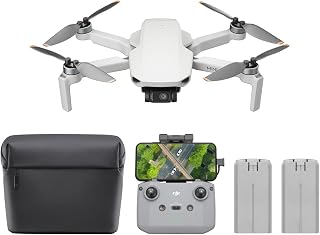
Buyers planning longer outings get real benefit from the two included batteries, which push total flight time to 62 minutes rather than constant pit stops to recharge. Auto return and 3-axis gimbal stabilization keep footage usable even for a beginner, while staying under 249 g keeps this practical for casual, regulation conscious flying.
Pros
- 62 minutes total flight time with two batteries
- 3-axis gimbal for smooth 4K footage
- QuickShots automate polished aerial shots
- Includes shoulder bag and spare propellers
Cons
- DJI Fly app requires manual download, not on app stores
- Real-world flight time varies with wind and temperature
For an article ranking drones by skill level, this Combo variant stands out as the pick for beginners who want to fly longer without interrupting the day. It shares the same under 249 gram build and 3-axis gimbal as the standard Mini 4K, delivering smooth 4K footage while skipping FAA registration in most regions. What changes the equation is the two included batteries, stretching total flight time to 62 minutes so new pilots get more practice and more shooting opportunities per outing. QuickShots still handle the complex maneuvers automatically, turning raw flights into edited-looking clips, and GPS return-to-home plus stable hovering give newer pilots a safety net while they build confidence. Level 5 wind resistance and a durable plastic and aluminum build mean it can handle everyday mishaps and breezier conditions. The package includes a shoulder bag and spare propellers, useful extras for someone just starting out. The DJI Fly app still requires a manual download rather than an app store install, and real flight times will vary from the rated estimate depending on wind and temperature.
Camera and Video: 4K Ultra HD video capture, 12MP still resolution, CMOS sensor, MP4 format support
Flight Performance: 31-minute max flight time (single battery), 62 minutes with combo's dual batteries, 10km max HD video transmission range, 38kph (Level 5) wind resistance, up to 4,000 meter altitude capability
Physical Specs: 246g weight, 9.65"L x 11.37"W x 2.2"H dimensions, gray plastic construction with 3-axis gimbal
Connectivity and Control: Bluetooth and Wi-Fi enabled, includes DJI RC-N1C remote controller with multiple connector cables (Lightning, Micro-USB, USB-C), beginner skill level
Included Accessories: 2x Intelligent Flight Batteries, Remote Controller, Shoulder Bag, Propeller Holder, 3 Pairs Spare Propellers, Gimbal Protector, Screwdriver, 18 Spare Screws, USB-C Data Cable, Multiple RC Connector Cables
Buy this if you're a beginner who wants extended flying sessions without interrupting a trip or shoot to recharge, thanks to the two-battery setup. It suits travel vloggers and casual hobbyists starting out. Skip it if you only fly occasionally and don't need the extra battery and accessories, since the standard single-battery version covers the basics.

Pilots at any skill level who still want dependable control will value the long distance control paired with one button return, a safety net that matters most for those less experienced with manual navigation. The 48 mp stills and 4K HDR footage give intermediate users creative headroom as their framing and editing skills develop over time.
Pros
- Sub-249g build simplifies registration in most regions
- 3-axis gimbal stabilizes footage in winds up to 38kph
- DJI RC remote includes a built-in 5.5-inch display
- 10km transmission range with One Button Return for safety
Cons
- 38-minute battery life can feel short for longer sessions
- QuickShots and Panorama modes take time to learn
If you're ranking the best DJI drones by skill level, the Mini 3 earns the entry-level slot without feeling like a compromise. Its sub-249g weight sidesteps the heavier registration hurdles that trip up first-time pilots, so newcomers can get airborne faster and focus on learning rather than paperwork. For this list, what matters is how approachable it makes aerial photography: a foldable, lightweight body, a 3-axis mechanical gimbal that keeps footage steady in wind up to 38kph, and 4K HDR video that already looks like a step above typical beginner gear. The DJI RC remote with its built-in 5.5-inch display means no phone mounting or app fumbling before takeoff. One Button Return and a 10km transmission range add a safety net that lets beginners explore further without losing confidence in the connection. It's not the most powerful drone in the lineup, but as the pick for someone just starting out or wanting a grab-and-go travel drone, it hits the right balance of simplicity, image quality, and flight stability.
Camera and Video: 4K UHD video at up to 30fps, 48MP still photos, 4K HDR recording, dual native ISO (100 and 800), CMOS optical sensor, supports JPG and RAW formats.
Flight Performance: Maximum flight time of 38 minutes with standard battery, expandable to 51 minutes with optional Intelligent Flight Battery Plus. Wind resistance rated at Level 5 (38kph). Maximum service altitude of 4,000 meters. GPS Return to Home with precise hovering and auto takeoff/landing.
Transmission and Control: Up to 10km HD video transmission range with FCC compliance. Includes DJI RC remote with 5.5-inch HD display, pre-installed DJI Fly app, and built-in 5.5-inch display. Wi-Fi and Bluetooth connectivity. QuickTransfer via Wi-Fi at up to 25Mb/s download speed.
Physical Specifications: Weight of 248g (under 249g registration threshold). Foldable design. Dimensions: 14.25L x 9.88W x 2.83H inches. 2453mAh Lithium-ion battery. Supports microSD card storage.
DJI Drone Buying Guide: What to Consider Before You Buy
Weight and FAA Registration
One of the most practical considerations for recreational flyers in the US is whether a drone requires FAA registration. Any drone weighing 250 grams or more must be registered if flown outdoors. Several models here, including the DJI Mini 4K, Drone With 4K UHD Camera, Under 249 g and the DJI Mini 3, 3-Axis Mechanical Gimbal Mini Camera, come in under that threshold for hassle-free flying.
If you want to keep things as simple as possible, going sub-249g also means fewer regulatory hurdles when flying in parks, at events, or while traveling. The DJI Neo Fly More Combo, Mini Drone With 4K UHD weighs just 135g, making it one of the most portable options in the lineup.
Camera Quality and Sensor Size
All eight drones on this list shoot 4K video, but sensor size and dynamic range vary meaningfully. Most of the Mini series use smaller sensors that perform well in daylight, while the DJI Mini 5 Pro Fly More Combo With DJI RC 2 steps up with a 1-inch CMOS sensor capable of 4K/60fps HDR video with noticeably richer color and detail.
For aerial photography enthusiasts who need professional-grade output, that larger sensor is worth a serious look. If you are building a workflow around drone imagery, our roundup of the best drones for photography in 2026 goes deeper on image quality comparisons.
Flight Time and Battery Options
Battery life shapes how much you actually get done on a shoot. The DJI Mini 3 Fly More Combo With DJI RC, 3 Batteries bundles three batteries for up to 114 minutes of total flight time, which is excellent value for longer sessions. The DJI Mini 4K Camera Drone Combo also ships with two batteries, giving you up to 62 minutes before you need to charge.
Single-battery models like the DJI Mini 4K, Drone With 4K UHD Camera, Under 249 g are a good entry point, but if you plan on longer outdoor sessions, a Fly More combo is almost always the smarter buy. Check out our picks for drones under $500 if battery-included bundles are a priority for your budget.
Control Options and Ease of Use
How you control a drone matters as much as what it can do. The DJI Neo Motion Fly More Combo takes a bold approach, pairing immersive FPV goggles with motion controller support for a completely hands-on flying experience. Meanwhile, the DJI Mini 3 With DJI RC, 3-Axis Mechanical Gimbal ships with DJI’s screen-integrated RC for a clean, phone-free setup right out of the box.
Beginners may appreciate the Neo’s palm takeoff and voice control features, which eliminate the learning curve entirely. More experienced pilots will likely prefer the precision and range that a dedicated RC controller provides. For those interested in longer-range exploration, our guide to the best long range drones in 2026 covers transmission distances in greater detail.
Final Thoughts
The DJI lineup in 2026 covers a wide spectrum of flyers, from first-time hobbyists to serious aerial photographers. If you want a capable, no-fuss entry point that stays under the FAA registration threshold, the DJI Mini 4K, Drone With 4K UHD Camera, Under 249 g is a smart, well-rounded choice. For those who want the most capable compact drone money can buy with a pro-level sensor and omnidirectional obstacle sensing, the DJI Mini 5 Pro Fly More Combo With DJI RC 2 is the clear top-tier pick. Either way, you are investing in proven technology backed by one of the most trusted names in the drone space.
Frequently Asked Questions
Which DJI drone is best for beginners in 2026?
The DJI Mini 4K, Drone With 4K UHD Camera, Under 249 g is one of the most beginner-friendly options available in 2026. It features one-tap takeoff and landing, GPS Return to Home, and stable hovering right out of the box. Its sub-249g weight also means no FAA registration is required for recreational use, which removes a common barrier for new pilots.
Do I need to register a DJI drone with the FAA?
It depends on the drone’s weight. Drones weighing 250 grams or more must be registered with the FAA for outdoor recreational flight. Several DJI models, including the Neo and Mini 4K, come in under that threshold and do not require registration for recreational use. Always verify current FAA guidelines before flying, as rules can change. For more context on drone regulations and model comparisons, visit our RC and Drones category page.
What is the best DJI drone for real estate photography?
For real estate use, you want a drone that delivers crisp, stable footage with reliable obstacle avoidance. The DJI Mini 5 Pro Fly More Combo With DJI RC 2 stands out here, thanks to its 1-inch CMOS sensor, 4K/60fps HDR video, and Nightscape omnidirectional obstacle sensing. Its compact size also makes it easy to transport between properties. Our dedicated guide to the best drones for real estate photography covers this use case in depth.
How long do DJI drone batteries last?
Flight time varies by model and conditions, but most DJI drones in this lineup offer between 31 and 51 minutes per battery charge. Wind speed, payload, and flight style all affect real-world battery life. Opting for a Fly More combo, like the DJI Mini 3 Fly More Combo With DJI RC, 3 Batteries, is the most practical way to extend your total session time without long waits between flights.
Common questions
Do I need to register a drone based on its weight?
Yes, if the drone weighs 249 g or more, the FAA requires registration. Models like the DJI Mini 4K stay under 249 g, which is why they're labeled regulation friendly and can skip that step. Heavier drones in the lineup, including Fly More Combo kits with extra accessories, may push past that threshold depending on configuration, so always weigh the exact setup before flying to confirm whether registration applies.
How does obstacle sensing work on these drones?
It varies by model, since none of the drones listed here advertise dedicated obstacle avoidance sensors in their specs. Instead, these DJI models rely on features like 3-axis gimbals for stable footage and AI-based subject tracking on the Neo to keep shots smooth. Pilots should stay visually aware of surroundings during flight, since the data doesn't indicate automated obstacle detection on these particular units.
How long is the flight time when flying in wind?
It depends on battery capacity and wind resistance rating, both of which vary across this lineup. The Mini 4K lists 38kph (Level 5) wind resistance, while the Mini 3 and its Fly More Combo emphasize extended flight time and wind resistance as key features. Stronger gusts will still reduce effective flight time versus calm conditions, so checking the wind rating before heading out helps set realistic expectations.


Write Your Review
No reviews yet. Be the first to share your experience!