

You just unboxed a new drone, the sky looks perfect, and then the question hits: do you actually need to register it with the FAA before you fly? It is a fair concern, and getting it wrong can mean fines or grounded flights. Whether you are a first-time hobbyist or a seasoned flyer picking up a new model, the rules are worth understanding before you ever hit takeoff.
This guide covers exactly when FAA registration is required, when you can skip it entirely, and which drones in 2026 are designed to keep you compliant without any extra paperwork. If you are also shopping for your next aircraft, check out our roundup of the best DJI drones in 2026 for a broader look at top-tier options.
Quick answer
This guide compares 8 picks, with DJI Neo Fly More Combo: Ultra-Portable 4K Drone ranked first. Potensic ATOM SE 4K GPS Drone, Under 249g, 62 Min has the most customer reviews.

For someone parsing FAA weight rules, this drone's propeller-protected, compact build is designed for safe, close-range handheld launches rather than long registered flights. Its AI-based subject tracking and ultra-stabilized 4K video suit casual flyers who want quality footage from a drone built more for everyday use than for operations that trigger registration requirements.
Pros
- 135g weight gives clear margin under FAA registration limits
- Palm takeoff/landing and controller-free flying modes
- Full 3D propeller guards reduce crash risk while learning
- Three batteries bundled extend total flight time to about an hour
Cons
- Only 10-15 minutes of flight per individual battery
- Plastic build favors portability over heavy-duty durability
If avoiding FAA registration is your main goal, the DJI Neo Fly More Combo makes the decision easy: at 135 grams, it falls well under any registration threshold, with room to spare compared to the 249g rule most drones aim for. That margin matters if you plan to add accessories or worry about manufacturer weight listings being optimistic. Beyond the weight question, this combo is built for people who want to fly immediately without studying flight mechanics. Palm takeoff and landing means no runway or flat surface required, and you can skip the controller entirely and fly via app or voice command if you just want quick clips. AI subject tracking and eight QuickShots handle the creative work. Full propeller guards mean you won't need to worry about nicking furniture or tree branches while learning. The tradeoff for staying registration-free at this weight is shorter per-battery flight time, though the three batteries included here stretch a session to roughly 45 minutes to an hour, which is reasonable for a drone this small and this exempt from paperwork.
Buy this if your top priority is never dealing with FAA registration and you want a drone that flies out of the box with minimal setup, including controller-free options. It suits beginners, kids' supervised use, and anyone who wants a grab-and-go drone for hikes or trips. Skip it if you need long single-charge flights or plan to fly in consistently strong wind, since 10-15 minutes per battery and moderate wind resistance are real limits.
Physical: Weight 135g, Dimensions 6.18x5.12x1.9 inches, Color gray, Material plastic
Camera: 4K UHD video, 12MP still images, CMOS sensor, MP4 format, JPEG support
Battery: 31,500 mAh capacity, Lithium ion cells, 10-15 minute flight time per charge
Connectivity: Wi-Fi, Bluetooth, 2.4GHz radio frequency, maximum 10km range
Package Includes: DJI Neo aircraft, RC-N3 remote, 3 intelligent batteries, 2-way charging hub, gimbal protector, propeller guards, spare propellers and screws, USB-C cables

Since FAA registration hinges on crossing the 250-gram threshold, this model's sub-249g build keeps recreational flyers in the exempt category without sacrificing capability. Paired with 4K Ultra HD footage and a 3-axis gimbal for stable shots, it lets beginners skip the registration process while still getting the footage quality that usually comes with heavier, registration-required drones.
Pros
- Under 249g, built specifically to avoid FAA registration
- 3-axis gimbal with genuine 4K video quality
- Level 5 wind resistance (38kph) at this weight class
- GPS return-to-home and one-tap takeoff for easier flying
Cons
- DJI Fly app requires manual download, not available on Google Play
- 31-minute flight time is solid but not class-leading
The DJI Mini 4K is built around the same under-249g rule this article is about, and it hits that target without the compromises some ultra-light drones make. You get a 3-axis gimbal and real 4K capture, not a scaled-down camera, plus Level 5 wind resistance (38kph) that most registration-exempt drones can't match. For anyone trying to understand the weight cutoff and find a drone that actually stays under it, this is a direct answer. GPS return-to-home and one-tap takeoff reduce the risk of losing a drone while you're still learning the rules around flying it. QuickShots like Helix, Dronie, and Boomerang let you produce usable video without editing experience. The 10km transmission range and 31-minute flight time are solid for recreational use, and multiple battery options let you scale up flight time later. The one friction point unrelated to weight or registration is that the DJI Fly app isn't on Google Play, so you'll need to download it directly from DJI, a minor step compared to the regulatory convenience this drone offers.
This fits beginners and budget-conscious flyers who specifically want to stay under the FAA weight threshold while still getting a capable 4K camera and real wind resistance. It's a good pick for travelers who don't want to deal with registration paperwork before a trip. Skip it if you want the longest possible flight time per battery or need Google Play app installation without extra steps.

With three batteries and extended flight time, this combo suits pilots ready to fly often enough that registration status becomes a real consideration, not just a technicality. Its foldable, wind-resistant design and 4K HDR video capture cater to intermediate flyers who've likely already looked into the FAA's weight-based rules before investing in more flight time.
Pros
- Stays under the weight threshold that avoids FAA registration
- Three batteries for up to 114 minutes total flight time
- 4K HDR video with Dual Native ISO for day and night detail
- Includes shoulder bag and DJI RC remote with built-in display
Cons
- No obstacle avoidance sensors, requiring deliberate flying
- App must be downloaded from DJI's website, not an app store
For anyone shopping specifically to dodge FAA registration requirements, this Fly More Combo keeps the same sub-249g airframe that qualifies for lighter regulatory treatment, while solving the one real complaint people have about the standard package: limited flight time. Three batteries bring total flight time up to 114 minutes, which matters if you're planning a full day of shooting without registration paperwork slowing you down. The core flight capability is identical to the base Mini 3: 4K HDR video with Dual Native ISO fusion for balanced exposure in tricky lighting, a 3-axis gimbal and brushless motors for stable footage in wind, and a 10km range with the DJI RC remote and its built-in display. Vertical shooting mode adds flexibility for social content. The combo includes a shoulder bag for transport, though it's snug if you're packing extra gear. There's no obstacle avoidance, so this still demands deliberate flying rather than hands-off confidence. App setup also requires downloading from DJI's site rather than an app store, a small extra step before your first flight.
Camera and Video: 4K UHD video capture at up to 30fps, 48MP still image resolution, Dual Native ISO (100 and 800), 4K HDR video support, vertical shooting mode. Supported formats include MP4 video and JPG/raw images.
Flight Performance: Maximum flight time of 38 minutes on standard battery, extended to 51 minutes with optional Intelligent Flight Battery Plus. Total combo flight time reaches 114 minutes with three included batteries. Wind resistance up to Level 5 (38kph). Takeoff altitude up to 4,000 meters. Maximum transmission range of 10km with HD video transmission and excellent anti-interference capabilities.
Physical Specifications: Weight 248g (under 249g registration threshold), dimensions 14.2 x 9.9 x 2.8 inches when packed. Foldable design. 3-axis mechanical gimbal with CMOS optical sensor technology. Brushless motors for enhanced power efficiency.
Connectivity and Control: Wi-Fi and Bluetooth connectivity, remote control via Wi-Fi technology. DJI RC controller included with 5.5-inch HD display and pre-installed DJI Fly App. Quick Wi-Fi file transfer up to 25Mb/s without needing phone connection. Lithium-ion battery cells with 100 amp-hour capacity.
Package Contents: DJI Mini 3 aircraft, DJI RC controller, 3x Intelligent Flight Batteries, Two-Way Charging Hub, shoulder bag, gimbal protector, spare propellers (3 pairs), spare screws (18 units), Type-C cables.
Good for people who've decided the sub-249g, registration-light route is right for them but want more flying time than a single battery allows, such as frequent flyers or those covering events. Skip it if you only fly occasionally, since the extra batteries add bulk and cost you won't use, or if you need obstacle avoidance for tighter, more complex environments.

Weighing in under 249 grams, this drone falls outside FAA registration requirements, which matters for anyone reading this guide hoping to avoid paperwork. It backs that up with GPS auto-return and a TOF sensor for safer beginner flights, plus a 96-minute flight time so new pilots can practice extensively without needing to file anything with the FAA.
Pros
- Under 249g, no FAA registration required
- 96 minutes total flight time across three batteries
- 3-axis brushless gimbal with EIS stabilization
- GPS, TOF, and auto return for added flight safety
Cons
- Video limited to 4K/30fps, not 60fps
- Full flight time requires sequential battery swaps
This Ruko U11MINI variant is aimed at the same registration question but adds more flight time and hardware to the equation. Staying under 249g means it avoids the FAA registration requirement outright, which is the deciding factor for many first-time buyers browsing this guide. Where it separates itself is the 96 minutes of total flight time spread across three batteries, letting you fly an entire outing without the legal detour of registering. The 3-axis brushless gimbal with EIS stabilization produces smooth 4K video and 8K photos, and GPS with TOF sensing plus auto return adds a layer of control beginners will appreciate. The AI takeoff and landing system removes guesswork from the first few flights, and a hard-sided case with foam compartments protects the whole kit between trips. For someone specifically weighing whether to deal with FAA registration, the sub-249g design settles that question immediately, while the extended battery life and stabilization make it practical for longer sessions rather than quick test flights.
Camera and Video: 8K photo resolution, 4K video at 30fps, 48MP effective still capture, CMOS optical sensor with 3-axis brushless gimbal and EIS stabilization.
Flight Performance: 96 minutes total flight time with 3 included 2200mAh lithium polymer batteries, 20,000 feet maximum transmission range, GPS with TOF and optical flow positioning, quadruple positioning system for stability.
Design and Portability: Under 249g weight (FAA exempt), palm-sized form factor, 12.6 inches x 7.56 inches x 2.28 inches in carrying case, advanced controller with digital real-time transmission.
Safety and Control: AI takeoff and landing system, beginner mode flight restrictions, 3 auto-return modes, built-in beeper for location tracking, USB charging with PD 3.0 fast charge capability.
Package Contents: Advanced controller, hard-sided carrying case, 3 intelligent flight batteries, 4 extra propellers, 3 USB cables, screwdriver, replacement screws, user manual, and one-click setup.
Suited to families and new aerial photographers who want to skip FAA registration and fly for extended sessions thanks to three batteries. Good for anyone prioritizing flight time and stabilized 4K footage over top frame rates. Skip it if you need 60fps video or want to avoid managing multiple battery swaps, since reaching the full 96 minutes requires changing batteries sequentially.
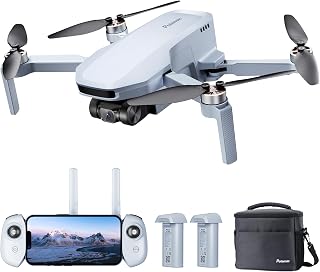
This drone's under-249g spec places it squarely in the no-registration category the article explains, making it a fit for beginners who want to fly legally without extra forms. Its 62-minute combined flight time across two batteries gives new pilots plenty of practice time while they get comfortable with GPS auto return and basic flight controls.
Pros
- Under 249g, so no FAA registration needed
- 62 minutes total flight time across two batteries
- 4K EIS camera with brushless motor stability
- Beginner mode plus 4km transmission range
Cons
- No obstacle avoidance sensors
- No included micro SD card for 4K footage
If the whole point of this purchase is staying out of FAA paperwork, the Potensic ATOM SE is built around that exact goal. Weighing under 249g, it falls below the threshold that triggers registration, so you can unfold it and fly without filing anything first. That matters most for beginners who want to learn the basics of GPS flight and aerial video without adding a legal step to the process. The 4K EIS camera and brushless motor mean you aren't sacrificing capability to stay under the weight limit, and the 62 minutes of combined flight time across two batteries gives you room to actually practice. Three flight modes plus a dedicated beginner mode let you ease into GPS-assisted flying gradually, while auto return adds a safety net if you lose orientation. The 4km transmission range keeps the connection steady well beyond typical backyard distances. For someone whose main question is whether they need to register before flying, this drone answers it by design, letting you focus on learning to fly rather than paperwork.
Camera and Video 4K video at 30fps with 1/3-inch Sony CMOS sensor, 12MP photos in JPEG, 118-degree field of view with +20 to -90 degree vertical tilt, EIS stabilization with ShakeVanish technology
Flight Performance Brushless motors, maximum speed 16m/s in sport mode (reaches max in 2.8 seconds), level-5 wind resistance, 4km control range with WiFi and PixSync 2.0 transmission technology
Battery and Flight Time Two 2500mAh lithium-ion batteries included, 31 minutes per battery (62 minutes total), automatic return-to-home on low battery or signal loss
Physical Specifications Weight 249 grams, dimensions 11.81 x 9.64 x 2.28 inches (folded), foldable design fits in jacket pocket, includes 2 batteries, remote control with 3 adapter cables, portable handbag, spare propellers, and accessories
Compatibility iOS 11 and above, Android 7.0 and above, micro SD card support for video storage (card not included), FOTA firmware updates for continuous improvements
Good for adults and beginners who want to avoid FAA registration entirely and start flying right out of the box. Suits casual flyers more interested in learning GPS flight basics and capturing 4K footage than chasing advanced features. Skip it if you want obstacle avoidance or plan to fly in consistently strong winds, since there are no collision sensors and performance dips at max speed in gusty conditions.
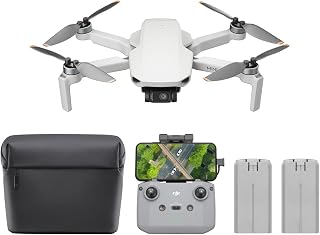
This combo answers the registration question directly by staying under 249 grams, the exact cutoff the FAA guide revolves around. It adds practical range for new pilots figuring out the rules, with 10km video transmission and two batteries totaling 62 minutes of flight time, so there's ample opportunity to fly and learn before any registration decision becomes urgent.
Pros
- 246g stays under the FAA registration threshold
- 3-axis gimbal with 4K footage comparable to larger drones
- Two batteries included for up to 62 minutes total flight time
- Level 5 wind resistance with brushless motors
Cons
- Narrow weight margin leaves little room for added accessories
- DJI Fly app needs manual install, not available on Google Play
At 246 grams, the DJI Mini 4K Combo sits just under the 249g FAA registration cutoff, which is the exact question this article is built around. That margin is tighter than some alternatives, so it's worth knowing your exact configuration if you add third-party accessories, but out of the box it's designed to clear the threshold. What makes this combo worth the registration-free tradeoff is that you're not settling for a stripped-down drone to hit the weight target. The 3-axis gimbal and 4K footage rival larger competitors, and the two included batteries push flight time to 62 minutes total, letting you shoot multiple scenes without feeling rushed by the weight-driven limitations. Level 5 wind resistance and a brushless motor system mean you're not sacrificing stability to stay exemption-eligible. The package includes a shoulder bag and spare propellers, useful since 246g leaves little margin for case or mount add-ons. The same DJI Fly app limitation applies here (manual download required, not on Google Play), and advertised battery life assumes ideal conditions rather than wind and cold.
Camera and Video: 4K Ultra HD video capture, 12MP still resolution, CMOS sensor, MP4 format support
Flight Performance: 31-minute max flight time (single battery), 62 minutes with combo's dual batteries, 10km max HD video transmission range, 38kph (Level 5) wind resistance, up to 4,000 meter altitude capability
Physical Specs: 246g weight, 9.65"L x 11.37"W x 2.2"H dimensions, gray plastic construction with 3-axis gimbal
Connectivity and Control: Bluetooth and Wi-Fi enabled, includes DJI RC-N1C remote controller with multiple connector cables (Lightning, Micro-USB, USB-C), beginner skill level
Included Accessories: 2x Intelligent Flight Batteries, Remote Controller, Shoulder Bag, Propeller Holder, 3 Pairs Spare Propellers, Gimbal Protector, Screwdriver, 18 Spare Screws, USB-C Data Cable, Multiple RC Connector Cables
Good for travelers and content creators who want to stay under the FAA weight limit without giving up flight time or camera quality, since the dual-battery setup offsets the usual tradeoff of lightweight drones. It suits people who fly often enough to want backup power on hand. Skip it if you plan to add heavier accessories that could push total weight over 249g, or if app installation friction is a dealbreaker.

Falling under the 249-gram mark keeps this drone outside FAA registration territory, a detail that matters most to readers weighing weight limits. Its 5.5-inch touchscreen controller and GPS auto return cater to beginners who want an easier, guided flying experience while staying within the weight class this guide identifies as exempt from registration.
Pros
- Under 249g, no FAA registration required
- Built-in 5.5 inch touchscreen remote, no phone needed to fly
- 20,000ft transmission range via R2 digital system
- GPS auto return and AI takeoff/landing for beginners
Cons
- Video capped at 4K/30fps despite 8K photo capability
- Mobile app still requires phone Wi-Fi connectivity
For readers specifically trying to figure out how to avoid drone registration, the Ruko U11MINI RC3 checks the box at 248 grams, just under the 249g FAA cutoff. That weight class is the entire reason this drone belongs in a registration-focused guide: no paperwork, no Remote ID requirement, just unfold and fly. What makes it stand out beyond the weight threshold is the built-in 5.5 inch touchscreen remote, which skips the usual smartphone pairing step that trips up first time flyers. The 3-axis gimbal and 4K/30fps video output give you stable, usable footage, and the 20,000 foot transmission range via the R2 digital system holds up well in open areas. GPS auto return and AI-assisted takeoff and landing reduce the intimidation factor for someone flying their first GPS drone. A sturdy carrying case and spare propellers round out a package aimed at people who want capability without complexity. For anyone whose priority is legally flying without registering, this model's sub-249g build is the headline feature, with everything else as a bonus.
Camera and Video: 1/2" CMOS sensor with 8K photo resolution and 48MP effective resolution. Records 4K video at 30fps in MP4 format. 3-axis mechanical brushless gimbal for stabilization.
Flight Performance: Up to 64 minutes total flight time with two 2200mAh lithium-ion batteries. Maximum transmission range of 20,000 feet using R2 digital system. Flight modes include GPS positioning, barometric altitude hold, TOF obstacle avoidance, and optical flow tracking.
Remote Control and Interface: Integrated 5.5" 1080P HD touchscreen controller with no phone required. Supports GPS auto-return, one-key landing, and failsafe return on signal loss or low battery.
Physical Specifications: Under 249 grams, making it FAA exempt from registration requirements. Dimensions 12.6" L x 7.56" W x 2.28" H with hard-side carrying case included. Available in updated black.

Readers trying to determine registration rules will want to know the exact weight class their drone falls into, and this one's lightweight, foldable design is built around staying compact and light. With a 3-axis mechanical gimbal for smooth 4K HDR video and wind resistance for stable outdoor use, it suits pilots who want capable footage while navigating weight-based registration thresholds.
Pros
- Under 249 grams, avoiding FAA registration in most cases
- 4K HDR video with stabilizing 3-axis gimbal
- 10km transmission range for long-distance flying
- DJI RC remote with built-in display, ready out of the box
Cons
- 38 minutes of flight time per battery is on the shorter side
- Extra batteries and accessories sold separately
If the question driving your purchase is whether you'll need to deal with FAA registration at all, the DJI Mini 3 answers it directly. Weighing under 249 grams, it falls below the threshold that triggers mandatory registration and Remote ID in most countries, so you can get airborne without the paperwork that larger drones require. That makes it a strong fit for anyone who wants aerial footage without first wading through federal rules. Beyond the weight advantage, the capability here is well beyond what a sub-250g classification might suggest. The 4K HDR video and 3-axis mechanical gimbal produce stable, detailed footage even in wind up to 38kph, and the 10km transmission range means you can fly far while keeping a clear live feed. The DJI RC remote comes with a built-in 5.5-inch display and the DJI Fly app pre-installed, so there's no scrambling to pair a phone before your first flight. Flight time tops out at 38 minutes, which is fine for casual outings but will have you landing sooner than you'd like on longer shoots.
Camera and Video: 4K UHD video at up to 30fps, 48MP still photos, 4K HDR recording, dual native ISO (100 and 800), CMOS optical sensor, supports JPG and RAW formats.
Flight Performance: Maximum flight time of 38 minutes with standard battery, expandable to 51 minutes with optional Intelligent Flight Battery Plus. Wind resistance rated at Level 5 (38kph). Maximum service altitude of 4,000 meters. GPS Return to Home with precise hovering and auto takeoff/landing.
Transmission and Control: Up to 10km HD video transmission range with FCC compliance. Includes DJI RC remote with 5.5-inch HD display, pre-installed DJI Fly app, and built-in 5.5-inch display. Wi-Fi and Bluetooth connectivity. QuickTransfer via Wi-Fi at up to 25Mb/s download speed.
Physical Specifications: Weight of 248g (under 249g registration threshold). Foldable design. Dimensions: 14.25L x 9.88W x 2.83H inches. 2453mAh Lithium-ion battery. Supports microSD card storage.
What to Know Before You Buy: A Practical Buying Guide
The 249-Gram Rule and Why It Matters
The single most important spec when it comes to FAA compliance is weight. Drones weighing less than 250 grams do not require FAA registration or Remote ID for recreational use. That threshold has made sub-249g models incredibly popular, and manufacturers have taken notice.
Models like the DJI Neo Fly More Combo, Mini Drone With 4K UHD (135g) and the DJI Mini 4K, Drone With 4K UHD Camera, Under 249 g are built specifically to stay under that limit. The best drones under $500 often land in this weight class, making compliance and affordability easy to combine.
Recreational vs. Commercial Use
Even if your drone weighs under 249 grams, the purpose of your flight changes the rules. Flying purely for fun means the sub-249g exemption applies. The moment you use drone footage for business purposes, such as real estate photography or paid videography, FAA Part 107 certification becomes required regardless of aircraft weight.
If you are moving toward professional aerial work, it is worth reading up on the best drones for real estate photography to understand what specs matter most for commercial applications. A drone that is registration-free for weekend hikes may still require certification when used on a paid job.
Remote ID: The New Compliance Layer
Beyond weight-based registration, the FAA now requires Remote ID for most drones. Think of it as a digital license plate that broadcasts your drone’s location. Drones under 249g flown recreationally are currently exempt, but it is something to watch as regulations evolve.
The DJI Mini 3 Fly More Combo With DJI RC, 3 Batteries and the DJI Mini 3 With DJI RC, 3-Axis Mechanical Gimbal both sit under 249g and are exempt from Remote ID requirements for recreational flyers. Staying informed about these rules protects you from unintentional violations as the regulatory landscape shifts.
Camera Quality and Flight Time Still Count
Staying under 249g does not mean sacrificing performance. The Potensic ATOM SE GPS Drone with 4K EIS Camera packs a Sony CMOS sensor and up to 62 minutes of flight time across two batteries into a sub-249g frame. The Ruko U11MINI 4K GPS Drone with Camera for Adults pushes that even further with 96 minutes of total flight across three smart batteries.
For buyers who want a fully self-contained setup without phone tethering, the Ruko U11MINI 4K (RC3) Camera Drone for Adults includes a 5.5-inch integrated touchscreen controller. It stays under 249g and offers 64 minutes of flight time, making it a compelling all-in-one package. You can explore more options across the spectrum in our guide to best long-range drones in 2026.
Final Thoughts
For most casual flyers in 2026, choosing a sub-249g drone is the simplest path to worry-free flying with no FAA registration required for recreational use. If you want a compact, capable option with an outstanding camera and smart flight modes, the DJI Mini 4K, Drone With 4K UHD Camera, Under 249 g is a strong all-around pick, while the Ruko U11MINI 4K GPS Drone with Camera for Adults stands out for anyone who prioritizes maximum flight time and family-friendly usability.
Frequently Asked Questions
Do you need to register a drone with the FAA if it weighs under 250 grams?
No, drones weighing less than 250 grams do not require FAA registration for recreational use under current rules. This exemption is one of the main reasons so many popular drones are engineered to come in just under that threshold. Always verify with the FAA directly, as regulations can change.
What happens if you fly a drone without registering it when required?
Flying an unregistered drone that legally requires registration can result in civil penalties up to $27,500 and criminal fines up to $250,000 under FAA enforcement. The FAA takes airspace safety seriously, and compliance protects both you and others sharing the sky. When in doubt, register before you fly.
Does the FAA registration requirement apply to drone photography for business?
Yes. If you use a drone commercially, such as for real estate listings, events, or paid content creation, you need FAA Part 107 certification regardless of the drone’s weight. The recreational exemption does not cover commercial operations. Our guide to the best drones for photography in 2026 covers models well suited to professional work.
Is Remote ID the same as FAA registration?
No, they are separate requirements. FAA registration assigns your drone an identification number, while Remote ID is a broadcast system that transmits your drone’s location during flight. Drones under 249g flown recreationally are currently exempt from both, but it is worth staying updated on FAA guidance as 2026 rules continue to develop.
Common questions
What exactly is the 250 gram line for drone registration?
It's the weight threshold where FAA registration becomes mandatory for recreational flyers. Any drone weighing 250 grams or more at takeoff, including battery and props, must be registered before it flies outdoors. Drones under that weight, like the Potensic ATOM SE at under 249g or the DJI Mini 4K and DJI Neo, are exempt from this specific rule, though other operating requirements can still apply depending on how and where you fly.
Do I have to take the recreational flyer test before flying?
Yes, if you fly for fun under the FAA's recreational rules, you must pass TRUST, the Recreational UAS Safety Test, before your first flight. It's free, online, and covers safety and regulatory basics rather than flying skill. Unlike registration, TRUST applies no matter how light your drone is, so even sub-249g models like the DJI Mini 4K or DJI Neo require it.
Where you still cannot fly a light drone even under 250 grams?
Restricted airspace, national parks, and over people or moving vehicles are places a light drone still can't legally fly. Weighing under 250 grams only exempts you from registration, not from airspace rules, local ordinances, or FAA no-fly zones near airports and stadiums. Models like the Potensic ATOM SE or DJI Mini 4K still need airspace authorization through apps like B4UFLY in controlled zones.


Write Your Review
No reviews yet. Be the first to share your experience!