

You set up your new projector, dim the lights, and the image looks washed out. Sound familiar? The culprit is almost always brightness. Knowing how many lumens you need for a projector before you buy is the single most important spec decision you will make. Whether you are building a dedicated home theater or want big-screen movies in your living room, this guide has you covered. For a deeper look at the top options available right now, check out our roundup of the best laser projector picks for home cinema and gaming.
Lumens measure how much light a projector outputs. More lumens means the image holds up better in ambient light. The right number depends on your room conditions, screen size, and how picky you are about image quality. We evaluated eight projectors across a wide brightness range to help you match the right spec to your space.
Quick answer
This guide compares 8 picks, with AWOL Vision Aetherion Max 4K Laser Projector, 3300 ranked first. BenQ TH671ST Short Throw 1080p Gaming Projector, 3000 has the most customer reviews.

Pros
- Exceptional brightness and color accuracy make it genuinely usable in daylit rooms, a rarity for projectors
- Ultra-short throw design eliminates installation hassles, heat concerns, and shadow issues
- Gaming performance rivals dedicated displays with 1ms latency, 240Hz support, and console connectivity
- Superior contrast and shadow detail rival far more expensive cinema projectors
- Low power consumption saves significant electricity versus comparable large-screen TVs
Cons
- Peak performance benefits from pairing with an ALR screen, adding significant additional cost
- Requires calibration and optimal room setup to achieve rated contrast ratios and color accuracy
The AWOL Vision Aetherion Max is a flagship 4K laser projector engineered for living rooms where traditional projectors fail. It targets home theater enthusiasts, serious gamers, and anyone wanting a 150+ inch display without installation complexity, and it delivers on that promise with genuine technical distinction.
The standout feature is daytime visibility. At 3,300 ISO lumens with 110% Rec.2020 color gamut, it renders vivid, color-accurate images even in bright rooms with windows open. The 6,000:1 native contrast ratio, enhanced by Noirscene System II's 7-level iris system, produces deep blacks and sharp shadow detail that separates this from budget alternatives. For gaming, the 1ms input latency at 240Hz with VRR and Dolby Vision Gaming support is genuine competitive performance, and simultaneous connectivity via three HDMI 2.1a and DisplayPort 1.4a eliminates cable switching between consoles and PC.
Design execution is refined. The ultra-short throw 0.2:1 ratio means it sits inches from the wall, eliminating ceiling mounts, heat concerns, and installation costs. Setup completes in minutes, and the compact footprint preserves living room space while delivering a screen 6x larger than an 85-inch TV. The Anti-RBE technology is legitimate, reducing the notorious rainbow-effect distractions that affect single-chip laser projectors, enabling comfortable all-day viewing for movie marathons and gaming sessions.
Two real considerations exist. The $3,799 price is substantial, and pairing it with an ALR screen to maximize contrast in bright rooms adds significant additional investment. Reaching the product's stated performance ceiling also demands proper calibration and room conditions, which may not suit users seeking plug-and-play simplicity.
The Aetherion Max earns its premium positioning. It solves real problems that standard projectors cannot address, performs exceptionally in its target use cases, and is built for longevity with a 2-year warranty and U.S.-based support. For anyone wanting a large-format display that works in their room as it actually exists, this is a thoughtfully engineered option.
Display Technology: Triple laser RGB, 4K native (3840x2160), 25,000-hour lifespan
Brightness and Contrast: 3,300 ISO lumens, 6,000:1 native contrast, 60,000:1 viewing contrast
Color Performance: 110% Rec.2020 color gamut, Dolby Vision, HDR10+, HDR10, HLG support
Gaming Performance: 1ms input latency at 240Hz, VRR, ALLM, Dolby Vision Gaming, native 24/48/50FPS with MEMC
Throw Ratio: 0.2:1 ultra-short throw, 0.5 to 20.19 feet throw distance, 80 to 150 inch screen size
Connectivity: 3x HDMI 2.1a, DisplayPort 1.4a, remote control, smartphone app, voice control
Build and Efficiency: 300W power consumption, floor mount, 2-year warranty, up to 500kWh annual savings vs comparable large-screen TV

Rated at 3000 lumens, this short throw model is built for rooms where you can't place a projector far from the wall but still want a bright, usable image with lights on. The short throw lens lets it sit close and fill a large screen, making it a practical pick for anyone short on room depth but needing solid daytime brightness.
Pros
- 3000 ANSI lumens handles moderate ambient light well
- Short-throw lens fits 100-inch screens in small rooms
- Low input lag suits console gaming
- Quiet 29 dB operation in eco mode
Cons
- Lamp-based light source needs eventual replacement
- DLP rainbow artifacts possible during fast motion
Lumens matter most when you can't fully darken a room, and 3000 ANSI lumens puts the BenQ TH671ST solidly in the range for living rooms and bedrooms with some ambient light. Paired with a 10000:1 contrast ratio, it holds up image punch in moderately lit spaces rather than washing out like dimmer projectors do. The short-throw lens means you don't need a lumen-sacrificing long cable run or awkward ceiling mount to hit a big screen, projecting 100 inches from just 5 feet away. If your space has windows you can't fully cover or evening light that creeps in, this brightness level combined with 92% Rec.709 color accuracy keeps movies, shows, and games looking sharp and vibrant rather than flat. It's a practical pick for anyone whose lumen requirement is driven by a shared, partially lit room rather than a dedicated blackout theater, with gaming responsiveness as a bonus for console players.
Display and Image: 1080p native resolution, 10000:1 contrast ratio, 3000 ANSI lumens brightness, 1.07 billion color support, 0.69 to 0.83 throw ratio for short-throw projection. Projects 60-inch to 120-inch screens optimally, up to 300 inches maximum.
Optics and Adjustment: 1.2x zoom lens, vertical keystone correction up to 40 degrees, 102.5% projection offset for flexible placement. Designed to project 100-inch screens from 1.5 meters (approximately 5 feet).
Connectivity and Ports: Dual HDMI 1.4a ports (one with MHL and HDCP 1.4 support), VGA input, USB Type A, 3.5mm audio in and out, RS232 serial control, dual IR receivers, and security bar. Compatible with laptops, gaming consoles, Blu-ray players, and streaming devices.
Light Source and Power: 240W lamp with 4000-hour typical life (10000 hours in eco modes). AC 100-240V universal power supply, 320W typical consumption, less than 0.5W standby. Cooling fan operates at 33 dB normal or 29 dB eco mode.
Physical Design: Dimensions 296 x 120 x 224 mm, weight 2.7 kg (5.95 lbs). Includes remote control, power cord, VGA cable, carrying bag option, and optional 3D glasses support.
Buy this if you need enough brightness for a living room or den with some ambient light and want short-throw placement near the screen. It suits gamers on Xbox One X or PS4 Pro wanting low input lag. Skip it if you have a fully dark dedicated theater room where lower lumens would suffice, or if you need 4K native resolution, since this tops out at 1080p.

At 1,800 ANSI lumens, this one hits a brightness tier that actually matters since ANSI ratings are measured more rigorously than ISO lumens, so a room with some ambient light won't wash out the image. Paired with true 4K resolution and Dolby Vision, it suits anyone wanting a grab-and-go unit that still delivers crisp detail without needing a fully blacked-out room.
Pros
- HybridBeam LED and laser boosts contrast beyond the lumen number
- True 4K with Dolby Vision for detail and color depth
- Automatic focus and keystone adapt to room conditions
- 25,000-hour light source lifespan
Cons
- 1,800 lumens lower than lamp-based competitors
- Requires measuring throw distance between 1.69 and 4.78 meters
At 1,800 ANSI lumens, the NEBULA Cosmos 4K SE sits at a lower brightness tier, but its HybridBeam LED and laser engine squeezes more usable contrast and color accuracy out of that lumen count than typical projectors manage. This matters directly for anyone calculating lumens needed: the spec sheet number alone doesn't predict image quality, and 50x better contrast than standard projectors means darker blacks and better perceived brightness without needing to chase a higher lumen rating. It's built for rooms where you can dim the lights but don't want blackout curtains, a practical middle ground many projector shoppers are actually solving for. True 4K resolution with Dolby Vision adds detail and dynamic range that higher-lumen but lower-resolution projectors can't match. Automatic keystone correction, autofocus, and ambient light sensing mean the projector adapts its output to your actual room conditions rather than assuming a perfect dark theater, which is often the real-world gap between a spec sheet's lumen rating and what you see on screen.
Display: True 4K UHD, 3840 x 2160 native resolution, 4K Dolby Vision, 1,800 ANSI lumens brightness, 400:1 contrast ratio, LED + Laser hybrid light source
Screen Size: 20 to 200 inches maximum, adjustable via throw distance and zoom
Connectivity: HDMI, USB, Bluetooth, AUX; includes remote control and button controls
Platform: Google TV with 4K Netflix support built-in
Smart Features: IEA 4.0 with auto-focus, keystone correction, obstacle avoidance, wall color adaptation, ambient light sensing
Physical: 10.26 x 6.5 x 10.33 inches, 9.9 pounds, portable floor mount design
Power: 40 watts
Lifespan: 25,000-hour light source operating life
Warranty: 12 months
Buy this if your room has moderate, controllable lighting and you want 4K detail with strong contrast rather than raw peak brightness. It fits users who want simple built-in streaming via Google TV. Skip it if you need to project in a bright room with uncontrolled daylight, since 1,800 lumens is lower than lamp-based alternatives, or if portability and a small footprint aren't priorities.

With 3200 ISO lumens and a 100,000:1 contrast ratio, this handles both bright and dark scenes well, which matters for anyone comparing lumens for true home theater depth rather than just raw brightness. The triple laser engine and HDR10 support mean the extra lumens translate into richer color accuracy, not just a washed-out brighter picture.
Pros
- 3200 ISO lumens measured by a stricter standard than ANSI
- 100,000:1 contrast ratio for vivid detail in lit rooms
- Supports screens up to 300 inches with lens shift flexibility
- Built-in Harman Kardon speakers and Google TV
Cons
- Needs over 17 feet of throw distance for maximum screen size
- Triple laser maintenance differs from familiar lamp-based upkeep
The XGIMI HORIZON 20 answers the lumens question with 3200 ISO lumens from an RGB triple laser engine, a figure that uses the stricter ISO measurement standard rather than the ANSI lumens most competitors cite, meaning its real-world brightness often outperforms similarly rated projectors. That brightness, combined with a 100,000:1 contrast ratio, lets it hold detail and color in rooms with some ambient light rather than demanding full blackout conditions. For anyone sizing a projector by lumens because they want a genuinely large screen, this model supports up to 300 inches, and flexible lens shift with optical zoom gives room to place it without being locked into one exact distance. Built-in Harman Kardon speakers and Google TV mean the lumen output isn't the only thing doing work; this is a complete setup rather than just a bright bulb. IMAX Enhanced, Dolby Vision, and HDR10+ support round out the picture quality so the high lumen count translates into genuinely vivid, detailed images rather than just raw brightness.
Optical Performance: Native resolution 3840x2160 (4K), 3200 ISO lumens brightness, 100,000:1 contrast ratio, maximum image size 300 inches, minimum image size 40 inches.
Laser Technology: 20x RGB triple laser engine with lossless optics, flexible lens shift, and optical zoom. Throws from 1.06 to 5.31 meters with 15cm vertical keystone correction.
Audio and Smart Features: Built-in Harman Kardon speakers, integrated Google TV with licensed Netflix, Bluetooth, HDMI, USB, and Wi-Fi connectivity. Supports H.264 and H.265 video encoding.
Gaming and Display: 240Hz refresh rate, 1ms input lag response time, VRR and ALLM support. Compatible with gaming consoles, laptops, smartphones, televisions, and speakers.
Power and Build: 180-watt consumption, supports 220V and 240V input, weighs 4.9 kg, floor-mount design. Includes remote control, adapter, user manual, and warranty card.
Buy this if you want high lumens for a large screen in a partially lit room and value an all-in-one setup with built-in sound and streaming. It suits gaming at high refresh rates. Skip it if your room is small, since the 300-inch maximum needs over 17 feet of throw distance, or if you prefer lamp-based maintenance over laser technology.

At 1200 ISO lumens, this is suited to dim or dark rooms rather than bright living spaces, which is an important distinction for readers calculating how many lumens they actually need. Its ultra-thin, portable laser design makes it a sensible choice for casual movie nights where controlling ambient light is easy and raw brightness isn't the priority.
Pros
- 1200 ISO laser lumens with accurate, speckle-free color
- Autofocus and keystone correction simplify setup
- 2.82 lbs and 1.87 inches thin for easy portability
- 30,000-hour laser light source
Cons
- Brightness and clarity fall off noticeably past 120 inches
- 1080p native resolution limits detail on larger screens
If you're trying to figure out how many lumens you actually need, the Dangbei Atom is a good case study in matching brightness to room size rather than chasing a big number. Its 1200 ISO lumens are laser-sourced, so they produce vivid, saturated color without the speckle artifacts that plague cheaper laser units at similar brightness levels. That rating is enough for a sharp, punchy image up to about 120 inches in a reasonably controlled room, which covers most apartments and bedrooms. Push past that size and you'll notice both pixel density and perceived brightness drop off, since the panel is 1080p and the lumens are spread over more screen area. Autofocus and keystone correction mean you spend your setup time enjoying the picture rather than fighting geometry. For anyone weighing lumens against portability, this is a solid reminder that 1200 lumens is a mid-range figure best suited to smaller, dimmer spaces rather than large or bright ones.
Display and Image: Native Resolution 1920 x 1080 (1080p Full HD), Maximum Display Size 180 inches, Minimum Display Size 40 inches, Maximum Brightness 1200 ANSI lumens, High Contrast Ratio, HDR 10 and HLG support, 3D-Ready
Light Source and Design: ALPD Laser Technology, 30,000-hour operating life, 1.87 inches thin, 2.8 lbs weight, Dimensions 7.68 x 7.68 x 4.92 inches, Front, rear, ceiling, and wall mount compatible, 1/4-inch tripod mounting thread
Connectivity and Controls: Built-in Wi-Fi, Bluetooth, HDMI, USB 2.0, 3.5mm audio jack, Wireless connectivity, Remote control included, Auto-focus, Digital keystone correction, Screen fit, Obstacle avoidance
Audio: Dual 5W built-in speakers, Dolby Audio support, 3.5mm headphone jack
Distance and Projection: Throw ratio supports 5.3 to 16.6 feet, Lens autofocus, Smart image adjustment features
Power and Warranty: 120W power adapter (19V/6.32A), 1-year manufacturer warranty, Includes remote control, AC cord, and user manual
Good for renters, students, and anyone who wants a laser-sharp 1080p picture on screens up to around 120 inches without worrying about lamp maintenance. Its 1200 lumens suit rooms where you can dim the lights. Skip it if you need a large-format image in a bright room or want native 4K detail. Home theater purists chasing maximum screen size should look at a higher-lumen model instead.

2450 ISO lumens puts this in a middle ground for readers who want more punch than entry-level portables but don't need a stationary high-brightness unit. Combined with 4K GTV support and a 200-inch max image, it's a fit for home theater setups with moderately controlled lighting where lumens need to stretch across a larger screen.
Pros
- 2450 ISO lumens with ALPD laser technology
- Native 4K resolution up to 200-inch picture
- Handles ambient light better than most laser projectors
- Built-in Google TV with Netflix and Chromecast support
Cons
- Needs appropriate room dimensions to show its full potential
- Blu-ray 3D depends on compatible content and external players
When the question is how many lumens you need, 2450 ISO lumens puts the Dangbei DBOX02 in a different league than typical home projectors, and it shows in how it handles light. Its ALPD laser system is bright enough to hold up against ambient light, something most projectors in this price class simply can't do, while still avoiding the speckle effect common to laser units. Paired with native 4K resolution, that brightness translates into a genuinely large, detailed image rather than a washed-out one, which matters if your room isn't fully blackout-capable or you want a screen size well beyond 120 inches. Built-in Google TV and Netflix mean you're not relying on an external streaming box to make use of that brightness and resolution. Dual 12W speakers with Dolby Audio and DTS:X add usable sound, though dedicated speakers would still improve things. For anyone whose room size or lighting conditions rule out lower-lumen projectors, this is the kind of brightness jump that actually changes what's possible.
Display: 4K (3840 x 2160), up to 200-inch projection, HDR10+ support
Brightness: 2450 ISO lumens with ALPD laser technology
Smart Features: Google TV built-in, Chromecast, Google Home compatible, Netflix officially licensed
Audio: Dual 12W speakers, Dolby Audio, DTS:X
Connectivity: Dual HDMI (eARC), 2x USB, 3.5mm audio jack, Bluetooth, WiFi
Setup: Auto keystone correction, autofocus, intelligent obstacle avoidance, screen fit optimization
Additional: Blu-ray 3D support, InstanPro AI Image Setup

At 5500 lumens, this is built for rooms with significant ambient light or very large screen sizes, which is exactly the scenario where lower-lumen portables fall short. The stationary form factor and 360 degree projection support make it a better match for a dedicated setup than for anyone comparing lumens for casual portable use.
Pros
- 5500 ANSI lumens for bright or large rooms
- 3,000,000:1 contrast ratio for sharp 1080p images
- 4 corner adjustment and 360-degree projection flexibility
- 20,000-hour laser lifespan with instant on/off
Cons
- 1080p native resolution rather than 4K
- No wireless casting, limited to HDMI and USB connectivity
For spaces where lumens matter more than resolution, the ViewSonic LS740HD answers the brightness question directly with 5500 ANSI lumens, a figure most home and many business projectors don't come close to. That brightness is paired with laser phosphor technology, so presentations and video stay crisp even in rooms with natural light, which is exactly where lower-lumen projectors wash out. A 3,000,000:1 contrast ratio keeps the 1080p image sharp and well-defined despite the high brightness. Four corner adjustment and flexible optical zoom make it easier to get a clean image in ceiling-mounted or unconventional setups, and 360-degree projection plus portrait mode extend that flexibility further. Instant power on and off removes the warm-up wait typical of lamp-based units. If your room has ambient light you can't fully control, or you need a very large screen to stay legible, this is the kind of lumen count that actually solves the problem rather than just adding a number to a spec sheet.
Display and Resolution: Native 1920x1080 (1080p Full HD), maximum 300-inch screen size, 1.1-1.5 throw ratio, 1.3x optical zoom, 3,000,000:1 contrast ratio.
Brightness and Light Source: 5,500 ANSI lumens, laser phosphor display type, 20,000-hour operating life, 210-watt lamp, 203-watt consumption.
Connectivity: HDMI, USB 2.0 Type A, 3.5mm audio jack. Controller includes remote and button controls.
Adjustment and Mounting: Horizontal/vertical keystone, 4-corner adjustment, 360-degree projection, portrait mode support, ceiling mount compatible (ViewSonic PJ-WMK-007 mount sold separately). Throw distance range from 1 to 8 meters.
Power and Warranty: 240-volt operation, instant power on/off. Three-year limited warranty on parts and labor, one-year lamp warranty, first-year Express Exchange service included.
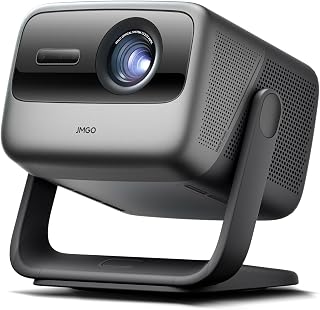
With 2800 ISO lumens and auto brightness plus wall color adaptation, this is aimed at readers who want the projector itself to compensate for inconsistent lighting conditions rather than relying purely on a high lumen count. The triple RGB laser engine backs that adaptability with accurate color, useful for mixed-light rooms where lumens alone don't guarantee a good picture.
Pros
- 2800 ISO lumens, above typical portable projector range
- Triple RGB laser for accurate color at high brightness
- Auto brightness and wall color adaptation
- Native 4K resolution with instant autofocus
Cons
- More brightness than needed for fully dark rooms
- Table/ceiling mounting only, less flexible than some portables
When you're calculating how many lumens you actually need, the JMGO N1S Ultra is a useful benchmark for the upper end of the consumer range. At 2800 ISO lumens, it sits well above the typical 1500 to 2400 lumen bracket most portable projectors occupy, which matters if your room has windows you won't always be able to block or curtains you don't want to close every movie night. The triple RGB laser engine isn't just about brightness output, it also keeps color accurate at that higher light level, so you're not trading punchy highlights for washed out tone. Features like auto brightness and wall color adaptation mean the projector can adjust its output on the fly depending on ambient light and surface, which is exactly the kind of real world lumen management a spec sheet number doesn't capture. If your use case involves any daytime viewing or a living room that's never fully dark, this is the lumen tier to be looking at.
Display Technology: Triple RGB Laser, 4K Native (3840 x 2160), 2800 ISO Lumens, 1600:1 Contrast Ratio
Connectivity: HDMI 2.1 with eARC, USB 2.0, Bluetooth, Wi-Fi, 3.5mm Audio Jack
Throw Distance: Minimum 5.2 feet, Maximum 25.1 feet, Supporting 60-300 inch image sizes
Smart Features: Google TV, Google Assistant voice control, Chromecast built-in, 3D TOF autofocus, real-time keystone correction, brightness and wall color adaptation
Audio: 20W dual speakers, Dolby Digital Plus, 45Hz bass response
Design: 9.57L x 8.27W x 9.37H inches, 9.9 pounds, portable with adjustable gimbal
Durability: 30,000-hour laser lifespan, 1-year manufacturer warranty
Projector Buying Guide: Lumens and What Else Matters
Room Brightness and Ambient Light
A completely dark, dedicated theater room can look stunning at 1,000 to 1,500 lumens. But most people watch in living rooms with windows, overhead lights, or both. For those spaces, you want at least 2,000 lumens, and ideally closer to 3,000 or more.
The right projector mount can also affect perceived brightness by optimizing throw angle and reducing light scatter. The AWOL VISION Aetherion Max 4K Projector leads the pack here with 3,300 ISO lumens from an RGB triple-laser engine, making it genuinely usable in open-plan living rooms without blackout curtains. The ViewSonic LS740HD 1080P Laser Projector pushes even further with 5,500 ANSI lumens, designed for high-ambient-light environments like classrooms and large meeting halls.
Screen Size and Throw Distance
Larger screens spread the same amount of light across a bigger area, which makes the image appear dimmer. Going from a 100-inch screen to a 150-inch screen at the same lumen output will noticeably reduce perceived brightness. Plan to compensate with more lumens or a high-gain ambient-light-rejection screen.
Short-throw and ultra-short-throw models solve part of this problem by sitting close to the screen. The BenQ TH671ST 3000 Lumens 1080p Short Throw Home delivers a 100-inch image from just five feet away. For ultra-short-throw setups at 200 inches, the AWOL VISION Aetherion Max uses a 0.2:1 ratio and sits inches from the wall, keeping brightness density high across the entire massive image.
Light Source Type: Lamp vs. Laser
Traditional lamp projectors dim significantly over time, sometimes losing half their rated brightness within a few thousand hours. Laser projectors maintain their output far longer and deliver more accurate colors throughout their lifespan. That means the rated lumens on a laser model actually reflect what you will see after years of use.
Every projector on this list uses either a laser or a hybrid laser-LED light source. The NEBULA Cosmos 4K SE Portable Projector uses HybridBeam technology combining LED and laser for 1,800 ANSI lumens, a solid choice for dedicated dark rooms. The XGIMI HORIZON 20 4K RGB Triple Laser Home steps up to 3,200 ISO lumens with an RGB triple laser engine and a 100,000:1 contrast ratio for vivid images day or night. If you are also weighing display technology more broadly, our guide to the best OLED TV for gaming puts projectors in useful context against flat-panel alternatives.
Use Case: Movies, Sports, or Gaming
Movie watchers in dark rooms can get away with 1,200 to 1,800 lumens and prioritize contrast and color accuracy instead. The Dangbei Atom Portable Laser Projector at 1,200 ISO lumens is purpose-built for this, weighing under three pounds and projecting up to 180 inches in a darkened room.
Sports fans and gamers who watch during the day need substantially more output. The Dangbei DBOX02 Laser Projector 4K GTV delivers 2,450 ISO lumens with ALPD technology that suppresses the speckle effect common in laser projectors, keeping fast-moving content sharp and vivid. For competitive gaming specifically, the JMGO N1S Ultra 4K Triple Laser Projector offers 2,800 ISO lumens alongside a gimbal-mounted design for flexible room placement. You can also compare projector gaming performance against dedicated displays in our best 4K TVs for gaming guide.
Final Thoughts
For most households, a projector in the 2,500 to 3,300 ISO lumen range hits the sweet spot between daytime usability and cinematic image quality. If you want the most capable all-around laser TV for a bright living room, the AWOL VISION Aetherion Max 4K Projector delivers class-leading brightness, contrast, and a zero-compromise gaming feature set. If portability and a dark-room home theater experience are your priority, the Dangbei Atom Portable Laser Projector packs genuine laser quality into a form factor light enough to carry between rooms.
Frequently Asked Questions
How many lumens do you need for a projector in a bright room?
For a living room with open windows or overhead lighting, aim for at least 2,500 to 3,500 lumens. RGB triple-laser models like the XGIMI HORIZON 20 and the AWOL VISION Aetherion Max are specifically engineered to hold up under ambient light conditions that would wash out a standard lamp projector. Pairing a high-lumen projector with an ambient-light-rejection screen makes a significant additional difference.
Is 1,000 lumens enough for a home projector?
In a fully darkened room with a screen under 100 inches, 1,000 lumens can produce a watchable image. However, most buyers find that number limiting in practice since any stray light immediately degrades the picture. In 2026, laser projectors at 1,200 lumens and above offer a noticeably better experience for the same investment.
What is the difference between ANSI lumens and ISO lumens?
Both measure brightness output, but ISO lumens use a newer international standard that tends to produce slightly lower numbers than the older ANSI measurement for the same projector. When comparing projectors, make sure you are comparing the same measurement type. A projector rated at 3,000 ISO lumens and one rated at 3,000 ANSI lumens may not actually output the same amount of light.
Does a higher lumen rating always mean better picture quality?
Not necessarily. Brightness and picture quality are related but separate factors. A high-lumen projector with poor contrast can look flat and washed out even in a dark room. Contrast ratio, color gamut, and tone mapping all shape the final image as much as raw brightness does. For a full home theater setup, pairing the right projector with quality audio matters too. Our guide on whether a soundbar needs a subwoofer is a useful next step once your display choice is locked in.
Common questions
How should you compare ANSI lumens versus brightest claims on the box?
ANSI lumens are the number to trust, since brightest claims on packaging often use LED or peak figures that inflate real output. The NEBULA Cosmos 4K SE lists 1,800 ANSI Lumens specifically, which is a standardized measurement taken under controlled conditions. The BenQ TH671ST and Dangbei models list lumens without the ANSI label, so treat those figures as rougher estimates rather than directly comparable numbers.
Why does room light matter more than screen size when choosing a projector?
Room light matters more than screen size because a dim image stays washed out no matter how large the picture is. A bright projector like the BenQ TH671ST at 3000 lumens holds up better with some ambient light, while the Dangbei Atom at 1200 lumens needs a darker room to look sharp. Screen size only affects how spread out the light is, not whether the room is dark enough.
Does watching in daylight need far more lumens than a dark room?
Yes, daylight viewing needs far more lumens than a dark room, since sunlight competes directly with the projected image. A dark home theater can look great with the Dangbei Atom at 1200 lumens or the NEBULA Cosmos 4K SE at 1800 ANSI Lumens, but a sunlit living room calls for something closer to the BenQ TH671ST at 3000 lumens, and even that will look washed out with curtains open.






Write Your Review
No reviews yet. Be the first to share your experience!