

You’ve been eyeing a new projector, and the resolution question keeps coming up: is a 4K projector worth it over 1080p, or is the jump in quality not noticeable enough to justify the difference? The answer depends heavily on screen size, viewing distance, and what you’re watching. For most home theater setups with screens above 100 inches, 4K delivers a noticeably sharper, more detailed image that 1080p simply can’t match. If you’re building a dedicated movie room or upgrading a living room setup, this guide is for you. For reference, our full roundup of the best laser projector picks for home cinema and gaming covers even more options across budgets and use cases.
We evaluated five projectors across different categories: a professional 1080p laser model, ultra-short-throw 4K options, a versatile throw projector, a gimbal-mounted smart unit, and a gaming-focused 4K powerhouse. The goal is to give you a clear picture of where 4K earns its place and where 1080p still holds its own.
Quick answer
This guide compares 5 picks, with Epson Pro EX11000 4600 Lumens Laser Projector ranked first. JMGO N1S Ultra 4K Triple Laser Projector with Google has the most customer reviews.
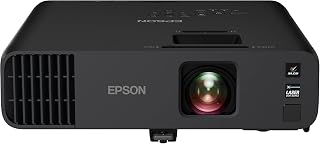
For readers weighing whether to skip 4K altogether, this one makes a case for 1080p done well. Its 3-chip 3LCD laser engine outputs true 1920 x 1080 without color wheel artifacts, and built-in Wi-Fi plus a lightweight portable build mean setup is painless. If budget and simplicity matter more than pixel count, this covers the fundamentals solidly.
Pros
- Native 1080p resolution
- Bright 4,600-lumen output
- Laser light source rated for 20,000 hours
- Built-in Wi-Fi, speaker, and Miracast
Cons
- No native 4K resolution
- Maximum contrast trails premium models
The Epson Pro EX11000 is the practical 1080p choice when a 4K upgrade is not essential. Its native 1920 x 1080 resolution suits presentations, training sessions, video meetings, and everyday large-screen viewing, while 4,600 lumens of brightness makes it better suited to offices and meeting rooms where ambient lighting must remain on. The 3-chip 3LCD system provides full RGB color, and the laser light source offers up to 20,000 hours of operation without lamp replacements. It also includes built-in Wi-Fi, Miracast mirroring, a 16-watt speaker, and dual HDMI inputs, covering common workplace needs without requiring external speakers. Setup features include 1.32 to 2.12 feet of throw distance, 1.6x optical zoom, and automatic vertical correction. Although it cannot deliver native 4K, that limitation is reasonable for users whose primary requirement is a bright, dependable business projector rather than premium home cinema detail.
Display and Image Quality
Native Resolution: 1920 x 1080 (Full HD)
Maximum Image Size: 310 inches
Minimum Image Size: 31 inches
Brightness: 4,600 lumens (color and white)
Contrast Ratio: Up to 100,000:1
Throw Distance: 1.32 to 2.12 feet
Optical Zoom: 1-1.6x
Light Source and Power
Light Source: Laser
Operating Life: 20,000 hours
Power Consumption: 272 watts
Connectivity and Audio
Inputs: 2x HDMI, USB, VGA, Ethernet
Wireless: Built-in Wi-Fi with Miracast
Speaker: 16 watts built-in
Video Encoding: H.264, H.265
Physical and Warranty
Weight: 9.5 pounds
Color: Black
Form Factor: Portable, tabletop mount
Warranty: 1-year limited warranty
Model Number: V11HA72220
Choose the Pro EX11000 for offices, meeting rooms, training spaces, and organizations that value brightness, low-maintenance laser operation, and straightforward connectivity. It is especially appropriate when 1080p content and presentations are the main priorities. Skip it if native 4K is essential for detailed video, large-screen gaming, or a dedicated home theater. Its 100,000:1 maximum contrast is solid, but it may not satisfy buyers who prioritize deep blacks and fine shadow detail over professional practicality and bright color output.

For readers set on 4K who also want daytime usability, the ultra short throw design and 3300 ISO lumens address the biggest 1080p-versus-4K debate point: visibility in bright rooms. PixelLock keeps the native 3840 x 2160 image stable without a precise install distance, and Dolby Vision gaming support with 1ms response makes the resolution jump useful for more than movies.
Pros
- Native 3840 x 2160 with 110% Rec.2020 delivers visible 4K detail at daytime brightness
- Ultra-short 0.2:1 throw eliminates ceiling mounting and installation complexity
- 1ms latency at 240Hz with three HDMI 2.1a and DisplayPort 1.4a for gaming
- 6,000:1 contrast with 7-level iris system produces shadow detail that justifies resolution jump
Cons
- Requires ALR screen investment to maximize contrast and resolution advantage in bright rooms
- Demands calibration and proper setup to reach stated performance ceiling
When weighing 4K against 1080p for large-screen projection, the AWOL Vision Aetherion Max demonstrates exactly why native resolution matters. Its 3840 x 2160 display delivers four times the pixel density of 1080p across screens up to 200 inches, preserving fine detail and eliminating the soft, pixelated edges that plague lower-resolution projectors at this scale. The triple laser system produces 3,300 ISO lumens with 110% Rec.2020 coverage, ensuring the added resolution remains visible in typical living room lighting rather than washing out. Ultra-short throw 0.2:1 placement means the unit sits inches from the wall, avoiding the ceiling installation and long throw distances that complicate traditional 4K projectors. The 6,000:1 contrast ratio and Noirscene System II iris deliver the shadow separation needed to make 4K content look genuinely sharper, not just technically higher-res. For gaming, 1ms latency at 240Hz with three HDMI 2.1a ports and DisplayPort 1.4a justifies the resolution jump for next-gen console and PC titles. Anti-RBE technology addresses the rainbow artifacts that distract from detail in single-chip laser systems, critical when resolution is the priority.
Display Technology: Triple laser RGB, 4K native (3840x2160), 25,000-hour lifespan
Brightness and Contrast: 3,300 ISO lumens, 6,000:1 native contrast, 60,000:1 viewing contrast
Color Performance: 110% Rec.2020 color gamut, Dolby Vision, HDR10+, HDR10, HLG support
Gaming Performance: 1ms input latency at 240Hz, VRR, ALLM, Dolby Vision Gaming, native 24/48/50FPS with MEMC
Throw Ratio: 0.2:1 ultra-short throw, 0.5 to 20.19 feet throw distance, 80 to 150 inch screen size
Connectivity: 3x HDMI 2.1a, DisplayPort 1.4a, remote control, smartphone app, voice control
Build and Efficiency: 300W power consumption, floor mount, 2-year warranty, up to 500kWh annual savings vs comparable large-screen TV

Anyone convinced 4K is worth the jump should look at the native 3840 x 2160 resolution paired with triple laser output rated at 3200 ISO lumens, bright enough for rooms with some ambient light. Dolby Vision and HDR10+ support add real contrast benefits over 1080p, while Google TV built in removes the need for a separate streaming box.
Pros
- Native 4K resolution
- 3200 ISO lumens with triple-laser RGB
- 100,000:1 contrast ratio
- Gaming features include 240Hz, VRR, and ALLM
Cons
- Large image needs substantial room space
- Premium positioning exceeds basic 1080p needs
The XGIMI HORIZON 20 gives buyers a strong reason to move beyond 1080p. Its native 3840 x 2160 resolution, RGB triple laser light source, and 3200 ISO lumens target a premium home entertainment experience rather than basic projection. A 100,000:1 contrast ratio supports the case for richer blacks and more detailed imagery, while support for IMAX Enhanced, Dolby Vision, and HDR10+ expands compatibility with modern 4K content. Flexible lens shift and optical zoom help position the projector without relying on keystone correction. Built-in Google TV, Harman Kardon speakers, Wi-Fi, Bluetooth, HDMI, and USB make it a relatively complete entertainment system. Pro-level gaming features include 1ms response time, 240Hz operation, VRR, and ALLM. It is portable at 4.9 kilograms and supports displays up to 300 inches. This is best suited to buyers who will use a large screen regularly and value image quality, gaming features, and integrated streaming over 1080p affordability.
Optical Performance: Native resolution 3840x2160 (4K), 3200 ISO lumens brightness, 100,000:1 contrast ratio, maximum image size 300 inches, minimum image size 40 inches.
Laser Technology: 20x RGB triple laser engine with lossless optics, flexible lens shift, and optical zoom. Throws from 1.06 to 5.31 meters with 15cm vertical keystone correction.
Audio and Smart Features: Built-in Harman Kardon speakers, integrated Google TV with licensed Netflix, Bluetooth, HDMI, USB, and Wi-Fi connectivity. Supports H.264 and H.265 video encoding.
Gaming and Display: 240Hz refresh rate, 1ms input lag response time, VRR and ALLM support. Compatible with gaming consoles, laptops, smartphones, televisions, and speakers.
Power and Build: 180-watt consumption, supports 220V and 240V input, weighs 4.9 kg, floor-mount design. Includes remote control, adapter, user manual, and warranty card.
Buy the HORIZON 20 for a dedicated home theater, large living room, or gaming setup where native 4K resolution and premium picture processing justify spending more than on a 1080p projector. It also suits enthusiasts who want triple-laser color, high contrast, flexible placement, and built-in streaming and audio. Skip it for small rooms, budget-focused use, or situations where native 4K detail will not materially improve the experience. The maximum 300-inch image requires substantial space and a throw distance exceeding 17 feet.
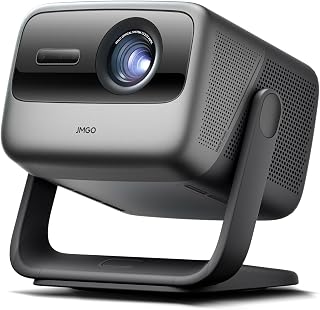
This model answers the 4K question with automation that makes the upgrade effortless. Instant autofocus and auto keystone correction mean the native 3840 x 2160 image stays sharp without manual tweaking, and the 2800 ISO lumen triple laser source handles moderately lit rooms. For readers who want 4K clarity without a fussy setup process, it fits.
Pros
- Native 4K RGB triple laser
- Built-in Google TV and 20W speaker
- Automatic focus, keystone, and alignment
- Supports 3D and flexible installation
Cons
- Lower brightness than 3200-lumen rival
- Not optimized for exceptionally dark scenes
The JMGO N1S Ultra is a strong 4K option for users who want detailed home entertainment without a complex installation. Native 3840 x 2160 resolution is paired with an RGB triple laser system and 2800 ISO lumens, giving it the specifications needed for large-screen movies, sports, gaming, and presentations. Built-in Google TV provides a direct route to streaming, while the 20-watt speaker offers integrated audio. Setup automation is a major advantage: instant autofocus, auto keystone correction, auto screen alignment, auto brightness, and wall color adaptation can simplify placement. Lossless zoom preserves the native image dimensions during adjustments, and Smart Eye Protection plus Smart Object Avoidance add convenience around viewers and objects. The projector supports Bluetooth, HDMI, USB, and Wi-Fi, along with Blu-ray 3D, Dolby Digital Plus, and table, ceiling, front, and rear projection arrangements. For buyers evaluating 4K over 1080p, the N1S Ultra emphasizes native detail, color technology, and helpful automatic setup rather than a simple specification upgrade.
Display Technology: Triple RGB Laser, 4K Native (3840 x 2160), 2800 ISO Lumens, 1600:1 Contrast Ratio
Connectivity: HDMI 2.1 with eARC, USB 2.0, Bluetooth, Wi-Fi, 3.5mm Audio Jack
Throw Distance: Minimum 5.2 feet, Maximum 25.1 feet, Supporting 60-300 inch image sizes
Smart Features: Google TV, Google Assistant voice control, Chromecast built-in, 3D TOF autofocus, real-time keystone correction, brightness and wall color adaptation
Audio: 20W dual speakers, Dolby Digital Plus, 45Hz bass response
Design: 9.57L x 8.27W x 9.37H inches, 9.9 pounds, portable with adjustable gimbal
Durability: 30,000-hour laser lifespan, 1-year manufacturer warranty

Pros
- Exceptional gaming performance: 240Hz refresh rate and 4.2ms input lag give you a real competitive edge
- Bright laser light source delivers consistent, vivid images in rooms with ambient lighting
- Versatile: Excels at both fast-paced gaming and immersive movie watching with HDR support
- Compact throw ratio lets you achieve massive 100-inch displays in smaller spaces
- Specialized golf simulation mode adds tangible value for enthusiasts of that niche
Cons
- Premium price point puts it out of reach for casual users or budget-conscious buyers
- 4K gaming caps at 1440p/120Hz, so true 4K gaming requires accepting lower frame rates
- Laser projectors can have longer startup times and may require regular maintenance compared to lamp-based models
The ViewSonic LX700-4K is a premium laser projector engineered for two distinct audiences: serious gamers seeking competitive performance and home theater fans who refuse to compromise on image quality. This is not a casual projector, it's a specialized tool for high-end installations where speed and visual fidelity both matter.
What sets this projector apart is how it balances seemingly conflicting demands. The 240Hz refresh rate and 4.2ms input lag deliver the responsiveness that competitive gamers crave, while the 4K UHD resolution, HDR support, and proprietary SuperColor technology ensure that movies and cinematic games look absolutely stunning. The 4,000 ANSI lumens brightness means you're not confined to dark rooms, making it practical for living spaces with ambient light.
Build and design reflect its premium positioning. The laser light source is inherently more reliable than traditional lamps, offering longer service life and more consistent brightness over time. The flexible mounting options, including 360-degree projection and curved screen compatibility, give installers real freedom. The compact throw ratio is genuinely useful, allowing a 100-inch image from just 7.7 feet away, which matters in real homes with real space constraints.
There are honest tradeoffs to consider. The price is steep, justifiable only if you genuinely need both gaming performance and 4K quality. Native 4K gaming tops out at lower frame rates, so you're actually projecting 1440p at 120Hz for gaming, with full 4K available for content. Laser projectors also tend to have longer startup times than lamp-based alternatives.
The verdict: This is the right projector if you're a gamer who also loves movies, or a theater enthusiast willing to optimize for gaming performance. For casual users or single-purpose installations, there are more affordable options. For those at the intersection of both worlds, the LX700-4K delivers genuine excellence.
The 240Hz refresh rate with 4.2ms input lag puts this projector in rare territory for gaming-focused projection. In fast-paced titles like first-person shooters, you'll notice smoother motion and more responsive controls compared to standard 60Hz projectors, giving you a tangible competitive advantage.
Native 4K gaming runs at 1440p/120Hz, which represents a practical balance between visual quality and frame rate. If you're streaming 4K content or playing slower-paced games, the full 4K resolution is available. Xbox compatibility is native and optimized, with CEC control integration for seamless console operation.
The 4,000 ANSI lumens brightness is genuinely useful for rooms with windows or ambient lighting, a scenario where many projectors struggle. The laser light source maintains consistent brightness and color accuracy throughout the lifespan, unlike traditional lamps that fade over time.
HDR and HLG support unlock depth and detail in modern content. The SuperColor technology expands the color gamut, delivering richer greens, blues, and reds. The 1.3x optical zoom and advanced keystone adjustment ensure that images fill your screen perfectly regardless of mounting constraints.
What to Look for When Choosing Between 4K and 1080p Projectors
Resolution and Screen Size Sweet Spot
At screen sizes under 100 inches and typical viewing distances of 10 feet or more, the difference between 4K and 1080p becomes harder to perceive. But push that screen to 120, 150, or even 200 inches, and 4K’s extra pixel density becomes immediately obvious in fine detail like facial textures, fabric patterns, and on-screen text.
The AWOL VISION Aetherion Max 4K Projector and the XGIMI HORIZON 20 4K RGB Triple Laser Home both target large-screen viewing above 100 inches, where their 4K output genuinely shines. In contrast, the Epson Pro EX11000 3-Chip 3LCD Full HD 1080p proves that 1080p with exceptional brightness and color accuracy can still be a compelling choice for business presentations and conference rooms where pixel-perfect sharpness matters less than visibility.
Brightness and Ambient Light Performance
Lumens matter enormously, especially if your room isn’t fully light-controlled. A 4K image looks stunning in a dark room, but if you’re watching in a living room with windows, you need a projector that can compete with ambient light. The ViewSonic LX700-4K 4K UHD Laser Gaming Projector delivers 4,000 ANSI lumens, making it one of the brighter options here for mixed-light environments.
The AWOL VISION Aetherion Max takes a different approach with its RGB triple-laser system and 3,300 ISO lumens rated for daytime viewing, covering 110% of the Rec.2020 color gamut without needing blackout curtains. For a deeper look at how display brightness affects your overall setup, see our guide on the best 4K TVs for gaming, which covers brightness benchmarks across display technologies.
HDR Support and Color Accuracy
4K projectors earn their value when they pair high resolution with proper HDR processing. Dolby Vision, HDR10+, and wide color gamut support transform the viewing experience in ways that raw pixel count alone cannot. The XGIMI HORIZON 20 4K RGB Triple Laser Home is IMAX Enhanced and Dolby Vision certified, while the AWOL VISION Aetherion Max supports Dolby Vision Gaming for console players.
The JMGO N1S Ultra 4K Triple Laser Projector brings ΔE less than 1 color accuracy via its tricolor laser optics, which is a measurable indicator of how faithfully it reproduces the colors a director intended. That level of color precision is where 4K projectors pull further ahead of budget 1080p alternatives.
Gaming and Low-Latency Requirements
If gaming is a priority, input lag and refresh rate become as important as resolution. Both the ViewSonic LX700-4K and the XGIMI HORIZON 20 offer 1ms response times and 240Hz support, which puts them in the same category as competitive gaming monitors. The AWOL VISION Aetherion Max adds VRR, ALLM, and three HDMI 2.1a ports so you can keep a PS5, Xbox Series X, and a PC connected simultaneously.
For comparison, if you’re weighing a projector against a flat-panel display for gaming, our overview of the best OLED TVs for gaming covers where OLED still has the edge in contrast and response. Pairing any of these projectors with the right mount is also worth planning early. Our best projector mount guide walks through stable installation options for different room configurations.
Final Thoughts
For most home theater enthusiasts projecting at 100 inches or larger, a 4K projector is genuinely worth the upgrade over 1080p, especially when it pairs high resolution with laser brightness and HDR support. If you want a flagship experience with daytime-ready brightness and ultra-short-throw convenience, the AWOL VISION Aetherion Max 4K Projector is the standout pick. For buyers who want a more versatile throw projector with excellent smart TV integration and strong gaming credentials at a more accessible point, the JMGO N1S Ultra 4K Triple Laser Projector delivers impressive performance and thoughtful design in a compact form factor.
Frequently Asked Questions
Is a 4K projector actually better than 1080p for movies?
For screens above 100 inches, yes, the difference is clearly visible. 4K delivers four times the pixel count of 1080p, which means sharper fine details, more natural textures, and a more immersive picture on large screens. When you add proper HDR and wide color gamut support, the overall image quality gap widens further.
Do you need 4K content to benefit from a 4K projector?
Not entirely. Modern 4K projectors include upscaling engines that improve the appearance of 1080p and even 720p content. That said, native 4K sources from streaming platforms, 4K Blu-ray, or gaming consoles will show the most dramatic improvement. In 2026, 4K content availability on major streaming platforms is broad enough that you won’t struggle to find material worth projecting.
Is a 1080p projector still worth buying in 2026?
Absolutely, for the right use case. A high-quality 1080p laser projector like the Epson Pro EX11000 3-Chip 3LCD Full HD 1080p offers exceptional brightness, rock-solid color accuracy, and a virtually maintenance-free light source, making it ideal for business environments or conference spaces. If screen size stays below 100 inches and content is primarily presentations or video calls, 1080p remains a very practical choice. For a broader look at display comparisons, our refresh rate and frame rate guide covers how resolution interacts with other image quality factors.
How far should you sit from a 4K projector screen?
The general guideline is to sit at a distance roughly 1.5 times the screen’s diagonal measurement. At a 120-inch screen, that places ideal seating around 15 feet away. At that distance, 4K’s extra resolution is clearly perceptible compared to 1080p, which is part of why larger screen setups benefit most from the resolution upgrade.
Common questions
What is the difference between native 4K versus accepts a 4K signal?
Native 4K means the projector has 3840 x 2160 physical pixels on its imaging chip, producing full detail without interpolation. Accepting a 4K signal just means the input supports a 4K source, but the projector may downscale it to a lower native resolution like 1080p. Models such as the JMGO N1S Ultra, AWOL VISION Aetherion Max, and XGIMI HORIZON 20 list native 3840 x 2160 resolution, so they display true 4K rather than simply accepting a 4K input and rescaling it.
How do screen size and seating distance decide if 4K matters?
Screen size and seating distance decide it because the human eye can only resolve so much detail at a given distance. On larger screens, like the 200 inch Laser TV setup supported by the AWOL VISION Aetherion Max, sitting closer makes extra pixel density from native 4K more noticeable. On smaller screens or farther seating, a sharp 1080p unit like the Epson Pro EX11000 can look nearly as detailed, since the eye can't fully resolve the 4K difference at that range.
Does the content you actually watch need to be 4K?
Not always, since picture quality depends on more than resolution alone. If you mostly watch 4K streaming, Blu-ray, or gaming content with HDR10+ or Dolby Vision support, a native 4K model like the XGIMI HORIZON 20 or JMGO N1S Ultra will show the extra detail. If your content is mainly 1080p broadcast or older media, a dedicated 1080p projector such as the Epson Pro EX11000 can still deliver a bright, sharp image without paying for unused 4K resolution.





Write Your Review
No reviews yet. Be the first to share your experience!