

You sit down to mix a track and something sounds off. The low end feels muddy, the vocals sit wrong, and you keep second-guessing every decision. More often than not, the problem is not your ears or your technique; it is the headphones. The right pair of studio headphones gives you an accurate, uncolored picture of your mix so you can make confident decisions every time. If you also want a solid desktop audio setup to complement your studio, check out our guide to the best 2.1 speakers for desktop.
This guide covers seven professional-grade options evaluated across sound accuracy, comfort, isolation, and build quality. Whether you are tracking in a loud room, mixing in an untreated space, or producing on the go, there is a pair here that fits your workflow.
Quick answer
This guide compares 7 picks, with Audio-Technica ATH-M50x Professional Studio Monitor ranked first.

Audio-Technica ATH-M50x Professional Studio
A detachable cable setup means you can swap in a longer or coiled cord without replacing the whole unit, which matters when a mixing chain involves moving around a room full of gear. Backed by a 2 year parts and labor warranty, this pick suits anyone who wants studio monitor accuracy without worrying about cable wear becoming a point of failure over time.
Pros
- Extended 20 Hz to 28 kHz frequency range for detailed mixing
- Detachable cable simplifies replacement
- 90-degree swiveling earcups for one-ear monitoring
- Durable aluminum build for daily studio use
Cons
- Wired-only design limits mobility
- No water resistance for outdoor or humid environments
The ATH-M50x sits near the top of this list because it balances mixing accuracy with the kind of practical features engineers actually use day to day. The 45mm drivers with copper-clad aluminum voice coils stretch across a 20 Hz to 28 kHz range, giving you extended detail on both ends of the spectrum, which matters when you're chasing low-end rumble or sibilance in a mix. Unlike some studio staples, this one uses a detachable cable, so a damaged cord doesn't sideline your session. The 90-degree swiveling earcups let you drop one ear to check room sound against your headphone mix, a small feature that speeds up real workflow. Aluminum housing and reinforced earpads suggest a build meant for daily studio wear rather than occasional use. At 38 ohms and 99 dB sensitivity, it drives easily from interfaces and everyday devices alike, so you're not locked into specialized gear. For mixing work where you want proven accuracy plus a few quality-of-life upgrades over older designs, this is a strong, well-rounded pick.
Driver: 45mm dynamic driver with rare earth magnets and copper-clad aluminum voice coils
Frequency Response: 20 Hz to 28 kHz
Impedance: 38 ohms
Sensitivity: 99 dB SPL
Design: Circumaural (over-ear), closed-back
Earcups: 90-degree swiveling for one-ear monitoring
Connectivity: 3.5mm wired jack with detachable cable
Construction: Aluminum enclosure with professional-grade earpads and headband
Warranty: 2 years on parts and labor
Weight: Professional-grade durable design optimized for studio use

This is the only entry here that ships with both mixing and producing ear pads, letting a mixer swap pad type depending on whether they're doing critical stereo mixing or general production work. The included 1.8m cable and jack adaptor round out a kit built specifically around the demands of a mixing workflow rather than general listening.
Pros
- Uncolored 5 to 36,000 Hz response for honest mixing
- Wide soundstage from open-back architecture
- Lightweight, ergonomic design for long sessions
- Swappable mixing and producing ear pads, both washable
Cons
- Open-back design leaks sound and lacks isolation
- Wired only, limiting studio mobility
For mixing engineers who need to hear every flaw before a track goes out, the HD 490 PRO is built specifically for that job. The open-back design and Sennheiser's Open-frame Architecture create a wide soundstage while keeping harmonic distortion low, which helps you place elements in a mix with more spatial accuracy than closed-back headphones typically allow. The uncolored 5 to 36,000 Hz frequency response is the real selling point here: it gives you an honest read on your mix rather than a flattering one, which is exactly what you want when making final decisions. The included low-frequency cylinder system keeps bass defined rather than smeared, so low-end choices translate better once the mix hits other playback systems. At 200g with ergonomic engineering, they're built for the long mixing sessions this article is about, and the dual ear pad system lets you switch between mixing pads for midrange clarity and producing pads for a different tonal perspective depending on the task at hand. Both pads are washable and replaceable, which matters over years of daily use.
Audio Specifications: Frequency Response: 5 Hz to 36 kHz, Sensitivity: 105 dB, Impedance: 130 ohm, Driver Type: Dynamic Driver. These specifications indicate excellent sensitivity for clean amplification and wide frequency coverage for professional audio work.
Physical Design: Weight: 200g, Enclosure Material: Aluminum, Earpiece Shape: Over-Ear (Circumaural), Headband: Adjustable. The lightweight aluminum construction balances durability with comfort during extended wear.
Connectivity: Wired connection via 3.5mm jack with included 6.5mm adapter, 1.8m cable with patented coil structure that blocks cable-borne noise. Right and left ear jacks allow flexible studio routing and configuration.
Included Accessories: 1.8m cable, 3.5mm to 6.5mm jack adapter, mixing ear pads, producing ear pads. Warranty: 2-year manufacturer coverage. Packaging: FSC-certified, forest-friendly materials.
Ideal for mixing and mastering engineers who need transparent, uncolored sound for final mix decisions and who work in a controlled room rather than needing isolation. The dual pad system also suits anyone who wants flexibility between mixing and producing tonal perspectives. Skip these if you need to track vocals or instruments, since the open-back design leaks sound and picks up room noise, or if you need wireless mobility.

Open-back construction gives this pair a wider, more natural soundstage, which helps when judging spatial placement and reverb tails during a mix. Bundled with both a cable and adapter, it's suited to a treated room setup where bleed isn't a concern and a mixer wants a more transparent, less fatiguing listen across long sessions.
Pros
- Wide 6Hz-38kHz range reveals mix detail accurately
- E.A.R. design improves soundstage and instrument separation
- Polymer-blend membrane keeps bass controlled, not bloated
- Lightweight 600g build with breathable velour earcups
Cons
- Firm clamping force causes initial discomfort, especially with glasses
- Open-back design leaks audio and lets in ambient noise
A mix engineer's job is to hear what's actually in the track, not a flattering version of it, and that's exactly where the HD 560S earns its spot on this list. The extended 6Hz to 38kHz frequency range and E.A.R. design, which angles the 38mm drivers to match your ear's natural geometry, translate into a wide, accurate soundstage that makes panning decisions and instrument separation easy to judge by ear. The polymer-blend transducer membrane keeps low end controlled rather than exaggerated, so bass-heavy mixes don't trick you into under-EQing. Open-back construction is the real reason it belongs in a mixing shortlist: it avoids the artificial resonance closed cans can introduce, giving a more neutral read on stereo width and depth. Clamping force is firm out of the box and needs a break-in period before long sessions feel comfortable, but the velour earcups and 600g weight keep fatigue low once that settles. For anyone mixing in a quiet, treated room, this is a serious analytical tool backed by a 2-year warranty.
Audio Performance: Frequency response 6Hz to 38kHz, 38mm dynamic drivers, 110dB sensitivity, 120 ohm impedance. The extended range captures sub-bass detail while the linear driver excursion ensures tight, controlled low-end performance.
Design and Build: Open-back over-ear design with velour earcups. Weight 600g. Features ergonomic acoustic refinement (E.A.R.) driver tilt for natural ear alignment. Detachable wired cable with 6.3mm jack and included 3.5mm adapter.
Connectivity: Wired only, compatible with desktops, music players, and any device with 3.5mm or 1/4-inch audio output. Includes protective carrying packaging and owner's manual.
Warranty and Support: 2-year manufacturer warranty with EU spare parts availability throughout the warranty period.
Buy this if you mix in a quiet room or with headphones as your primary reference and want an honest, uncolored read on your low end and stereo image. Skip it if you mix in shared spaces, need isolation from background noise, or record while monitoring, since the open back leaks sound both ways. Also budget a couple of days for the headband to loosen if you wear glasses.

This model has been a broadcast and studio staple for decades, and it comes bundled with a protective case and coiled cable, making it easy to toss in a bag between sessions. For mixers who move between home setups and studio visits, that included case matters more than most spec sheets let on. The 90 day warranty is modest, but the design has proven itself over years of professional use.
Pros
- 40mm drivers deliver accurate, revealing sound for mixing
- Closed-back design isolates outside noise
- Rugged, folding build with gold-plated connectors
- Includes case and dual adapters for studio and consumer gear
Cons
- Non-detachable 9.8-foot cord limits mobility and repairability
- No active noise cancellation, only passive isolation
If your mixing setup needs a reference headphone that won't lie to you, the MDR7506 earns its reputation. Sound engineers have leaned on this model for decades precisely because the 40mm neodymium drivers and 10 Hz to 20 kHz range expose problems in a mix rather than flattering them. For this list, that's the whole point: mixing demands honesty over comfort, and the closed-back design blocks room noise so you can hear what's actually happening in the track. The folding design and included case make it practical for engineers who move between rooms or bring their own cans to a session. Gold-plated connectors and oxygen-free copper cabling reflect the kind of build that survives years on a studio shelf, not just a few months of casual use. It's not the newest technology on this list, but for mixing work specifically, familiarity and consistency matter more than novelty. Anyone who wants a headphone that studios have standardized on for a reason should have this on their shortlist.
Driver and Audio: 40mm dynamic drivers with neodymium magnets, frequency response 10 Hz to 20,000 Hz, 63 ohm impedance
Design: Closed-ear over-ear headphones, foldable construction, angular/rounded earpiece shape, weighs 8 ounces
Connectivity: Non-detachable 9.8-foot wired cord with gold-plated plugs, 1/4 inch and 1/8 inch dual adapters included
Included Items: Headphones, 9.8-foot audio cord, 1/4 inch adapter, protective soft case (9.6 ounces)
Warranty: 90-day manufacturer warranty, Sony authorized dealer support
Buy this if you want a proven, no-frills mixing reference that studios have trusted for years and you don't mind a fixed cable. Skip it if you need a detachable cord for easy replacement or plan to use these for casual, extended everyday listening, since the over-ear clamping force can tire you out on long sessions. Ideal for engineers who value consistency over comfort features.

Audio-Technica ATH-M20x Studio Monitor Headphones
Entry-level mixers often need a reliable pair without a steep learning curve or big investment, and this option delivers straightforward studio monitor sound with a fixed cable and 2 year parts and labor warranty. It works well as a first serious pair for someone building a home mixing setup who wants Audio-Technica's monitor voicing before stepping up to pricier models.
Pros
- Flat, neutral frequency response reveals mix issues clearly
- Lightweight 210g build reduces fatigue on long sessions
- Closed-back design offers effective sound isolation
- Long 9.8-foot cable allows flexible studio movement
Cons
- Lighter, less sturdy construction than pricier M-Series models
- Fixed cable rather than detachable design
Not every mixing setup needs a flagship price tag, and the ATH-M20x earns its spot on this list as the accessible entry point for anyone starting out. The 40mm drivers with copper-clad aluminum voice coils are tuned for low-frequency accuracy, and the 15 Hz to 20,000 Hz range delivers a flat, neutral signature that won't mask problems in your mix. That neutrality is exactly what a beginner mixing engineer needs: a headphone that reveals issues in a track instead of smoothing them over with hyped bass. The closed-back circumaural design provides real isolation, useful whether you're mixing in a noisy room or tracking vocals nearby. At 210 grams, it's light enough to wear through long mixing sessions without the ear or neck fatigue heavier models can cause. The 9.8-foot cable gives you room to move between a desk and a mixing console. It won't match the build heft of pricier M-Series models, but for anyone learning to mix and needing an honest, uncolored reference, it delivers where it counts.
Audio Driver: 40mm dynamic driver with rare earth magnets and copper-clad aluminum voice coils
Frequency Response: 15 to 20,000 Hz
Sensitivity: 96 dB/mW
Impedance: 47 ohms
Cable Length: 9.8 feet (2.99 meters), tangle-free with single-side exit
Connector: 3.5mm jack (standard headphone)
Connectivity: Wired only
Design: Over-ear circumaural closed-back
Weight: 210 grams
Materials: Copper-clad aluminum, neodymium, plastic
Warranty: 2 years on parts and labor
Compatible Devices: Desktops, laptops, music production equipment
Good for beginner producers and engineers who need an honest, neutral reference for learning to mix without overspending. Also fits anyone who wants a lightweight headphone for long sessions. Skip it if you want the sturdier build or extended frequency range of higher-tier models, since this one trades some construction quality for accessibility.
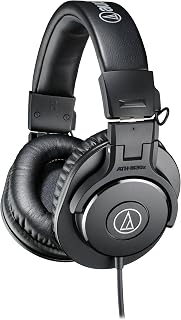
With 38 ohm impedance, this pair is easy to drive from an audio interface or basic headphone amp, so mixers without high-powered gear still get accurate playback. The over-ear form factor keeps a consistent seal during long sessions, which helps when judging low end and stereo imaging matters as much as comfort over multi-hour mixing stretches.
Pros
- Tuned mid-range helps with critical mix decisions
- Strong passive isolation for untreated rooms
- Collapsible, single-side cable design for portability
- Durable build suited to daily studio use
Cons
- Snug fit may tire larger heads over long sessions
- Single-sided cable can feel slightly unbalanced
If you're building a mixing setup and need a second pair of ears to sanity-check your masters, the ATH-M30x earns its spot on this list as the budget-friendly reference option. The 40mm drivers with rare earth magnets and copper-clad aluminum voice coils are specifically tuned for mid-range definition, which matters most when you're deciding whether a vocal or lead instrument sits correctly in a mix. Since these are studio monitors rather than consumer headphones, they avoid the bass-boosted coloration that can trick you into misjudging a mix on other headphones. The over-ear circumaural design seals well, so you can work in a room without your monitors bleeding into recordings or your judgment. The collapsible frame and single-side cable keep your workspace tidy, which counts for something when you're moving between a desk and a vocal booth. For anyone building a mixing chain without breaking the budget on a reference headphone, this is a sensible entry point that still respects the demands of critical listening work.
Driver: 40 millimeter with rare earth magnets and copper-clad aluminum voice coils
Design: Circumaural over-ear headphones
Impedance: 38 ohms
Form Factor: Over-ear, collapsible
Cable: Single-side exit
Color: Black
Best for beginner to intermediate mixers who want a dedicated monitoring headphone without spending on flagship studio gear, plus anyone doing quality control checks before a mix goes out the door. Skip these if you have a larger head, since the circumaural fit runs snug during long sessions, or if you need wireless freedom. Also skip if you're chasing the widest possible soundstage, since closed-back designs like this one trade some spaciousness for isolation.

A collapsible design and included screw-type quarter inch adaptor make this pair practical for mixers who split time between a home rig and studio consoles with different jack sizes. Closed-back isolation helps when tracking alongside mixing duties in the same room, and the 2 year warranty backs up a build that's known for surviving daily studio handling.
Pros
- Warm, non-fatiguing sound for long mixing sessions
- 32 dB passive isolation without batteries
- Wide 8 Hz to 25 kHz frequency response
- Replaceable pads, cable, and padding extend lifespan
Cons
- Wired coiled cable restricts mobility
- Isolation quality depends on individual ear seal
For mixing engineers who spend hours at a time with headphones on, the HD 280 Pro solves a problem the flashier options don't: fatigue. The warm, natural dynamic driver sound doesn't wear on your ears across long sessions, which is exactly what you need when you're auditioning the same mix for the tenth time in a row. The 32 dB passive noise attenuation is a real asset in home studios or shared spaces, letting you isolate from room noise without relying on batteries or active circuitry that can introduce its own coloration. An 8 Hz to 25 kHz frequency response gives you a genuinely wide window into your mix, catching low-end rumble and high-frequency detail that cheaper headphones smooth over. The user-replaceable ear pads, headband padding, and cable mean this pair can stay in rotation for years rather than getting swapped out when one part wears down. With over 11,000 positive reviews backing its reputation, it's a proven workhorse rather than a gamble, and that reliability is worth something when you're relying on your ears every day.
Audio Performance: Frequency response 8 Hz to 25 kHz, 64-ohm impedance, dynamic driver type with warm, natural sound reproduction.
Noise Control: 32 dB passive noise attenuation via closed-ear design with around-the-ear padded earcups.
Connectivity: Wired with standard 3.5mm jack, detachable cable with 3.3 to 9.8 feet coiled length.
Design: Lightweight ergonomic over-ear construction with collapsible earpieces. Replaceable earpads, headband padding, and audio cord.
Build Materials: Plastic and polyurethane construction rated water-resistant. Includes 1/4-inch screw-type adapter for professional audio interfaces.
Compatibility: Universal compatibility with tablets, computers, and any device with standard 3.5mm audio jack. Warranty: 2 years.
Great for mixing engineers who want a durable, long-session pair that won't fatigue their ears, especially in home studios needing isolation from outside noise. Also solid for anyone who wants replaceable parts so the headphones last for years. Skip these if you need mobility, since the wired coiled cable limits movement, or if your ears don't achieve a tight seal easily, since isolation depends on fit.
What to Look for in Studio Headphones for Mixing
Open-Back vs. Closed-Back Design
Open-back headphones like the HD 490 PRO Open-Back Professional Headphone and the Sennheiser HD 560S Open-Back Over-Ear Wired create a wide, natural soundstage that makes stereo placement and depth much easier to judge. They are ideal for mixing sessions in quiet, treated environments.
Closed-back designs like the Audio-Technica ATH-M50X Professional Studio and the Sony MDR7506 Professional Large Diaphragm block outside noise and prevent bleed during tracking. If you work in louder spaces or record while monitoring, closed-back is the practical choice.
Frequency Response and Accuracy
For mixing, you want headphones with an honest, relatively flat frequency response. Hyped bass or boosted highs will fool you into making EQ decisions that fall apart on other playback systems. The HD 490 PRO stands out here with its uncolored frequency response from 5 to 36,000 Hz, designed specifically for accurate studio reproduction.
Budget-friendly options like the Audio-Technica ATH-M20x Professional Studio and the Audio-Technica ATH-M30x Professional Studio are tuned for enhanced low-frequency performance and mid-range definition respectively, offering solid accuracy for their segment. Learning how each pair colors sound slightly is part of developing your ears as a mixer.
Comfort and Long-Session Wearability
Mixing sessions can run for hours, so comfort is not optional. Circumaural designs that fully cup the ears, like the Audio-Technica M-Series line and the Sennheiser HD 280 Pro Headphone, Black, distribute clamping force evenly and reduce fatigue. Padded headbands and replaceable earpads extend the usable lifespan of your investment.
The HD 490 PRO goes further by including two distinct sets of ear pads optimized for producing versus mixing, which is a thoughtful touch for those who spend serious time in the box. For gear that complements long studio sessions, a quality microphone arm can also improve your overall ergonomics at the desk.
Cable and Connectivity Options
A detachable cable is a practical feature that most working engineers appreciate quickly. The ATH-M50X introduced this to the beloved M-Series line, and the HD 490 PRO offers both right and left ear jacks with a patented coil structure that blocks cable-borne noise. Swapping cables when one wears out is far more affordable than replacing the whole headphone.
The Sony MDR7506 uses a fixed 9.8-foot coiled cord, which works well in a studio rack setup but limits portability. Consider how and where you mix most often before deciding how much the cable situation matters to you. For a broader look at audio and electronics categories, browse our full Headphones and Audio section.
Final Thoughts
If you want a versatile closed-back workhorse with a proven sonic signature, the Audio-Technica ATH-M50X Professional Studio remains one of the most respected choices in studios worldwide. For producers and mix engineers who want the most transparent, wide-open sound available, the HD 490 PRO Open-Back Professional Headphone delivers a reference-grade listening experience that rewards critical ears.
Frequently Asked Questions
Are open-back or closed-back headphones better for mixing?
Open-back headphones generally offer a more natural, spacious soundstage that makes panning and depth easier to evaluate during a mix. Closed-back headphones are better suited for tracking and noisier environments because they block external sound. Many engineers keep one of each type and use them at different stages of a project.
Can you use gaming headsets for mixing music in 2026?
Gaming headsets are generally not recommended for mixing because they are tuned to flatter games and entertainment, not to reproduce audio accurately. They often have an exaggerated bass response and boosted highs that will mislead your mixing decisions. If you are curious about gaming audio gear, our roundup of the best headsets for FPS gaming covers that side of the spectrum well, but for music production, a dedicated studio monitor headphone is the right tool.
How important is soundstage when choosing headphones for mixing?
Soundstage determines how well you can perceive the width and depth of a stereo mix. A wider soundstage, like what open-back designs provide, makes it easier to place instruments across the stereo field and judge reverb tails. Closed-back headphones compress the soundstage somewhat, which is one reason mixing engineers often prefer open-back for final mix decisions.
What impedance should studio headphones have for home studio use?
Most home studio setups work well with headphones rated between 32 and 80 ohms, as these drive easily from standard audio interfaces without needing a dedicated headphone amplifier. Higher impedance models can deliver cleaner performance but may require more output voltage to reach comfortable listening levels. All seven models reviewed here are well-matched for typical audio interface outputs found in home and project studios.





Write Your Review
No reviews yet. Be the first to share your experience!