

Your phone is fading, the campsite has no outlet, or a storm has taken down the grid. In each situation, portable battery power helps, but choosing between a power bank and a power station determines what you can actually keep running. If you only need USB charging for daily devices, our fast-charging power bank choices may be the more practical place to start.
This power bank vs power station guide is for travelers, campers, remote workers, and homeowners who need a clearer way to match a battery to real devices. We compared capacity, continuous output, port selection, carrying convenience, and recharge flexibility across compact stations and larger emergency-ready models.
Quick answer
This guide compares 10 picks, with Jackery Explorer 1000 v2 Portable Power Station ranked first. Jackery Explorer 300 Portable Power Station 292Wh has the most customer reviews.

Once your needs move past phone charging into real home backup territory, this is the station that makes sense. Rated for 1500 watts output, it can run larger appliances during an outage, which is exactly the threshold where a simple power bank stops being adequate for the job.
Pros
- One-hour emergency fast charging
- Seven output ports reduce device swapping
- LFP battery rated for 4000+ cycles
- 23.8 lbs stays genuinely portable
Cons
- Only 42 minutes runtime at full 1500W load
- Solar panels sold separately
When you're weighing a power bank against a full power station, the Explorer 1000 v2 shows exactly where that line sits. It's too big to slip in a bag like a bank, but it covers what a bank never could: appliances, fast one-hour emergency recharging, and seven output ports for running multiple devices at once. If your backup needs include more than keeping a phone alive, this is the kind of unit that bridges that gap. The LFP battery holds over 70% capacity after 4000 cycles, so it's built to be a long-term fixture in your emergency kit rather than something you replace in a year or two. At 23.8 lbs with a foldable handle, it stays portable enough to move between a car, a garage, and a campsite, which is the practical tradeoff a power station asks you to accept in exchange for real wattage. For anyone deciding between a compact bank and a true backup system, this lands solidly on the station side.
Capacity and Power Output: 1070Wh battery capacity, 1500W continuous AC output, 3000W surge peak, 7 total power outlets
Charging: 1-hour emergency fast charge or 1.7-hour standard charge, 100W USB-C PD output, ChargeShield 2.0 technology
Battery Technology: LFP battery with 4000+ charge cycles, maintains 70%+ capacity after 4000 cycles, 10+ year lifespan
Ports and Connectivity: 2x USB-C (100W PD), 1x USB-A, 1x DC car port, 3x pure sine wave AC ports, LED lights, smart app control
Physical Specifications: Weight: 23.8 lbs, Dimensions: 12.87in (L) x 8.82in (W) x 9.72in (H), Foldable handle for portability
Additional Features: Smart app control with three charging modes, 30 dB quiet mode, energy efficiency mode, compatible with Jackery solar panels
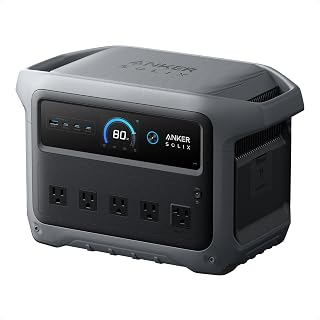
For readers who have outgrown smaller stations and want solar compatibility built in, this unit's 2000 watt output puts it in home backup range rather than just gadget charging. It suits campers or homeowners who want one device capable of running higher draw tools or appliances when needed.
Pros
- 2,000W output handles multiple appliances at once
- 49-minute full recharge via wall outlet
- 10ms UPS switchover protects sensitive devices
- Nine ports for simultaneous charging
Cons
- Solar recharge requires separate panel purchase
- Heavier and bulkier than a true power bank
If you're trying to decide whether a power bank is enough or you actually need a power station, the SOLIX C1000 Gen 2 makes the case for stepping up. It has 2,000W continuous output and nine ports, letting it run laptops, fans, lights, and even CPAP machines at once, which is well beyond what any power bank can handle. The 49-minute full recharge and 10ms UPS switchover matter most in backup scenarios where you can't afford downtime, exactly the situation this article is addressing. Its compact 15.1 by 8.2 by 9.6 inch frame and 11.3 kg weight mean it still travels like a larger power bank would, just with far more capability underneath. Solar input up to 600W extends its usefulness past typical bank territory into off-grid backup, making it a strong fit for anyone who has outgrown a power bank's limits but doesn't want a bulky generator-sized system.
Good for homeowners, remote workers, and RV travelers who need to run multiple devices or medical equipment simultaneously during outages. Also fits van lifers and campers wanting solar flexibility. Skip it if your needs are limited to charging a phone or small electronics on the go, where a basic power bank is lighter and more convenient. Also skip it if you need a true whole-home backup solution beyond portable capacity.
Capacity: 1,024Wh LiFePO4 battery
Output: 2,000W continuous, 3,000W peak
Ports: 10 total outputs
Wall Recharge: 1,600W input, 49 minutes to full
Solar Input: Up to 600W at 60V maximum, 1.8 hours to full
UPS Switchover: 10 milliseconds
Dimensions: 15.1L x 8.2W x 9.6H inches
Weight: 11.3 kg (24.9 lbs)
Battery Cycles: 4,000+ cycles with minimum 80% retention
Warranty: 5 years
Colors Available: Gray
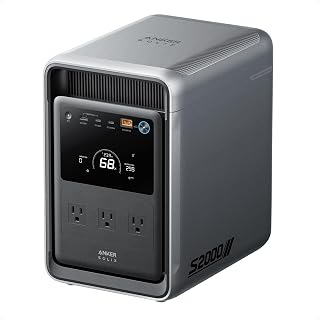
This station targets the reader comparing options for whole home resilience rather than casual device charging. At 2010Wh capacity with 1500 watt output, it can sustain multiple appliances through an extended outage, and the compact, lightweight build keeps it manageable despite that larger energy reserve.
Pros
- Covers 99% of essential household appliances
- 35-hour refrigerator runtime from low idle draw
- 10,000 charge cycle LFP battery
- Six recharge methods including solar and generator
Cons
- No 12V DC port for certain RV appliances
- Heavier footprint than true portable power banks
The SOLIX S2000 is a clear example of why someone outgrows a power bank and needs a dedicated power station instead. With 2,010Wh capacity and 1,500W continuous output, it covers 99% of essential household appliances, including refrigerators and medical equipment, which is far past what any power bank is designed for. Its 6W idle draw enables a 35-hour refrigerator runtime, a detail that matters most during extended outages where a power bank would be useless. At 35.7 pounds and a notably compact footprint, it's lighter and smaller than comparable 2kWh systems, so while it's not pocket portable like a bank, it remains manageable to move around a home or load into a vehicle. Six recharge methods, including 400W solar input and generator compatibility, give it flexibility across home backup, travel, and off-grid use. For readers deciding where their needs fall between pocket-sized power banks and full backup systems, this sits firmly on the power station side built for sustained, whole-home style reliability.
Capacity and Output: 2,010Wh LiFePO4 battery, 1,500W continuous output, 3,000W peak output
Battery Technology: 314Ah LFP cells, 10,000 cycle lifespan, 15-year warranty
Dimensions: 8.19L x 11.1W x 12.7H inches
Weight: 35.7 pounds
Outlets: 8 total (front and rear configuration)
Charging Options: AC input, solar (up to 400W), generator, car outlet, alternator charger
UPS Switchover: Less than 10 milliseconds
Idle Power Draw: 6W
Color: Black
Model: AS220
Warranty: 5 years
Best for homeowners who need long-duration backup for refrigerators, medical equipment, or multiple essential appliances during outages. Also suits off-grid users wanting solar flexibility across six charging methods. Skip it if you just need to charge phones or small electronics, since a power bank is far lighter and simpler. Also skip it if you specifically need a 12V DC port for RV appliances, which this unit lacks.

If you need a dependable mid-size backup without the bulk of a full home system, this one fits well. Its 4 hour charge time means you can top it off quickly between outings, and 300 watts of output covers phones, laptops, and small appliances during a short outage or weekend trip away from outlets.
Pros
- Six devices charged at once via AC, USB-A, and USB-C
- 300W output with 600W surge handles laptops and cameras
- LiFePO4 battery rated for 4,000+ charge cycles
- Compact 7.5 lb build with integrated carry handle
Cons
- Not suited for refrigerators, AC units, or high-wattage tools
- AC charging takes 3-4 hours to fill
Choosing between a power bank and a power station usually comes down to one question: how many devices do you need running at once, and for how long? The Jackery Explorer 300 answers that with two AC outlets, dual USB-A, and a USB-C PD port, letting six devices draw power simultaneously, something no pocket power bank can touch. At 7.5 lbs with a built-in handle, it still travels like a bank but backs up a laptop, camera, or drone with a 300W rated output and 600W surge, well beyond typical USB-only capacity. The LiFePO4 cell gives it a real lifespan edge too, rated for over 4,000 cycles, so it holds up as a long-term backup rather than a disposable gadget. If your need is bridging a storm outage, a weekend off-grid, or keeping several gadgets alive on the road, this sits squarely in power station territory while staying light enough to carry like a bank.
Buy this if you want power station capability (multiple AC and USB outputs, laptop-level output) without power station bulk, especially for travel, camping, or outage prep. Skip it if you only need to top off a phone, where a compact power bank is lighter and cheaper, or if you're hoping to run a fridge or AC unit, which this capacity was never built for.
Capacity: 292Wh (LiFePO4 battery)
Weight: 7.1-7.5 lbs
Dimensions: 15.43in D x 9.92in W x 11.89in H
AC Output: 2 outlets, 110V, 300W continuous (600W peak surge)
USB Ports: USB-C PD 100W, USB-A 2.4A (x2)
Car Port: 120W 12V output
Charging Time: Approximately 4 hours AC, 2.8 hours with 100W solar panel
Battery Cycles: 4,000+ before reaching 70% capacity
Warranty: 2 year manufacturer
Model: JE-300E

Readers deciding between a lightweight bank and a station that still accepts sunlight will like that this model runs on solar as well as stored battery power. With a 360 watt output ceiling, it manages camp lighting and small electronics while staying rechargeable off grid, which a basic power bank cannot offer.
Pros
- 300W output with 600W surge for laptops and demanding devices
- 80% recharge in 50 minutes via 140W USB-C
- Eight ports including three AC outlets
- LiFePO4 battery rated for 3,000 cycles, 5-year warranty
Cons
- Solar panel and shoulder strap sold separately
- 288Wh capacity depletes quickly with high-draw devices
The real question in a power bank versus power station decision is runtime and output versus charging speed and portability, and the Anker SOLIX C300 tries to win on both. It delivers 300W continuous output with 600W surge from a 288Wh LiFePO4 battery, enough to run a laptop for hours or top off a phone more than eight times, far beyond what a power bank handles. But what makes it worth considering over a bulkier station is its charging speed: 140W bidirectional USB-C gets it to 80% in just 50 minutes from wall power, closing the gap with power banks when you need a fast top-up between trips. Eight ports, including three AC outlets and multiple USB-C options, mean you're not choosing between charging a laptop or a phone, you do both. At 4.13kg it's heavier than a bank but still built for carrying, backed by a 5-year warranty and 3,000-cycle LiFePO4 chemistry for long-term reliability.
Power Output: 300W continuous, 600W surge capacity
Battery: 288Wh LiFePO4, 3,000 cycle lifespan
Charging Ports: 3x AC outlets (300W total), 1x car socket (120W), 2x USB-C (140W each), 1x USB-C (15W), 1x USB-A (12W)
Recharge Time: 50 minutes to 80% via wall outlet (AC charging cable included)
Dimensions: 6.46"L x 6.34"W x 9.45"H
Weight: 4.13kg (9.1 lbs)
Noise Level: 25dB at 3.3 feet
Warranty: 5 years
Compatibility: Compatible with 100W and 60W Anker solar panels, not compatible with SOLIX PS30, PS200, or PS400
Pick this if you need power station output (laptop runtime, multiple simultaneous devices) but don't want to wait hours to recharge the unit itself. Camping, travel, and outage prep all fit. Skip it if you only need to charge small devices like phones, where a lighter power bank will do, or if you need true off-grid endurance, since solar panels are sold separately and the 288Wh capacity drains fast under heavy load.

If your use case leans toward charging many small devices at once rather than running appliances, the seven ports here address that directly. Backed by a 90000mAh equivalent capacity and solar charging support, it works well for groups camping together who each need their own device powered.
Pros
- 288Wh capacity handles laptops and small appliances, not just phones
- 2.8kg weight keeps it genuinely portable versus bulkier stations
- Seven ports and dual 140W USB-C charge multiple devices fast
- Solar charging option supports off-grid use
Cons
- 288Wh capacity limits how many full laptop charges you get
- No shoulder strap included despite the portable design focus
When you're deciding between a power bank and a power station, the question is usually about how much device you need to run and for how long. The Anker SOLIX C300 DC sits right at that crossover point. At 2.8kg with a compact footprint, it's still something you can carry in a backpack, unlike bulkier stations that end up living in the trunk of a car. But it brings 288Wh and 300W output, enough to run laptops, cameras, and small appliances that a typical power bank simply can't touch. Seven ports let multiple devices charge at once, and dual 140W USB-C ports mean fast recharging for your gear too. Add solar charging compatibility and a 1.5 hour recharge time, and this becomes the backup option for people who need more runway than a power bank offers but don't want to give up portability entirely. It's the station pick for anyone whose power needs have outgrown a brick in their pocket.
Battery and Power: 288Wh capacity, 300W sustained output, LiFePO4 battery chemistry with 3-year limited warranty. Recharge time: 1.5 hours to full via dual USB-C fast charging.
Ports and Connectivity: 7 total outlets including 1x car socket (120W), 2x USB-C (140W each), 1x USB-C (100W), 1x USB-C (15W), and 2x USB-A (12W each). Includes 60cm 140W USB-C to USB-C charging cable.
Physical Specifications: Weight 2.8kg (6.2 lbs), dimensions 4.89 inches length by 7.87 inches width by 4.72 inches thickness. Battery weight: 1,740g. 30% smaller footprint than competing midrange power stations.
Compatibility: Compatible with 100W or 60W Anker solar panels for sustainable charging. Not compatible with Anker SOLIX PS30, PS200, or PS400 solar panels.
Buy this if you're upgrading from a power bank because your devices or trip length have outgrown it, especially for camping, remote work, or road trips where laptops and multiple gadgets need power. Skip it if you only need to top off a phone, a basic power bank is lighter and simpler, or if you need to run heavy appliances like space heaters, which exceed its output.

For readers weighing backup options between a pocket power bank and a heavier station, this LiFePO4 unit splits the difference. The 256Wh capacity paired with 300 watt output handles camping gear or emergency essentials, and its listed uses spanning residential and outdoor scenarios make it a flexible middle choice.
Pros
- Exceptional portability and lightweight design makes it ideal for camping, hiking, and emergency kits
- Long battery lifespan with LiFePO4 chemistry and advanced BMS protection ensures years of dependable use
- Multiple charging methods including solar, AC, car, and dual charging for flexibility in any situation
- Versatile port selection handles everything from smartphones to laptops to small appliances simultaneously
- Pure sine wave output protects sensitive devices like CPAPs and electronics from power damage
Cons
- Limited 256Wh capacity may require multiple charges for high-power devices or extended off-grid trips
- No customer reviews available, making it difficult to verify real-world performance and user experiences
- Solar panel sold separately, adding additional cost to fully utilize the solar charging capability
The ALLWEI 300W Portable Power Station is a solid mid-range option for anyone needing reliable backup power or portable energy for outdoor adventures. This unit combines practical features with a wallet-friendly price point, making it accessible for families, campers, and emergency preparedness planners who want dependable power without premium pricing.
The 256Wh LiFePO4 battery is the standout feature here, offering 3000 charge-discharge cycles that translate to roughly a decade of regular use. The pure sine wave inverter delivers 300W continuous and 600W peak power, which is enough to safely run laptops, mini fridges, CPAP machines, and drones without the risk of surging damage that lower-quality power stations can cause. The six output ports, including USB-C PD 60W, dual USB options, and a standard AC outlet, let you charge multiple devices at once.
Build quality appears solid for the price. At just 6.4 pounds and pocket-sized dimensions, this feels genuinely portable rather than a marketing claim. The inclusion of a 3-level LED light with SOS mode adds practical value for camping or power outages. The BMS protection system with six layers of safety checks provides confidence for both home backup and outdoor use.
The main limitations are capacity and the lack of verified customer reviews. The 256Wh capacity is modest by current standards, so you may need to recharge multiple times on longer trips or for power-hungry devices. The multiple recharging options, including AC wall charging, car charging, and solar charging with MPPT optimization, do help extend usability. However, without user feedback available, it is difficult to verify claims about real-world runtime or durability beyond the manufacturer specifications.
Overall, the ALLWEI 300W is a practical choice for occasional outdoor use and emergency backup. The LiFePO4 chemistry and multi-charging flexibility set it apart from cheaper alternatives, while the compact design and versatile ports make it genuinely useful. For the price, it represents good value if your power needs are moderate and you are willing to charge frequently on extended trips.
Power Output: 300W continuous, 600W peak surge with pure sine wave
Battery: 256Wh LiFePO4 with 3000 charge-discharge cycles
Voltage: 120V AC at 60Hz
Output Ports: 1x AC outlet, 1x USB-C PD 60W, 1x USB-A 18W fast charge, 2x DC5521, 1x car lighter socket
Charging Time: 3.5-4 hours AC or car charging, 4-5 hours solar (100W panel), 2-2.5 hours dual charging
Weight: 6.4 lbs
Dimensions: 9.25x5x6.8 inches
Runtime: 1500 hours
Warranty: 5-year manufacturer coverage
Camping and RVing: The lightweight, portable design with multiple charging options makes this ideal for weekend trips and extended outdoor stays where AC access is limited.
Emergency Home Backup: Keep this charged for unexpected power outages. The pure sine wave output safely powers medical devices like CPAP machines and sensitive electronics without risk.
Off-Grid Adventures: With solar charging capability and multiple recharge methods, this power station supports remote work, digital nomading, and outdoor activities where grid power is unavailable.
Budget-Conscious Buyers: If you need reliable backup power but cannot justify premium-priced alternatives, this delivers core functionality at an accessible price point.

For someone unsure whether a power bank or station fits their camping and emergency needs, this model offers both AC outlets and USB-C PD 60W fast charging in one compact unit. The 192Wh capacity suits laptops and phones, making it a practical step up from a bank without going oversized.
Pros
- Exceptional durability with LiFePO4 chemistry and 3500+ lifecycle rating
- Lightweight and compact design makes it genuinely portable for outdoor adventures
- Multiple charging ports allow six devices to charge simultaneously
- Solar charging capability with MPPT optimization adds off-grid flexibility
- Strong 4.3/5 customer rating reflects real-world reliability
Cons
- 300W power limit excludes high-draw appliances like rice cookers, hair dryers, and mini-fridges
- Solar panels and car charging cables sold separately, adding to total cost
- 100W AC charging speed means home recharge takes several hours
The DaranEner NEOZ is a portable power station built for outdoor enthusiasts, emergency preparedness, and remote work situations where reliable backup power matters. At 5.73 lbs with dimensions smaller than a toaster, it slots easily into backpacks, vehicles, or emergency kits without real burden.
The 192Wh LiFePO4 battery delivers 300W continuous output with 600W surge capacity, handling phones, tablets, laptops, CPAP machines, and power tools effectively. The standout feature is the LiFePO4 chemistry, which endures 3500+ full charge cycles compared to 300-500 cycles for standard lithium-ion, meaning this unit could realistically serve you for 10+ years with proper maintenance. The built-in MPPT solar controller makes sustainable charging practical, and simultaneous six-device charging via 2 AC outlets, USB-C PD 60W, and two USB-A ports covers most scenarios.
Build quality impresses for the price point. The pure sine wave output protects sensitive electronics without the noise or interference of modified sine systems. The smart Battery Management System actively prevents overcharging, overheating, and short circuits. An integrated LED flashlight with SOS mode adds practical value during emergencies or camping at night.
The main limitation is the 300W ceiling, which excludes high-startup appliances like air fryers, hair dryers, and full-size mini-fridges that draw 800W+. Also factor in separate solar panel purchases and multi-hour AC recharge times into your decision. Despite these constraints, the price-to-longevity ratio and genuine portability make this one of the smarter choices for casual outdoor use and home backup.
Verdict: A capable, durable power station that delivers real value for camping, travel, and emergency scenarios. Not for power-hungry appliances, but excellent for keeping essentials charged anywhere.
Power Output: 300W continuous, 600W peak surge
Battery: 192Wh LiFePO4 with 3500+ cycle rating
Charging Ports: 2x AC outlets (300W), 1x USB-C PD (60W), 2x USB-A QC3.0 (18W), 1x 12V DC
Charge Inputs: AC wall outlet (100W max), solar panel (60W DC via MPPT), car charger (10V-26V)
Design: 8.66 x 7.09 x 5.12 inches, 5.7 lbs, grey ABS plastic
Safety: Smart BMS, pure sine wave, overload protection
Extras: Integrated LED flashlight with 4 brightness modes, SOS emergency mode
Who Should Buy: Campers, RV travelers, remote workers, emergency preparedness planners, and outdoor enthusiasts who need reliable backup for phones, laptops, and low-to-mid-power devices.
Who Should Skip: Anyone needing to power high-draw appliances like air fryers, microwaves, hair dryers, or full-size refrigerators regularly.
Setup Tips: Complete two full charge-discharge cycles after receiving to optimize battery performance. Recharge every 1-2 months even when not in use to maintain battery health.
Cost Considerations: Budget separately for solar panels if you want off-grid charging capability. AC recharge from empty takes approximately 2-3 hours depending on outlet power.
Best Use Cases: Weekend camping trips, emergency home backup, van life power needs, outdoor event power, travel device charging, CPAP machine overnight backup.

Readers trying to decide if a power bank is enough versus a true station will find this one sits right at that boundary. At just 2.3 pounds with a 240 watt peak, it covers small camping electronics without the weight of larger stations, bridging the gap between the two categories.
Pros
- Exceptional portability at 2.3 pounds with multiple charging options for maximum flexibility
- Abundant connectivity with 8 output ports supporting phones, laptops, tablets, cameras, and accessories simultaneously
- Quick recharge via AC outlet or car charger, with solar compatibility for true off-grid capability
- Emergency-ready with LED display, SOS lighting modes, and reliable 4.2-star customer satisfaction
- Excellent value with included accessories and comprehensive 24-month warranty coverage
Cons
- 120W continuous output may be insufficient for high-power devices like full-size laptops or power tools
- Solar panel sold separately, requiring additional investment for solar charging functionality
- Limited 88Wh capacity compared to larger portable power stations, best suited for day trips rather than extended off-grid use
The HOWEASY Portable Power Station is a lightweight, feature-rich power solution designed for campers, outdoor adventurers, and anyone needing reliable emergency backup power. With an 88Wh capacity and compact 2.3-pound form factor, it bridges the gap between smartphone power banks and bulky generators, making it ideal for weekend trips, tailgating, and household outages.
What sets this unit apart is its versatile connectivity and flexible charging ecosystem. Eight output ports including dual AC sockets (120W continuous, 240W peak), USB-C with 18W fast charging, dual QC 3.0 ports, standard USB, and DC outputs mean you can charge multiple devices simultaneously. The three recharging modes, AC wall outlet, solar panel compatible, and 12V/24V car charging, provide genuine flexibility for different scenarios without lock-in to a single power source.
The design prioritizes portability without sacrificing functionality. The hidden handle saves precious space, the LED display provides clear power status visibility, and separate AC/DC buttons make operation straightforward. Emergency preparedness is enhanced by three LED lighting modes including steady, flash, and SOS functions, turning the unit into a dual-purpose device for outdoor safety.
The primary limitation is output capacity. The 120W continuous rating (240W peak) handles phones, tablets, cameras, and most USB devices well, but struggles with power-hungry devices like full-size laptops or power tools. Additionally, the 88Wh capacity is modest for extended trips, and solar charging requires purchasing a separate panel.
The HOWEASY delivers solid value for casual outdoor users and emergency preparedness. With 4.2-star ratings from over 2,000 reviews, strong warranty coverage, and responsive customer service, it represents a practical entry point to portable power. Best suited for day adventures and backup power rather than serious off-grid living.
Power Capacity: 88Wh rechargeable battery with 1500+ cycle life
Output Power: 120W continuous, 240W peak
AC Output: 2 ports at 110V
USB Ports: 1 USB-C (18W), 2 QC 3.0, 1 standard USB (5V 2.4A)
DC Ports: 2 ports (12V/10A)
Dimensions: 6.6 x 4 x 3 inches
Weight: 2.3 pounds
Charging: AC outlet (adapter included), solar compatible (15V-24V, panel not included), 12V/24V car charger (included)
Features: LED display, emergency lighting with SOS mode, simultaneous charging support
Warranty: 24 months with 24/7 customer support
Best For: Weekend camping trips, outdoor events, emergency home backup, RV travel, and situations where charging multiple devices portably is essential.
Not Ideal For: Powering high-wattage appliances, extended off-grid living beyond 1-2 days, or users requiring simultaneous charging of multiple laptop computers.
Consider If: You want affordable entry-level portable power with proven reliability, need multiple charging ports for group trips, or seek emergency preparedness without complexity.
Solar Enhancement: Pair with a compatible 15V-24V solar panel for true off-grid capability and indefinite runtime on sunny days.
Warranty Assurance: Two-year coverage plus responsive customer service provides confidence in long-term reliability and support.

For readers who mostly need power bank style convenience but want a bit more headroom, this 88Wh unit with 120 watt surge capacity fits that gap. It handles phones, lights, and small fans on a trip, and its wide list of recommended uses reflects that flexible, light duty role.
Pros
- 8 total output ports including dual AC outlets
- Fast 2-hour charge from empty to 80%
- Built-in LED flashlight with three brightness modes
- UL certified with overcharge and short-circuit protection
Cons
- Laptops reportedly drain faster than specs suggest
- High-wattage devices can trigger automatic shutoff
If you're torn between a power bank's portability and a power station's output, the MARBERO M82 lands right in the middle. At 3.2 lbs, it's barely bigger than a camera, closer to a bank in footprint, but its 8 output ports (dual AC outlets, USB-A, USB-C PD, and a 12V car port) let it do what banks can't: run small devices and charge several gadgets at once. That versatility is the whole case for picking it over a plain power bank when your need includes anything beyond phones, think a fan, a light, or a tablet alongside your phone. A 2-hour charge from empty to 80% means less downtime between uses, and the built-in LED flashlight adds backup utility a power bank won't offer. Just know its limits: reviewers report laptops draining it faster than specs suggest, and high-wattage devices can trigger the automatic shutoff. For light, multi-device backup in a near-power-bank size, it fits the bridge-the-gap need well.
Good fit for campers, travelers, or anyone wanting power-station versatility (AC outlets, multiple ports) in a size close to a power bank. Best for small devices and short outages rather than sustained laptop use. Skip it if you need dependable multi-hour laptop runtime or plan to run higher-wattage tools and appliances, since shutoffs and faster-than-expected drain have been reported.
Buying Guide: Power Bank vs Power Station
Start With Watt-Hours, Not Just Device Type
Power banks are usually rated in milliamp-hours, while portable stations prominently list watt-hours. Watt-hours are more useful when you are comparing different categories because they describe stored energy, although real runtime also varies with conversion losses, battery age, and the way your device draws power.
An 88Wh model such as the HOWEASY Portable Power Station,120W(240W Peak) or MARBERO Portable Power Station 88Wh, 120W Surge is geared toward phones, lights, and light-use electronics. For more capacity without moving into a large backup unit, consider the DaranEner Portable Power Station, ALLWEI Portable Power Station 300W, Jackery Explorer 300 Portable Power Station,292Wh, or either 288Wh Anker C300 model. For an everyday USB-only alternative, compare these 20000mAh power banks for travel and daily charging.
Match Continuous Output and Ports to Your Appliances
A power bank typically handles phones, tablets, and laptops through USB ports. A power station adds an inverter and, in many cases, AC outlets, car sockets, and DC outputs, which makes it more suitable for equipment that cannot charge from USB-C alone.
Check continuous watts first, then surge capacity and the exact port layout. The DaranEner and ALLWEI units provide 300W-class AC power for compatible small loads, while the Anker SOLIX C300 Portable Power Station adds three AC outlets and high-output USB-C charging. The Anker SOLIX C300 DC Portable Power Station, 288Wh is a smart fit for USB-C and 12V gear, but it has no AC outlet. For bigger demands, the Jackery Explorer 1000 v2 Portable Power, Anker SOLIX C1000 Gen 2 Portable Power Station, and Anker SOLIX S2000 Portable Power Station, 2,010Wh provide substantially more battery capacity and appliance-ready output. If tidy USB charging is your priority, these power banks with built-in cables can eliminate the need for an extra cord.
Be Honest About Weight, Space, and Where You Will Carry It
The main benefit of a power bank is that it slips into a pocket, purse, or daypack with little thought. Even small power stations occupy more space because they include extra ports, cooling hardware, a display, and often an AC inverter, but they can replace several wall chargers at camp or in a vehicle.
Compact stations create a useful middle ground. The HOWEASY weighs 2.3 pounds, the MARBERO weighs 3.2 pounds, the DaranEner weighs 5.73 pounds, and the ALLWEI weighs 6.4 pounds. The Jackery Explorer 300 remains notably portable at 7.5 pounds, whereas high-capacity backup units are better carried from the car to a campsite or from storage to a room during an outage. For flights, review our power bank options for airplane travel and always confirm the current battery rules with your airline.
Prioritize Battery Life and Recharge Flexibility
LiFePO4 battery chemistry is a worthwhile feature when you expect frequent use, camping trips, or regular backup duty. The Jackery Explorer 300 and Explorer 1000 v2 list more than 4,000 cycles to 70% capacity, while the Anker SOLIX C1000 Gen 2 also lists 4,000 cycles with at least 80% capacity remaining. The Anker SOLIX S2000 lists an especially long 10,000-cycle LFP design.
Recharge speed and input options affect how useful a station feels between trips. The Anker SOLIX C1000 Gen 2 supports rapid wall charging and solar input, while the C300 models can recharge through wall power, a vehicle, solar, or USB-C methods. The ALLWEI supports AC, car, solar, and combined AC-plus-solar input, and the DaranEner supports wall, car, and solar charging. Check each unit’s supported input limits and connector requirements before buying panels, especially since some models work best with specific solar hardware. Our portable solar panel guides can help you plan an off-grid setup that makes sense.
Final Thoughts
A power bank is the easier everyday companion, while a power station becomes the better answer when you need AC power, larger reserves, or dependable outage coverage. Choose the Jackery Explorer 1000 v2 Portable Power for versatile home backup and camping capability, or the MARBERO Portable Power Station 88Wh, 120W Surge for a compact light-and-device power companion.
Frequently Asked Questions
Is a power station better than a power bank?
Neither is automatically better because they serve different power needs. A power bank is usually easier to carry and ideal for USB devices, while a power station has more energy, more port types, and often AC output for camping gear, work equipment, and selected home essentials. For a simple daily-carry option, see these 10000mAh power bank picks for travel and daily carry.
Can you take a portable power station on an airplane?
Airline and transportation rules apply to lithium battery capacity, and permission can vary by carrier and route. Smaller 88Wh stations are closer to common carry-on battery limits than larger models, but you should verify the airline’s current policy before traveling. Large power stations intended for appliance backup are generally impractical for air travel.
What size power station do I need for camping or an outage?
For phones, headlamps, cameras, and small fans, an 88Wh to 300Wh station can be enough for a short trip. For multiple laptops, CPAP equipment, or longer off-grid use, a 250Wh to 500Wh model offers more margin. Refrigerators and broader outage plans generally call for a 1,000Wh-class station or larger, after you confirm appliance wattage and startup demand.
Do portable power stations work with solar panels in 2026?
Many do, but solar compatibility is not universal. Confirm the station’s maximum solar input, acceptable voltage range, connector type, and any brand-specific limitations before pairing it with a panel. Solar is particularly helpful for extending a camping stay, though weather, panel angle, shade, and daylight hours all affect charging results.



Write Your Review
No reviews yet. Be the first to share your experience!