

A new graphics card can turn a formerly comfortable PC into a system that shuts down during a combined CPU and GPU load. In an 850w vs 1000w power supply decision, the larger label alone is not the answer, because cable limits, brief power spikes, cooling, and planned upgrades matter too. If rendering is central to your build, pair the PSU decision with our GPU picks for Blender rendering before ordering parts.
This guide explains where 850W is enough, when 1000W is the smarter reserve, and which current ATX 3.1 features deserve attention. The comparison below covers ten fully modular options for gaming, creative work, and high-performance desktop builds, so you can select capacity with confidence rather than buying wattage you will not use.
Quick Comparison
Ratings reflect the most recent data pull. Check each listing for current price and availability.
Quick answer
This guide compares 10 picks, with 1000W 80+ Gold Modular PSU, ATX 3.1 & PCIe 5.1 Ready ranked first. ASUS ROG Strix 1000W Platinum Fully Modular PSU holds the highest customer rating among them. 1000W 80+ Gold Fully Modular PSU, ATX 3.1 & PCIe 5.1 has the most customer reviews.
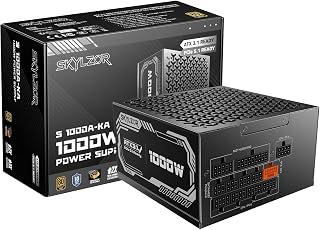
Choosing 1000W makes sense when you want sustained headroom, and the 140mm low-noise fan here keeps that extra capacity from translating into extra noise under load. The 105C-rated Japanese capacitors point to longer-term reliability, which matters to someone picking a PSU meant to outlast a few GPU upgrade cycles rather than just the current build.
Pros
- 1000W gives real headroom over 850W for high-end GPUs
- ATX 3.1 and PCIe 5.1 ready for current and future cards
- Fully modular dragon-pattern cables ease routing
- 140mm fan stays quiet at idle and light loads
Cons
- Limited long-term user data available
- Single fan means no cooling redundancy
Deciding between 850W and 1000W usually comes down to headroom for your GPU and future upgrades, and this SKYLZOR unit makes the case for going with the bigger number without a big cost jump. At 1000W with 80+ Gold efficiency, it gives you real breathing room over an 850W unit for high-end graphics cards and ATX 3.1 or PCIe 5.1 systems, so you are not cutting it close on power budget. The fully modular dragon-pattern cables and the dual-color 16-pin PCIe 5.1 cable make the extra wattage easy to wire into a clean build rather than a tangle of unused cables you'd get from a cheaper non-modular 1000W option. The 140mm smart fan auto-sleeps at idle, so stepping up from 850W to 1000W does not mean more fan noise day to day. With 105C Japanese capacitors and a 10-year warranty backing it, this reads as a sensible upgrade pick for anyone whose build sits right on the edge of what an 850W PSU can comfortably handle.
Power Output: 1000W
Efficiency: 80+ Gold Certified (up to 92%)
Form Factor: ATX
Cooling: 140mm FDB Smart Fan
Connectors: ATX, SATA, 16-pin PCIe 5.1
Cable Type: Fully Modular
Capacitors: 100% Japanese 105°C-rated
Dimensions: 6 x 6 x 3.7 inches
Warranty: 10-year limited support, 2-year manufacturer
Buy this if your parts list is pushing the limits of an 850W supply, especially with a current-generation GPU, and you want extra headroom plus modular cables without paying for Platinum tier. Skip it if your build is modest and 850W already covers it with margin, since the single-fan cooling and lack of long-term user data make it a less obvious pick for buyers who do not actually need the jump to 1000W.

For a build where GPU transient spikes are a real concern, the GPU-First Intelligent Voltage Stabilizer and 80 Plus Platinum efficiency make the case for stepping up to 1000W over 850W. The GaN MOSFET design supports stable power delivery at that higher wattage, which matters most to someone pairing a flagship card with a high-core-count CPU.
Pros
- GPU-First voltage stabilizer targets high-end graphics cards
- 80 Plus Platinum efficiency beyond typical 850W Gold units
- Individually sleeved, pre-cut cables for clean routing
- 0dB fan mode keeps extra wattage quiet at idle
Cons
- Individual stranded wiring may look less uniform than braided cables
- Premium features come with a higher-tier price point
If you are weighing 850W against 1000W because your GPU is the deciding factor, this ASUS ROG Strix model is built around exactly that question. The GPU-First intelligent voltage stabilizer and GaN MOSFET design exist specifically to feed power-hungry cards cleanly, which is the main reason builders move up from 850W in the first place. Rather than just adding wattage, this unit adds up to 45% improved power delivery to the graphics card and up to 30% better efficiency than traditional designs, so the extra 150W over an 850W unit is put to deliberate use rather than sitting idle as unused margin. The 80 Plus Platinum certification and Cybenetics Lambda A+ rating mean that headroom comes with excellent efficiency too, not just more raw capacity. Individually sleeved, pre-cut cables keep the build tidy despite the added connectors a 1000W unit requires, and the dual ball bearing fan with 0dB mode keeps the step up in wattage from translating into a step up in noise. For builds centered on a flagship GPU, this is a reasoned case for 1000W over 850W.
Power Output: 1000 watts, 80 Plus Platinum Certified
Form Factor: ATX, Full Modular Design
Dimensions: 6.3 x 5.9 x 3.4 inches
Input Voltage: 237.6 to 264 volts AC
Connectors: 20+4 pin main connector, PCIe power, SATA connectors, specialized 600W GPU cable
Fan Design: Dual ball bearing with 0dB technology
Model: ROG-STRIX-1000P-GAMING
Warranty: 10 years

Pros
- Excellent efficiency rating cuts electricity costs on high-power systems
- Quiet operation won't distract during gaming or content creation workflows
- Modern connector standards future-proof your build for upcoming hardware generations
- Fully modular design eliminates cable clutter for better airflow and aesthetics
- Strong warranty coverage provides peace of mind for premium power delivery
Cons
- 115V input voltage only, limiting use outside North American standard outlets
- Premium pricing sits higher than non-modular 1000W alternatives
- At 15-20 dBA, the C1000 is louder than the smaller C750 and C850 models
The NZXT C1000 Gold Core is a 1000W fully modular power supply built for gamers and content creators who demand both performance and reliability. With ATX 3.1 certification and PCIe 5.1 support, this PSU is ready for the latest NVIDIA RTX graphics cards and future-generation hardware.
What sets this unit apart is its exceptional efficiency combination: 80+ Gold certification paired with Cybenetics Platinum efficiency. Real-world performance means lower power bills, reduced heat output, and stable voltage delivery even under sustained high loads. The 135mm fluid dynamic bearing fan with Zero RPM mode keeps the unit whisper-quiet during light workloads, making it ideal for content creators who need silent operation.
Build quality is premium throughout. The 105 degrees C-rated capacitors deliver long-term reliability, while the fully modular cable system with embossed connectors makes routing clean and simple. Compact dimensions at 5.91 x 5.91 x 3.39 inches fit most mid-tower and full-tower cases without hassle.
The main trade-off is noise during heavy loads, rated A+ at 15-20 dBA, which is louder than the smaller C750 and C850 variants. Additionally, this unit requires 120V AC input, limiting international compatibility. The premium pricing reflects the quality, but offers solid value against boutique competitors.
Verdict: The NZXT C1000 Gold Core earns its reputation as a top-tier PSU for high-end gaming rigs and professional workstations. The combination of modern connectors, efficiency, modularity, and the comprehensive 7-year warranty make this a smart investment for builders prioritizing stability and future-proofing.
Power Output: 1000W continuous
Efficiency Rating: 80+ Gold, Cybenetics Platinum
Form Factor: ATX 3.1 certified
Connectors: Dual 12V-2x6 PCIe 5.1, support for legacy 8-pin PCIe cables
Design: Fully modular with embossed cables
Cooling: 135mm FDB fan with Zero RPM mode
Noise Rating: Cybenetics A+ (15-20 dBA)
Capacitors: Premium 105 degrees C-rated
Input Voltage: 120V AC
Dimensions: 5.91 x 5.91 x 3.39 inches
Warranty: 7 years
Model: PA-0G3BB-US
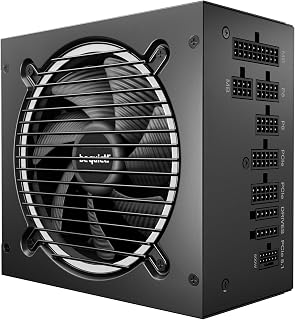
Readers comparing 850W to 1000W for a fully modular build will notice this one's cable setup keeps unused connectors out of the case entirely, improving airflow at the higher wattage tier. 80 Plus Gold efficiency means less wasted heat even when the system is pulling closer to that 1000 watt ceiling under a demanding GPU and CPU combo.
Pros
- Semi-passive fan stays off at idle for silent operation
- Handles power transients up to 2000W for GPU spikes
- Native 12V-2x6 and PCIe 6+2-pin connectors, no adapters needed
- 10-year warranty backs long-term reliability
Cons
- Sustained heavy loads generate noticeable heat
- CPU cable routing can be tight in large tower cases
For builders torn between 850W and 1000W because they are not sure how much headroom they actually need, the be quiet! Pure Power 13 M makes 1000W feel like the safer, quieter choice rather than overkill. Its semi-passive cooling keeps the single 120mm fan off entirely during idle and light tasks, so the jump from an 850W unit does not cost you anything in noise, and even under moderate gaming loads the fan stays negligible. The single 12V rail with LLC topology and support for power transients up to 2000W give this unit real headroom for transient GPU spikes that an 850W supply might not absorb as comfortably. Native 12V-2x6 and four PCIe 6+2-pin connectors mean current and next-generation GPUs connect without adapters, which matters if your 1000W choice is partly about future-proofing. The trade-off for that efficient power delivery is more generated heat under sustained heavy load, so it is worth factoring in your case airflow when deciding whether the extra 150W over an 850W unit is right for your setup.
Power Output: 1000W continuous, handles transients up to 2000W
Efficiency Rating: 80+ Gold certified with up to 94.4% efficiency
Standards: ATX 3.1 compliant with PCIe 5.1 support
Connectors: 12V-2x6 connector for next-gen cards, 4x PCIe 6+2-pin for current-gen GPUs, fully modular cable design
Cooling: Single 120mm semi-passive fan with zero RPM mode under light load
Topology: LLC for superior voltage regulation and stability
Form Factor: ATX, fully modular design
Dimensions: 6.3 x 5.91 x 3.39 inches
Weight: 3.14 kg
Warranty: 10 years
Input Voltage: 100-240V AC
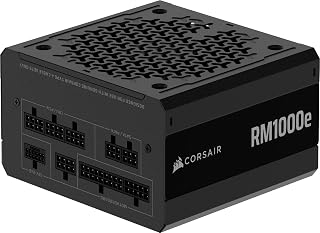
If you're weighing 1000W builds for high-end GPUs, this unit's ATX 3.1 and PCIe 5.1 readiness matters since newer graphics cards demand native high-transient connectors rather than adapters. The 1000 watt output gives enough headroom for a power-hungry CPU and GPU pair without running near capacity, and air cooling keeps the design straightforward for a standard mid-tower case.
Pros
- Native 12V-2x6 connector, no adapters needed for next-gen GPUs
- ATX 3.1 compliance for current and future hardware
- Fully modular cables for cleaner builds
- 105 degree Celsius capacitors for stable high-load output
Cons
- 1000W is more capacity than mid-range builds need
- Single-fan cooling may limit headroom in hot environments
Deciding between 850W and 1000W often comes down to one question: how much GPU headroom do you actually need? The RM1000e makes the case for stepping up to 1000W if your build includes a flagship graphics card or you plan to add a second GPU down the line. The native 12V-2x6 connector means power-hungry next-gen cards plug in directly, no adapters required, and ATX 3.1 compliance keeps you aligned with current and upcoming hardware standards. For builders weighing capacity against cost, the fully modular cable system is a practical advantage since you only run what your layout needs, keeping airflow clean regardless of case size. The single 120mm rifle bearing fan and 105 degree Celsius capacitors point to a unit built for sustained high loads, not just occasional spikes. If your platform is mid-range, this is more capacity than you'll use. But for high-end gaming rigs, workstations, or content creation systems, the extra 150W over an 850W unit buys real breathing room.
Power Output: 1000W continuous
Form Factor: ATX, 5.91 x 5.51 x 3.35 inches, 3.6 pounds
Modular Design: Fully modular with removable cables
Cooling: 1x 120mm rifle bearing fan
Efficiency: Cybenetics Gold certified
Standards: ATX 3.1, PCIe 5.1 compatible
Input Voltage: 100-240V AC
Warranty: 7 years manufacturer
Model: CP-9020297-NA
Connectors Include: 1x 24-pin ATX, 2x 8-pin ATX 12V, 1x 8-pin PCIe, 1x 600W 12V-2x6 native cable, 1x adapter cable to dual 8-pin, 6x SATA, 2x PATA

For builders choosing between 850W and 1000W, this one's 1000 watt rating covers a flagship GPU plus overclocked CPU with margin to spare, while PCIe 5.1 readiness means no adapter cables for newer cards. The dedicated fan cooling actively manages heat under sustained load, which suits a case with limited airflow.
Pros
- Native 12V-2x6 connectors plus traditional PCIe 8-pin cables
- Cybenetics Gold efficiency for stable power delivery
- Fully modular design improves airflow and cable management
- White finish suits lighter case aesthetics
Cons
- GPUs needing three 8-pin connectors may require an adapter
- Fan noise increases noticeably under sustained full load
If you're torn between 850W and 1000W, the deciding factor is usually your GPU setup. The RM1000e in white is built for systems where one high-end card, or even a multi-GPU workload, pushes past what an 850W unit comfortably handles. Cybenetics Gold efficiency and native 12V-2x6 connectors mean next-gen cards get stable power without hunting for adapters, while traditional PCIe 8-pin cables keep current hardware covered too. The fully modular design lets you skip unused cables entirely, which matters more as wattage climbs since you're managing more potential cable clutter. A 120mm rifle bearing fan handles everyday loads quietly, and the 140mm form factor fits most modern ATX cases without a tight squeeze. The white finish is a nice bonus if your build leans toward lighter, RGB-forward aesthetics rather than an all-black interior. The tradeoff for going bigger: GPUs needing three 8-pin connectors may come up one short, and full sustained load does bring noticeable fan noise. For most builds that genuinely need 1000W, these are minor tradeoffs against the capacity gained.
Power Output: 1000W fully modular
Efficiency Rating: Cybenetics Gold
Form Factor: ATX, 5.91 x 5.51 x 3.35 inches
Compliance: Intel ATX 3.1 certified, PCIe 5.1 ready
Connectors: 24-pin ATX, dual 8-pin ATX 12V, 8-pin PCIe, native 12V-2x6 cable, 6x SATA, 2x PATA
Cooling: 120mm rifle bearing fan with optimized curve
Capacitors: 105°C-rated for enhanced stability
Input Voltage: 100-240V AC
Warranty: 7 years manufacturer warranty
Weight: 3.6 pounds

Opting for 1000W over 850W usually comes down to future upgrade headroom, and the military-grade components and dual ball bearing fan here are built to handle that sustained higher load over years of use. Full modularity also helps a reader managing more cables at this wattage tier keep case airflow clean around a power-hungry GPU.
Pros
- ATX 3.1 ready with a 600W-capable 16-pin PCIe connector for next-gen GPUs
- 80+ Gold efficiency backed by Japanese capacitors
- Fully modular design keeps high-capacity builds clean
- 10-year warranty with military-grade component durability
Cons
- More capacity than mid-range builds actually need
- Minimal RGB or aesthetic customization options
When you're deciding between 850W and 1000W, the ASUS TUF Gaming 1000W Gold represents the case for going big. If your build includes a flagship CPU and GPU together, especially paired with multiple drives or a liquid cooling loop, the extra headroom this unit provides over an 850W model becomes meaningful rather than wasted. ATX 3.1 compatibility and a native 16-pin PCIe connector rated for 600W mean this supply is built with next-generation graphics cards in mind, something an 850W unit may struggle to accommodate as cleanly. The 80+ Gold certification and military-grade component spec give you efficiency and durability that scale with the higher output. Fully modular cabling keeps the extra capacity from translating into extra clutter, and the dual ball bearing fan is designed to hold up over the long run under sustained higher loads. For builders weighing whether their power draw justifies the jump from 850W, this unit answers that question by giving you room to grow into future upgrades without replacing the supply.
Power Output: 1000W continuous power, 80+ Gold Certified efficiency (90%+ at 50% load)
Form Factor: ATX standard, dimensions 5.9 x 5.9 x 3.4 inches, weight 5.5 pounds
Connectors: 21 total connectors including 16-pin ATX 3.1 PCIe connector, standard ATX 24-pin and CPU 8-pin connectors
Cooling: Single 120mm dual ball bearing axial-tech fan with optimized airflow design
Input: 100-240V AC universal voltage input for worldwide compatibility
Operating Temperature: Up to 40 degrees Celsius maximum rated temperature
Cable Management: Fully modular design with premium sleeved cables and TUF-branded velcro straps included
Warranty: 10-year limited warranty with ASUS lifetime customer support
Buy this if your build pairs a high-end CPU with a current or upcoming flagship GPU, or if you run multiple drives and liquid cooling that push total draw well past what an 850W unit comfortably handles. Skip it if you're building a mid-range system, since the extra capacity and cost over an 850W option won't be put to use. Also skip it if minimal cable bulk and RGB aesthetics matter more to you than raw capacity.

For someone settling on 1000W to run a current-gen GPU without connector headaches, the native dual-color 12V-2x6 cable removes the need for adapters that often come with lower-wattage 850W kits. The RGB low-noise smart fan and 105C-rated capacitors add quiet, durable cooling for a build expected to run demanding loads regularly.
Pros
- Exceptional value at this price point with solid build quality and reliable performance
- Near-silent operation verified by users, even at maximum fan speed
- Excellent voltage stability confirmed by oscilloscope testing in user reviews
- Future-proof design supports latest GPU standards and power delivery technologies
- Comprehensive accessory kit includes PSU tester, cable comb, and ties for easy setup
Cons
- RGB lighting may be difficult to see inside opaque cases despite quality implementation
- Brand recognition is lower than established manufacturers like Corsair or EVGA
- Limited real-world user data compared to market-leading competitors
The Auotac 1000W is a fully modular power supply built for gamers and workstation users who demand efficiency, reliability, and clean cable management. At 1000W, it provides ample headroom for high-end GPUs like the RTX 4090 or 5080 with comfortable overhead, making it suitable for both current and next-generation builds.
What sets this PSU apart is its comprehensive feature set at an aggressive price point. The 80+ Gold certification delivers 92% efficiency, reducing power waste and your electricity bill over time. More importantly, native support for ATX 3.1 and PCIe 5.1 means you're buying forward compatibility. The dual-color 12V-2x6 cable with yellow connectors adds both aesthetics and practical confirmation that connections are secure. The 140mm low-noise RGB fan runs remarkably quiet according to user feedback, making this suitable even for bedroom systems.
Build quality shines through Japanese-made 105C capacitors rated for esports-level stability, fully modular cable design with dragon-pattern aesthetics, and thoughtful touches like the included PSU tester for standalone verification. The compact 150x150x86mm footprint fits mainstream cases without hassle. Cable management is simplified by the included comb and ties, reducing setup friction for first-time builders.
The main drawbacks are modest brand recognition compared to established competitors and the RGB lighting visibility limitation in opaque cases. Some users may also prefer larger PSU manufacturers with longer market presence and deeper customer support resources.
Verdict: The Auotac 1000W offers excellent value with a solid reliability track record, making it a smart choice for builders prioritizing efficiency, quiet operation, and modern connectivity standards without premium pricing. Recommended for gaming rigs, workstations, and future-proofed builds from mid-range to high-end configurations.
Power Output: 1000W continuous
Efficiency Rating: 80+ Gold (92% efficiency)
Form Factor: ATX Fully Modular
Dimensions: 150 x 150 x 86mm (5.91 x 5.91 x 3.39 inches)
Weight: 3.2 pounds
Cooling: 140mm RGB Low-Noise Smart Fan
Capacitors: 100% Japanese-made 105C electrolytic
Standards: ATX 3.1 compliant, PCIe 5.1 ready
Cable Type: Dual-color 12V-2x6 with yellow connectors
Warranty: 10-year manufacturer limited warranty
EU Spare Parts Availability: 10 years
Ideal For: High-performance gaming builds, professional workstations, enthusiasts who value quiet operation and clean cable management, builders upgrading from older PSU platforms, and anyone seeking future-proof ATX 3.1 and PCIe 5.1 support.
Not Ideal For: Budget-conscious builders needing only 650-750W, users prioritizing absolute brand reputation over value, or those in environments where warranty support from established manufacturers is critical.

Pros
- Exceptional quietness with completely silent operation at idle and light loads
- Future-proof PCIe 5.0 and ATX 3.1 support ready for next-generation components
- Outstanding efficiency reduces electricity consumption and system heat generation
- High transient response handles power-hungry graphics cards without instability
- Premium build quality with modular cabling and printed connector labels
Cons
- Premium pricing compared to standard 80+ Gold 1000W units
- Zero-RPM fan requires 2-5 minute cooldown periods to prevent rapid cycling
- 1-year warranty appears short despite 10-year expected lifespan claim
The be quiet! Power Zone 2 1000W is a premium power supply designed for builders who demand both performance and silence. This unit targets high-end gaming PCs, content creation workstations, and enthusiast systems where quiet operation and reliable power delivery are non-negotiable. With ATX 3.1 and PCIe 5.1 support, it's built for systems that will serve users for years to come.
The standout feature is its semi-passive zero-RPM cooling system, which keeps the 140mm Pure Wings 3 fan completely silent during low-load operation. Combined with 94% efficiency (dual Platinum certifications), the PSU runs cool and quiet in real-world usage. The single robust 12V rail with transient response up to 2000W ensures stable power delivery even when graphics cards demand heavy current spikes, making it ideal for RTX 4090 and next-generation GPU builds.
Build quality reflects German engineering throughout. The LLC topology provides best-in-class voltage regulation, essential for stable overclocking. The custom-tuned Pure Wings 3 fan is purpose-built for this PSU model, and thoughtful touches like printed connector labels on the case and a 90-degree 12V-2x6 connector cable demonstrate attention to detail. The distinctive mesh front panel and compact 7 x 4 x 6 inch form factor fit modern case designs while maintaining proper airflow.
The primary drawback is the semi-passive fan design, which requires 2-5 minute post-ventilation cooldown periods to avoid frequent starts and stops. This can feel unintuitive for those accustomed to traditional always-on fan designs. Additionally, the 1-year warranty seems conservative for a unit marketed with German engineering credentials, though the 10-year expected lifespan suggests excellent component reliability.
The Power Zone 2 1000W is the right choice for builders prioritizing silence and stability in premium systems. Its Platinum efficiency means lower power bills over time, and native next-gen connector support eliminates future compatibility concerns. If your budget allows for premium quality and quiet operation matters in your build, this PSU delivers exceptional value despite its higher entry price.
Power Output: 1000W continuous, handles transient loads up to 2000W
Efficiency Rating: 80+ Platinum, Cybenetics Platinum, 94% peak efficiency
Connectors: ATX power, 12V-2x6 (PCIe 5.1), 3x PCIe 6+2-pin, fully modular
Cooling: Pure Wings 3 140mm semi-passive fan, zero-RPM at low load
Form Factor: ATX standard, 7 x 4 x 6 inches, 7 pounds
Input Voltage: 100-240V AC, universal voltage compatibility
Warranty: 1 year manufacturer warranty
Perfect for: Enthusiasts building high-end gaming PCs with RTX 4090 or RTX 5090 graphics cards, content creators needing stable power for workstation builds, silent PC builders, users with noise-sensitive work environments, anyone planning a system that will last 5+ years without upgrade.
Consider alternatives if: You need budget-friendly power delivery (standard 80+ Gold units cost less), you require extremely compact form factors beyond ATX standard, you want guaranteed silent operation at all times (zero-RPM may cycle under certain conditions).

For readers deciding whether 850W is enough, this supply's native 450W PCIe 5.1 connector shows it was built specifically to feed a single modern high-draw GPU directly, avoiding adapter clutter. Smart Zero Fan mode keeps it silent at idle and light loads, a practical plus for a quieter mid-range gaming rig that doesn't need the extra headroom of 1000W.
Pros
- Native PCIe 5.1 connector support without adapters
- 80 PLUS Gold efficiency reduces energy use and heat
- Smart Zero Fan technology for quiet idle and light-load operation
- Broad connector coverage across ATX, PCIe, Molex, and SATA
Cons
- 850W may not suit multi-GPU or flagship card builds
- Long-term durability data is limited compared to established models
For builders deciding whether 850W is enough or 1000W is necessary, the Toughpower GT 850W makes a strong case for staying at the lower tier without giving up next-gen features. It carries native PCIe 5.1 support and ATX 3.1 compliance, so even without the extra 150W of its bigger sibling, it accommodates modern high-wattage GPU connectors directly. 80 PLUS Gold efficiency keeps heat and energy draw in check, which matters when you're trying to get the most out of a smaller wattage budget. Smart Zero Fan technology means the 120mm hydraulic bearing fan can idle during lighter loads, something that becomes more noticeable at 850W since everyday tasks rarely push the supply hard. The fully modular flat black cables simplify routing and keep airflow clean, and connector coverage spans ATX, PCIe, Molex, and SATA for broad compatibility. The honest tradeoff is capacity itself: if your build includes multiple GPUs or a top-tier flagship card, 850W may not leave the margin that 1000W provides. For most single-GPU high-performance builds, though, this covers the need without over-provisioning.
Power Output and Standards: 850W capacity, ATX 3.1 compliant, PCIe 5.1 support with native 450W 12+4 pin connector. Single high-amperage 12V rail for stable delivery.
Efficiency and Certification: 80 PLUS Gold rated, achieving up to 90% efficiency at 115Vac input. Safety approvals include CE, UKCA, ICES, TUV, LVD, RCM, CB, FCC, cTUVus, BSMI, CCC, BIS, and S-MARK.
Cooling and Design: 120mm hydraulic bearing fan with Smart Zero Fan technology. Fully modular design with four 6+2 pin PCIe connectors plus one 12+4 pin native PCIe Gen 5.1 connector. Dimensions: 150mm W x 86mm H x 140mm D.
Environmental Specs: Operating temperature range 0°C to 40°C, humidity 5% to 85%. Storage temperature minus 40°C to 70°C. Input voltage 100-240V, 50-60Hz, max 10A input current. Hold-up time 17ms at 80% load. Power Good Signal 100-250ms. MTBF 100,000 hours. 5-year warranty.
How to choose between an 850W and 1000W power supply
Calculate sustained demand, then leave meaningful headroom
Start with the graphics card’s stated board power, then add your processor’s expected sustained draw, motherboard, memory, drives, cooling, and USB accessories. That sum is a baseline rather than a final PSU target. A sensible reserve helps the unit handle short GPU power excursions without operating near its ceiling during intensive work.
The Thermaltake Toughpower GT 850W ATX 3.1 Standard is a practical fit when your full configuration and GPU connector requirement remain comfortably within its capability. A 1000W option such as the be quiet! Pure Power 13 M gives demanding single-GPU builds more space for processor boosts and future components. For AI-enhanced media work, check your GPU needs against this GPU configuration guide for video upscaling as well.
Match the GPU connector to your graphics card
Modern high-output graphics cards may use a native 12V-2×6 connector, while many established cards still rely on multiple 8-pin PCIe leads. A native cable makes routing cleaner and removes the need for an additional adapter. Confirm the cable’s supported output, follow the graphics card maker’s guidance, and ensure your case panel will close without placing sharp pressure on the connector.
The ASUS TUF Gaming 1000W Gold includes a 16-pin PCIe lead rated for up to 600W, while the NZXT C1000 Gold Core uses a dual-color 12V-2×6 connector to make full insertion easier to confirm. CORSAIR RM1000e models also provide native 12V-2×6 support with fully modular cabling. This detail matters in creator systems, so include it in a broader plan using our Premiere Pro hardware guide.
Consider efficiency, heat, and fan behavior
An 80 PLUS Gold or Platinum badge indicates how efficiently a PSU converts incoming power, but it is not the only indicator of a well-built unit. Higher efficiency can mean less wasted heat at a comparable load, which may allow quieter cooling. Fan type, fan curve, internal heatsinks, and zero-RPM operation all affect how noticeable the unit is at your desk.
For a quiet 1000W build, the ASUS ROG Strix 1000W Platinum combines GaN MOSFETs, large heatsinks, and 0dB behavior at light loads. The be quiet! Power Zone 2 uses a large 140mm Pure Wings 3 fan with semi-passive operation, while CORSAIR RM1000e models use a tuned 120mm fan curve. A larger-capacity PSU can also run at a lighter percentage of its rating, though component quality remains just as important as wattage.
Choose 1000W for likely upgrades, not just a bigger number
Move to 1000W when you expect a flagship-class GPU, a power-hungry multicore CPU, several storage devices, extensive cooling, or long creative workloads that stress CPU and GPU together. It is also the more flexible choice if you regularly replace major components. An 850W supply remains a strong option for a balanced gaming PC with one GPU and a realistic component plan.
Do not overlook physical fit and cable layout. The SKYLZOR 1000W Fully Modular Power Supply uses a 140mm fan and Japanese capacitors, while the Auotac 1000W Fully Modular Power Supply, 80+ Gold PSU adds an RGB fan, a dual-color GPU cable, and cable-management accessories. Fully modular designs let you install only the leads you need, improving airflow and making future changes less frustrating.
Final Thoughts
For a balanced high-performance gaming build with a suitable GPU power requirement, the Thermaltake Toughpower GT 850W ATX 3.1 Standard is a focused 850W choice with modern connector support. If you want additional room for a more demanding graphics card, workstation loads, or later upgrades, the ASUS ROG Strix 1000W Platinum delivers premium efficiency and GPU-focused voltage management.
Frequently Asked Questions
Is 850W enough for a gaming PC in 2026?
Usually, yes, provided your CPU, GPU, and accessories fit within the power supply maker’s documented limits with room for transient demand. Start with the graphics card vendor’s PSU recommendation, then account for the rest of your hardware rather than judging by GPU class alone. If you are selecting parts for a demanding game, compare card requirements with our GPU guide for Helldivers 2 before settling on 850W.
When should I choose 1000W instead of 850W?
Choose 1000W when your system pairs a high-draw GPU with a top-tier processor, substantial cooling, numerous drives, or production work that keeps several components busy at once. It also makes sense when you intend to upgrade the GPU during the PSU’s service life. Extra capacity is most useful when it supports a real hardware plan, rather than serving as a substitute for checking connector compatibility.
Does a 1000W power supply always use more electricity than an 850W unit?
No. Wattage is the maximum continuous output the PSU can provide, not the amount it constantly pulls from the wall. Your components determine actual demand, while the PSU’s efficiency influences how much incoming energy becomes usable power. A well-matched 1000W unit can draw less energy than a poorly matched lower-capacity alternative if the system load and efficiency differ.
Do I need an ATX 3.1 power supply for a new graphics card?
Not every new graphics card requires ATX 3.1, but the standard is useful for modern systems because it addresses transient loads and often includes native 12V-2×6 support. It is especially worthwhile if your card uses the newer 16-pin connector or you want a cleaner upgrade path. For a gaming-focused card choice, review these Baldur’s Gate 3 GPU recommendations, then verify the selected card’s specific power and cable guidance.

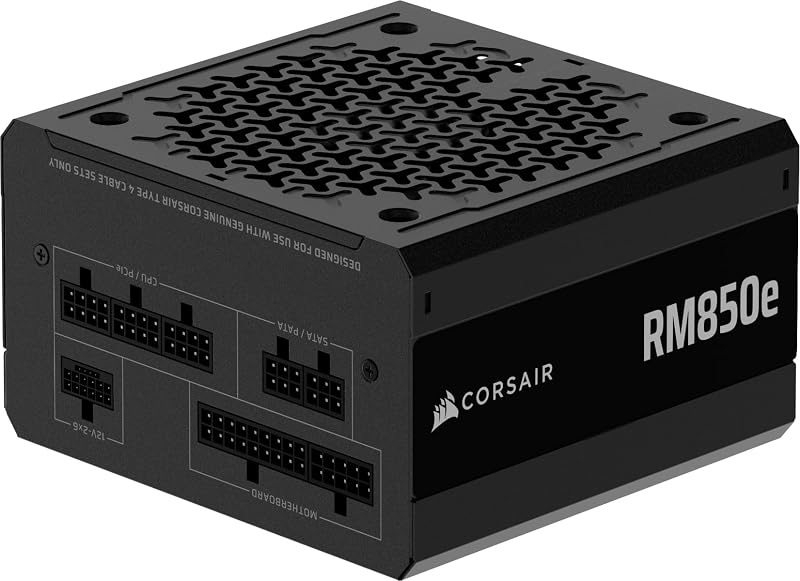


Write Your Review
No reviews yet. Be the first to share your experience!