

Building or upgrading a gaming PC on a budget means every dollar you spend on a graphics card needs to count. Whether you’re targeting smooth 1080p framerates or pushing into 1440p territory, the AMD lineup has compelling options across a wide range of performance tiers. The challenge is knowing which card actually fits your build, your monitor, and your power supply.
This guide covers nine AMD graphics cards worth considering in 2026, from entry-level options to upper-midrange performers. We evaluated each card based on architecture, memory configuration, cooling design, and real-world suitability. Whether you’re gaming on a modest rig or planning a fresh build, there’s a pick here for you. For more electronics coverage across categories, check out the Electronics section.
Quick Comparison
Ratings reflect the most recent data pull. Check each listing for current price and availability.
Quick answer
This guide compares 9 picks, with ASRock Radeon RX 9060 XT Challenger 16GB GDDR6 PCIe 5.0 ranked first. MAXSUN AMD Radeon RX 550 4GB GDDR5 Compact ITX GPU has the most customer reviews.

The impressive 3290 MHz boost clock paired with 16GB GDDR6 delivers exceptional performance per dollar for 1440p enthusiasts. That substantial memory buffer ensures smooth gameplay in VRAM-intensive titles where 8GB cards falter. The 0dB silent mode and LED indicator add quality-of-life features, while DisplayPort 2.1a and HDMI 2.1b support future display standards.
Pros
- 16GB GDDR6 is exceptionally generous for a budget-tier card
- 3290 MHz boost clock delivers 60+ fps at 1440p on high settings
- 0dB idle and mid-60s load temps keep noise and heat low
- Single 8-pin power connector works with existing 550W PSUs
Cons
- 128-bit memory bus limits headroom for 4K and heavy professional workloads
- Dual-fan cooler is adequate but trails the thermal headroom of triple-fan premium designs
For budget-focused gamers who refuse to compromise at 1440p, the ASRock Radeon RX 9060 XT Challenger 16GB OC makes a compelling case. Built on RDNA 4 architecture with 32 compute units and a 3290 MHz boost clock, it pushes past the performance ceiling of older mid-range cards, with users reporting 60+ fps on high settings in modern titles. The 16GB GDDR6 frame buffer is unusually generous for this tier, giving the card longevity as games grow more memory-hungry. Efficiency is a real budget-friendly bonus: a single 8-pin connector and a 550W PSU requirement mean upgraders avoid a costly power supply swap. The 0dB idle mode keeps things quiet during everyday use, and sustained load temps in the mid-60s reflect a cooler that punches above its price class. Ray tracing support and DisplayPort 2.1a future-proof the connectivity side. At 249mm, it slides into most mid-tower cases without planning around clearance. For the budget AMD GPU conversation in 2026, this card sits at the top of the mid-range bracket.
GPU: AMD Radeon RX 9060 XT (RDNA 4, 32 Compute Units)
Memory: 16GB GDDR6 at 20 Gbps on 128-bit bus
Clock Speeds: 3290 MHz boost, 2700 MHz game clock
Output: DisplayPort 2.1a, HDMI 2.1b
Max Resolution: 7680x4320 pixels
Power: Single 8-pin connector, 550W PSU recommended
Size: 249mm (L) x 132mm (W) x 41mm (H), 2-slot design
Cooling: Dual fans, 0dB idle mode
Interface: PCIe 5.0 x16
Weight: 0.98 kg
Warranty: 2 years manufacturer
This card suits 1440p gamers who want above-average VRAM, strong thermals, and RDNA 4 efficiency without paying flagship prices. It also works well for builders upgrading older systems that already have a 550W PSU. Skip it if your primary workload is 4K gaming or intensive professional rendering, where the 128-bit memory bus may become a bottleneck, or if your case cannot accommodate a 249mm card.

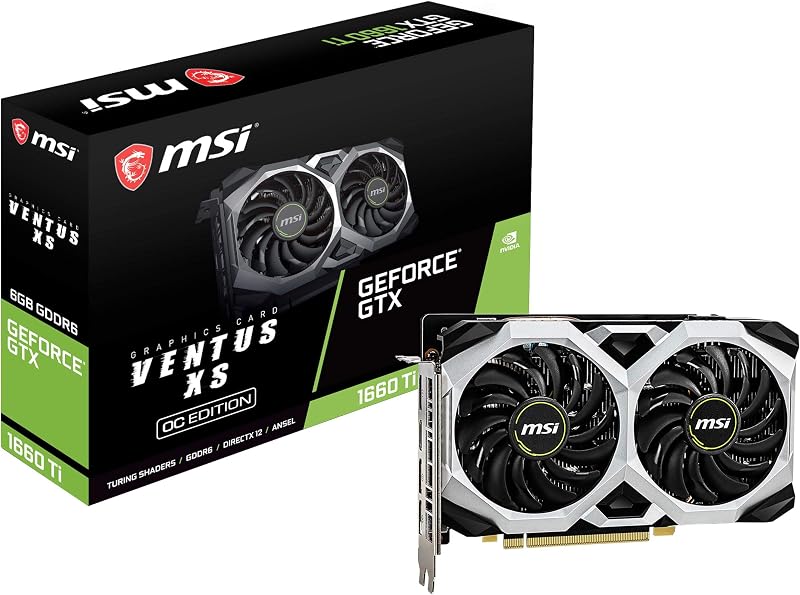
This NVIDIA card falls outside the AMD focus of this article and offers only 6GB GDDR6, which limits performance in modern games requiring more VRAM. The 1500 MHz clock speed trails behind current AMD budget offerings. For gamers seeking AMD value and future-proofing, the limited memory capacity makes this less suitable despite its OC Edition designation.
Pros
- Compact 20cm, 2-slot design fits tight cases and pre-built systems
- DLSS 3 support boosts 1080p frame rates in compatible games
- Dual Axial-tech fans with barrier ring deliver quiet, efficient cooling
- IP5X dust resistance and stainless steel bracket improve long-term reliability
Cons
- 6GB VRAM limits performance in demanding AAA titles and rules out practical 4K gaming
- NVIDIA card in an AMD-focused roundup means no AMD ecosystem features like FSR or Radeon Software
Budget AMD GPU seekers should note that the ASUS Dual RTX 3050 6GB is an NVIDIA card, so it sits outside the AMD family entirely. That said, its place in a budget GPU roundup is earned on its own merits. The Ampere-based 6GB GDDR6 card runs at a 1500 MHz GPU clock and fits a 2-slot, 20cm footprint, making it one of the most physically flexible options for upgraders squeezed by small cases or restricted power budgets. At 1080p it handles esports and lighter AAA titles at medium to high settings with smooth frame rates, and DLSS 3 support stretches performance further in compatible titles. The dual Axial-tech fans with barrier ring design keep thermals controlled and noise low under sustained load. IP5X dust resistance and a stainless steel bracket add durability beyond what the price tier usually offers. The 6GB frame buffer is the hard ceiling here: demanding modern AAA games and any 4K ambition will hit it quickly. For purely 1080p use on a tight budget with spatial constraints, the tradeoff is acceptable.
Best for system builders working inside small-form-factor or pre-built cases where a full-size GPU simply will not fit, and for anyone upgrading from integrated graphics on a modest power supply. Also suits light productivity users who need 3D or video-editing acceleration. Skip it if you want to stay in the AMD ecosystem, plan to game at 1440p or 4K, or need more than 6GB VRAM for modern titles.
GPU Architecture: NVIDIA GeForce RTX 3050 with Ampere SM, 2nd Gen RT Cores, and 3rd Gen Tensor Cores for DLSS 3 support.
Memory: 6GB GDDR6 with 1500 MHz memory clock speed, delivering adequate bandwidth for 1080p and light 1440p workloads.
Clock Speeds: OC Mode: 1500 MHz boost clock, Default Mode: 1470 MHz boost clock for flexible performance tuning.
Thermal Design: Dual Axial-tech fans, 2-slot form factor (20cm length, 7.9in x 4.7in), IP5X dust resistance, and stainless steel bracket.
Power: No external power connector required. PCIe x16 slot power delivery only, making it ideal for systems with limited PSU capacity.
Connectivity: HDMI 2.1, DisplayPort 1.4a, and DVI-D for multi-monitor setups and modern display standards.

The 2695 MHz boost clock squeezes impressive performance from the 8GB GDDR6 configuration, making it ideal for 1080p gamers on tight budgets. The 0dB silent fan mode means zero noise during light tasks or desktop use, perfect for those building quiet systems. RDNA 3 architecture brings efficiency improvements that keep power consumption reasonable without requiring expensive PSU upgrades.
Pros
- Highest factory boost clock among RX 7600 options at 2695 MHz
- 8GB GDDR6 at 18 Gbps handles modern textures comfortably at 1080p
- 0dB silent fan mode keeps the system quiet during light loads
- Single 8-pin connector works with modest 550W power supplies
Cons
- PCIe 4.0 x8 interface is less suitable for bandwidth-intensive GPU-compute tasks
- Limited real-world user reviews make long-term reliability harder to gauge
Among budget AMD options for 1080p gaming, the ASRock Radeon RX 7600 Challenger makes a strong case on raw clock speed alone. Its factory overclock pushes the RDNA 3 processor to a 2695 MHz boost, the highest boost figure of the RX 7600 cards in this roundup, and pairs it with 8GB of GDDR6 running at 9000 MHz on a 128-bit bus. That memory buffer is generous for the budget tier, giving modern game engines enough headroom to load high-resolution textures without stuttering. DirectX 12 Ultimate compliance brings ray tracing into reach even at this price point. The 0dB silent fan mode is a practical bonus for living-room or office builds where noise matters, cutting fan spin entirely during light workloads. At 269mm and a single 8-pin power requirement, it slots into compact systems without demanding a PSU upgrade. PCIe 4.0 x8 is worth noting for compute-heavy workloads but poses no issue for gaming. The three-year ASRock warranty offsets the limited real-world reliability track record.
GPU: AMD Radeon RX 7600 with 32 CUs and 2048 stream processors
Memory: 8GB GDDR6 at 18 Gbps on 128-bit bus
Clock Speeds: Boost 2695MHz, Game 2280MHz, Base 1770MHz
Interface: PCI Express 4.0 x8
Power: Single 8-pin connector, 550W PSU recommended
Cooling: Dual striped axial fans with ultra-fit heatpipe, 0dB silent mode
Outputs: 3x DisplayPort 1.4a with DSC, 1x HDMI 2.1 VRR, supports up to 4 displays at 8K
Dimensions: 269.2 x 131.8 x 40.3mm (2-slot card)
API Support: DirectX 12 Ultimate, OpenGL 4.6
Warranty: 3 years
The right pick for budget-focused AMD gamers who want the fastest out-of-box 1080p experience in this class and value a quiet card for shared living spaces or office setups. Also well suited to small-form-factor builders with modest power supplies. Skip it if your target is 1440p high-refresh gaming, if you run GPU-compute workloads that benefit from full PCIe bandwidth, or if you prefer a brand with a larger user review base.

The 12GB of GDDR6 memory provides ample headroom for modern gaming at 1440p without breaking the bank. This capacity ensures smooth performance in texture-heavy titles where budget cards with 8GB often struggle. The dual fan cooling keeps temperatures manageable during extended sessions, while the 2584 MHz boost clock delivers solid frame rates across popular esports and AAA games.
Pros
- 12GB GDDR6 with 48MB Infinity Cache handles 1440p without VRAM bottlenecks
- 0dB idle mode silences fans during light workloads
- Three DisplayPort 2.1 plus HDMI 2.1 outputs support high-refresh monitors
- Metal backplate adds rigidity and assists thermal performance
Cons
- White LED lighting cannot be customized, which may conflict with RGB builds
- One-year warranty is shorter than some competing cards in the same tier
When the goal is 1440p gaming on a budget without unnecessary extras, the ASRock RX 7700 XT Challenger 12GB OC is the practical choice. Built on RDNA 3 with 54 compute units, it targets high-refresh 1440p and handles less demanding 4K titles with 12GB GDDR6 on a 192-bit bus backed by 48MB of Infinity Cache. That memory configuration provides meaningful headroom for modern game assets without the cost premium of higher-tier cards. Reviewers report 70-plus FPS in demanding titles, and the 2584MHz boost clock keeps sustained performance consistent. The dual-fan cooling system with 0dB idle mode is a standout for budget builds where silence matters, particularly in home office or living room setups. Three DisplayPort 2.1 and one HDMI 2.1 output future-proof the display chain for high-refresh monitors. The metal backplate adds structural rigidity and assists heat dissipation. For gamers stepping up from a GTX 1070 or RTX 3060 class card, this delivers a noticeable generational leap at a sensible point on the budget spectrum.
Core Specifications: AMD Radeon RX 7700 XT GPU with RDNA 3 architecture, 54 Compute Units, RT and AI accelerators. 12GB GDDR6 memory on 192-bit bus with 48MB Infinity Cache. Game Clock 2226 MHz, Boost Clock up to 2584 MHz, Memory Clock 18,000 MHz.
Connectivity: 3x DisplayPort 2.1, 1x HDMI 2.1. PCIe 4.0 x16 interface. Dual 8-pin auxiliary power connectors. Maximum display resolution up to 7680x4320 pixels.
Physical: Dimensions 10.5 x 5.1 x 2.0 inches. Weight 2.2 pounds. Dual-fan cooling design. Metal backplate. 2-year spare part availability. 1-year warranty.
A strong pick for 1440p gamers upgrading from older mid-range cards like the GTX 1070 or RTX 3060 who want a clean performance jump without overspending. The silent idle mode suits living room and home office setups. Skip it if you want customizable RGB lighting, need a longer warranty than one year, or are building into a compact case without space for dual 8-pin connectors.

With 16GB of GDDR6 memory, this card future-proofs your build for demanding titles that require substantial VRAM. The 3060 MHz clock speed delivers excellent performance for gamers seeking high refresh rate gaming at 1440p or comfortable 4K experiences. PCIe 5.0 support ensures compatibility with modern platforms, making it a smart choice for budget-conscious enthusiasts building systems today.
Pros
- 16GB GDDR6 eliminates VRAM constraints at 1440p and 4K
- 160 to 220fps reported in modern AAA titles at 1440p high settings
- PCIe 5.0 ensures compatibility with current and future platforms
- WINDFORCE cooling with server-grade thermal gel runs quietly under load
Cons
- Requires at least a 750W power supply, ruling out older budget builds
- 11.34-inch length requires case compatibility check before purchase
For budget-conscious AMD fans who refuse to settle at 1080p, the GIGABYTE Radeon RX 9070 XT Gaming OC makes a compelling case as the ceiling of smart spending. Its 16GB GDDR6 buffer is the headline stat here: at a time when VRAM-starved cards choke on modern AAA titles, 16GB removes that ceiling entirely. Consistent user reports of 160 to 220fps at 1440p high settings confirm this is a card built for high-refresh gaming rather than just passing the bar. PCIe 5.0 support means it won't become a bottleneck in any current or near-future platform. The WINDFORCE cooling setup with server-grade thermal gel keeps thermals in check without intrusive fan noise, which matters when you're hunting every last frame. 4K is achievable at medium to high settings, giving this GPU genuine longevity. At 11.34 inches it fits most modern cases, and the silver-black design is understated enough to work in any build. For AMD budget shoppers, this is the performance target everything else is measured against.
Core Specifications
GPU: AMD Radeon RX 9070 XT
Memory: 16GB GDDR6
Memory Clock: 2600 GHz
GPU Clock: 3060 MHz
Interface: PCIe 5.0 x16
Max Resolution: 7680 x 4320 (8K)
Physical and Connectivity
Dimensions: 11.34 inches (L) x 5.2 inches (W)
Weight: 1.78 kg
Output: DisplayPort
Power Connectors: Dual 8-pin (750W+ PSU recommended)
Cooling: WINDFORCE system with Hawk fans and thermal gel
Warranty and Support
Manufacturer: GIGABYTE
Warranty: 3 years
Model: GV-R9070XTGAMING OC-16GD
Gaming Performance at Common Resolutions
1440p Gaming: 160-220fps on most modern AAA titles at high settings. Excellent for competitive gaming and high-refresh monitors.
4K Gaming: Playable at high settings on most titles, medium settings on demanding new releases. Solid for content creators monitoring in 4K.
Esports Titles: 300+ fps possible on optimized competitive games for ultra-high refresh gameplay.
Real-World Use Cases
Best suited for 1440p gaming at 144+ fps, 4K content creation workflows, professional 3D rendering, and VR gaming. Handles flight simulators like DCS at high settings with 4K head tracking. Eliminates VRAM constraints for media professionals working with large files.
Driver Recommendations
Run DDU (Display Driver Uninstaller) before installation if upgrading from another card. Install latest AMD drivers for maximum stability and performance. Update BIOS if required by your system for PCIe 5.0 compatibility.

The 16GB GDDR6 memory capacity paired with a 3030 MHz boost clock provides substantial performance for gamers targeting high settings at 1440p. This memory buffer prevents the stuttering and texture loading issues that plague 8GB cards in newer AAA titles. Native DisplayPort 2.1a and HDMI 2.1b outputs ensure compatibility with the latest high refresh rate monitors.
Pros
- Power draw of 180 to 190W runs 15 to 20W below comparable cards
- Dual BIOS with Quiet and Performance modes for flexible thermal management
- GPU temps stay below 60C under sustained load
- Native DisplayPort 2.1a and HDMI 2.1b cover all current display standards
Cons
- 12.3-inch length requires careful case compatibility check
- Some users encountered initial driver issues, though updates resolved them
The ASUS Prime RX 9070 XT OC Edition stands out in the budget AMD conversation for one underappreciated reason: power efficiency. Drawing 180 to 190W, typically 15 to 20W below competing cards at the same performance tier, it asks less of your power supply while delivering 4K-capable output and up to 3030MHz boost clocks. That matters on a budget build where every component dollar counts. The dual BIOS is a practical feature rather than a marketing checkbox: Quiet mode holds idle temps at 28 to 32C with near-silent fans, while Performance mode opens the throttle without thermal penalties. GPU temperatures staying below 60C under sustained stress speaks to the quality of the phase-change thermal pad setup and Axial-tech fans with dual-ball bearings rated for extended lifespan. At 16GB GDDR6 and PCIe 5.0, the spec sheet matches the top pick in this category. Users upgrading from older mid-range hardware report FPS gains around 50%, a figure that translates to genuinely transformative real-world play. DisplayPort 2.1a and HDMI 2.1b outputs cover every current monitor standard.
Memory and Bus: 16GB GDDR6, 256-bit interface, 3030 MHz memory clock
Architecture: AMD Radeon RX 9070 XT, PCIe 5.0 x16, 3030 MHz boost clock (OC mode), 2480 MHz game clock (OC mode)
Connectivity: 3x DisplayPort 2.1a, 1x HDMI 2.1b, maximum resolution 7680 x 4320
Cooling: 3x Axial-tech fans with dual-ball bearings, phase-change thermal pad, 0dB idle technology, 2.5-slot design
Software: Dual BIOS switch (Quiet and Performance profiles), GPU Tweak III for performance tuning and monitoring, ASUS GPU Guard protection
Dimensions and Power: 12.3 inches long, 5.1 inches wide, approximately 1500g, estimated 180-190W typical draw
Warranty: 3-year manufacturer coverage
Best suited to budget builders who want strong thermal performance in tighter cases, efficiency-minded gamers on modest power supplies, and Linux users who need reliable AMD driver support. The compact 2.5-slot design is a bonus for smaller builds. Skip it if you need the absolute maximum clockspeed money can buy, or if the 12.3-inch length is a problem for your chassis.

Pros
- Perfect for compact systems and older desktop PCs with space constraints
- No additional power supply requirements make installation straightforward
- Excellent thermal and acoustic performance with minimal fan noise
- Strong real-world reliability backed by positive user experiences across Linux and Windows
- Great value for casual gamers and content creators on a budget
Cons
- Entry-level performance, not suitable for high-refresh or 4K gaming
- Single fan design may limit extreme overclocking or continuous high-load scenarios
The MAXSUN Radeon RX 550 is a compact, energy-efficient graphics card designed for users upgrading legacy systems or building small-form-factor PCs. With 4GB of GDDR5 memory and 512 stream processors, it targets casual gamers, content creators, and professionals who need reliable GPU acceleration without breaking the bank or demanding extensive case space.
Performance and real-world use reveal a card that excels at 1080p gaming and professional workflows. Users consistently report smooth gameplay in modern titles, stable performance during 3D CAD/CAM work, and reliable video and photo editing capabilities. The 1183 MHz boost clock paired with 6000 MHz memory bandwidth provides genuine utility for these workloads, and the card's Linux compatibility, particularly with distributions like Linux Mint, makes it an excellent solution for open-source enthusiasts.
Build quality stands out for a budget card. The silver-plated PCB and all-solid capacitor design translate to lower operating temperatures and improved stability. The proprietary 9cm cooling fan operates quietly while delivering sufficient airflow, and the compact form factor means it fits into tight spaces without monopolizing valuable case real estate. Installation is straightforward, with no additional power connectors required on most systems.
The main limitation is performance ceiling. This card is not designed for high-refresh gaming, 4K resolution, or demanding AI workloads. Heavy sustained loads could challenge the single-fan thermal design. However, for the intended audience of budget-conscious users upgrading aging systems or those prioritizing silent operation and efficiency over raw power, these constraints are acceptable tradeoffs.
The MAXSUN Radeon RX 550 delivers genuine value and proven reliability. It's the smart choice for Linux users, compact PC builders, and anyone seeking a no-fuss, low-power GPU upgrade that simply works without unnecessary complexity or expense.
GPU: AMD Radeon RX 550
Memory: 4GB GDDR5 (6000 MHz)
Architecture: Polaris, 512 Stream Processors
Clock Speed: Up to 1183 MHz boost
Interface: PCI-Express x16 (backward compatible with x8)
Power: No additional connectors required
Display Outputs: HDMI, DisplayPort, DVI-D Dual Link
Max Resolution: 7680 x 4320
Dimensions: 7.28 inches L x 4.44 inches W
Weight: 198g
Cooling: Single 9cm fan
Warranty: 3 years
DirectX: Version 12
OpenGL: 4.5/4.6
Best For: This card excels for legacy PC upgrades, Linux systems, compact builds, and budget-conscious users. It's ideal for 1080p gaming, professional work in CAD/CAM and content editing, and anyone needing reliable GPU support without high power demands.
Not Ideal For: Competitive or high-refresh gaming, 4K resolution work, or AI applications requiring substantial GPU compute resources.
System Requirements: Any desktop with a free PCI-Express x16 or x8 slot. No additional power supply capacity needed. Compatible with Windows, Linux, and macOS systems.
Installation Tips: Install latest drivers from AMD's official website for optimal performance. Linux Mint and other Debian-based distributions offer excellent out-of-the-box support. The compact size means it fits nearly any case design.

The 8GB GDDR6 memory handles 1080p gaming well, though the lack of listed clock speed raises questions about performance consistency. Three DisplayPort outputs provide excellent multi-monitor flexibility for budget gamers running secondary displays. RDNA 3 architecture brings modern features and efficiency to entry-level builds, though competing models often specify more detailed performance metrics.
Pros
- 130W TDP suits compact builds and modest power supplies
- SWFT dual-fan cooler runs in the mid-to-upper 70s at just 60 percent fan speed
- 9.49-inch length fits cases where larger cards cannot
- Fans idle silently, keeping the system quiet during everyday tasks
Cons
- 8GB VRAM limits longevity as modern titles increase memory demands
- Performance headroom for 1440p ultra settings and 4K gaming is minimal
The XFX Speedster SWFT210 RX 7600 occupies the entry point of the budget AMD GPU lineup, and it earns that spot through consistent real-world efficiency rather than headline specs. RDNA 3 architecture paired with 8GB GDDR6 running at 17.5 GHz memory clock delivers smooth 1080p gameplay across modern titles and holds its own at 1440p in less demanding games. The 130W power draw is one of the lowest in its class, which means smaller PSUs stay in play and electricity costs stay down over time. The XFX SWFT dual-fan cooler keeps load temps in the mid-to-upper 70s at only 60 percent fan speed, and fans cut out entirely at idle. Physically, the 9.49-inch length and 900-gram weight open doors to compact builds that larger cards simply cannot enter. Three DisplayPort outputs alongside HDMI give flexible multi-monitor options. VR titles including Half-Life: Alyx run well with proper driver setup. This is the card for builders whose priority is a quiet, efficient, fit-anywhere GPU that handles mainstream gaming without excess.
GPU Architecture: AMD RDNA 3
Memory: 8GB GDDR6 at 17.5 GHz
Boost Clock: Up to 2655 MHz
Power Consumption: 130W typical gaming load
Cooling: XFX SWFT Dual Fan solution
Dimensions: 9.49" L x 5.16" W
Weight: 900g
Outputs: HDMI + 3x DisplayPort
Max Resolution: 7680x4320
Interface: PCI Express
Warranty: 3-year manufacturer coverage
Ideal For: 1080p and 1440p gaming at 60fps, indie and retro games, esports titles, emulation, VR gaming at moderate settings, small-form-factor PC builds, office and CAD workstations that need basic GPU support, Linux gaming environments, and upgrades from GTX 1600-series cards.
Not Recommended For: High-end 4K gaming, rendering and 3D modeling workloads, machine learning projects, extreme overclocking, or competitive settings where 144+ fps is critical.

The 8GB GDDR6 memory paired with a 2655 MHz clock speed handles 1080p gaming effortlessly across most titles. Three DisplayPort outputs alongside HDMI give budget gamers flexibility for multi-monitor setups without sacrificing connectivity. RDNA 3 architecture ensures modern feature support and solid efficiency, making this a practical entry point for AMD fans seeking reliable performance.
Pros
- PCIe 4.0 x16 interface provides full bandwidth, the broadest connection among these RX 7600 cards
- Dual-fan SWFT cooler runs quietly under load, uncommon at this price
- 8GB GDDR6 with 18 Gbps memory speed handles 1080p textures and multitasking well
- Three-year warranty and low power draw suit budget builds with modest PSUs
Cons
- AMD FSR upscaling produces noticeably softer images compared to NVIDIA DLSS alternatives
- 1440p gaming requires significant settings compromises and 4K is not practical
The XFX Speedster SWFT210 RX 7600 is a textbook budget AMD GPU for 1080p gaming. Built on RDNA 3 with 8GB of GDDR6 and a 2655 MHz boost clock, it delivers smooth, high-detail frame rates in modern titles and holds up well during multitasking scenarios like gaming while streaming. Its PCIe 4.0 x16 interface gives it the fullest bandwidth connection of the RX 7600 cards here, a minor but real advantage for future-proofing. The SWFT dual-fan cooler draws consistent praise for running quietly even under load, a rarity at this price tier, and the card's compact profile fits mid-tower and smaller cases without disrupting system airflow. A 600W PSU is sufficient, and heat output stays low relative to higher-performance cards. AMD's FSR upscaling is on board, though the existing write-up notes it produces softer images than NVIDIA's competing solution, which is worth knowing before you buy. A three-year warranty rounds out a reliability package that gives genuine confidence for a first AMD discrete GPU purchase.
GPU: AMD Radeon RX 7600 (RDNA 3 Architecture)
Memory: 8GB GDDR6
Memory Clock: 18 GHz
Boost Clock: Up to 2655 MHz
Maximum Resolution: 3840 x 2160 pixels
Video Outputs: 1x HDMI, 3x DisplayPort
Interface: PCI Express x16
Cooling: XFX SWFT Dual Fan
Power Consumption: Low (600W PSU compatible)
Warranty: 3 Years Manufacturer
Weight: 2 kg
Model: RX-76PSWFTFA
A natural fit for first-time discrete GPU buyers who want a proven, quiet AMD card for 1080p gaming without overhauling their power supply. Content creators doing video editing or 3D work on a budget will also benefit from the 8GB buffer. Pass on this card if you are targeting 1440p at high refresh rates, need 4K capability, or prioritize the sharpest possible upscaled image quality.
How to Choose the Right AMD GPU for Your Budget
Target Resolution and Refresh Rate
Your monitor determines more about your GPU choice than almost any other factor. If you’re gaming at 1080p on a 144Hz display, a card like the maxsun AMD Radeon RX 550 4GB GDDR5 ITX Computer PC can handle lighter titles and older games without breaking a sweat. For competitive 1080p gaming with modern titles, the ASRock Radeon RX 7600 Challenger 8GB OC, RDNA 3 is a strong entry point.
Stepping up to 1440p changes the equation considerably. Cards like the ASRock Radeon RX 7700 XT Challenger 12GB OC with its 12GB GDDR6 on a 192-bit bus are built for that resolution. If you want to push 1440p at high framerates without compromise, the ASRock Radeon RX 9060 XT Challenger 16GB OC with its RDNA 4 architecture and 16GB of GDDR6 is purpose-built for exactly that workload.
VRAM: How Much Do You Actually Need
Modern games are increasingly VRAM-hungry, and buying a card with too little memory today means shorter useful life. At 1080p, 8GB is the practical minimum for current and near-future titles. The XFX Speedster SWFT210 Radeon RX 7600 Graphics Card hits that mark with 8GB GDDR6 and RDNA 3 efficiency.
At 1440p and beyond, 12GB to 16GB gives you meaningful headroom. The GIGABYTE Radeon RX 9070 XT Gaming OC 16G Graphics and ASUS Prime Radeon RX 9070 XT 16GB GDDR6 OC Edition both land at 16GB, making them future-resistant picks for high-resolution rigs.
Power Supply and Case Clearance
It’s easy to overlook physical compatibility until a card arrives and doesn’t fit. The ASRock Radeon RX 7600 Challenger 8GB OC, RDNA 3 measures 269.2mm long and requires a single 8-pin connector with a recommended 550W PSU, which is fairly accessible. The maxsun AMD Radeon RX 550 4GB GDDR5 ITX Computer PC goes even smaller with its ITX form factor, ideal for compact builds.
Larger cards like the ASRock Radeon RX 7700 XT Challenger 12GB OC require dual 8-pin connectors and more chassis space. Always measure your case’s GPU clearance and confirm your PSU wattage before purchasing. A card that exceeds your PSU’s rated output will cause instability regardless of how capable the GPU itself is.
Architecture Generation and Feature Support
AMD’s RDNA generations matter beyond raw performance numbers. RDNA 3 cards like the RX 7600 and RX 7700 XT bring hardware ray tracing, DisplayPort 2.1, and improved AI acceleration compared to older generations. RDNA 4, found in the ASRock Radeon RX 9060 XT Challenger 16GB OC, pushes further with 3rd Gen Ray Tracing and 2nd Gen AI Accelerators alongside PCIe 5.0 support.
If you’re building a long-term system, choosing a newer architecture gives you better driver support and feature longevity. The RX 550, while capable for light use, runs on an older architecture with fewer modern features. It suits very specific use cases like media playback, office work with light gaming, or ITX builds where space is the primary constraint. You can browse the full Graphics Cards category for additional comparisons.
Final Thoughts
For most buyers hunting a capable budget AMD GPU in 2026, the choice comes down to what resolution you’re gaming at and how much headroom you want. If 1080p is your target and you want RDNA 3 efficiency in a compact, affordable package, the ASRock Radeon RX 7600 Challenger 8GB OC is a well-rounded pick with solid clock speeds and a single power connector that keeps installation simple. If you’re ready to game at 1440p with next-gen architecture, the ASRock Radeon RX 9060 XT Challenger 16GB OC delivers RDNA 4 performance, 16GB of GDDR6, and a 3290MHz boost clock in a dual-fan cooling package that punches well above its class.
Frequently Asked Questions
What is the best budget AMD GPU for 1080p gaming in 2026?
The ASRock Radeon RX 7600 Challenger 8GB OC, RDNA 3 is one of the strongest options for 1080p gaming. It combines a 2695MHz boost clock, 8GB GDDR6, and RDNA 3 architecture in a single-slot power configuration. The XFX Speedster SWFT210 Radeon RX 7600 Graphics Card is another solid choice at the same performance tier with XFX’s dual-fan cooling solution.
Is 8GB VRAM enough for gaming in 2026?
For 1080p gaming, 8GB remains sufficient for the vast majority of current titles, though some newer open-world games are beginning to push into higher VRAM usage at ultra settings. If you plan to game at 1440p or keep your card for several years, stepping up to 12GB or 16GB gives you more breathing room. Cards like the ASRock Radeon RX 7700 XT Challenger 12GB OC offer that extra headroom without moving into the top end of the market.
What should I look for in an AMD GPU for a small form factor build?
Compact builds prioritize card length and slot width above almost everything else. The maxsun AMD Radeon RX 550 4GB GDDR5 ITX Computer PC is purpose-built for ITX cases with its small footprint and low power draw, making it a reliable option for home theater PCs or compact office rigs. Always check your case’s maximum GPU length spec before purchasing, since even mid-range cards can exceed 270mm. For related reading on compact electronics builds and component compatibility, the Electronics hub has additional guides worth browsing.
How does AMD’s RDNA 4 architecture compare to RDNA 3 for budget buyers?
RDNA 4 brings meaningful generational improvements over RDNA 3, including upgraded ray tracing hardware, second-generation AI accelerators, and PCIe 5.0 support. In practical terms, you get better performance per watt and improved rasterization in the same thermal envelope. The ASRock Radeon RX 9060 XT Challenger 16GB OC is currently the accessible entry point into RDNA 4, and its 16GB memory configuration makes it competitive at 1440p where RDNA 3 cards at similar tiers carry less VRAM.




Write Your Review
No reviews yet. Be the first to share your experience!