

You just picked up a 165Hz 1080p monitor and now your GPU is the bottleneck. Whether you are dropping frames in fast-paced shooters or struggling to maintain a consistent refresh rate in open-world titles, the graphics card is what determines whether that high-refresh panel actually delivers on its promise. Getting the right match for 1080p at 165Hz means balancing raw performance, memory capacity, and power efficiency without spending more than you need to.
This guide covers ten of the strongest GPU options available right now, from budget-friendly cards that punch above their weight to premium options built for those who want headroom to spare. Whether you are building a new rig or upgrading an existing one, the picks below span a wide range of performance tiers so you can find the right fit.
Quick Comparison
Ratings reflect the most recent data pull. Check each listing for current price and availability.
Quick answer
This guide compares 10 picks, with ASRock Radeon RX 9060 XT Challenger 16GB GDDR6 PCIe 5.0 ranked first. MSI RTX 3060 12GB Gaming Graphics Card - 1440p High has the most customer reviews.

With 16GB GDDR6 memory and an impressive 3290 MHz boost clock, this card delivers both the memory capacity and raw speed needed for sustained 165Hz gaming at 1080p. The DisplayPort 2.1a output ensures full bandwidth for high-refresh monitors while the generous VRAM buffer prevents hitching in texture-streaming scenarios. The combination makes it excellent for both competitive shooters and visually demanding single-player games.
Pros
- 16GB VRAM provides exceptional headroom at 1080p
- 3290 MHz boost delivers performance well above 165Hz targets
- Mid-60s temperatures with near-silent 0dB idle cooling
- 550W PSU requirement and compact 249mm length
Cons
- Performance capability exceeds baseline 1080p 165Hz needs
- Higher cost than cards targeting this resolution specifically
The ASRock Radeon RX 9060 XT Challenger exceeds 1080p 165Hz requirements with substantial overhead, making it a forward-looking choice for this use case. The RDNA 4 architecture with 32 compute units and 3290 MHz boost clock pushes well beyond 165 fps in competitive titles and maintains high frame rates in demanding single-player games at 1080p with settings maximized. Users report 60+ fps at 1440p high settings, meaning 1080p performance leaves refresh rate targets easily satisfied. The 16GB GDDR6 memory provides exceptional headroom for texture quality and future-proofs against VRAM limitations that plague smaller buffers. Thermal performance stands out with sustained mid-60s temperatures under load and near-silent operation thanks to 0dB idle fans. The single 8-pin connector requires only a 550W PSU, simplifying builds and upgrades. At 249mm length, the dual-fan cooler fits standard cases without spatial concerns. Ray tracing support handles modern rendering features competently. The main consideration is capacity beyond the 165Hz 1080p target, as this card delivers 1440p-class performance that may exceed immediate needs for this specific resolution and refresh rate.
GPU: AMD Radeon RX 9060 XT (RDNA 4, 32 Compute Units)
Memory: 16GB GDDR6 at 20 Gbps on 128-bit bus
Clock Speeds: 3290 MHz boost, 2700 MHz game clock
Output: DisplayPort 2.1a, HDMI 2.1b
Max Resolution: 7680x4320 pixels
Power: Single 8-pin connector, 550W PSU recommended
Size: 249mm (L) x 132mm (W) x 41mm (H), 2-slot design
Cooling: Dual fans, 0dB idle mode
Interface: PCIe 5.0 x16
Weight: 0.98 kg
Warranty: 2 years manufacturer
Ideal for gamers wanting performance beyond 165Hz 1080p minimums, those planning future monitor upgrades to 1440p, or anyone seeking maximum settings with ray tracing at this resolution. The 16GB VRAM suits multitaskers and content creators gaming on the side. Skip this if your budget is tight and you only need baseline 165Hz performance, or if 1080p gaming is your absolute ceiling with no upgrade plans, as cheaper options handle this target adequately.

With 6GB GDDR6 memory and a 1500 MHz boost clock, this entry-level option handles less demanding esports titles at 165Hz but struggles with AAA games at maximum settings. The limited VRAM becomes a constraint in texture-heavy environments, making this suitable primarily for competitive shooters and older games where high refresh rates matter more than visual fidelity. It represents a budget-conscious starting point for high-refresh gaming.
Pros
- Easily exceeds 165 FPS in competitive esports titles
- 20cm compact design fits small-form-factor and pre-built cases
- DLSS 3 upscaling boosts performance in supported games
- Dual Axial-tech fans keep temps controlled with low noise
Cons
- 6GB VRAM limits performance in demanding modern AAA games
- Ray tracing remains a secondary feature versus traditional rasterization
The ASUS Dual RTX 3050 6GB hits the entry point for 1080p 165Hz gaming with surgical precision. In esports titles like Valorant, CS2, and Overwatch, this card pushes well past 165 FPS at high settings, making it a natural match for competitive players who prioritize responsiveness. Lighter AAA games and older catalog titles run smoothly at medium to high settings, while DLSS 3 upscaling stretches performance further in supported games without visible quality loss. The compact 20cm length and 2-slot design solve real problems for upgraders stuck with pre-built systems or small-form-factor cases where physical space dictates GPU choice more than preference. Thermal performance stays solid thanks to dual Axial-tech fans with barrier rings that increase air pressure, keeping noise low and temps controlled even during extended play sessions. The stainless steel bracket and IP5X dust resistance add durability that budget cards often sacrifice. Power efficiency matters here too, as the modest draw lets this card work in systems with basic PSUs. DisplayPort and HDMI outputs cover standard monitor setups without fuss.
Buy this if you play esports titles competitively and need a high-refresh experience without spending mid-range money, or if you're upgrading a pre-built system with tight physical and power constraints. Also works well for productivity users who need GPU acceleration for video editing or 3D modeling alongside casual gaming. Skip if you play the latest demanding AAA titles at maximum settings, as the 6GB VRAM becomes a limiting factor. Also pass if you already own a stronger GPU, since this represents a step down in capability.
GPU Architecture: NVIDIA GeForce RTX 3050 with Ampere SM, 2nd Gen RT Cores, and 3rd Gen Tensor Cores for DLSS 3 support.
Memory: 6GB GDDR6 with 1500 MHz memory clock speed, delivering adequate bandwidth for 1080p and light 1440p workloads.
Clock Speeds: OC Mode: 1500 MHz boost clock, Default Mode: 1470 MHz boost clock for flexible performance tuning.
Thermal Design: Dual Axial-tech fans, 2-slot form factor (20cm length, 7.9in x 4.7in), IP5X dust resistance, and stainless steel bracket.
Power: No external power connector required. PCIe x16 slot power delivery only, making it ideal for systems with limited PSU capacity.
Connectivity: HDMI 2.1, DisplayPort 1.4a, and DVI-D for multi-monitor setups and modern display standards.

The 10GB GDDR6 memory and 2600 MHz clock speed position this as a capable mid-range option for 1080p high-refresh gaming. With DisplayPort 2.1 and HDMI 2.1a outputs, it fully supports modern 165Hz monitors without compromising signal bandwidth. The 0dB cooling technology keeps noise low during lighter gaming sessions while maintaining performance when frame rates climb above 165 fps in competitive titles.
Pros
- 10GB VRAM prevents bottlenecks at 1080p high refresh rates
- XeSS 2 upscaling boosts frame rates without visible quality loss
- 0dB silent cooling stops fans entirely at idle and low loads
- Metal backplate and premium build quality exceed budget expectations
Cons
- Intel Arc driver ecosystem remains newer than NVIDIA and AMD
- Not positioned for 4K gaming performance
The ASRock Arc B570 Challenger brings 10GB GDDR6 and a 2600 MHz GPU clock to 1080p 165Hz gaming at a budget tier where compromises usually run deep. Intel's Xe2-HPG architecture with XeSS 2 upscaling delivers smooth frame rates in modern titles at high settings, and the AI-powered scaling technology adds headroom when you need extra frames without visual degradation. Real-world performance keeps demanding games playable while competitive titles sail past the 165Hz target with ease. The 10GB buffer provides breathing room that 6GB and 8GB cards lack, reducing stuttering in VRAM-intensive scenes and future-proofing against rising texture demands. Build quality punches above its weight class: dual striped axial fans with 0dB silent cooling stop entirely during light loads and desktop use, then spin up quietly under gaming stress. The metal backplate prevents sag while adding rigidity that budget cards rarely include. Connectivity covers all bases with three DisplayPort 2.1 and one HDMI 2.1a output, supporting multiple high-refresh monitors simultaneously. The single 8-pin power connector simplifies installation without adapter frustration.
The Arc B570 excels at 1440p gaming, maintaining high frame rates with maxed or near-maxed settings in modern AAA titles like Assassin's Creed Resync, Subnautica 2, and God of War. The 10GB VRAM buffer ensures smooth performance without stuttering even in VRAM-intensive scenarios with multiple monitors or intensive applications running simultaneously.
XeSS 2 technology provides meaningful performance boosts through AI-powered upscaling without sacrificing perceived image quality. Users report stable gameplay and low thermal temps, with the card operating at just 45-56 degrees Celsius at zero RPM and averaging around 68 degrees under sustained gaming loads. Idle power consumption is remarkably low at 18-21 watts during light tasks like streaming and multi-monitor work.
The card handles both 1080p ultra settings and 1440p high settings comfortably. While not positioned as a 4K solution, users seeking budget-friendly 1440p gaming will find this card highly capable and reliable across current and near-future game libraries.
GPU: Intel Arc B570 (Xe2-HPG Architecture)
Memory: 10GB GDDR6, 160-bit bus
Clock Speeds: 2600 MHz GPU, 19 Gbps Memory
Power: Single 8-pin connector
Interface: PCIe 4.0 x8
Display Outputs: 3x DisplayPort 2.1, 1x HDMI 2.1a
Max Resolution: 7680 x 4320
Cooling: Dual striped axial fans with 0dB Silent Cooling
Backplate: Metal with structural reinforcement
Weight: 0.99 kg
Warranty: 2 Years Manufacturer
Media Engine: Advanced with AV1 encoding support
DirectX Support: 12 Ultimate

Pros
- Triple-fan cooling for quieter operation and thermal headroom
- 8GB GDDR6 handles 1080p texture streaming effectively
- RDNA 3 architecture provides current-generation efficiency
- 0dB silent mode stops fans during light workloads
Cons
- 8GB VRAM ceiling limits headroom for future titles
- Ray tracing performance secondary to rasterization focus
The ASRock Radeon RX 7600 Challenger Pro 8GB OC targets 1080p 165Hz gaming directly with its RDNA 3 architecture and triple-fan cooling solution. The 2695 MHz memory clock paired with 8GB GDDR6 provides sufficient bandwidth and capacity for high-refresh gaming at this resolution. The 2280 MHz GPU clock from the Radeon RX 7600 chip delivers competitive frame rates in modern titles when settings balance visual quality with refresh rate targets. Triple fans distinguish this model from reference dual-fan designs, offering enhanced thermal headroom and quieter operation during extended sessions. The 0dB silent feature stops fans entirely during light loads and desktop use, reducing system noise between gaming sessions. RDNA 3 brings current-generation efficiency and feature support including ray tracing capabilities, though the architecture focuses performance on rasterization workloads where 165Hz targets matter most. The PCIe 4.0 interface maintains compatibility with current motherboards while the 8GB VRAM handles texture streaming at 1080p without bottlenecks in most titles. DisplayPort and HDMI outputs cover standard connectivity needs. This card sits in the sweet spot for gamers whose primary goal is smooth 165Hz performance at 1080p without overspending on capabilities targeting higher resolutions.
GPU AMD Radeon RX 7600 (RDNA 3 Architecture, 32 Compute Units)
Memory 8GB GDDR6 at 18 Gbps, 128-bit interface, 288 GB/s bandwidth
Clocks Game Clock 2280 MHz, Boost Clock up to 2695 MHz
Stream Processors 2048
Cache 32MB AMD Infinity Cache
Connectivity 3x DisplayPort 1.4a with DSC, 1x HDMI 2.1 (supports up to 4 displays, 8K resolution)
Interface PCIe 4.0 x8 (compatible with PCIe 4.0 and 3.0 motherboards)
Power Single 8-pin connector, 550W recommended PSU
Cooling Triple-fan Challenger Pro design with 0dB silent mode
Dimensions 303mm (L) x 131mm (W) x 45mm (H), 2.5-slot card
Warranty 3 years manufacturer

The 12GB GDDR6 configuration with 192-bit memory bus provides excellent bandwidth for consistent frame delivery at 165Hz in 1080p gaming. With an 1837 MHz boost clock and ample VRAM, this card handles modern titles with high texture settings without memory bottlenecks. The PCIe 4 interface and 15 Gbps memory speed ensure data flows smoothly, making it a reliable choice for high-refresh gaming.
Pros
- 12GB GDDR6 memory handles texture-heavy games easily
- Easily exceeds 165fps in competitive esports titles
- Twin Fan cooling keeps temperatures and noise low
- Three DisplayPort and HDMI 2.1 outputs for flexibility
Cons
- 2020 architecture trails newer cards in ray tracing
- Power efficiency lower than RTX 40 and 50 series
For 1080p gaming at 165Hz, the MSI Gaming GeForce RTX 3060 delivers exactly what you need without overspending on unnecessary 4K capability. Built on NVIDIA's Ampere architecture with 12GB of GDDR6 memory, this card consistently pushes frame rates well beyond 165fps in competitive esports titles like CS2 and Valorant. The generous memory buffer proves valuable when cranking up texture quality in modern AAA games, letting you max out visual settings while maintaining the high refresh rates your monitor demands. MSI's Torx Twin Fan cooling solution keeps temperatures controlled and noise levels low during marathon gaming sessions, so thermal throttling won't interrupt your gameplay. The card includes HDMI 2.1 and three DisplayPort 1.4a outputs for flexible display connectivity. While its 2020 architecture means ray tracing performance trails newer RTX 40 and 50 series cards, raw rasterization performance at 1080p remains excellent. Installation is straightforward, and MSI's software lets you fine-tune fan curves and clock speeds. For the 1080p 165Hz sweet spot, this GPU hits the performance target consistently without pushing into premium pricing territory.
GPU: NVIDIA GeForce RTX 3060 Ampere Architecture
Memory: 12GB GDDR6
GPU Clock Speed: 1837 MHz
Memory Clock Speed: 1807 MHz
Memory Interface: 192-Bit
Max Power Draw: 170W
Interface: PCI-Express 4.0 x16
Video Outputs: 3x DisplayPort 1.4a, 1x HDMI 2.1
Max Resolution: 7680x4320
Cooling: Twin-Fan Design
Dimensions: 9.25 inches L x 4.88 inches W
Weight: 340g
Warranty: 3 Years
Model: RTX 3060 Ventus 2X 12G OC
Manufacturer: MSI
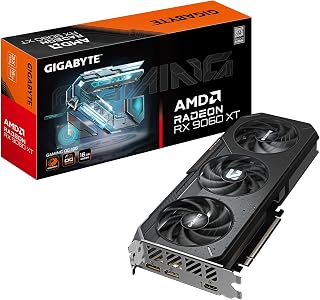
The 16GB GDDR6 memory paired with a 2700 MHz boost clock provides strong performance headroom for 1080p gaming well beyond 165 fps. This substantial VRAM allocation eliminates memory bottlenecks in modern titles while the PCIe 5.0 interface ensures maximum data throughput. The combination of high memory capacity and competitive clock speeds makes it well-suited for gamers prioritizing both visual quality and refresh rate.
Pros
- Maintains high frame rates at 1080p maximum settings
- WINDFORCE cooling stays below 68C and remains quiet
- 16GB VRAM eliminates constraints at this resolution
- Strong value for the performance delivered
Cons
- Single HDMI port limits multi-monitor flexibility
- Performance exceeds needs for esports-focused users
For 1080p 165Hz gaming, the GIGABYTE RX 9060 XT hits a performance sweet spot without unnecessary overhead. The RDNA 4 architecture and 16GB GDDR6 memory push frame rates well beyond 165fps on maximum settings across modern titles, giving you the flexibility to enable every visual option your games offer. Where this card distinguishes itself is thermal management: the WINDFORCE cooling system keeps temperatures below 68C while maintaining quiet operation, which matters during long gaming sessions. The 2700MHz clock speed and PCIe 5.0 interface ensure compatibility with current systems and enough bandwidth for texture streaming at high refresh rates. Build quality feels solid with a sturdy backplate, and users report stable performance across demanding applications beyond gaming. The 16GB memory buffer eliminates any concern about VRAM constraints at this resolution, even with high-resolution texture packs. Physical installation is straightforward for most cases, and the cooling remains effective without requiring aggressive fan curves. The single HDMI port limits multi-monitor flexibility if you rely on HDMI connections rather than DisplayPort. This card provides exactly what 1080p 165Hz requires without pushing into premium territory where you pay for performance you cannot use at this resolution.
GPU Architecture: AMD RDNA 4, Radeon RX 9060 XT with 16GB GDDR6 memory and 20,000 MHz memory speed. Clock speed reaches 2,700 MHz with PCIe 5.0 interface for maximum bandwidth.
Gaming Performance: Delivers smooth 1080p gaming at ultra settings with frame rates exceeding 100 FPS in most titles. At 1440p on high to ultra settings, frame rates remain consistent and smooth. Esports games run at very high FPS with minimal temperature impact.
Display Support: Supports 7680x4320 resolution output via DisplayPort and HDMI, accommodating ultra-wide and professional multi-monitor configurations. Compact dimensions (11.06 inches length) fit most standard desktop cases.
Thermal Performance: The WINDFORCE cooling system excels, maintaining temperatures under 68 degrees Celsius during intensive workloads. Fans operate quietly throughout normal gaming and even demanding professional applications.
Ideal for gamers committed to 1080p 165Hz who want maximum settings without premium pricing, especially those building mid-range systems or upgrading from older hardware. Users who value quiet cooling and thermal efficiency during extended sessions will appreciate the WINDFORCE design. Skip this if you need multiple HDMI outputs for your monitor setup or if you are planning to move to 4K high-refresh gaming soon. Buyers focused on esports titles at lower settings can save money with less capable options.

The 12GB GDDR7 memory configuration delivers exceptional bandwidth for handling high refresh rate gaming at 1080p resolution. With a 2640 MHz boost clock and next-generation memory technology, this card maintains consistent frame pacing above 165 fps in modern titles. The triple DisplayPort 2.1a outputs ensure you can connect high-refresh monitors without bottlenecks, making it an excellent match for competitive gamers targeting smooth gameplay.
Pros
- DLSS 4 and ray tracing stay smooth at 1080p ultra settings
- Excellent thermal performance with quiet three-fan cooling
- Military-grade components and protective coating for durability
- Massive headroom for future game releases at this resolution
Cons
- Substantial 13-inch length and 3.125-slot thickness
- Significant performance overhead for current 1080p demands
At 1080p 165Hz, the ASUS TUF RTX 5070 OC delivers far more horsepower than the resolution demands, which translates to consistent ultra settings with ray tracing enabled and headroom that future-proofs your display investment. The 12GB GDDR7 memory and 2640MHz boost clock handle demanding titles without breaking a sweat, while DLSS 4 support ensures you maintain triple-digit frame rates even when visual fidelity is maxed out. The Blackwell architecture brings efficiency gains that matter for extended gaming sessions, and the three Axial-tech fans keep temperatures around 65C under sustained load. Build quality stands out with military-grade components and protective PCB coating that justify the premium positioning. The 3.125-slot cooling design manages heat without excessive noise, and the included anti-sag bracket addresses a common concern with heavier cards. Physical dimensions require attention since the 13-inch length and substantial thickness demand a roomy case. This represents significant overhead for 1080p 165Hz, but that overhead means you will not need to compromise settings or worry about performance drops for years to come.
GPU and Memory: NVIDIA GeForce RTX 5070, 12GB GDDR7, 2640MHz boost clock, PCIe 5.0 interface
Cooling and Design: 3.125-slot form factor, three Axial-tech fans, phase-change thermal pad, protective PCB coating, military-grade components, GPU Guard bracket
Connectivity: 3x DisplayPort 2.1a, 2x HDMI 2.1b, 7680x4320 maximum resolution support
Physical: 13 inches long, 5.5 inches wide, 3.4 pounds, includes cooling bracket and stand
Warranty and Support: 3-year manufacturer warranty, GPU Tweak III software for performance monitoring and thermal control
Best suited for enthusiasts pairing a 1080p 165Hz monitor with a no-compromise build, particularly those planning to keep their system for several years or who intend to upgrade their display later. Gamers who prioritize ray tracing, maximum visual settings, and absolute stability will appreciate the overhead. Skip this if your budget is tight or your case cannot accommodate a 13-inch card over three slots thick. Users focused strictly on 1080p esports titles will find cheaper options that still max out 165Hz without the premium cost or physical footprint.

The 6GB GDDR6 configuration and 1492 MHz boost clock limit this card to esports and less graphically intensive games at 165Hz. While the 14 Gbps memory speed helps maintain frame consistency in fast-paced shooters, the restricted VRAM capacity means you'll need to reduce texture quality in modern AAA titles. It works for competitive gaming where high refresh rates outweigh visual settings.
Pros
- 70-watt power draw with no external cables needed
- DLSS and ray tracing support for optimized titles
- Compact 7.4-inch length fits restrictive cases
- Quiet dual-fan cooling with three-year warranty
Cons
- 6GB VRAM limits texture quality in newer games
- Generational age means lower performance than current alternatives
For 1080p 165Hz gaming, the MSI RTX 3050 Ventus 2X 6GB delivers accessible entry into high-refresh-rate gameplay without demanding system overhauls. The Ampere architecture provides ray tracing and DLSS support, technologies that help maintain smooth frame rates in optimized titles at 1080p resolution. Its 1492 MHz boost clock handles competitive shooters and esports titles where high refresh rates matter most. The defining advantage is its 70-watt power draw through PCIe alone, eliminating external power cable requirements and making it compatible with restrictive OEM power supplies found in pre-built systems. The compact 7.4-inch dual-fan Ventus cooler keeps temperatures reasonable while operating quietly, important for extended gaming sessions. Build quality meets MSI standards with a three-year warranty backing the hardware. Limitations surface with the 6GB VRAM, which restricts texture quality headroom in newer AAA games, and the card's generational age means it sits below current-generation performance curves. For hitting 165Hz in less demanding titles or medium settings in modern games, this card provides stable, proven performance.
GPU Specifications: NVIDIA GeForce RTX 3050 with Ampere architecture, 96-bit memory interface, 1492 MHz boost clock. Memory: 6GB GDDR6 running at 14 Gbps. Power consumption: 70W. Video outputs: 1x DisplayPort 1.4a, 2x HDMI 2.1a. Maximum supported resolution: 7680x4320.
Physical Design: Dimensions 7.4 inches (L) x 4.3 inches (W). Weight 0.58 kg. Dual-fan cooling design. PCIe x16 slot required. No external power connectors needed. Compatible with desktop systems. Includes quick setup guide and 3-year warranty.
Best suited for gamers upgrading pre-built systems with limited PSU capacity, those building ultra-compact rigs, or anyone seeking affordable entry into DLSS-enabled 165Hz gaming at 1080p. The zero external power requirement makes it ideal for HP, Dell, or similar OEM machines. Skip this if you demand ultra settings in current AAA titles, plan to game beyond 1080p resolution, or need more than 6GB VRAM for texture-heavy games and multitasking.

This card's 16GB GDDR6 memory provides ample headroom for texture-heavy games at 1080p while the 3060 MHz boost clock ensures frame rates stay well above the 165Hz threshold. The substantial VRAM capacity prevents stuttering in demanding scenarios and future-proofs your build as games continue requiring more memory. Its combination of high clock speeds and memory bandwidth makes it ideal for sustained high-refresh gaming.
Pros
- 160-220fps on AAA titles provides massive overhead
- 16GB VRAM eliminates memory constraints entirely
- WINDFORCE cooling remains quiet under sustained load
- 11.34-inch length fits most modern cases
Cons
- Requires at least 750W power supply
- Performance overhead exceeds strict 1080p 165Hz needs
The GIGABYTE RX 9070 XT brings high-end performance to 1080p 165Hz with substantial room to spare. Users report 160-220fps on AAA titles at high settings, which means you can push visual quality to the absolute limit while staying well above your refresh rate ceiling. The 3060MHz GPU clock and 16GB GDDR6 memory handle texture-heavy games and ensure you will not encounter VRAM bottlenecks that plagued earlier generation cards at high settings. PCIe 5.0 support and the latest AMD architecture mean this card fits into modern builds with full bandwidth utilization. Thermal management through the WINDFORCE system with Hawk fans keeps temperatures controlled without generating distracting noise, and the server-grade thermal gel contributes to stable long-term operation. The 11.34-inch length fits most contemporary cases, and the silver and black aesthetic integrates cleanly into gaming builds. At 1080p 165Hz, this represents considerable overhead that translates to consistent performance without frame drops or thermal throttling. The card also handles 4K at medium to high settings, which provides upgrade flexibility if you later move to a higher-resolution display. Power requirements demand at least a 750W supply, so budget accordingly. This GPU targets users who want bulletproof 1080p performance and future-proofing without flagship pricing.
Core Specifications
GPU: AMD Radeon RX 9070 XT
Memory: 16GB GDDR6
Memory Clock: 2600 GHz
GPU Clock: 3060 MHz
Interface: PCIe 5.0 x16
Max Resolution: 7680 x 4320 (8K)
Physical and Connectivity
Dimensions: 11.34 inches (L) x 5.2 inches (W)
Weight: 1.78 kg
Output: DisplayPort
Power Connectors: Dual 8-pin (750W+ PSU recommended)
Cooling: WINDFORCE system with Hawk fans and thermal gel
Warranty and Support
Manufacturer: GIGABYTE
Warranty: 3 years
Model: GV-R9070XTGAMING OC-16GD
Gaming Performance at Common Resolutions
1440p Gaming: 160-220fps on most modern AAA titles at high settings. Excellent for competitive gaming and high-refresh monitors.
4K Gaming: Playable at high settings on most titles, medium settings on demanding new releases. Solid for content creators monitoring in 4K.
Esports Titles: 300+ fps possible on optimized competitive games for ultra-high refresh gameplay.
Real-World Use Cases
Best suited for 1440p gaming at 144+ fps, 4K content creation workflows, professional 3D rendering, and VR gaming. Handles flight simulators like DCS at high settings with 4K head tracking. Eliminates VRAM constraints for media professionals working with large files.
Driver Recommendations
Run DDU (Display Driver Uninstaller) before installation if upgrading from another card. Install latest AMD drivers for maximum stability and performance. Update BIOS if required by your system for PCIe 5.0 compatibility.

With 16GB GDDR6 memory and a 3030 MHz boost clock, this card offers both capacity and speed for demanding 1080p high-refresh gaming. The triple DisplayPort 2.1a outputs provide flexible multi-monitor configurations while maintaining full bandwidth for 165Hz displays. Its generous memory buffer and high clock frequency ensure smooth performance in both competitive titles and graphically intensive games without compromise.
Pros
- 50% FPS gains over older mid-range cards ensure smooth 165Hz gaming
- Dual BIOS offers silent operation or maximum performance on demand
- Stays under 60C during stress tests with quiet Axial-tech cooling
- 16GB VRAM eliminates bottlenecks at 1080p high refresh rates
Cons
- 12.3-inch length may not fit compact cases
- Early driver issues required updates, though now resolved
At 1080p 165Hz, the ASUS Prime Radeon RX 9070 XT delivers more power than most gamers will ever tap. The 16GB GDDR6 buffer eliminates any risk of VRAM bottlenecks, while the 3030 MHz boost clock in Performance mode pushes frame rates well beyond 165 FPS in competitive shooters and demanding single-player titles alike. Users upgrading from older mid-range hardware see 50% FPS improvements, meaning smooth high-refresh gameplay becomes effortless rather than a balancing act of compromised settings. The dual BIOS gives real flexibility: run Quiet mode for silent desktop use and casual gaming, then flip to Performance when you want every available frame. Thermal management stays excellent throughout, with GPU temps holding under 60C during extended sessions thanks to phase-change thermal pads and Axial-tech fans with dual-ball bearings. The 2.5-slot design fits most modern cases without blocking adjacent slots, and the 180-190W power draw keeps system requirements reasonable. DisplayPort 2.1a and HDMI 2.1b outputs handle any modern 1080p 165Hz monitor configuration. This card brings headroom that guarantees longevity as game demands increase.
Memory and Bus: 16GB GDDR6, 256-bit interface, 3030 MHz memory clock
Architecture: AMD Radeon RX 9070 XT, PCIe 5.0 x16, 3030 MHz boost clock (OC mode), 2480 MHz game clock (OC mode)
Connectivity: 3x DisplayPort 2.1a, 1x HDMI 2.1b, maximum resolution 7680 x 4320
Cooling: 3x Axial-tech fans with dual-ball bearings, phase-change thermal pad, 0dB idle technology, 2.5-slot design
Software: Dual BIOS switch (Quiet and Performance profiles), GPU Tweak III for performance tuning and monitoring, ASUS GPU Guard protection
Dimensions and Power: 12.3 inches long, 5.1 inches wide, approximately 1500g, estimated 180-190W typical draw
Warranty: 3-year manufacturer coverage
Perfect for gamers building a long-term 1080p system who want guaranteed ultra settings and high refresh rates for years ahead. Also ideal if you stream or record gameplay, since the ample VRAM and processing power handle both tasks simultaneously without frame drops. Skip this if you game primarily at 4K or need absolute maximum flagship performance, as this card targets excellent value rather than bleeding-edge benchmarks. Also reconsider if your case has severe space limitations, since the 12.3-inch length requires standard ATX room.
Buying Guide: What to Look for in a 1080p 165Hz GPU
Raw Framerate Performance
A 165Hz monitor can display up to 165 frames per second, but only if your GPU can actually produce them. For competitive titles like Valorant or CS2, even a mid-range card can sustain well above 165fps. For more demanding games, you want a card with enough compute headroom to stay consistently above the target without dipping below it during intense scenes.
Cards like the ASRock Radeon RX 9060 XT Challenger 16GB OC offer a boost clock of 3290 MHz backed by the RDNA 4 architecture, which translates to strong sustained framerates across a wide variety of titles at 1080p. If you want even more overhead, the ASUS TUF Gaming GeForce RTX 5070 12GB GDDR7 OC brings NVIDIA Blackwell-level performance that leaves plenty of room to max out settings and still stay comfortably above 165fps.
VRAM Capacity and Memory Bandwidth
At 1080p, VRAM matters more than many people realize, especially as modern games ship with increasingly large texture assets. Six gigabytes is workable for older or lighter titles, but 8GB to 16GB gives you far more flexibility for demanding games and future releases. A card running out of VRAM mid-session causes stutters that no framerate target can hide.
The GIGABYTE Radeon RX 9060 XT Gaming OC 16G Graphics and the ASRock RX 9060 XT both ship with 16GB of GDDR6, making them outliers at their performance tier. Budget picks like the ASUS Dual GeForce RTX 3050 6GB GDDR6 OC Edition and the msi Gaming RTX 3050 Ventus 2X 6G OC Graphics Card come with 6GB, which works for 1080p but leaves less headroom as games grow more demanding.
AI Upscaling and Frame Generation
Both AMD and NVIDIA now offer AI-powered upscaling technologies that can significantly boost effective framerates without a proportional hit to image quality. AMD FSR and NVIDIA DLSS can be the difference between a card that barely hits 165fps and one that comfortably exceeds it in more demanding titles. Frame generation, available on newer architectures, can multiply perceived smoothness even further.
The ASRock Intel Arc B570 Challenger 10GB OC GDDR6 brings Intel XeSS 2 to the table, which is a capable AI upscaling solution with growing game support. The newer RDNA 4 cards support AMD’s latest FSR implementation, while Blackwell-based cards like the ASUS TUF RTX 5070 include DLSS 4 with multi-frame generation for a significant performance multiplier.
Cooling, Noise, and Power Efficiency
A GPU that runs hot or loud undermines the experience even if the framerates are there. For a 1080p 165Hz setup, you are often running the card hard for extended sessions, so thermal performance and fan noise are real quality-of-life factors. Cards with 0dB silent mode, like the ASRock Radeon RX 7600 Challenger Pro 8GB OC, keep fans off entirely under light loads, which makes a noticeable difference during browsing or lighter gaming.
Power draw also matters for your overall system build. A card requiring a single 8-pin connector is far friendlier to moderate power supplies than something pulling two or three connectors. The Arc B570 and RX 7600 both run on a single 8-pin, making them solid choices for builds where PSU headroom is limited.
Final Thoughts
For most gamers targeting smooth, consistent 165Hz gameplay at 1080p, the ASRock Radeon RX 9060 XT Challenger 16GB OC is the standout choice, combining next-gen RDNA 4 architecture, a generous 16GB VRAM buffer, and a high boost clock in a compact dual-fan design. If your library skews toward the most demanding titles and you want headroom for years to come, the ASUS TUF Gaming GeForce RTX 5070 12GB GDDR7 OC delivers top-tier Blackwell performance with DLSS 4 and exceptional build quality that justifies the premium investment.
Frequently Asked Questions
What GPU do I need for a consistent 165fps at 1080p in 2026?
For esports titles and lighter games, a mid-range card like the ASRock Radeon RX 7600 Challenger Pro 8GB OC or the MSI Gaming GeForce RTX 3060 12GB 15 Gbps GDRR6 will sustain well above 165fps without issue. For AAA games at maximum settings, you will want something in the RX 9060 XT or RTX 5070 tier to stay above the threshold consistently. AI upscaling tools like DLSS or FSR can also help bridge the gap on slightly less powerful hardware.
Is 6GB of VRAM enough for 1080p gaming at high refresh rates?
Six gigabytes of VRAM is sufficient for 1080p in most current titles, especially at medium to high settings. However, some newer releases with large texture packs are already pushing into the 6GB ceiling, causing occasional stutters when VRAM overflows to system memory. For a longer-lasting build, 8GB is the practical minimum in 2026, and 12GB to 16GB future-proofs your investment considerably.
Does PCIe 4.0 vs PCIe 5.0 matter for 1080p 165Hz gaming?
For gaming at 1080p, the difference between PCIe 4.0 and PCIe 5.0 is practically negligible. Current GPUs do not come close to saturating PCIe 4.0 x16 bandwidth during gaming workloads. Cards like the ASRock Intel Arc B570 Challenger 10GB OC GDDR6 on PCIe 4.0 perform identically in gaming scenarios compared to a PCIe 5.0 slot. PCIe 5.0 support is more relevant for future-proofing and certain professional workloads.
Should I consider an Intel Arc GPU for a 165Hz 1080p setup?
Intel Arc cards have matured significantly and are now a legitimate option for 1080p gaming. The ASRock Intel Arc B570 Challenger 10GB OC GDDR6 offers 10GB of GDDR6 memory and XeSS 2 AI upscaling, making it a strong value option for hitting 165fps in most titles. Driver quality has improved substantially, and the platform now has solid game compatibility, though AMD and NVIDIA still have broader ecosystem support overall.




Write Your Review
No reviews yet. Be the first to share your experience!