

You’re dropping into Tilted Towers, the storm is closing in, and your frame rate suddenly tanks. At 1440p, Fortnite can be surprisingly demanding, especially when you push settings to high or competitive modes with uncapped frames. The right GPU makes all the difference between winning gunfights and watching your opponents move in slow motion.
This guide is built for players who want to run Fortnite at 1440p with confidence, whether you’re chasing 144Hz competitive play or cinematic quality at 60fps. We evaluated cards across performance tiers so you can find the right fit for your system and goals.
Quick Comparison
Ratings reflect the most recent data pull. Check each listing for current price and availability.
Quick answer
This guide compares 10 picks, with ASRock Radeon RX 9060 XT Challenger 16GB GDDR6 PCIe 5.0 ranked first. MSI RTX 3060 12GB Gaming Graphics Card - 1440p High has the most customer reviews.

The 16GB GDDR6 memory provides exceptional overhead for maximum texture quality and future-proofs against content updates at 1440p. RDNA 4 architecture brings efficiency improvements that translate to sustained performance during marathon sessions. The 3290 MHz boost clock ranks among the highest available, delivering outstanding frame rates for competitive advantage in build fights and tracking fast-moving targets.
Pros
- 16GB VRAM future-proofs texture streaming demands
- 3290 MHz boost delivers high refresh rate headroom
- Mid-60C thermals with minimal fan noise
- Single 8-pin connector works with 550W PSU
Cons
- Overpowered for 1080p Fortnite use
- 16GB ceiling limits intensive 4K workloads
At 1440p Fortnite, the RX 9060 XT Challenger removes every bottleneck and delivers commanding performance. The 3290 MHz boost clock combined with RDNA 4's 32 compute units and 16GB GDDR6 memory creates substantial overhead for sustained high frame rates at maximum settings. Multiple reports confirm 60fps floors with headroom extending well into competitive refresh territory, even during intense build battles and late-game storm circles. The 16GB memory buffer future-proofs against Fortnite's evolving texture demands while eliminating stutter during asset streaming. Thermal engineering impresses with sustained mid-60C temps under full load, paired with near-silent operation thanks to 0dB idle functionality. The dual-fan cooler balances adequate airflow against compact design, while the efficient power architecture requiring only a single 8-pin connector and 550W PSU simplifies builds and upgrades. The 249mm length fits standard cases without spatial gymnastics. RDNA 4 architecture handles Fortnite's Unreal Engine efficiently, and ray tracing support adds visual polish for players prioritizing aesthetics over competitive advantage. Where this card dominates is delivering enthusiast-grade 1440p Fortnite performance without flagship heat, noise, or power consumption. It provides performance cushion for graphic updates and maintains consistency across all game modes.
GPU: AMD Radeon RX 9060 XT (RDNA 4, 32 Compute Units)
Memory: 16GB GDDR6 at 20 Gbps on 128-bit bus
Clock Speeds: 3290 MHz boost, 2700 MHz game clock
Output: DisplayPort 2.1a, HDMI 2.1b
Max Resolution: 7680x4320 pixels
Power: Single 8-pin connector, 550W PSU recommended
Size: 249mm (L) x 132mm (W) x 41mm (H), 2-slot design
Cooling: Dual fans, 0dB idle mode
Interface: PCIe 5.0 x16
Weight: 0.98 kg
Warranty: 2 years manufacturer
Perfect for Fortnite players demanding maximum settings, high refresh rates, and future-proofed 1440p performance without flagship costs. The 16GB VRAM and thermal efficiency suit extended sessions and streaming workloads. Skip this if you play exclusively at lower resolutions where the performance ceiling goes unused, or if you need 4K gaming capability for titles beyond Fortnite. The memory and GPU power target 1440p specifically, making it overpowered for 1080p and underpowered for sustained 4K.

The 6GB GDDR6 memory meets Fortnite's minimum requirements for 1440p but leaves limited overhead for high texture settings or future content updates. The 1500 MHz clock speed delivers playable frame rates in less demanding scenarios, though competitive players seeking consistent triple-digit FPS during build battles may find performance lacking. This represents an entry point rather than an optimal solution.
Pros
- DLSS 3 recovers significant performance for stable 60fps
- Compact 20cm length fits restricted case environments
- Dual Axial-tech fans maintain quiet, cool operation
- IP5X dust resistance enhances long-term durability
Cons
- 6GB VRAM forces lower texture quality at 1440p
- Native resolution performance struggles without upscaling
The ASUS Dual RTX 3050 6GB sits at the bottom tier for 1440p Fortnite, delivering playable but compromised experiences. The 6GB VRAM limitation forces lower texture quality and view distances, while the GPU's rasterization power struggles to maintain consistent 60fps at native 1440p. However, DLSS 3 transforms the equation entirely. Enabling Performance mode recovers substantial headroom, making 60fps stable at competitive settings. The compact 20cm form factor and 2-slot design excel in constrained builds where physical space dictates GPU choice. Dual Axial-tech fans with barrier ring design keep thermals controlled during extended sessions, while IP5X dust resistance ensures longevity. The Ampere architecture handles Fortnite's Unreal Engine efficiently, and concurrent ray-tracing with shading works adequately for casual play. Where this card shines is delivering acceptable 1440p Fortnite performance in small-form-factor cases or pre-built systems with limited power delivery. It won't dominate competitive lobbies with maximum settings and 144Hz refresh rates, but for players prioritizing system compatibility and reasonable frame rates over visual fidelity, it crosses the threshold.
This card suits players upgrading compact pre-builts or small-form-factor cases where physical dimensions and power constraints eliminate larger options. It works for casual Fortnite players accepting medium settings and DLSS upscaling to achieve 1440p playability. Skip this if you demand high settings, native resolution clarity, or competitive frame rates above 60fps. The 6GB VRAM and modest GPU power create immediate compromises that competitive players and visual perfectionists will find unacceptable at 1440p.
GPU Architecture: NVIDIA GeForce RTX 3050 with Ampere SM, 2nd Gen RT Cores, and 3rd Gen Tensor Cores for DLSS 3 support.
Memory: 6GB GDDR6 with 1500 MHz memory clock speed, delivering adequate bandwidth for 1080p and light 1440p workloads.
Clock Speeds: OC Mode: 1500 MHz boost clock, Default Mode: 1470 MHz boost clock for flexible performance tuning.
Thermal Design: Dual Axial-tech fans, 2-slot form factor (20cm length, 7.9in x 4.7in), IP5X dust resistance, and stainless steel bracket.
Power: No external power connector required. PCIe x16 slot power delivery only, making it ideal for systems with limited PSU capacity.
Connectivity: HDMI 2.1, DisplayPort 1.4a, and DVI-D for multi-monitor setups and modern display standards.

Pros
- Exceptional value for budget-conscious gamers seeking reliable 1080p performance
- Excellent thermal management with quiet dual-fan operation
- Compact design and modest power requirements make it a practical upgrade option
- Strong customer satisfaction with 4.7-star rating backed by real-world gaming feedback
- Versatile connectivity supports older and newer display technologies
Cons
- Not ideal for high-refresh or 1440p gaming, performance caps around 60 FPS on demanding titles
- Limited future-proofing compared to higher-end models for next-generation games
The EVGA GeForce GTX 1660 Super SC Ultra is a mid-range graphics card built for budget-conscious gamers who want dependable 1080p performance without premium pricing. It's ideal for anyone upgrading from integrated graphics or older entry-level cards, and it's particularly suited to casual gamers playing modern titles at comfortable frame rates and settings.
Real-world performance data shows this card delivers approximately 50% better performance than the stock GTX 1660, pushing frame rates to 97 FPS in demanding benchmarks. Gamers report smooth playback on PS4-generation equivalent games and newer titles like Forza Horizon 5 and Cyberpunk 2077 with moderate settings adjustments. The NVIDIA Turing architecture provides solid power efficiency, meaning lower electricity bills and less heat output compared to older generations.
The dual-fan cooling system is a standout strength, maintaining temperatures between 30-58°C under typical loads while remaining remarkably quiet. The compact 7.96-inch form factor fits standard mid-tower cases, and the all-metal backplate adds rigidity and a professional look. Multiple connectivity options (DVI, DisplayPort, HDMI) ensure compatibility with both older and newer displays, giving you flexibility in your setup.
The main limitation is performance ceiling: this card maxes out around 60 FPS on demanding modern games at high settings. If you're chasing high refresh rates (144+ FPS) or planning to game at 1440p resolution with high settings, this isn't the card for you. It's also less future-proofed than higher-end alternatives for upcoming AAA titles.
Overall, the GTX 1660 Super SC Ultra is a reliable, no-nonsense graphics card that delivers excellent performance for the price. It runs cool, stays quiet, and handles 1080p gaming exceptionally well. If your expectations align with 1080p gaming at 60 FPS on modern titles, this card offers outstanding value and peace of mind backed by a 3-year warranty.
This GPU excels in 1080p gaming scenarios, delivering smooth frame rates on modern titles when settings are optimized. Users report achieving 60+ FPS on contemporary games with medium to high settings, making it suitable for casual and competitive gaming alike. The 50% performance jump over stock configurations means real-world gaming improvements are substantial and immediately noticeable.
The Turing architecture prioritizes power efficiency without sacrificing gaming realism and visual quality. This translates to lower system power demands, reduced cooling requirements, and quieter operation compared to older GPU generations. For gamers building or upgrading budget-constrained systems, this efficiency is a major practical advantage.
The GTX 1660 Super SC Ultra packs 6GB of GDDR6 memory clocked at 14,000 MHz, with a real boost clock of 1,830 MHz. These specs deliver confident 1080p performance and adequate headroom for moderate 1440p gaming. The card requires a standard PCI-Express x16 slot found on virtually all modern motherboards, making compatibility straightforward for most builders and upgraders.
Connectivity includes DVI dual-link, DisplayPort, and HDMI outputs, covering both legacy and modern display standards. At just 1.2 pounds with compact 7.96-inch length, it fits comfortably in most mid-tower and full-tower cases without requiring exotic cooling solutions or structural modifications. Power consumption is modest, requiring only a standard 450-550W power supply for most system configurations.

The 10GB GDDR6 memory handles Fortnite's asset streaming at 1440p with room for medium to high texture quality. Intel Arc's driver maturity has improved significantly, offering competitive performance in DirectX 12 titles like Fortnite. The 2600 MHz clock speed pushes respectable frame rates during standard gameplay, though the architecture may lag slightly behind AMD and NVIDIA in peak optimization.
Pros
- XeSS 2 upscaling boosts performance without visual compromise
- 10GB VRAM handles texture streaming without stuttering
- 0dB silent cooling eliminates noise at idle
- DisplayPort 2.1 and HDMI 2.1a support modern displays
Cons
- Intel Arc driver ecosystem younger than competitors
- Not positioned for 4K performance headroom
Fortnite at 1440p demands GPU horsepower and memory bandwidth, both areas where the Arc B570 Challenger delivers exceptional value. The 2600 MHz Xe2-HPG architecture paired with 10GB GDDR6 on a 160-bit bus handles Fortnite's Unreal Engine workload smoothly at high settings. XeSS 2 upscaling provides the same performance multiplication as DLSS without image degradation, pushing frame rates well beyond 60fps and into competitive refresh territory. The 10GB memory buffer accommodates Fortnite's texture streaming without stuttering, even during hot-drop chaos in crowded POIs. Thermal engineering stands out with dual striped axial fans incorporating 0dB silent cooling, meaning zero noise during lobby time and minimal acoustic presence during gameplay. The metal backplate prevents sag while reinforcing premium build quality uncommon at this tier. Connectivity surpasses requirements with three DisplayPort 2.1 and one HDMI 2.1a output covering any modern monitor configuration. The single 8-pin power connector simplifies cable management. Intel's Arc driver maturity continues improving, and Fortnite optimization has reached reliable status. This card occupies the sweet spot for 1440p Fortnite, balancing strong performance, quiet operation, and forward-looking features without inflated pricing.
The Arc B570 excels at 1440p gaming, maintaining high frame rates with maxed or near-maxed settings in modern AAA titles like Assassin's Creed Resync, Subnautica 2, and God of War. The 10GB VRAM buffer ensures smooth performance without stuttering even in VRAM-intensive scenarios with multiple monitors or intensive applications running simultaneously.
XeSS 2 technology provides meaningful performance boosts through AI-powered upscaling without sacrificing perceived image quality. Users report stable gameplay and low thermal temps, with the card operating at just 45-56 degrees Celsius at zero RPM and averaging around 68 degrees under sustained gaming loads. Idle power consumption is remarkably low at 18-21 watts during light tasks like streaming and multi-monitor work.
The card handles both 1080p ultra settings and 1440p high settings comfortably. While not positioned as a 4K solution, users seeking budget-friendly 1440p gaming will find this card highly capable and reliable across current and near-future game libraries.
GPU: Intel Arc B570 (Xe2-HPG Architecture)
Memory: 10GB GDDR6, 160-bit bus
Clock Speeds: 2600 MHz GPU, 19 Gbps Memory
Power: Single 8-pin connector
Interface: PCIe 4.0 x8
Display Outputs: 3x DisplayPort 2.1, 1x HDMI 2.1a
Max Resolution: 7680 x 4320
Cooling: Dual striped axial fans with 0dB Silent Cooling
Backplate: Metal with structural reinforcement
Weight: 0.99 kg
Warranty: 2 Years Manufacturer
Media Engine: Advanced with AV1 encoding support
DirectX Support: 12 Ultimate

The 192-bit memory bus paired with 12GB GDDR6 delivers solid bandwidth for Fortnite's textures at 1440p resolution. The 1837 MHz boost clock provides reliable performance for hitting 60-100 FPS on high settings, suitable for players prioritizing visual quality over maximum refresh rates. Ampere architecture's ray tracing capabilities remain underutilized in Fortnite but offer compatibility with other titles.
Pros
- 12GB GDDR6 exceeds the RTX 3060 Ti and 3070 in VRAM, reducing texture memory pressure at 1440p
- 1837 MHz GPU clock supports smooth frame rates in Fortnite at 1440p settings
- Twin Torx dual-fan cooling keeps thermals low during extended sessions
- PCIe 4.0 x16 interface ensures no bandwidth bottleneck from the platform
Cons
- Ampere architecture trails newer RTX 40 and 50 series cards in ray tracing performance and power efficiency
- 192-bit memory bus limits peak bandwidth compared to wider-bus competitors at higher resolutions
At 1440p in Fortnite, the MSI GeForce RTX 3060 12GB lands in a comfortable sweet spot. The Ampere architecture handles Fortnite's engine efficiently, and the 1837 MHz boost clock keeps frame rates competitive across the various visual presets the game offers. What separates this card from similarly priced options is the 12GB GDDR6 frame buffer, which exceeds what the RTX 3060 Ti and RTX 3070 carry. At 1440p, Fortnite's higher-resolution texture streaming benefits from that headroom, letting you push texture quality without memory becoming a bottleneck. The GDDR6 memory runs at 1807 MHz over a 192-bit bus, delivering solid bandwidth for the resolution. MSI's Twin Torx fan setup manages thermals quietly during long Fortnite sessions, which matters for competitive players who leave the game running for extended periods. The PCIe 4.0 interface ensures the card is not limited by bandwidth from the host system. HDMI and DisplayPort outputs give flexibility for different monitor setups at 1440p.
GPU: NVIDIA GeForce RTX 3060 Ampere Architecture
Memory: 12GB GDDR6
GPU Clock Speed: 1837 MHz
Memory Clock Speed: 1807 MHz
Memory Interface: 192-Bit
Max Power Draw: 170W
Interface: PCI-Express 4.0 x16
Video Outputs: 3x DisplayPort 1.4a, 1x HDMI 2.1
Max Resolution: 7680x4320
Cooling: Twin-Fan Design
Dimensions: 9.25 inches L x 4.88 inches W
Weight: 340g
Warranty: 3 Years
Model: RTX 3060 Ventus 2X 12G OC
Manufacturer: MSI

The 12GB GDDR6 memory capacity ensures smooth texture streaming in Fortnite at 1440p without hitting VRAM limits during extended matches. This configuration handles high settings comfortably, delivering stable frame rates for players who value consistency over peak performance. The dual-fan cooling keeps thermals in check during long gaming sessions, maintaining boost clocks when tracking opponents through build structures.
Pros
- 12GB VRAM handles texture streaming and multitasking without stuttering
- DLSS support boosts frame rates when needed
- Dual-fan cooling stays quiet during long sessions
- All-metal backplate improves structural rigidity and heat dissipation
Cons
- Market pricing often exceeds original MSRP
- Not designed for extreme 4K ultra settings
Fortnite at 1440p demands consistent frame rates and headroom for both competitive and visual quality modes, and the EVGA GeForce RTX 3060 XC Gaming delivers exactly that balance. Its 3584 CUDA cores and 1882 MHz boost clock push frame rates well into the triple digits at high settings, while the generous 12GB GDDR6 memory ensures zero stuttering when Epic cranks up texture streaming or you're running Discord and browser tabs alongside the game. Ampere architecture brings DLSS support, which can boost performance further if you want to push settings higher without sacrificing smoothness. The dual-fan cooling setup handles extended Fortnite sessions without excessive noise, and the all-metal backplate adds durability for a card that will see heavy use. Real-time ray tracing capability means you can experiment with enhanced lighting if Epic continues expanding those features. Build quality feels substantial, and thermal management keeps the card stable even during intense endgame circles with maximum player counts and effects on screen.
GPU and Memory: NVIDIA GeForce RTX 3060 with 12GB GDDR6, 3584 CUDA cores, 1882 MHz boost clock, 2nd Gen Ray Tracing Cores, 3rd Gen Tensor Cores
Connectivity and Compatibility: PCI-Express x16 interface, DisplayPort and HDMI outputs, compatible with any motherboard featuring a PCI-e x16 slot, supports up to 7680x4320 display resolution
Cooling and Design: Dual-fan cooling system, all-metal backplate, dimensions 8.39L x 4.93W inches, weight 907g
Specifications: Memory clock speed 15000 MHz, 3-year manufacturer warranty included
This card suits Fortnite players who prioritize smooth 1440p gameplay across competitive and visual quality modes, especially those upgrading from GTX 1000-series hardware where the performance jump will be dramatic. The 12GB VRAM future-proofs against texture updates and ensures stability with background applications running. Skip this if you're chasing absolute maximum frame rates for professional esports, where lighter, higher-clocked cards might edge ahead. Also reconsider if 4K ultra gaming across multiple AAA titles is your priority, as flagship models deliver more horsepower for that workload.

Pros
- Excellent value for 1440p gaming and AI development at this price point
- 12GB VRAM handles demanding creative software and large language models efficiently
- Dual DisplayPort 1.4 and HDMI 2.1 connectivity supports high-resolution multi-monitor setups
- Reliable WINDFORCE cooling keeps the card stable during heavy workloads
- Proven Ampere architecture delivers consistent performance across gaming and professional applications
Cons
- Not ideal for 4K gaming at maximum settings, better suited for 1440p or below
- Power consumption may require a quality 650W or higher power supply for stability
- Newer generation cards offer better performance per watt, though at significantly higher cost
The Gigabyte RTX 3060 Gaming OC V2 is a workhorse graphics card built on NVIDIA's proven Ampere architecture. It targets gamers and creators seeking reliable performance without breaking the bank, whether you are building your first PC or upgrading from older hardware. The 12GB GDDR6 memory stands out as a major advantage in its class, supporting both modern AAA titles and computationally intensive tasks like AI model training and 3D rendering.
Performance-wise, this card excels at 1440p gaming, delivering smooth frame rates in demanding titles with ray-tracing enabled. The 2nd Gen RT Cores offer twice the throughput of previous-generation equivalents, while NVIDIA DLSS technology uses AI acceleration to boost frame rates without sacrificing image quality. For creative professionals, the 3rd Gen Tensor Cores with structural sparsity provide substantial acceleration in video editing, 3D modeling, and machine learning workflows. Real-world testing confirms strong performance for smaller AI models and excellent results running larger LLMs across dual-card configurations.
Build quality is solid throughout. The WINDFORCE 3X cooling system features three efficient fans that maintain stable temperatures under sustained loads. The card measures 11.1 inches in length, so you should verify your case dimensions before purchasing. Connectivity is modern and comprehensive: dual DisplayPort 1.4 ports and dual HDMI 2.1 outputs allow flexible multi-monitor setups and future-proofing for high-refresh displays.
The main limitation is that this card targets 1440p as its sweet spot rather than 4K gaming. While playable at 4K, you will need to reduce settings to maintain acceptable frame rates. Additionally, peak power draw may require a quality 650W or higher PSU to ensure stable operation, particularly in multi-GPU setups or systems with power-hungry CPUs.
Final verdict: The Gigabyte RTX 3060 Gaming OC V2 delivers exceptional value for budget-conscious buyers. It strikes an honest balance between performance and affordability, making it a smart choice for 1440p gaming, creative work, and AI development without the premium pricing of newer generations.
GPU: NVIDIA GeForce RTX 3060 Ampere, 12GB GDDR6 192-bit memory
Memory Speed: 15,000 MHz
Core Clock: 1837 MHz
Interface: PCI-Express 4.0 x16
Outputs: 2x DisplayPort 1.4, 2x HDMI 2.1
Max Resolution: 3840x2160 at 60Hz
Cooling: WINDFORCE 3X with 3 fans
Dimensions: 11.1 inch length, 4.61 inch width
Weight: 0.77 kg
Model Number: GV-N3060GAMING OC-12GD V2
1440p Gaming: Delivers solid frame rates in modern AAA titles with ray-tracing enabled, supported by DLSS technology for frame rate optimization.
AI and Machine Learning: The 12GB VRAM accommodates smaller language models and serves as part of dual-card setups for larger models, with excellent tensor acceleration.
Creative Professionals: Video editors, 3D artists, and live streamers benefit from hardware encoding, NVIDIA Studio drivers, and tensor-accelerated applications like DaVinci Resolve and Blender.
Budget-Conscious Builders: First-time PC builders and upgraders seeking capable hardware without premium pricing on newer GPU generations.
Multi-Monitor Setups: Dual DisplayPort 1.4 and HDMI 2.1 outputs support high-refresh displays and complex workstation configurations.

The GDDR7 memory technology offers faster bandwidth than previous generations, eliminating frame drops when rendering Fortnite's dynamic environments at 1440p. With a 2640 MHz boost clock, you'll maintain high refresh rates even during particle-heavy moments like storm effects or explosion clusters. The 12GB capacity handles high texture settings comfortably, ensuring visual clarity for spotting opponents across the map.
Pros
- DLSS 4 maintains high refresh rates with ray tracing enabled
- 65C temperatures sustained during extended sessions
- Military-grade components with protective PCB coating
- Anti-sag bracket included for secure installation
Cons
- 13-inch length requires careful case compatibility verification
- Excessive performance for Fortnite-only systems
For Fortnite at 1440p, the ASUS TUF RTX 5070 OC delivers exceptional headroom that transforms the experience. The 12GB GDDR7 memory and 2640MHz boost clock handle Epic settings with ray tracing active while maintaining high refresh rates that competitive players demand. DLSS 4 support means you can push visual quality without sacrificing responsiveness, critical in fast-paced build battles. The Blackwell architecture ensures this card will handle future Fortnite updates and Unreal Engine enhancements without breaking stride. Thermal performance stands out during marathon gaming sessions. The 3.125-slot triple Axial-tech fan design with phase-change thermal pads keeps temperatures around 65C even during extended arena matches, maintaining consistent frame times when it matters most. Military-grade components and protective PCB coating add durability for systems that run daily. The included anti-sag bracket handles the 13-inch length confidently. This is overkill for Fortnite alone, but if you're building a system that balances competitive gaming with content creation or streaming, the stability and performance justify the investment.
GPU and Memory: NVIDIA GeForce RTX 5070, 12GB GDDR7, 2640MHz boost clock, PCIe 5.0 interface
Cooling and Design: 3.125-slot form factor, three Axial-tech fans, phase-change thermal pad, protective PCB coating, military-grade components, GPU Guard bracket
Connectivity: 3x DisplayPort 2.1a, 2x HDMI 2.1b, 7680x4320 maximum resolution support
Physical: 13 inches long, 5.5 inches wide, 3.4 pounds, includes cooling bracket and stand
Warranty and Support: 3-year manufacturer warranty, GPU Tweak III software for performance monitoring and thermal control
Competitive Fortnite players building premium systems will appreciate the consistent high refresh capability and thermal stability during tournaments. Streamers who need to encode while gaming benefit from the performance overhead. Content creators mixing gaming with video work get exceptional versatility. Skip this if you only play Fortnite casually, as mid-range options deliver the frame rates you need at lower cost. Also avoid if your case can't accommodate the 13-inch length and substantial 3.125-slot width without compromising airflow.

The 12GB GDDR6 memory provides sufficient headroom for Fortnite's textures and effects at 1440p resolution, preventing stuttering during intense build fights. The 2584 MHz boost clock ensures consistently high frame rates when dropping into crowded POIs or during late-game circles. AMD's RDNA 3 architecture delivers excellent efficiency, keeping temperatures manageable during extended gaming sessions without thermal throttling.
Pros
- 0dB idle mode silences fans during lobbies and light use
- 70+ fps maintained in demanding scenarios at 1440p
- 12GB VRAM with 48MB Infinity Cache prevents stuttering
- Three DisplayPort 2.1 outputs for multi-monitor setups
Cons
- White LED lighting cannot be customized
- 1-year warranty shorter than some competitors
The ASRock RX 7700 XT Challenger brings solid 1440p Fortnite performance with practical features that matter during actual play. AMD's RDNA 3 architecture with 54 compute units pushes 70+ fps in demanding scenarios, keeping gameplay smooth whether you're landing Tilted or fighting final circle. The 12GB GDDR6 memory paired with 48MB Infinity Cache prevents stuttering when texture quality spikes during chaotic build fights. This card targets players stepping up from GTX 1070 or RTX 3060 class hardware who want meaningful improvements without flagship costs. The dual striped ring fans with ultra-fit heatpipes excel at quiet operation. The 0dB idle mode silences fans completely during lobby time and light creative work, valuable if you game in shared spaces or stream with sensitive microphones. Under full load, thermals stay controlled without intrusive fan noise disrupting voice chat. The 2584 MHz boost clock maintains consistent frame times across matches. Three DisplayPort 2.1 outputs and HDMI 2.1 future-proof your setup for high-refresh monitors. The metal backplate adds rigidity and helps dissipate heat in tighter case configurations common with budget builds.
Core Specifications: AMD Radeon RX 7700 XT GPU with RDNA 3 architecture, 54 Compute Units, RT and AI accelerators. 12GB GDDR6 memory on 192-bit bus with 48MB Infinity Cache. Game Clock 2226 MHz, Boost Clock up to 2584 MHz, Memory Clock 18,000 MHz.
Connectivity: 3x DisplayPort 2.1, 1x HDMI 2.1. PCIe 4.0 x16 interface. Dual 8-pin auxiliary power connectors. Maximum display resolution up to 7680x4320 pixels.
Physical: Dimensions 10.5 x 5.1 x 2.0 inches. Weight 2.2 pounds. Dual-fan cooling design. Metal backplate. 2-year spare part availability. 1-year warranty.
Gamers upgrading from GTX 1070 or RTX 3060 tier cards will see substantial frame rate and visual quality gains. Players building budget-focused 1440p systems get strong performance without overspending. Users who game in shared spaces or stream benefit from the quiet 0dB idle mode. Skip this if you already own RX 6800 or RTX 4060 Ti level hardware, as performance gains won't justify replacement. Also avoid if your power supply lacks dual 8-pin connectors or your case can't fit the card comfortably.
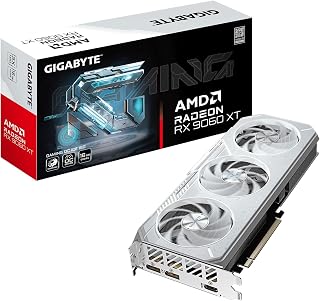
With 16GB GDDR6 memory, this card eliminates any VRAM concerns at 1440p while allowing maxed-out visual settings in Fortnite. The server-grade thermal gel and reinforced structure ensure stable clock speeds during extended play sessions when every frame matters. PCIe 5.0 support provides maximum bandwidth for loading assets quickly when landing or rotating between zones.
Pros
- 16GB VRAM handles texture streaming without bottlenecks
- Temperatures stay in 30s to mid-40s during extended play
- Under 220W power draw keeps system heat and costs low
- Factory overclock to 2780MHz adds headroom out of box
Cons
- Requires Windows 11, blocking older system builds
- Weight may need optional support bracket
The GIGABYTE RX 9060 XT Gaming OC Ice hits the sweet spot for 1440p Fortnite without overspending. AMD's RDNA 4 architecture delivers 60+ fps on high to ultra settings while drawing under 220W, keeping system heat and electricity costs reasonable. The 16GB GDDR6 buffer ensures texture streaming stays smooth even with future cosmetic updates and map changes that bloat VRAM demands. AI-accelerated features in RDNA 4 polish frame pacing, making arena mode feel consistently responsive. Where this card shines is sustained performance during long gaming sessions. The triple WINDFORCE fans with server-grade thermal gel and copper heat pipes keep temperatures in the 30s to mid-40s range, preventing thermal throttling when you're grinding ranked matches. The compact form factor fits standard cases easily, and the reinforced metal backplate adds structural confidence for systems that travel to LAN events. Factory overclocking to 2780MHz means you get extra headroom out of the box. This represents excellent value for players upgrading from laptops or older GPUs who want smooth 1440p performance with plenty of VRAM security.
GPU Specifications: AMD Radeon RX 9060 XT, RDNA 4 architecture, 2780 MHz base clock, 16GB GDDR6 memory at 20,000 MHz, PCIe 5.0 interface, 128-bit memory bus
Cooling: Triple-fan WINDFORCE system with server-grade thermal gel, composite copper heat pipes, copper base plate, 3D active fans, and reinforced metal backplate
Outputs: DisplayPort 2.1a and HDMI 2.1b, supports up to 3840x2160 native and 7680x4320 via DisplayPort
Physical: 11.06 inches long, 4.65 inches wide, 1.9 pounds, single 8-pin PCIe power connector, 3-year manufacturer warranty
System Requirements: Windows 11, PCIe x16 slot, adequate power supply recommended
Players upgrading from laptops or older discrete GPUs will see dramatic improvements in frame consistency and visual quality. Budget-conscious builders get 16GB VRAM security and excellent thermals without premium pricing. Gamers who value efficiency and quieter operation benefit from the sub-220W power draw. Skip this if you already own a recent mid-range or better GPU, as the upgrade won't justify the cost. Also avoid if you're still running Windows 10, since this card requires Windows 11 to function properly.
How to Choose the Best GPU for Fortnite at 1440p
With so many options on the market, narrowing down your choice comes down to a few practical factors. Here’s what to look at before you commit to a card.
Target Frame Rate and Refresh Rate
Your monitor’s refresh rate sets the ceiling for how much GPU power you actually need. A 144Hz display benefits enormously from a card like the ASRock Radeon RX 7700 XT Challenger 12GB OC, which delivers consistent high-frame-rate output at 1440p on AMD’s RDNA 3 architecture.
If you’re running a 240Hz panel for competitive play, stepping up to something like the ASUS TUF Gaming GeForce RTX 5070 12GB GDDR7 OC gives you headroom to hit those extreme frame counts without compromise.
VRAM and Memory Bus Width
At 1440p, VRAM becomes a real consideration. Fortnite’s high-resolution texture packs and dense environments can push usage above 8GB at higher settings. Cards with 12GB or more, like the EVGA GeForce RTX 3060 XC Gaming, 12G-P5-3657-KR or the ASRock Radeon RX 9060 XT Challenger 16GB OC with its generous 16GB GDDR6, give you room to grow.
Memory bus width also affects how fast data moves between the GPU and VRAM. A 192-bit bus, as found on the ASRock Radeon RX 7700 XT Challenger 12GB OC, offers better bandwidth than a 128-bit design, which matters when textures are loading fast during a firefight.
Upscaling and AI Features
Fortnite supports both NVIDIA DLSS and AMD FSR, meaning you can trade a small amount of visual fidelity for a significant frame rate boost. NVIDIA cards like the MSI Gaming GeForce RTX 3060 12GB 15 Gbps GDRR6 leverage DLSS with Tensor Cores, while AMD’s newest cards use FSR 4 via RDNA 4 AI Accelerators.
Intel’s ASRock Intel Arc B570 Challenger 10GB OC GDDR6 brings XeSS 2 into the mix, an AI-powered upscaling alternative that performs impressively at 1440p and is a compelling option in its price segment.
Cooling and Power Efficiency
Long Fortnite sessions generate sustained GPU load. A card with a well-designed cooler keeps thermals in check and prevents performance throttling. The GIGABYTE Radeon RX 9060 XT Gaming OC ICE 16G uses server-grade thermal gel and Hawk fans with alternate spinning, which is a genuinely innovative approach to heat dissipation.
0dB silent mode, available on cards like the ASRock Radeon RX 7700 XT Challenger 12GB OC and the ASRock Radeon RX 9060 XT Challenger 16GB OC, keeps your setup quiet during lighter workloads and menu browsing. It’s a small detail that adds up over hours of play.
Final Thoughts
For most Fortnite players chasing smooth 1440p performance, the ASRock Radeon RX 9060 XT Challenger 16GB OC stands out as a forward-thinking pick with its RDNA 4 architecture, massive 16GB GDDR6 buffer, and strong boost clocks. If you want the absolute ceiling for competitive 1440p with no frame rate compromises, the ASUS TUF Gaming GeForce RTX 5070 12GB GDDR7 OC delivers Blackwell-generation power and DLSS 4 support that will keep you ahead of the pack for years to come.
Frequently Asked Questions
What GPU do I need to run Fortnite at 1440p 144fps?
To consistently hit 144fps at 1440p in Fortnite, you generally want a mid-to-high-tier GPU with strong rasterization performance and upscaling support. Cards in the RTX 3060 class can get close on competitive settings, while options like the ASRock Radeon RX 7700 XT Challenger 12GB OC and above handle it more comfortably. Enabling DLSS or FSR can push borderline cards over the 144fps threshold without a major visual hit.
Is 8GB VRAM enough for Fortnite at 1440p in 2026?
8GB can work for Fortnite at 1440p on standard texture settings, but it can feel limiting if you run high-quality texture packs or play alongside other background tasks. In 2026, 12GB is the sweet spot for comfortable 1440p gaming, and 16GB cards like the ASRock Radeon RX 9060 XT Challenger 16GB OC or the GIGABYTE Radeon RX 9060 XT Gaming OC ICE 16G give you room to max out every setting without worry.
Does ray tracing matter for Fortnite at 1440p?
Fortnite does support ray tracing and it produces noticeably better lighting and shadow quality in the game’s environments. However, enabling full ray tracing at 1440p carries a significant performance cost, so it’s best paired with a higher-end card and an upscaling feature like DLSS or FSR. For purely competitive play, most players turn ray tracing off to maximize frame rates.
Can a budget GPU handle Fortnite at 1440p?
Yes, budget-friendly options like the ASUS Dual GeForce RTX 3050 6GB GDDR6 OC Edition can run Fortnite at 1440p on medium settings with reasonable frame rates, especially with upscaling enabled. For those who want a step up without going flagship, the ASRock Intel Arc B570 Challenger 10GB OC GDDR6 is worth a look as a capable, efficient card with XeSS 2 support. Just keep expectations realistic on ultra settings if you go the budget route.




Write Your Review
No reviews yet. Be the first to share your experience!