

Minecraft may look simple on the surface, but load up a shader pack, crank the render distance, or fire up a mod-heavy world and your GPU will feel every pixel. Whether you’re playing vanilla at high framerates or chasing cinematic visuals with ray tracing shaders, the graphics card you choose shapes the entire experience.
This guide covers ten of the top graphics cards available right now, from budget-friendly picks for casual players to high-end options built for heavily modded servers and 4K screenshot sessions. Whatever your setup looks like, there’s a strong match on this list.
Quick Comparison
Ratings reflect the most recent data pull. Check each listing for current price and availability.
Quick answer
This guide compares 10 picks, with ASRock Radeon RX 9060 XT Challenger 16GB GDDR6 PCIe 5.0 ranked first. MSI RTX 3060 12GB Gaming Graphics Card - 1440p High has the most customer reviews.

The impressive 3290 MHz boost clock makes this Challenger model particularly responsive for high refresh rate Minecraft gaming at 1440p resolution. Sixteen gigabytes of GDDR6 memory easily accommodates extensive mod collections, ultra-high-resolution texture packs, and extreme render distances simultaneously without performance drops. The 0dB silent mode keeps the card completely quiet during lighter vanilla sessions, perfect for content creators recording gameplay without background noise interference.
Pros
- 16GB GDDR6 handles the heaviest shader packs and texture overhauls without VRAM pressure
- 3290 MHz boost clock and RDNA 4 architecture deliver strong 1440p frame rates
- 0dB idle mode keeps the card completely silent during lighter Minecraft sessions
- Compact 249mm length and single 8-pin connector suit a wide range of existing systems
Cons
- 128-bit memory bus is narrower than competing cards at this tier, which can matter in extreme workloads
- Dual-fan cooler, while effective, lacks the headroom of triple-fan designs if airflow in your case is restricted
Minecraft is one of those games that scales wildly depending on how you play it. Vanilla chunks at modest render distances ask very little of a GPU, but modded Minecraft with shaders, high render distances, and texture packs is a genuinely demanding workload. The ASRock Radeon RX 9060 XT Challenger sits in a sweet spot for that second group. Its RDNA 4 architecture and 3290 MHz boost clock push well beyond what older mid-range cards could manage, and the 16GB GDDR6 buffer means even the heaviest shader packs and high-resolution texture overhauls won't exhaust your VRAM. Ray tracing support is a bonus for players using path-tracing shader mods. Thermals stay in the mid-60s under load, fans go completely silent at idle, and the single 8-pin power requirement keeps upgrade friction low. The 249mm length fits most mid-tower cases without planning around it. For a Minecraft player who wants buttery-smooth shader performance at 1440p without loud fans or a hulking card, this hits the right notes.
GPU: AMD Radeon RX 9060 XT (RDNA 4, 32 Compute Units)
Memory: 16GB GDDR6 at 20 Gbps on 128-bit bus
Clock Speeds: 3290 MHz boost, 2700 MHz game clock
Output: DisplayPort 2.1a, HDMI 2.1b
Max Resolution: 7680x4320 pixels
Power: Single 8-pin connector, 550W PSU recommended
Size: 249mm (L) x 132mm (W) x 41mm (H), 2-slot design
Cooling: Dual fans, 0dB idle mode
Interface: PCIe 5.0 x16
Weight: 0.98 kg
Warranty: 2 years manufacturer
Best suited for modded Minecraft players who run demanding shader packs, high render distances, or large texture overhauls at 1440p. The 16GB buffer and quiet 0dB idle mode make it appealing for long sessions. Skip it if you only play vanilla Minecraft at 1080p and want the absolute lowest spend, or if your case cannot fit a dual-fan card at 249mm.

This Dual model delivers reliable 1080p Minecraft performance with its 1500 MHz boost clock handling vanilla gameplay and moderate shader packs smoothly. The 6GB GDDR6 memory provides enough headroom for popular texture packs and render distances up to 16 chunks. Ray tracing support through the GeForce RTX 3050 chip enables RTX-enabled Minecraft editions, bringing realistic lighting and reflections to your builds without requiring a flagship card.
Pros
- DLSS 3 support improves frame rates in compatible shader packs
- 20cm compact design fits restrictive small-form-factor cases
- Dual Axial-tech fans provide quiet, effective cooling
- IP5X dust resistance and steel bracket ensure durability
Cons
- 6GB VRAM limits demanding shaders and high render distances
- Struggles with ray tracing and 4K gameplay
For Minecraft players focused on vanilla gameplay, lighter shader packs, and 1080p resolution, the ASUS Dual RTX 3050 6GB OC Edition provides an accessible entry point into dedicated GPU performance. The Ampere architecture supports DLSS 3, which boosts frame rates in supported shader packs and maintains smooth gameplay even when exploring new chunks or running moderate view distances. At 1080p with medium shader settings, this card delivers consistent performance for casual players and those upgrading from integrated graphics. The 20cm compact form factor and 2-slot design solve compatibility problems in small-form-factor cases and pre-built systems where physical space restricts GPU options. Dual Axial-tech fans with barrier ring design provide effective cooling despite the compact footprint, keeping temperatures controlled and noise levels reasonable during gameplay. The smaller fan hub allows longer blades that move air efficiently without aggressive RPM. IP5X dust resistance and a stainless steel bracket add durability for long-term reliability. The 6GB GDDR6 memory handles vanilla Minecraft and lighter shader configurations comfortably, though it shows limitations with demanding 4K packs or extreme render distances. For players building budget systems or upgrading restrictive pre-builts who plan to play Minecraft at 1080p without the heaviest shader loads, this card strikes a practical balance between capability and constraints.
Ideal for budget-conscious Minecraft players sticking to 1080p with vanilla gameplay or lighter shader packs, and anyone upgrading small-form-factor or pre-built systems with limited physical space and power capacity. Skip this if you're committed to ray tracing, 4K resolution, or demanding shader combinations that will quickly overwhelm the 6GB VRAM. Also pass if you have room and budget for more capable hardware.
GPU Architecture: NVIDIA GeForce RTX 3050 with Ampere SM, 2nd Gen RT Cores, and 3rd Gen Tensor Cores for DLSS 3 support.
Memory: 6GB GDDR6 with 1500 MHz memory clock speed, delivering adequate bandwidth for 1080p and light 1440p workloads.
Clock Speeds: OC Mode: 1500 MHz boost clock, Default Mode: 1470 MHz boost clock for flexible performance tuning.
Thermal Design: Dual Axial-tech fans, 2-slot form factor (20cm length, 7.9in x 4.7in), IP5X dust resistance, and stainless steel bracket.
Power: No external power connector required. PCIe x16 slot power delivery only, making it ideal for systems with limited PSU capacity.
Connectivity: HDMI 2.1, DisplayPort 1.4a, and DVI-D for multi-monitor setups and modern display standards.

The 10GB GDDR6 configuration offers a sweet spot for Minecraft players using demanding shader compilations and large modpacks simultaneously. Intel Arc B570's 2600 MHz clock handles high frame rates at 1440p resolution with moderate settings. The 0dB cooling feature keeps the card silent during lighter vanilla Minecraft sessions, making it perfect for streamers or players in quiet environments who don't want fan noise during recording.
Pros
- 10GB GDDR6 handles memory-heavy shader packs and resource packs without bottlenecking
- 0dB silent fans stay off during typical Minecraft load levels
- XeSS 2 upscaling recovers frame rates when demanding shaders push performance down
- DisplayPort 2.1 and HDMI 2.1a support high-refresh 1440p monitors
Cons
- Intel Arc driver ecosystem is younger than NVIDIA or AMD, with occasional game-specific optimization updates
- PCI-Express x8 interface rather than full x16 may concern builders targeting future upgrades
Minecraft may not demand cutting-edge hardware, but players who want to run high-resolution texture packs, shader mods, or ray tracing at 1440p need a card that punches above entry-level. The ASRock Arc B570 Challenger fits that role well. Intel's Xe2-HPG architecture handles the Java and Bedrock editions with plenty of headroom, and XeSS 2 upscaling is genuinely useful when shader packs push frame rates lower. The 10GB of GDDR6 memory means even memory-hungry resource packs and ambitious shader pipelines stay well within budget. The 2600 MHz GPU clock keeps frame times consistent, and the 0dB fan behavior means the card is completely silent during typical Minecraft sessions where GPU load stays moderate. Connectivity covers HDMI 2.1a and DisplayPort 2.1, so pairing it with a high-refresh-rate 1440p monitor is straightforward. The dual-fan cooler and metal backplate reflect build quality typically associated with pricier hardware. The main caveat is Intel's driver ecosystem, which is newer than NVIDIA or AMD alternatives, though modern titles including Minecraft run smoothly.
The Arc B570 excels at 1440p gaming, maintaining high frame rates with maxed or near-maxed settings in modern AAA titles like Assassin's Creed Resync, Subnautica 2, and God of War. The 10GB VRAM buffer ensures smooth performance without stuttering even in VRAM-intensive scenarios with multiple monitors or intensive applications running simultaneously.
XeSS 2 technology provides meaningful performance boosts through AI-powered upscaling without sacrificing perceived image quality. Users report stable gameplay and low thermal temps, with the card operating at just 45-56 degrees Celsius at zero RPM and averaging around 68 degrees under sustained gaming loads. Idle power consumption is remarkably low at 18-21 watts during light tasks like streaming and multi-monitor work.
The card handles both 1080p ultra settings and 1440p high settings comfortably. While not positioned as a 4K solution, users seeking budget-friendly 1440p gaming will find this card highly capable and reliable across current and near-future game libraries.
GPU: Intel Arc B570 (Xe2-HPG Architecture)
Memory: 10GB GDDR6, 160-bit bus
Clock Speeds: 2600 MHz GPU, 19 Gbps Memory
Power: Single 8-pin connector
Interface: PCIe 4.0 x8
Display Outputs: 3x DisplayPort 2.1, 1x HDMI 2.1a
Max Resolution: 7680 x 4320
Cooling: Dual striped axial fans with 0dB Silent Cooling
Backplate: Metal with structural reinforcement
Weight: 0.99 kg
Warranty: 2 Years Manufacturer
Media Engine: Advanced with AV1 encoding support
DirectX Support: 12 Ultimate
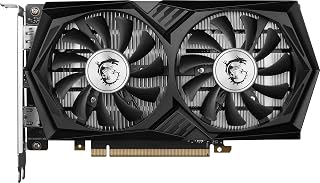
The 1507 MHz boost clock provides solid performance for 1080p Minecraft gaming with popular shader packs like BSL or Complementary. Six gigabytes of GDDR6 memory handles moderate texture resolution upgrades and render distances up to 16 chunks comfortably. Ampere architecture brings ray tracing support to this GeForce RTX 3050, enabling enhanced lighting effects in Minecraft RTX while maintaining playable frame rates for players wanting visual upgrades on budget-conscious builds.
Pros
- Bus-powered design requires no external power connectors, ideal for older or low-wattage systems
- 6GB GDDR6 memory handles Minecraft shader packs and texture mods without strain
- Compact 8.1-inch length fits small cases commonly used for dedicated Minecraft builds
- Dual-fan cooling keeps temperatures stable during long play sessions
Cons
- Ray tracing performance drops significantly in more demanding configurations, limiting visual ceiling
- Underperforms the GTX 1660 Ti in direct comparisons, so it is not the strongest option at its tier
Minecraft is one of the least demanding games you can run, which makes the MSI GeForce RTX 3050 a surprisingly comfortable fit for players who want smooth performance without overspending. Built on NVIDIA's Ampere architecture with 6GB of GDDR6 memory running at 14 Gbps, this card handles 1080p Minecraft with ease, leaving plenty of headroom for shader packs and resource-intensive texture mods that can otherwise bring budget hardware to its knees. The dual-fan cooling system maintains low temperatures during long play sessions, and the compact 8.1-inch form factor means it fits into older or smaller cases that Minecraft players often repurpose as dedicated servers or family gaming machines. The bus-powered design is a genuine convenience here, since many older systems being revived specifically for Minecraft lack high-wattage power supplies. Ray tracing support is present, and unlike in graphically demanding AAA titles, Minecraft's ray tracing workload is far more manageable on this hardware. For players who want a reliable, low-effort upgrade that keeps a legacy PC relevant for years of block-building sessions, the RTX 3050 delivers exactly what is needed.
Best for Minecraft players upgrading a system that is ten or more years old, particularly those using a low-wattage power supply that cannot support cards requiring external connectors. Also a strong pick for parents setting up a dedicated family Minecraft machine in a compact case. Skip it if you are building a new high-end PC from scratch or want to push Minecraft with ray tracing and shaders simultaneously at high frame rates, where a more powerful card would serve better.
GPU: NVIDIA GeForce RTX 3050 (Ampere Architecture)
Memory: 6GB GDDR6 at 14 Gbps
Memory Interface: 96-bit
Boost Clock: 1507 MHz
Output Connectors: 1x DisplayPort 1.4a, 2x HDMI 2.1a
Maximum Resolution: 7680x4320
Cooling: Dual fans
Power Draw: Bus powered, no external PSU connection
Dimensions: 8.1 inches length x 4.3 inches width
Weight: 1.5 pounds
Interface: PCI-Express x16
Warranty: 3 years

The generous 12GB GDDR6 memory allocation ensures this Torx Twin Fan card handles shader packs and texture mods without VRAM bottlenecks, even at extreme render distances. The 1837 MHz clock speed maintains triple-digit frame rates in most Minecraft scenarios, including complex redstone contraptions and populated multiplayer servers. PCIe 4 support provides ample bandwidth for streaming modded gameplay while the RTX 3060 chip enables ray traced global illumination.
Pros
- 12GB GDDR6 exceeds the VRAM on RTX 3070 and 3060 Ti, preventing memory limits during heavy shader and texture loads
- Twin Fan cooler keeps thermals low and fan noise minimal through long Minecraft sessions
- DLSS support helps maintain frame rates when demanding shader mods spike GPU usage
- Supports up to 7680x4320 output, leaving room for future display upgrades without replacing the card
Cons
- Ampere architecture trails RTX 40 and 50 series in ray tracing performance and power efficiency
- 1837 MHz boost clock is modest compared to newer mid-range cards, which show larger gains in shader-heavy workloads
Shader mods transform Minecraft visually, but they turn a lightweight game into a real GPU stress test. The MSI RTX 3060 Ventus 2X handles that transition well. The 12GB GDDR6 pool is the headline advantage here: it outpaces cards like the RTX 3070 on raw VRAM capacity, which matters when shader packs and high-resolution texture overhauls are loaded simultaneously. Esports-style Minecraft with sodium or vanilla optimization mods will produce extremely high frame rates, while shader-heavy play at 1440p remains smooth. MSI's Twin Fan cooler keeps thermals low across extended sessions, and the card supports up to 7680x4320 output, so a future monitor upgrade won't require a GPU swap. The Ampere architecture also supports DLSS, which can recover significant frame rate headroom when path-tracing shaders push the workload hard. Fan curve and performance profiles are adjustable through MSI's software. For a Minecraft-focused build where VRAM ceiling and thermal consistency matter more than cutting-edge architecture, this card delivers reliably.
GPU: NVIDIA GeForce RTX 3060 Ampere Architecture
Memory: 12GB GDDR6
GPU Clock Speed: 1837 MHz
Memory Clock Speed: 1807 MHz
Memory Interface: 192-Bit
Max Power Draw: 170W
Interface: PCI-Express 4.0 x16
Video Outputs: 3x DisplayPort 1.4a, 1x HDMI 2.1
Max Resolution: 7680x4320
Cooling: Twin-Fan Design
Dimensions: 9.25 inches L x 4.88 inches W
Weight: 340g
Warranty: 3 Years
Model: RTX 3060 Ventus 2X 12G OC
Manufacturer: MSI

Twelve gigabytes of GDDR6 memory provides exceptional headroom for running multiple high-resolution texture packs and shader compilations simultaneously without performance degradation. The metal backplate adds rigidity and heat dissipation during extended Minecraft marathons with demanding modpacks. This XC Gaming model's dual-fan design maintains cool, quiet operation while delivering consistent frame rates across vanilla and heavily modded scenarios, making it versatile for any Minecraft configuration.
Pros
- 12GB GDDR6 comfortably handles large texture packs and shader resource loading
- DLSS support provides a frame rate buffer when demanding shader mods push GPU load high
- Metal backplate adds structural durability for a card that may run under sustained load in long play sessions
- Significant performance leap for players still on GTX 1000-series or older GPUs
Cons
- Ampere is a 2020 architecture, so ray tracing and power efficiency trail newer generation cards
- Fans run more audibly under heavy shader load compared to some quieter alternatives in this class
Minecraft's GPU demand is easy to underestimate until you load a shader pack and watch frame rates crater on older hardware. The EVGA RTX 3060 XC Gaming addresses that directly. Its 12GB GDDR6 buffer is generous enough to hold large texture packs and shader resources without constant memory pressure, and the Ampere architecture's DLSS support is a practical tool for recovering frame rate headroom when shaders push the workload up. The 1882 MHz boost clock keeps performance consistent across large modpacks. Ray tracing is available for players using compatible shader mods. The dual-fan cooler and metal backplate keep the card stable over long sessions, and the all-metal construction adds durability. For someone coming from a GTX 1060 or similar older card who wants Minecraft to look its absolute best at 1440p with shaders enabled, the jump in performance is substantial. It also holds up well across other games, so the investment covers more than just one title.
GPU and Memory: NVIDIA GeForce RTX 3060 with 12GB GDDR6, 3584 CUDA cores, 1882 MHz boost clock, 2nd Gen Ray Tracing Cores, 3rd Gen Tensor Cores
Connectivity and Compatibility: PCI-Express x16 interface, DisplayPort and HDMI outputs, compatible with any motherboard featuring a PCI-e x16 slot, supports up to 7680x4320 display resolution
Cooling and Design: Dual-fan cooling system, all-metal backplate, dimensions 8.39L x 4.93W inches, weight 907g
Specifications: Memory clock speed 15000 MHz, 3-year manufacturer warranty included
A strong pick for players upgrading from GTX 1000-series cards who want high-fidelity modded Minecraft at 1440p with shaders and large texture packs. DLSS support adds useful flexibility. Less compelling for players already on RTX 30-series hardware or those who only need vanilla performance, where the upgrade delta shrinks considerably.
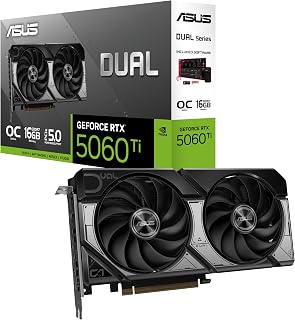
This OC Edition combines 16GB of cutting-edge GDDR7 memory with a 2632 MHz clock speed, ensuring buttery-smooth performance with the most demanding shader combinations and ultra-resolution texture packs. The substantial VRAM capacity handles heavily modded Minecraft instances with hundreds of mods while maintaining high render distances. Ray tracing capabilities through the GeForce RTX 5060 Ti deliver stunning lighting effects and reflections that transform builds into photorealistic scenes.
Pros
- 16GB GDDR7 handles extreme render distances and texture packs
- DLSS 4 and Blackwell architecture optimize shader performance
- 0dB silent mode during vanilla gameplay, aggressive cooling under load
- Compact 2.5-slot design fits small builds without thermal sacrifice
Cons
- Compact sizing limits extreme overclocking potential
- Overkill for players sticking to vanilla Minecraft
Minecraft players pushing shader packs, ray tracing, and high render distances need a GPU that balances memory, modern architecture, and thermal efficiency. The ASUS Dual RTX 5060 Ti 16GB delivers exactly that in a compact package. Built on NVIDIA's Blackwell architecture with 767 AI TOPS, this card handles Minecraft RTX at 4K with demanding shader combinations while maintaining playable frame rates. DLSS 4 support extends performance further when paired with compatible shader packs. The 16GB GDDR7 memory eliminates stuttering even with extreme render distances and texture packs that overwhelm cards with less VRAM. Cooling stays impressively controlled thanks to Axial-tech fans with barrier ring pressure focusing and 0dB technology that silences the card during lighter vanilla sessions. The 2632 MHz boost clock provides headroom for chunk loading and complex lighting calculations. PCIe 5.0 connectivity and dual BIOS switching between Quiet and Performance modes add flexibility. The 2.5-slot compact design fits small-form-factor builds without thermal compromise, backed by dual ball bearing fans rated for extended lifespan. For Minecraft enthusiasts building around ray tracing, shaders, and future modding, this card provides the memory capacity and computational power to handle it all.
GPU and Memory: NVIDIA GeForce RTX 5060 Ti, 16GB GDDR7, 2632 MHz (OC Mode), 2602 MHz (Default Mode). Supports DLSS 4 and Blackwell architecture for AI-accelerated performance.
Connectivity and Cooling: 3x DisplayPort 2.1b, HDMI 2.1b, PCIe 5.0 x16 interface. Dual Axial-tech fans with dual ball bearings, 2.5-slot compact form factor, 0dB technology for silent idle operation.
Physical and System Requirements: Dimensions 9 inches long by 4.7 inches wide, weighs 0.66 kg. Supports maximum resolution of 7680x4320 pixels. Includes 3-year warranty and SpeedSetup manual. Compatible with standard desktop builds requiring adequate power supply and proper case ventilation.
Perfect for Minecraft players committed to ray tracing, high-resolution shader packs, and extreme render distances who need a card that won't bottleneck on VRAM or thermal performance. Also suits compact case builders who refuse to sacrifice cooling. Skip this if you play vanilla Minecraft without shaders or mods, as you're paying for memory and features you won't utilize. Budget players running lighter shader packs at 1080p can find better value elsewhere.

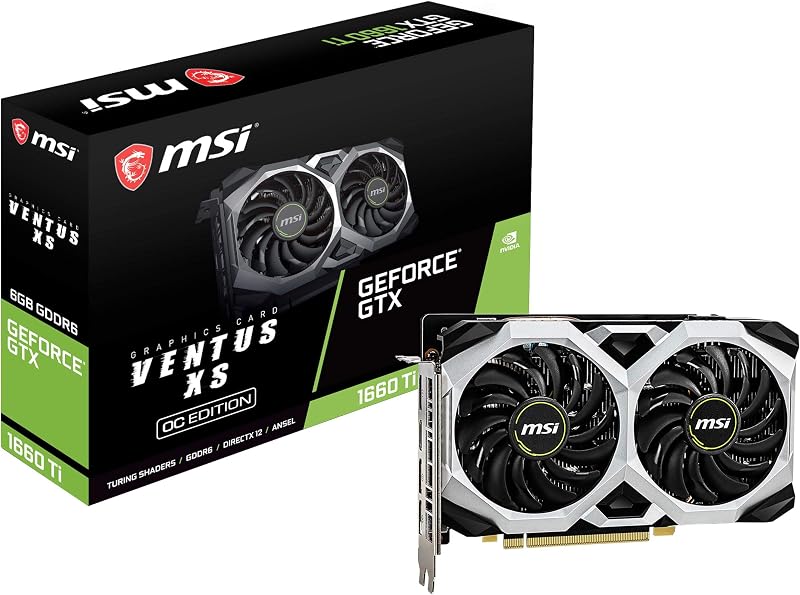
The Ventus 2X design keeps temperatures low during extended Minecraft sessions while the 1492 MHz boost clock maintains consistent frame rates with medium shader packs. Six gigabytes of GDDR6 memory handles popular modpacks like FTB and vanilla gameplay with enhanced textures comfortably. This RTX 3050 variant enables ray traced lighting in Minecraft RTX editions, adding realistic shadows and reflections to creations without overwhelming your system.
Pros
- No external power connector required, compatible with OEM and proprietary PSUs
- RTX ray tracing and DLSS support for Bedrock Edition at 1080p
- Compact 7.4-inch length fits nearly any desktop case
- Mature Ampere driver ecosystem ensures broad Minecraft mod and launcher compatibility
Cons
- 6GB VRAM can become limiting with memory-heavy shader packs or texture packs above 1080p
- Generational age means less raw performance headroom compared to current-generation alternatives
For Minecraft players on older pre-built desktops or budget builds where swapping the power supply is not practical, the MSI RTX 3050 Ventus 2X 6GB is a rare fit. Its 70-watt draw pulls power directly from the PCIe slot, requiring zero external connectors, which makes it compatible with the compact or proprietary PSUs found in OEM machines from HP, Dell, and similar brands. In Minecraft terms, that translates to 1080p gameplay with ray tracing enabled via Bedrock's RTX path, backed by DLSS for frame rate recovery. The 1492 MHz boost clock and 6GB of GDDR6 are more than enough for vanilla Minecraft and moderate shader use at 1080p. The dual-fan Ventus cooler keeps thermals reasonable and noise levels low. At 7.4 inches the card fits virtually any mid-tower case. NVIDIA's Ampere architecture and mature driver ecosystem mean compatibility across every Minecraft launcher and mod platform is a non-issue. The 6GB VRAM ceiling is worth noting if you plan to run the most VRAM-intensive shader packs at higher resolutions.
GPU Specifications: NVIDIA GeForce RTX 3050 with Ampere architecture, 96-bit memory interface, 1492 MHz boost clock. Memory: 6GB GDDR6 running at 14 Gbps. Power consumption: 70W. Video outputs: 1x DisplayPort 1.4a, 2x HDMI 2.1a. Maximum supported resolution: 7680x4320.
Physical Design: Dimensions 7.4 inches (L) x 4.3 inches (W). Weight 0.58 kg. Dual-fan cooling design. PCIe x16 slot required. No external power connectors needed. Compatible with desktop systems. Includes quick setup guide and 3-year warranty.
The right pick for Minecraft players with OEM desktops that cannot accommodate a new power supply, or anyone who wants ray-traced Minecraft at 1080p with zero installation complexity. Also suits users who prioritize NVIDIA's stable driver ecosystem. Skip it if your case accepts a standard PSU and you want more VRAM headroom for ambitious 1440p shader packs.

The 16GB GDDR6 memory makes this card exceptional for Minecraft with heavy shader packs and high-resolution texture mods that demand substantial VRAM. The 3060 MHz clock speed ensures smooth frame rates even when running ray tracing enabled resource packs alongside render distances of 32 chunks or more. This Gaming OC model handles modded Minecraft setups with hundreds of mods without stuttering, making it ideal for players who want maximum visual fidelity.
Pros
- 16GB GDDR6 prevents VRAM bottlenecks with heavy mods and shaders
- Strong 1440p performance at high settings with shader packs
- WINDFORCE cooling stays quiet during extended sessions
- PCIe 5.0 support future-proofs for upcoming game updates
Cons
- Requires 750W power supply minimum
- Lacks DLSS support for NVIDIA-optimized shaders
Minecraft with shader packs and high render distances demands substantial VRAM and strong rasterization performance, making the GIGABYTE Radeon RX 9070 XT an intelligent pick for players who prioritize smooth gameplay over brand loyalty. The 16GB GDDR6 memory eliminates the stuttering and texture pop-in that plague smaller VRAM cards when loading heavily modded worlds or pushing render distances beyond 32 chunks. AMD's latest architecture delivers consistent frame rates at 1440p and handles 4K with demanding shaders at adjusted settings. The WINDFORCE cooling system with Hawk fans and server-grade thermal gel keeps temperatures stable during extended building sessions, while maintaining low noise levels that won't intrude on gameplay. PCIe 5.0 compatibility ensures the card remains relevant as mod complexity increases and game updates demand more resources. The 3060 MHz boost clock powers through chunk generation and complex lighting calculations without frame drops. Build quality suits long gaming sessions with reported stability across demanding workloads. At 11.34 inches, the card fits most modern cases designed for gaming builds. For Minecraft players seeking excellent 1440p shader performance and future-proof VRAM capacity without paying flagship prices, this represents strong value in the current market.
Core Specifications
GPU: AMD Radeon RX 9070 XT
Memory: 16GB GDDR6
Memory Clock: 2600 GHz
GPU Clock: 3060 MHz
Interface: PCIe 5.0 x16
Max Resolution: 7680 x 4320 (8K)
Physical and Connectivity
Dimensions: 11.34 inches (L) x 5.2 inches (W)
Weight: 1.78 kg
Output: DisplayPort
Power Connectors: Dual 8-pin (750W+ PSU recommended)
Cooling: WINDFORCE system with Hawk fans and thermal gel
Warranty and Support
Manufacturer: GIGABYTE
Warranty: 3 years
Model: GV-R9070XTGAMING OC-16GD
Gaming Performance at Common Resolutions
1440p Gaming: 160-220fps on most modern AAA titles at high settings. Excellent for competitive gaming and high-refresh monitors.
4K Gaming: Playable at high settings on most titles, medium settings on demanding new releases. Solid for content creators monitoring in 4K.
Esports Titles: 300+ fps possible on optimized competitive games for ultra-high refresh gameplay.
Real-World Use Cases
Best suited for 1440p gaming at 144+ fps, 4K content creation workflows, professional 3D rendering, and VR gaming. Handles flight simulators like DCS at high settings with 4K head tracking. Eliminates VRAM constraints for media professionals working with large files.
Driver Recommendations
Run DDU (Display Driver Uninstaller) before installation if upgrading from another card. Install latest AMD drivers for maximum stability and performance. Update BIOS if required by your system for PCIe 5.0 compatibility.

PNY NVIDIA GeForce RTX 5050 8GB Blackwell Graphics
Eight gigabytes of GDDR6 memory provides ample capacity for running shader packs alongside texture resolution bumps and render distances of 24 chunks. The 2317 MHz clock speed from this GeForce RTX 5050 ensures high frame rates in both vanilla and lightly modded Minecraft environments at 1080p and 1440p. Dual-fan cooling maintains quiet operation during marathon building sessions, while ray tracing support brings enhanced visual realism to compatible Minecraft versions.
Pros
- RTX 50 Series architecture delivers current-generation upscaling and AI features for Minecraft shader workloads
- 8GB GDDR6 comfortably handles demanding resource packs and shader packs
- 2317 MHz GPU clock provides strong frame rates at 1080p and capable 1440p performance
- Dual-fan cooling suits mid-tower and compact desktop builds
Cons
- PCIe x8 interface rather than full x16 may limit long-term platform flexibility
- Entry-level 50 Series positioning means limited headroom for 4K or the most GPU-intensive shader configurations
The PNY GeForce RTX 5050 brings NVIDIA's RTX 50 Series architecture to a dual-fan form factor with 8GB of GDDR6 and a 2317 MHz GPU clock. For Minecraft, those specifications translate to smooth 1080p and capable 1440p performance across both Bedrock and Java editions, with enough GPU headroom to handle popular shader packs without sacrificing playable frame rates. The RTX 50 Series generation brings updated AI and upscaling capabilities, which benefit shader-heavy Minecraft sessions where maintaining consistent frame pacing matters. Eight gigabytes of GDDR6 is a comfortable ceiling for even demanding resource packs, and the dual-fan cooler manages thermals without requiring an oversized chassis. The PCIe x8 interface works across a broad range of motherboards. As an RTX 50 Series entry-level card it occupies the practical sweet spot for Minecraft players who want a modern architecture with room to grow beyond the game itself, whether that means branching into other titles or pairing it with a higher-refresh monitor down the line.
GPU: NVIDIA GeForce RTX 5050 with Blackwell Architecture
Memory: 8GB GDDR6, 128-bit bus
Clock Speed: 2317 MHz (GPU), 2317 MHz (Memory)
Interface: PCIe 5.0 x8
Output Ports: DisplayPort 2.1, HDMI 2.1
Max Resolution: 7680x4320
Form Factor: 2-Slot, SFF-Ready
Power: Efficient design suitable for compact builds
Warranty: 3 Years
Well suited for Minecraft players who want a current-generation NVIDIA card with 8GB of GDDR6 for shader packs and resource packs at 1080p to 1440p, without stepping up to a larger or more expensive GPU. Also a reasonable fit for compact builds where a dual-fan card is preferable. Skip it if you need full PCIe x16 bandwidth or require more than 8GB VRAM.
How to Choose the Right GPU for Minecraft
VRAM: More Than You Think You Need
Vanilla Minecraft is light on VRAM, but modern shader packs like Complementary or BSL can push usage well above 4GB at higher resolutions. If you’re planning to run a texture pack alongside shaders, options like the ASRock Radeon RX 9060 XT Challenger 16GB OC with its full 16GB of GDDR6 give you genuine headroom.
Cards with 6GB are workable for 1080p vanilla or lightly modded play, but they can become a bottleneck as your world grows. Going with 12GB or more future-proofs your build considerably.
Architecture and Shader Compatibility
Minecraft’s Java edition leans heavily on OpenGL, and certain shader packs are optimized specifically for NVIDIA or AMD hardware. RTX-based cards like the MSI Gaming GeForce RTX 3060 12GB 15 Gbps GDRR6 unlock NVIDIA’s path-traced ray tracing in Bedrock edition, delivering realistic light bouncing and shadows that genuinely transform the game’s look.
AMD’s RDNA 4 architecture, found in the ASRock RX 9060 XT, brings its own ray tracing improvements and strong rasterization performance. Intel Arc cards, including the ASRock Intel Arc B570 Challenger 10GB OC GDDR6, have matured significantly and offer solid OpenGL performance for the price point.
Clock Speed and Frame Rate Consistency
High boost clocks matter more than raw spec sheets suggest when Minecraft’s CPU-heavy chunk loading creates sudden GPU load spikes. The ASRock RX 9060 XT’s 3290 MHz boost clock is among the highest in this roundup and translates to responsive, stutter-free chunk transitions even at high render distances.
Mid-range options like the ASUS Dual GeForce RTX 3050 6GB GDDR6 OC Edition and the msi Gaming GeForce RTX 3050, Desktop deliver perfectly smooth 1080p Minecraft without breaking a sweat, making them smart picks if you’re building a dedicated gaming machine on a tighter component budget.
Cooling and Long-Session Reliability
Minecraft sessions run long. Thermal throttling during a multi-hour survival session or a massive build project can cause noticeable frame drops. Cards with 0dB silent mode, like the ASRock RX 9060 XT Challenger and the ASUS Dual GeForce RTX 5060 Ti 16GB GDDR7 OC, idle silently under light load and only spin up fans when sustained performance demands it.
Dual-fan designs across nearly every card on this list are well-suited to extended play. The GIGABYTE RX 9070 XT’s WINDFORCE system with Hawk Fans and server-grade thermal gel is particularly capable for those pushing 4K with high-end shaders. If you’re also putting together a travel-friendly gaming setup, pairing your rig with reliable hardside luggage makes hauling your tower to LAN parties far less stressful.
Final Thoughts
For most Minecraft players, the ASRock Radeon RX 9060 XT Challenger 16GB OC stands out as the most well-rounded option, combining next-gen RDNA 4 architecture, a generous 16GB GDDR6 frame buffer, and a blistering boost clock that handles shaders, mods, and high render distances with ease. If you want a more accessible entry point that still delivers excellent 1080p Minecraft performance, the MSI Gaming GeForce RTX 3060 12GB 15 Gbps GDRR6 remains one of the most dependable mid-range GPUs available, with 12GB of VRAM and strong NVIDIA ecosystem support for RTX shaders in Bedrock edition.
Frequently Asked Questions
Do you really need a dedicated GPU to run Minecraft?
Vanilla Minecraft can run on integrated graphics, but the moment you add shaders, increase render distance, or load resource packs, integrated solutions fall short fast. A dedicated GPU unlocks stable high framerates and makes shader-heavy gameplay genuinely enjoyable rather than a slideshow.
Is 6GB of VRAM enough for Minecraft with shaders in 2026?
At 1080p with medium-tier shaders and no high-resolution texture packs, 6GB is sufficient for a smooth experience. Cards like the msi Gaming RTX 3050 Ventus 2X 6G OC Graphics Card handle this use case well. However, if you plan to scale up to 1440p or stack multiple resource packs, 12GB or more is a smarter long-term investment in 2026.
Which GPU architecture works best with Minecraft Java Edition?
Minecraft Java Edition uses OpenGL, and both NVIDIA Ampere and AMD RDNA architectures handle it exceptionally well. NVIDIA has a slight edge for compatibility with popular shader loaders like Iris and OptiFine, while AMD’s newer RDNA 4 cards offer strong raw performance. Intel Arc has improved dramatically and is a legitimate contender at its price tier. For a broader look at how gear choices affect your gaming lifestyle, check out our guide on the best checked luggage for international travel if you’re a gamer who’s also constantly on the move.
Can a high-end GPU like the RTX 5060 Ti or RX 9070 XT run Minecraft at 4K?
Absolutely. Cards like the GIGABYTE Radeon RX 9070 XT Gaming OC 16G Graphics and the ASUS Dual RTX 5060 Ti are more than capable of driving 4K Minecraft with demanding shader packs at high framerates. They’re overkill for vanilla play but genuinely shine when you’re running cinematic visuals, recording content, or streaming at maximum quality settings.




Write Your Review
No reviews yet. Be the first to share your experience!