

You’re mid-stream, your game looks great, but your CPU is maxed out and your broadcast is stuttering. That’s the moment every streamer dreads, and it’s exactly the problem a dedicated GPU with a powerful hardware encoder solves. Modern graphics cards offload encoding from your CPU entirely, letting you game and stream simultaneously without sacrificing quality in either direction.
This guide is built for gamers, content creators, and live broadcasters who want a GPU that handles both rendering and encoding without compromise. Whether you’re just getting started or pushing 4K streams, you’ll find the right card here. We’ve evaluated each option below based on encoding capability, thermal performance, VRAM, and architecture generation.
Quick Comparison
Ratings reflect the most recent data pull. Check each listing for current price and availability.
Quick answer
This guide compares 10 picks, with ASUS Dual GeForce RTX 3050 6GB OC Edition - Compact ranked first.

Budget-conscious streamers benefit from the RTX 3050's dedicated NVENC encoder, which offloads streaming tasks from the CPU for minimal performance impact. The 6GB GDDR6 memory handles 1080p gaming and simultaneous encoding without frame drops in less demanding titles. Hardware acceleration for OBS and similar software ensures clean streams even on modest systems. HDMI output simplifies single-cable connections to capture hardware.
Pros
- Dedicated NVENC encoder frees CPU for streaming software
- Compact 20cm length fits small streaming PC builds
- DLSS 3 maintains frame rates while encoding
- Dual-fan cooling handles extended streaming sessions quietly
Cons
- 6GB VRAM limits AAA game streaming and 1440p output
- Ray tracing performance drops significantly during encoding
Streaming demands GPU resources for encoding, game performance, and overlay management simultaneously. The ASUS Dual RTX 3050 6GB OC Edition handles this multi-tasking workload effectively at 1080p, where most streamers broadcast. Its dedicated NVENC encoder offloads video compression from the CPU, preserving processing power for your games and streaming software. DLSS 3 support stretches performance in compatible titles, maintaining playable frame rates even while encoding. The dual Axial-tech fans with barrier ring design keep temperatures stable during extended streaming sessions, while IP5X dust resistance ensures longevity. The compact 20cm, 2-slot design fits streaming PCs built in smaller cases popular with desk setups. Ampere architecture delivers concurrent operations efficiently, so encoding quality remains high without tanking in-game FPS. The 6GB VRAM proves sufficient for streaming esports titles and lighter games at 1080p medium-to-high settings. While 4K streaming and demanding AAA titles exceed its capacity, the card aligns perfectly with the 1080p60 or 1080p30 streaming standard most platforms and audiences prefer.
Buy this if you stream esports, indie games, or lighter titles at 1080p and need a compact card that fits small-form-factor builds. It suits beginners entering streaming without overspending on hardware they won't fully utilize. Skip this if you plan to stream AAA games at 1440p or higher, produce 4K content, or run multiple demanding applications simultaneously. The 6GB VRAM bottleneck becomes apparent quickly outside 1080p streaming workflows.
GPU Architecture: NVIDIA GeForce RTX 3050 with Ampere SM, 2nd Gen RT Cores, and 3rd Gen Tensor Cores for DLSS 3 support.
Memory: 6GB GDDR6 with 1500 MHz memory clock speed, delivering adequate bandwidth for 1080p and light 1440p workloads.
Clock Speeds: OC Mode: 1500 MHz boost clock, Default Mode: 1470 MHz boost clock for flexible performance tuning.
Thermal Design: Dual Axial-tech fans, 2-slot form factor (20cm length, 7.9in x 4.7in), IP5X dust resistance, and stainless steel bracket.
Power: No external power connector required. PCIe x16 slot power delivery only, making it ideal for systems with limited PSU capacity.
Connectivity: HDMI 2.1, DisplayPort 1.4a, and DVI-D for multi-monitor setups and modern display standards.

The RTX 5060's GDDR7 memory delivers faster bandwidth than GDDR6 alternatives, reducing latency spikes when streaming software accesses frame buffers. With 8GB capacity, it handles 1080p and 1440p gaming with encoding overhead comfortably. The 2512 MHz boost clock maintains high frame rates necessary for smooth viewer experiences. PCIe 5.0 support ensures maximum throughput when paired with modern platforms, beneficial for capture card configurations.
Pros
- Dedicated NVENC encoder handles streaming without fps loss
- GDDR7 memory provides bandwidth for modern games
- Dual-fan cooling maintains stability during long streams
- PCIe 5.0 interface ensures future compatibility
Cons
- 8GB VRAM limits headroom for highest game settings
- Not ideal for 4K streaming workflows
Streaming demands balanced GPU power: enough encoding muscle to produce clean output without frame drops, but not so much horsepower that your budget evaporates on wasted capability. The GIGABYTE GeForce RTX 5060 WINDFORCE OC addresses this need directly. Built on NVIDIA's latest architecture with 8GB GDDR7 memory, it provides the NVENC encoder that handles streaming workloads separately from gaming rendering, preventing the performance hits that plague software encoding. The dual-fan WINDFORCE cooling system maintains thermal stability during extended streams, which matters when you're broadcasting for hours. The 2512 MHz boost clock and PCIe 5.0 interface deliver sufficient gaming performance at 1080p high settings while the dedicated encoder manages your stream to Twitch or YouTube simultaneously. DisplayPort and HDMI outputs support multi-monitor setups for managing chat, alerts, and game footage. For streamers building their first dedicated rig or upgrading from integrated graphics, this card offers the core technology needed without inflating costs with features irrelevant to broadcasting.
GPU: NVIDIA GeForce RTX 5060 (Blackwell architecture)
Memory: 8GB GDDR7, 128-bit interface
Memory Clock: 28,000 MHz
GPU Clock: 2,512 MHz
Interface: PCIe 5.0 x16
Cooling: Dual-fan WINDFORCE system
Outputs: DisplayPort, HDMI
Max Resolution: 7680 x 4320 pixels
Dimensions: 7.83 inches L x 4.57 inches W
Power Profile: Dedicated graphics
Warranty: 3-year manufacturer coverage
Buy this if you stream at 1080p or 1440p and need reliable NVENC encoding without overspending on unused 4K capability. Perfect for new streamers establishing consistent broadcast quality or casual streamers who prioritize stability over maximum settings. Skip it if you're streaming competitive esports at 240Hz or need 4K60 output, where higher-tier cards justify their cost. Also pass if you already own a 30-series or 40-series card, as the upgrade won't transform your stream quality enough to warrant replacement.
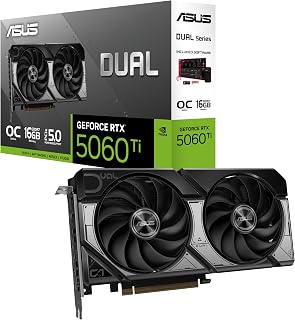
The 16GB GDDR7 capacity excels for streamers running memory-intensive games with high-resolution textures while encoding at 1440p or 4K. This generous buffer prevents the stuttering that occurs when VRAM runs low during simultaneous gaming and streaming. The 2632 MHz boost clock ensures consistent performance across demanding titles. Native DisplayPort 2.1b and HDMI 2.1b support future-proofs connectivity for next-generation capture equipment and monitors.
Pros
- 16GB GDDR7 handles simultaneous streaming and gaming workloads
- 0dB fan mode keeps streams quiet during lighter sessions
- Dual BIOS switches between quiet encoding and performance modes
- Compact 2.5-slot design fits rigs with capture card expansion needs
Cons
- Compact cooling limits extreme overclocking potential
- Overkill for streamers focused only on esports titles at 1080p
Streaming at high quality demands a GPU that can encode fast, maintain high frame rates, and handle multiple tasks at once. The ASUS Dual RTX 5060 Ti with 16GB GDDR7 delivers exactly that balance. Its 767 AI TOPS of computational power drives NVIDIA's hardware encoder while maintaining smooth gameplay at 1440p ultra or 4K high settings, so your stream stays crisp without tanking your in-game performance.nnWhat sets this card apart for streamers is the intelligent thermal design. The Axial-tech fans with 0dB technology stay silent during lighter sessions, keeping your microphone feed clean. When you push into demanding AAA titles, performance mode spins up to 2632 MHz with full cooling capacity. Dual ball bearing fans ensure longevity through marathon streaming sessions, outlasting sleeve bearings by double.nnThe dual BIOS switch offers practical flexibility: quiet mode for casual streams where encoding matters more than raw power, performance mode when you need every frame. At 2.5 slots, it fits comfortably in most streaming rigs without blocking adjacent expansion slots you might need for capture cards. PCIe 5.0 and 16GB VRAM mean you won't bottleneck as streaming software and games grow more demanding.
GPU and Memory: NVIDIA GeForce RTX 5060 Ti, 16GB GDDR7, 2632 MHz (OC Mode), 2602 MHz (Default Mode). Supports DLSS 4 and Blackwell architecture for AI-accelerated performance.
Connectivity and Cooling: 3x DisplayPort 2.1b, HDMI 2.1b, PCIe 5.0 x16 interface. Dual Axial-tech fans with dual ball bearings, 2.5-slot compact form factor, 0dB technology for silent idle operation.
Physical and System Requirements: Dimensions 9 inches long by 4.7 inches wide, weighs 0.66 kg. Supports maximum resolution of 7680x4320 pixels. Includes 3-year warranty and SpeedSetup manual. Compatible with standard desktop builds requiring adequate power supply and proper case ventilation.
Perfect for dedicated streamers building compact rigs or upgrading without case modifications. The 16GB buffer handles simultaneous gameplay, encoding, chat overlays, and browser sources without stuttering. Ideal if you stream demanding titles at 1440p or higher and need reliable, quiet operation.nnSkip this if you stream lightweight games at 1080p where budget cards suffice, or if you're chasing maximum overclocking potential. The compact form factor prioritizes compatibility and thermals over extreme tweaking headroom.

This RTX 5070 variant offers a higher 2640 MHz boost clock for improved frame consistency during streaming sessions. The 12GB GDDR7 memory buffer prevents stuttering when games and encoding software compete for resources. Dual HDMI 2.1b outputs allow simultaneous connections to a gaming monitor and capture card without adapters. The OC edition ensures headroom for handling CPU-intensive streaming software alongside demanding titles.
Pros
- 2640 MHz clock and DLSS 4 handle 4K streaming workloads
- Consistent 65C thermals prevent throttling during long broadcasts
- AI performance creates thumbnails and graphics between streams
- Military-grade build and 3-year warranty ensure streaming reliability
Cons
- 13-inch length and 3.125-slot thickness require spacious case
- 12GB VRAM may limit future 4K titles with massive texture demands
High-end streaming requires a GPU that won't flinch when encoding 4K while gaming at ultra settings, and the ASUS TUF RTX 5070 OC is built for exactly that load. The 2640 MHz boost clock on Blackwell architecture with DLSS 4 keeps frame rates high at 1440p with ray tracing or solid 4K performance, while NVIDIA's encoder runs concurrently without stealing frames from your gameplay. The 12GB GDDR7 buffer ensures streaming software, game assets, overlays, and browser sources all coexist smoothly.nnWhat distinguishes this card for serious streamers is thermal stability. The 3.125-slot cooling system with three Axial-tech fans and phase-change thermal pads consistently holds 65C under sustained load, according to owners. That thermal consistency matters when you're six hours into a broadcast and GPU throttling would ruin both your game performance and stream quality. Military-grade components and protective PCB coating add durability for streamers who run their systems hard and often.nnThe AI performance shines for creators who stream and produce content between sessions. Image generation and lighter video models run efficiently, letting you create thumbnails, overlays, and promotional graphics without switching hardware. The included bracket eliminates GPU sag during transport to LAN events or creator meetups. Three-year warranty coverage protects your investment through years of intensive broadcasting schedules.
GPU and Memory: NVIDIA GeForce RTX 5070, 12GB GDDR7, 2640MHz boost clock, PCIe 5.0 interface
Cooling and Design: 3.125-slot form factor, three Axial-tech fans, phase-change thermal pad, protective PCB coating, military-grade components, GPU Guard bracket
Connectivity: 3x DisplayPort 2.1a, 2x HDMI 2.1b, 7680x4320 maximum resolution support
Physical: 13 inches long, 5.5 inches wide, 3.4 pounds, includes cooling bracket and stand
Warranty and Support: 3-year manufacturer warranty, GPU Tweak III software for performance monitoring and thermal control
Built for professional-level streamers and content creators broadcasting at 4K or producing video between streams. Excellent if you need thermal reliability during marathon sessions and AI capability for creating stream assets and promotional content.nnSkip if you have a compact case, as the 13-inch length and 3.125-slot thickness demand significant clearance. Also unnecessary if you stream occasionally or at 1080p where the performance and durability exceed your actual workload.

High-end streamers benefit from the RTX 5080's 16GB GDDR7 running at 30 Gbps, enabling flawless 4K gameplay with simultaneous high-bitrate encoding. The 2640 MHz boost clock handles the most demanding AAA titles without frame drops during broadcasts. DLSS 4 technology provides extra performance headroom, letting streamers maximize visual quality while maintaining encoding resources. Triple DisplayPort 2.1b outputs accommodate complex multi-monitor streaming setups.
Pros
- Latest NVENC produces superior encoding quality
- 16GB VRAM handles streaming plus multitasking without stutter
- Whisper-quiet cooling preserves audio quality
- 4K gaming performance eliminates visual compromise
Cons
- 11.9-inch length requires case compatibility verification
- Some units exhibit minor coil whine
Professional streamers and content creators face a different calculus than casual broadcasters: stream quality directly impacts audience retention and revenue. The ZOTAC Gaming RTX 5080 SOLID CORE OC delivers the horsepower required for flawless 4K streaming alongside maximum game settings. Its Blackwell architecture includes the latest NVENC generation, producing superior encoding efficiency that translates to smaller file sizes and better visual clarity at equivalent bitrates. Real testing confirms 66-88 FPS in demanding titles like Cyberpunk 2077 at 4K with ray tracing ultra and DLSS 4, meaning your stream never compromises visual fidelity. The 16GB GDDR7 memory and 30 Gbps bandwidth eliminate stuttering when running OBS, multiple browser tabs, Discord, and AAA games simultaneously. The IceStorm 3.0 cooling system with vapor chamber and three 90mm fans keeps the card whisper-quiet during streams, crucial for microphone clarity. The reinforced frame and metal backplate signal build quality that withstands the thermal cycling of daily multi-hour broadcasts. At 11.9 inches, case compatibility requires verification, but the performance justifies planning your build around it.
GPU: NVIDIA GeForce RTX 5080 (Blackwell Architecture)
Memory: 16GB GDDR7, 256-bit, 30 Gbps, PCIe 5.0
Clock Speed: 2640 MHz base with OC support up to +125 MHz confirmed
Cooling: Vapor chamber, composite heatpipes, three 90mm fans, active fan control, FREEZE fan stop
Outputs: 3x DisplayPort 2.1b, 1x HDMI 2.1b, 8K capable, 4-display ready
Form Factor: 2.5 slots, 11.9 inches length, 2.2 inches width
Power: 8-pin to 16-pin cable connectors included
Warranty: 3 years
This card suits serious streamers monetizing their content and needing 4K output or extreme 1440p settings to differentiate their production value. Also ideal for hybrid creator workflows that alternate between streaming and video editing. Skip it if you stream occasionally at 1080p, where you're paying for capability your audience won't see. Also unnecessary if your games run at medium settings anyway, making a mid-tier card with identical encoding more sensible.
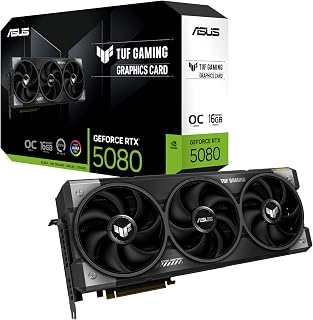
The 2730 MHz boost clock on this RTX 5080 variant provides exceptional performance for professional streamers broadcasting at 1440p or 4K. With 16GB GDDR7, memory constraints never interfere with high-quality encoding or texture-heavy games. Dual HDMI 2.1b outputs simplify connections to both gaming displays and professional capture devices. The OC edition ensures sustained performance during marathon streaming sessions without thermal throttling affecting broadcast quality.
Pros
- Phase-change thermal pad prevents performance degradation during long streams
- 16GB GDDR7 handles simultaneous gaming and encoding workloads
- DLSS 4 boosts frame rates without impacting stream quality
- Military-grade build withstands constant operation
Cons
- Requires 850W PSU and significant case clearance
- Flagship tier may exceed needs for 1080p streaming
Streaming at high resolutions while maintaining smooth gameplay requires a GPU that can handle encoding workloads without sacrificing frame rates. The ASUS TUF Gaming RTX 5080 brings NVIDIA's Blackwell architecture and DLSS 4 support to the table, offering dedicated hardware encoders that offload streaming tasks from the GPU cores. The 16GB of GDDR7 memory ensures headroom for running games, streaming software, and browser sources simultaneously without bottlenecks. What sets this card apart for streamers is the phase-change GPU thermal pad paired with three Axial-tech fans and an optimized fin array, maintaining consistent clock speeds during marathon broadcasts when thermal throttling could otherwise degrade stream quality. The GPU Tweak III software provides real-time monitoring, letting you track temperatures and performance metrics while live. Military-grade components and protective PCB coating add longevity for creators who run their systems daily under sustained load. Auto-Extreme precision manufacturing reinforces reliability. Native DisplayPort 2.1a and HDMI 2.1b outputs support multi-monitor setups common in streaming rigs.
GPU: NVIDIA GeForce RTX 5080
Memory: 16GB GDDR7
Boost Clock: 2730 MHz (OC Mode), 2700 MHz (Default Mode)
Physical Dimensions: 348mm length, 3.6-slot design, 4.3 lbs
Video Outputs: 3x DisplayPort 2.1a, 2x HDMI 2.1b
Power Requirement: Minimum 850W PSU with 16-pin 12V-2x6 (12VHPWR) connector
Manufacturing: Auto-Extreme precision automated manufacturing
Cooling: Three Axial-tech fans, phase-change GPU thermal pad, protective PCB coating
Power Supply: Verify your PSU is rated for 850W minimum and includes the required 16-pin 12V-2x6 (12VHPWR) connector. Standard 6-pin or 8-pin connectors are insufficient for this card.
Physical Clearance: Confirm your case accommodates the 348mm length and can support the 3.6-slot width requirement. Measure internal dimensions and account for storage drives, fans, and other components that may interfere with the card's placement.
System Integration: The card includes a GPU bracket for secure installation. Ensure your motherboard provides adequate PCIe slot access and that your monitor cables support DisplayPort 2.1a or HDMI 2.1b for optimal performance.

The 1492 MHz boost clock delivers reliable 1080p performance while the built-in NVENC encoder handles streaming workloads independently of the GPU's rendering pipeline. This separation prevents encoding from impacting gameplay smoothness, essential for competitive streamers. The 6GB GDDR6 provides sufficient memory for streaming popular esports titles and indie games. DisplayPort connectivity ensures compatibility with modern high refresh rate displays favored by streaming audiences.
Pros
- 70-watt slot power enables streaming from OEM PCs
- NVENC encoder offloads compression from CPU
- Compact design fits standard mid-tower cases
- Quiet dual-fan cooling for long streaming sessions
Cons
- 6GB VRAM struggles with AAA titles while streaming
- Limited to 1080p medium settings in demanding games
Streaming from pre-built systems or older hardware becomes viable with the MSI RTX 3050 Ventus 2X 6GB thanks to its slot-powered design. Drawing just 70 watts directly from the PCIe connection eliminates the need for PSU upgrades, a critical advantage for OEM machines from Dell or HP where proprietary power supplies can't support traditional graphics cards. The built-in NVENC encoder handles stream compression independently, keeping CPU resources available for game logic and broadcasting software. At 1080p, this card maintains stable frame rates in esports titles while simultaneously encoding, the core requirement for smooth streaming. The 7.4-inch compact length fits standard cases without clearance concerns. Ampere architecture supports ray tracing and DLSS, adding visual polish to streams when bandwidth allows. The dual-fan Ventus cooler operates quietly during multi-hour broadcasts, maintaining thermal stability users report as reliable. The 6GB VRAM suffices for 1080p streaming workflows, though texture quality may need adjustment in VRAM-heavy titles. For streamers working within existing hardware constraints or building entry-level broadcast setups, this card solves the power compatibility puzzle while delivering competent encoding performance.
GPU Specifications: NVIDIA GeForce RTX 3050 with Ampere architecture, 96-bit memory interface, 1492 MHz boost clock. Memory: 6GB GDDR6 running at 14 Gbps. Power consumption: 70W. Video outputs: 1x DisplayPort 1.4a, 2x HDMI 2.1a. Maximum supported resolution: 7680x4320.
Physical Design: Dimensions 7.4 inches (L) x 4.3 inches (W). Weight 0.58 kg. Dual-fan cooling design. PCIe x16 slot required. No external power connectors needed. Compatible with desktop systems. Includes quick setup guide and 3-year warranty.
Buy this if you stream from a pre-built PC with a proprietary PSU, need ultra-low power draw, or want hardware encoding without system upgrades. It works for 1080p esports and casual game streaming where power availability matters more than maximum settings. Skip this if you stream demanding AAA titles, broadcast at 1440p or higher, or have a standard PSU that supports more powerful cards with external connectors.

The 16GB GDDR6 capacity provides ample memory for running games, streaming software, and browser overlays simultaneously without performance degradation. The Radeon RX 9070 XT includes hardware AV1 encoding, delivering superior stream quality at lower bitrates compared to older codecs. With a 3060 MHz boost clock, it maintains high frame rates while encoding, crucial for smooth viewer experiences. Multiple DisplayPort outputs simplify multi-monitor setups common in streaming configurations.
Pros
- 16GB VRAM eliminates memory constraints
- 160-220 FPS at 1440p provides encoding headroom
- Quiet cooling during extended broadcasts
- Handles video editing and rendering between streams
Cons
- AMD encoding still trails NVENC in compression efficiency
- Requires 750W power supply minimum
Streamers working outside the NVIDIA ecosystem or seeking maximum value should examine AMD's approach carefully. The GIGABYTE Radeon RX 9070 XT Gaming OC brings serious gaming performance with 16GB GDDR6 and a 3060 MHz boost clock, delivering 160-220 FPS at 1440p high settings across modern titles. That frame rate headroom means your game stays smooth even when encoding loads spike. The 16GB memory buffer prevents VRAM bottlenecks when streaming open-world games with high-resolution textures, an issue that plagues 8GB cards. AMD's encoding has improved substantially, and while NVENC still holds a technical edge in compression efficiency, the gap narrows with each generation. The WINDFORCE cooling with Hawk fans and server-grade thermal gel keeps temperatures controlled during marathon streams without excessive noise. At 11.34 inches, it fits standard cases better than oversized competitors. PCIe 5.0 ensures compatibility with current systems. The card also handles content creation workloads like video editing and 3D rendering between streams, adding versatility. Build quality proves reliable with proper driver setup, though AMD's software ecosystem requires more user involvement than NVIDIA's plug-and-play approach.
Core Specifications
GPU: AMD Radeon RX 9070 XT
Memory: 16GB GDDR6
Memory Clock: 2600 GHz
GPU Clock: 3060 MHz
Interface: PCIe 5.0 x16
Max Resolution: 7680 x 4320 (8K)
Physical and Connectivity
Dimensions: 11.34 inches (L) x 5.2 inches (W)
Weight: 1.78 kg
Output: DisplayPort
Power Connectors: Dual 8-pin (750W+ PSU recommended)
Cooling: WINDFORCE system with Hawk fans and thermal gel
Warranty and Support
Manufacturer: GIGABYTE
Warranty: 3 years
Model: GV-R9070XTGAMING OC-16GD
Gaming Performance at Common Resolutions
1440p Gaming: 160-220fps on most modern AAA titles at high settings. Excellent for competitive gaming and high-refresh monitors.
4K Gaming: Playable at high settings on most titles, medium settings on demanding new releases. Solid for content creators monitoring in 4K.
Esports Titles: 300+ fps possible on optimized competitive games for ultra-high refresh gameplay.
Real-World Use Cases
Best suited for 1440p gaming at 144+ fps, 4K content creation workflows, professional 3D rendering, and VR gaming. Handles flight simulators like DCS at high settings with 4K head tracking. Eliminates VRAM constraints for media professionals working with large files.
Driver Recommendations
Run DDU (Display Driver Uninstaller) before installation if upgrading from another card. Install latest AMD drivers for maximum stability and performance. Update BIOS if required by your system for PCIe 5.0 compatibility.

The RTX 5070's dual encoder hardware makes it ideal for streaming workloads that demand simultaneous gameplay and broadcast encoding. With 12GB of fast GDDR7 memory, the card handles modern games at high settings while maintaining smooth encoding performance. The dual BIOS feature provides flexibility between performance and quiet operation, useful for streamers recording commentary. Native HDMI 2.1b and DisplayPort 2.1b outputs ensure compatibility with high refresh rate monitors and capture devices.
Pros
- 300+ FPS in competitive games leaves headroom for encoding
- DLSS 4 maintains frames while streaming demanding AAA titles
- Three Axial-tech fans stay cool and quiet during long sessions
- 12GB GDDR7 handles simultaneous streaming software and overlays
Cons
- 12-inch length requires adequate case measurement before purchase
- 2.5-slot width may conflict with tight builds or adjacent cards
Streaming competitive titles demands consistent high frame rates and spare GPU power for encoding, and the ASUS Prime RTX 5070 hits that target squarely. With users reporting 300+ FPS in Rainbow Six Siege and Overwatch at 1440p, you'll have frames to spare while NVIDIA's hardware encoder handles your stream without impacting gameplay. The 12GB GDDR7 and 2542 MHz clock give you headroom to run OBS, Discord, browser sources, and overlays simultaneously.nnBlackwell architecture with DLSS 4 becomes crucial when streaming AAA games. It reconstructs frames intelligently so your GPU can dedicate resources to both rendering and encoding without compromise. Demanding titles stay above 180 FPS at high settings, meaning smooth gameplay translates to smooth streams for your viewers.nnCooling matters during long streaming sessions, and the three Axial-tech fans with phase-change thermal pads keep temperatures in check without excessive noise that bleeds into your microphone. The 2.5-slot configuration fits most streaming rigs while leaving space for capture cards if needed. PCIe 5.0 connectivity and 4000 MHz memory speed ensure data moves quickly between components when multitasking across streaming software, game capture, and chat monitoring. The three-year warranty backs reliability through countless hours of broadcast.
GPU and Memory: NVIDIA GeForce RTX 5070, 12GB GDDR7 memory, 2542 MHz boost clock, 4000 MHz memory clock
Connectivity: PCIe 5.0 x16, HDMI 2.1b (1x), DisplayPort 2.1b (3x), HDCP support
Design: 2.5-slot form factor, 12 inches long, 5 inches wide, weighs 3.3 pounds, three Axial-tech fans, phase-change thermal pad
Display Support: Up to 7680x4320 resolution, supports dual-monitor and multi-display configurations
Warranty: 3-year manufacturer warranty, includes cables, Velcro straps, and manual
Ideal for competitive streamers and content creators broadcasting at 1440p who need both high frame rates and encoding power. Works brilliantly with mid-to-high-end CPUs like the Ryzen 7 7800X3D for responsive, multitasking-heavy streaming setups.nnNot the right pick for small-form-factor builds where the 12-inch length won't fit. Also skip if you stream casually at 1080p where more affordable options deliver adequate performance without the capability you won't fully use.

PNY NVIDIA GeForce RTX 5050 8GB Blackwell Graphics
The RTX 5050's 8GB GDDR6 memory offers better multitasking headroom than 6GB alternatives, accommodating streaming overlays and chat applications alongside gameplay. NVIDIA's latest NVENC generation on the 5050 provides improved encoding efficiency for sharper 1080p streams at standard bitrates. The 2317 MHz clock maintains stable frame rates in modern titles during encoding. Dual-fan cooling keeps temperatures manageable during extended streaming sessions.
Pros
- 8GB VRAM allows higher texture settings while streaming
- Modern NVENC produces cleaner streams at lower bitrate
- 2317 MHz boost clock maintains stability during encoding
- Dual outputs support multi-monitor streaming setups
Cons
- PCIe x8 interface may limit bandwidth in some configurations
- Overkill for pure 1080p esports streaming
The PNY RTX 5050 brings current-generation encoding technology to streamers seeking efficiency improvements over older hardware. Its 8GB GDDR6 memory provides headroom for 1080p and 1440p streaming with texture settings higher than 6GB cards allow, reducing visual compromises during broadcasts. The newer NVENC generation delivers better bitrate efficiency, producing cleaner streams at lower bandwidth, beneficial for platforms with upload caps or viewers on slower connections. Dual-fan cooling manages heat across extended streaming sessions, critical when encoding and gaming simultaneously stress the GPU. The 2317 MHz boost clock maintains consistent frame rates while the encoder works, preventing stuttering that disrupts viewer experience. DisplayPort and HDMI outputs support multi-monitor setups common in streaming stations where chat, alerts, and game footage span separate displays. The PCIe x8 interface and 2-slot design fit modern builds without physical constraints. As a 50-series card, it represents a newer architectural baseline with optimizations for concurrent workloads that streaming demands. While not flagship-tier, it balances encoding capability with gaming performance for streamers broadcasting competitive or mid-tier titles where consistent output matters more than maximum graphical fidelity.
GPU: NVIDIA GeForce RTX 5050 with Blackwell Architecture
Memory: 8GB GDDR6, 128-bit bus
Clock Speed: 2317 MHz (GPU), 2317 MHz (Memory)
Interface: PCIe 5.0 x8
Output Ports: DisplayPort 2.1, HDMI 2.1
Max Resolution: 7680x4320
Form Factor: 2-Slot, SFF-Ready
Power: Efficient design suitable for compact builds
Warranty: 3 Years
Buy this if you stream at 1080p or 1440p and want improved encoding efficiency over older NVENC generations, or if 8GB VRAM better suits your game library. It works for streamers building new systems who prioritize modern architecture. Skip this if you stream only esports at 1080p where 6GB cards suffice, or if you need high-refresh 1440p gaming alongside streaming where more powerful cards justify the investment.
What to Look for in a Streaming GPU
Hardware Encoder Quality
The single most important streaming feature on any GPU is its hardware encoder. NVIDIA’s NVENC encoder, found on every card in this list, offloads the encoding workload entirely from your CPU. This means your processor stays focused on running the game while the GPU handles the stream output.
Newer-generation encoders on Blackwell cards like the ASUS SFF-Ready Prime NVIDIA GeForce RTX 5070 and the ZOTAC Gaming GeForce RTX 5080 Solid CORE OC DLSS 4 deliver noticeably cleaner output at lower bitrates, which matters if you’re broadcasting on platforms with upload caps.
VRAM: How Much Do You Actually Need?
For 1080p streaming while gaming, 6GB of VRAM is a functional baseline. Cards like the ASUS Dual GeForce RTX 3050 6GB GDDR6 OC Edition and the msi Gaming RTX 3050 Ventus 2X 6G OC Graphics Card fit that role well for entry-level streamers.
If you’re targeting 1440p or 4K streaming alongside demanding titles, you’ll want 12GB or more. The ASUS Dual GeForce RTX 5060 Ti 16GB GDDR7 OC stands out here with a generous 16GB GDDR7 frame buffer, giving your stream plenty of headroom even in memory-intensive open worlds.
Thermal Management and Noise
Streaming sessions can run for hours, so sustained thermal performance matters far more than peak benchmarks. Cards with phase-change GPU thermal pads, like the ASUS TUF Gaming GeForce RTX 5070 12GB GDDR7 OC and the ASUS TUF Gaming GeForce RTX™ 5080 16GB GDDR7 OC, maintain lower GPU temperatures under prolonged load compared to traditional thermal paste designs.
Fan stop technology is another useful feature for streamers who use a microphone. The ASUS Dual GeForce RTX 5060 Ti 16GB GDDR7 OC includes 0dB mode, allowing fans to stop completely during lighter workloads so your mic picks up your voice, not your rig.
Architecture and AI Upscaling
DLSS 4, available on every Blackwell-based card in this roundup, uses AI to reconstruct frames and boost performance without a proportional hit to visual quality. For streamers, that means more headroom to allocate encoding resources without dropping in-game frame rates.
The GIGABYTE GeForce RTX 5060 WINDFORCE OC 8G Graphics and the PNY NVIDIA GeForce RTX™ 5050 Dual-Fan Graphics both bring DLSS 4 to more accessible price points, making Blackwell’s AI capabilities available without going all-in on a flagship card. AMD’s GIGABYTE Radeon RX 9070 XT Gaming OC 16G Graphics is also worth considering for streamers who prefer AV1 encoding through AMD’s competing encoder pipeline, backed by 16GB of GDDR6 memory.
Final Thoughts
For most streamers who want a well-rounded card that handles 1080p to 1440p broadcasts without breaking a sweat, the ASUS Dual GeForce RTX 5060 Ti 16GB GDDR7 OC delivers an impressive mix of VRAM, DLSS 4 support, and efficient cooling in a compact form factor. If you’re a high-end creator pushing 4K output or running multiple simultaneous capture sources, the ASUS TUF Gaming GeForce RTX 5080 16GB GDDR7 OC has the raw encoding power and thermal durability to handle every scenario you throw at it for years to come.
Frequently Asked Questions
Does a GPU matter for streaming quality?
Yes, significantly. Modern GPUs include dedicated hardware encoders that handle stream compression independently of your CPU. Using a GPU encoder like NVENC means your gameplay frame rate and your stream output quality no longer have to compete for the same processing resources. In 2026, even mid-range GPUs include capable encoders that outperform software encoding on most consumer CPUs.
How much VRAM do I need for streaming at 1080p versus 4K?
For 1080p streaming with modern game titles, 6GB to 8GB of VRAM is generally sufficient. Stepping up to 1440p or 4K streaming while gaming simultaneously pushes VRAM requirements toward 12GB and beyond, especially in open-world games with high-resolution texture packs. If you plan to upgrade your streaming resolution over time, investing in a 16GB card now gives you considerably more longevity.
Is NVIDIA or AMD better for live streaming in 2026?
Both platforms offer competitive hardware encoders for live streaming in 2026. NVIDIA’s NVENC, especially on Blackwell-generation cards, is widely regarded as the more mature solution with broader software compatibility across OBS, Streamlabs, and XSplit. AMD’s encoder has improved considerably and is a strong option for users already in the AMD ecosystem. Your streaming software, game library compatibility, and overall system build should guide that choice more than encoding quality alone.
Can I stream and game on the same GPU without a second PC?
Absolutely. A dedicated capture card or second PC used to be the recommended setup, but modern GPUs with hardware encoders make single-PC streaming fully viable. Cards with NVENC or AMD’s encoder handle the broadcast compression independently, so there’s no need to split your workload across two machines. For most streamers in 2026, a single capable GPU is all you need for a clean, professional-looking broadcast.




Write Your Review
No reviews yet. Be the first to share your experience!