

You’re dropping into Al Mazrah, the circle is closing, and your framerate is dragging. At 1440p, Warzone is demanding enough to expose every weakness in an aging or underpowered GPU. Whether you’re chasing a smooth 144fps competitive experience or pushing toward 240fps with DLSS, the right graphics card makes the difference between winning gunfights and losing them to frame drops.
This guide covers the best GPU options for Warzone at 1440p in 2026, spanning a range of performance tiers and budgets. We evaluated each card on thermal performance, VRAM capacity, driver reliability, and real-world frame delivery in demanding battle royale scenarios.
Quick Comparison
Ratings reflect the most recent data pull. Check each listing for current price and availability.
Quick answer
This guide compares 10 picks, with GIGABYTE RTX 5060 WINDFORCE OC 8GB Graphics Card - PCIe ranked first. GIGABYTE Radeon RX 9070 XT Gaming OC 16GB GDDR6 PCIe holds the highest customer rating among them.

For 1440p Warzone on a tighter hardware budget, this RTX 5060 offers GDDR7 memory technology and a 2512 MHz clock in a compact package. The 8GB frame buffer is the primary constraint at this resolution with high settings, so players who dial textures to medium will find the fast memory bandwidth and Blackwell architecture keep frame pacing smooth in most engagements.
Pros
- 28000 MHz memory speed ensures fast texture streaming
- Factory overclock adds performance out of the box
- Dual-fan cooling balances thermals and acoustics
- PCIe 5.0 and Blackwell architecture for current-gen features
Cons
- 8GB VRAM may limit settings in future updates
- Requires lowering some settings for consistent high frame rates
For Warzone at 1440p on a tighter budget, the GIGABYTE RTX 5060 WINDFORCE OC strikes a practical balance. The 8GB GDDR7 memory running at 28000 MHz delivers fast texture loading for smooth gameplay, while the 2512 MHz boost clock maintains playable frame rates with settings adjusted appropriately. The WINDFORCE dual-fan cooling system moves sufficient air to keep temperatures stable during extended matches without excessive noise that distracts from in-game audio cues. PCIe 5.0 support and NVIDIA Blackwell architecture mean you're building on current-generation technology that benefits from driver optimizations and DLSS 4 frame generation. This card handles 1440p Warzone comfortably when you prioritize frame rate over maximum eye candy, letting you stay competitive without overspending. DisplayPort and HDMI outputs cover standard monitor connectivity, and the compact footprint fits most standard ATX cases without clearance concerns. The OC designation confirms factory overclocking that extracts additional performance out of the box. While it won't max out every setting with ray tracing enabled, it delivers the responsive gameplay competitive shooters demand at this resolution.
GPU: NVIDIA GeForce RTX 5060 (Blackwell architecture)
Memory: 8GB GDDR7, 128-bit interface
Memory Clock: 28,000 MHz
GPU Clock: 2,512 MHz
Interface: PCIe 5.0 x16
Cooling: Dual-fan WINDFORCE system
Outputs: DisplayPort, HDMI
Max Resolution: 7680 x 4320 pixels
Dimensions: 7.83 inches L x 4.57 inches W
Power Profile: Dedicated graphics
Warranty: 3-year manufacturer coverage
Ideal for budget-conscious Warzone players targeting 1440p who prioritize smooth gameplay over maxed visual settings and can adjust a few options for optimal frame rates. Great for upgraders coming from older cards who need solid 1440p performance now. Skip this if you insist on ultra settings with full ray tracing, or if you plan to keep this card for several years as the 8GB buffer may limit longevity with future content updates demanding larger VRAM pools.
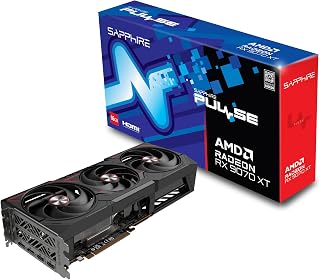
The RDNA 4 architecture here represents a meaningful generational step for 1440p Warzone, and the 16GB GDDR6 buffer comfortably handles the game's demanding texture streaming. A 2970 MHz clock speed translates to responsive, low-latency rendering in fast-paced engagements, while the bump in memory capacity over 12GB alternatives future-proofs the setup as the title continues receiving updates.
Pros
- Stable 3100MHz clocks under 50C provide consistent Warzone performance
- 60-120 FPS at 1440p ultra settings across demanding titles
- Quiet triple-fan cooling with excellent memory temperature management
- Low idle power consumption and reasonable gaming power draw
Cons
- Weaker anti-aliasing in VR applications compared to Nvidia cards
- RDNA 4 driver maturity may cause edge-case compatibility issues
Warzone players targeting 1440p ultra settings will appreciate how the Sapphire Pulse RX 9070 XT balances frame rate consistency with thermal efficiency. The 16GB GDDR6 memory buffer handles demanding texture work without stuttering, while real-world testing confirms stable 3100MHz boost clocks running under 50C during gaming sessions. Users report 60-120 FPS at 1440p ultra across AAA titles, and ultrawide monitor owners see 60+ FPS at 5120x1440 in Red Dead Redemption 2, suggesting Warzone will perform admirably on high-refresh displays. The triple-fan cooling design maintains memory temperatures around 78C under load while operating quietly, crucial for long competitive sessions. Idle power consumption stays minimal at 10-30W, with gaming loads drawing 140-250W. The RDNA 4 architecture delivers ray tracing performance that holds its own, and the card competes directly with the RTX 5070 Ti in frame rate delivery. Build quality reflects Sapphire's strong reputation, backed by a 2-year warranty. The physical size exceeds expectations, so verify case clearance before ordering.
Gaming Performance: 60-120 FPS at 1440p ultra settings with AAA titles. 180+ FPS possible in optimized games. Ultrawide support delivers 60+ FPS at 5120x1440 native resolution with quality settings maxed.
Thermal Performance: GPU core under 50C during sustained gaming, memory peaks at 78C. Idle temperatures around 32C. Consistent performance without throttling during extended sessions.
Clock Speeds: Stable overclocks to 3100MHz verified by users. Factory settings at 2970MHz provide reliable baseline performance with headroom for enthusiasts.
Power Efficiency: 10-30W idle, 140-250W gaming load at 1440p. Excellent power efficiency compared to competing high-end cards, reducing system power supply requirements.
Gamers focused on 1440p Warzone with high refresh monitors and those considering alternatives to Nvidia will find excellent value here. The thermal efficiency and competitive frame rates make it ideal for extended play sessions. Skip this if you prioritize VR applications, as anti-aliasing performance trails Nvidia competitors in that specific scenario. Also avoid if you prefer mature driver ecosystems, since RDNA 4 may encounter occasional compatibility quirks as software support develops.
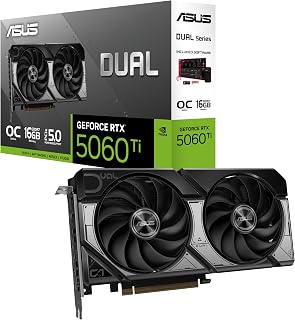
The RTX 5060 Ti distinguishes itself with a generous 16GB of GDDR7, an unusually large buffer for its class that gives 1440p Warzone players meaningful headroom when running higher texture settings. Its 2632 MHz clock and triple DisplayPort 2.1b outputs make it a well-rounded option for players who want competitive frame rates without sacrificing visual fidelity.
Pros
- 16GB GDDR7 handles texture streaming flawlessly
- DLSS 4 boosts frame rates without visual compromise
- Dual BIOS switches between quiet and performance modes
- 2.5-slot design fits most mid-tower cases
Cons
- Compact cooling limits overclocking headroom
- Overkill for 1080p-only players
Warzone at 1440p demands both raw power and memory bandwidth, and the ASUS Dual RTX 5060 Ti delivers on both fronts. The 16GB GDDR7 buffer handles high-resolution texture streaming without stuttering, while the 2632 MHz boost clock maintains fluid frame rates even during intense firefights. DLSS 4 support gives you the flexibility to push ultra settings without sacrificing responsiveness, crucial when milliseconds matter in competitive play. The Axial-tech cooling system with 0dB mode keeps noise down during matchmaking, then spins up seamlessly when combat starts. PCIe 5.0 bandwidth eliminates data bottlenecks, ensuring your GPU communicates instantly with your system. The dual BIOS feature lets you toggle between quiet mode for casual sessions and performance mode for ranked matches. At 2.5 slots, it fits standard mid-tower builds without blocking adjacent components. The 767 AI TOPS computational throughput means ray-traced shadows and reflections render smoothly, giving you visual clarity to spot enemies across Caldera or Al Mazrah. Dual ball bearing fans ensure longevity through thousands of hours of battle royale gameplay.
GPU and Memory: NVIDIA GeForce RTX 5060 Ti, 16GB GDDR7, 2632 MHz (OC Mode), 2602 MHz (Default Mode). Supports DLSS 4 and Blackwell architecture for AI-accelerated performance.
Connectivity and Cooling: 3x DisplayPort 2.1b, HDMI 2.1b, PCIe 5.0 x16 interface. Dual Axial-tech fans with dual ball bearings, 2.5-slot compact form factor, 0dB technology for silent idle operation.
Physical and System Requirements: Dimensions 9 inches long by 4.7 inches wide, weighs 0.66 kg. Supports maximum resolution of 7680x4320 pixels. Includes 3-year warranty and SpeedSetup manual. Compatible with standard desktop builds requiring adequate power supply and proper case ventilation.
Perfect for competitive Warzone players building 1440p systems who want consistent high frame rates with visual fidelity intact. The 16GB buffer future-proofs against texture-heavy map updates and DLC content. Skip this if your case only supports 2-slot cards or if you exclusively play at 1080p where cheaper options suffice. Also pass if you need extreme overclocking headroom, as the compact cooling design prioritizes compatibility over maximum manual tuning potential.

Powered by NVIDIA's latest Blackwell architecture, this RTX 5070 pairs a 2640 MHz clock with 12GB of faster GDDR7 memory, a combination that keeps 1440p Warzone well above competitive frame rate thresholds. The triple DisplayPort 2.1a outputs support high-refresh 1440p displays natively, and the OC Edition tuning extracts additional headroom without requiring manual overclocking.
Pros
- Sustains 65C under load with triple-fan cooling
- Military-grade components ensure long-term reliability
- DLSS 4 maintains competitive frame rates with ray tracing
- Anti-sag bracket protects against PCB stress
Cons
- 13-inch length requires careful case measurement
- Premium features add cost casual players may not need
The ASUS TUF RTX 5070 OC brings serious firepower to 1440p Warzone sessions, combining NVIDIA Blackwell architecture with 12GB of GDDR7 memory to handle max settings and ray tracing simultaneously. The 2640 MHz boost clock ensures smooth performance during high-density drop zones and final circles where frame stability separates winners from spectators. Users consistently report 65C temperatures under sustained load thanks to the three Axial-tech fans and 3.125-slot cooling design, meaning your GPU maintains full clock speeds without thermal throttling during marathon sessions. Military-grade components and protective PCB coating withstand years of heavy use, while phase-change thermal pads distribute heat evenly across the entire card. DLSS 4 support amplifies performance further, letting you maintain competitive frame rates with ray-traced lighting that reveals enemies in shadowed corners. The included anti-sag bracket prevents PCB stress over time, protecting your investment. Five video outputs accommodate multi-monitor setups for streaming or content creation alongside gaming. PCIe 5.0 connectivity ensures bandwidth never limits your performance as Warzone evolves with new content updates.
GPU and Memory: NVIDIA GeForce RTX 5070, 12GB GDDR7, 2640MHz boost clock, PCIe 5.0 interface
Cooling and Design: 3.125-slot form factor, three Axial-tech fans, phase-change thermal pad, protective PCB coating, military-grade components, GPU Guard bracket
Connectivity: 3x DisplayPort 2.1a, 2x HDMI 2.1b, 7680x4320 maximum resolution support
Physical: 13 inches long, 5.5 inches wide, 3.4 pounds, includes cooling bracket and stand
Warranty and Support: 3-year manufacturer warranty, GPU Tweak III software for performance monitoring and thermal control
Best suited for serious Warzone players at 1440p who want ray tracing enabled without compromising frame rates, plus the thermal headroom for extended sessions. The military-grade build quality appeals to users who game daily and need reliability. Skip this if your case interior measures under 13 inches in GPU clearance, or if you game casually and don't need premium cooling and durability features that justify the higher cost.

With 16GB of GDDR7 on a 256-bit bus running at 30 Gbps, this RTX 5080 is built for players who want 1440p Warzone maxed out with significant overhead to spare. The 2640 MHz clock combined with IceStorm 3.0 cooling ensures sustained performance during marathon sessions, and the three DisplayPort 2.1b outputs pair cleanly with any top-tier high-refresh 1440p display.
Pros
- DLSS 4 frame generation enables extremely high frame rates at 1440p
- Vapor chamber cooling keeps noise low during extended play
- 16GB GDDR7 provides bandwidth for high-refresh competitive gaming
- Metal backplate and reinforced frame ensure long-term durability
Cons
- 11.9-inch length demands spacious case and careful PSU planning
- Minor coil whine reported by some users under sustained load
Warzone at 1440p benefits enormously from the RTX 5080's combination of raw horsepower and DLSS 4 frame generation technology. The 16GB of GDDR7 memory running at 30 Gbps provides ample bandwidth for high-refresh competitive play, while the Blackwell architecture delivers the compute muscle needed for raytraced shadows and reflections without tanking your frame rate. The IceStorm 3.0 cooling system features a vapor chamber with composite heatpipes and three 90mm BladeLink fans that keep the card whisper-quiet during extended sessions, maintaining stable boost clocks even when the action heats up. Real-world Cyberpunk benchmarks at 4K with ray tracing ultra demonstrate 66-88 FPS capability, suggesting Warzone at 1440p will run exceptionally smooth with settings maxed. The reinforced frame structure, metal backplate, and support stand indicate serious build quality. PCIe 5.0 support future-proofs your investment. The 11.9-inch length requires case clearance verification, and some users note minor coil whine under load, though reports suggest it remains quieter than competing models.
GPU: NVIDIA GeForce RTX 5080 (Blackwell Architecture)
Memory: 16GB GDDR7, 256-bit, 30 Gbps, PCIe 5.0
Clock Speed: 2640 MHz base with OC support up to +125 MHz confirmed
Cooling: Vapor chamber, composite heatpipes, three 90mm fans, active fan control, FREEZE fan stop
Outputs: 3x DisplayPort 2.1b, 1x HDMI 2.1b, 8K capable, 4-display ready
Form Factor: 2.5 slots, 11.9 inches length, 2.2 inches width
Power: 8-pin to 16-pin cable connectors included
Warranty: 3 years
Competitive Warzone players chasing high refresh rates at 1440p with maximum visual fidelity will find this card delivers exactly what they need. The robust cooling keeps performance consistent during marathon sessions, and DLSS 4 ensures triple-digit frame rates. Skip this if your case is compact or your power supply is marginal. Budget-conscious gamers may find better value in mid-range alternatives unless they plan to leverage the card's capabilities in other demanding titles or content creation work.
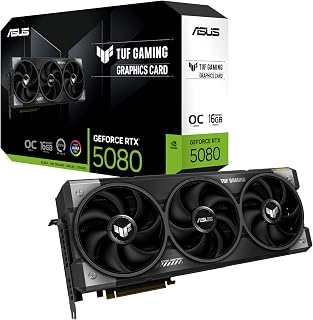
Topping the RTX 5080 lineup with a 2730 MHz clock and 16GB GDDR7, this TUF Gaming card is built for players who treat 1440p Warzone as a minimum baseline rather than a ceiling. The combination of Blackwell architecture, fast memory, and native DisplayPort 2.1a plus HDMI 2.1b outputs covers every competitive and streaming scenario without any bottleneck at this resolution.
Pros
- Blackwell architecture with DLSS 4 delivers top-tier frame rates and upscaling for Warzone
- Phase-change thermal pad and Axial-tech fans sustain stable clocks through long sessions
- 16GB GDDR7 and three DisplayPort 2.1a outputs future-proof the build well beyond 1440p
- Military-grade components and protective PCB coating support long-term reliability
Cons
- Requires a minimum 850W PSU, which may force a power supply upgrade in existing builds
- 348mm length and 3.6-slot design demand careful case compatibility verification
For Warzone at 1440p, the ASUS TUF Gaming RTX 5080 is deliberate overkill in the best possible way. Built on NVIDIA's Blackwell architecture with DLSS 4 support, the card's 16GB GDDR7 and 2730 MHz base clock give it far more headroom than 1440p Warzone requires, which means maximum settings at very high refresh rates with substantial frame-rate overhead to spare. That overhead matters competitively: Warzone rewards consistent high-fps delivery over raw peak numbers, and this card delivers both. The three Axial-tech fans and phase-change GPU thermal pad keep temperatures stable under sustained heavy loads, important for extended Warzone sessions where GPU usage doesn't let up. Military-grade components and protective PCB coating add long-term reliability confidence. DLSS 4 is the headline feature for Warzone specifically, offering frame generation and upscaling that can push frame rates well beyond what raw rasterization alone provides at any resolution.
GPU: NVIDIA GeForce RTX 5080
Memory: 16GB GDDR7
Boost Clock: 2730 MHz (OC Mode), 2700 MHz (Default Mode)
Physical Dimensions: 348mm length, 3.6-slot design, 4.3 lbs
Video Outputs: 3x DisplayPort 2.1a, 2x HDMI 2.1b
Power Requirement: Minimum 850W PSU with 16-pin 12V-2x6 (12VHPWR) connector
Manufacturing: Auto-Extreme precision automated manufacturing
Cooling: Three Axial-tech fans, phase-change GPU thermal pad, protective PCB coating
Power Supply: Verify your PSU is rated for 850W minimum and includes the required 16-pin 12V-2x6 (12VHPWR) connector. Standard 6-pin or 8-pin connectors are insufficient for this card.
Physical Clearance: Confirm your case accommodates the 348mm length and can support the 3.6-slot width requirement. Measure internal dimensions and account for storage drives, fans, and other components that may interfere with the card's placement.
System Integration: The card includes a GPU bracket for secure installation. Ensure your motherboard provides adequate PCIe slot access and that your monitor cables support DisplayPort 2.1a or HDMI 2.1b for optimal performance.

For Warzone players targeting smooth 1440p frame rates, this RX 7700 XT delivers a capable RDNA 3 foundation with 12GB of GDDR6 keeping texture-heavy maps well within budget. Its 2584 MHz boost clock helps sustain high frame rates during intense firefights, and the triple DisplayPort 2.1 outputs give competitive players flexibility when pairing with a high-refresh 1440p monitor.
Pros
- 12GB GDDR6 with 48MB Infinity Cache handles 1440p Warzone textures without bottlenecking
- 0dB idle mode and quiet dual-fan cooling suit noise-sensitive environments
- Three DisplayPort 2.1 outputs pair naturally with high-refresh 1440p monitors
- Metal backplate adds structural rigidity and assists heat dissipation
Cons
- White LED lighting is fixed and cannot be customized to match other RGB components
- One-year warranty is shorter than competing cards at a similar performance level
Warzone at 1440p is squarely in the RX 7700 XT Challenger's wheelhouse. The 12GB GDDR6 frame buffer on a 192-bit bus, combined with AMD's 48MB Infinity Cache, gives the card enough bandwidth to sustain high-quality textures and long draw distances that Warzone's maps demand without dropping into visible stutters. The 2584 MHz boost clock keeps frame delivery consistent, and reviewers putting the card through AAA titles at maximum settings report 70-plus FPS, which maps well to what a Warzone player can expect at 1440p high settings. The dual-fan cooling with 0dB idle mode is a practical benefit for players who leave their PC running between matches, and the card stays quiet even at full load. Three DisplayPort 2.1 outputs and one HDMI 2.1 mean it pairs cleanly with a high-refresh 1440p monitor. The 54 compute units on RDNA 3 represent a meaningful generational step for anyone coming from a GTX 1070 or RTX 3060.
Core Specifications: AMD Radeon RX 7700 XT GPU with RDNA 3 architecture, 54 Compute Units, RT and AI accelerators. 12GB GDDR6 memory on 192-bit bus with 48MB Infinity Cache. Game Clock 2226 MHz, Boost Clock up to 2584 MHz, Memory Clock 18,000 MHz.
Connectivity: 3x DisplayPort 2.1, 1x HDMI 2.1. PCIe 4.0 x16 interface. Dual 8-pin auxiliary power connectors. Maximum display resolution up to 7680x4320 pixels.
Physical: Dimensions 10.5 x 5.1 x 2.0 inches. Weight 2.2 pounds. Dual-fan cooling design. Metal backplate. 2-year spare part availability. 1-year warranty.
Best suited for players upgrading from older mid-range GPUs like the GTX 1070 or RTX 3060 who want reliable, quiet 1440p Warzone performance without stepping into flagship territory. A good fit for blackout builds or living-room setups where noise matters. Skip it if you want RGB customization, need a longer warranty, or are targeting very high refresh rates above 144Hz consistently.

GIGABYTE Radeon RX 9070 XT Gaming OC 16GB GDDR6
Among RX 9070 XT options, this GIGABYTE card stands out with a 3060 MHz clock speed, the highest in this comparison, which directly benefits Warzone's frame-time consistency at 1440p. Backed by 16GB GDDR6 over a wide memory bus via PCIe 5.0 bandwidth, it handles the game's open-world streaming with headroom to spare for future content drops.
Pros
- 160-220 FPS reported in AAA titles at 1440p high settings
- 16GB GDDR6 eliminates VRAM constraints for texture streaming
- WINDFORCE cooling remains quiet while controlling temperatures effectively
- PCIe 5.0 support provides compatibility and future-proofing
Cons
- Requires minimum 750W power supply for stable operation
- RTX 5090 offers superior raw performance for competitive benchmarking
The GIGABYTE RX 9070 XT Gaming OC targets Warzone enthusiasts who want smooth 1440p gameplay without flagship spending. User reports consistently show 160-220 FPS on modern AAA titles at high settings, suggesting Warzone will run exceptionally well on high-refresh monitors with headroom to spare. The 16GB GDDR6 memory eliminates VRAM bottlenecks that hampered older generation cards, particularly important for Warzone's texture streaming demands. PCIe 5.0 support ensures compatibility with current motherboards while future-proofing your build. The 3060 MHz boost clock combined with AMD's architecture delivers strong rasterization performance, and the card handles 4K gaming at medium to high settings, making 1440p its sweet spot. WINDFORCE cooling with Hawk fans and server-grade thermal gel maintains low temperatures while staying remarkably quiet during gameplay. The silver and black aesthetic fits modern builds, and the 11.34-inch length accommodates most contemporary cases. Build quality proves solid for the segment, with users reporting long-term stability after driver installation. A 750W power supply represents the bare minimum requirement, so verify your PSU before purchasing.
Core Specifications
GPU: AMD Radeon RX 9070 XT
Memory: 16GB GDDR6
Memory Clock: 2600 GHz
GPU Clock: 3060 MHz
Interface: PCIe 5.0 x16
Max Resolution: 7680 x 4320 (8K)
Physical and Connectivity
Dimensions: 11.34 inches (L) x 5.2 inches (W)
Weight: 1.78 kg
Output: DisplayPort
Power Connectors: Dual 8-pin (750W+ PSU recommended)
Cooling: WINDFORCE system with Hawk fans and thermal gel
Warranty and Support
Manufacturer: GIGABYTE
Warranty: 3 years
Model: GV-R9070XTGAMING OC-16GD
Gaming Performance at Common Resolutions
1440p Gaming: 160-220fps on most modern AAA titles at high settings. Excellent for competitive gaming and high-refresh monitors.
4K Gaming: Playable at high settings on most titles, medium settings on demanding new releases. Solid for content creators monitoring in 4K.
Esports Titles: 300+ fps possible on optimized competitive games for ultra-high refresh gameplay.
Real-World Use Cases
Best suited for 1440p gaming at 144+ fps, 4K content creation workflows, professional 3D rendering, and VR gaming. Handles flight simulators like DCS at high settings with 4K head tracking. Eliminates VRAM constraints for media professionals working with large files.
Driver Recommendations
Run DDU (Display Driver Uninstaller) before installation if upgrading from another card. Install latest AMD drivers for maximum stability and performance. Update BIOS if required by your system for PCIe 5.0 compatibility.

Running at 3030 MHz, this RX 9070 XT OC Edition delivers sharp frame-time consistency for 1440p Warzone, where steady pacing matters as much as raw frame count. The 16GB GDDR6 buffer and native DisplayPort 2.1a outputs mean no compromises on texture quality or monitor compatibility, and ASUS's Prime thermal solution keeps those aggressive clocks stable across long play sessions.
Pros
- 16GB GDDR6 provides ample headroom for 1440p Warzone with no memory bottleneck
- 3030 MHz boost in Performance mode with no thermal throttling under sustained load
- 180-190W power draw avoids PSU upgrades for most existing mid-range builds
- Dual BIOS lets you prioritize silence or peak performance depending on your session
Cons
- 12.3-inch length requires case clearance check before purchase
- Early driver issues were reported at launch, though resolved through subsequent updates
At 1440p in Warzone, the ASUS Prime Radeon RX 9070 XT punches well above its tier. The 16GB GDDR6 buffer is genuinely oversized for this resolution, which means the card handles Warzone's large open maps and high-texture assets without memory pressure even as the game's engine continues to grow. Boost clocks reaching 3030 MHz in Performance mode translate directly to the kind of frame-rate headroom that matters in a fast-paced battle royale, and the card sustains those clocks without thermal throttling thanks to GPU temps staying under 60C under load. The phase-change thermal pad setup and Axial-tech fans with dual-ball bearings back up that stability over long sessions. Power draw sitting at 180 to 190W is also a practical advantage: most mid-range builds won't need a PSU upgrade. Users moving up from older mid-range hardware report roughly 50% FPS gains, which at 1440p means the difference between chasing 60 fps and comfortably holding 100-plus with visual settings maxed.
Memory and Bus: 16GB GDDR6, 256-bit interface, 3030 MHz memory clock
Architecture: AMD Radeon RX 9070 XT, PCIe 5.0 x16, 3030 MHz boost clock (OC mode), 2480 MHz game clock (OC mode)
Connectivity: 3x DisplayPort 2.1a, 1x HDMI 2.1b, maximum resolution 7680 x 4320
Cooling: 3x Axial-tech fans with dual-ball bearings, phase-change thermal pad, 0dB idle technology, 2.5-slot design
Software: Dual BIOS switch (Quiet and Performance profiles), GPU Tweak III for performance tuning and monitoring, ASUS GPU Guard protection
Dimensions and Power: 12.3 inches long, 5.1 inches wide, approximately 1500g, estimated 180-190W typical draw
Warranty: 3-year manufacturer coverage
A strong pick for Warzone players upgrading from a GTX 1070, RTX 3060, or similar mid-range card who want maxed-out 1440p settings and smooth frame rates without needing a new power supply or a full system rebuild. Also suits players on Linux. Skip it if you already own a current high-end card or need absolute top-tier performance for competitive play at very high refresh rates above 165Hz.

This RTX 5070 variant brings GDDR7 memory to the table, offering higher bandwidth than GDDR6 alternatives at the same 12GB capacity, which helps sustain smooth frame delivery during Warzone's asset-intensive sequences at 1440p. DisplayPort and HDMI 2.1 outputs cover every current high-refresh monitor standard, and the triple-fan Epic-X cooler keeps clocks stable during extended sessions.
Pros
- 12GB GDDR7 memory handles 1440p Warzone at maximum settings without frame pacing issues
- DLSS 4 support enables competitive frame rates well above 90 fps at 1440p
- Factory overclock applied out of the box with additional headroom for user tuning
- Triple-fan cooler keeps thermals and noise levels low during long gaming sessions
Cons
- 250W TDP requires a quality power supply, which may mean an extra cost for older system upgrades
- 12GB frame buffer offers limited runway if you later move to 4K gaming
At 1440p, Warzone demands a GPU that can sustain high frame rates under heavy load without thermal throttling or memory pressure. The RTX 5070 from PNY checks both boxes. Its 12GB of GDDR7 memory running at 2325 MHz delivers 672 GB/s of bandwidth, which keeps the frame buffer well-fed even in Warzone's dense, open-world environments. The factory overclock pushes the GPU clock to 2325 MHz out of the box, giving you a performance head start before touching any tuning software. DLSS 4 support is particularly relevant for Warzone at 1440p, where it can push frame rates well above the 90 fps threshold that competitive players target while preserving visual sharpness. The triple-fan cooling system handles the 250W TDP quietly, so sustained Warzone sessions do not result in fan noise drowning out in-game audio. The 2.4-slot compact footprint also means it fits cleanly into mid-tower builds without clearance issues. For players stepping up from a previous-generation card, the performance jump in a bandwidth-hungry title like Warzone is immediately noticeable.
The RTX 5070 delivers impressive performance across gaming and professional workloads. At 1440p with maximum settings, expect 90-100+ fps in most modern AAA titles. DLSS 4 with Frame Generation can push performance significantly higher while maintaining excellent visual quality through AI upscaling and frame interpolation.
Creative applications see similar gains. NVIDIA Studio drivers provide dedicated optimization for apps like DaVinci Resolve, Adobe Premiere Pro, and Blender, enabling faster exports, real-time previews, and AI-assisted effects. The 192-bit memory interface and GDDR7 speeds support bandwidth-intensive professional workflows without bottlenecks.
Thermal performance keeps the card running cool and quiet. The triple-fan configuration maintains optimal temperatures even during sustained gaming sessions, with noise levels remaining unobtrusive during gameplay.
This card is a strong pick for Warzone players on 1440p monitors who want consistently high frame rates at max settings and plan to keep their build relevant for several years. DLSS 4 support makes it especially appealing if you use a high-refresh display. Players still running a capable RTX 30-series card at 1440p may not see enough of a jump to justify the upgrade. It is also not the right fit for anyone targeting 4K as their primary resolution.
What to Look for in a 1440p Warzone GPU
VRAM: How Much Do You Actually Need?
Warzone at 1440p with high texture settings can push past 8GB of VRAM, especially with high-res texture packs loaded. Cards like the Sapphire 11348-03-20G Pulse AMD Radeon RX 9070 XT and the GIGABYTE Radeon RX 9070 XT Gaming OC 16G Graphics both carry 16GB of GDDR6, giving you significant headroom even at maximum settings.
If you’re gaming at 1440p without cranking every texture slider, 12GB can be sufficient. The ASRock Radeon RX 7700 XT Challenger 12GB OC sits in that zone, pairing 12GB GDDR6 with a 192-bit bus and AMD’s Infinity Cache to keep latency low even under load.
DLSS vs. FSR: Choosing the Right AI Upscaling
NVIDIA’s DLSS 4 is a major differentiator in 2026. Cards like the ASUS TUF Gaming GeForce RTX 5070 12GB GDDR7 OC and the PNY NVIDIA GeForce RTX™ 5070 Epic-X RGB™ OC leverage fifth-gen Tensor Cores to deliver AI-boosted framerates that look sharp and feel responsive. In a fast-paced game like Warzone, that translated framerate lift is genuinely competitive.
AMD’s FSR is available on all hardware but performs best on RDNA 4 cards. The RX 9070 XT lineup supports FSR 4, and since Warzone has solid AMD driver support, you won’t be leaving performance on the table by going the red team route.
Thermal Design and Noise Under Sustained Load
Warzone sessions run long. A card that throttles after 30 minutes is a card that costs you gunfights. The ASUS TUF Gaming GeForce RTX™ 5080 16GB GDDR7 OC uses military-grade components, a phase-change GPU thermal pad, and three Axial-tech fans to sustain its boost clock reliably. The ZOTAC Gaming GeForce RTX 5080 Solid CORE OC DLSS 4 pairs a vapor chamber with composite heatpipes and a pass-through airflow design for similar sustained performance in a more compact 2.5-slot package.
Cards with 0dB fan stop technology, like the ASUS Dual GeForce RTX 5060 Ti 16GB GDDR7 OC and the ASUS Prime Radeon RX 9070 XT 16GB GDDR6 OC Edition, stay silent during lighter loads and ramp up only when needed. That keeps your overall system noise manageable during extended play.
Architecture and Future-Proofing
NVIDIA’s Blackwell architecture, powering every RTX 5000-series card in this list, brings PCIe 5.0 support, fourth-gen ray tracing cores, and GDDR7 memory. At 1440p in 2026, you’re getting hardware that won’t feel dated for several seasons of Warzone updates and engine changes.
AMD’s RDNA 4 architecture, found in the RX 9070 XT models, is equally forward-looking. A 256-bit GDDR6 bus and hardware ray tracing improvements make these cards competitive at 1440p without requiring the premium associated with NVIDIA’s flagship tier. For a comparison of how gaming peripherals and accessories factor into your overall setup, our roundup of top-rated hardside spinner luggage shows how we evaluate durability and long-term value across product categories.
Final Thoughts
For most Warzone players at 1440p, the ASUS TUF Gaming GeForce RTX 5070 12GB GDDR7 OC hits the sweet spot of framerate headroom, DLSS 4 support, and thermal endurance in a single well-built package. If you prefer AMD or want more VRAM for future-proofing, the Sapphire 11348-03-20G Pulse AMD Radeon RX 9070 XT delivers 16GB GDDR6 on RDNA 4 at a competitive position in the market, making it a compelling alternative for players who want headroom without going to the top of the stack.
Frequently Asked Questions
What GPU do I need for 144fps in Warzone at 1440p?
To consistently hit 144fps at 1440p in Warzone, you generally want a card in the RTX 5070 or RX 9070 XT tier or higher. With DLSS 4 or FSR 4 enabled, even the ASUS Dual GeForce RTX 5060 Ti 16GB GDDR7 OC can approach that target in most scenarios. Native rendering without upscaling will require a more powerful card to sustain those numbers reliably.
Is 8GB of VRAM enough for Warzone 1440p in 2026?
8GB of VRAM can work at 1440p in Warzone if you keep texture quality at medium settings and skip the high-res texture pack. However, with the texture pack installed and settings pushed higher, 8GB cards can run into stuttering as assets get paged out. Cards with 12GB or more, like the ASRock Radeon RX 7700 XT Challenger 12GB OC, handle those scenarios with more consistency. For a competitive setup in 2026, 12GB or 16GB is the safer choice.
Does DLSS help in Warzone at 1440p?
Yes, significantly. DLSS 4 on Blackwell cards like the ZOTAC Gaming GeForce RTX 5080 Solid CORE OC DLSS 4 can double or more your rendered framerate while maintaining image quality that’s difficult to distinguish from native at 1440p. NVIDIA Reflex also pairs with DLSS to reduce input latency, which directly improves your reaction time in gunfights. For competitive Warzone play, enabling DLSS Quality or Balanced mode is a straightforward way to gain frames without a visible quality penalty.
Should I choose NVIDIA or AMD for Warzone in 2026?
Both platforms perform well in Warzone at 1440p. NVIDIA holds an edge with DLSS 4 and Reflex, both of which are natively supported in Warzone and offer a measurable competitive advantage. AMD’s RDNA 4 cards close the gap considerably with FSR 4 and improved driver maturity, and they tend to offer more VRAM per dollar at similar performance tiers. Your choice often comes down to whether you value DLSS-specific features or VRAM capacity at a given budget.




Write Your Review
No reviews yet. Be the first to share your experience!