

You’ve built a solid rig or you’re ready to upgrade, and you don’t want to overspend, but you also won’t settle for mediocre frames. That’s exactly where the sub-$1000 GPU market hits its sweet spot. Cards in this range now deliver genuine 1440p and 4K capability, loaded with high VRAM, advanced cooling systems, and architecture that supports AI-enhanced rendering features like DLSS 4 and AMD’s equivalent upscaling technologies.
This guide covers ten of the strongest contenders available right now, spanning AMD’s RDNA 4 lineup and NVIDIA’s Blackwell generation. Whether you want a compact card for a small form factor build or a powerhouse with triple-fan cooling, there’s a strong option here for you.
Quick Comparison
Ratings reflect the most recent data pull. Check each listing for current price and availability.
Quick answer
This guide compares 10 picks, with ASUS Prime Radeon RX 9070 EVO 16GB GDDR6 Gaming ranked first. GIGABYTE Radeon RX 9070 XT Gaming OC 16GB GDDR6 PCIe has the most customer reviews.

The 16GB GDDR6 memory provides ample headroom for demanding gaming at high resolutions, ensuring textures and assets load smoothly without stuttering. Running at 2610 MHz, this card delivers strong performance for AAA titles at 1440p and even 4K gaming. The dual HDMI 2.1b and triple DisplayPort 2.1a outputs offer versatile connectivity for multi-monitor setups. With its OC Edition tuning, gamers get out-of-the-box performance gains without manual tweaking.
Pros
- 16GB GDDR6 handles 4K ultra settings without VRAM bottlenecks
- Triple-fan cooling with phase-change thermal pad keeps temperatures low under sustained load
- Dual BIOS switch offers a choice between performance and quiet operation
- Five display outputs including HDMI 2.1b and DisplayPort 2.1a cover demanding multi-monitor configurations
Cons
- Requires a robust power supply and adequate case airflow to perform at its best
- Linux driver maturity has historically lagged, though recent AMD updates have improved stability
The 16GB GDDR6 frame buffer handles ultra-settings workloads with room to spare, and the 2610 MHz boost clock keeps frame rates competitive across demanding modern titles. Triple axial-tech fans paired with a phase-change thermal pad hold temperatures in check even during extended sessions, and the dual-ball bearings contribute to long-term reliability. The dual BIOS switch is a practical touch, letting you prioritize raw performance or near-silent operation depending on the situation. Five display outputs, including two HDMI 2.1b and three DisplayPort 2.1a ports, cover multi-monitor setups and 8K-capable displays. PCIe 5.0 support and the mature ASUS GPU Tweak III software round out a package that feels genuinely future-proofed. For gamers upgrading from RTX 3060 or 3070 class hardware, the performance jump is substantial.
GPU: AMD Radeon RX 9070, Architecture: RDNA 4
Memory: 16GB GDDR6, 2610 MHz memory clock
Boost Clock: 2610 MHz (OC mode), 2590 MHz (Default mode)
Game Clock: 2140 MHz (OC mode), 2120 MHz (Default mode)
Connectivity: PCIe 5.0 x16, 2x HDMI 2.1b, 3x DisplayPort 2.1a
Dimensions: 12 inches long, 5 inches wide, 2.5-slot design
Fans: 3x Axial-tech with dual-ball bearings
Max Resolution: 7680x4320 pixels
Weight: 2.4 pounds
Features: 0dB technology, Dual BIOS (Quiet/Performance), Phase-change thermal pad, Auto-Extreme manufacturing, GPU Tweak III software
Warranty: 3 years
Model Number: PRIME-RX9070-O16G-EVO
Gamers upgrading from RTX 3000-series or older AMD cards who want smooth 4K ultra gaming will find this card hits the target squarely. It also suits creators running GPU-accelerated workloads on a budget-conscious build. Those gaming at 1080p or 1440p on standard refresh monitors should look at less expensive options, and buyers running a modest power supply or a cramped case may face compatibility hurdles.

The Mercury Magnetic Air Edition combines 16GB GDDR6 memory with customizable RGB lighting that appeals to gamers building themed setups. Multiple display outputs including three DisplayPort connections allow flexible monitor configurations for immersive gaming or productivity. AMD RDNA 4 architecture brings improved efficiency and performance per watt compared to previous generations. The XFX cooling solution handles thermal demands effectively while the magnetic design simplifies installation and maintenance for DIY builders.
Pros
- RDNA 4 architecture delivers native 4K gaming with ray tracing at stable frame rates
- Magnetic air triple-fan system runs quietly under load while maintaining solid thermal performance
- 16GB GDDR6 at 20 GHz memory speed provides headroom for high-resolution and future workloads
Cons
- At 14.17 inches and 2.33 kg, it requires a spacious case and careful airflow planning
- Three 8-pin power connectors demand a robust PSU, and AMD's driver ecosystem has a learning curve for users switching from Nvidia
RDNA 4 architecture drives real-world results: demanding titles like Dragon's Dogma 2 run at native 4K with ray tracing active and hold 60 fps. The magnetic air triple-fan cooling system earns attention for how quietly it manages thermal loads, which matters during long gaming sessions. Memory runs at 20 GHz and the GDDR6 frame sits at 16GB, giving the card headroom for high-resolution texture packs and future titles. Subtle RGB lighting fits modern builds without dominating the aesthetic, and the engineering finish reflects the card's enthusiast positioning. At 14.17 inches, case compatibility is a real consideration, and three 8-pin power connectors demand a capable PSU. Those factors aside, the raw performance-to-budget ratio at this price tier is difficult to beat for gamers who have made 4K their primary target.
Core Specifications: GPU Architecture: AMD RDNA 4, Chipset: RX 9070 XT, Memory: 16GB GDDR6 at 20 GHz, Memory Bus: 256-bit. Base Clock: 1870 MHz, Game Clock: 2570 MHz, Boost Clock: 3100 MHz. Display Output: 3x DisplayPort + 1x HDMI supporting up to 3840x2160 resolution.
Physical Dimensions: Length: 14.17 inches, Width: 6.3 inches, Weight: 2.33 kg. Interface: PCI-Express x16. Power Requirements: Three 8-pin PCIe connectors required. Cooling: Triple magnetic air fans with customizable RGB lighting system.
Compatibility and Warranty: Compatible with desktop systems only. Supports Windows, Linux, and professional APIs. Includes 3-year XFX manufacturer warranty plus extended fan coverage. Model Number: RX-97TMARGB9, UPC: 840191502590.
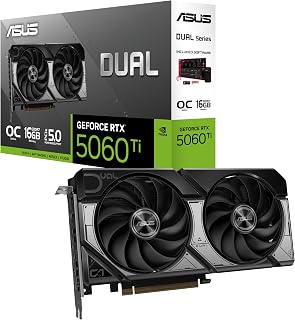
Featuring 16GB GDDR7 memory, this card offers significantly more VRAM than typical mid-range options, making it ideal for gamers who want longevity and high-detail settings. The 2632 MHz clock speed delivers smooth 1440p gaming across a wide library of titles. DisplayPort 2.1b connections support the latest high refresh rate monitors up to 4K 240Hz. The dual-fan cooling design keeps temperatures manageable while maintaining quieter operation than triple-fan alternatives.
Pros
- 16GB GDDR7 memory future-proofs for demanding games
- Compact 2.5-slot design fits tight chassis
- 0dB fans stay silent during light gaming
- Dual BIOS switches between Quiet and Performance modes
Cons
- Compact sizing limits overclocking headroom
- Entry-level options offer better value for budget builds
For gamers shopping in the premium bracket who need a card that fits smaller builds without sacrificing capability, the ASUS Dual RTX 5060 Ti 16GB delivers exactly that balance. NVIDIA's Blackwell architecture and 16GB of GDDR7 memory push 1440p ultra settings effortlessly and handle 4K high settings with DLSS 4 support, generating 767 AI TOPS for computational tasks. The compact 2.5-slot design prioritizes compatibility, making it viable for tight chassis where larger cards simply won't fit. Cooling comes from Axial-tech fans with longer blades and focused airflow, plus 0dB technology that shuts fans off during lighter sessions for silent operation. When pushed, the card hits 2632 MHz in performance mode. Dual ball bearing fans outlast traditional sleeve designs by a factor of two, and dual BIOS lets you toggle between Quiet and Performance profiles instantly. PCIe 5.0 connectivity and that generous 16GB buffer keep this card relevant for years. The tradeoff is modest overclocking headroom compared to larger, more extreme cards, but the engineering quality and form factor make it a smart pick for powerful compact rigs.
GPU and Memory: NVIDIA GeForce RTX 5060 Ti, 16GB GDDR7, 2632 MHz (OC Mode), 2602 MHz (Default Mode). Supports DLSS 4 and Blackwell architecture for AI-accelerated performance.
Connectivity and Cooling: 3x DisplayPort 2.1b, HDMI 2.1b, PCIe 5.0 x16 interface. Dual Axial-tech fans with dual ball bearings, 2.5-slot compact form factor, 0dB technology for silent idle operation.
Physical and System Requirements: Dimensions 9 inches long by 4.7 inches wide, weighs 0.66 kg. Supports maximum resolution of 7680x4320 pixels. Includes 3-year warranty and SpeedSetup manual. Compatible with standard desktop builds requiring adequate power supply and proper case ventilation.
Gamers building or upgrading small-form-factor PCs who need serious 1440p and respectable 4K performance without the bulk of flagship models should buy this. Enthusiasts who value silent operation during lighter workloads and want future-proof memory capacity will appreciate the 16GB GDDR7 and dual BIOS flexibility. Skip it if you're chasing extreme overclocking potential or building in a spacious case where a larger card would provide better cooling headroom. Budget-focused gamers can find cheaper entry points.

With a boosted 2640 MHz clock speed in OC Edition form, this card pushes frame rates higher in competitive and single-player titles alike. The 12GB GDDR7 memory ensures ray tracing and high-resolution textures perform without bottlenecks. TUF Gaming construction means reinforced durability for long gaming sessions and overclocking headroom. Dual HDMI 2.1b ports allow simultaneous connections to multiple displays or capture devices, ideal for streamers and content creators who game.
Pros
- Flawless 1440p ray tracing and solid 4K performance
- Military-grade components with protective PCB coating
- Consistent 65C temperatures under sustained load
- Excels in video editing, rendering, and AI workloads
Cons
- 13 inches long and over 2 inches thick requires large case
- 12GB VRAM may face limitations with next-gen titles
Serious gamers building high-performance systems for 1440p and 4K will find the ASUS TUF RTX 5070 OC delivers exceptional capability and durability. NVIDIA's Blackwell architecture with 12GB GDDR7 and a 2640 MHz boost clock handles ray tracing at 1440p flawlessly and pushes solid 4K performance. DLSS 4 support ensures the frame rates and visual quality that justify the enthusiast investment. Beyond gaming, this card excels in video editing, rendering, and AI workloads like image generation. Military-grade components, protective PCB coating, and phase-change thermal pads distinguish it from standard offerings. The 3.125-slot cooling design with three Axial-tech fans maintains consistent 65C temperatures even under sustained load. An included bracket and stand eliminate sag concerns, and the compact form factor relative to its performance is remarkable. Users report impressive stability across creative applications and lighter video generation models. The engineering quality extends to a 3-year warranty, backing the premium build. The card measures 13 inches long and over 2 inches thick, so case compatibility verification is essential before purchase. While 12GB VRAM handles current games comfortably, future titles demanding larger textures may eventually test that limit.
GPU and Memory: NVIDIA GeForce RTX 5070, 12GB GDDR7, 2640MHz boost clock, PCIe 5.0 interface
Cooling and Design: 3.125-slot form factor, three Axial-tech fans, phase-change thermal pad, protective PCB coating, military-grade components, GPU Guard bracket
Connectivity: 3x DisplayPort 2.1a, 2x HDMI 2.1b, 7680x4320 maximum resolution support
Physical: 13 inches long, 5.5 inches wide, 3.4 pounds, includes cooling bracket and stand
Warranty and Support: 3-year manufacturer warranty, GPU Tweak III software for performance monitoring and thermal control
Gamers and content creators building high-performance rigs for 1440p gaming with ray tracing, 4K capability, and creative workloads should buy this. Enthusiasts who value military-grade durability and exceptional cooling under sustained load will appreciate the engineering quality. Skip it if your case can't accommodate a 13-inch, 3.125-slot card. Also skip if you're gaming at 1080p exclusively, where cheaper cards deliver similar results, or if you need more than 12GB VRAM for next-generation texture demands.

The impressive 3060 MHz GPU clock speed stands out as one of the fastest configurations available, translating to exceptional frame rates in both esports titles and AAA games. Its 16GB GDDR6 memory handles large texture packs and future game requirements with ease. PCIe 5.0 support ensures maximum bandwidth for data transfer between CPU and GPU. The Gaming OC designation means GIGABYTE tuned this card specifically for sustained high performance during extended gaming marathons.
Pros
- 3060 MHz boost clock delivers 160 to 220 fps at 1440p in demanding AAA titles
- 16GB GDDR6 eliminates VRAM constraints at both 1440p and 4K resolutions
- WINDFORCE cooling with Hawk fans and server-grade thermal gel runs quietly under sustained load
- Compact 11.34-inch length fits a wider range of cases than many competing high-end cards
Cons
- 750W PSU is the stated minimum, so underpowered systems will need an upgrade before installation
- Raw peak performance falls short of Nvidia's top-tier options, though those cards cost significantly more
The 3060 MHz boost clock is the highest of the three cards here, and the 16GB GDDR6 buffer means VRAM won't be the limiting factor at 1440p or when pushing into 4K territory. At 1440p, users consistently see 160 to 220 fps in modern AAA titles at high settings, making it a strong match for high-refresh-rate monitors. The WINDFORCE system with Hawk fans and server-grade thermal gel keeps the card quiet and cool across extended play. At 11.34 inches long, it fits a wider range of cases than its competitors in this article. PCIe 5.0 support keeps the build relevant for upcoming platform upgrades.
Core Specifications
GPU: AMD Radeon RX 9070 XT
Memory: 16GB GDDR6
Memory Clock: 2600 GHz
GPU Clock: 3060 MHz
Interface: PCIe 5.0 x16
Max Resolution: 7680 x 4320 (8K)
Physical and Connectivity
Dimensions: 11.34 inches (L) x 5.2 inches (W)
Weight: 1.78 kg
Output: DisplayPort
Power Connectors: Dual 8-pin (750W+ PSU recommended)
Cooling: WINDFORCE system with Hawk fans and thermal gel
Warranty and Support
Manufacturer: GIGABYTE
Warranty: 3 years
Model: GV-R9070XTGAMING OC-16GD
Gaming Performance at Common Resolutions
1440p Gaming: 160-220fps on most modern AAA titles at high settings. Excellent for competitive gaming and high-refresh monitors.
4K Gaming: Playable at high settings on most titles, medium settings on demanding new releases. Solid for content creators monitoring in 4K.
Esports Titles: 300+ fps possible on optimized competitive games for ultra-high refresh gameplay.
Real-World Use Cases
Best suited for 1440p gaming at 144+ fps, 4K content creation workflows, professional 3D rendering, and VR gaming. Handles flight simulators like DCS at high settings with 4K head tracking. Eliminates VRAM constraints for media professionals working with large files.
Driver Recommendations
Run DDU (Display Driver Uninstaller) before installation if upgrading from another card. Install latest AMD drivers for maximum stability and performance. Update BIOS if required by your system for PCIe 5.0 compatibility.

Clocking in at 3030 MHz, this OC Edition delivers exceptional out-of-the-box speeds that eliminate manual overclocking for most gamers. The 16GB GDDR6 provides substantial memory capacity for high-resolution gaming and texture-heavy open-world titles. Native DisplayPort 2.1a outputs support cutting-edge monitors with extreme refresh rates and resolutions. ASUS Prime reliability ensures stable performance during marathon gaming sessions, backed by quality components and effective thermal management.
Pros
- Boost clocks up to 3030 MHz with GPU temps held under 60C during stress tests
- Draws 180-190W, notably more efficient than competing cards at similar performance levels
- Dual BIOS profiles let you choose between near-silent operation and full performance
- Native DisplayPort 2.1a and HDMI 2.1b support displays up to 7680x4320
Cons
- At 12.3 inches it will not fit smaller cases, and the 2.5-slot width needs to be verified against your build
- Some users hit driver instability at launch, though hardware was not the root cause and updates resolved it
Its 16GB of GDDR6 memory and boost clocks reaching 3030 MHz put 4K gaming well within reach, with users reporting 50% FPS gains over previous mid-range hardware. What separates it from similarly specced competition is power efficiency: the card typically draws 180-190W, running 15-20W below comparable cards at the same performance tier, which matters for system builders watching their PSU headroom. The dual BIOS setup adds practical flexibility, with Quiet mode holding idle temps at 28-32C on near-silent fans and Performance mode delivering full clocks without thermal throttling. Under sustained load, GPU temperatures stay below 60C. The Axial-tech fans feature dual-ball bearings rated for double the lifespan of standard designs, and the 2.5-slot compact footprint works with most modern cases. Native DisplayPort 2.1a and HDMI 2.1b outputs cover 8K-capable displays. Early adopters encountered some driver instability, though updates resolved those issues within weeks.
Memory and Bus: 16GB GDDR6, 256-bit interface, 3030 MHz memory clock
Architecture: AMD Radeon RX 9070 XT, PCIe 5.0 x16, 3030 MHz boost clock (OC mode), 2480 MHz game clock (OC mode)
Connectivity: 3x DisplayPort 2.1a, 1x HDMI 2.1b, maximum resolution 7680 x 4320
Cooling: 3x Axial-tech fans with dual-ball bearings, phase-change thermal pad, 0dB idle technology, 2.5-slot design
Software: Dual BIOS switch (Quiet and Performance profiles), GPU Tweak III for performance tuning and monitoring, ASUS GPU Guard protection
Dimensions and Power: 12.3 inches long, 5.1 inches wide, approximately 1500g, estimated 180-190W typical draw
Warranty: 3-year manufacturer coverage
Ideal for gamers upgrading from mid-range cards who want strong 4K performance and long-term reliability without chasing absolute flagship specs. Also a solid pick for creators doing 3D rendering or AI workloads on AMD hardware. Skip it if you need top-tier frame rates in every scenario regardless of power draw, or if you are building a Linux system that cannot tolerate any initial driver adjustment period.

The Reaper features 16GB GDDR6 memory at 2400 MHz, balancing strong performance with efficient power consumption for extended gaming sessions. DisplayPort 2.1 and HDMI 2.1 connectivity supports modern gaming monitors with high refresh rates and HDR capabilities. Its thermal design keeps the card cool under load without excessive fan noise that distracts during gameplay. The straightforward aesthetic fits various build themes while delivering reliable AMD RDNA 4 performance for contemporary gaming demands.
Pros
- Full 16GB GDDR6 at 20 GHz memory clock on the RX 9070 XT silicon
- Triple-fan cooling handles thermal load without requiring an elaborate chassis
- Three DisplayPort 2.1 outputs plus HDMI 2.1 covers demanding multi-display configurations
- PCIe x16 interface ensures compatibility with current and recent-generation motherboards
Cons
- Base GPU clock of 2400 MHz is lower than some competing RX 9070 XT variants
- Minimal available detail on cooling performance metrics or build-specific features beyond the core specs
The triple-fan cooling setup and PCIe x16 interface are standard for this class, and the display output array of one HDMI 2.1 and three DisplayPort 2.1 ports covers multi-monitor setups and high-refresh-rate displays at up to 7680x4320 resolution. Memory clock speed is rated at 20 GHz, matching what competing RX 9070 XT boards offer. The Reaper branding signals a focus on accessible pricing rather than premium extras, which suits builders who want the core RX 9070 XT experience without paying for elaborate cooling aesthetics or factory overclocks. The base GPU clock is listed at 2400 MHz.
GPU Processor: AMD Radeon RX 9070 XT
Memory: 16GB GDDR6
GPU Clock Speed: 2400 MHz
Memory Clock Speed: 20 GHz
Interface: PCI-Express x16
Power Connectors: Two 8-pin PCI Express connectors
Minimum System Power: 750W
Display Outputs: 1x HDMI 2.1, 3x DisplayPort 2.1
Maximum Resolution: 7680x4320
Card Dimensions: 289 x 111 x 41mm
Card Length: 289mm
Cooling: Triple-fan design
Warranty: 2 Year Limited

This Quicksilver Gaming Edition packs 16GB GDDR6 memory for handling detailed textures and complex scenes in modern games without performance drops. The three DisplayPort outputs enable triple-monitor racing or flight simulation setups for maximum immersion. AMD RDNA 4 architecture provides excellent efficiency and compatibility with the latest gaming technologies including FSR upscaling. XFX engineering focuses on delivering consistent frame rates across diverse gaming genres from competitive shooters to open-world adventures.
Pros
- RDNA 4 architecture with enhanced raytracing delivers high-fidelity lighting in modern AAA titles
- 16GB GDDR6 handles 4K gaming, rendering, and streaming workloads simultaneously
- Triple-fan cooling sustains performance through extended gaming sessions
- Supports resolutions up to 7680x4320 via DisplayPort and HDMI outputs
Cons
- Requires a 1000W minimum power supply due to power spikes that can reach 500W
- At 13.78 inches it is one of the longer cards in this class and AMD driver stability may require undervolting
The 16GB GDDR6 memory handles 4K gaming, video editing, 3D rendering, and streaming simultaneously without performance degradation, making it more than a single-purpose gaming card. Users report smooth frame rates even in demanding scenarios, and the triple-fan cooler manages thermals effectively during extended sessions. Its 13.78-inch length fits most standard tower cases but demands a pre-build measurement check. The more pressing constraint is power: the card requires a 1000W power supply minimum because of occasional spikes that can reach 500W, a hard requirement that rules it out for systems with modest PSUs. Undervolting addresses concerns for those who encounter AMD driver instability, a known consideration across recent AMD generations.
GPU Chipset: AMD Radeon RX 9070 XT with unified RDNA 4 compute units
Memory: 16GB GDDR6 at 20GHz memory clock speed
Clock Speeds: 1660MHz base clock, 2400MHz gaming clock, 2970MHz boost clock
Display Support: Up to 7680x4320 resolution via DisplayPort and HDMI connectivity
Cooling: XFX QICK triple-fan cooling solution with optimized thermal management
Interface: PCI-Express x16 for desktop systems
Power Requirements: Minimum 1000W power supply with stable 12V rail recommended
Warranty: 2-year manufacturer coverage included
Model: XFX Quicksilver RX-97TQICKB9
Right for gamers and creators who have a 1000W or stronger power supply and want top-end 4K visual quality from an RX 9070 XT card. A strong pick if raytracing fidelity is a priority. Skip it if your current PSU is under 1000W, if you prefer a compact build, or if AMD driver maturity is a dealbreaker rather than something you are willing to manage with undervolting.

Pros
- 16GB GDDR6 on a 256-bit interface handles 4K textures without VRAM pressure
- 3.06 GHz factory overclock on RDNA 4 delivers strong out-of-the-box performance
- Triple-fan Nitro+ cooling sustains stable thermals during long gaming sessions
- Four display outputs (dual HDMI, dual DisplayPort) support flexible multi-monitor setups
Cons
- Requires solid case airflow and adequate power delivery to hit rated specifications
- Older systems may see bottlenecking due to PCIe x16 bandwidth limitations
Built on AMD's RDNA 4 architecture, it pairs a 3.06 GHz factory overclock with 16GB of GDDR6 memory on a 256-bit interface, giving you the headroom to run demanding AAA titles at 4K with high-to-ultra settings without constantly bumping into a VRAM ceiling. The triple-fan cooling setup keeps thermals stable under sustained load, which matters when you are pushing the GPU hard across long sessions. Ray tracing performance is competitive, and RDNA 4's AI acceleration adds value for anyone who doubles this rig as a creative workstation. Four display outputs, covering both HDMI and DisplayPort, make multi-monitor configurations straightforward. The 2-year warranty adds peace of mind for a purchase at this price tier. For builders targeting a high-end 4K experience without crossing into flagship GPU territory, this card sits in a productive spot on the performance-per-dollar curve.
GPU Architecture: AMD Radeon RX 9070 XT, RDNA 4 core design optimized for gaming and compute workloads.
Memory Configuration: 16GB GDDR6 with 256-bit bus interface, delivering 640 GB/s memory bandwidth for high-resolution textures and fast data access.
Clock Speeds: GPU boost clocked at 3.06 GHz factory-overclocked, memory operating at 20 GHz effective speed for minimal bottlenecking.
Output: 2x HDMI 2.1 and 2x DisplayPort 2.1 connectors enable 4K high-refresh or multi-display configurations.
Cooling: Triple-fan design with optimized airflow pattern for sustained performance under load.
Interface: PCI-Express x16 Gen 4, compatible with modern desktop platforms.
Also a solid pick if you run a multi-monitor setup, since both HDMI and DisplayPort outputs are included. Skip it if your case lacks adequate ventilation, your power delivery is marginal, or you are still on an older platform where PCIe bandwidth could become a limiting factor.

The 12GB GDDR7 memory represents next-generation VRAM technology, offering significantly faster data transfer rates than GDDR6 for smoother frame delivery in graphically intensive games. Its 2542 MHz clock speed handles modern titles with ray tracing capabilities admirably. The compact SFF-ready design fits smaller builds without sacrificing cooling efficiency thanks to axial-tech fans. Native DisplayPort 2.1b and HDMI 2.1b support future-proof display connectivity for high refresh rate monitors.
Pros
- 300+ FPS in competitive titles at 1440p
- 12GB GDDR7 handles modern game complexity
- Runs cooler and quieter than previous-gen alternatives
- 2.5-slot design fits more builds than three-slot cards
Cons
- 12-inch length requires adequate case clearance
- Compact ITX cases may struggle with fit
Gamers who want strong 1440p performance and don't need the expense or bulk of top-tier cards will find exactly what they need in the ASUS Prime RTX 5070. This mid-range card uses NVIDIA's Blackwell architecture with 12GB GDDR7 and a 2542 MHz clock to deliver over 300 FPS in competitive titles like Rainbow Six Siege and Overwatch at 1440p, while AAA games stay above 180 FPS at high settings. DLSS 4 ensures smooth frame pacing and improved visuals. The 2.5-slot configuration is narrower than traditional three-slot designs but more robust than single-slot alternatives, fitting a wider range of builds. Three Axial-tech fans with optimized blade geometry create strong downward airflow, and the phase-change thermal pad transfers heat exceptionally well. Users consistently report this card runs cooler than AMD's previous-generation alternatives and quieter than older blower designs, making it comfortable for extended sessions. Pairing it with mid-to-high-end CPUs like the Ryzen 7 7800X3D delivers the responsiveness competitive gamers demand. The main caveat is its 12-inch length and 2.5-slot width, which require adequate case clearance.
GPU and Memory: NVIDIA GeForce RTX 5070, 12GB GDDR7 memory, 2542 MHz boost clock, 4000 MHz memory clock
Connectivity: PCIe 5.0 x16, HDMI 2.1b (1x), DisplayPort 2.1b (3x), HDCP support
Design: 2.5-slot form factor, 12 inches long, 5 inches wide, weighs 3.3 pounds, three Axial-tech fans, phase-change thermal pad
Display Support: Up to 7680x4320 resolution, supports dual-monitor and multi-display configurations
Warranty: 3-year manufacturer warranty, includes cables, Velcro straps, and manual
Gamers prioritizing 1440p performance at competitive framerates without paying flagship prices should buy this. Competitive players who need consistent 300+ FPS in esports titles and smooth AAA performance will appreciate the balance of power and cooling. Skip it if you're building in a compact ITX or very tight SFF case where the 12-inch length won't fit. Also skip if you're targeting 4K ultra settings as your primary use case, where more powerful cards deliver better value.
Buying Guide: What to Look for in a GPU Under $1000
Architecture and Generation
The GPU generation you choose shapes everything from raw rasterization performance to AI-driven upscaling quality. Both AMD’s RDNA 4 and NVIDIA’s Blackwell architectures represent meaningful leaps over their predecessors, bringing improved ray tracing, better power efficiency, and new upscaling capabilities.
Cards like the XFX Mercury AMD Radeon RX 9070XT OC Magnetic Air and the ASUS TUF Gaming GeForce RTX 5070 12GB GDDR7 OC represent the current generation’s best. Buying current-gen ensures driver support and feature longevity for years ahead.
VRAM and Memory Bandwidth
For 1440p gaming, 12GB of VRAM is a comfortable baseline in 2026. If you plan to run 4K textures, heavy modding, or creative workloads alongside gaming, 16GB gives you meaningful headroom without compromise.
Most of the AMD cards in this roundup, including the ASUS Prime Radeon RX 9070 XT 16GB GDDR6 OC Edition and the PowerColor Reaper AMD Radeon RX 9070 XT 16GB GDDR6, ship with 16GB GDDR6 across a 256-bit bus. That combination keeps frame times smooth even in VRAM-hungry titles.
Cooling Design and Thermal Performance
A GPU that runs hot will throttle under sustained load, undermining the performance you paid for. Look for cards with phase-change thermal pads, dual-ball fan bearings, and zero-RPM idle modes. These features extend component lifespan and keep noise levels manageable during lighter sessions.
The ASUS Prime Radeon RX 9070 EVO 16GB GDDR6 OC and the ASUS SFF-Ready Prime NVIDIA GeForce RTX 5070 both use ASUS’s Axial-tech fan design combined with phase-change thermal pads, making them particularly strong for builds where thermals matter most.
Form Factor and Build Compatibility
Not every case can accommodate a three-slot, 320mm card. If you’re building in a mid-tower or smaller chassis, a 2.5-slot design can be the difference between a clean fit and a frustrating install. Check your case’s GPU clearance before committing to any card.
The ASUS Dual GeForce RTX 5060 Ti 16GB GDDR7 OC and the ASUS Prime RTX 5070 are both SFF-friendly at 2.5 slots, making them ideal for compact builds without sacrificing thermal performance. The PowerColor Reaper AMD Radeon RX 9070 XT 16GB GDDR6 sits at a compact 289mm length, offering similar flexibility on the AMD side.
Final Thoughts
The GPU market at this price tier is genuinely competitive in 2026, and you’re well-served no matter which direction you go. If you want the highest-rated card with exceptional cooling and a compact build-friendly design, the ASUS Prime Radeon RX 9070 EVO 16GB GDDR6 OC earns its spot at the top of this list. For those who prefer NVIDIA’s ecosystem and AI upscaling via DLSS 4 with a proven military-grade build quality, the ASUS TUF Gaming GeForce RTX 5070 12GB GDDR7 OC is a rock-solid choice that delivers sustained performance under heavy loads.
Frequently Asked Questions
Is a GPU under $1000 good enough for 4K gaming in 2026?
Yes, several cards in this range handle 4K gaming well, especially with AI upscaling enabled. Cards like the XFX Mercury AMD Radeon RX 9070XT OC Magnetic Air with its 3100 MHz boost clock and 16GB GDDR6 are equipped for high-resolution play. Pairing them with AMD FSR or NVIDIA DLSS 4 gets you smooth frame rates without requiring a flagship-tier card.
Should I choose AMD or NVIDIA for a GPU in this price range?
Both camps offer strong options here. AMD’s RDNA 4 cards, including the GIGABYTE Radeon RX 9070 XT Gaming OC 16G Graphics and the Sapphire 11348-01-20G Nitro+ AMD Radeon™ RX 9070, tend to lead on raw rasterization and VRAM capacity. NVIDIA’s Blackwell cards, like the RTX 5070 lineup, bring DLSS 4 and strong ray tracing support to the table. Your choice may come down to the software ecosystem you prefer and which titles you play most.
How much VRAM do I need for modern gaming in 2026?
For 1080p and 1440p gaming, 12GB covers the vast majority of current titles comfortably. If you play at 4K, use high-resolution texture packs, or do any GPU-accelerated creative work, 16GB gives you meaningful extra headroom. Most AMD cards in this roundup ship with 16GB, which makes them particularly future-resistant picks.
What PSU wattage do I need for a high-end GPU?
Most cards in this tier recommend at least a 750W power supply, and the PowerColor Reaper AMD Radeon RX 9070 XT 16GB GDDR6 specifies exactly that as its minimum system power. A quality 850W unit gives you comfortable overhead, especially if you’re pairing the card with a high-core-count CPU. Always check the specific card’s requirements before purchasing a PSU.




Write Your Review
No reviews yet. Be the first to share your experience!