

A microphone can sound polished at your desk yet turn keyboard clatter, cooling fans, and nearby voices into a distraction. That is why the condenser vs dynamic microphone decision starts with your room and speaking habits, not simply whether you podcast, game, record vocals, or join calls.
This guide compares nine USB and USB/XLR options for streamers, remote workers, podcasters, and voice-over beginners. We compared pickup patterns, connection choices, placement needs, and onboard controls so you can match a mic to your routine. If you are considering a more specialized vocal option, our Shure microphone guide is a useful next stop.
Quick answer
This guide compares 9 picks, with FIFINE T669 USB Condenser Microphone with Boom Arm ranked first. FIFINE K669B USB Condenser Microphone for PC, PS4, PS5 has the most customer reviews.

A unidirectional condenser with a gain knob and detachable 8.2ft USB cable gives podcasters and voiceover creators the sensitivity needed to pick up vocal nuance in a treated room, while the included boom arm stand keeps the capsule positioned close to your mouth for consistent levels without re-adjusting between takes.
Pros
- Complete bundle: boom arm, shock mount, pop filter, windscreen included
- Cardioid condenser capsule with 20Hz-20KHz response for detailed vocals
- Durable metal mic body and all-steel boom arm construction
- Flexible positioning with 180-degree and 135-degree arm movement
Cons
- Cardioid condenser pattern picks up more background noise than a dynamic mic in untreated rooms
- USB Type-B connector may need an adapter for Type-C-only devices
Choosing between a condenser and a dynamic mic often comes down to how much gear you want to deal with, and the FIFINE T669 answers that by handing you a complete condenser setup in one box. For creators weighing their first studio-style purchase, the appeal here is the bundle: boom arm, shock mount, double-layer pop filter, and windscreen arrive alongside the mic, so there's no separate shopping list before you can record. The cardioid condenser capsule and 20Hz-20KHz response give it the detailed, sensitive sound that typically pulls people toward condensers over dynamic mics in the first place, good for picking up vocal nuance in podcasting and voiceover work. The all-steel boom arm's 180-degree vertical and 135-degree forward swing makes positioning simple for both hands-free recording and staying out of frame on camera. If you're trying to decide which mic type fits your setup, this one makes the condenser route low-friction by removing the accessory guesswork entirely.
Audio Performance: Polar pattern is unidirectional (cardioid), frequency response spans 20Hz to 20KHz with 78dB signal-to-noise ratio and 70dB audible noise floor. Condenser capsule design captures detailed, nuanced audio ideal for vocals and instruments.
Connectivity: USB Type-A and Type-C connectors enable compatibility with most modern computers and laptops. Includes 8.2-foot detachable USB-B to USB-A/C cable for flexible positioning. Requires no additional drivers on Windows and Mac systems.
Physical Design: Metal enclosure construction with adjustable boom arm stand featuring 13-inch fixed horizontal arm and 30-inch maximum reach. C-clamp and detachable desktop mount options provide secure desk mounting. Total unit weight is 1kg with package dimensions of 16.5 x 9.61 x 2.99 inches.
Included Accessories: Condenser microphone, scissor boom arm stand with C-clamp, pop filter with double layers, windscreen, shock mount, 8.2-foot USB cable, metal ring adapter, and user manual. One-year manufacturer warranty included.
Good for anyone comparing condenser and dynamic mics who wants a complete, ready-to-record package without buying separate stands or filters. Suits podcasters, streamers, and voiceover creators recording in a reasonably quiet room. Skip it if you record in an untreated or noisy space, since the cardioid condenser pattern will pick up ambient sound more than a dynamic mic would. Also skip if your setup only has USB Type-C and you don't want to deal with an adapter.

With unidirectional pickup rated at 78 db sensitivity and simple USB-A/C plug and play, this condenser suits creators recording vocals or running video meetings who need clear speech capture across laptop, desktop, or even console setups without touching driver settings or an audio interface.
Pros
- Cardioid condenser design for clear, detailed vocal capture
- Built-in volume knob for real-time level adjustment
- Includes USB cable with Type-A and Type-C adapters plus a desktop stand
- Solid metal construction that feels sturdy for the category
Cons
- Needs careful mic placement (6-12 inches) to avoid plosives and noise
- Auto-volume features in apps like Zoom may need to be disabled for consistent levels
When you're sorting through condenser versus dynamic options, the FIFINE K669B earns its spot by being an uncomplicated entry point into condenser sound. It uses a cardioid condenser design, which naturally captures more detail and background ambiance than a dynamic mic, something worth knowing if you're deciding which type suits your room. The built-in volume knob gives real-time level control during streams or gaming sessions, a practical touch that keeps you from digging through software menus mid-recording. Everything needed to get going is in the box: a 6.5-foot USB cable with Type-A and Type-C adapters and a desktop tripod stand, so there's no extra setup cost in time or gear. Build quality is solid, with metal construction that doesn't feel like a budget toy. The main thing to understand about condenser mics like this one is placement sensitivity. Positioned 6-12 inches from your mouth, it performs well, but too close and plosives or noise creep in. For creators comparing mic types for 2026, this is a straightforward, no-fuss condenser option.
Connectivity and Compatibility: USB Type-A and Type-C connectors. Works with Windows PC, Mac, PS4, PS5, and most streaming platforms including Discord, OBS, Twitch, and Zoom.
Audio Performance: Cardioid condenser microphone with 20Hz-20kHz frequency response, 78dB audio sensitivity and signal-to-noise ratio, 16dB audible noise level. Captures clear, natural vocals with minimal background interference.
Physical Design: All-metal construction with unidirectional polar pattern. Includes desktop tripod stand, 6.5-foot USB-B to USB-A/C cable, volume control knob, and user manual. Weight is 5.6 ounces. One-year manufacturer warranty included.
Best for streamers, gamers, and remote workers upgrading from a laptop mic who want a simple condenser option with onboard volume control. Also fits anyone wanting Type-A and Type-C compatibility without extra cables. Skip it if you record in a room with noticeable background noise, since the condenser design will capture more of it than a dynamic mic. Also skip if you want broadcast-grade polish rather than an entry-level upgrade.

Streamers wanting a dynamic mic that rejects room noise will appreciate the unidirectional capsule paired with built-in headphone monitoring and volume control, letting you ride gain in real time during live gameplay, while XLR or USB connectivity lets the setup grow alongside a future mixer or audio interface.
Pros
- Dual USB/XLR connectivity for growing setups
- Cardioid pattern rejects room and desk noise
- Solid metal and ABS build with adjustable stand
- One-touch LED mute for instant privacy
Cons
- RGB and function keys disable in XLR mode
- XLR cable and boom arm sold separately
Choosing between condenser and dynamic mics usually comes down to one question: how much background noise does your room let in? If the answer is a lot, the AM8 is the dynamic pick worth a close look. Its cardioid pattern is built to isolate your voice while shrugging off keyboard clatter, mouse clicks, and room hum, exactly the problem condensers struggle with in untreated spaces. For creators starting out, the USB side gets you recording instantly with RGB lighting, gain control, and real-time monitoring built in. As your channel grows, the same mic switches to XLR for routing through a mixer or audio interface, so you are not buying twice. Metal and ABS construction, an adjustable desktop stand, and a windscreen round out a package that feels sturdier than its category average. The one-touch LED mute button is a small but genuinely useful privacy feature. For anyone comparing microphone types for streaming or gaming, this is a dynamic mic that grows with you instead of locking you into one connection method.
Good for streamers and gamers upgrading from a headset mic who want room-noise rejection and a clear growth path from USB to XLR. Skip it if you need RGB and function keys while running XLR, since those disable in that mode, or if your desk setup cannot be isolated from keyboard and mouse noise, which the mic will still pick up at close range.

Pros
- Exceptional value with comprehensive accessories that typically cost extra on competing models
- High-resolution 192kHz/24Bit audio captures detail that rivals much more expensive microphones
- Truly plug-and-play setup means you can start recording within seconds of unboxing
- Sturdy metal construction and shock mount keep audio stable and isolated from desk vibrations
- Versatile cardioid pattern works well for podcasting, voiceover, content creation, and streaming
Cons
- Not compatible with Xbox, limiting use for gaming streamers on that platform
- Desk clamp requires desktop thickness under 2.1 inches, which may not fit all desk setups
- Frequency response tops out at 16kHz, which is adequate for speech and streaming but below professional studio standards for music production
The MAONO A04 is a professional USB condenser microphone designed for podcasters, streamers, content creators, and anyone who needs broadcast-quality audio without professional studio complexity. This all-in-one kit arrives with everything needed to start recording: the microphone itself, adjustable boom arm, shock mount, pop filter, foam windscreen, and USB cables. It bridges the gap between consumer-grade webcam audio and expensive studio setups.
The standout feature is the professional 192kHz/24Bit audio chipset, which captures audio at a resolution typically found in microphones costing two to three times as much. The 16mm condenser capsule delivers smooth, flat frequency response that handles vocals beautifully while maintaining strong bass presence. In real-world use, this translates to clear dialogue for podcasts, natural voiceovers, and crisp streaming audio. The cardioid polar pattern focuses on front-facing sound while rejecting background noise effectively.
Build quality is solid throughout. The metal enclosure feels premium and durable, while the included shock mount isolates vibrations from your desk, preventing unwanted rumbling. The magnet ring on the USB cable reduces electromagnetic interference that can introduce hum or noise. The pop filter and windscreen further clean up recordings by minimizing plosives and wind noise, showing thoughtful engineering.
The main limitations are a 16kHz frequency response ceiling, which is fine for speech and streaming but falls short for serious music production, and incompatibility with Xbox. Additionally, the desk clamp requires desks under 2.1 inches thick. These are minor constraints that rarely affect the target user.
The MAONO A04 delivers impressive performance and completeness at its price point. Whether you are launching a podcast, streaming to Twitch, teaching online, or recording voiceovers, this microphone provides the audio quality and ease of use to sound professional from day one.
Audio Quality: 192kHz/24Bit sampling rate, 70dB signal-to-noise ratio, 16mm condenser capsule, cardioid polar pattern
Frequency Response: 30Hz to 16kHz, smooth and flat for natural sound reproduction
Connectivity: USB-A and USB-C (both cables included), plug-and-play with no drivers required
Compatibility: Windows, Mac, Linux, PS4, PS5, and compatible phones. Works with Discord, Twitch, Zoom, Skype, and YouTube. Not compatible with Xbox.
Included Components: USB condenser microphone, adjustable scissor arm stand, metal shock mount, pop filter, foam windscreen, desk mounting clamp, dual USB cables, user manual
Physical: Metal enclosure, 1.35kg weight, dimensions 17.13 x 8.07 x 3.54 inches, requires desk thickness under 2.1 inches for clamp
Warranty: 1-year manufacturer warranty
Podcasters: The A04 excels at capturing clear dialogue with natural tone, making it ideal for solo or co-hosted shows. The included pop filter and windscreen minimize audio artifacts.
Content Creators and Streamers: Works seamlessly with Twitch, YouTube, and other platforms. The all-in-one kit means you can go live without additional purchases. Cardioid pattern keeps focus on your voice while reducing room noise.
Voiceover Artists: The smooth, flat frequency response and high resolution capture nuanced vocal performances suitable for audiobooks, YouTube videos, and professional voiceover work.
Remote Workers and Online Teachers: Plug-and-play compatibility with Zoom, Skype, and Teams makes this perfect for calls and online classes. Sound quality is dramatically better than built-in laptop microphones.
Budget-Conscious Professionals: If you need professional-grade audio without professional-grade pricing, this microphone punches well above its cost. The included accessories eliminate the need for separate purchases.
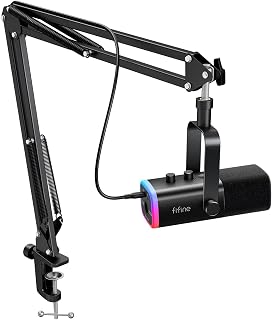
This dynamic mic kit's dual XLR/USB connectors and unidirectional pattern make it a practical upgrade path for streamers who start on USB and later add a mixer or audio interface, and the headphone jack with volume control lets you monitor your own voice while gaming without latency surprises.
Pros
- USB plug-and-play with no drivers needed
- Includes sturdy metal boom arm with C-clamp
- Cardioid pattern rejects background noise
- Windscreen included for plosive control
Cons
- XLR cable not included
- RGB control limited to physical button, no software
When you are weighing condenser against dynamic for streaming, connectivity flexibility often tips the decision, and the AM8T leans into that. It pairs USB plug-and-play with full XLR support, so you can start streaming on Windows or Mac the moment it is plugged in, then move to a mixer or audio interface later without replacing the mic. The cardioid pickup and 80dB signal-to-noise ratio focus on your voice while filtering out background chatter and room noise, a core reason dynamic mics get recommended for untreated rooms over condensers. What makes this entry stand out among dynamic picks is the included boom arm kit: metal construction with elastic springs holds the mic steady, and the C-clamp fits desks up to 2 inches thick with an anti-scratch pad. A windscreen handles plosives out of the box. RGB lighting is controlled by a physical button rather than software, which keeps setup simple but limits customization. For creators who want a complete, ready-to-mount gaming or streaming mic without separately sourcing an arm, this is a practical dynamic option.
Audio Specifications: Frequency range 50Hz-16kHz, cardioid polar pattern, 80dB signal-to-noise ratio, -50dB sensitivity. Powered via USB for both connectivity and power on PC/Mac.
Physical Design: Black ABS plastic and metal construction, approximately 1 kg weight. Boom arm stand measures 12.6 x 4.72 x 1.97 inches with adjustable positioning and C-clamp. Accommodates desks up to 2 inches thick.
Connectivity and Ports: USB-C and XLR connectors, 3.5mm headphone jack with independent volume control, mute button with LED indicator, gain knob for level adjustment. Includes 8.2ft USB-C to USB cable, windscreen, and user manual.
Suited to streamers and podcasters who want a complete kit, mic plus boom arm, without buying mounting hardware separately. Skip it if you want deep software control over RGB effects, since control here is a physical button, or if your desk exceeds 2 inches thick, which the included clamp cannot accommodate. XLR users also need to source their own cable.

Podcasters recording multi-guest episodes benefit from this dynamic mic's unidirectional pattern and built-in noise reduction, which keeps background chatter out of each track, while the arm stand and mute function let hosts manage overlapping conversation and quick cutoffs without fumbling for a separate switch mid-recording.
Pros
- Complete kit: boom arm, shock mount, windscreen, cables included
- 130dB SPL handles loud sources without distortion
- Tap-to-mute and headphone monitoring jack onboard
- Dual USB/XLR connectivity for future upgrades
Cons
- Desk clamp limited to surfaces under 2 inches thick
- Function keys controlled externally in XLR mode
For a roundup weighing condenser against dynamic mics, the K688CT makes the case for dynamic by showing up fully equipped rather than requiring extra purchases. It is a complete kit: metal boom arm, shock mount, windscreen, and both USB and XLR cables are included, so there is no scramble to find mounting hardware after unboxing. The 130dB SPL rating and unidirectional cardioid pattern are built to keep ambient noise out and your voice forward, which is the main reason creators choose dynamic over condenser in rooms without acoustic treatment. Recording within the recommended 2 to 6 inch range gives clear, distortion-free vocals, and the shock mount plus windscreen cut desk vibration and plosives before they reach the capsule. Onboard tap-to-mute, gain control, and a headphone monitoring jack keep feedback immediate during a session. USB mode is plug-and-play on Windows or Mac, while XLR mode opens up mixer and interface routing, with the tradeoff that function keys shift to external gear control in that mode.
Connectivity: USB-C to USB-A cable and XLR connectors included
Microphone Type: Dynamic, unidirectional cardioid pattern
Audio Performance: 130dB SPL, 80dB signal-to-noise ratio, 50Hz-16KHz frequency response
Controls: Tap-to-mute button, gain knob, headphone monitoring jack with volume control (USB mode only)
Physical: Metal construction, 1.31 kg weight, includes 3/8 inch to 5/8 inch adapter and C-clamp desk mount
Compatibility: PC, Mac, audio interfaces, mixing boards, compatible with gaming, streaming, podcasting, and video conferencing applications
Warranty: 1 year manufacturer warranty
A strong fit for podcasters and streamers who want a ready-to-use kit with no accessories to buy separately. Also works for voiceover and video call use. Skip it if your desk is thicker than 2 inches, since the included clamp will not fit, or if you specifically want onboard control retained while running XLR.

Pros
- Excellent sound quality with natural warmth that flatters vocal content and speech
- Intuitive hands-on controls make adjustments fast and easy during live sessions
- Solid metal build feels premium and stays stable with included table stand
- True USB plug-and-play means no driver installation or software learning curve
- Built-in headphone monitoring prevents audio latency issues during recording
Cons
- USB-C cable may require an adapter if your device only has USB-A ports
- Table stand is compact but may not reach optimal mic height for all desk setups without optional boom arm
- Limited to cardioid pattern only, not suitable if you need omnidirectional or figure-eight pickup modes
The Sennheiser Profile is a professional-grade USB condenser microphone designed for content creators who demand great sound without the headache of complex setup. Whether you're a podcaster, streamer, or gamer, this microphone puts your voice front and center with the simplicity of a single cable connection.
The standout feature is its German-engineered cardioid condenser capsule, which captures warm, natural vocal tones while effectively rejecting background noise. The three physical control knobs (gain, mix, volume) give you real-time sound adjustment without diving into software menus. This is especially valuable during live streams where you need to adapt on the fly. The built-in headphone jack with mix control lets you monitor your voice with zero latency, a feature that saves countless production headaches.
Build quality is impressive for the price point. The all-metal construction feels solid and professional, and the adjustable tilt table stand keeps your mic positioned exactly where you need it. At 350 grams, it's substantial enough to feel durable without being cumbersome. The included 1.2-meter USB-C cable is generously sized, though you may need an adapter if your computer only has USB-A ports.
The only real limitation is the fixed cardioid pattern. If you need flexibility between pickup patterns or plan to record multiple speakers, you'll need to explore other options. The table stand is also quite compact, so taller desk setups might benefit from an optional boom arm mount. Otherwise, this is a genuinely no-nonsense microphone that delivers studio-quality audio straight out of the box.
Verdict: The Sennheiser Profile is the best choice for anyone tired of complicated audio setups. It combines professional sound, intuitive controls, and foolproof setup into one reliable package. Highly recommended for streamers and podcasters who value simplicity without sacrificing quality.
Audio Specifications: Cardioid condenser capsule with 125 dB SPL handling, 60 dB signal-to-noise ratio, and 60 dB audible noise floor. Single 1/4-inch output channel with warm frequency response optimized for vocals.
Connectivity: USB-C connector, powered directly from your device with no external power supply required. Compatible with PC, Mac, tablets, and mobile devices. Includes 1.2-meter USB-C cable.
Physical: All-metal construction with premium components. Dimensions 4.37 x 4.37 x 7.95 inches. Weight 350 grams. Includes adjustable tilt table stand. Optional boom arm mount available for alternative positioning.
Controls: Mute button, gain dial, mix control, and volume knob for hands-on adjustment. Direct headphone output with separate mix control. No software installation required.
Ideal For: Podcasters launching their first show, live streamers on Twitch or YouTube, gaming content creators, voice-over artists, and anyone recording vocals or speech who wants professional results without technical complexity.
Perfect If You: Value simplicity over features, want to minimize setup time, prefer hardware controls over software menus, need reliable performance during live sessions, and appreciate German engineering and build quality.
May Want to Look Elsewhere If: You need multiple polar patterns for flexible recording scenarios, require ultra-compact form factors for travel, plan to record entire bands or orchestras, or have a strict budget well below $100.
Pros
- Exceptional sound quality and audio clarity praised by gamers and content creators
- Incredibly fast setup process takes less than 5 minutes from unboxing to recording
- RGB lighting adds gaming aesthetic appeal without being overwhelming or distracting
- Intuitive touch controls make muting and gain adjustment effortless during live sessions
- Sturdy metal boom arm with flexible joints accommodates various desk setups and angles
Cons
- Boom arm mounting pad can slip slightly on certain desk surfaces, requiring occasional readjustment
- Not designed for professional studio use; best suited for casual streaming and gaming rather than professional audio production
- RGB modes cannot be turned off completely, which may not suit minimalist setups
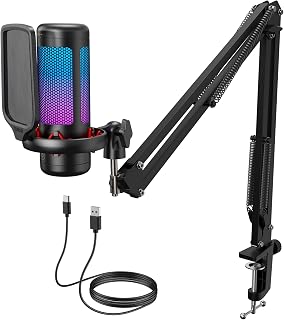
The TONOR TC310+ is a complete USB microphone solution designed for gamers, streamers, and content creators who want professional audio without the professional price tag. It comes as a ready-to-use kit with everything you need: the condenser microphone, adjustable boom arm, pop filter, shock mount, and USB cable, making it perfect for anyone setting up their first streaming or recording setup.
The microphone delivers crisp, clear audio that far exceeds expectations at this price point. The unidirectional polar pattern effectively minimizes background noise, and the condenser design captures vocal clarity that recordings and teammates immediately recognize as an upgrade. Real users report that friends notice the audio improvement during gaming sessions, and recordings require minimal post-processing editing.
Setup is genuinely hassle-free. Unlike many budget USB microphones, the TC310+ requires no driver installation or software configuration, just a USB connection and you're ready to record. The boom arm assembles easily and features multiple adjustable joints that let you find the perfect angle for your setup. The touch controls are intuitive: tap the top to mute, rotate the dial for gain adjustment, and press the RGB button to cycle through 4 lighting modes or adjust brightness.
Build quality is solid for the price. The microphone features an acrylonitrile butadiene styrene and alloy steel construction that feels durable, and the included accessories are functional. The boom arm works well on most desks up to 2.36 inches thick, though users note the mounting pad can slip slightly on certain surfaces, occasionally requiring repositioning during intense gaming.
The TONOR TC310+ is an excellent entry-level choice for streamers, podcast enthusiasts, and gamers who prioritize ease of use and value. It won't replace high-end studio equipment, but for casual streaming and content creation, it delivers professional results at a fraction of the cost.
Connectivity and Compatibility: USB-A connection, works with PC, Mac, PS4, PS5, and laptops. No drivers required for plug-and-play operation.
Audio Performance: Unidirectional polar pattern with 78 dB signal-to-noise ratio, 10 dB audio sensitivity. Condenser microphone design for clear vocal reproduction.
Controls and Features: One-tap mute button, rotating gain control dial, RGB lighting with 4 modes (6 static colors, single-color gradient, breathing effect, mix-color gradient). Brightness adjustment via long-press on RGB icon.
Included Accessories: Microphone unit, metal boom arm with adjustable joints, pop filter, shock mount, USB cable, and user manual.
Physical Specifications: Dimensions 16 x 6 x 5.4 inches, weight 474 grams. Boom arm clamp fits desks with thickness up to 2.36 inches.

Content creators juggling multiple devices will value the 125 db sensitivity and broad compatibility spanning computers, tablets, and smartphones, while echo control and one-touch recording make this condenser mic approachable for TikTok and YouTube creators who want clean audio without learning a full recording interface.
Pros
- Intelligent noise reduction targets keyboard, fan, and AC sounds
- Zero-latency monitoring via 3.5mm jack
- Physical knobs for gain, monitoring volume, and echo control
- Weighted metal base and windscreen included for stability and plosive control
Cons
- Fixed noise reduction algorithm rather than adjustable parameters
- Echo control doesn't match the processing power of dedicated DAW software
If the condenser-vs-dynamic debate for you really comes down to noise control, the ZealSound K66 leans hard into that question with its intelligent noise reduction mode, which specifically targets keyboard clicks, fan hum, and AC buzz. That's a meaningful consideration for creators choosing a condenser mic, since condensers are generally more sensitive to room sound than dynamic mics, and this one tries to compensate directly. Paired with a cardioid pickup pattern and 40Hz-18kHz frequency response, it aims for warm, detailed vocals while filtering out common home-office distractions. Real-time zero-latency monitoring through the 3.5mm jack lets you hear your recording as it happens, and physical knobs for gain, monitoring volume, and echo mean quick adjustments during a live stream without opening software. The weighted metal base keeps it stable through active gestures or desk bumps, and the included windscreen cuts down on plosive pops. For creators deciding between mic types based on how forgiving a mic is in an imperfect room, this is a condenser built with that exact tradeoff in mind.
Audio Specifications: Condenser capsule with cardioid polar pattern, 40Hz-18kHz frequency response, 46kHz sampling rate, 125dB audio sensitivity, 85dB signal-to-noise ratio, 66dB audible noise, 2.2k-ohms impedance.
Connectivity: USB connection, 3.5mm monitoring headphone jack, USB-C adapter, Lightning adapter for mobile devices. Dimensions 1.58 x 1.58 x 6.1 inches, weight 1.1 pounds.
Included Accessories: Microphone with metal stand base, 70.9-inch USB cable, foam windscreen, USB-C adapter, Lightning adapter, user manual, and technical support. Manufacturer warranty covers 365 days from purchase date.
Suited to podcasters, streamers, and YouTubers recording in home offices or bedrooms with some ambient noise, who want a condenser mic that actively works to reduce it. The physical controls also help anyone who needs quick adjustments during live streaming. Skip it if you record in a treated studio space, where the noise reduction and echo control add little value, or if you need DAW-level processing rather than built-in hardware controls.
How to Choose Between a Condenser and Dynamic Microphone
Start with the noise around you
Condenser capsules are responsive and can capture a detailed, open vocal sound when your room is calm. The FIFINE T669 Studio Condenser USB Microphone and MAONO A04 USB Microphone suit creators who can control their recording space, because their cardioid patterns favor what is directly in front while still responding to nearby reflections and desk noise.
If traffic, roommates, fans, or an active keyboard are part of your everyday setup, a close-spoken dynamic mic is often easier to manage. The FIFINE AmpliGame AM8 USB/XLR Dynamic Microphone, FIFINE AmpliGame AM8T XLR/USB Gaming Microphone, and FIFINE AmpliTank K688CT Podcast Microphone Kit all use cardioid dynamic designs intended for close placement. Explore the broader Headphones & Audio collection if you are building out the rest of your sound setup.
Choose USB for simplicity or XLR for expansion
USB is the straightforward route when you want to connect directly to a computer and begin recording with minimal equipment. The FIFINE K669B USB Microphone, TONOR Gaming Microphone Set with Boom Arm, ZealSound Podcast Microphone for PC, and SENNHEISER Professional Profile focus on that direct workflow, with several offering gain adjustment, mute functions, or headphone monitoring.
XLR makes sense when you want to add a mixer or audio interface later, route more than one microphone, or adjust your signal with dedicated hardware. The AM8, AM8T, and K688CT give you both paths, so you can start with USB before moving to XLR. Remember that an XLR cable may be separate, and USB-side controls can be unavailable in XLR mode, so a reliable cable and adapter guide can help you plan the whole connection chain.
Give placement and desk stability equal attention
No pickup pattern can fully compensate for poor positioning. Keep the microphone close enough for a solid vocal level, angle it slightly away from bursts of air, and place it away from noisy computer exhaust when possible. A boom arm also frees desk space while helping you maintain a repeatable speaking distance from one session to the next.
The FIFINE T669 includes a boom arm, shock mount, and dual pop filter, while the MAONO A04 USB Microphone kit adds a shock mount, windscreen, and pop filter for a more complete desk arrangement. The ZealSound Podcast Microphone for PC uses a rotatable top-addressed body and weighted base, and the SENNHEISER Professional Profile offers a compact table stand. If desk hardware is a major source of clicks, review your microphone placement alongside our keyboard and mouse guide.
Match controls and vocal character to your content
For quiet voice-over work, online teaching, and carefully managed podcast sessions, a condenser can bring a smooth, present vocal character without requiring an interface. The SENNHEISER Professional Profile is built around a cardioid condenser capsule with direct gain, mix, and volume controls, while the MAONO A04 supports a high-resolution USB recording format. Those specifications are useful, but room noise and placement still shape the finished result.
For gaming and live streams, immediate controls may matter just as much as capsule type. The AM8 and AM8T combine tap mute, gain adjustment, headphone monitoring, and RGB features in USB mode, while the TONOR model keeps mute, gain, lighting, and a boom arm within one kit. The ZealSound model adds noise reduction, monitoring, mobile-device adapters, and echo control. For comfortable listening between takes, browse our Sennheiser headphone guide for additional monitoring ideas.
Final Thoughts
Choose the FIFINE AmpliGame AM8 USB/XLR Dynamic Microphone if you want the flexibility to begin with USB and later connect through XLR in a busier room. Choose the SENNHEISER Professional Profile if your priority is a compact condenser with warm vocal character and direct desktop controls.
Frequently Asked Questions
Is a condenser or dynamic microphone better for a bedroom studio in 2026?
A condenser microphone can be an excellent fit when your bedroom studio is quiet and you can position the mic away from walls, fans, and computer noise. A dynamic microphone is usually the safer choice when your space has more background activity because you can speak very close to it. Neither type is automatically superior, since microphone distance and room control have a major effect on clarity.
Do USB microphones need headphones for monitoring?
Headphones are not mandatory for basic USB recording, but they are valuable for hearing hum, clipping, plosives, and uneven volume before you finish a session. Models with a built-in headphone jack allow direct, low-delay monitoring, which is especially helpful for streaming and voice-over work. If you need a dedicated listening pair, our Sennheiser headphone guide can help narrow the options.
Will a USB microphone work with consoles and phones?
Compatibility depends on the specific microphone and device, so USB alone does not guarantee that every console or phone will recognize it. Several choices here support computers and PlayStation consoles, while the ZealSound model includes adapters for mobile devices. Check the microphone’s stated platform support and use the correct port or adapter before building your setup around it.
Is XLR worth it for a new podcaster?
XLR is worthwhile if you expect to add a second microphone, use an audio interface, or want more physical control over your signal later. It is not a requirement for clear podcast audio, and a well-positioned USB microphone can provide excellent results for a solo show. A dual USB/XLR model offers a practical middle ground because it lets your setup grow without forcing an immediate interface purchase.





Write Your Review
No reviews yet. Be the first to share your experience!