

When the campground loop has no hookups, keeping a phone, headlamp, camera, and cooler running becomes a daily power calculation. A portable panel can replace some of that energy while you hike, drive, or relax at camp, but it cannot create power after dark or beneath dense tree cover.
To answer is a solar panel worth it for camping, match your gear to the way you travel. This guide covers practical power needs, battery storage, panel sizes, and weather considerations for tent campers, road trippers, and off-grid travelers. For more model-specific ideas, see our portable solar panel picks for camping.
Quick answer
This guide compares 8 picks, with ZOUPW 480W Bifacial Portable Solar Panel, N-Type 25% ranked first. ZeroKor 300W Portable Solar Generator with 60W Panel has the most customer reviews.
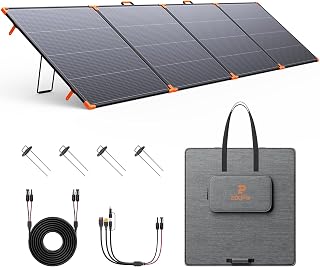
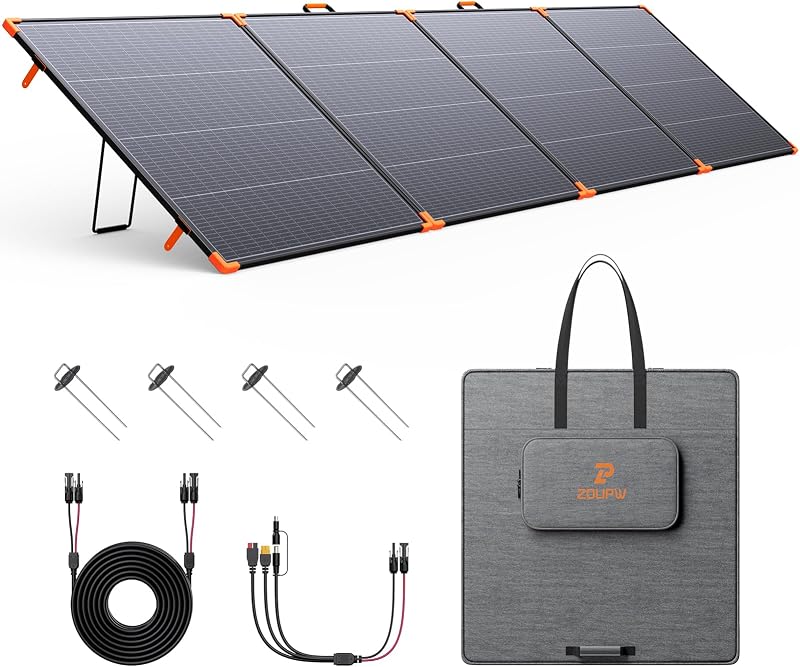
Campers parked at a fixed site for several days benefit from this panel's 480W output and bifacial design, which captures reflected light off sand, snow, or a reflective tarp to squeeze out extra charging. The 25%+ efficiency rating and IP68 waterproofing mean it keeps working through dew and sudden rain without supervision.
Pros
- High 21.3 W/lb portability for its power output
- Bifacial cells boost output on reflective camp surfaces
- Foldable composite build is 66% lighter than glass panels
- 42.5V output pairs directly with major power stations
Cons
- Bulkier than smaller panels for quick weekend trips
- Needs regular surface cleaning to hold peak efficiency
For camping specifically, the question isn't just whether a solar panel works, it's whether it earns its spot in a packed vehicle or backpack. The ZOUPW 480W answers that with a 21.3 W/lb ratio and foldable composite build that's lighter than glass panels, so it doesn't eat your cargo space the way five smaller panels would. Bifacial cells mean it keeps producing even when ground-reflected light is all you've got, which matters at a sandy or snowy campsite where panel angle is never perfect. The 42.5V output plugs straight into EcoFlow, Bluetti, and Anker stations, so campers already running one of those can skip extra adapters. IP68 waterproofing and a scratch-resistant coating mean it tolerates being strapped to a roof rack or tossed in a truck bed on the way to the site. For anyone trying to decide if a panel is worth the extra gear weight, this one's output-to-weight math is the strongest argument.
Power Output: 480 watts maximum
Efficiency Rating: 25% plus high efficiency
Voltage: 42.5V output, 11.3A amperage capacity
Cell Type: A+ monocrystalline, N-Type 16BB architecture
Bifacial Gain: Up to 30% additional power on high-albedo surfaces
Weight: 22.5 pounds
Dimensions (Folded): 138.6 inches L x 0.9 inches W x 32.6 inches H
Power Density: 21.3 watts per pound
Temperature Rating: Operates safely up to 140 degrees Fahrenheit
Protection Rating: IP68 waterproof
Material: Composite material coating with scratch resistance
In the Box:
1x ZOUPW 480W bifacial solar panel
1x Stylish padded storage bag for transport
1x 2-foot 12AWG 4-in-1 connector cable
1x 13-foot 12AWG solar connector extension cable
4x Ground stakes for outdoor anchoring
1x User manual with setup instructions
Warranty: 36-month manufacturer coverage
Support: 24/7 customer service available for technical assistance

Compatibility matters when your camp setup already includes a specific power station, and this panel's 5-in-1 connectivity covers Jackery, EcoFlow, Anker, and Bluetti units directly. At 100W with 23.5% efficiency and IP67 waterproofing, it's sized right for keeping a mid-size battery topped off during a multi-day off-grid or RV trip.
Pros
- 5-in-1 cable connects to most major power station brands
- Direct USB-C PD and USB-A charging without a power station
- Adjustable kickstands improve sun angle and output
- IP67 waterproofing with a protected controller pocket
Cons
- Output drops significantly in solar-poor regions or weather
- Charging speed is capped by your power station's input limit
If the camping question is whether solar is worth it at all, a 100W panel like this is the low-risk way to find out. It's light enough at 9.5 pounds to fold into a camp setup without dedicating a vehicle to it, and the 5-in-1 cable means it works with whatever power station you already own, from Jackery to EcoFlow to Bluetti, without buying separate adapters. Adjustable kickstands let you angle it toward the sun as it moves through the day, which is the kind of detail that decides whether solar actually pulls its weight at a campsite versus sitting flat and underperforming. Built-in USB-C PD and USB-A ports also mean you can skip the power station entirely and charge a phone or camera directly, useful for shorter trips where a full station is unnecessary. IP67 waterproofing and a zippered pocket for the controller handle the realities of outdoor use. For campers testing whether solar earns a place in their gear, this is a reasonable entry point.
Good for budget-conscious campers who want to try solar charging without committing to a large setup, especially those already carrying a compatible power station. Also works for quick phone or camera charging via direct USB. Skip it if you're running larger appliances or need fast recharge for a bigger battery, since output depends heavily on sun conditions and location.
Power Output: 100W maximum, 23.5% efficiency
Electrical: 20.16V output, 4.96A capacity, 24.3V maximum voltage
Dimensions (Unfolded): 48.43 inches L x 21.06 inches W x 0.98 inches H
Dimensions (Folded): 24.13 x 21.06 x 1.77 inches
Weight: 9.5 lbs
Materials: Grade A+ monocrystalline cells, ETFE coating
Connectors: DC8020, XT60, Anderson, DC7909/8mm, DC5521
Ports: 1x USB-C (PD 15V/3A), 2x USB-A (QC3.0 12V/1.5A)
Protection: IP67 waterproof, overcurrent and short-circuit protection
Temperature Rating: Up to 158 degrees F
Warranty: 12 months manufacturer warranty plus lifetime technical support
Included: 100W solar panel, 10ft 5-in-1 solar extension cable, user manual

Shoulder-season campers dealing with shorter daylight hours need panels that convert what little sun they get, and 25% efficiency across 16 cells helps here. Rated at 200W with an 11.3A output, it's foldable and lightweight enough to pack alongside a power station without adding real weight to the gear pile.
Pros
- 90+ watt real-world output in full sun
- Direct USB-C PD and USB-A charging without a station
- Adjustable kickstands and grommets for staking in wind
- UL 61730 certified for build and safety confidence
Cons
- Kickstands can be unstable on uneven camp ground
- MC4 adapter for some power stations sold separately
For camping, the appeal of the Renogy 200W is balance: enough wattage to matter, light enough to not be a chore. At 13.9 pounds and folding to backpack-friendly dimensions, it sits in a middle ground between a bare-minimum charger and a heavy multi-panel setup, which fits most weekend or week-long camping trips well. The 25% efficiency N-Type cells deliver real-world output in the 90+ watt range in full sun, enough to keep a power station topped up through a few days at camp. Built-in USB-C PD and dual USB-A ports mean you can charge a phone or tablet directly without even connecting a station, handy for simpler trips. Four adjustable kickstands and reinforced grommets let you angle and stake it against campsite wind, a detail that matters more at camp than almost anywhere else. UL 61730 certification adds some reassurance on build safety. For campers weighing portability against actual charging power, this lands in a practical spot.
Power Output: 200W maximum power, 11.3A amperage, 21.6V maximum voltage
Cell Technology: 16 N-Type monocrystalline cells, 25% efficiency rating
Dimensions (Unfolded): 23.72 inches L x 22.99 inches W x 1.97 inches H
Weight: 13.9 pounds
Connectivity: MC4 connector output, USB-C PD 45W, dual USB-A ports for direct charging
Certifications: UL 61730, CE, RoHS, FCC, CA65, PSE, ISO 9001
Warranty: 2-year material and workmanship warranty
Model: RPP200EF-SE, ASIN B0CNPHD4VY
Suits campers and RV users who want a solar panel sized for real camp use, not just an emergency backup, and who are comfortable staking it down in open, windy sites. Also fits anyone wanting direct USB charging without a power station. Skip it if your site is often shaded or windy enough that kickstand stability becomes a constant fight, or if your power station needs an MC4 adapter sold separately.
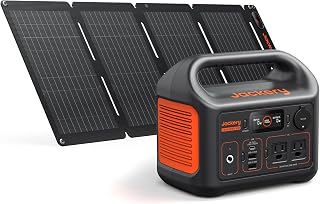
A weekend tent camper doesn't need a massive setup, just enough juice for lights, a phone, and maybe a fan. With 292Wh capacity and a 300W AC output, this all-in-one kit covers small appliances without the bulk of larger systems, and the included panel means you're not sourcing a separate charging source before your trip.
Pros
- Lightweight at 7.5 lbs for easy transport
- 292Wh LiFePO4 battery rated for 4,000+ charge cycles
- Real-time wattage display shows solar input and usage clearly
- Multiple ports mean fewer adapters needed
Cons
- Included 40W panel takes 7.5 hours to reach 80 percent charge
- 292Wh capacity needs careful load management on longer trips
If you're trying to figure out whether a solar panel actually pays off for camping, the Explorer 300 is a good entry point to think about. It's a 300W power station paired with a 40W solar panel, built around the question most campers have: can the sun realistically keep my gear charged overnight? At 7.5 lbs, it travels easily, and its 292Wh LiFePO4 battery holds enough for phones, lights, and small devices across a weekend trip. The pure sine wave output protects sensitive electronics, and the real-time wattage display lets you track exactly how much solar input you're getting versus how much you're draining, which is the core data point anyone weighing solar camping gear needs to see. The catch, and it matters for this exact question, is that the included 40W panel is slow, roughly 7.5 hours to hit 80 percent. That's worth factoring into any 'is it worth it' calculation before you commit.
Good for weekend campers who want to test solar charging without a big investment, especially those running phones, tablets, lights, and small electronics. Skip it if you need to run a fridge or multiple devices for extended off-grid stretches, or if slow solar recharge times would frustrate you. It also suits anyone wanting a lightweight, grab-and-go unit over a heavier high-capacity system.
AC Wall Charging: Full charge via included AC adapter in approximately 6-8 hours
Car Charging: Via included car charger cable through 12V outlet, rate varies with vehicle charging capability
Solar Charging: 40W included panel reaches 80% capacity in 7.5 hours under optimal conditions; 100W panel (sold separately) reaches 80% in 2.8 hours
Battery Specs: 292Wh capacity, LiFePO4 chemistry, 4,000+ charge cycles to 70% capacity, supports 500+ full cycles yearly for 8+ years
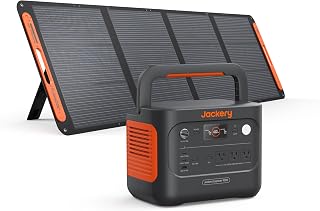
For campers who also run a mini fridge, CPAP, or power tools at the site, 1070Wh storage and 1500W output gives real headroom beyond basic phone charging. The bundled 200W panel recharges that capacity fast enough to matter on a multi-day trip, making it suited to roadtrips and extended stays rather than quick overnights.
Pros
- 200W panel reaches 80 percent charge in 6 hours of sun
- 1500W continuous output handles fridges and motor-driven appliances
- LFP battery maintains over 70 percent capacity after 4,000 cycles
- Multiple charging methods including solar, wall, and car
Cons
- 23.8 lbs plus solar panel adds notable bulk and weight
- 1500W continuous output can still limit multiple high-draw appliances running together
For campers asking whether solar is worth the investment, the Solar Generator 1000 V2 makes the case for going bigger rather than starting small. Pairing a 1070Wh battery with a 200W solar panel, it reaches 80 percent charge in just 6 hours of clear sun, a meaningful upgrade over smaller panel setups that leave you waiting most of the day. The 1500W continuous output with 3000W surge means it isn't limited to small electronics, it can run fridges, CPAP machines, and inflatables, the kind of loads that actually justify carrying solar gear into the backcountry. At 23.8 lbs it's heavier than entry-level stations, but still manageable for one person loading a vehicle. The LFP battery holds over 70 percent capacity after 4,000 cycles, meaning the investment in solar camping gear pays off over roughly a decade of use rather than a single season. For anyone comparing cost against years of reliable off-grid power, that long lifespan is the deciding factor.
Buy this if camping trips involve real appliance loads, like fridges or CPAP machines, and you want faster solar recharge than smaller panels offer. It also fits anyone treating this as a long-term investment across many trips. Skip it if you only need to charge phones and small electronics, or if the added weight and bulk of a 200W panel doesn't suit your packing setup.
Battery: 1070Wh LFP (Lithium Iron Phosphate) with 4000+ cycle lifespan
AC Output: 1500W continuous, 3000W surge peak at 120V, 60Hz
Solar Input: 200W panel included, reaches 80% charge in 6 hours (clear conditions)
AC Charging: 1.7 hours standard, 1 hour emergency mode via app
Alternator Charging: 3 hours with 600W charger (sold separately)
Ports: 3x pure sine wave AC outlets, 2x USB-C (100W PD max), 1x USB-A, 1x DC car outlet, LED lights
Weight: 23.8 lbs with foldable handle
Dimensions: 12.87"L x 8.82"W x 9.72"H
Warranty: 2-year manufacturer coverage, 5-year coverage included with purchase
Model: JE-1000D (E1000v2+200W bundle)

Backpackers and minimalist campers who just need to keep a phone or headlamp alive don't want to haul a full panel setup. At 40W with direct USB-C and USB-A outputs, this one skips the power station middleman entirely, and the included carabiners let it clip straight onto a pack or tent line while hiking.
Pros
- Lightweight at 1.76 lbs and folds smaller than a magazine
- 24 percent monocrystalline efficiency for solid real-time output
- IP67 weatherproof rating with durable ETFE lamination
- Triple output ports support phones, tablets, and power stations
Cons
- No battery, so charging stops without direct sunlight
- Junction box isn't fully waterproof during heavy rain
If the real question behind this guide is whether a solar panel alone is worth packing for camping, the FlexSolar 40W is built for exactly that scenario. It skips the battery entirely and focuses on real-time charging straight from the sun, which keeps weight down to 1.76 lbs and folds smaller than a magazine. For campers who already own a power bank or power station and just want a way to top it up during the day, this answers the question directly: yes, if portability and simplicity matter more than stored capacity. The 24 percent monocrystalline efficiency performs well when angled directly at the sun, and the triple output system covers USB-C, USB-A, and DC devices without extra cables. IP67 weatherproofing and ETFE lamination suit the unpredictable conditions of outdoor trips. The honest tradeoff is that output depends entirely on sun exposure in the moment, so cloudy days or shade will noticeably slow things down, which is a key consideration before deciding solar is worth adding to a camping kit.
Power Output: 40W total capacity with 18W max per USB port (QC3.0 USB-A and PD2.0 USB-C) and 40W max on 19V DC port
Solar Efficiency: 24% monocrystalline cell conversion rate
Dimensions (Folded): 8.0 x 11.1 x 1.8 inches
Dimensions (Unfolded): 48.8 inches L x 11 inches W x 0.1 inch H
Weight: 1.76 lbs (0.8 kg)
Weatherproofing: IP67 rated, dustproof and waterproof (avoid submersion over 30 minutes)
Material: ETFE laminate coating with monocrystalline cells
Included Accessories: 2 carabiners and user manual
Good for campers who already carry a battery pack or power station and want a lightweight way to recharge it during daylight hours. Also fits anyone prioritizing pack weight over stored capacity. Skip it if you need power at night or in low light, since this panel has no battery and only outputs power while the sun is actually hitting it.

Car campers who want flexibility in where they set up will appreciate the compact folded dimensions here, since it stores easily in a trunk or pack pocket. Rated at 100W with IP67 waterproofing, it handles an unexpected downpour at the campsite while still delivering enough output to charge USB devices or a small battery bank.
Pros
- IP67 waterproof and dustproof for unpredictable camping weather
- Three simultaneous outputs charge multiple devices at once
- 23% monocrystalline efficiency holds up better in overcast conditions
- ETFE lamination and aluminum frame built for repeated outdoor use
Cons
- Actual output drops well below 100W in poor sun or bad angles
- Folded size still takes up dedicated pack or vehicle space
If you're weighing whether a solar panel earns its spot in your camping gear, the FlexSolar 100W makes a strong case. The real question with camping solar is always reliability under rough conditions, and this panel answers it with an IP67 waterproof and dustproof rating plus ETFE lamination that shrugs off UV exposure and temperature swings. That matters more than peak wattage once you're actually at a campsite dealing with weather you can't control. For the worth-it calculation, consider the three simultaneous outputs: 45W USB-C PD 3.0, 18W USB-A QC 3.0, and 100W DC, so you're not stuck choosing between charging your phone or your power station. The 4-in-1 cable adapter removes the usual connector guesswork. At 1.85 kg with a monocrystalline design folding down to a manageable size, it earns its pack weight by covering phones, tablets, and larger battery banks in one unit. For campers deciding between a dedicated panel versus relying on car charging or carrying extra battery banks, this is the panel that justifies the investment.
Power Output: 100W maximum rated power
Efficiency: 23% monocrystalline silicon with ETFE lamination
Outputs: USB-C PD 3.0 (45W), USB-A QC 3.0 (18W), DC output (100W)
Cable Adapters: 4-in-1 system includes DC5521, DC7909, Anderson, XT60 connectors
Dimensions (Folded): 12.99 x 10.43 x 2.17 inches (330 x 265 x 55mm)
Dimensions (Unfolded): 45.47 x 26.18 inches for maximum surface area
Weight: 4.1 lbs (1.85 kg)
Rating: IP67 waterproof and dustproof
Materials: Monocrystalline silicon, aluminum frame, ETFE protective coating
Included: Solar charger, adapter cable, premium carry bag
Model Number: YL-S100-CA (YL-S100-US)
Good fit for campers, hikers, and RV owners who want a dedicated charging source that handles multiple devices and tolerates rain, dust, and rough handling. Worth it if you camp often enough to need reliable off-grid charging beyond a single phone. Skip it if you only camp occasionally and could get by with a power bank, or if you need guaranteed full-rated output on cloudy days, since real-world performance drops with weak sun.

Someone who wants camping power without juggling separate components will find the appeal in having the panel and station bundled as one unit. The 300W output and AC outlet handle a laptop, mini projector, or phone charging at the site, and the attached 60W panel means setup is just unfold and connect.
Pros
- Power station and 60W panel bundled together in one purchase
- Multiple outlets including AC, USB-C Quick Charge, and USB-A
- Battery management system with overload and overheat protection
- Compact and lightweight at 5.1 pounds for easy transport
Cons
- 300W output excludes high-draw appliances
- Solar panel junction box is not waterproofed
For anyone asking whether solar is worth bringing camping, this bundle sidesteps the usual hesitation by pairing a 300W power station with a 60W monocrystalline panel in one purchase, so there's no separate panel to research or buy. That makes the worth-it decision simpler: you get storage and generation together, with 2 AC outlets, USB-C Quick Charge, three USB ports, and a DC port covering most camping electronics at once. The 20.5% panel efficiency plus a battery management system guarding against overload, short circuit, overvoltage, and overheating gives some reassurance for unattended outdoor charging. At 5.1 pounds and compact dimensions, it travels easily in a vehicle or camping gear without feeling like dead weight. The built-in SOS flashlight with reading mode is a small but genuine camping-specific perk. If your hesitation about solar is the upfront complexity of matching a panel to a power station, this answers that directly by bundling both, making it a reasonable entry point for testing whether solar fits your camping routine before investing further.
Battery and Power Output: 280Wh battery capacity, 300W continuous output, 110V AC outlets, 60-hertz frequency, pure sine wave output.
Charging Ports and Outlets: 2x 300W AC outlets, 1x DC port (9V-12.6V max, 10A), 3x USB-A ports (5V/3A max), 1x USB-C Quick Charge (5V/3A, 9V/2A, 15V/2A max), integrated SOS flashlight.
Charging Methods: Home AC adapter (15V), 12V car cigarette lighter adapter, 60W solar panel (13V-23V DC5521 connector, built-in MPPT controller).
Physical Specifications: Weight 5.1 pounds, dimensions 8.5"L x 6.7"W x 4.1"H, ABS material construction, available in Black and Orange, 7-hour runtime on full charge.
Safety and Warranty: Built-in BMS with overload, short circuit, overvoltage, overheating, and overcurrent protection. Automatic cooling fan system. 12-month manufacturer warranty from purchase date.
Suited to campers wanting an all-in-one solar setup without separately sourcing a panel and station, especially for weekend trips or car camping. Also fits families needing multiple outlets at once. Skip it if you run higher-draw devices, since 300W excludes things like hair dryers or coffee makers, or if you camp in wet climates often, since the panel's junction box isn't waterproofed and needs protection from rain.
How to Decide Whether Camping Solar Is Worth It
Start With Your Actual Daily Power Load
Write down every device you expect to use, how often you will charge it, and whether it runs from USB, DC, or an AC outlet. Phones, lights, cameras, and GPS units have very different needs from a compressor cooler, drone batteries, a CPAP machine, or cooking appliances. Your power station capacity and inverter limit matter just as much as panel wattage.
For small electronics, direct USB charging can be enough during a sunny stop. The FlexSolar 40W Foldable Solar Panel Charger has USB-C, USB-A, and DC outputs in a very light folding format, although it does not store energy itself. Pairing a small panel with one of the top 20000mAh power banks gives you a useful buffer for evenings.
Choose Storage Before Chasing Higher Wattage
A solar panel produces electricity only while it has usable sunlight, so a battery is what makes that energy available at breakfast, after sunset, or during a cloudy stretch. If your devices have to run beyond daylight hours, consider a panel and power station as one system rather than two unrelated purchases.
The Portable Solar Generator 300W Portable Power is a compact all-in-one approach because it includes a 60W panel and a portable station with AC, USB, and DC outputs. It suits modest camping electronics, but its 300W output ceiling means you should avoid high-draw appliances. Compare similar options in our portable generators category before building a larger camp setup.
Match Panel Size to Your Time at Camp
A 40W to 100W panel is a sensible range when you are topping up phones, camera batteries, and a small power station during a weekend away. The ZOUPW 100W Portable Solar Panel for Power adds adjustable kickstands, direct USB ports, and a five-connector cable for broad power-station compatibility. Still, a station with a lower solar input limit will only accept the wattage it is designed to receive.
For longer stays or a larger battery, 200W can provide more recovery time during a good daylight window. The Renogy 200W Portable Solar Panel for Power combines N-Type cells, four kickstands, and multiple panel angles in a portable package, though its MC4 output may require a separate adapter. Travelers with substantial battery banks may prefer the ZOUPW 480W Bifacial Portable Solar Panel N-Type, which is better suited to vehicle-based camps than light packing.
Plan for Shade, Rain, and Connector Fit
Rated output assumes strong, direct sunlight, so real-world charging drops with shade, poor panel angle, haze, dirty surfaces, and short winter days. Pick a camp spot with an open view of the sky, reposition the panel as the sun moves, and use longer cables only when they help you place the panel outside a shaded tent or vehicle area.
Weather protection matters, but check the whole setup rather than the panel label alone. The FlexSolar 100W Foldable Portable Solar Panel has IP67 protection, USB-C, USB-A, and a DC output with common power-station adapters, making it convenient for changing campsites. Before your trip, confirm voltage, connector type, and input limits against your station manual, then browse our portable solar panel guide for additional format comparisons.
Final Thoughts
Camping solar is worth it when you value quiet, renewable daytime charging and choose a system sized for your real devices rather than an optimistic wattage label. The ZOUPW 100W Portable Solar Panel for Power makes sense for flexible device charging and compact stations, while the Jackery Solar Generator 1000 v2 and 200W Solar is the more complete choice for campers who need substantial stored power.
Frequently Asked Questions
Is a solar panel worth it for weekend camping?
It can be, especially if you camp away from electrical hookups and want to keep phones, lights, cameras, and a battery pack ready without running a gas generator. A small folding panel is most useful when you have several hours of open sunlight. For a single overnight trip with only a phone, a charged power bank may be simpler.
How many watts of solar do I need for camping?
Choose wattage based on your battery capacity, device load, sunlight, and time available for charging. Around 40W to 100W generally fits personal electronics and smaller stations, while 200W or more is more appropriate for replenishing larger power stations during multi-day trips. Always verify your station’s maximum solar input before connecting a panel.
Can a camping solar panel charge a phone without a power station?
Yes, many folding panels include USB-A or USB-C ports for direct phone and tablet charging. Output can vary as clouds move or the panel angle changes, so charging a power bank first is often more convenient. A panel with a built-in controller provides added protection for compatible small devices, but you should keep ports and connection points dry.
Do portable solar panels work on cloudy days in 2026?
They can still produce power in bright overcast conditions, but output will be lower than in clear, direct sunlight. High-efficiency monocrystalline panels can make better use of limited light, yet no portable panel removes the need for stored battery capacity. Bring a backup charging option, such as one of our fast-charging power bank picks, when reliable phone access is essential.




Write Your Review
No reviews yet. Be the first to share your experience!