

When a campsite, road trip, or sudden outage leaves you looking for an outlet, a foldable solar panel can turn open sunlight into useful power for a battery station or essential devices. The challenge is choosing a panel whose output, connectors, weight, and weather rating genuinely fit the way you travel or prepare at home.
This guide narrows down the best foldable solar panel options for backpack-friendly charging, RV travel, larger power stations, and emergency readiness. An off-grid kit is even more practical when you also safeguard important files with a reliable external hard drive for backup.
Quick answer
This guide compares 10 picks, with ZOUPW 480W Bifacial Portable Solar Panel, N-Type 25% ranked first. FlexSolar 40W Foldable Solar Panel Charger with USB-C has the most customer reviews.
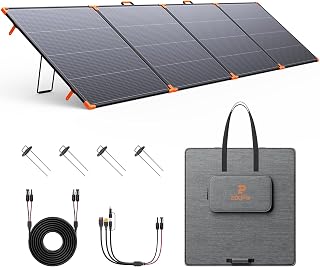
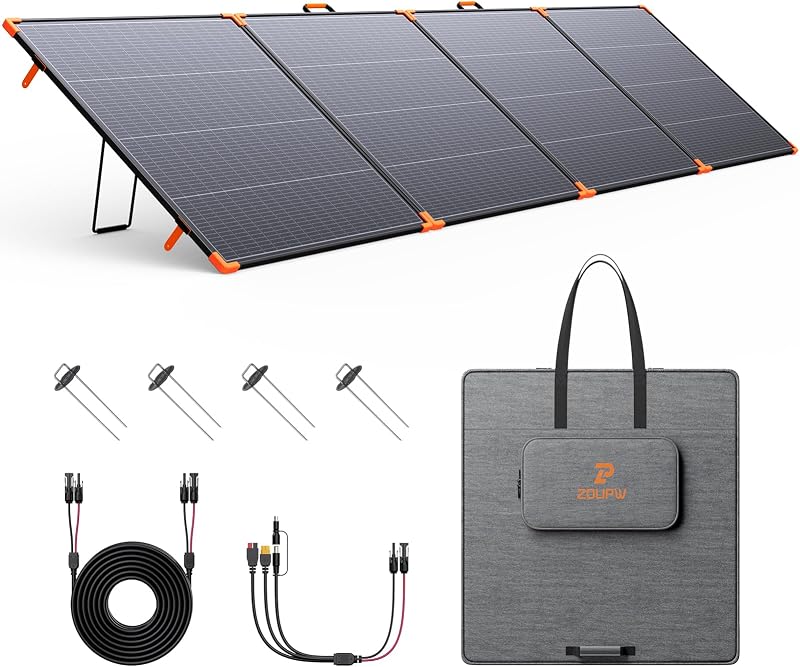
The 480W bifacial model is aimed at campers or backup planners who need to replenish a sizable compatible power station rather than merely keep phones charged. Its 480-watt maximum output, 25%+ efficiency, and 11.3A capacity support faster energy collection in limited daylight, while the foldable IP68-rated design adds practical weather resistance for outdoor deployment.
Pros
- 480W rated maximum power
- 25%+ efficiency and bifacial design
- Foldable 22.5-pound construction
- IP68 waterproof rating
Cons
- Large 138.6 by 32.6-inch open footprint
- 42.5V output requires power-station compatibility
For a camping base camp or a home outage kit, the ZOUPW 480W is aimed at supplying considerably more solar capacity than compact phone-focused panels. It is rated at 480 watts, with 25%+ efficiency, 42.5V output, and 11.3A capacity. That combination makes it a strong match when a compatible power station needs meaningful daytime input, while the 22.5-pound foldable format keeps it portable rather than roof-mounted. Its bifacial construction is especially relevant for open campsites and backup setups where both sides can receive light. The 16-cell N-Type 16BB design, bypass diodes, and scratch-resistant composite coating further shape it as a panel built for changing outdoor conditions. IP68 waterproofing adds protection for rain, dust, and wet weather; its upper temperature rating is 140°F. It measures 138.6 by 32.6 inches when opened, so it needs a wide clear area and is less suited to cramped campsites. A storage bag is included for carrying and storing the panel between deployments.
Power Output: 480 watts maximum
Efficiency Rating: 25% plus high efficiency
Voltage: 42.5V output, 11.3A amperage capacity
Cell Type: A+ monocrystalline, N-Type 16BB architecture
Bifacial Gain: Up to 30% additional power on high-albedo surfaces
Weight: 22.5 pounds
Dimensions (Folded): 138.6 inches L x 0.9 inches W x 32.6 inches H
Power Density: 21.3 watts per pound
Temperature Rating: Operates safely up to 140 degrees Fahrenheit
Protection Rating: IP68 waterproof
Material: Composite material coating with scratch resistance
In the Box:
1x ZOUPW 480W bifacial solar panel
1x Stylish padded storage bag for transport
1x 2-foot 12AWG 4-in-1 connector cable
1x 13-foot 12AWG solar connector extension cable
4x Ground stakes for outdoor anchoring
1x User manual with setup instructions
Warranty: 36-month manufacturer coverage
Support: 24/7 customer service available for technical assistance

This 100W foldable panel makes sense for camping trips and compact emergency kits built around smaller power stations. Its 23.5% efficiency helps make the most of available sun, and true 5-in-1 universal connectivity is useful when a household or campsite uses different compatible devices. IP67 waterproofing and a 158°F temperature rating improve its field readiness.
Pros
- 23.5% rated efficiency
- 5-in-1 connector system
- IP67 waterproofing and ETFE lamination
- USB-C PD and QC3.0 USB-A ports
Cons
- 100W rating limits larger backup jobs
- Station input cap can limit charging
Camping and basic backup power do not always call for the biggest panel; a manageable charger that connects cleanly to a power station can be more useful. The ZOUPW 100W panel is rated for 100 watts, 23.5% efficiency, 20.16V output, and 4.96A capacity. At 9.5 pounds, it is a more practical option for carrying from a vehicle to a campsite or setting out during a short outage than a much larger folding model. Its 5-in-1 connection system supports XT60, Anderson, DC5521, DC7909, and DC8020 connections, with compatibility listed for Jackery, EcoFlow, Anker, Bluetti, and generic lithium batteries. The foldable panel measures 48.43 by 21.06 inches when open, and adjustable kickstands help position it toward the sun. Field-focused protection matters in this category: it has IP67 waterproofing, ETFE lamination, a zippered pocket for its controller and cables, and a 158°F upper temperature rating. Direct USB-C PD and QC3.0 USB-A charging expand its use for phones, cameras, and tablets when a power station is unnecessary. Actual charging remains dependent on sunlight and the input limit of the connected station.
Choose this panel for car campers, weekend campers, or emergency-kit owners who want a foldable 100W panel, broad connector coverage, and direct USB options for small electronics. It suits people pairing it with a supported Jackery, EcoFlow, Anker, Bluetti, or generic lithium battery system. Skip it if your backup plan demands more than 100W of rated solar input, if you want the lightest possible panel, or if your power station has a lower input cap that limits charging.
Power Output: 100W maximum, 23.5% efficiency
Electrical: 20.16V output, 4.96A capacity, 24.3V maximum voltage
Dimensions (Unfolded): 48.43 inches L x 21.06 inches W x 0.98 inches H
Dimensions (Folded): 24.13 x 21.06 x 1.77 inches
Weight: 9.5 lbs
Materials: Grade A+ monocrystalline cells, ETFE coating
Connectors: DC8020, XT60, Anderson, DC7909/8mm, DC5521
Ports: 1x USB-C (PD 15V/3A), 2x USB-A (QC3.0 12V/1.5A)
Protection: IP67 waterproof, overcurrent and short-circuit protection
Temperature Rating: Up to 158 degrees F
Warranty: 12 months manufacturer warranty plus lifetime technical support
Included: 100W solar panel, 10ft 5-in-1 solar extension cable, user manual

At 110 watts, this foldable option suits campers who want more charging headroom than a basic USB panel without committing to a large array. The 23.5% efficiency and 5.5A capacity are relevant for collecting useful power during daytime stops, while its IP67 waterproof rating helps it handle damp campground or emergency-use conditions.
Pros
- 110W rated output at 20V
- 23.5% conversion efficiency
- Compact 23.46 by 21.25-inch folded size
- IP67 rating with dual kickstands
Cons
- Output may exceed a station's input limit
- 110W rating may not cover heavier backup loads
An outage kit becomes easier to use when its solar panel can ride in the car, unfold without tools, and connect to a compatible power station. This 110W MHPOWOS panel is designed around that portable role. It supplies a rated maximum of 110 watts at 20V and 5.5A, with 23.5% conversion efficiency. For camping, those figures place it between small device chargers and bulky high-output panels, while its 8.5-pound weight remains manageable for travel and campsite setup. Folded, it measures 23.46 by 21.25 by 1.57 inches, which helps it fit a vehicle-based camping or home-emergency kit. Reinforced handles and dual kickstands support a tool-free setup on a flat surface. The panel's IP67 waterproof rating is useful for outdoor storage and changing weather, and its 4-in-1 connector system includes Anderson, XT60, DC7909, and DC5521 connections for many power stations. Keep the power station's solar input ceiling in mind: it may accept less than the panel's 110W rating, limiting the actual charging speed. With portability, weather protection, and a compact folded size, this is a sensible solar option for modest camping loads and backup use.
Buy this model for campers who travel by car or RV, maintain a compact emergency kit, and want more rated output than a 100W panel without carrying a very large 480W unit. It is also a fit when a supported 4-in-1 connector is useful and the power station accepts 20V solar input. Skip it for backpacking-focused travel, for power stations with a low solar-input limit, or for households seeking enough panel capacity for heavier backup demands.

Pros
- Superior 25% efficiency from N-Type 16BB cell technology maximizes output in limited space
- Rugged durability with extreme temperature range and hail-resistant coating for outdoor adventures
- Convenient onboard USB ports eliminate need for adapters when charging portable devices
- Foldable kickstand design simplifies setup and orientation for optimal sun exposure
- 3-year warranty on output and 2-year material/workmanship coverage provides peace of mind
Cons
- MC4 connector requires separate 4-in-1 adapter cable (sold separately) for some power stations
- Daily output of 320Wh is weather-dependent and may vary significantly in cloudy climates
- Higher price point reflects premium efficiency, making it more costly than basic portable panels
The Renogy 100W is a premium foldable solar panel engineered for serious outdoor enthusiasts, RV travelers, and off-grid users who demand reliable power in remote locations. Its standout feature is the industry-leading 25% conversion efficiency from N-Type 16BB solar cells, which significantly outperforms standard panels at 22.5%. This means you'll generate more usable power from the same sunlight, a critical advantage when space and sunlight hours are limited.
Performance-wise, this panel delivers approximately 320Wh daily under ideal sunlight conditions, though real-world output depends on weather, angle, and cloud cover. The parallel wiring configuration is smart engineering that prevents individual shadows from dragging down overall efficiency, so partial shading from trees or passing clouds won't cripple your power generation. Direct USB-C PD (45W max) and USB-A ports let you charge phones, tablets, and laptops directly without extra adapters in many situations.
Build quality is genuinely robust. The IP67 waterproof rating with hail-resistant ETFE coating means this panel handles punishment, whether from desert heat (up to 185F), extreme cold (-40F), hail, snow, or storms. At 8.86 lbs and folding to just 20.6x24.6x1.6 inches, it's portable enough for car camping or RV storage without being flimsy. The kickstand design makes positioning straightforward for capturing maximum solar angle.
The main drawback is compatibility complexity. While the panel supports most major power stations including Jackery Explorer 300 and EcoFlow RIVER 3 Max, some require a separate 4-in-1 adapter cable (ASIN B0HF8C61W4) sold independently. Also, achieving the rated 320Wh output requires consistent bright sunlight; cloudy or winter conditions will reduce that substantially. The higher price reflects its premium efficiency tier, so budget-conscious buyers may find cheaper alternatives.
Verdict: The Renogy 100W is a premium choice for serious off-grid users and RV owners who prioritize efficiency, durability, and portability. Its 25% efficiency and robust weatherproofing justify the investment if you'll use it regularly in variable conditions. Best suited for longer trips or stationary RV setups where daily recharging matters. Backed by solid warranty coverage and proven compatibility with popular power stations.
Power Output: 100W maximum power, 5.66A amperage capacity, 21.6V maximum voltage
Efficiency: 25% conversion efficiency with N-Type 16BB monocrystalline silicon cells (16 cells total)
Dimensions & Weight: Unfolded 41.8L x 20.9W x 1.4H inches, folded 22.99 x 22.54 x 1.57 inches, weighs 7.3 lbs
Durability: IP67 waterproof rating, ETFE coating, operating temperature range -40F to 185F, hail-resistant
Connectivity: MC4 output cables (1x USB-C PD 45W max, 2x USB-A 18W/15W), compatible with major power stations and 12V battery systems with charge controller
Warranty: 3-year output and material/workmanship, 2-year manufacturer coverage, model RPP100EF-SE
Ideal for: RV and van lifers, camping enthusiasts, off-grid cabin owners, emergency backup power seekers, and portable electronics users who need reliable solar charging in remote locations.
Great if you: Value efficiency and durability over cost, have limited roof or mounting space, want onboard USB charging convenience, camp in variable weather conditions, or need a lightweight solar solution that folds for transport.
Consider alternatives if: Budget is your primary concern and you don't need premium efficiency, you live in consistently cloudy regions where output will suffer, or you only need occasional emergency backup power.

Pros
- High-efficiency SunPower MAXEON solar cells provide better performance than budget alternatives
- Award-winning industrial design combines functionality with attractive vintage-inspired aesthetics
- Lightweight at 1.7 lbs with compact foldable form factor, ideal for backpacking and travel
- Water-resistant ripstop nylon and aluminum construction withstand outdoor conditions
- Current checker LED display provides transparency on charging performance in real time
Cons
- No built-in battery storage, so charging only works during daylight hours with direct sunlight
- At 28W output, charging speeds may be slower compared to wall chargers for power-hungry devices
- Premium pricing reflects the design award and efficiency gains but may not suit budget-conscious buyers
The ELECOM NESTOUT is a premium portable solar charger engineered for outdoor enthusiasts, campers, and travelers seeking reliable renewable energy on the go. With its 28W output, dual USB-A ports, and award-winning design, it bridges practical functionality with aesthetic appeal for anyone looking to reduce dependence on conventional power sources during outdoor activities.
What sets this charger apart is its use of SunPower MAXEON cells, which deliver up to 24% higher efficiency than traditional solar panels. The built-in current checker LED display allows you to monitor power generation in real time, while adjustable stands help you optimize the angle for maximum sun capture. The 4-panel configuration folds compactly to fit in a backpack, making it genuinely portable without sacrificing power output.
Build quality is exceptional. The ripstop nylon exterior resists tears and water damage, the aluminum frame provides structural integrity, and tempered glass panels protect the solar cells. The included storage bag with mesh pouches keeps cables organized, and exterior hooks let you hang the charger from trees or tent lines for hands-free operation. At 1.7 lbs folded, it won't weigh you down on the trail.
The main limitation is that solar charging depends on daylight and direct sunlight, so charging speed varies by weather and time of day. For power-hungry devices or cloudy conditions, you may need supplementary power sources. The 28W output also means slower charging compared to wall chargers, though it's adequate for phones, tablets, and earbuds.
If you prioritize design, efficiency, and durability for outdoor adventures, the ELECOM NESTOUT delivers on all fronts. The IF Design Gold Award recognition reflects genuine engineering quality, not just marketing hype. This is a premium choice for serious outdoor enthusiasts willing to invest in reliable solar charging.
Power Output: 28W maximum power with 5V USB output and 4.8A amperage capacity.
Solar Technology: High-efficiency SunPower MAXEON cells with up to 24% efficiency gain over traditional solar panels.
Connectivity: Dual USB-A ports for simultaneous charging of multiple devices.
Design: 4-panel foldable configuration with adjustable stands and current checker LED display.
Durability: Water-resistant ripstop nylon, aluminum frame, tempered glass panels, and short circuit protection.
Dimensions (Unfolded): 11 inches L x 2.4 inches W x 6.1 inches H.
Dimensions (Folded): 30cm L x 20cm W x 5cm H.
Weight: 771g (1.7 lbs) including carrying bag.
Included: Solar charger, USB cable, product manual, and storage bag with pouches.
Warranty: 1-year manufacturer warranty from ELECOM.
Model: MPA-NEST-S014OV.
Who Should Buy This: Outdoor enthusiasts, campers, hikers, and travelers who spend extended time away from grid power and value portability, reliability, and design quality. It's ideal for charging phones, tablets, and personal electronics during camping trips, backpacking adventures, or off-grid stays. Also suitable for emergency backup power during power outages.
Best Use Cases: Multi-day camping trips, van life adventures, international travel in sunny climates, emergency preparedness kits, and outdoor photography where you need to keep devices charged without carrying multiple battery banks.
What to Expect: Charging speed depends on sunlight intensity and panel angle. In direct sunlight at optimal angle, expect reasonable charging speeds for phones and smaller devices. In cloudy conditions or indirect sunlight, charging will be slower. The adjustable stands help maximize efficiency by positioning panels perpendicular to the sun.
Not Recommended For: Users who need instant fast charging or work primarily indoors, those with limited outdoor time, or budget buyers seeking the cheapest solar option. If you need battery storage for nighttime charging, consider pairing this with a portable power bank.

For campers and home backup users with a compatible higher-voltage power station, this 220W folding panel provides a meaningful middle ground between portability and solar yield. Its 40V output and 5.5A capacity are designed for stations that accept that input range, while 23.5% efficiency helps turn a short sunny window into more stored energy.
Pros
- 220W maximum output
- 23.5% conversion efficiency
- IP67 waterproof and dustproof rating
- Four adjustable kickstands
Cons
- Requires 40V power-station compatibility
- 8.07kg weight is substantial
For a camping kit that also has to cover home or roadside backup, the MHPOWOS 220W panel makes the case for bringing a higher-output foldable option rather than several small chargers. Its 220W maximum power, 23.5% efficiency, and monocrystalline-silicon construction target meaningful charging for a compatible power station when sunlight is available. The 40V output and 5.5A capacity are central to its setup: check the station's input limit first, because a lower-voltage input will not use its full potential. At camp, the panel folds to 23.5 by 21.25 by 2.3 inches for transport, then uses four adjustable kickstands to face the sun on flat ground. Thick carrying handles help with moving its 8.07kg frame. Its IP67 protection is useful where rain, dust, and mud are part of the trip or an emergency deployment. A 7-in-1 solar connector extends its role across power stations from EcoFlow, Anker, Jackery, Bluetti, and other major brands. This is a strong camping-and-backup match for users who prioritize power-station charging over the lightest possible panel.
The MHPOWOS 220W operates at 40V output, which is higher than some portable power stations can accept. Before purchase, confirm your power station model specifications, particularly the maximum input voltage and maximum power input limit.
Compatible brands include EcoFlow, Anker, Jackery, and Bluetti, though not all models within these brands accept 40V. Check your device's manual or contact the manufacturer to verify maximum voltage input. Even if compatible, your power station may have a lower maximum power ceiling than 220W, which limits real-world charging speed but does not indicate panel deficiency.
The 7-in-1 connector system provides flexibility for various power station models. If your primary device cannot accept the full 40V, this panel works best as a secondary charger for newer models with higher voltage compatibility, or paired with devices specifically designed for 40V input systems.

The 25% efficiency rating ensures faster charging when sunlight is limited at wooded campsites or during overcast backup scenarios. At 200 watts with 11.3A output, it can recharge a mid-sized power station in a few hours, critical when you need reliable backup power or want to break camp quickly. The 16-cell foldable design balances portability with enough surface area to capture meaningful energy without occupying excessive pack space.
Pros
- 25% N-Type cell efficiency
- 200W MC4 power-station output
- 45W USB-C PD plus dual USB-A ports
- Foldable 13.9-pound design
Cons
- Some stations need a separate MC4 adapter
- Kickstands may need anchoring in wind
Camping power plans often split into two jobs: replenish a power station for the evening and keep small essentials running during the day. The Renogy 200W EFLEX is designed to cover both. Its N-Type monocrystalline cells are rated at 25% efficiency, and its 200W maximum output connects to a station through MC4. For phones, tablets, laptops, and cameras, it also provides a 45W USB-C Power Delivery port and two USB-A ports, allowing direct charging without routing every device through a battery station. The 13.9-pound panel folds to 23.72 by 22.99 by 1.97 inches, making it more appropriate for car camping, RVs, and grab-and-go backup storage than fixed solar hardware. Magnetic handles keep it closed, while a weatherproof zipper pocket keeps connections protected. Four adjustable kickstands help set its angle, and reinforced grommets allow staking when wind is a concern. Its 21.6V maximum voltage is another compatibility figure to confirm, and some stations require an MC4 adapter sold separately. For a campsite or outage kit where direct device ports matter as much as station charging, its flexible output selection is the key advantage.
Power Output: 200W maximum power, 11.3A amperage, 21.6V maximum voltage
Cell Technology: 16 N-Type monocrystalline cells, 25% efficiency rating
Dimensions (Unfolded): 23.72 inches L x 22.99 inches W x 1.97 inches H
Weight: 13.9 pounds
Connectivity: MC4 connector output, USB-C PD 45W, dual USB-A ports for direct charging
Certifications: UL 61730, CE, RoHS, FCC, CA65, PSE, ISO 9001
Warranty: 2-year material and workmanship warranty
Model: RPP200EF-SE, ASIN B0CNPHD4VY
Buy it if you camp from a vehicle or RV and want one folding panel for both a power station and direct USB charging. It also suits backup kits where phones, tablets, laptops, or cameras may need power before a station is available. Skip it if you need the smallest or lightest option, need assured stability on uneven or windy ground without anchors, or do not have the needed MC4 adapter for your station.

This 40W charger is especially appropriate for minimalist camping, day hikes, or a small emergency electronics kit where direct device charging matters more than running a power station. Built-in USB-C, USB-A, and DC outputs can serve several common charging needs, while the thin 0.1-inch profile and included carabiners make it convenient to hang or lash to gear.
Pros
- 1.76-pound foldable design
- USB-C, USB-A, and 19V DC outputs
- 24% monocrystalline-cell efficiency
- ETFE laminate and IP67 rating
Cons
- Does not store energy
- Junction box is not fully waterproof
Not every camping or backup setup calls for a large panel and power station. The FlexSolar 40W charger fills the lighter-duty role: providing daylight power for small electronics or sending power to a portable station through its 19V DC output. Its USB-C PD2.0, USB-A QC3.0, and DC outputs support different charging needs, although the panel reaches its best 40W performance when a single port is used. Because it is a solar panel rather than a battery, it must be in sunlight to charge and does not store energy for later. At 1.76 pounds and about magazine-sized when folded, it is well suited to camping packs, day trips, and compact emergency kits. The 24% monocrystalline-cell efficiency, ETFE laminate, and IP67 weatherproof rating give it a more outdoor-focused profile than a basic portable USB charger. Two supplied carabiners expand mounting choices. Sun angle and unobstructed light still matter greatly, and the junction box is not fully waterproof, so it should be brought inside during heavy rain. Choose it as a lightweight supplement for communication devices and modest backup charging, not as the primary solar source for large power demands.
Power Output: 40W total capacity with 18W max per USB port (QC3.0 USB-A and PD2.0 USB-C) and 40W max on 19V DC port
Solar Efficiency: 24% monocrystalline cell conversion rate
Dimensions (Folded): 8.0 x 11.1 x 1.8 inches
Dimensions (Unfolded): 48.8 inches L x 11 inches W x 0.1 inch H
Weight: 1.76 lbs (0.8 kg)
Weatherproofing: IP67 rated, dustproof and waterproof (avoid submersion over 30 minutes)
Material: ETFE laminate coating with monocrystalline cells
Included Accessories: 2 carabiners and user manual
Buy it if your camping or emergency kit needs a highly portable solar option for phones, tablets, or a small portable power station during daylight. It makes sense for hikers, travelers, and anyone who values a 1.76-pound folding design, carabiner mounting, and multiple output types. Skip it if you need stored energy, dependable charging in shade or after dark, simultaneous peak output from several ports, or enough solar capacity to make it your main source for high-demand gear.

This 100W folding panel suits campers seeking a more substantial portable supply for a compatible power station while keeping packed gear manageable. At 1.85 kg, it is easier to move between a vehicle, tent, and sunny charging spot than larger panels. Its IP67 waterproof rating adds reassurance for outdoor use, and USB connectivity supports everyday device charging.
Pros
- Three simultaneous outputs: 45W USB-C, 18W USB-A, and 100W DC
- 23% monocrystalline efficiency rating
- IP67 waterproof and dustproof construction
- 4-in-1 adapter cable and carry bag included
Cons
- Output can be significantly lower in overcast conditions or with poor angles
- Folded panel still needs dedicated pack or vehicle space
Camping power plans work best when the panel can cover small devices during the day and also contribute to a stored emergency reserve. The FlexSolar YL-S100-CA brings a 100W rating in a foldable 4.1-pound panel that is 0.59 inches thick when folded, making it suited to a vehicle kit or a campsite setup where space matters. Its monocrystalline cells are rated at 23% efficiency, while the ETFE surface and aluminum frame pair outdoor-focused materials with IP67 water and dust protection. For a camping trip, the output mix is the practical advantage: 45W USB-C PD 3.0, 18W USB-A QC 3.0, and 100W DC can serve personal electronics and a compatible portable power station at the same time. A 4-in-1 adapter cable broadens connection options, and a carry bag is included. For backup use, it makes the most sense as a compact supplementary source rather than the only energy plan. Its actual production can fall well below 100W in heavy cloud or poor panel positioning, and its folded size still requires dedicated pack or vehicle room.
Power Output: 100W maximum rated power
Efficiency: 23% monocrystalline silicon with ETFE lamination
Outputs: USB-C PD 3.0 (45W), USB-A QC 3.0 (18W), DC output (100W)
Cable Adapters: 4-in-1 system includes DC5521, DC7909, Anderson, XT60 connectors
Dimensions (Folded): 12.99 x 10.43 x 2.17 inches (330 x 265 x 55mm)
Dimensions (Unfolded): 45.47 x 26.18 inches for maximum surface area
Weight: 4.1 lbs (1.85 kg)
Rating: IP67 waterproof and dustproof
Materials: Monocrystalline silicon, aluminum frame, ETFE protective coating
Included: Solar charger, adapter cable, premium carry bag
Model Number: YL-S100-CA (YL-S100-US)
Buy this panel if your camping or vehicle backup kit needs a 4.1-pound, 100W option that can charge USB devices while supplying DC power to a compatible portable power station. It suits campers who value IP67 protection, a folded 0.59-inch profile, and connector flexibility from the included adapter system. Skip it if your backup plan depends on guaranteed full-rated output in cloud or poor sun angles, or if you need a panel that takes almost no packing space. It is supplemental capacity rather than a sole power source.

The IP65 waterproof rating protects against sudden rain during camping trips and outdoor emergencies when you can't immediately shelter your gear. Its 200W output at 24% efficiency delivers dependable charging speed for power stations, while the QC3.0 and USB-C 60W ports let you charge phones and laptops directly without routing through a separate battery. The foldable form factor makes it easy to transport and deploy at remote campsites or during power outages.
Pros
- 200W maximum rating with 24% efficiency
- MC4 output plus 60W USB-C and 18W QC3.0
- 9.8-foot MC4 cable
- IP65 waterproof ETFE laminate
Cons
- Kickstands offer limited angle control on uneven ground
- Attached cable reduces modularity
At a campsite or during a prolonged outage, a larger foldable panel can be useful when the aim is to replenish a power station while retaining direct charging for essential devices. This 200W model is built around that role, with an MC4 output for power-station connection plus a 60W USB-C port and 18W QC3.0 port. Its monocrystalline panel carries a 24% efficiency rating, 200W maximum-power rating, 10.8A amperage capacity, and 19.8V maximum voltage. The 9.8-foot MC4 cable allows the panel to sit away from connected equipment as sunlight changes. Its ETFE laminate, high-density polyester backing, and IP65 waterproof rating are relevant for car camping, RV use, and an emergency kit exposed to routine outdoor conditions. At 15.7 pounds and 23 by 22 inches when folded, it is portable in the car-camping sense, not an ultralight carry item; magnetic handles help with transport. For backup planning, treat the 200W number as a maximum rather than a promise for every setup. Typical output will not reach the nameplate rating, and the basic adjustable kickstands have limited angle control on uneven ground. The attached cable also limits modularity.
This panel works seamlessly with popular power station brands including Jackery, Ecoflow, Bluetti, Flashfish, and Anker. The kit includes a 5-in-1 MC4 connector cable with adapters for Anderson, XT60, 8020, 7909, and 5521 connectors, covering most modern portable power stations.
The versatility extends to direct device charging through integrated USB ports, allowing you to power phones and tablets independently or simultaneously with power station charging. This multi-input capability makes it ideal for complex off-grid setups where you're managing multiple power needs at once.
Performance: 200W maximum power output, 24% conversion efficiency, 10.8A amperage capacity, 19.8V maximum voltage, 23.4V output voltage
Charging Ports: USB-C PD60W, QC3.0 18W, USB 5V/3A
Connectors: MC4 primary, 5-in-1 MC4 adapter cable (9.8ft), 3 DC adapters included
Physical: 23L x 1.9W x 22H inches (folded), 15.7 lbs, monocrystalline silicon cells, ETFE laminate, high-density polyester backing
Durability: IP65 waterproof rating, 24-month warranty, 30-day money-back guarantee
How to Choose the Best Foldable Solar Panel
Foldable solar panels differ far more than their watt labels suggest. We compared manufacturer-listed output, portability, connection options, direct device charging, and outdoor protection so you can focus on the features that matter for your particular power station and routine.
Match Output to Your Actual Power Needs
Wattage describes a panel’s potential output in bright, direct sun, not a constant amount of energy throughout the day. Smaller panels are ideal for phones, lights, and compact battery packs, while a larger model makes more sense when you need to replenish a power station after running a fridge, laptop, fan, or camping gear.
For higher-demand setups, the ZOUPW 480W Bifacial Portable Solar Panel N-Type brings N-Type cells, a bifacial design, and a 42.5V architecture aimed at larger stations. The MHPOWOS 220W Portable Solar Panel 40V Folding Solar Panel and TWELSEAVAN 200W Portable Solar Panel for Power Station offer a more manageable middle ground for RV trips and extended camp stays.
Confirm Voltage, Connector, and Station Limits
Connector fit is only one part of compatibility. Confirm your power station’s maximum solar input voltage, current, and wattage before connecting any panel, especially higher-voltage choices such as the 42.5V ZOUPW 480W model or the 40V MHPOWOS 220W model.
The ZOUPW 100W Portable Solar Panel for Power includes a five-connector cable, while the MHPOWOS 110W Portable Solar Panel for Power Station IP67 includes adapters for several common station inputs. Renogy’s 100W and 200W portable panels use MC4 output, so you may need a separate adapter, particularly if you are building a mobile work kit around a portable SSD for Mac.
Consider Weight, Packed Size, and Setup Time
A panel that is awkward to carry often stays in the car, which defeats the purpose of portable power. The 1.76-pound FlexSolar 40W Foldable Solar Panel Charger and 28W ELECOM NESTOUT Portable Solar Panel are sensible choices for day hikes, phone charging, and lightweight emergency bags.
For more charging capacity without a burdensome load, the FlexSolar 100W Foldable Portable Solar Panel weighs 4.1 pounds and folds into a compact carry format. The Renogy 100W Portable Solar Panel for Power is another strong balance of output and portability, while an external SSD for gaming can help keep a travel entertainment setup compact alongside your solar gear.
Prioritize Weather Protection and Panel Positioning
Look for ETFE lamination, reinforced corners, solid kickstands, and an IP rating appropriate for your conditions. IP67 panels are designed to handle dust and rain exposure, but ports, junction boxes, and connected power stations still need sensible protection from standing water and sustained downpours.
The ZOUPW 100W, MHPOWOS 110W, Renogy 100W, and FlexSolar 100W models carry IP67 protection, while the ZOUPW 480W is listed with IP68 protection. Keep the panel clear of shade, angle it toward the sun, and use separate data storage such as a NAS hard drive for a broader home outage plan.
Final Thoughts
Choose the ZOUPW 100W Portable Solar Panel for Power if you want adaptable connectors, direct USB charging, and a practical size for regular camping. Pick the ZOUPW 480W Bifacial Portable Solar Panel N-Type when a larger compatible power station and serious off-grid output are your priorities.
Frequently Asked Questions
How many watts do I need from a foldable solar panel?
Choose wattage around the devices and battery capacity you plan to support. A 28W or 40W panel works well for phones and small USB gear, while 100W panels are a versatile starting point for compact power stations and multi-day camping.
Panels in the 200W to 480W range suit bigger battery stations, RV power needs, and more ambitious backup plans. Your station may accept less power than the panel can generate, so its solar input limit remains the deciding specification.
What should I check before connecting a foldable solar panel to a power station?
Start with the station’s maximum input voltage, maximum input current, accepted connector type, and supported solar wattage. A panel can have the correct plug yet still be unsuitable if its voltage exceeds what the station permits.
Also check whether an adapter is included and whether your station uses MC4, XT60, Anderson, DC7909, DC8020, or another input. Read the station manual before setup, and keep cable connections dry and free of debris.
Can a foldable solar panel charge a phone directly?
Yes, several panels here include direct USB outputs. The ELECOM NESTOUT has dual USB-A ports, while the FlexSolar 40W, FlexSolar 100W, Renogy 100W, Renogy 200W, and TWELSEAVAN 200W add USB-C or fast USB-A options for compatible devices.
Direct charging is most dependable in clear sun with the panel aimed toward the light. A standalone panel does not store energy, so charging through a power station is the better choice when you need power after sunset or in changing weather.
Are foldable solar panels worth it for emergency backup in 2026?
They are worthwhile when paired with a compatible power station and realistic expectations. Solar recharges batteries during daylight, but output changes with cloud cover, shade, temperature, and panel angle, so it should be one part of a broader emergency plan.
Keep important files duplicated on a high-capacity 8TB hard drive, and budget your stored energy around essential equipment first. High-draw desktop gear, including a 500Hz monitor for competitive gaming, needs substantially more battery capacity than a phone, router, or LED light.



Write Your Review
No reviews yet. Be the first to share your experience!