

You have a model to train, a dataset that keeps growing, and a deadline that will not move. The GPU sitting in your workstation, or the one you are about to buy, will determine whether that training run takes hours or days. Whether you are fine-tuning a large language model, building computer vision pipelines, or running inference at scale, the right graphics card is the single most important hardware decision you will make.
This guide covers ten of the strongest options available for machine learning workloads in 2026, from professional workstation cards with massive VRAM to more accessible options for developers just getting started. Every card here has been evaluated on the criteria that actually matter for AI work: memory capacity, compute architecture, software ecosystem, and thermal design.
Quick Comparison
Ratings reflect the most recent data pull. Check each listing for current price and availability.
Quick answer
This guide compares 10 picks, with ASRock Intel Arc Pro B70 Creator 32GB Workstation GPU ranked first. MSI RTX 5080 SUPRIM Liquid 16GB GDDR7 Graphics Card holds the highest customer rating among them. Kelinx RX 580 8GB GDDR5 Gaming Graphics Card, 2048SP has the most customer reviews.

The exceptional 32GB GDDR6 capacity allows simultaneous loading of massive datasets and complex models that would otherwise require memory paging, dramatically accelerating training workflows. Four DisplayPort 2.1 outputs enable multi-monitor setups for visualizing training metrics, code, and documentation concurrently. The vapor chamber cooling with Honeywell PTM7950 thermal interface material ensures sustained performance under heavy computational loads typical of intensive machine learning experimentation.
Pros
- 32GB GDDR6 VRAM accommodates large language models and complex datasets on a single card
- 256 XMX engines provide dedicated AI inference and training acceleration
- Efficient multi-GPU Linux scaling suits local cluster deployments
- Vapor chamber and Honeywell PTM7950 material sustain stable thermals under continuous ML loads
Cons
- Intel Arc software ecosystem is still maturing, requiring careful driver tuning for optimal performance
- Blower fan produces noticeable noise levels under the sustained loads common in ML workloads
The ASRock Intel Arc Pro B70 Creator is purpose-built for the machine learning use case in a way that gaming-oriented GPUs are not. Its defining specification is 32GB of GDDR6 memory, which doubles the VRAM of the RTX 5080 tier cards and directly addresses the model-size constraints that limit single-GPU ML work. Built on Intel's Xe2-HPG architecture with 256 XMX engines running at a 2540 MHz engine clock, the card accelerates AI inference and training workloads while the PCIe 5.0 x16 interface sustains maximum bandwidth throughput. Multi-GPU scaling under Linux is efficient, making this card particularly relevant for organizations building local LLM training or inference clusters. Thermal engineering suits continuous professional use: a vapor chamber, Honeywell PTM7950 phase-change material, and a blower-style fan work together to maintain stable temperatures during sustained compute loads. The blower design also helps exhaust heat cleanly in dense multi-card configurations. The primary tradeoff is software maturity; the Intel Arc ecosystem requires careful driver tuning, and early adopters should anticipate a configuration learning curve.
The 32GB memory capacity directly addresses the constraints of local LLM deployment. You can run models like Llama 2 70B, Mistral, and other large language models entirely on-device, eliminating cloud API costs and latency. Multi-GPU configurations allow you to combine cards for even larger model support or parallel inference serving.
The 256 XMX engines accelerate matrix operations fundamental to AI workloads. Combined with Linux optimization for multi-GPU scaling, this card enables efficient distributed training and inference pipelines. Researchers working with custom models or fine-tuning benefit from local compute that matches or exceeds cloud alternatives in throughput per dollar.
Best for ML engineers, AI researchers, and data scientists who regularly work with large models that exceed 16GB VRAM, or organizations deploying multi-GPU Linux clusters for LLM training and inference. Privacy-sensitive workloads benefit from its local compute capacity. Skip it if your ML stack relies on CUDA-specific libraries with no OpenCL or oneAPI equivalents, or if you are not prepared to invest time in driver and software configuration.
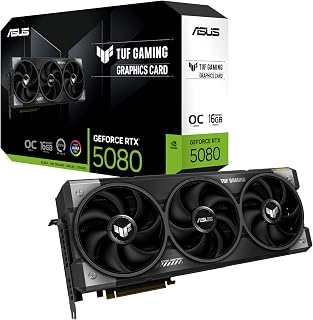
The 16GB GDDR7 memory delivers the bandwidth and capacity needed for training sophisticated deep learning architectures, including transformer models and convolutional networks. NVIDIA's latest architecture provides optimized tensor cores specifically designed to accelerate matrix operations fundamental to neural network training. The 2730 MHz overclock further reduces training time per epoch, allowing researchers to iterate faster when experimenting with hyperparameters and model configurations.
Pros
- Blackwell Tensor Cores accelerate ML training and inference workloads
- Phase-change thermal pad sustains peak clock speeds through long training runs
- Military-grade components and protective PCB coating suit always-on workstation use
- GPU Tweak III enables granular monitoring and tuning during ML jobs
Cons
- Mandatory 850W PSU and 348mm length require careful system planning
- 16GB VRAM may constrain practitioners working with large language models
For machine learning workloads in 2026, the ASUS TUF Gaming RTX 5080 brings NVIDIA's Blackwell architecture to bear with 16GB of GDDR7 memory and a 2730 MHz boost clock. Blackwell's enhanced Tensor Cores are the core reason this card belongs in an ML conversation: they accelerate matrix operations central to model training and inference, while DLSS 4's AI-driven capabilities hint at the generation's broader compute philosophy. The phase-change GPU thermal pad is especially relevant here. Sustained training runs punish cards with thermal throttling; this solution maintains consistent performance under prolonged heavy loads without degradation. Military-grade components and Auto-Extreme manufacturing add confidence for machines that run continuously. The GPU Tweak III software provides real-time monitoring useful when tuning training jobs. The 850W minimum PSU requirement and 348mm card length mean this GPU demands a purpose-built workstation, but within a properly provisioned system it delivers elite-tier compute throughput for practitioners who need a single-card ML solution.
GPU: NVIDIA GeForce RTX 5080
Memory: 16GB GDDR7
Boost Clock: 2730 MHz (OC Mode), 2700 MHz (Default Mode)
Physical Dimensions: 348mm length, 3.6-slot design, 4.3 lbs
Video Outputs: 3x DisplayPort 2.1a, 2x HDMI 2.1b
Power Requirement: Minimum 850W PSU with 16-pin 12V-2x6 (12VHPWR) connector
Manufacturing: Auto-Extreme precision automated manufacturing
Cooling: Three Axial-tech fans, phase-change GPU thermal pad, protective PCB coating
Power Supply: Verify your PSU is rated for 850W minimum and includes the required 16-pin 12V-2x6 (12VHPWR) connector. Standard 6-pin or 8-pin connectors are insufficient for this card.
Physical Clearance: Confirm your case accommodates the 348mm length and can support the 3.6-slot width requirement. Measure internal dimensions and account for storage drives, fans, and other components that may interfere with the card's placement.
System Integration: The card includes a GPU bracket for secure installation. Ensure your motherboard provides adequate PCIe slot access and that your monitor cables support DisplayPort 2.1a or HDMI 2.1b for optimal performance.
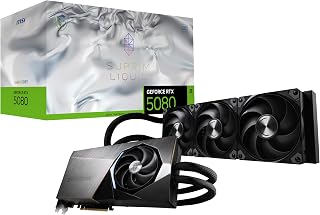
The 16GB GDDR7 memory paired with a 256-bit bus provides the bandwidth necessary for training large neural networks and handling substantial datasets efficiently. The liquid cooling system maintains stable performance during extended training sessions, preventing thermal throttling that could slow down iterative model development. With NVIDIA Blackwell architecture and a 2760 MHz boost clock, this card delivers the computational horsepower required for deep learning workloads without compromise.
Pros
- 16GB GDDR7 on a 256-bit bus provides high memory bandwidth for training and inference
- Integrated liquid cooling sustains 35 to 40 degrees Celsius during long compute sessions, preventing thermal throttling
- Blackwell architecture with a 2760 MHz boost clock delivers consistent tensor throughput
- PCI-Express x16 interface maximizes host-to-device data transfer for large dataset pipelines
Cons
- Heat output is substantial and requires adequate case airflow and favorable ambient conditions even with liquid cooling
- 16GB VRAM ceiling can be a bottleneck for very large model training that demands more memory capacity
Machine learning workloads demand sustained compute throughput, and the MSI RTX 5080 SUPRIM Liquid SOC delivers exactly that. Built on NVIDIA's Blackwell architecture with 16GB of GDDR7 memory on a 256-bit bus and a memory clock running at 30 GHz, this card brings serious bandwidth to training and inference tasks. The boost clock reaches 2760 MHz, with a base of 2745 MHz, giving models consistent throughput without frequency dips mid-run. What sets this variant apart for ML use is the integrated liquid cooling system, which holds GPU temperatures in the 35 to 40 degree Celsius range during extended sessions. Thermal throttling is a real concern during long training runs, and this cooling solution eliminates it. The Blackwell architecture brings hardware-level improvements relevant to tensor operations and large model inference. For researchers and engineers who run jobs that last hours, the combination of GDDR7 bandwidth, sustained clock speeds, and a cooling system that never backs down makes this a compelling workstation-class choice in a consumer GPU form factor.
GPU Chipset: NVIDIA GeForce RTX 5080 (Blackwell Architecture)
Memory: 16GB GDDR7
Memory Interface: 256-bit
Boost Clock: 2760 MHz
Memory Speed: 30 GHz
Outputs: 3x DisplayPort 2.1a, 1x HDMI 2.1b
Max Resolution: 7680 x 4320
Power Connection: PCIe x16
Cooling: Integrated Liquid Cooler
Dimensions: 10.5 inches length, 4.4 inches width
Warranty: 3 Years
Best suited for ML engineers, researchers, and data scientists running extended training jobs or large inference workloads who need sustained performance without thermal throttling. The 16GB GDDR7 frame buffer handles mid-to-large model sizes comfortably. Those working with very large language models that exceed 16GB VRAM should look at multi-GPU or data-center options instead. Also skip this if your case or ambient environment cannot accommodate the substantial heat output the liquid cooler still exhausts.

With 16GB of GDDR7 memory on a 256-bit bus, this card handles large batch sizes and complex architectures essential for efficient gradient descent optimization. The WINDFORCE cooling system maintains thermal stability during multi-hour training runs, preventing performance degradation that could extend project timelines. NVIDIA's Blackwell architecture includes enhanced tensor cores optimized specifically for the matrix multiplications that dominate machine learning computation.
Pros
- Enhanced Tensor Cores and Blackwell architecture target AI and ML acceleration directly
- PCIe 5.0 x16 interface eliminates bandwidth bottlenecks for large dataset transfers
- 30000 MHz GDDR7 memory clock provides high throughput for compute-intensive tasks
- WINDFORCE three-fan system manages sustained thermal loads typical of training runs
Cons
- Substantial power draw requires a robust PSU with sufficient 8-pin connectors
- 16GB VRAM ceiling limits applicability for large-scale LLM training
The GIGABYTE RTX 5080 Gaming OC enters the machine learning arena with the full capability set of NVIDIA's Blackwell generation: enhanced Tensor Cores for accelerated matrix math, DLSS 4 support that reflects the architecture's AI-first design, and 16GB of GDDR7 running on a 256-bit bus at 30000 MHz memory clock. PCIe 5.0 x16 connectivity removes bandwidth as a bottleneck when feeding the GPU with large datasets, and the 7680x4320 resolution support signals headroom for visualization-heavy ML workflows. The WINDFORCE three-fan cooling system is engineered for sustained loads rather than bursty gaming peaks, which translates well to the continuous thermal demands of training jobs. Tensor Cores open direct paths to AI acceleration for creative and computational pipelines beyond standard training tasks. The card weighs approximately four pounds and stretches to 13.46 inches, so rack or tower planning is necessary. A robust PSU with available 8-pin connectors is required, and good case airflow helps manage the notable heat output the RTX 5080 tier produces under full ML utilization.
GPU Architecture: NVIDIA GeForce RTX 5080 (Blackwell)
Memory: 16GB GDDR7, 256-bit interface
Memory Speed: 30,000 MHz
GPU Clock: 2.73 GHz boost
Interface: PCIe 5.0 x16
Cooling: WINDFORCE triple-fan system
Power Connectors: 1x 12V connector, 2x 6-pin to 3x 8-pin adapter
Display Outputs: DisplayPort, HDMI
Max Resolution: 7680x4320 pixels
Physical Dimensions: 13.46 inches (L) x 5.59 inches (W)
Weight: 4 pounds
Warranty: 3-year manufacturer
Model: GV-N5080GAMING OC-16GD
Ideal for AI researchers, ML engineers, and computational professionals who need maximum single-card Blackwell performance on a desktop platform and can provide adequate power and airflow. Also suits data scientists who blend ML workloads with GPU-accelerated 3D or visualization work. Skip it if your budget does not extend to flagship-tier hardware, if your chassis cannot fit a 13.46-inch card, or if your workloads demand more than 16GB of VRAM.

The substantial 32GB GDDR6 memory enables training of large language models and handling high-resolution image datasets without running into memory constraints. AMD RDNA 4 architecture with dedicated AI accelerators provides competitive performance for popular frameworks like PyTorch and TensorFlow. The 2920 MHz boost clock combined with specialized AI hardware acceleration delivers the throughput needed for both training and inference tasks across various model architectures.
Pros
- 32GB GDDR6 memory handles large model training and sizable datasets without swapping
- 2nd Gen AI Accelerators on RDNA 4 provide dedicated ML hardware acceleration
- Blower cooler prevents heat recirculation in multi-GPU and rack-mounted configurations
- Vapor chamber with premium thermal interface material supports 24/7 sustained operation
Cons
- Driver and framework compatibility must be verified before purchase; not universally supported across all AI toolchains
- Two-slot footprint and professional positioning require careful planning in existing workstation builds
Machine learning workloads punish GPUs that run out of memory or throttle under sustained load, and the ASRock Radeon AI PRO R9700 is built to avoid both failure modes. The 32GB GDDR6 frame buffer on a 256-bit bus gives large model training the headroom it needs, while RDNA 4 architecture and 2nd Gen AI Accelerators provide dedicated hardware acceleration for ML inference and training operations rather than repurposing general compute units. The 64 Compute Units and 2920 MHz boost clock sustain throughput across long training runs, not just burst workloads. The blower cooler is a deliberate choice for ML environments: in multi-GPU rack setups or dense workstation farms, blower cooling exhausts heat directly out of the chassis rather than recirculating it between adjacent cards. The vapor chamber with Honeywell PTM7950 thermal interface material and the die-cast build are rated for 24/7 continuous operation, matching the always-on demands of production ML infrastructure. The primary caveat is framework compatibility: ASRock explicitly recommends verifying that your specific AI software stack supports this card before committing.
GPU Architecture: AMD Radeon AI PRO R9700, RDNA 4 with 64 Compute Units
Memory: 32GB GDDR6 on 256-bit bus
Clock Speed: 2920 MHz boost
Ray Tracing: 3rd Generation
AI Accelerators: 2nd Generation dedicated AI accelerators
Cooling: Vapor chamber heatsink with Honeywell PTM7950 thermal interface, single blower design
Power Interface: PCIe 5.0
Display Outputs: Four DisplayPort 2.1a
Form Factor: Standard 2-slot design
Build: Die-cast metal shroud, metal backplate
Brand: ASRock
AI researchers and ML engineers running large models who work within verified-compatible frameworks will get the most from this card's 32GB buffer and dedicated AI accelerators. Teams building multi-GPU training clusters benefit especially from the blower design. Skip it if your framework or toolchain has not confirmed support for this GPU, or if you need a general-purpose card that works out of the box across consumer software.
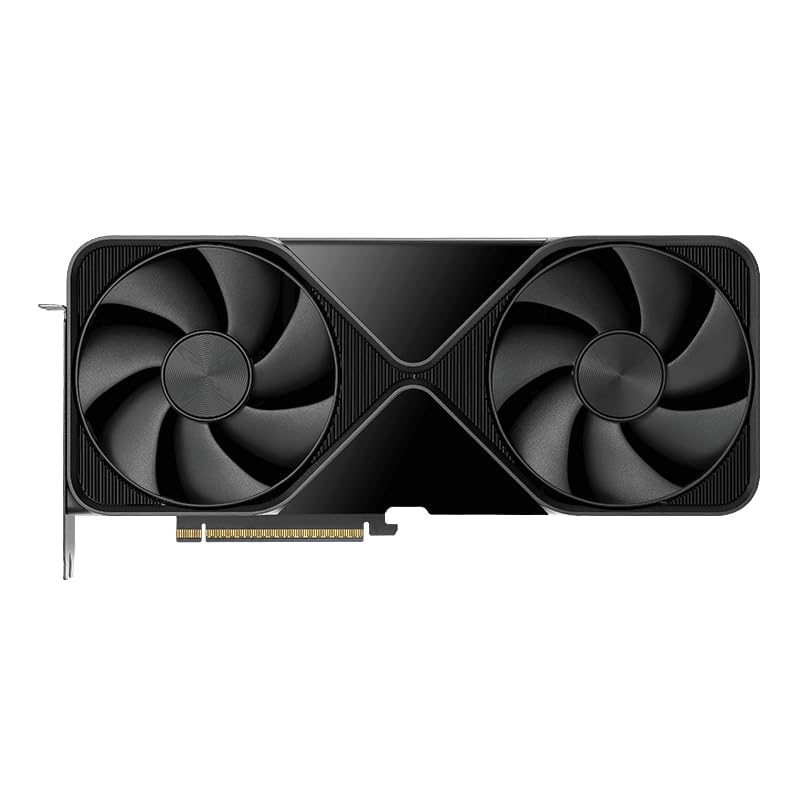
The massive 96GB DDR7 ECC memory capacity accommodates the largest available models and datasets, including cutting-edge transformer architectures that demand enormous memory footprints. Error-correcting memory ensures data integrity during critical training runs that may span days or weeks. Fifth-generation tensor cores specifically engineered for AI workloads provide unmatched acceleration for the matrix operations central to backpropagation and gradient calculations in deep learning.
Pros
- 96GB GDDR7 ECC memory fits the largest language models and generative AI workloads entirely on-device
- 5th-gen Tensor cores with FP4 support deliver up to 3x throughput over the previous generation
- PCIe Gen 5 doubles CPU-to-GPU bandwidth, reducing data transfer bottlenecks in training pipelines
- Two-slot form factor and single-connector power delivery simplify workstation integration despite flagship specs
Cons
- OEM packaging raises condition verification concerns; buyers must vet the seller and inspect documentation
- Side-mounted exhaust directs heat into the case interior, requiring deliberate airflow planning with supplemental fans
When the bottleneck in machine learning is memory capacity and tensor throughput, the RTX PRO 6000 Blackwell addresses both at the top of the market. Its 96GB of GDDR7 memory with ECC protection means even the largest language models and generative AI systems can fit entirely on-device, eliminating the performance penalty of memory offloading. The 5th-generation Tensor cores deliver up to 3x the throughput of the prior generation and add FP4 precision support, which accelerates AI inference while shrinking memory footprint, a particularly valuable combination for researchers iterating on model size and precision tradeoffs. PCIe Gen 5 connectivity doubles bandwidth over Gen 4, reducing the CPU-to-GPU transfer bottleneck that becomes significant in data-intensive training pipelines. Despite this level of capability, the card occupies only two slots and uses a single 600W connector, which simplifies workstation integration. The double-flow-through cooling sustains peak performance under full load. One practical concern is the OEM packaging: buyers should verify seller documentation carefully and confirm the card's condition before purchase.
Memory and Compute: 96GB GDDR7 ECC memory with 1.8TB per-second bandwidth. 5th-generation Tensor cores with FP4 precision support. 4th-generation ray tracing cores with double the ray-triangle intersection rate.
Connectivity: PCIe Gen 5 interface. DisplayPort 2.1 with support for 8K at 240 Hz or 16K at 60 Hz. Single HDMI output. Universal MIG for workload partitioning and isolation.
Thermal and Power: 600W power consumption. Double-flow-through cooling design. Two-slot form factor. Dimensions 17x10x5 inches, 4 pounds.
Warranty and Support: 3-year manufacturer warranty. OEM packaging. Compatible with Windows operating systems on desktop tower systems.
Artificial Intelligence and Machine Learning: Run and fine-tune large language models locally without relying on cloud services. The 96GB memory and high-bandwidth Tensor cores enable fast training and inference for generative AI applications.
3D Design and Visualization: Build photorealistic renderings with complex geometry, HDR color depth, and multi-monitor precision layouts. Perfect for architectural visualization, visual effects, and product design workflows.
Data Science and Simulation: Process massive datasets and run computationally intensive simulations. The PCIe Gen 5 bandwidth and memory capacity handle data-intensive tasks that would bottleneck lesser GPUs.
Multi-Tenant Workloads: Universal MIG partitioning enables running multiple isolated workloads concurrently, ideal for shared workstations and enterprise environments requiring secure resource separation.
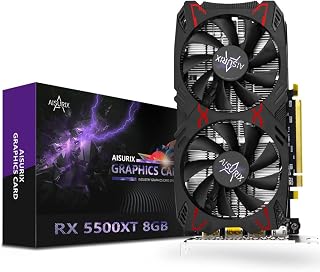
The 8GB GDDR6 memory provides a reasonable balance for training mid-sized neural networks and running inference workloads without breaking the bank. PCI Express 4.0 connectivity ensures adequate data transfer speeds when loading datasets from system memory. The intelligent fan system adjusts cooling based on workload intensity, maintaining consistent performance during prolonged training sessions while minimizing acoustic disruption in smaller workspaces.
Pros
- RDNA architecture offers improved ROCm compatibility compared to older AMD generations, broadening ML framework support
- 8GB GDDR6 handles small to medium model sizes and is a step up from GDDR5 in bandwidth
- 130W TDP allows use in compact workstations with modest power supplies
- PCI Express 4.0 interface improves host-to-device data transfer bandwidth for dataset loading
Cons
- 128-bit memory bus is a hard bandwidth ceiling that limits training throughput on larger models and bigger batch sizes
- Cooling has documented limitations under extended full-load operation, which is the norm for long ML training runs
The AISURIX RX 5500 XT brings AMD's RDNA architecture to an 8GB GDDR6 configuration with a 128-bit memory bus and a memory clock of 1717 MHz. For machine learning, RDNA represents a meaningful step forward over older Polaris hardware, and GDDR6 improves available memory bandwidth. However, the 128-bit bus width is a notable bottleneck: it cuts effective bandwidth compared to wider GDDR6 implementations on competing cards, and bandwidth is one of the most critical factors in training throughput. The 8GB frame buffer is workable for small to medium models but will limit batch sizes. At 130W, the card is extremely power-efficient, making it viable in compact workstations or systems with limited PSU headroom. The RDNA architecture has broader ROCm support than the older Polaris generation, which improves compatibility with PyTorch and other ML frameworks under Linux. The intelligent dual-fan system keeps thermals stable during sustained compute loads for typical workloads, though the existing write-up notes limitations under extended full-load scenarios, which long training runs represent. This is a budget entry point for ML experimentation, not a production training card.
This card excels at 1080p gaming with medium to high graphical settings on modern AAA titles, delivering consistent 60+ FPS for immersive gameplay without competitive esports demands. Productivity tasks like video editing, 3D modeling, and streaming are feasible with proper configuration, though GPU-intensive workloads may show thermal throttling.
Power efficiency stands out as a key advantage. The 130W maximum draw means most modern 450W+ PSUs handle this card without stress. In comparison, other 8GB cards at similar price points often require 180W or higher, making this ideal for pre-built systems with standard power supplies.
Thermal performance is mixed. Under light loads and typical office work, the automatic fan shutdown creates near-silent operation. Under sustained gaming, expect moderate noise and acceptable temperatures with proper case airflow. Repasting may improve thermal contact if noise becomes objectionable after extended use.
A reasonable starting point for students and hobbyists learning ML who need GPU acceleration on a limited budget and are willing to work within the constraints of 8GB VRAM and a 128-bit bus. PCI Express 4.0 connectivity is a genuine plus for data throughput. Skip this for any serious model training, fine-tuning large networks, or professional inference deployment. Engineers who run jobs overnight or need reliable extended full-load performance should invest in a higher-tier card.

The 24GB GDDR7 ECC memory offers both substantial capacity for mid-to-large models and error correction to ensure computational accuracy during lengthy training cycles. Fourth-generation RT and tensor core technology accelerates mixed-precision training, reducing time-to-convergence for modern neural network architectures. The single-slot design maximizes PCIe lane availability for additional GPUs in multi-card training setups, enabling distributed learning configurations that scale performance linearly.
Pros
- ECC memory protection prevents silent data corruption across extended training and inference runs
- PCIe 5.0 x16 doubles CPU-to-GPU bandwidth versus Gen 4, reducing data pipeline bottlenecks
- Single-slot form factor maximizes GPU density in multi-card workstation builds
- 3-year manufacturer warranty reflects suitability for continuous production workloads
Cons
- Single-fan thermal design requires adequate case airflow; insufficient ventilation will affect sustained performance
- Optimized for professional AI and rendering workloads; consumer and gaming use cases will not utilize its capabilities
Machine learning in production environments demands more than raw compute, it requires memory integrity and data path bandwidth that hold up across thousands of training iterations. The NVIDIA RTX PRO 4000 Blackwell addresses both with 24GB of GDDR7 ECC memory and a PCIe 5.0 x16 interface. ECC protection catches and corrects single-bit errors that would otherwise silently corrupt gradient calculations or model weights, a critical property for research where reproducibility matters. The GDDR7 memory type provides high bandwidth to feed the GPU's compute units, and the PCIe 5.0 interface doubles throughput versus Gen 4, keeping CPU-to-GPU data movement from becoming a bottleneck in dataset-heavy training workflows. The single-slot, full-height form factor is a genuine differentiator for AI labs running dense workstation arrays or tower builds with limited expansion space. The 3-year manufacturer warranty signals confidence in reliability for continuous workloads. The single-fan cooling is quieter than dual-fan designs but depends on adequate case airflow, which should be factored into workstation planning. The 1230 MHz base clock reflects this card's positioning around sustained reliability rather than peak burst performance.
GPU Architecture: Blackwell
Memory: 24GB GDDR7 with ECC
GPU Clock Speed: 1230 MHz
Memory Clock Speed: 1750 MHz
Interface: PCIe 5.0 x16
Display Outputs: 4x DisplayPort 2.1b
Max Resolution: 7680 x 4320 pixels
Power Configuration: Single-slot, full-height
Cooling: Single fan
Weight: 0.84 kg (1.85 lbs)
Dimensions: 9.5 inches L x 4.4 inches W
Warranty: 3 years manufacturer
Model Number: VCNRTXPRO4000B-PB

The 8GB GDDR5 memory across a 256-bit interface offers sufficient capacity for learning smaller models and experimenting with frameworks like TensorFlow or PyTorch on a budget. The freeze fan stop feature reduces noise during idle periods between training runs, making it suitable for home lab environments. While the 1750 MHz clock and older architecture limit performance on cutting-edge models, it handles foundational machine learning tasks and educational projects adequately.
Pros
- 8GB frame buffer on a 256-bit bus is usable for very small model experiments
- 185W power draw is compatible with budget systems that have modest PSUs
- Dual-fan design with automatic stop reduces noise during lighter compute tasks
- Dual DisplayPort plus HDMI supports a multi-monitor development workstation setup
Cons
- Polaris architecture with GDDR5 memory lacks the compute throughput and bandwidth needed for modern ML training workloads
- ROCm support for this generation is limited and aging, restricting framework compatibility for GPU-accelerated ML
The Kelinx AISURIX RX 580 is built on the Polaris architecture with 2048 stream processors and 8GB of GDDR5 memory running at 1750 MHz over a 256-bit bus. For machine learning, that specification profile is a significant constraint. GDDR5 memory bandwidth and the older Polaris compute architecture lack the tensor acceleration and memory throughput that modern ML frameworks increasingly assume. Training even moderately sized neural networks will be slow compared to current-generation hardware, and the 8GB frame buffer limits the batch sizes and model sizes you can load onto the GPU. The card draws 185W, which is reasonable for a budget part, and the dual-fan setup with automatic fan stop works well for mixed workloads. Multi-monitor output via dual DisplayPort and HDMI is useful for development environments. DirectX 12 support is present, but that matters far less for ML than CUDA or ROCm compute stack maturity, and ROCm support for Polaris-generation hardware is limited and aging. This card can run basic ML experiments and educational workloads through ROCm or ONNX runtimes, but it is not a practical choice for serious model development in 2026.
Core Specifications
GPU Memory: 8GB GDDR5
Stream Processors: 2048SP
GPU Clock: 1750 MHz
Memory Clock: 1750 MHz
Memory Interface: 256-bit
Max Power Consumption: 185W
Power Connector: 1x 8-pin
Connectivity and Display
Video Outputs: 2x DisplayPort, 1x HDMI
Max Resolution: 3840x2160 (4K)
Multi-Monitor Support: Up to 2 monitors
Architecture and Compatibility
GPU Architecture: Polaris 20 XTX
Process Node: 14nm
DirectX: Version 12
Interface: PCI Express 3.0 x16
Compatible Devices: Desktop PC
Warranty: 1 Year

Pros
- Exceptional CUDA core count outperforms consumer-grade GPUs for professional applications
- HBM2 memory architecture reduces bandwidth bottlenecks during intensive computations
- Excellent value compared to enterprise GPU alternatives like Tesla cards
- Verified safe arrival with premium packaging and complete accessories
- Handles both professional workloads and 4K gaming with impressive performance
Cons
- Premium pricing may exceed budgets for hobbyists or casual gamers
- Overkill specifications for standard gaming or light creative work
- Gold casing design may not match all system aesthetics despite its premium appeal
The NVIDIA TITAN V Volta represents the pinnacle of consumer-accessible GPU technology, designed for professionals who demand serious computational firepower. This card targets content creators, machine learning researchers, video editors, and 3D artists who require both gaming performance and professional-grade compute capabilities in a single solution.
At the heart of the TITAN V lies its 5,120 CUDA cores paired with 12GB of high-bandwidth HBM2 memory. This configuration delivers exceptional performance in parallel processing tasks like neural network training, video compression, and complex simulations. Reviewers confirmed that the card handles 4K gaming at high frame rates while simultaneously supporting memory-intensive workloads, making it genuinely versatile for mixed-use professionals.
The card arrives in NVIDIA's distinctive gold Founders Edition casing, a premium aesthetic choice that commands attention in any workstation. Build quality proves solid with multi-layer protective packaging during shipping, and the inclusion of original box, manual, adapter, and static shield bag ensures complete setup flexibility and future resale value. The professional-grade construction reflects the target market of serious practitioners.
The primary drawback is pricing, which positions this GPU squarely in the professional segment rather than consumer gaming market. While significantly cheaper than Tesla and Quadro equivalents with comparable specs, the TITAN V still demands substantial investment. Additionally, the robust specifications may feel excessive for users performing light creative work or standard gaming.
The NVIDIA TITAN V Volta justifies its investment for professionals requiring genuine computational acceleration. Buyers consistently report satisfaction with performance across demanding applications, making this a reliable choice for those ready to elevate their creative and research capabilities beyond entry-level alternatives.
GPU Architecture: NVIDIA TITAN V (Volta)
CUDA Cores: 5,120
Memory: 12GB HBM2
Memory Clock Speed: 1700 MHz
Display Resolution: Up to 3840x2160 (4K)
Interface: PCI Express
Video Output: HDMI
Model Number: GV100-400-A1
Weight: 16 ounces
Edition: Founders Edition (Gold)
How to Choose the Right GPU for Machine Learning
VRAM Capacity Comes First
More than clock speed or core count, VRAM is the defining spec for machine learning. Large language models, transformer architectures, and high-resolution image generation can consume tens of gigabytes just to load the model weights before a single forward pass runs.
Cards like the NVD RTX PRO 6000 Blackwell push into professional territory with 96GB of GDDR7 ECC memory, which is genuinely in a different class for large-scale LLM fine-tuning. If your workloads are more moderate, the ASRock Intel Arc Pro B70 Creator 32GB Workstation and the ASRock Radeon AI PRO R9700 Creator 32GB both deliver 32GB of GDDR6 at a far more approachable level, giving you room for serious models without requiring a datacenter budget.
Tensor Cores and AI-Specific Accelerators
Raw shader count matters less for ML than dedicated AI compute engines. NVIDIA’s Tensor Cores, Intel’s XMX engines, and AMD’s AI Accelerators are the hardware units that actually run matrix multiplications at the heart of neural network training and inference.
The NVIDIA RTX PRO 4000 Blackwell Graphics Card brings 5th Gen Tensor Cores with FP4 precision support, which meaningfully reduces memory usage during inference compared to older generations. The ASRock Intel Arc Pro B70 Creator 32GB Workstation packs 256 XMX engines built on the Xe2-HPG architecture, making it a compelling option for developers who want Intel’s oneAPI ecosystem alongside strong matrix math throughput.
Software Ecosystem and Framework Compatibility
Even the most powerful GPU is only as useful as its software support. NVIDIA’s CUDA ecosystem remains the most mature for ML, with near-universal support across PyTorch, TensorFlow, JAX, and every major ML library. If your workflow depends on CUDA-specific libraries, an RTX-series or RTX PRO card keeps friction to a minimum.
AMD’s ROCm platform has improved significantly and the ASRock Radeon AI PRO R9700 Creator 32GB is explicitly engineered for AI development with AMD’s RDNA 4 architecture and 2nd Gen AI Accelerators. Intel’s oneAPI is a strong third option for developers building cross-platform pipelines. Know your stack before you buy, because framework compatibility shapes your day-to-day experience as much as raw hardware.
Thermal Design for Sustained Workloads
Training runs last hours, sometimes days. A GPU that boosts aggressively and then throttles under sustained load will give you worse real-world results than its spec sheet suggests. Blower-style coolers, like those on the ASRock Arc Pro B70 and the ASRock Radeon AI PRO R9700 Creator 32GB, exhaust heat directly out of the chassis, a major advantage in dense multi-GPU workstation and server configurations.
Both ASRock professional cards use a vapor chamber heatsink paired with Honeywell PTM7950 phase-change thermal interface material, which maintains reliable junction temperatures across 24/7 operation. For consumer-grade cards running ML on the side, the msi Gaming RTX 5080 16G SUPRIM Liquid SOC Graphics takes a different approach with an integrated liquid cooling loop, keeping thermals in check even at the card’s elevated boost clock.
Final Thoughts
For most machine learning practitioners in 2026, the ASRock Intel Arc Pro B70 Creator 32GB Workstation offers a compelling balance of massive VRAM, next-gen PCIe 5.0 bandwidth, and a blower-cooled design built for sustained compute, while researchers and enterprise teams who need to fine-tune the largest models locally should look hard at the NVD RTX PRO 6000 Blackwell, which delivers 96GB of ECC-protected GDDR7 memory and 5th Gen Tensor Cores in a single card that can handle workloads most GPUs simply cannot load.
Frequently Asked Questions
How much VRAM do I need for machine learning in 2026?
For running smaller models, fine-tuning pre-trained networks, or working with tabular data, 8GB to 16GB of VRAM covers most use cases. If you are training large transformer models from scratch or fine-tuning LLMs with billions of parameters, you will want 24GB or more. Cards like the NVIDIA RTX PRO 4000 Blackwell Graphics Card with 24GB GDDR7 ECC hit a practical sweet spot for serious ML work without crossing into datacenter pricing.
Is an NVIDIA GPU required for deep learning, or can AMD and Intel GPUs work?
NVIDIA’s CUDA ecosystem is the most widely supported, but it is no longer the only viable option. AMD’s ROCm platform has matured considerably and supports PyTorch natively. Intel’s oneAPI covers a growing range of ML frameworks. The ASRock Radeon AI PRO R9700 Creator 32GB is a strong AMD option built specifically for AI and creator workloads, while the ASRock Intel Arc Pro B70 Creator 32GB Workstation brings Intel’s Xe2-HPG architecture into the professional ML space. Check your specific framework’s documentation before committing.
Can I use a gaming GPU for machine learning?
Yes, gaming GPUs are widely used for ML experimentation, research, and even production inference. Cards like the ASUS TUF Gaming GeForce RTX 5080 16GB GDDR7 OC and the GIGABYTE GeForce RTX 5080 Gaming OC 16G Graphics run the same CUDA cores and Tensor Cores as professional workstation cards, with the trade-off being less VRAM and the absence of ECC memory. For most developers and researchers, a high-end gaming GPU delivers excellent performance at a more accessible entry point than a dedicated workstation card.
What is ECC memory and does it matter for machine learning?
ECC, or Error-Correcting Code memory, detects and corrects single-bit memory errors before they can corrupt data. For long training runs where a silent memory error could invalidate hours of computation, ECC is a meaningful reliability feature. Professional cards like the NVIDIA RTX PRO 4000 Blackwell Graphics Card and the NVD RTX PRO 6000 Blackwell include ECC-protected GDDR7 memory, which is one of the key reasons they carry a premium over consumer alternatives. For casual experimentation, standard GDDR6 or GDDR7 without ECC is perfectly fine in practice.




Write Your Review
No reviews yet. Be the first to share your experience!