

Running a triple-monitor sim racing setup is one of the most demanding things you can ask of a graphics card. You are pushing pixels across three screens simultaneously, often at high refresh rates, while iRacing, Assetto Corsa Competizione, or rFactor 2 renders every mirror, shadow, and trackside detail in real time. A card that handles single-screen gaming just fine can buckle under that kind of load.
This guide covers the top graphics cards for triple-monitor sim racing in 2026, from value-focused options to no-compromise flagships. Whether you are building a new rig or upgrading an existing one, every card here has been evaluated specifically with triple-screen workloads in mind.
Quick Comparison
Ratings reflect the most recent data pull. Check each listing for current price and availability.
Quick answer
This guide compares 10 picks, with ASUS TUF Gaming RTX 5070 12GB GDDR7 OC - Blackwell ranked first. GIGABYTE Radeon RX 9070 XT Gaming OC 16GB GDDR6 PCIe holds the highest customer rating among them. GIGABYTE RTX 5070 Ti Gaming OC 16GB GDDR7 Graphics Card has the most customer reviews. PNY NVIDIA GeForce RTX 5070 12GB GDDR7 Graphics Card leads this list on VRAM.

The TUF Gaming edition delivers three DisplayPort 2.1a outputs, making it straightforward to connect a triple monitor setup without adapters. Its 12GB GDDR7 memory handles the demanding framebuffer requirements of spanning sim racing visuals across three screens at high refresh rates. The 2640 MHz boost clock ensures smooth performance when rendering complex cockpit views and environmental details simultaneously across your entire field of view.
Pros
- DLSS 4 and GDDR7 memory handle triple-screen rendering efficiently
- Superior cooling maintains 65C under sustained racing loads
- Military-grade components and protective coating ensure longevity
- Five outputs with three DisplayPort 2.1a connections
Cons
- Physical size requires 13+ inch clearance and over two inches width
- 12GB VRAM may limit future-proofing for next-gen titles
Triple-monitor sim racing places extraordinary demands on GPU hardware, and the ASUS TUF RTX 5070 OC responds with the bandwidth and thermal stability this workload requires. The 12GB of GDDR7 memory handles the massive texture loads from rendering three synchronized 1440p displays, while the Blackwell architecture and 2640MHz boost clock maintain the consistent frame times crucial for immersive racing. DLSS 4 becomes essential here, extracting playable performance from what would otherwise overwhelm lesser cards. The robust cooling solution proves its worth during marathon racing sessions, with the three Axial-tech fans and phase-change thermal pads holding temperatures at 65C even when the GPU sustains maximum load across all three screens. Military-grade components and protective PCB coating add longevity that matters when hardware runs this hard for extended periods. The 3.125-slot design and included anti-sag bracket ensure physical stability inside your rig. Five display outputs cover triple DisplayPort 2.1a connections with bandwidth to spare. This card bridges the gap between adequate and exceptional for serious sim racers who refuse to compromise visual fidelity or frame consistency.
GPU and Memory: NVIDIA GeForce RTX 5070, 12GB GDDR7, 2640MHz boost clock, PCIe 5.0 interface
Cooling and Design: 3.125-slot form factor, three Axial-tech fans, phase-change thermal pad, protective PCB coating, military-grade components, GPU Guard bracket
Connectivity: 3x DisplayPort 2.1a, 2x HDMI 2.1b, 7680x4320 maximum resolution support
Physical: 13 inches long, 5.5 inches wide, 3.4 pounds, includes cooling bracket and stand
Warranty and Support: 3-year manufacturer warranty, GPU Tweak III software for performance monitoring and thermal control
Buy this if you run triple 1440p displays for sim racing and demand stable performance with high detail settings and ray tracing during long sessions. The exceptional cooling and military-grade build quality justify the investment for serious racers who log significant hours. Skip it if you race on a single monitor or prioritize budget over durability, or if your case cannot accommodate a 13-inch card exceeding two inches in thickness. Also reconsider if you plan to move to 4K triple-monitor setups soon, where 12GB VRAM may eventually become limiting.

The 16GB GDDR7 framebuffer handles the substantial memory requirements of driving three monitors simultaneously in modern sim racing titles. Three DisplayPort 2.1b outputs provide direct connectivity for a triple screen array without adapters or splitters. The IceStorm 3.0 cooling system manages heat effectively during prolonged racing sessions where the GPU continuously renders panoramic cockpit views and detailed track environments across your entire visual range.
Pros
- Confirmed smooth triple-screen racing performance by reviewers
- Vapor chamber and 90mm fans stay quiet under sustained load
- 16GB GDDR7 eliminates texture bottlenecks across three displays
- Reinforced frame with support stand prevents GPU sag
Cons
- 11.9-inch length requires case compatibility verification
- Some units exhibit minor coil whine under load
When you connect three monitors for sim racing, you need a GPU that can sustain high frame rates without thermal throttling or performance drops mid-session. The ZOTAC RTX 5080 SOLID CORE OC delivers exactly that capability through its vapor chamber cooling paired with composite heatpipes and three 90mm BladeLink fans. Reviewers specifically confirmed smooth performance across triple-screen racing simulations, validating this card's real-world credentials for this exact workload. The 16GB of GDDR7 memory removes any texture streaming bottlenecks that occur when rendering expansive racing environments across multiple displays simultaneously. PCIe 5.0 and 30 Gbps memory bandwidth ensure data moves fast enough to feed all three screens without stutter. The Blackwell architecture with DLSS 4 multiplies effective performance, letting you maintain visual quality settings that would otherwise cripple frame consistency. Aggressive thermal management keeps the card whisper-quiet even during endurance races where GPU load stays maxed for hours. The reinforced frame structure and metal backplate add mechanical stability, while the included support stand prevents PCB flex from the weight. At 11.9 inches, it fits most modern cases better than oversized alternatives while delivering flagship-tier output across your triple-monitor cockpit.
GPU: NVIDIA GeForce RTX 5080 (Blackwell Architecture)
Memory: 16GB GDDR7, 256-bit, 30 Gbps, PCIe 5.0
Clock Speed: 2640 MHz base with OC support up to +125 MHz confirmed
Cooling: Vapor chamber, composite heatpipes, three 90mm fans, active fan control, FREEZE fan stop
Outputs: 3x DisplayPort 2.1b, 1x HDMI 2.1b, 8K capable, 4-display ready
Form Factor: 2.5 slots, 11.9 inches length, 2.2 inches width
Power: 8-pin to 16-pin cable connectors included
Warranty: 3 years
This card suits sim racers running triple displays who want confirmed real-world performance in racing titles with exceptional thermal management during long sessions. The 16GB VRAM and vapor chamber cooling justify the investment for enthusiasts who race frequently and demand whisper-quiet operation even under sustained load. Skip it if you race casually on a single screen or if your case cannot accommodate an 11.9-inch card. Also consider alternatives if minor coil whine bothers you or if you prefer avoiding proprietary RGB software for lighting control.
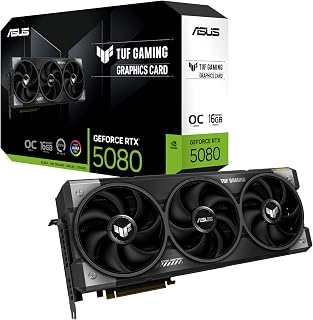
With three native DisplayPort 2.1a outputs, this card connects directly to a triple monitor sim racing setup without requiring adapters or splitters. The 16GB GDDR7 memory manages the substantial VRAM demands of rendering detailed cockpits and tracks across three synchronized displays. Its 2730 MHz boost clock maintains high frame rates even when driving through complex racing scenarios where the GPU must continuously update expansive multi-screen perspectives.
Pros
- Phase-change thermal pad maintains consistency during extended racing sessions
- DLSS 4 and Blackwell architecture deliver high frame rates across wide resolutions
- Military-grade components and PCB coating ensure long-term reliability
- Five video outputs provide flexible triple-monitor connectivity options
Cons
- 348mm length and 3.6-slot design require spacious case compatibility
- 850W minimum PSU mandatory for stable operation
Triple-monitor sim racing at high resolution pushes graphics hardware to sustained maximum load, where thermal management becomes critical. The TUF Gaming RTX 5080 addresses this with a phase-change GPU thermal pad that maintains consistent performance during multi-hour endurance races without the degradation traditional paste exhibits. Three Axial-tech fans paired with an optimized fin array keep temperatures stable even when driving rendered cockpits across 7680 pixels of horizontal span. The Blackwell architecture with DLSS 4 support delivers high frame rates at triple 1440p or 4K, while three DisplayPort 2.1a and two HDMI 2.1b outputs provide flexible connectivity options. Military-grade components and protective PCB coating offer reliability for setups that see daily use. GPU Tweak III software gives real-time monitoring and granular control over performance parameters, useful for tuning frame delivery consistency. The 16GB GDDR7 buffer handles detailed sim environments with headroom. However, the 348mm length and 3.6-slot width demand careful case planning, and the 850W minimum PSU requirement represents a significant power infrastructure consideration for builders.
GPU: NVIDIA GeForce RTX 5080
Memory: 16GB GDDR7
Boost Clock: 2730 MHz (OC Mode), 2700 MHz (Default Mode)
Physical Dimensions: 348mm length, 3.6-slot design, 4.3 lbs
Video Outputs: 3x DisplayPort 2.1a, 2x HDMI 2.1b
Power Requirement: Minimum 850W PSU with 16-pin 12V-2x6 (12VHPWR) connector
Manufacturing: Auto-Extreme precision automated manufacturing
Cooling: Three Axial-tech fans, phase-change GPU thermal pad, protective PCB coating
Power Supply: Verify your PSU is rated for 850W minimum and includes the required 16-pin 12V-2x6 (12VHPWR) connector. Standard 6-pin or 8-pin connectors are insufficient for this card.
Physical Clearance: Confirm your case accommodates the 348mm length and can support the 3.6-slot width requirement. Measure internal dimensions and account for storage drives, fans, and other components that may interfere with the card's placement.
System Integration: The card includes a GPU bracket for secure installation. Ensure your motherboard provides adequate PCIe slot access and that your monitor cables support DisplayPort 2.1a or HDMI 2.1b for optimal performance.

With 16GB of GDDR6 memory, this card provides ample framebuffer capacity for triple screen configurations where sim racing titles must render expansive cockpit perspectives and track environments. The 3060 MHz clock speed delivers strong performance for maintaining consistent frame rates across all three displays. Multiple DisplayPort outputs ensure native connectivity for your multi-monitor array without requiring signal splitting or conversion.
Pros
- 16GB VRAM handles triple-screen texture loads without constraint
- Strong 1440p performance translates well to multi-monitor racing
- WINDFORCE cooling stays quiet during sustained racing sessions
- 11.34-inch length fits most cases without clearance issues
Cons
- Requires 750W power supply minimum for stable operation
- NVIDIA alternatives offer superior raw performance at higher cost
Driving three monitors for sim racing without spending flagship money requires smart hardware selection, and the GIGABYTE Radeon RX 9070 XT offers a compelling path forward. The 16GB of GDDR6 memory proves crucial for triple-screen setups where texture streaming across multiple displays can quickly exhaust smaller buffers. Performance at 1440p translates directly to this use case, where each of your three screens demands GPU resources simultaneously yet this card maintains the high frame rates necessary for smooth racing immersion. The 3060MHz clock speed and AMD's latest architecture provide the computational horsepower to render complex racing environments across your entire field of view without the frame drops that ruin lap times. The WINDFORCE cooling system with Hawk fans handles sustained racing loads while remaining remarkably quiet, letting you focus on engine sounds rather than fan noise during marathon sessions. Server-grade thermal conductive gel contributes to long-term stability when hardware runs hard for extended periods. PCIe 5.0 support ensures bandwidth keeps pace with data demands. At 11.34 inches, this card fits most cases without the clearance headaches that plague oversized alternatives. For sim racers building or upgrading triple-monitor cockpits on realistic budgets, this GPU delivers the VRAM capacity and consistent performance the workload demands.
Core Specifications
GPU: AMD Radeon RX 9070 XT
Memory: 16GB GDDR6
Memory Clock: 2600 GHz
GPU Clock: 3060 MHz
Interface: PCIe 5.0 x16
Max Resolution: 7680 x 4320 (8K)
Physical and Connectivity
Dimensions: 11.34 inches (L) x 5.2 inches (W)
Weight: 1.78 kg
Output: DisplayPort
Power Connectors: Dual 8-pin (750W+ PSU recommended)
Cooling: WINDFORCE system with Hawk fans and thermal gel
Warranty and Support
Manufacturer: GIGABYTE
Warranty: 3 years
Model: GV-R9070XTGAMING OC-16GD
Gaming Performance at Common Resolutions
1440p Gaming: 160-220fps on most modern AAA titles at high settings. Excellent for competitive gaming and high-refresh monitors.
4K Gaming: Playable at high settings on most titles, medium settings on demanding new releases. Solid for content creators monitoring in 4K.
Esports Titles: 300+ fps possible on optimized competitive games for ultra-high refresh gameplay.
Real-World Use Cases
Best suited for 1440p gaming at 144+ fps, 4K content creation workflows, professional 3D rendering, and VR gaming. Handles flight simulators like DCS at high settings with 4K head tracking. Eliminates VRAM constraints for media professionals working with large files.
Driver Recommendations
Run DDU (Display Driver Uninstaller) before installation if upgrading from another card. Install latest AMD drivers for maximum stability and performance. Update BIOS if required by your system for PCIe 5.0 compatibility.

This model includes three native DisplayPort 2.1a outputs specifically suited for connecting a triple monitor sim racing cockpit without signal adapters. The 16GB GDDR6 memory allocation handles the expanded framebuffer needs when rendering detailed racing environments across three synchronized displays. At 3030 MHz, the clock speed maintains smooth frame delivery across your peripheral screens where consistency matters for competitive lap times and immersive racing.
Pros
- Three native DisplayPort 2.1a outputs for direct triple-monitor connection
- 16GB GDDR6 handles wide multi-screen resolutions without memory bottlenecks
- Stays under 60C during sustained load with phase-change thermal pad cooling
- Dual BIOS profiles balance silent operation and performance modes
Cons
- 12.3-inch length requires case compatibility verification
- Initial driver updates needed for optimal stability at launch
Running three monitors in sim racing demands consistent frame delivery across wide fields of view, and the RX 9070 XT handles this workload with 16GB of GDDR6 memory and modern connectivity. Three native DisplayPort 2.1a outputs eliminate adapter headaches when connecting triple 1440p or 4K displays. The 3030 MHz boost clock sustains performance during long racing sessions without thermal throttling, keeping GPU temperatures below 60C even under continuous load thanks to the phase-change thermal pad design. Users report 50% FPS improvements over older mid-range cards, translating to smoother cockpit views and better responsiveness in titles like iRacing or Assetto Corsa Competizione. The dual BIOS system lets you switch between silent operation for casual practice runs and performance mode for competitive racing. At 2.5 slots and 12.3 inches, it fits most standard cases without blocking airflow. Power draw stays between 180-190W, lower than competing cards at this performance level, making it easier to pair with existing power supplies.
Memory and Bus: 16GB GDDR6, 256-bit interface, 3030 MHz memory clock
Architecture: AMD Radeon RX 9070 XT, PCIe 5.0 x16, 3030 MHz boost clock (OC mode), 2480 MHz game clock (OC mode)
Connectivity: 3x DisplayPort 2.1a, 1x HDMI 2.1b, maximum resolution 7680 x 4320
Cooling: 3x Axial-tech fans with dual-ball bearings, phase-change thermal pad, 0dB idle technology, 2.5-slot design
Software: Dual BIOS switch (Quiet and Performance profiles), GPU Tweak III for performance tuning and monitoring, ASUS GPU Guard protection
Dimensions and Power: 12.3 inches long, 5.1 inches wide, approximately 1500g, estimated 180-190W typical draw
Warranty: 3-year manufacturer coverage
Ideal for sim racers building or upgrading triple-monitor setups who need reliable performance across wide resolutions without flagship spending. The triple DisplayPort outputs and thermal stability suit extended racing sessions. Skip this if you already own recent high-end hardware or need absolute maximum frame rates at triple 4K resolution, where more powerful options justify their cost. Also reconsider if your case cannot accommodate the 12.3-inch length or you require NVIDIA-specific features for certain racing titles.

This RTX 5070 variant provides both DisplayPort and HDMI outputs to accommodate various triple monitor configurations commonly used in sim racing setups. The 12GB GDDR7 memory manages the increased VRAM demands of spanning detailed racing environments across three displays. Its triple-fan cooling solution maintains stable temperatures during extended racing sessions where GPU load remains consistently high across all connected screens.
Pros
- 12GB GDDR7 memory handles triple-screen workloads effectively
- Triple-fan cooling stays quiet during extended racing sessions
- DLSS 4 provides performance headroom for demanding sims
- Compact 2.4-slot design fits most racing cockpit builds
Cons
- 250W TDP requires quality power supply for stable operation
- Factory overclock leaves limited headroom for manual tuning
Running triple monitors for sim racing demands serious graphics horsepower, and the PNY RTX 5070 Epic-X RGB delivers the bandwidth and memory capacity this setup requires. The 12GB GDDR7 memory with 672 GB/s bandwidth handles the increased pixel count across three displays without stuttering, while NVIDIA's Blackwell architecture provides the raw processing power needed for high refresh rate racing at 1440p per screen. Factory overclocked to 2325 MHz, this card maintains consistent frame rates above 90 fps in graphically intensive titles, critical when you need smooth motion across a wide field of view. The triple-fan cooling system keeps temperatures controlled during long racing sessions, and noise levels remain low enough not to distract from immersive gameplay. DLSS 4 support adds headroom for future sim racing titles while boosting current performance. The compact 2.4-slot design fits most racing cockpit PCs, and the 250W TDP, while substantial, remains manageable with a quality power supply. For sim racers building or upgrading a triple-monitor rig, this GPU offers the performance and features to keep pace with demanding racing simulations.
The RTX 5070 delivers impressive performance across gaming and professional workloads. At 1440p with maximum settings, expect 90-100+ fps in most modern AAA titles. DLSS 4 with Frame Generation can push performance significantly higher while maintaining excellent visual quality through AI upscaling and frame interpolation.
Creative applications see similar gains. NVIDIA Studio drivers provide dedicated optimization for apps like DaVinci Resolve, Adobe Premiere Pro, and Blender, enabling faster exports, real-time previews, and AI-assisted effects. The 192-bit memory interface and GDDR7 speeds support bandwidth-intensive professional workflows without bottlenecks.
Thermal performance keeps the card running cool and quiet. The triple-fan configuration maintains optimal temperatures even during sustained gaming sessions, with noise levels remaining unobtrusive during gameplay.
This card suits sim racing enthusiasts building or upgrading triple-monitor setups who want reliable 1440p performance across all three displays. It fits users transitioning from older GPUs who need the memory bandwidth for increased pixel counts and DLSS 4 for future-proofing. Skip this if you already own a current-generation high-end GPU or if your racing cockpit PC lacks adequate power supply capacity for the 250W requirement. Budget-conscious racers running single or dual displays can find adequate performance at lower price points.

The 16GB GDDR7 memory configuration provides sufficient framebuffer capacity for triple monitor sim racing where detailed track environments and cockpit textures span across three synchronized displays. WINDFORCE cooling maintains stable temperatures during extended racing sessions where GPU utilization remains consistently elevated. Multiple DisplayPort and HDMI outputs accommodate the connectivity requirements of a three-screen cockpit setup commonly used for immersive sim racing experiences.
Pros
- Enhanced RT and Tensor Cores with DLSS 4 maintain high frame rates across wide resolutions
- 16GB GDDR7 and PCIe 5.0 handle detailed sim environments without bottlenecks
- WINDFORCE triple-fan cooling manages sustained racing session thermals
- Included VGA holder prevents GPU sag in horizontal installations
Cons
- Substantial power draw requires robust PSU with 8-pin connectors
- 13.46-inch length and 4-pound weight need case compatibility verification
Driving triple monitors at maximum detail in modern sim racing titles requires substantial GPU horsepower, and the RTX 5080 Gaming OC delivers with Blackwell architecture and 16GB of GDDR7 memory. Enhanced RT Cores handle realistic reflections and lighting in cockpit views, while Tensor Cores accelerate DLSS 4 frame generation to maintain smoothness across wide fields of view. The card supports up to 7680x4320 resolution with PCIe 5.0 bandwidth, ensuring no bottlenecks when rendering detailed environments across three displays. Real-world performance keeps demanding titles at maximum settings with stable frame delivery, critical for consistent lap times and immersion. The WINDFORCE triple-fan cooling system manages thermals during sustained racing sessions, though the 4-pound weight and 13.46-inch length demand solid case support and planning. Multiple DisplayPort and HDMI outputs simplify triple-screen connectivity. Robust construction suits frequent use in dedicated sim rigs. The included VGA holder addresses GPU sag concerns in horizontal cases. Power requirements necessitate a strong PSU with available 8-pin connectors, and good case airflow helps the cooling system perform optimally under continuous load.
GPU Architecture: NVIDIA GeForce RTX 5080 (Blackwell)
Memory: 16GB GDDR7, 256-bit interface
Memory Speed: 30,000 MHz
GPU Clock: 2.73 GHz boost
Interface: PCIe 5.0 x16
Cooling: WINDFORCE triple-fan system
Power Connectors: 1x 12V connector, 2x 6-pin to 3x 8-pin adapter
Display Outputs: DisplayPort, HDMI
Max Resolution: 7680x4320 pixels
Physical Dimensions: 13.46 inches (L) x 5.59 inches (W)
Weight: 4 pounds
Warranty: 3-year manufacturer
Model: GV-N5080GAMING OC-16GD
Designed for serious sim racers building no-compromise triple-monitor setups who want maximum visual fidelity and frame rate headroom at triple 1440p high-refresh or triple 4K. The RT and Tensor Core capabilities benefit titles with advanced lighting and DLSS support. Skip this if your budget or power supply cannot support flagship hardware, or if you run lower resolutions where mid-tier cards provide adequate performance. Also reconsider if your case lacks space for 13.46 inches of length and proper airflow for heat management.

The triple-fan cooling design manages heat effectively during extended sim racing sessions where triple monitors demand sustained GPU performance without thermal throttling. DLSS 4 technology helps maintain high frame rates across all three displays by intelligently upscaling the image, reducing the rendering burden. DisplayPort and HDMI outputs provide connectivity flexibility for different triple monitor configurations, though the 672MB specification appears to be a listing error for this model.
Pros
- DLSS 4 maintains playable frame rates across three displays
- Compact 12.94-inch length fits typical sim racing cases
- 6144 CUDA cores deliver solid 1080p and moderate 1440p performance
- VelocityX software enables racing-optimized configurations
Cons
- 12GB memory limits headroom for triple high-resolution setups
- Requires quality 850W or larger power supply
The PNY RTX 5070 with Blackwell architecture targets triple-monitor sim racing at resolutions where visual quality meets performance balance. The 12GB GDDR7 memory provides sufficient frame buffer for three 1080p or lower 1440p displays, while 6144 CUDA cores push frames consistently across the wide field of view. DLSS 4 technology becomes essential in triple-screen configurations, using AI to upscale efficiently and maintain playable frame rates that would otherwise strain native rendering. The 672GB/sec memory bandwidth keeps textures flowing smoothly across all displays simultaneously, critical for avoiding pop-in during high-speed racing. At 2325 MHz base and 2512 MHz boost clocks, this card handles modern racing sims with ray tracing enabled, though you may need to adjust settings for the most demanding titles across three screens. The triple-fan cooling design manages heat output during extended racing sessions, and the compact 12.94-inch length fits most sim racing rigs housed in mid-tower cases. Full ray tracing support enhances realism with accurate reflections on car paint and track surfaces. VelocityX software allows custom fan curves and clock adjustments tailored to your specific racing setup and ambient temperatures.
GPU Specifications: NVIDIA GeForce RTX 5070, Blackwell architecture, 6144 CUDA cores, 12GB GDDR7 memory, 672GB/s bandwidth
Clock Speeds: Base 2325 MHz, Boost 2512 MHz, Memory 2325 MHz
Power and Interface: 250W TDP, PCI Express 5.0 x16, dual 8-pin PCIe power connectors (one 16-pin adapter included)
Video Outputs: DisplayPort, HDMI, supports up to 7680x4320 resolution
Physical: Triple-fan cooling, 12.94 x 5.39 inches, 1000g weight, compatible with standard ATX desktop systems
Software: VelocityX control suite, NVIDIA DLSS 4, NVIDIA Studio drivers
Perfect for sim racers running triple 1080p monitors or those planning moderate 1440p triple-screen setups who want modern features without flagship expense. Great for those upgrading from older GPUs who need immediate performance gains for current racing titles. Avoid this if you demand maximum settings across triple 4K displays, as the 12GB frame buffer becomes limiting. Also skip if your racing catalog consists mainly of older, less demanding sims that run fine on budget cards.

This RTX 5070 Ti offers 16GB GDDR7 memory, providing substantial framebuffer capacity for triple screen sim racing configurations where memory bandwidth directly impacts smoothness across synchronized displays. The WINDFORCE cooling system handles sustained thermal loads during long racing sessions where the GPU continuously renders panoramic views. Multiple DisplayPort and HDMI outputs ensure flexible connectivity for various three-monitor arrangements common in dedicated sim racing cockpits.
Pros
- 16GB GDDR7 memory handles triple-screen resolutions comfortably
- WINDFORCE triple-fan cooling maintains stability during long races
- Factory overclocked for immediate performance gains
- Multiple video outputs for flexible monitor configurations
Cons
- Requires robust power supply and case airflow
- Overkill for single-monitor sim racing setups
Running three monitors for sim racing demands substantial GPU horsepower, and the GIGABYTE RTX 5070 Ti Gaming OC delivers exactly that with 16GB of GDDR7 memory and a robust cooling solution. The WINDFORCE triple-fan system becomes critical when pushing pixels across three displays simultaneously, keeping temperatures stable during marathon racing sessions. With 2600 MHz clock speeds and PCIe 5.0 support, this card handles the wide field of view required for immersive sim racing without frame drops. The 16GB frame buffer provides headroom for high-resolution textures and anti-aliasing across all three screens, while the 256-bit memory bus ensures smooth data flow. DisplayPort and HDMI outputs offer flexibility when connecting multiple displays, and the GeForce RTX 5070 Ti chipset supports the latest graphics technologies that modern racing sims increasingly rely upon. The GAMING OC designation means factory overclocking comes standard, squeezing extra performance from the silicon without manual tweaking. For triple-monitor sim racing setups running titles like iRacing, Assetto Corsa Competizione, or rFactor 2, this card balances raw power with thermal management.
Core Specs: GPU: NVIDIA GeForce RTX 5070 Ti (Blackwell Architecture) | Memory: 16GB GDDR7 | Memory Interface: 256-bit | GPU Clock: 2600 MHz | Memory Clock: 2600 MHz | PCIe: 5.0
Cooling and Power: WINDFORCE cooling system with 3 fans | Dimensions: 13.46" L x 5.59" W | Weight: 3.9 pounds
Outputs and Compatibility: Video Outputs: DisplayPort, HDMI | Max Resolution: 7680 x 4320 (8K) | Compatible with desktop systems | Interface: PCI-Express x16
Warranty: 3-year manufacturer warranty
Ideal for sim racers building or upgrading a triple-monitor cockpit who need reliable performance across demanding titles. Perfect for those running 1440p displays or mixed-resolution setups who want consistent frame rates without thermal throttling. Skip this if you race on a single ultrawide or standard monitor, where less expensive cards will suffice. Also pass if your racing titles are older or less demanding, as you would be paying for unused capability.

Pros
- 8960 CUDA cores handle triple-screen pixel counts effortlessly
- DLSS 4 maintains high frame rates across combined resolutions
- 896GB/sec memory bandwidth prevents texture streaming bottlenecks
- VelocityX software enables racing-specific performance tuning
Cons
- Demands quality power supply with sufficient capacity
- Requires adequate case cooling for sustained racing sessions
Triple-monitor sim racing setups place extraordinary demands on graphics hardware, and the PNY RTX 5070 Ti answers with Blackwell architecture designed for exactly this workload. The 8960 CUDA cores and 16GB of GDDR7 memory running at 896GB/sec bandwidth ensure smooth rendering across three displays without stuttering or frame drops during intense racing action. DLSS 4 becomes particularly valuable here, using AI upscaling to maintain high frame rates across the combined resolution of three screens. The triple-fan cooling solution addresses the sustained thermal load that comes from rendering ultra-wide fields of view for hours at a time. With base clocks at 2295 MHz and boost clocks reaching 2452 MHz, this card pushes through the pixel count required for triple 1440p or even 4K displays. Full ray tracing support brings realistic reflections and lighting to modern racing sims, enhancing immersion in cockpit views. PCIe 5.0 compatibility ensures maximum bandwidth for texture streaming across multiple monitors. DisplayPort and HDMI outputs provide the necessary connectivity for three-screen configurations, while VelocityX software allows fine-tuning performance profiles specifically for racing applications.
GPU: NVIDIA GeForce RTX 5070 Ti
Architecture: Blackwell
Memory: 16GB GDDR7 (256-bit)
Memory Bandwidth: 896GB/sec
CUDA Cores: 8960
Base Clock: 2295 MHz
Boost Clock: 2452 MHz
Interface: PCIe 5.0
Video Outputs: DisplayPort, HDMI
Features: NVIDIA DLSS 4, Full Ray Tracing, VelocityX Software
Best suited for dedicated sim racers investing in triple 1440p or 4K displays who want maximum visual fidelity and consistent frame rates. Excellent choice for those running modern racing sims with ray tracing who refuse to compromise on graphics quality. Skip this if your budget cannot accommodate the power supply and cooling requirements, or if you race casually on lower-resolution screens where mid-range cards deliver sufficient performance.
Buying Guide: What to Look For in a Triple-Monitor Sim Racing GPU
VRAM: More Is Not Optional
Triple monitors multiply the texture and framebuffer memory your GPU needs to hold at once. At high resolutions across three screens, you want at least 16GB of VRAM to avoid stutters and asset pop-in during a race. Cards like the ASUS TUF Gaming GeForce RTX™ 5080 16GB GDDR7 OC and the GIGABYTE Radeon RX 9070 XT Gaming OC 16G Graphics both land at 16GB, which gives you real headroom.
Cards with 12GB, like the RTX 5070 lineup, can still handle triple screens at moderate settings, but you may need to dial back texture quality in the most detailed sim titles. Know your resolution targets before you decide.
Display Output Count and Port Types
Triple monitors require three active display outputs, so confirm the card you choose supports that without an adapter chain. Most modern cards here offer at least three DisplayPort 2.1 outputs plus an HDMI port. The ZOTAC Gaming GeForce RTX 5080 Solid CORE OC DLSS 4 specifically offers three DisplayPort 2.1b and one HDMI 2.1b, making it straightforward to connect a triple-screen rig with full bandwidth at each port.
If you plan to run G-Sync or FreeSync across all three monitors, also verify that your monitors and the card share a compatible adaptive sync standard. Mismatched standards can leave one or more screens without variable refresh rate support.
Raw Rasterization Performance and DLSS or FSR Support
Sim racing titles are CPU-heavy, but the GPU still carries the visual workload. NVIDIA’s DLSS 4 Multi Frame Generation, available on all the RTX 5000 series cards here, is a genuine game-changer for triple-screen setups because it can nearly double your effective frame rate without proportional rendering cost. The PNY NVIDIA GeForce RTX™ 5070 Epic-X RGB™ OC and the PNY GEFORCE RTX™ 5070 12GB Triple Fan DLSS 4 both carry this capability at a more accessible tier.
AMD’s RX 9070 XT cards rely on FSR 4, which has improved significantly and works well in titles like Assetto Corsa. If your sim of choice has strong FSR support, the AMD options are compelling. If DLSS support is widespread in your game library, the NVIDIA cards hold a clear edge.
Thermal Design and Slot Width
Sim racing sessions can run for hours, so sustained thermal performance matters more here than in a typical gaming context. Cards with vapor chamber cooling and phase-change thermal pads, such as the ASUS TUF series, maintain lower temperatures under prolonged load compared to traditional heatsink designs.
Slot width is also worth a look if your sim rig PC has a compact case. The ASUS Prime Radeon RX 9070 XT 16GB GDDR6 OC Edition uses a 2.5-slot design that fits more builds than the 3.6-slot flagships, without giving up much cooling performance. Double-check your case clearance and PCIe slot spacing before ordering any card over three slots wide.
Final Thoughts
For most sim racers stepping into a triple-monitor setup, the GIGABYTE GeForce RTX 5070 Ti Gaming OC 16G hits the sweet spot of 16GB GDDR7, strong DLSS 4 support, and sustained thermal performance across long stints. If you want the absolute ceiling in rendering headroom and plan to push maximum detail at high refresh rates across all three screens, the ASUS TUF Gaming GeForce RTX 5070 12GB GDDR7 OC delivers exceptional build quality and the headroom to future-proof your rig as sim titles continue to grow more demanding.
Frequently Asked Questions
How much VRAM do I need for sim racing with three monitors?
For triple-monitor sim racing in 2026, 16GB of VRAM is the recommended starting point if you want to run high texture settings without compromising frame consistency. Cards with 12GB can manage, but you may need to reduce some visual settings in the most detailed titles. GDDR7 memory, found across the RTX 5000 and RX 9070 XT lineup, also offers significantly higher bandwidth than previous generations, which helps with the added data throughput of three screens.
Does DLSS help with triple-monitor sim racing?
Yes, and it is one of the biggest reasons to lean toward an RTX 5000 series card for a triple-screen rig. DLSS 4 with Multi Frame Generation can dramatically boost effective frame rates, which matters a lot when you are rendering three high-resolution viewports at once. Titles like Assetto Corsa Competizione and iRacing have added DLSS support in recent updates, making the technology practically useful rather than theoretical.
Can an RTX 5070 run three monitors in sim racing?
An RTX 5070 is capable of driving triple monitors in sim racing, especially with DLSS 4 active. At 1080p per screen, you will have plenty of performance headroom. At 1440p per screen, you may want to be selective about settings in the most demanding titles. For those who want consistent maximum detail at 1440p across all three screens, stepping up to the RTX 5070 Ti or RTX 5080 tier is worth considering.
Is AMD or NVIDIA better for triple-monitor sim racing in 2026?
Both platforms are viable in 2026, and the gap has narrowed considerably. NVIDIA holds an advantage in titles with strong DLSS 4 support and benefits from a more mature driver ecosystem for multi-monitor configurations. AMD’s RX 9070 XT offers excellent raw rasterization performance and FSR 4, which works well in AMD-supported titles. Your choice should come down to which sims you run most often and whether DLSS or FSR support is broader in that game. Either way, both architectures are a significant step up from previous generations for triple-screen workloads.




Write Your Review
No reviews yet. Be the first to share your experience!