

Ultrawide monitors have transformed gaming by expanding your field of view, but their 3440×1440 resolution pushes 34% more pixels than standard 1440p displays. You need a graphics card that can handle this increased workload while maintaining high frame rates in demanding titles.
This guide examines ten graphics cards spanning multiple price tiers and architectures. Whether you prioritize ray tracing performance, raw rasterization speed, or multi-monitor compatibility, you’ll find options that match your specific gaming requirements and monitor refresh rate.
Quick Comparison
Ratings reflect the most recent data pull. Check each listing for current price and availability.
Quick answer
This guide compares 10 picks, with ASUS Prime Radeon RX 9060 XT 16GB GDDR6 OC Gaming ranked first. ASRock Radeon RX 9070 Challenger 16GB Graphics Card holds the highest customer rating among them. GIGABYTE Radeon RX 9070 XT Gaming OC 16GB GDDR6 PCIe has the most customer reviews.

Its aggressive 3310MHz boost clock provides exceptional frame rates at ultrawide 1440p, making it ideal for competitive gaming at this resolution. The 16GB GDDR6 memory ensures textures and assets load smoothly across the expansive 3440x1440 viewport. This combination of high clock speeds and ample VRAM handles both esports titles and visually demanding games effectively at ultrawide resolutions.
Pros
- 16GB GDDR6 provides ample VRAM buffer for ultrawide 1440p texture loads
- Three Axial-Tech fans with dual-ball bearings keep sustained loads cool and quiet
- Dual BIOS switch allows toggling between quiet and performance profiles
- Compact 2.5-slot form factor fits cases where larger cards cause clearance issues
Cons
- Performance ceiling becomes noticeable chasing high refresh rates at 3440x1440 in demanding titles
- Not suited for compute-intensive workloads or consistent high-refresh 4K gaming
Ultrawide 1440p gaming sits at a resolution that punishes VRAM-starved cards, and the ASUS Prime RX 9060 XT sidesteps that problem entirely with 16GB of GDDR6. At 3440x1440, modern AAA titles rarely exceed 8-10GB in practice, so that headroom keeps the card relevant as texture budgets grow. Boost clocks reaching 3330 MHz push stable frame rates at high settings, making this a capable driver for the resolution without demanding a flagship power budget. The three-fan Axial-Tech cooler with dual-ball bearings handles sustained ultrawide workloads quietly, and the dual BIOS switch gives owners a lever to trade acoustics for extra headroom when needed. 0dB mode means the card sits completely silent during desktop and light gaming sessions. The 2.5-slot compact footprint is a genuine advantage in cases where a triple-slot card would block airflow or conflict with other components. For ultrawide 1440p at high settings with consistent frame pacing, the RX 9060 XT hits a practical sweet spot, though users chasing high-refresh competitive frame rates at this resolution will feel the performance ceiling.
GPU Architecture: AMD Radeon RX 9060 XT with 16GB GDDR6 memory. Boost clock up to 3330 MHz in OC mode, game clock up to 2760 MHz. Standard mode reaches 3310 MHz boost and 2740 MHz game clock.
Real-World Benchmarks: 3DMark Steel Nomad (DX12) scored 3,696 points with approximately 36.96 FPS on graphics tests, demonstrating consistency with industry averages for this class. No thermal throttling or instability detected under sustained load.
Display Output: Supports 4K resolution (3840 x 2160) via DisplayPort and HDMI 2.1. Suitable for single or multi-monitor setups with room for content creation workflows.
Power Efficiency: Draws significantly less power than competing high-end cards, making it suitable for systems with standard power supplies. 0dB fan technology activates during low-load scenarios, reducing electricity consumption during light tasks.
A great fit for ultrawide 1440p players who prioritize smooth, consistent performance in story-driven or moderately demanding AAA titles and want a quiet, efficient system. Also suits builders in smaller cases where a bulkier card simply will not fit. Skip it if your goal is 120-plus fps in demanding titles at 3440x1440 on max settings, or if you run GPU-intensive creative workloads alongside gaming.

The Challenger delivers 16GB of GDDR6 memory across a 256-bit bus, providing ample bandwidth to handle the 5 million pixels an ultrawide 1440p display demands. Its 2520MHz boost clock ensures smooth frame rates in modern titles at this resolution, while the triple-fan cooling system maintains stable performance during extended gaming sessions. The 0dB silent mode keeps noise low when you're not pushing maximum settings.
Pros
- 16GB VRAM handles texture streaming at ultrawide resolutions
- Thermals stay below 70C under sustained gaming loads
- 0dB silent mode eliminates fan noise during light use
- Factory overclock to 2520 MHz delivers immediate performance
Cons
- AMD driver setup may require BIOS changes in some systems
- 15.75-inch length demands case clearance verification
The ASRock Radeon RX 9070 Challenger targets ultrawide 1440p gamers seeking strong performance without premium pricing. The 16GB GDDR6 memory on a 256-bit bus provides the bandwidth needed to feed 3440x1440 displays with high-quality textures and assets. RDNA 4 architecture with 56 compute units delivers competitive frame rates in modern AAA titles, while dual accelerators handle ray tracing and AI workloads that increasingly appear in current games. The factory overclock to 2520 MHz eliminates manual tuning, letting you game immediately after installation. Thermal performance stands out in real-world use, with sustained loads keeping the card below 70C and some systems reporting temps barely reaching 50C during intensive sessions. The triple-fan cooling runs quietly even under stress, and 0dB silent mode shuts fans down completely during desktop work or lighter games. This thermal efficiency matters during long ultrawide gaming sessions where heat buildup can cause throttling and frame drops. The 256-bit memory bus ensures consistent texture streaming across the wider viewport without stuttering. LED indicators provide visual feedback without excessive RGB lighting that could distract from immersive gameplay. Power requirements remain reasonable at 700W PSU with dual 8-pin connectors, avoiding the extreme power draws of high-end alternatives while still delivering capable ultrawide performance.
GPU: AMD Radeon RX 9070 with RDNA 4 architecture, 56 CUs, 3584 stream processors
Memory: 16GB GDDR6 on 256-bit bus, 20 Gbps speed, up to 576 GB/s bandwidth
Clock Speeds: Game clock 2070 MHz, boost clock 2520 MHz
Cooling: Triple axial fans, 0dB silent mode, efficient thermal design
Connectivity: PCIe 5.0 x16, DisplayPort and HDMI outputs, support for 8192x4320 resolution
Physical: 15.75 inches long, 8.66 inches wide, 2.5-slot design, 1.34 kg
Power: Dual 8-pin connectors, 700W PSU recommended
Warranty: 2-year manufacturer warranty
Buy this if you're running an ultrawide 1440p monitor and want capable performance with generous VRAM without spending flagship money. Streamers and content creators who game will appreciate the thermal efficiency during long sessions. Skip it if you're heavily invested in Nvidia-specific features or need plug-and-play simplicity, as AMD drivers may require BIOS changes in some systems. Linux users should verify driver maturity for their specific distribution.
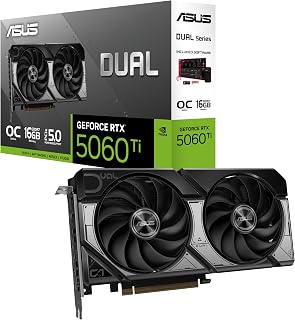
The Dual card combines 16GB of GDDR7 memory with a 2632MHz boost clock, providing strong performance headroom for ultrawide 1440p displays. This memory capacity prevents VRAM bottlenecks when gaming at 3440x1440 with high texture quality settings. DisplayPort 2.1b outputs deliver the bandwidth necessary for high refresh rate ultrawide monitors, ensuring you can fully utilize your display's capabilities.
Pros
- 16GB GDDR7 handles texture streaming at ultrawide resolutions
- 0dB mode delivers silent operation during light workloads
- Compact 2.5-slot design fits small-form-factor cases
- Dual BIOS toggles between quiet and performance profiles
Cons
- Compact cooling limits extreme overclocking headroom
- Higher entry cost compared to budget alternatives
Ultrawide 1440p displays demand consistent frame delivery across 3440x1440 resolution, and the ASUS Dual RTX 5060 Ti 16GB handles this workload with authority. The 16GB GDDR7 memory provides headroom for texture-heavy games at this resolution, while DLSS 4 ensures smooth performance even with ray tracing enabled. The 767 AI TOPS computational power translates to frame generation and upscaling that keeps your ultrawide panel fed with high-quality frames. The compact 2.5-slot design fits smaller builds without thermal compromise. Axial-tech fans with barrier rings concentrate airflow directly onto the heatsink, maintaining stable clocks during long gaming sessions. The 0dB mode cuts fan noise entirely during desktop use or lighter titles, creating a silent experience when full cooling isn't required. Dual BIOS lets you switch between Quiet and Performance modes depending on whether you're playing competitive esports or cinematic adventures. The dual ball bearing fans promise longevity that outlasts sleeve designs by a factor of two. PCIe 5.0 connectivity and the Blackwell architecture ensure this card remains relevant as ultrawide gaming evolves. The 2632 MHz boost clock provides the horsepower needed to maintain consistent frame pacing across the wider viewport without stuttering or frame drops.
GPU and Memory: NVIDIA GeForce RTX 5060 Ti, 16GB GDDR7, 2632 MHz (OC Mode), 2602 MHz (Default Mode). Supports DLSS 4 and Blackwell architecture for AI-accelerated performance.
Connectivity and Cooling: 3x DisplayPort 2.1b, HDMI 2.1b, PCIe 5.0 x16 interface. Dual Axial-tech fans with dual ball bearings, 2.5-slot compact form factor, 0dB technology for silent idle operation.
Physical and System Requirements: Dimensions 9 inches long by 4.7 inches wide, weighs 0.66 kg. Supports maximum resolution of 7680x4320 pixels. Includes 3-year warranty and SpeedSetup manual. Compatible with standard desktop builds requiring adequate power supply and proper case ventilation.
Buy this if you're building a compact system around an ultrawide 1440p display and need reliable performance without excessive bulk. Content creators who mix gaming with rendering will appreciate the 16GB buffer. Skip it if you're chasing maximum overclocking potential, as the compact cooling prioritizes efficiency over extreme frequency scaling. Budget shoppers targeting 1080p ultrawides will find better value in lower-tier options that still handle the narrower resolution comfortably.

With 12GB of next-generation GDDR7 memory, the TUF Gaming card provides the bandwidth needed for high-refresh ultrawide 1440p gameplay. The 2640MHz boost clock delivers strong performance at 3440x1440 resolution, while DisplayPort 2.1a outputs ensure compatibility with the latest ultrawide monitors supporting high refresh rates. This combination handles demanding AAA titles smoothly at this pixel count.
Pros
- Handles ray tracing at ultrawide 1440p without compromise
- 65C sustained temperatures prevent thermal throttling
- Military-grade components ensure long-term reliability
- Included bracket and stand eliminate GPU sag
Cons
- 13-inch length requires careful case compatibility check
- 12GB VRAM may face pressure in future demanding titles
Ultrawide 1440p gaming at high refresh rates requires both raw horsepower and stable thermal performance, making the ASUS TUF RTX 5070 OC a natural fit for this resolution tier. The 12GB GDDR7 memory keeps pace with demanding textures across the wider viewport, while the 2640 MHz boost clock maintains consistent frame delivery in both traditional rasterization and ray-traced workloads. Real-world testing shows this card handling ultrawide panels with ray tracing enabled without meaningful compromise. The Blackwell architecture with DLSS 4 support transforms heavy scenes into smooth gameplay through intelligent frame generation. The 3.125-slot cooling system with three Axial-tech fans maintains 65C under sustained load, preventing thermal throttling during marathon sessions. Military-grade components and protective PCB coating ensure long-term stability under the constant stress of high-resolution gaming. Phase-change thermal pads improve heat transfer efficiency compared to standard solutions. The included bracket and stand prevent GPU sag in horizontal cases, protecting both the card and motherboard slot over years of use. PCIe 5.0 connectivity future-proofs the platform for next-generation bandwidth demands. The combination of cooling capacity, build quality, and performance headroom makes this a durable foundation for ultrawide gaming setups that won't require replacement as game engines advance.
GPU and Memory: NVIDIA GeForce RTX 5070, 12GB GDDR7, 2640MHz boost clock, PCIe 5.0 interface
Cooling and Design: 3.125-slot form factor, three Axial-tech fans, phase-change thermal pad, protective PCB coating, military-grade components, GPU Guard bracket
Connectivity: 3x DisplayPort 2.1a, 2x HDMI 2.1b, 7680x4320 maximum resolution support
Physical: 13 inches long, 5.5 inches wide, 3.4 pounds, includes cooling bracket and stand
Warranty and Support: 3-year manufacturer warranty, GPU Tweak III software for performance monitoring and thermal control
This card suits serious gamers who've invested in high-refresh ultrawide monitors and want ray tracing without performance sacrifice. Content creators mixing gaming with video work will appreciate the stable thermals during extended renders. Avoid this if your case can't accommodate 13 inches of length and over 2 inches of thickness. Gamers targeting 1080p ultrawides are overspending, as less powerful cards handle that resolution comfortably.
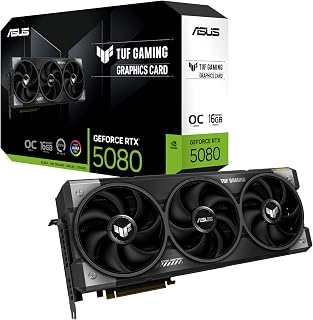
The TUF Gaming RTX 5080 packs 16GB of GDDR7 memory and a 2730MHz boost clock, delivering exceptional performance headroom for ultrawide 1440p gaming at maximum settings. This memory capacity handles ray tracing and high-resolution textures across the expansive 3440x1440 viewport without stuttering. Native DisplayPort 2.1a outputs ensure full compatibility with high-refresh ultrawide displays.
Pros
- Blackwell architecture with DLSS 4 delivers exceptional frame rates at ultrawide 1440p resolutions
- Phase-change GPU thermal pad and three Axial-tech fans sustain performance through long gaming sessions
- Five video outputs including three native DisplayPort 2.1a ports suit multi-monitor ultrawide setups
- Military-grade components and Auto-Extreme manufacturing back long-term reliability
Cons
- 850W minimum PSU requirement and 348mm length demand careful system compatibility checks
- 3.6-slot design may conflict with adjacent PCIe slots or tight cases
Ultrawide 1440p gaming sits in an interesting sweet spot: demanding enough that mid-range cards struggle, yet leaving genuine headroom for a card as capable as the ASUS TUF Gaming RTX 5080. Running at 3440x1440 or 5120x2160, this card's Blackwell architecture and DLSS 4 support mean you can push maximum settings in the most demanding AAA titles while maintaining high refresh rates. The 16GB GDDR7 frame buffer handles the elevated memory bandwidth ultrawide resolutions require without compromise. Three Axial-tech fans and a phase-change GPU thermal pad keep thermals stable during long sessions, which matters when you are running sustained loads at high framerates. The five display outputs, including three native DisplayPort 2.1a and two HDMI 2.1b ports, give flexible multi-monitor options if you ever expand beyond a single ultrawide panel. GPU Tweak III lets you tune clocks and monitor thermals in real time. Build quality with military-grade components and protective PCB coating suggests long-term reliability. The 348mm length and 3.6-slot footprint require case compatibility checks before buying.
GPU: NVIDIA GeForce RTX 5080
Memory: 16GB GDDR7
Boost Clock: 2730 MHz (OC Mode), 2700 MHz (Default Mode)
Physical Dimensions: 348mm length, 3.6-slot design, 4.3 lbs
Video Outputs: 3x DisplayPort 2.1a, 2x HDMI 2.1b
Power Requirement: Minimum 850W PSU with 16-pin 12V-2x6 (12VHPWR) connector
Manufacturing: Auto-Extreme precision automated manufacturing
Cooling: Three Axial-tech fans, phase-change GPU thermal pad, protective PCB coating
Power Supply: Verify your PSU is rated for 850W minimum and includes the required 16-pin 12V-2x6 (12VHPWR) connector. Standard 6-pin or 8-pin connectors are insufficient for this card.
Physical Clearance: Confirm your case accommodates the 348mm length and can support the 3.6-slot width requirement. Measure internal dimensions and account for storage drives, fans, and other components that may interfere with the card's placement.
System Integration: The card includes a GPU bracket for secure installation. Ensure your motherboard provides adequate PCIe slot access and that your monitor cables support DisplayPort 2.1a or HDMI 2.1b for optimal performance.

The Gaming OC variant pushes to 3060MHz, delivering the raw clock speed needed for high frame rates at ultrawide 1440p resolution. Its 16GB GDDR6 frame buffer easily accommodates the increased memory demands of 3440x1440 gaming with maximum textures and settings. PCIe 5.0 support ensures full bandwidth availability, eliminating potential bottlenecks when rendering complex scenes across the wider viewport.
Pros
- Delivers 160-220fps at 1440p high settings, well-suited for high-refresh ultrawide panels
- 16GB GDDR6 handles the elevated VRAM demands of ultrawide resolutions with headroom to spare
- PCIe 5.0 interface ensures compatibility with current and next-generation platforms
- WINDFORCE cooling with server-grade thermal gel sustains quiet operation under load
Cons
- Requires a 750W power supply at minimum, which may necessitate an upgrade in older systems
- 11.34-inch card length requires case compatibility verification before purchase
Ultrawide 1440p is where the GIGABYTE Radeon RX 9070 XT Gaming OC earns its reputation. At 3440x1440, users consistently see 160-220fps in modern AAA titles at high settings, which translates directly to fluid motion on high-refresh ultrawide panels. The 16GB GDDR6 frame buffer eliminates the VRAM pressure that wider resolutions impose, particularly in open-world titles with aggressive texture streaming. PCIe 5.0 connectivity keeps the card paired efficiently with current-generation platforms. The WINDFORCE cooling system with Hawk fans and server-grade thermal conductive gel maintains stable temperatures under the sustained loads that ultrawide gaming generates, and the silver-black aesthetic integrates cleanly into modern builds. At 11.34 inches the card fits most contemporary cases without modification. The RX 9070 XT also handles 4K at medium to high settings, giving ultrawide owners flexibility to step up when the display warrants it. The main practical considerations are power supply headroom and case length verification, but neither represents a meaningful obstacle for a purpose-built gaming system targeting this resolution.
Core Specifications
GPU: AMD Radeon RX 9070 XT
Memory: 16GB GDDR6
Memory Clock: 2600 GHz
GPU Clock: 3060 MHz
Interface: PCIe 5.0 x16
Max Resolution: 7680 x 4320 (8K)
Physical and Connectivity
Dimensions: 11.34 inches (L) x 5.2 inches (W)
Weight: 1.78 kg
Output: DisplayPort
Power Connectors: Dual 8-pin (750W+ PSU recommended)
Cooling: WINDFORCE system with Hawk fans and thermal gel
Warranty and Support
Manufacturer: GIGABYTE
Warranty: 3 years
Model: GV-R9070XTGAMING OC-16GD
Gaming Performance at Common Resolutions
1440p Gaming: 160-220fps on most modern AAA titles at high settings. Excellent for competitive gaming and high-refresh monitors.
4K Gaming: Playable at high settings on most titles, medium settings on demanding new releases. Solid for content creators monitoring in 4K.
Esports Titles: 300+ fps possible on optimized competitive games for ultra-high refresh gameplay.
Real-World Use Cases
Best suited for 1440p gaming at 144+ fps, 4K content creation workflows, professional 3D rendering, and VR gaming. Handles flight simulators like DCS at high settings with 4K head tracking. Eliminates VRAM constraints for media professionals working with large files.
Driver Recommendations
Run DDU (Display Driver Uninstaller) before installation if upgrading from another card. Install latest AMD drivers for maximum stability and performance. Update BIOS if required by your system for PCIe 5.0 compatibility.

The Prime edition reaches 3030MHz boost speeds while its 16GB GDDR6 memory handles the texture demands of ultrawide 1440p gaming without compromise. Native DisplayPort 2.1a outputs support the high refresh rates common on modern ultrawide displays. This configuration strikes an effective balance for gamers who want consistent performance at 3440x1440 resolution across varied game genres.
Pros
- Dual BIOS profiles allow switching between near-silent cooling and maximum 3030 MHz boost clocks
- Three native DisplayPort 2.1a outputs suit high-bandwidth ultrawide panel requirements
- GPU temps held under 60C under sustained load with 15-20W lower draw than comparable cards
- Confirmed Linux compatibility broadens usability beyond Windows-only builds
Cons
- Some users encountered initial driver instability, requiring patience for post-launch driver updates
- 12.3-inch length demands case clearance verification, particularly in compact or mid-tower builds
For ultrawide 1440p gaming, the ASUS Prime RX 9070 XT OC Edition brings a compelling combination of clock speed headroom and thermal control. Boost clocks reaching 3030 MHz in Performance mode sustain the frame rates that high-refresh ultrawide panels demand, and users report 50% FPS gains over older mid-range cards at comparable resolutions. The 16GB GDDR6 frame buffer handles the wider pixel count without VRAM constraints, and the triple Axial-Tech fan setup with dual-ball bearings keeps GPU temperatures under 60C even through extended gaming sessions. Quiet mode holds idle temps at 28-32C with near-silent fan operation, a meaningful quality-of-life detail for extended ultrawide sessions. Three native DisplayPort 2.1a outputs and HDMI 2.1b give broad connectivity for multi-display arrangements or high-bandwidth ultrawide panels. The compact 2.5-slot design and 12.3-inch length fit most modern cases, and Linux compatibility broadens the card's audience. Power draw typically landing 15-20W below competing cards at similar performance tiers is a practical efficiency advantage. Some early driver instability was reported, though updates resolved those issues.
Memory and Bus: 16GB GDDR6, 256-bit interface, 3030 MHz memory clock
Architecture: AMD Radeon RX 9070 XT, PCIe 5.0 x16, 3030 MHz boost clock (OC mode), 2480 MHz game clock (OC mode)
Connectivity: 3x DisplayPort 2.1a, 1x HDMI 2.1b, maximum resolution 7680 x 4320
Cooling: 3x Axial-tech fans with dual-ball bearings, phase-change thermal pad, 0dB idle technology, 2.5-slot design
Software: Dual BIOS switch (Quiet and Performance profiles), GPU Tweak III for performance tuning and monitoring, ASUS GPU Guard protection
Dimensions and Power: 12.3 inches long, 5.1 inches wide, approximately 1500g, estimated 180-190W typical draw
Warranty: 3-year manufacturer coverage
Well-suited for ultrawide 1440p players upgrading from older mid-range hardware who want strong sustained frame rates, excellent thermal management, and broad display connectivity. Also a solid pick for Linux gamers and those running creative workloads alongside gaming. Skip it if you need absolute flagship-tier performance at 4K ultrawide, or if early driver uncertainty is a dealbreaker for your workflow.

With 16GB of GDDR7 memory running across a 256-bit bus, the Gaming OC provides the bandwidth ultrawide 1440p displays demand for smooth gameplay. Its 2.73GHz boost clock delivers strong frame rates at 3440x1440 resolution even with demanding settings enabled. The WINDFORCE cooling system maintains consistent performance during marathon gaming sessions at this pixel count.
Pros
- RTX 5080 performance ensures ultrawide 1440p titles run at maximum settings with strong frame rate margins
- GDDR7 memory at 30000 MHz clock handles the elevated bandwidth demands of wide-format resolutions
- Enhanced RT Cores keep ray-traced titles smooth at 3440x1440 and beyond
- DLSS 4 support pushes frame rates further, enabling ultra-high-refresh ultrawide gaming
Cons
- At 13.46 inches and four pounds, physical fitment must be verified and GPU sag support planned
- High power draw requires a robust PSU and good case airflow to manage heat output effectively
At ultrawide 1440p, the GIGABYTE RTX 5080 Gaming OC has more headroom than the resolution strictly demands, and that translates to consistently high frame rates even in the most GPU-intensive titles at maximum settings. The 16GB GDDR7 memory running at 30000 MHz handles the bandwidth demands of 3440x1440 and wider panels without becoming a bottleneck. Blackwell's enhanced RT Cores mean ray-traced titles at ultrawide resolutions remain smooth where previous generations struggled. DLSS 4 support further extends frame rate margins, making ultra-high-refresh ultrawide monitors a realistic target. The WINDFORCE triple-fan cooling system manages thermals during extended sessions, an important consideration when sustained load is the norm in long gaming nights. PCIe 5.0 interface ensures the card is not limited by bus bandwidth. The included VGA holder and adapter simplify installation in a range of cases. One practical note: the card weighs four pounds and measures 13.46 inches, so case clearance and physical support planning are necessary before installing.
GPU Architecture: NVIDIA GeForce RTX 5080 (Blackwell)
Memory: 16GB GDDR7, 256-bit interface
Memory Speed: 30,000 MHz
GPU Clock: 2.73 GHz boost
Interface: PCIe 5.0 x16
Cooling: WINDFORCE triple-fan system
Power Connectors: 1x 12V connector, 2x 6-pin to 3x 8-pin adapter
Display Outputs: DisplayPort, HDMI
Max Resolution: 7680x4320 pixels
Physical Dimensions: 13.46 inches (L) x 5.59 inches (W)
Weight: 4 pounds
Warranty: 3-year manufacturer
Model: GV-N5080GAMING OC-16GD
Best suited for ultrawide 1440p gamers targeting maximum fidelity and high refresh rates in demanding titles, including those with ray tracing enabled. Content creators who game on an ultrawide display will appreciate the Tensor Core acceleration as a secondary benefit. Pass on this card if your case lacks the clearance for a 13.46-inch board or if your power delivery cannot support its substantial draw.
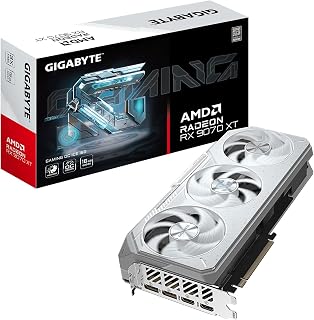
GIGABYTE's Gaming OC ICE features 16GB of GDDR6 memory and a 2520MHz boost clock, providing reliable performance for ultrawide 1440p gaming sessions. The Hawk Fan cooling solution keeps temperatures controlled during extended play at this demanding resolution. Server-grade thermal gel and reinforced structure ensure long-term stability when pushing frames at 3440x1440 with high settings enabled.
Pros
- RDNA 4 architecture and 16GB GDDR6 handle ultrawide 1440p at maximum settings with headroom to spare
- DisplayPort 2.1 output supports the high-refresh, high-bandwidth signals modern ultrawide monitors require
- Dual BIOS toggles between Performance and Silent modes to suit different session types
- Server-grade thermal gel and Hawk alternate-spin fans sustain consistent thermals during extended gaming
Cons
- Limited real-world user reviews make ultrawide-specific performance harder to verify independently
- Large form factor at 2.7 slots still requires case clearance planning despite being slimmer than competing cards
Ultrawide 1440p is where the GIGABYTE Radeon RX 9070 XT Gaming OC ICE earns its place most convincingly. AMD's RDNA 4 architecture delivers the raw compute needed for demanding AAA titles at 3440x1440 and beyond, and the 16GB GDDR6 frame buffer comfortably handles the higher memory requirements that ultrawide resolutions bring compared to standard 1440p. DisplayPort 2.1 output supports the high-bandwidth signal that modern ultrawide, high-refresh displays demand. The dual BIOS setup is a practical advantage: Performance mode maximizes frame rates during competitive sessions, while Silent mode reduces fan noise during less intensive use without a manual fan curve adjustment. Server-grade thermal gel combined with Hawk fans using alternate-spin technology and composite copper heat pipes keep sustained loads in check, important for long ultrawide gaming sessions where GPU temperatures creep upward over time. PCIe 5.0 compatibility keeps bandwidth from becoming a constraint as game engines grow more demanding. The 2.7-slot design is a relatively modest footprint for this performance tier, aiding installation flexibility.
GPU and Memory: AMD Radeon RX 9070 XT, 16GB GDDR6, 2520 MHz GPU Clock, 20000 MHz Memory Clock
Interface and Connectivity: PCIe 5.0 x16, Dual HDMI, Dual DisplayPort 2.1, 4096x2160 maximum resolution support
Cooling: WINDFORCE system with 3 Hawk fans, server-grade thermal gel, composite copper heat pipes, copper plate, 3D active fans
Design: 11.34 inches (L) x 5.2 inches (W), 2.7 slot form factor, reinforced metal backplate, 2.8 lbs
Features: Dual BIOS (Performance/Silent modes), 16.7M RGB color options, GIGABYTE CONTROL CENTER support
Warranty: 3-year manufacturer warranty
Well matched to ultrawide 1440p gamers who want strong performance at high refresh rates without stepping up to an RTX 5080 budget. The dual BIOS is a genuine convenience for users who switch between performance and quiet environments. Skip it if you need a deep library of community benchmarks before committing, as real-world ultrawide performance data is still accumulating for this card.

The Gaming OC features 16GB of GDDR6 memory, ensuring budget-conscious ultrawide 1440p gamers have sufficient VRAM for modern titles without compromise. Its 2810MHz core clock provides adequate performance at 3440x1440 resolution for competitive and less demanding games. Dual DisplayPort 1.4 and HDMI 2.1a outputs offer flexible connectivity for various ultrawide monitor configurations.
Pros
- 16GB GDDR6 at 18,000 MHz handles ultrawide VRAM demands with headroom to spare
- RDNA 3 architecture delivers competitive rasterization at 3440x1440
- Triple-fan Windforce cooler with copper heat pipes maintains stable thermals during long sessions
- HDMI 2.1a and DisplayPort 1.4 outputs cover a wide range of ultrawide monitor standards
Cons
- 128-bit memory bus limits peak bandwidth, which can surface in the most demanding ultrawide workloads
- Recommended 700W PSU may require a power supply upgrade in older mid-range builds
Ultrawide 1440p is one of the most demanding resolutions a mid-range card has to handle, and the RX 7600 XT brings a meaningful advantage to that fight: 16GB of GDDR6 running at 18,000 MHz over a 128-bit bus. At standard 1440p that buffer is generous, but ultrawide panels push geometry, shadow maps, and texture streaming harder, and having that headroom keeps frame pacing stable in open-world titles that would otherwise cause a 8GB card to stutter. RDNA 3 architecture supplies capable rasterization for the 3440x1440 workload at high settings, and the card's raytracing hardware adds visual quality in titles that support it without requiring a full step down in resolution. Three 80mm fans across the Windforce cooler, backed by composite copper heat pipes, keep thermals in check during the long sessions ultrawide setups tend to encourage. Output options cover both DisplayPort 1.4 and HDMI 2.1a, matching well with the range of ultrawide monitors currently on the market. PCI-E 4.0 x16 connectivity ensures no bandwidth bottleneck from the platform side.
GPU & Memory: AMD Radeon RX 7600 XT with 16GB GDDR6 memory, 128-bit memory interface, 18000 MHz memory clock, and 2810 MHz boost clock.
Architecture: RDNA 3 compute units with advanced raytracing, AI accelerator, and AV1 encoding support. Supports DirectX 12 Ultimate.
Connectivity: PCI-Express 4.0 x16, 2x DisplayPort 2.1, 2x HDMI 2.1a.
Cooling: Windforce system with 3x 80mm blade fans, 5 composite copper heat pipes, and direct GPU contact copper plate.
Physical: 11.06 inches length, 4.61 inches width, 1.2 kg weight. Requires 700W power supply.
Display Support: Up to 8K resolution (7680x4320).
This card suits 1440p ultrawide gamers on a mid-range budget who need more than 8GB of VRAM to stay ahead of memory-hungry open-world and AAA titles. It also appeals to streamers who can use the onboard AV1 encoder alongside their gaming rig. Skip it if your ultrawide panel runs at high refresh rates above 144Hz and you want consistently maxed settings in demanding games, as more powerful options will be a better fit.
Buying Guide
Architecture and Memory Bandwidth
The latest NVIDIA Blackwell and AMD RDNA 4 architectures bring significant improvements in memory bandwidth and cache efficiency. Cards like the ASUS TUF Gaming GeForce RTX 5070 12GB GDDR7 OC leverage GDDR7 memory, delivering faster texture streaming and better frame pacing at ultrawide resolutions.
Memory bus width matters considerably for ultrawide gaming. A 256-bit interface paired with 16GB VRAM provides headroom for high-resolution textures and ray tracing workloads. The ASRock Radeon RX 9070 Challenger 16GB OC Graphics combines this configuration with factory overclocking for consistent performance across demanding titles.
Cooling Solutions for Sustained Performance
Ultrawide gaming sessions push GPUs harder than standard displays, making thermal management critical. Triple-fan designs with axial-tech blade configurations move substantially more air through enlarged heatsink arrays. The ASUS TUF Gaming GeForce RTX™ 5080 16GB GDDR7 OC employs a 3.6-slot cooler with phase-change thermal pads that outlast traditional paste under continuous loads.
Cards with 0dB fan modes let you enjoy lighter games silently, then ramp up automatically when rendering complex scenes. Dual BIOS switches provide quick toggling between quiet and performance profiles without software intervention, useful when switching between productivity work and gaming sessions.
Ray Tracing and AI Upscaling
Ray tracing at ultrawide resolutions demands specialized hardware acceleration. Third-generation ray tracing cores in AMD’s RDNA 4 architecture and NVIDIA’s Blackwell platform handle complex lighting calculations without crushing frame rates. DLSS 4 and FSR upscaling technologies reconstruct higher-resolution images from lower internal renders, effectively boosting performance by 40-60% in supported titles.
AI accelerators handle frame generation and upscaling simultaneously, which proves particularly valuable when pushing 165Hz or 200Hz ultrawide displays. For more information on pairing your GPU with a capable processor, check out our guides on the best CPU for RTX 5080 and best CPU for RTX 5070 ti.
Physical Dimensions and Power Requirements
Modern high-performance cards occupy 2.5 to 3.6 slots vertically and extend up to 348mm in length. Verify your case supports these dimensions before purchasing, particularly if you have front-mounted radiators or drive cages. Some manufacturers include GPU support brackets to prevent PCB flex over time.
Power supply requirements have escalated with performance gains. Most cards reviewed here require 700-850W PSUs with dedicated 16-pin 12V-2×6 connectors or dual 8-pin PCIe cables. Insufficient power delivery causes stability issues and throttling, negating the performance you paid for. If you’re building a complete system, explore our coverage of best RTX 5080 model and best RX 9070 XT models for detailed specifications.
Final Thoughts
Ultrawide 1440p gaming delivers immersive experiences when paired with capable hardware. If you prioritize ray tracing and DLSS 4 capabilities, the ASUS TUF Gaming GeForce RTX 5070 12GB GDDR7 OC provides excellent performance in modern titles with advanced cooling and military-grade components. For those seeking strong value with ample VRAM and proven RDNA 4 architecture, the ASRock Radeon RX 9070 Challenger 16GB OC delivers smooth frame rates and includes dedicated manufacturer support through Amazon. Both cards handle demanding ultrawide resolutions effectively while maintaining thermal efficiency during extended gaming sessions.
Frequently Asked Questions
What GPU do I need for 144Hz ultrawide 1440p gaming?
Achieving 144Hz at 3440×1440 requires cards in the RTX 5070 or RX 9070 class minimum for modern AAA titles at high settings. The ASUS Dual GeForce RTX 5060 Ti 16GB GDDR7 OC handles less demanding competitive games at these refresh rates, while the GIGABYTE GeForce RTX 5080 Gaming OC 16G Graphics maintains consistent frame pacing in ray-traced environments. DLSS or FSR upscaling helps bridge the gap when native rendering falls short.
Is 12GB VRAM enough for ultrawide gaming in 2026?
Twelve gigabytes handles most current games at ultrawide resolutions with high texture settings, though some recent releases approach this limit with ray tracing enabled. Cards with 16GB like the ASUS Prime Radeon RX 9060 XT 16GB GDDR6 OC Edition provide additional overhead for texture mods and future-proofing. Monitor your VRAM usage during gameplay to determine if you’re approaching capacity in your most-played titles.
Do I need to upgrade my power supply for these GPUs?
High-end cards require robust power delivery, with the ASUS TUF Gaming GeForce RTX™ 5080 16GB GDDR7 OC specifying minimum 850W with 16-pin 12V-2×6 connectors. Mid-range options like the Gigabyte Radeon RX 7600 XT Gaming OC 16GB Graphics work with 700W units. Verify your PSU includes the correct cables before purchasing, as older units lack modern connector standards. Our power supplies category covers compatible options.
What’s the difference between 2.5-slot and 3.6-slot cooling?
Slot count indicates vertical thickness, affecting case compatibility and cooling capacity. Compact 2.5-slot designs like the ASUS Prime Radeon RX 9070 XT 16GB GDDR6 OC Edition fit smaller chassis and leave adjacent slots accessible for expansion cards. Larger 3.6-slot coolers provide superior thermal performance and quieter operation under load but require verification of case clearance and motherboard spacing. Both approaches effectively manage temperatures when designed properly.




Write Your Review
No reviews yet. Be the first to share your experience!