

NVIDIA’s RTX 5080 demands a processor that can keep pace with its frame-rendering horsepower. Pair it with an underpowered CPU and you’ll watch your GPU sit idle while the processor struggles to feed it draw calls. Choose the right chip and you’ll unlock every frame the 5080 can deliver, whether you’re chasing 240 Hz in competitive shooters or 4K ultra in story-driven epics.
This guide evaluates six AMD Ryzen processors built for high-refresh gaming and content creation. We focused on core architecture, 3D V-Cache technology, and real-world compatibility with modern processor platforms to identify the CPUs that eliminate bottlenecks and maximize your RTX 5080 investment.
Quick Comparison
| Model | Link | Rating | CPU Speed | CPU Socket | Secondary Cache |
|---|---|---|---|---|---|
| 1 AMD Ryzen 9 5900XT 16-Core Processor: High-Performance... | Check price | 4.7 of 5664 ratings | 3.3 GHz | Socket AM4 | 8 MB |
| 2 AMD Ryzen 7 7800X3D 8-Core Processor 5nm Socket AM5 4.2GHzHighest ratedMost reviewed | Check price | 4.8 of 58,070 ratings | 4.2 GHz | Socket AM5 | n/a |
| 3 AMD Ryzen 9 9900X 12-Core Desktop Processor, 5.6 GHz... | Check price | 4.8 of 51,709 ratings | 4.4 GHz | Socket AM5 | 12 MB |
| 4 AMD Ryzen 7 9800X3D 8-Core Gaming CPU with 3D V-Cache,... | Check price | 4.8 of 56,151 ratings | 4.7 GHz | Socket AM5 | 8 MB |
| 5 AMD Ryzen 7 9850X3D 8-Core Gaming CPU 4.7GHz Socket AM5... | Check price | 4.7 of 5432 ratings | 4.7 GHz | Socket AM5 | 8 MB |
| 6 AMD Ryzen 9 9950X 16-Core Processor - 5.7 GHz Gaming &... | Check price | 4.7 of 51,200 ratings | 4.3 GHz | Socket AM5 | 16 MB |
Ratings reflect the most recent data pull. Check each listing for current price and availability.
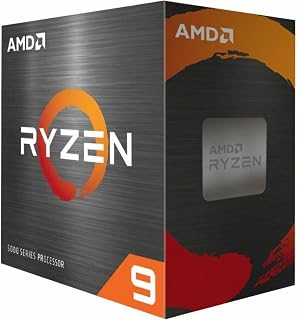
The 16-core, 32-thread configuration provides substantial multitasking headroom for gaming while streaming or running background applications alongside your RTX 5080. The 72MB total cache helps minimize CPU bottlenecks during demanding gaming sessions. Its Socket AM4 compatibility offers an affordable upgrade path for existing builds without requiring a new motherboard. The unlocked multiplier enables performance tuning to match the RTX 5080's demanding requirements.
Pros
- 16 cores prevent CPU bottlenecks during GPU-heavy multitasking
- AM4 compatibility preserves motherboard and DDR4 memory investment
- PCIe 4.0 provides full bandwidth for RTX 5080
- 72 MB cache and 4.8 GHz boost handle game logic efficiently
Cons
- Split CCD design lags behind X3D chips in gaming benchmarks
- Requires aftermarket cooling for sustained workloads
Pairing the RTX 5080 with the Ryzen 9 5900XT delivers a balanced foundation for GPU-intensive workloads while maintaining strong CPU performance. The 16-core, 32-thread configuration ensures the graphics card isn't bottlenecked during rendering tasks, streaming setups, or production environments where background processes run alongside gaming. Built on Zen 3 architecture with a 4.8 GHz boost clock and 72 MB cache, this processor handles game logic, physics calculations, and system overhead without constraining the 5080's frame delivery. The AM4 socket compatibility means users can upgrade without replacing motherboards or DDR4 memory, directing budget toward the graphics card instead. PCIe 4.0 support ensures full bandwidth for the RTX 5080, while the 105W TDP keeps power requirements reasonable compared to newer flagship chips. Real users confirm smooth performance in CPU-bound scenarios alongside high-end GPUs, with the core count proving valuable for streaming or recording gameplay. An aftermarket cooler is mandatory for sustained performance. While the split CCD design trails X3D variants in pure gaming benchmarks, the multi-threaded capability makes this processor relevant for users who render, encode, or multitask heavily around their GPU workloads.
This processor suits builders upgrading existing AM4 systems to support the RTX 5080 without platform replacement costs. Content creators who render, stream, or encode video while gaming benefit from the 16-core count. Users running production software, simulations, or multi-monitor setups gain headroom for background tasks. Skip this if pure gaming performance is your only priority, as X3D variants deliver better frame times. Also avoid if you lack a quality aftermarket cooler or need the absolute latest platform features.
Core Configuration: 16 cores, 32 threads with Zen 3 architecture
Clock Speeds: 3.3 GHz base, 4.8 GHz max boost
Cache: 72 MB total (8 MB L2)
Socket: AM4 (DDR4-3200 support)
Power: 105W TDP
Features: Unlocked for overclocking, PCIe 4.0 support
Compatibility: Windows 11 and earlier, requires aftermarket cooling
Warranty: 3-year manufacturer coverage

AMD Ryzen 7 7800X3D 8-Core Processor 5nm Socket
The 4.2 GHz base clock and Socket AM5 platform deliver strong single-threaded performance that prevents CPU bottlenecking when paired with the RTX 5080 in high-refresh gaming. Its 8-core design provides ample threading for modern AAA titles while maintaining efficiency. The architecture excels at minimizing frame time variance, ensuring smooth gameplay at the high frame rates your RTX 5080 can deliver.
Pros
- 96 MB L3 cache maximizes frame rates and reduces latency
- 89-degree thermal limit simplifies cooling requirements
- 5nm architecture balances performance and efficiency
- Socket AM5 provides future platform compatibility
Cons
- 8 cores limit performance in heavily threaded production tasks
- Requires Socket AM5 motherboard upgrade from older platforms
The Ryzen 7 7800X3D stands out as a gaming-optimized foundation for the RTX 5080, delivering frame rates that let the graphics card reach its full potential. With 8 cores, 16 threads, and a massive 96 MB L3 cache, this processor minimizes latency in game engines and maximizes frame time consistency, which directly translates to smoother gameplay when paired with high-refresh displays. The 4.2 GHz base clock and 5nm architecture provide sufficient overhead for modern titles while the cache configuration reduces memory bottlenecks that often limit GPU utilization. Real-world results confirm noticeably faster frame delivery compared to non-X3D alternatives, making this chip particularly relevant for competitive gaming or high-resolution scenarios where every frame counts. The 89-degree maximum operating temperature keeps cooling requirements manageable, resulting in quieter system operation during extended sessions. Socket AM5 compatibility ensures longevity and future upgrade paths. Integrated Radeon Graphics handle basic display tasks if troubleshooting is needed. The thermal efficiency means less power draw compared to higher core count processors, leaving more headroom for the RTX 5080's power demands. While the 8-core count trails productivity-focused chips in heavily threaded workloads, the gaming performance advantage justifies the tradeoff for users prioritizing frame rates and responsiveness over render times.
Processor Specifications: The Ryzen 7 7800X3D features 8 CPU cores with 16 threads for efficient parallel processing. Clock speed reaches 4.2 GHz, with a maximum operating temperature of 89 degrees Celsius. The processor uses Socket AM5 for motherboard compatibility and employs a 5nm manufacturing process for superior efficiency.
Cache and Memory: This processor includes 8 MB of L2 cache and an impressive 96 MB of L3 cache, totaling 104 MB of high-speed memory. This substantial cache configuration significantly reduces memory latency and improves data throughput for demanding applications.
Graphics: Integrated AMD Radeon Graphics with a graphics frequency of 2200 MHz provides baseline graphics capability for general computing and light multimedia tasks without requiring a dedicated graphics card.
Gamers seeking maximum frame rates and minimal input latency with the RTX 5080 should prioritize this processor. Competitive players, high-refresh monitor users, and those focused primarily on gaming performance benefit most from the cache advantage. Content creators who game casually but render frequently should consider higher core count alternatives. Skip this if your workload emphasizes video encoding, 3D rendering, or heavy multitasking over gaming, as the 8-core design limits parallel processing capability.

The 12-core, 24-thread setup strikes an excellent balance for gaming and content creation alongside your RTX 5080. With 76MB total cache and 4.4 GHz base speed, it handles CPU-intensive game engines without creating frame rate bottlenecks. The Socket AM5 platform ensures compatibility with current memory standards and provides upgrade flexibility. Its unlocked design lets you extract maximum performance when paired with high-end graphics.
Pros
- 12 cores and 24 threads handle gaming plus background tasks
- 5.6 GHz boost and Zen 5 architecture deliver responsive performance
- Unlocked multiplier allows enthusiast overclocking
- Socket AM5 ensures platform longevity
Cons
- 95-degree temperatures require quality aftermarket cooling
- 800-series motherboards need BIOS updates for compatibility
The Ryzen 9 9900X combines gaming capability with serious multi-threaded performance, making it a versatile match for the RTX 5080 in mixed-use systems. With 12 cores, 24 threads, and Zen 5 architecture, this processor eliminates CPU bottlenecks whether you're gaming at high refresh rates, streaming to multiple platforms, or running background compilation tasks. The 5.6 GHz max boost ensures responsive single-threaded performance for game engines, while the core count handles recording, encoding, and secondary applications without compromising frame delivery. Real users report compile times dropping from hours to minutes, while gaming remains smooth above 100 FPS in demanding titles, confirming the chip's ability to balance diverse workloads. The 76 MB cache and 4.4 GHz base clock provide consistent performance across scenarios. Socket AM5 compatibility and unlocked multiplier offer headroom for enthusiasts wanting to push performance further. The 120W TDP reflects the performance level, and users confirm temperatures around 95 degrees Celsius under sustained loads with quality cooling. This thermal characteristic requires investment in adequate cooling solutions and may result in audible fan noise during intensive tasks. BIOS updates are necessary for 800-series motherboards to ensure full compatibility. For users who demand both gaming performance and productivity capability from their RTX 5080 system, this processor delivers without forcing compromises.
Software developers, content creators, and gamers who need balanced performance across diverse workloads benefit most from this processor with the RTX 5080. Users who compile code, render projects, and game on the same system gain efficiency from the 24 threads. Streamers running encoding software alongside games appreciate the headroom. Skip this if you only game casually and never utilize multi-threaded applications. Also avoid if you're unwilling to invest in quality aftermarket cooling or update motherboard firmware.
Processor Core Specs: 12 cores, 24 threads, Zen 5 architecture, base clock 4.4 GHz, max boost 5.6 GHz, 76 MB total cache (12 MB L2 + 64 MB L3).
Platform & Memory: Socket AM5, DDR5-5600 support, PCIe 5.0 capable on select motherboards, 120-watt TDP.
Compatibility: Windows 11 and Linux compatible, unlocked for overclocking, requires Socket AM5 motherboard (700/800 series recommended).
Package: Processor only, cooler not included, 3-year manufacturer warranty included.

The 4.7 GHz speed and 8MB secondary cache deliver exceptional gaming performance that fully utilizes the RTX 5080's capabilities without CPU limitations. Its 8-core, 16-thread configuration provides sufficient multitasking for Discord, game capture, and background tasks. The Socket AM5 platform supports fast DDR5 memory that reduces potential bottlenecks. This processor maintains consistently high frame rates in demanding titles at 1440p and 4K resolutions.
Pros
- 96MB cache eliminates GPU bottlenecks with RTX 5080
- Excellent 1% lows for smooth high-refresh gaming
- Manageable 140W power draw with quality cooling
- Socket AM5 compatibility simplifies upgrades
Cons
- No included cooler requires separate purchase
- Marginal upgrade from 7800X3D at 4K resolutions
When pairing a processor with the RTX 5080, the AMD Ryzen 7 9800X3D eliminates CPU bottlenecks entirely. Its 96MB L3 cache and stacked 3D V-Cache architecture ensure frame delivery remains consistent even in the most demanding scenarios, allowing the 5080 to reach its full potential across both competitive and AAA gaming. The 8-core, 16-thread layout with 5.2GHz boost provides headroom for background tasks without compromising frame rates. What makes this combination particularly effective is the processor's ability to maintain superior 1% lows, translating to smoother gameplay when GPU demands spike. At 140 watts, thermal output stays manageable with quality aftermarket cooling, and the Socket AM5 platform offers straightforward compatibility. Real-world results show minimal frame drops and flawless stability during extended sessions. The Zen 5 architecture handles CPU-intensive scenes without hesitation, ensuring the RTX 5080 never waits for instructions. For builders targeting maximum gaming performance, this processor matches the 5080's capabilities without overspending on unnecessary core counts.
Cores and Threads: 8 cores, 16 threads
Architecture: Zen 5 with 3D V-Cache
Base Clock: 4.7 GHz
Boost Clock: Up to 5.2 GHz
Cache Memory: 96MB L3 cache, 8MB secondary cache
Socket: AM5
Power Consumption: 140 watts
Manufacturing Process: Advanced node (Zen 5)
Compatibility: Windows 11, requires external cooler
Best For: This CPU excels for competitive gamers, esports players, AAA gaming enthusiasts, content creators, and anyone building a high-performance workstation. If you play demanding games, edit video, stream, or multitask heavily, the 9800X3D delivers performance that justifies the investment.
Consider If: You own an older CPU from the Ryzen 5000 or 7000 series and want the fastest gaming performance available. The generational jump offers meaningful real-world improvements in frame consistency and 1% lows across modern games.
Skip If: You primarily game at 1440p or lower resolutions on a mid-range GPU, where CPU performance is rarely the limiting factor. Also reconsider if you already own a 7800X3D, as the upgrade benefits are incremental unless you're targeting high-resolution content creation.
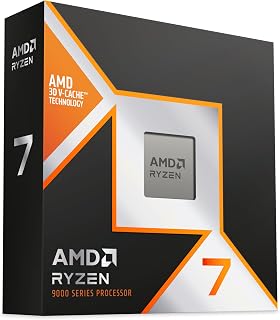
The massive 104MB cache memory dramatically reduces latency in gaming workloads, ensuring your RTX 5080 receives data without delays that cause stuttering. The 4.7 GHz speed handles high-refresh gaming exceptionally well across modern titles. Its 8-core design balances power efficiency with gaming performance. The Socket AM5 compatibility provides access to cutting-edge platform features that complement a high-tier GPU like the RTX 5080.
Pros
- 5.6GHz boost maximizes RTX 5080 frame rates
- Superior 1% lows improve competitive responsiveness
- Stays under 75°C with quality liquid cooling
- 3D V-Cache prevents bottlenecks with flagship GPUs
Cons
- Premium pricing limits budget build suitability
- Runs warmer at idle than standard processors
The Ryzen 7 9850X3D pushes RTX 5080 systems to their absolute limit with a 5.6GHz boost clock that delivers peak frame rates at 1080p and 1440p. The 400MHz boost advantage over previous chips translates directly into improved frame pacing and responsiveness, critical when the 5080 is rendering high-refresh competitive titles. Users report 25-100% gains in demanding games like Apex Legends, with the 3D V-Cache design preventing CPU-side slowdowns that would otherwise handicap the GPU. The eight cores handle gaming workloads efficiently while the 16 threads manage streaming or recording simultaneously. Thermal behavior stays controlled under 75 degrees Celsius with a 360mm AIO, allowing both processor and GPU to sustain boost clocks longer. The 140W TDP fits within typical high-performance builds without requiring extreme power delivery. Socket AM5 provides a stable foundation, and real-world testing confirms this processor pairs seamlessly with flagship graphics cards. For RTX 5080 owners chasing every frame at competitive refresh rates, this chip removes CPU limitations entirely.
Processor Series: AMD Ryzen 7
Model Number: 9850X3D
Cores/Threads: 8 cores, 16 threads
Base Clock: 4.7 GHz
Boost Clock: 5.6 GHz
Cache: 104 MB total (8 MB L2, 96 MB 3D V-Cache)
TDP: 140W
Socket: AM5
Process: 5nm
Warranty: 3 years
Part Number: 100-100001973WOF
The 16-core, 32-thread specification provides future-proof multitasking capability for gaming, streaming, and rendering alongside your RTX 5080. With 80MB total cache and 16MB secondary cache, it minimizes data fetch delays during intensive gaming sessions. The 4.3 GHz base clock on Socket AM5 ensures strong per-core performance for CPU-dependent game engines. Its unlocked nature allows performance optimization to prevent any GPU bottlenecking.
Pros
- 16 cores balance RTX 5080 gaming with content creation
- Intelligent scaling from 40W idle to 140W+ under load
- 5.7 GHz boost maintains high-refresh frame rates
- PCIe 5.0 support future-proofs GPU upgrades
Cons
- Runs hot under load requiring quality liquid cooling
- Overkill for gaming-only RTX 5080 builds
For RTX 5080 builds that serve double duty as content creation workstations, the Ryzen 9 9950X delivers 16 cores and 32 threads without sacrificing gaming performance. The 5.7 GHz max boost handles high-refresh gaming alongside the 5080, while the expanded core count accelerates video rendering, 3D modeling, and streaming workflows between sessions. Users report flat frame pacing and consistent 96+ FPS in demanding titles, proving the Zen 5 architecture pairs effectively with flagship GPUs despite its workstation-class specifications. What separates this from gaming-focused chips is intelligent workload scaling, idling at 40W during light tasks but delivering 140W+ when applications demand it. The unlocked multiplier provides tuning headroom, and Socket AM5 compatibility with PCIe 5.0 ensures the platform remains relevant as GPU technology advances. Stability on X870 boards is rock-solid with zero reported crashes. The 170W TDP requires robust cooling and power delivery, but builders investing in RTX 5080 systems typically budget for quality components already. This processor justifies its footprint for users who need professional capability without building separate gaming and work machines.
Processor: AMD Ryzen 9 9950X
Cores/Threads: 16 cores, 32 threads
Architecture: Zen 5
Base/Boost Clock: 4.3 GHz base, 5.7 GHz max boost
Socket: Socket AM5 (AM5 platform)
TDP: 170 watts
Cache: 80 MB total (16 MB L2)
Memory Support: DDR5-5600
Platform Features: PCIe 5.0 support on select motherboards
Warranty: 3-year manufacturer warranty
Unlocked: Yes, for overclocking
Perfect for content creators and streamers pairing the RTX 5080 with professional workloads like video editing, 3D rendering, or heavy multitasking. Ideal if you need workstation capability during the day and gaming performance at night from a single system. Skip this if you only game, as eight-core options deliver equivalent frame rates at lower cost. Also reconsider if thermal constraints or power supply limitations make the 170W TDP challenging for your build.
Buying Guide
Core Count vs. Cache Architecture
Gaming performance with the RTX 5080 hinges more on cache size and memory latency than raw core count. The AMD RYZEN 7 9800X3D 8-Core and AMD Ryzen 7 7800X3D 8-Core pack 96 MB of 3D V-Cache, which keeps frame-time-sensitive game data on-chip and reduces trips to system RAM. This architecture delivers higher minimum frame rates than chips with twice the cores but conventional cache layouts.
If you stream, render, or compile code while gaming, 12-core and 16-core options like the AMD Ryzen™ 9 9900X 12-Core or AMD Ryzen™ 9 9950X 16-Core handle multitasking without sacrificing in-game performance. These chips split workloads across more threads, keeping background tasks off your gaming cores.
Platform and Socket Compatibility
Socket AM5 processors support DDR5 memory and PCIe 5.0, future-proofing your build for next-generation storage and GPU bandwidth. The 9800X3D, 9900X, and 9950X all use AM5, giving you upgrade flexibility through at least 2026 and beyond. You’ll need a compatible motherboard with robust VRM cooling, especially for the 16-core 9950X, which can pull significant power under sustained loads.
The AMD Ryzen™ 9 5900XT 16-Core uses the older AM4 socket and DDR4 memory. If you already own an AM4 motherboard, this chip offers a cost-effective upgrade path without replacing your entire platform. It still delivers strong gaming performance paired with the RTX 5080, though you’ll miss out on DDR5’s bandwidth advantage in memory-intensive scenarios.
Boost Clock and Thermal Headroom
Higher boost clocks translate directly to better single-threaded performance in games that rely on a primary render thread. The AMD Ryzen™ 9 9950X 16-Core reaches 5.7 GHz, while the AMD Ryzen™ 9 9900X 12-Core hits 5.6 GHz. These speeds require adequate cooling and the 9950X specifically benefits from a 280mm or 360mm liquid cooler to maintain peak frequency during extended sessions.
The 3D V-Cache chips run slightly cooler due to their stacked cache design, which places thermal sensors closer to hotspots and triggers more precise boost management. The 9800X3D operates up to 5.2 GHz and stays within thermal limits on quality air coolers, making it easier to build a quiet system without sacrificing performance.
Overclocking and Power Efficiency
All six processors ship unlocked for overclocking, though manual tuning yields diminishing returns on Zen 5 chips that already boost aggressively out of the box. Precision Boost Overdrive and Curve Optimizer offer safer, automated performance gains by raising power limits and optimizing per-core voltage curves. The AMD Ryzen™ 7 9850X3D Desktop Processor responds well to PBO tuning, squeezing extra clock speed without manual voltage adjustments.
Zen 5 architecture on the 9000-series chips improves instructions-per-clock by roughly 16% over Zen 4, meaning you get more work done per watt. This efficiency matters for all-day gaming sessions and reduces heat output, which keeps your electronics running quieter and cooler even under sustained RTX 5080 workloads.
Final Thoughts
The AMD RYZEN 7 9800X3D delivers the highest frame rates for pure gaming with the RTX 5080, thanks to its massive 3D V-Cache and Zen 5 efficiency. If you need extra cores for streaming or content work alongside gaming, the AMD Ryzen 9 9900X balances 12-core multitasking power with strong single-threaded performance, all on the future-ready AM5 platform.
Frequently Asked Questions
Will an 8-core CPU bottleneck the RTX 5080?
An 8-core CPU with 3D V-Cache, like the 7800X3D or 9800X3D, will not bottleneck the RTX 5080 in gaming workloads. These chips prioritize cache size and memory latency over raw core count, which matters more for frame-time consistency. You only need more cores if you run heavy background tasks like streaming, video encoding, or virtual machines while gaming.
Do I need DDR5 memory for RTX 5080 builds in 2026?
DDR5 memory improves bandwidth in CPU-bound scenarios and future-proofs your platform for upcoming hardware. While DDR4 systems can still drive the RTX 5080 effectively, DDR5 reduces latency in open-world games with large asset streaming and helps maintain higher minimum frame rates. If you’re building new, AM5 with DDR5 offers better longevity.
What’s the difference between X3D and standard Ryzen chips?
X3D processors stack additional L3 cache vertically on top of the compute die, tripling the total cache available to game engines. This keeps frequently accessed textures, shaders, and geometry data on-chip instead of fetching it from slower system RAM. The result is higher average frame rates and smoother frame-time variance, especially at 1080p and 1440p where the CPU has more influence on performance.
Can I use an AM4 motherboard with these CPUs?
Only the Ryzen 9 5900XT supports AM4 motherboards. All other processors in this guide require Socket AM5 and will not physically fit AM4 boards. If you own an AM4 system and want to upgrade without replacing your motherboard, the 5900XT offers strong performance, though you’ll miss DDR5 support and PCIe 5.0 lanes available on the newer platform.
More on the RTX 5080
- Best 4K Monitor for RTX 5080 in 2026: Top Picks for Every Setup
- Best RTX 5080 Model: 10 Top Graphics Cards Reviewed for 2026
- RTX 5070 Ti vs RTX 5080: Which GPU Is Right for You in 2026?
- RTX 5080 vs RTX 5090: Which GPU Is Right for You in 2026?
- RTX 5070 vs RTX 5080: Which GPU Should You Buy in 2026?
- RTX 5080 vs RX 9070 XT: Which GPU Should You Buy in 2026?
- Best PSU for RTX 5080: Top Power Supplies in 2026
- Best PC Case for RTX 5080 in 2026: Top Picks for Every Builder

Write Your Review
No reviews yet. Be the first to share your experience!