

Building a gaming rig around AMD’s Radeon RX 9060 XT requires a processor that can keep up with its 1440p capabilities without bottlenecking frame rates or holding back your investment. The right CPU pairing depends on your gaming preferences, whether you stream or create content, and how much headroom you want for future upgrades.
This guide reviews 10 processors designed to complement the RX 9060 XT, from budget-friendly six-core options to high-end 12-core powerhouses. We’ve evaluated each based on gaming performance, multi-threaded workload handling, power efficiency, and platform features to help you choose the processor that matches your needs and budget.
Quick Comparison
Ratings reflect the most recent data pull. Check each listing for current price and availability.
Quick answer
This guide compares 10 picks, with AMD Ryzen 5 9600X 6-Core Zen 5 Processor, 5.4 GHz ranked first. AMD Ryzen 7 7800X3D 8-Core Processor 5nm Socket AM5 has the most customer reviews.

The 65-watt TDP keeps heat output minimal while the 6-core, 12-thread configuration handles modern game engines without thermal throttling concerns. Its 38MB total cache reduces memory latency during GPU-synchronized tasks, ensuring frame pacing stays consistent. Socket AM5 compatibility means straightforward motherboard pairing with PCIe 5.0 support, giving the RX 9060 XT full bandwidth access for maximum throughput.
Pros
- 65W TDP leaves power and thermal headroom in RX 9060 XT mid-range builds
- Zen 5 architecture with 5.4 GHz boost keeps the GPU well-fed in gaming workloads
- Socket AM5 platform supports DDR5 and PCIe 5.0 for long-term compatibility
- Unlocked multiplier allows overclocking if extra frequency is ever needed
Cons
- No cooler included, adding to build cost
- 6-core configuration can fall short in heavily threaded professional applications
When pairing a processor with the RX 9060 XT, the GPU does the heavy lifting in games, which means a 6-core chip like the Ryzen 5 9600X is genuinely sufficient rather than a compromise. Built on Zen 5 architecture with 12 threads and a 5.4 GHz max boost clock, it keeps the RX 9060 XT well-fed in popular titles without creating a CPU bottleneck at common resolutions. The 65W TDP is a standout figure here: a lower-power processor leaves more thermal and electrical headroom in mid-range builds, and the RX 9060 XT already demands adequate case airflow on its own. The unlocked multiplier lets you squeeze extra frequency if you ever feel the need, and the Socket AM5 platform brings DDR5 and PCIe 5.0 compatibility for longevity. No cooler is included, so budget for one, but the chip's cool-running thermal behavior means a mid-range air cooler is all that is needed. For a gaming-focused RX 9060 XT build, the 9600X hits the sweet spot between core count, efficiency, and platform modernity.
Processor Details: AMD Ryzen 5 9600X, 6 cores, 12 threads, Zen 5 architecture, Socket AM5
Clock Speeds: Base 3.9 GHz, Max Boost 5.4 GHz, unlocked multiplier
Power and Thermal: 65W TDP, air cooling recommended, efficient thermal design
Memory and Cache: 38 MB total cache (6 MB L2), DDR5-5600 support
Platform: Socket AM5 compatible, PCIe 5.0 ready on select motherboards, Windows 11 optimized
Package: 3-year manufacturer warranty, cooler not included
Best suited for gamers building a focused RX 9060 XT gaming rig who want an efficient, modern AM5 platform without overspending on cores the GPU workload will never require. Also a strong fit for compact or mid-tower builds where thermal and power budgets are tight. Skip it if your workload extends beyond gaming into heavily threaded tasks like video encoding or 3D rendering, where the 6-core count starts to show limits.

With 8 cores and 16 threads at 4.2GHz base speed, this processor eliminates CPU bottlenecks in virtually all current gaming scenarios. The X3D's massive stacked cache dramatically reduces memory access times during texture streaming and physics calculations that GPUs depend on. Socket AM5 ensures native PCIe 5.0 lanes deliver full bandwidth to the RX 9060 XT without artificial limitations.
Pros
- 96 MB L3 cache directly reduces GPU-feeding latency for higher frame rates
- 8 cores and 16 threads prevent CPU bottlenecking with the RX 9060 XT
- Maximum 89°C thermal ceiling keeps the processor stable during extended gaming sessions
- AM5 platform shared with Ryzen 9000 series provides a viable upgrade path
Cons
- Cache advantage is most pronounced in gaming, offering less benefit in general professional workloads
- Requires a Socket AM5 motherboard, which may mean a platform upgrade for existing users
The Ryzen 7 7800X3D brings a distinctive advantage to an RX 9060 XT pairing through its 96 MB L3 cache, which keeps frame-critical game data close to the cores and reduces the latency the GPU has to wait on. With 8 cores, 16 threads, and a 4.2 GHz base clock on the AM5 platform, it provides more than enough threading to prevent any CPU-side bottleneck across the demanding titles the RX 9060 XT is designed to run. The 5nm architecture contributes to a controlled thermal profile, with a maximum operating temperature of 89 degrees Celsius, so the processor runs predictably even during long gaming sessions where the RX 9060 XT is also generating heat inside the case. Socket AM5 compatibility is shared with newer Ryzen 9000 series chips, meaning the platform has a clear upgrade path. The integrated AMD Radeon Graphics offers a diagnostic fallback if you ever need to troubleshoot the discrete card. For gamers who want every possible frame rate advantage from their RX 9060 XT, the 7800X3D's cache architecture is the defining reason to choose it over a conventional processor.
Processor Specifications: The Ryzen 7 7800X3D features 8 CPU cores with 16 threads for efficient parallel processing. Clock speed reaches 4.2 GHz, with a maximum operating temperature of 89 degrees Celsius. The processor uses Socket AM5 for motherboard compatibility and employs a 5nm manufacturing process for superior efficiency.
Cache and Memory: This processor includes 8 MB of L2 cache and an impressive 96 MB of L3 cache, totaling 104 MB of high-speed memory. This substantial cache configuration significantly reduces memory latency and improves data throughput for demanding applications.
Graphics: Integrated AMD Radeon Graphics with a graphics frequency of 2200 MHz provides baseline graphics capability for general computing and light multimedia tasks without requiring a dedicated graphics card.
The right pick for serious gamers who want to extract maximum frame rates from the RX 9060 XT and are willing to prioritize gaming-specific cache architecture over raw multi-threaded throughput. Also fits content creators who game heavily as a secondary use. Skip it if your primary workload is CPU-bound professional software rather than gaming, since the cache advantage is largely game-specific.
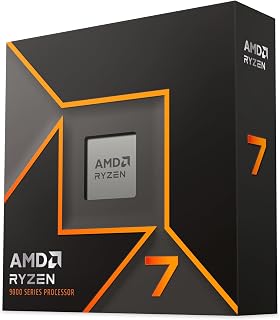
Eight cores at 3.8GHz base speed provide excellent single-threaded performance that modern game engines prioritize for draw call submissions. The 40MB total cache stores critical game data locally, reducing latency when the GPU requests scene information from system memory. Its 105-watt TDP allows aggressive boost behavior during gaming loads without overwhelming mainstream cooling solutions or competing excessively with GPU power draw.
Pros
- Eight cores prevent CPU bottlenecks with the RX 9060 XT in threaded titles
- 40 MB total cache smooths frame pacing and reduces latency
- Socket AM5 provides upgrade path for future AMD generations
- Unlocked multiplier enables tuning for higher clocks
Cons
- No stock cooler included, adding to build cost
- Overkill for pure 1440p gaming with limited multitasking
The Ryzen 7 9700X delivers eight cores and sixteen threads at a 3.8 GHz base clock, providing ample parallel processing power for the RX 9060 XT without creating bottlenecks in demanding titles. Its 40 MB of total cache (8 MB L2 plus additional L3) keeps frame times smooth by reducing memory latency during texture streaming and physics calculations. The Socket AM5 platform ensures forward compatibility with future AMD releases, while the 105-watt TDP strikes a balance between performance headroom and manageable thermals. Because it ships without a stock cooler, you'll need to budget for an aftermarket solution, but that flexibility lets you tailor cooling to your case layout and noise preferences. The unlocked multiplier opens the door to overclocking, though the chip already offers strong out-of-the-box speeds for GPU-bound workloads. For builders pairing the RX 9060 XT with a system that handles streaming, content creation, or heavily threaded games, this processor provides the core count and cache depth to keep frame rates high and consistent.
Cores and Threads: 8 cores, 16 threads on Zen 5 architecture
Clock Speed: 3.8 GHz base, 5.5 GHz max boost (unlocked)
Cache: 40 MB L3 cache, 8 MB L2 cache
Power Consumption: 105 watts TDP
Memory Support: DDR5-5600
Socket: Socket AM5 with PCIe 5.0 support on select motherboards
Warranty: 3-year manufacturer warranty
This chip suits enthusiasts building a balanced gaming and productivity rig around the RX 9060 XT, especially those who stream or edit video alongside their gaming sessions. The eight-core layout handles background tasks without stealing resources from the GPU. Skip it if you're on a strict budget and only game; six-core alternatives deliver nearly identical frame rates in GPU-limited scenarios at a lower cost. Also pass if you prefer an all-in-one cooler solution, since this model requires a separate purchase.

The 12-core, 24-thread design crushes background tasks while gaming, preventing frame drops when streaming or recording gameplay. Its 76MB total cache keeps frequently accessed data immediately available, reducing wait times when the GPU requests CPU-side calculations. The 120-watt TDP provides thermal headroom for sustained boost clocks during extended sessions where both processor and graphics card run simultaneously at high utilization.
Pros
- 12 cores and 24 threads eliminate CPU bottlenecks even when multitasking alongside the RX 9060 XT
- 5.6 GHz max boost preserves strong single-threaded gaming performance
- Unlocked multiplier supports further tuning for enthusiasts
- Socket AM5 with DDR5 and PCIe 5.0 support offers a future-proof platform
Cons
- 120W TDP runs hot and demands a quality aftermarket cooler, which is not included
- Core count is excess for pure gaming use cases, making it harder to justify over lower-wattage options
Pairing the Ryzen 9 9900X with an RX 9060 XT makes the most sense when the PC serves double duty: a gaming machine by night and a workstation by day. The 12 cores and 24 threads on the Zen 5 architecture handle GPU-adjacent tasks like game streaming, background rendering, and video export without pulling resources away from whatever the RX 9060 XT is doing. The 5.6 GHz max boost and unlocked multiplier mean single-threaded gaming performance is not sacrificed for that core count, so the GPU stays fully utilized in demanding titles. At 120 watts the chip runs warm, with users reporting temperatures near 95 degrees Celsius under load at stock settings, so a quality aftermarket cooler is not optional. The mature Socket AM5 platform delivers DDR5 and PCIe 5.0 support, and the 76 MB total cache keeps data throughput strong. For users on 800-series boards, updated BIOS firmware is essential before pairing with this processor. This is deliberate overkill if gaming is your only goal, but for a creator or developer who also games with an RX 9060 XT, it removes every CPU-side constraint.
Ideal for content creators, developers, and power users who want the RX 9060 XT as their GPU but need genuine multi-threaded CPU performance for rendering, compilation, or streaming alongside gaming. Also suits enthusiasts who want a single build to handle everything without compromise. Skip it if gaming is your sole use case, since the extra cores and 120W power draw go largely unused compared to a 6- or 8-core alternative.
Processor Core Specs: 12 cores, 24 threads, Zen 5 architecture, base clock 4.4 GHz, max boost 5.6 GHz, 76 MB total cache (12 MB L2 + 64 MB L3).
Platform & Memory: Socket AM5, DDR5-5600 support, PCIe 5.0 capable on select motherboards, 120-watt TDP.
Compatibility: Windows 11 and Linux compatible, unlocked for overclocking, requires Socket AM5 motherboard (700/800 series recommended).
Package: Processor only, cooler not included, 3-year manufacturer warranty included.

The 3290MHz boost clock ensures this card won't bottleneck even the fastest processors you'd pair with an RX 9060 XT. Its dual-fan 0dB silent cooling keeps noise minimal during lighter gaming loads, while the 16GB GDDR6 provides ample headroom for high-resolution textures. DisplayPort 2.1a and HDMI 2.1b support means you're future-proofed for next-gen monitors that demand maximum bandwidth from both GPU and CPU.
Pros
- 3290 MHz boost clock and 16GB GDDR6 deliver strong 1440p performance with RDNA 4 architecture
- Sustained mid-60s temperatures under load with a quiet dual-fan and 0dB idle mode
- Single 8-pin connector and 550W PSU compatibility simplify system upgrades
- Compact 249mm length fits a wide range of cases
Cons
- Dual-fan cooler provides less thermal headroom than triple-fan designs in the same GPU tier
- 16GB VRAM ceiling can be a constraint for 4K gaming and intensive professional rendering workflows
The ASRock Radeon RX 9060 XT Challenger fits squarely into the sweet spot this article targets: a capable RDNA 4 card that delivers strong 1440p gaming without demanding extreme CPU horsepower or a massive power supply. The 3290 MHz boost clock and 16GB GDDR6 memory give it enough headroom to sustain high frame rates in modern titles, and the RDNA 4 architecture brings hardware ray tracing to a price tier where it was previously absent. Thermal management is a genuine strength: sustained mid-60s temperatures under full load and a 0dB idle mode keep noise low during lighter use. A single 8-pin power connector and 550W PSU compatibility make it an accessible upgrade for existing systems without requiring a full platform overhaul. The dual-fan cooler is not the most aggressive design in the RX 9060 XT lineup, but it handles real-world workloads reliably. DisplayPort 2.1a and HDMI 2.1b future-proof the display stack. For builders seeking an efficient, quiet RDNA 4 card without the bulk or power draw of triple-fan alternatives, the Challenger is a practical and well-rounded choice.
GPU: AMD Radeon RX 9060 XT (RDNA 4, 32 Compute Units)
Memory: 16GB GDDR6 at 20 Gbps on 128-bit bus
Clock Speeds: 3290 MHz boost, 2700 MHz game clock
Output: DisplayPort 2.1a, HDMI 2.1b
Max Resolution: 7680x4320 pixels
Power: Single 8-pin connector, 550W PSU recommended
Size: 249mm (L) x 132mm (W) x 41mm (H), 2-slot design
Cooling: Dual fans, 0dB idle mode
Interface: PCIe 5.0 x16
Weight: 0.98 kg
Warranty: 2 years manufacturer
Ideal for 1440p gamers upgrading from older mid-range cards who want meaningful performance gains without rebuilding their entire system around higher power demands. A natural fit for compact and mid-tower builds where thermal efficiency matters. Less appropriate for users planning heavy 4K gaming or GPU-intensive professional workloads like high-resolution 3D rendering, where the 16GB VRAM ceiling and dual-fan cooling may fall short.

With triple-fan cooling and 16GB GDDR6, this card maintains consistent performance during extended sessions where CPU-GPU synergy matters most. The RDNA 4 architecture works efficiently with modern Ryzen processors to minimize frame time variance. Dual DisplayPort outputs let you run multi-monitor setups without sacrificing refresh rates, ensuring your chosen processor's gaming potential translates directly to smooth visuals across all screens.
Pros
- 16GB GDDR6 provides ample VRAM headroom for 1440p and VR workloads
- Triple-fan cooling stays quiet and cool under sustained gaming loads
- Compact 11.42-inch length fits a wide range of cases and CPU platform choices
- RDNA 4 efficiency reduces thermal strain on the overall build
Cons
- AMD driver software is less refined than Nvidia alternatives, requiring occasional user intervention
- Raytracing performance trails comparable Nvidia cards, limiting that workload regardless of CPU pairing
Pairing the XFX Swift RX 9060 XT with a well-matched CPU unlocks what RDNA 4 actually offers. The 16GB GDDR6 buffer and the architecture's efficient design mean the GPU rarely becomes the limiting factor at 1440p, which shifts pressure onto the processor to keep frame pacing tight. A capable CPU eliminates the bottleneck that would otherwise blunt the card's strong rasterization throughput. The triple-fan cooling solution keeps thermals stable under sustained loads, so a processor that can maintain high all-core clocks without thermal headroom concerns pairs naturally here. At 1080p the combination handles every modern title with headroom to spare, and VR workloads benefit from a CPU that can handle the additional simulation tasks alongside the GPU's rendering pipeline. Raytracing is a known soft spot, so builds targeting rasterized gaming at high refresh rates benefit most from a processor with strong single-thread performance. The compact 11.42-inch form factor fits a wide range of cases, giving builders flexibility to choose platforms with modern chipsets and fast PCIe x16 connectivity without worrying about physical clearance.
Core Specifications: AMD Radeon RX 9060 XT chipset, RDNA 4 architecture, 1900MHz base clock, 3320MHz boost clock, 16GB GDDR6 memory at 20GHz, PCI-Express x16 interface.
Display Outputs: 1x HDMI 2.0, 2x DisplayPort connectors support up to 3840x2160 resolution. Optimal for 1440p gaming or multi-monitor setups.
Thermal Design: XFX SWFT triple-fan cooling solution, compact 11.42-inch length, 1.5kg weight. Fits standard mid-tower cases with typical clearance requirements.
Warranty: 3-year manufacturer protection covers defects and failures, providing peace of mind for multi-year ownership.

The massive 140MB cache hierarchy virtually eliminates memory-related stuttering in open-world games where the GPU constantly queries CPU for asset streaming. Twelve cores at 4.4GHz handle simultaneous encoding, Discord, and browser tabs without stealing cycles from your gaming performance. Socket AM5 compatibility ensures the RX 9060 XT receives full PCIe 5.0 bandwidth while this processor tackles frame-time-critical calculations.
Pros
- 140MB 3D V-Cache reduces CPU-side latency and keeps the RX 9060 XT consistently fed
- 12 cores and 24 threads handle simultaneous gaming, streaming, and creative tasks without resource contention
- 120W thermal design allows efficient cooling without premium hardware
- AM5 socket provides a forward-compatible platform for future GPU upgrades
Cons
- Requires a quality AM5 motherboard, raising total build cost significantly
- Performance headroom exceeds what casual or single-game users will realistically use
When pairing a processor with the RX 9060 XT, the goal is eliminating CPU bottlenecks so the GPU can hit its ceiling at 1440p and beyond. The Ryzen 9 9900X3D is built for exactly that scenario. Its 3D V-Cache technology pushes the total cache to 140MB, which directly reduces latency in frame-rate-sensitive workloads and lets the GPU stay consistently fed with data. The 12 cores and 24 threads mean that even with a game running, background tasks like streaming or capture software won't steal resources from the RX 9060 XT. The 4.4 GHz base clock maintains strong single-threaded throughput for titles that lean on CPU performance. At 120W, the thermal load is manageable, and efficient cooling is achievable without exotic hardware. On AM5, this processor is also forward-compatible with future GPU upgrades, so the platform investment extends well past this GPU generation. For anyone who wants the RX 9060 XT to perform at its full potential rather than be held back by the CPU, the 9900X3D is a compelling anchor for the build.
Core Configuration: 12 cores, 24 threads
Base Clock Speed: 4.4 GHz
Cache Memory: 140 MB total (12 MB L2, 128 MB L3 with 3D V-Cache)
Socket: Socket AM5
TDP: 120 watts
Manufacturing Process: Advanced TSMC process
Architecture: Zen 5 with 2nd Gen 3D V-Cache Technology
Model Number: 100-100001368WOF
Platform Support: Windows
Package Dimensions: 1.6 inches x 1.6 inches
Best suited for enthusiast builders who want the RX 9060 XT to run without any CPU-side constraints, whether gaming, streaming, and recording simultaneously, or mixing creative workloads with gaming sessions. Also a strong fit for AM5 platform investors planning future GPU upgrades. Skip it if your workload is purely casual gaming at lower settings where a mid-range processor would deliver the same real-world results at the GPU.

The 3275MHz boost clock puts this among the fastest variants available, extracting maximum frames when paired with high-core-count processors. Its 0dB cooling activates only under load, keeping your system quiet during CPU-intensive tasks outside gaming. PCIe 5.0 support ensures full bandwidth compatibility with latest-generation motherboards, eliminating any potential data transfer bottlenecks between processor and graphics card.
Pros
- 3275 MHz boost clock sustains high frame rates at 1440p when paired with a capable CPU
- PCIe 5.0 interface is ready for current and next-generation processor platforms
- 0dB fan mode keeps the system silent during lighter CPU and GPU workloads
- 16GB GDDR6 with FSR 4 support provides headroom for demanding and future titles
Cons
- ARGB cable is not included, complicating lighting setups that do not use an ASRock motherboard
- Some builds require BIOS adjustments to resolve initial PCIe detection issues
The ASRock Steel Legend RX 9060 XT is built for sustained 1440p output, and the CPU sitting beside it determines how consistently that target is met. The 3275 MHz boost clock and 32 compute units push frame rates well past 100 fps in most modern titles at high settings, but that throughput only materializes when the processor can feed the GPU without stalling. PCIe 5.0 support means the card is ready for current-generation platforms, and builders pairing it with a recent mainstream CPU avoid leaving bandwidth on the table. The 0dB fan mode is a genuine quality-of-life feature during light workloads, and the silence extends to the rest of the build when the CPU cooler is similarly capable at idle. AMD FSR 4 adds a meaningful performance buffer for titles that push the hardware hard. The metal backplate and military-grade components suggest the card will hold up across multiple CPU platform generations. For anyone stepping up from a 3050-class GPU and a matching older processor, this combination delivers a dramatic generational leap in frame rate and visual quality.
GPU Specifications: AMD Radeon RX 9060 XT with RDNA 4 architecture, 32 Compute Units, 3rd Gen Ray Tracing, 2nd Gen AI Acceleration. 3275 MHz Boost Clock.
Memory: 16GB GDDR6, 2500 MHz memory clock.
Connectivity: DisplayPort 2.1a, HDMI 2.1b, PCIe 5.0 x16. Supports up to 8K 120Hz or 4K 240Hz displays.
Cooling: Triple striped-ring fans with ultra-fit heatpipes, 0dB passive cooling under low load.
Physical: 11.73 inches length, 2.01 inches width, 1155g weight. Metal backplate included. DisplayPort 2.1a, HDMI 2.1b.
Warranty: 2 years manufacturer coverage.
This card suits builders targeting smooth 1440p gaming at high refresh rates who are also upgrading their CPU to a current-generation platform. Streamers and content creators who need balanced GPU performance alongside a multi-core processor will appreciate the VRAM headroom. Users on older 10-series or 3050-class setups doing a full platform refresh get the biggest return. Skip it if you need premium build materials or are not planning to update the CPU alongside the GPU.

The 3320MHz boost clock stands as the highest in this lineup, making it ideal for users who've invested in premium processors and refuse to compromise. Triple-fan cooling handles heat dissipation efficiently when CPU and GPU both run at maximum utilization. RDNA 4's improved efficiency means less power draw competition between components, letting your processor maintain boost clocks longer during intensive gaming sessions.
Pros
- Triple-fan cooler sustains 55 degrees Celsius at full GPU load, the coolest in its class
- 3320 MHz boost clock and 20 GHz memory clock deliver top-tier RX 9060 XT performance out of the box
- 16GB GDDR6 supports both 1440p gaming and 4K UHD output up to 3840x2160
- Overclocking headroom allows performance configurations approaching the RX 9070 XT tier
Cons
- Large physical footprint requires a mid-tower or larger case and may need a support bracket
- RGB lighting is always active and cannot be toggled off through software
Among RX 9060 XT variants, the XFX Swift stands out for builders who want maximum thermal headroom paired with a strong overclock. The triple-fan cooling solution holds GPU temperatures to 55 degrees Celsius at full utilization, an unusually low figure for this performance class that directly benefits sustained workloads at 1440p and mixed 4K settings. The 3320 MHz boost clock is the highest in the standard RX 9060 XT lineup, and the RDNA 4 architecture with 16GB GDDR6 at a 20 GHz memory clock gives it the memory bandwidth to handle demanding scenes without dropping frames. Users report stable overclocked configurations that push performance closer to the RX 9070 XT tier. The triple-fan design does make the card physically large, so case compatibility requires attention, and the RGB lighting cannot be disabled through software. A 650W PSU is the recommended minimum. For a build centered on extracting the most from the RX 9060 XT platform with room to push further, the XFX Swift is the thermally and performance-capable choice in this GPU family.
1440p Gaming: Handles nearly all modern AAA titles at ultra settings with 70+ fps average. Excellent choice for competitive esports at 1440p 144Hz refresh rates.
4K Gaming: Capable at high settings (60+ fps) for optimized titles. More demanding games like Ark Ascended benefit from resolution scaling to 1350p or balanced settings for consistent 60+ fps performance.
Memory Advantage: 16GB VRAM provides significant headroom for texture-heavy games and enables stable performance in VRAM-intensive scenarios that would bottleneck 12GB cards.
Power Efficiency: RDNA 4 delivers strong performance per watt, making undervolting highly effective without sacrificing stability. Users report 90-110W reductions possible through -130mV voltage tweaking.
A strong match for enthusiast 1440p gamers and overclockers who want the best-cooling, highest-clocked RX 9060 XT available and have a mid-tower or larger case with solid airflow. Also suits anyone planning to run extended workloads where sustained low temperatures matter. Skip it if your case is compact, you prefer silent RGB-free aesthetics, or a standard RX 9060 XT clock speed already meets your performance target.
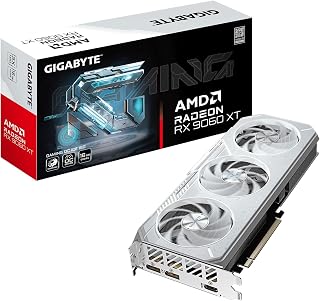
Gigabyte's Hawk Fan design and server-grade thermal gel maintain stable GPU temperatures even when your processor pushes demanding workloads. The 128-bit memory interface paired with 16GB GDDR6 handles high-resolution gaming without choking CPU-dependent draw calls. Its reinforced structure prevents PCB flex in larger cases, ensuring reliable physical connection to the PCIe 5.0 slot regardless of processor heat output.
Pros
- Sub-220W system draw leaves thermal and PSU headroom for a high-performance CPU
- Server-grade thermal gel and WINDFORCE cooling maintain temperatures in the low-to-mid 40s under load
- Two-slot compact design improves case flexibility and CPU cooler clearance
- RDNA 4 AI acceleration improves older titles where CPU inefficiencies also contribute to poor performance
Cons
- Requires Windows 11, ruling out builds on older operating systems or legacy platforms
- Card weight may require an aftermarket GPU support bracket for long-term peace of mind
The GIGABYTE RX 9060 XT Gaming OC Ice brings a specific strength to a CPU-focused build: it draws under 220W from the system while delivering 1440p performance at high to ultra settings. That power efficiency means the PSU and thermal budget can accommodate a higher-end CPU without the total system draw becoming a concern. The factory overclock on top of RDNA 4 architecture gives the GPU side of the pairing more headroom, which shifts the performance ceiling toward the processor. Builders upgrading from a laptop or an older discrete GPU will find the jump substantial, particularly when the CPU upgrade happens simultaneously. The WINDFORCE triple-fan system with server-grade thermal gel holds temperatures in the low-to-mid 40s under load, a thermal profile that complements a CPU running demanding workloads in parallel. The compact two-slot footprint and reinforced structure give builders flexibility with case and CPU cooler clearance. AI-accelerated features in RDNA 4 also improve performance in older, poorly optimized titles where CPU overhead is often a contributing factor.
GPU Specifications: AMD Radeon RX 9060 XT, RDNA 4 architecture, 2780 MHz base clock, 16GB GDDR6 memory at 20,000 MHz, PCIe 5.0 interface, 128-bit memory bus
Cooling: Triple-fan WINDFORCE system with server-grade thermal gel, composite copper heat pipes, copper base plate, 3D active fans, and reinforced metal backplate
Outputs: DisplayPort 2.1a and HDMI 2.1b, supports up to 3840x2160 native and 7680x4320 via DisplayPort
Physical: 11.06 inches long, 4.65 inches wide, 1.9 pounds, single 8-pin PCIe power connector, 3-year manufacturer warranty
System Requirements: Windows 11, PCIe x16 slot, adequate power supply recommended
This card fits builders who want power-efficient 1440p gaming without sacrificing the ability to pair a strong CPU in the same build. It works well for those upgrading from aging discrete GPUs or migrating from a gaming laptop to a desktop platform. The Windows 11 requirement makes it a poor fit for anyone running older operating systems or building around legacy hardware. Those who prefer a passive-heavy, near-silent build should note the card's weight may benefit from a support bracket.
Buying Guide: Choosing the Right Processor for RX 9060 XT
Core Count and Gaming Performance Balance
The RX 9060 XT thrives at 1440p resolution where GPU-bound scenarios become more common, but your processor still matters significantly. Six-core processors like the AMD Ryzen™ 5 9600X 6-Core deliver excellent gaming performance for most titles, providing the 100+ FPS experiences modern displays demand without unnecessary overhead.
Eight-core options offer the sweet spot for gamers who also stream, edit footage, or run background applications. The extra cores handle multitasking without sacrificing frame rates, making processors like the AMD Ryzen 7 7800X3D 8-Core particularly valuable for content creators who game. Twelve-core models provide headroom for professional workloads but may exceed what pure gaming demands, so consider whether you’ll utilize that additional threading capacity.
Cache Architecture and Frame Time Consistency
AMD’s 3D V-Cache technology dramatically improves gaming performance by reducing memory latency and keeping more game data readily accessible to the processor. The Ryzen 7 7800X3D with its 96 MB of L3 cache delivers exceptional frame time consistency, translating to smoother gameplay even when average FPS numbers appear similar to standard processors.
Standard cache configurations still perform admirably, especially when paired with fast DDR5 memory that the AM5 platform supports. The AMD Ryzen™ 7 9700X 8-Core balances 40 MB of cache with Zen 5 architecture improvements, offering strong gaming performance without the premium associated with 3D V-Cache models. Your choice depends on whether you prioritize absolute peak performance or value efficient performance per dollar spent.
Platform Features and Future Upgradeability
AMD’s AM5 socket provides a unified platform across Ryzen 5, 7, and 9 processors, giving you flexibility to upgrade without changing motherboards. All processors reviewed here support DDR5-5600 memory and PCIe 5.0, ensuring compatibility with current and upcoming storage and GPU technologies. This forward-looking design protects your investment as component standards evolve.
Consider your motherboard’s power delivery capabilities when selecting higher-end processors. The AMD Ryzen™ 9 9900X 12-Core and similar high-core-count models demand robust VRM designs to maintain boost clocks under sustained loads. Budget and mid-range boards may throttle these processors during intensive workloads, negating some of their performance advantages. Match your processor choice to your motherboard’s specifications to avoid leaving performance on the table.
Thermal Requirements and Cooling Considerations
Modern Ryzen processors ship without coolers, requiring separate cooling solutions that match their thermal profiles. Six and eight-core models operate efficiently with quality tower air coolers, keeping temperatures reasonable during gaming sessions. The 65W TDP rating on processors like the Ryzen 5 9600X makes them particularly easy to cool, reducing system noise and simplifying case airflow planning.
Higher-end 12-core processors benefit from premium cooling solutions, whether high-performance air towers or 240mm+ liquid coolers. These processors boost higher and sustain those clocks longer when properly cooled, translating to better performance in sustained workloads. If you’re considering a high-performance processor for demanding gaming, factor cooling costs into your total budget to ensure your system maintains optimal performance without thermal throttling.
Final Thoughts
The RX 9060 XT pairs beautifully with AMD’s current processor lineup, offering balanced performance across gaming and productivity workloads. For pure gaming performance at 1440p, the AMD Ryzen 7 7800X3D remains the standout choice with its massive cache advantage and exceptional frame time consistency. Content creators and multitaskers will find the AMD Ryzen 9 9900X delivers the threading performance needed for simultaneous gaming, streaming, and rendering without compromising either activity.
Frequently Asked Questions
Will a 6-core processor bottleneck the RX 9060 XT at 1440p?
No, modern six-core processors like the Ryzen 5 9600X provide sufficient performance for 1440p gaming where the GPU becomes the primary limiting factor. At higher resolutions, graphics cards handle more of the rendering workload, reducing CPU dependency. Six cores become more limiting at 1080p with high refresh rates or in CPU-intensive simulation games, but for typical 1440p gaming scenarios, they perform admirably alongside the RX 9060 XT.
Does the RX 9060 XT require PCIe 5.0 support from the processor?
While the RX 9060 XT supports PCIe 5.0, it operates perfectly fine on PCIe 4.0 connections without performance loss. Current graphics cards don’t saturate PCIe 4.0 bandwidth, so the 5.0 capability serves more as future-proofing than immediate necessity. All AM5 processors support PCIe 5.0, but you can confidently use this GPU with older platforms running PCIe 4.0 if you’re upgrading an existing system rather than building new.
How important is DDR5 memory speed when pairing processors with the RX 9060 XT?
DDR5 memory speed impacts gaming performance measurably but not dramatically at 1440p resolutions. Moving from DDR5-5600 to DDR5-6400 typically yields 3-7% FPS improvements depending on the game, with CPU-bound titles showing larger gains. The baseline DDR5-5600 that all reviewed processors support provides excellent performance, making faster kits a nice optimization rather than a requirement. For balanced gaming builds, investing in quality DDR5-6000 CL30 memory offers good value without chasing diminishing returns from extreme speeds.
Should I choose a processor with integrated graphics when using a dedicated RX 9060 XT?
All AM5 Ryzen processors include integrated graphics, providing a valuable troubleshooting tool even when using a dedicated GPU. If your graphics card develops issues or requires RMA service, the integrated GPU keeps your system functional for basic tasks and diagnostics. This built-in redundancy adds peace of mind without affecting gaming performance since the dedicated RX 9060 XT handles all graphics workloads during normal operation. The integrated graphics remain inactive when a discrete card is installed and connected.


Write Your Review
No reviews yet. Be the first to share your experience!