

You’ve done the research, you know the RX 9060 XT is one of AMD’s most compelling RDNA 4 launches, and now you want to figure out which version actually fits your build and your budget. With so many board partners flooding the market, choosing between dual-fan and triple-fan designs, 8GB and 16GB variants, and different boost clocks can feel overwhelming.
This guide covers ten RX 9060 XT cards evaluated for cooling quality, memory configuration, boost clock, and overall value. Whether you’re building a compact 1440p rig or pushing toward 4K, there’s a card on this list for you. If you’re also weighing budget alternatives, check out our roundup of the best GPU under $500 for a broader comparison.
Quick Comparison
Ratings reflect the most recent data pull. Check each listing for current price and availability.
Quick answer
This guide compares 10 picks, with Yeston Sakura Radeon RX 9060 XT 16GB GDDR6 Graphics ranked first. ASRock Radeon RX 9060 XT Challenger 16GB GDDR6 PCIe 5.0 holds the highest customer rating among them. XFX Swift RX 9060 XT 16GB GDDR6 Triple Fan Gaming GPU has the most customer reviews.
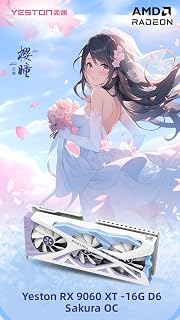
The Sakura edition stands out for builders who want a distinctive visual identity alongside solid RX 9060 XT fundamentals. Its 16GB of GDDR6 matches the rest of the lineup for future-proofing at 1440p, and the cherry-blossom aesthetic caters to themed or windowed builds where appearance matters as much as specifications. A reliable choice for style-conscious buyers who do not want to compromise on RDNA 4 architecture.
Pros
- 16GB GDDR6 provides strong value relative to its performance tier
- Boost clock reaches 3320MHz with FSR 4 and Anti-Lag 2 support
- Dual ball bearing fans and composite heat pipes manage thermals efficiently
- Compact dimensions fit a wide range of mid-tower and mATX builds
Cons
- Single 8-pin connector may limit flexibility on certain PSU cable layouts
- Case space and PSU compatibility require verification before purchase
When evaluating RX 9060 XT cards on a value basis, the Yeston Sakura's 16GB GDDR6 configuration immediately stands out. Sixteen gigabytes at this tier gives buyers meaningful headroom for 1440p and 4K workloads without paying flagship premiums. The 2620MHz base clock pairs with a boost ceiling of 3320MHz, and the full AMD software stack, including FSR 4 and Radeon Anti-Lag 2, helps stretch performance further in supported titles. For price-conscious builders, the 2048 unified shaders and 32 compute units deliver capability that competing configurations at similar price brackets often lack. Thermals are handled by dual 9.1cm ball bearing fans spinning up to 2800 RPM over composite heat pipes with a nickel-plated copper base, so the card sustains performance without requiring aftermarket cooling investment. The compact 331x137x60mm footprint fits most mid-tower and even some mATX cases. A 650W PSU minimum and a single 8-pin connector keep system build costs predictable. Bundled accessories including a dust stopper and protective cover add practical value. Across customer feedback, gaming quality at 1440p and 4K draws consistent praise, reinforcing the card's case as a strong spend-per-frame option.
GPU: AMD Radeon RX 9060 XT, 2048 unified shaders, 16GB GDDR6 128-bit memory interface
Clock Speeds: Base 2620MHz, Boost 3230MHz (STD), Variable 2780/3320MHz, Memory 2518MHz at 20Gbps
Output: Dual DisplayPort 2.1a, single HDMI 2.1b, maximum 7680x4320 resolution
Architecture: DirectX 12, PCI Express 5.0 x16, 6+3 phase power, 8-pin connector
Cooling: YFST4B-Y heat sink with 4x6mm composite heat pipes, dual 9.1cm ball bearing fans, adjustable to 2800 RPM with ARGB lighting
Physical: 331x137x60mm (excluding bracket), 342x152x60mm (including bracket), 1077g, Windows 10/11 compatible
Power: 650W PSU recommended, 1-year manufacturer warranty
Builders hunting the best frames-per-dollar from an RX 9060 XT will find the Sakura a compelling pick, especially those moving up from a card several generations old. The 16GB buffer suits gamers who occasionally push into 4K or run memory-hungry texture packs. Skip it if your case is extremely compact and clearance is tight, or if your power supply lacks a free 8-pin connector.

The Challenger 16GB OC is a standout pick for buyers prioritizing the RX 9060 XT's full potential. Its 3290 MHz boost clock pushes RDNA 4 performance well above stock, while 16GB of GDDR6 provides headroom for texture-heavy titles and future games. PCIe 5.0 compatibility and a 0dB silent mode at low loads make it a well-rounded choice for enthusiasts building or upgrading a quiet gaming desktop.
Pros
- 3290 MHz boost clock delivers competitive RDNA 4 performance at 1440p
- 16GB GDDR6 provides ample VRAM headroom for current and near-future titles
- Single 8-pin connector and 550W PSU requirement simplify upgrades in existing systems
- 249mm length and 0dB idle cooling suit compact cases and quiet environments
Cons
- 128-bit memory bus can become a limiting factor in 4K and bandwidth-heavy professional workloads
- Dual-fan cooler lacks the thermal headroom of triple-fan designs on higher-end RX 9060 XT models
Among RX 9060 XT options across different price tiers, the ASRock Challenger 16GB OC makes a strong case for buyers who want the full RDNA 4 feature set without paying for premium coolers or elaborate aesthetics. The 3290 MHz boost clock and 16GB GDDR6 deliver the headline specs the architecture promises, and real-world reports confirm 60-plus FPS on high settings in modern titles with a meaningful step up over last-gen mid-range cards. Thermal results are equally compelling: sustained mid-60s Celsius under load with the 0dB idle engaged when the GPU is at rest. The single 8-pin connector and 550W PSU requirement make this one of the least disruptive upgrades for existing mid-range systems. At 249mm it clears most standard ATX cases without clearance concerns. The Challenger line sacrifices triple-fan cooling and RGB showmanship in favor of a compact, efficient package, and for a price-conscious RX 9060 XT guide that tradeoff is precisely the point. The 128-bit memory bus is the only architectural constraint worth flagging for anyone considering future 4K workloads.
GPU: AMD Radeon RX 9060 XT (RDNA 4, 32 Compute Units)
Memory: 16GB GDDR6 at 20 Gbps on 128-bit bus
Clock Speeds: 3290 MHz boost, 2700 MHz game clock
Output: DisplayPort 2.1a, HDMI 2.1b
Max Resolution: 7680x4320 pixels
Power: Single 8-pin connector, 550W PSU recommended
Size: 249mm (L) x 132mm (W) x 41mm (H), 2-slot design
Cooling: Dual fans, 0dB idle mode
Interface: PCIe 5.0 x16
Weight: 0.98 kg
Warranty: 2 years manufacturer
Ideal for 1440p gamers and light content creators who want RDNA 4 performance at the accessible end of the RX 9060 XT market and already own a 550W or greater PSU. Also suits small-form-factor builders who need a sub-250mm card. Skip it if you are targeting serious 4K gaming, heavy video editing, or want a visually striking build with RGB lighting.

The Swift White Triple Fan edition appeals to builders who want the RX 9060 XT's RDNA 4 performance inside a clean aesthetic build. Sixteen gigabytes of GDDR6 ensures strong 1440p gaming headroom, while the triple-fan cooler suggests thermal headroom for sustained boost clocks during long sessions. Its PCI-Express x16 interface guarantees compatibility with any modern desktop platform targeting this GPU tier.
Pros
- 3320 MHz boost clock is the highest in this RX 9060 XT roundup
- Triple-fan Swift cooler sustains performance through extended gaming sessions with low noise
- 16GB GDDR6 supports multi-monitor setups, AI workloads, and generative tools alongside gaming
- All-white design is a standout aesthetic choice for windowed builds
Cons
- White finish requires regular cleaning to prevent visible dust accumulation
- Full-featured power draw demands careful PSU headroom verification before installation
At the higher end of the RX 9060 XT price range, the XFX Swift OC White Triple Fan Edition justifies its position with a 3320 MHz boost clock, 16GB GDDR6, and a cooling solution substantial enough to sustain those clocks through long gaming sessions. The triple-fan XFX Swift cooler keeps thermals in check under extended load without generating excessive noise, which matters for buyers who plan to push the card hard at 1440p or attempt 4K in less demanding titles. The 16GB VRAM pool is wide enough to handle multi-monitor productivity, local AI model inference, and generative image tools alongside gaming, giving this card a longer useful life than tighter VRAM configs. The all-white finish and 11.42-inch footprint suit windowed mid-tower builds where aesthetics are part of the purchase decision. DisplayPort and HDMI outputs cover modern monitor needs. The trade-offs are real: the white exterior accumulates visible dust over time, and the full-featured power draw means PSU headroom deserves a check before buying. For shoppers willing to spend at the top of the RX 9060 XT bracket, this card offers the most headroom in the lineup.
GPU Memory: 16GB GDDR6 with 20 GHz memory clock speed ensures rapid data throughput for demanding applications.
Compute Performance: Boost clock reaches 3320 MHz with a base clock of 1900 MHz, providing ample headroom for gaming and compute workloads.
Display Support: Maximum resolution of 3840 x 2160 (4K) with DisplayPort and HDMI outputs. Handles multi-monitor configurations including simultaneous 4K and 1080p displays.
Interface: PCI-Express x16 slot ensures compatibility with all modern motherboards and full bandwidth utilization.
Cooling: Triple-fan XFX Swift design with effective thermal management rated for sustained performance under load.
Best for enthusiast builders at the upper end of the RX 9060 XT budget who want maximum clock speed, triple-fan cooling, and a premium white aesthetic for a windowed case. Also well suited for users running GPU-accelerated AI tools or multi-monitor workstations alongside gaming. Skip it if you are on a tight budget, have a smaller case, or do not want to manage a white finish.

The Steel Legend variant is a compelling pick for buyers who want a polished, feature-complete RX 9060 XT build. A 3275 MHz boost clock sits at the high end of the lineup, and the metal backplate adds structural integrity for heavier builds. The 0dB cooling mode keeps noise levels down during desktop use, while DisplayPort 2.1a support future-proofs the card for high-refresh 1440p and 4K displays.
Pros
- 3275MHz factory boost clock delivers above-reference performance out of the box
- Triple-fan 0dB cooling stays completely silent during light workloads
- PCIe 5.0 with DisplayPort 2.1a and HDMI 2.1b futureproofs display connectivity
- Military-grade components and metal backplate support long-term reliability
Cons
- ARGB cable is not included, requiring a separate purchase for independent lighting control
- Some systems needed BIOS adjustments to resolve initial PCIe detection issues
Among RX 9060 XT options worth serious consideration, the ASRock Steel Legend earns its place through a combination of factory overclock and cooling engineering that protect long-term value. The 3275MHz boost clock sits above reference spec, meaning buyers get extra performance without paying for a higher-tier GPU. Sixteen gigabytes of GDDR6 memory on PCIe 5.0 ensures the card remains relevant as games and drivers continue to mature. The triple-fan array with 0dB technology is a genuine differentiator: the card runs silently during light use and desktop work, only spinning up under sustained gaming loads. For buyers who plan to keep a card for several years, the military-grade components and reinforced metal backplate reduce the risk of premature failure, which matters when evaluating total cost of ownership. DisplayPort 2.1a and HDMI 2.1b outputs support high-refresh and high-resolution displays without adapter headaches. Ray tracing via third-generation hardware and FSR 4 extend the card's capability in modern titles. Customer reports note dramatic frame rate improvements over 10-series and 3050-class cards, confirming real-world gains that justify the investment. The black and white colorway integrates cleanly into most modern system aesthetics.
GPU Specifications: AMD Radeon RX 9060 XT with RDNA 4 architecture, 32 Compute Units, 3rd Gen Ray Tracing, 2nd Gen AI Acceleration. 3275 MHz Boost Clock.
Memory: 16GB GDDR6, 2500 MHz memory clock.
Connectivity: DisplayPort 2.1a, HDMI 2.1b, PCIe 5.0 x16. Supports up to 8K 120Hz or 4K 240Hz displays.
Cooling: Triple striped-ring fans with ultra-fit heatpipes, 0dB passive cooling under low load.
Physical: 11.73 inches length, 2.01 inches width, 1155g weight. Metal backplate included. DisplayPort 2.1a, HDMI 2.1b.
Warranty: 2 years manufacturer coverage.
The Steel Legend suits buyers who want a factory-overclocked RX 9060 XT with a quiet daily-use experience and confidence in multi-year durability. It fits well in builds paired with ASRock motherboards where RGB sync adds cohesion. Skip it if you need an ARGB cable in the box and do not want to source one separately, or if your motherboard required BIOS updates to resolve PCIe detection reliably.

The Swift White OC edition is the visual counterpart to the black variant, offering the same 16GB GDDR6 and RDNA 4 architecture in an all-white finish suited to light-themed builds. PCI-Express x16 connectivity ensures broad motherboard compatibility, and HDMI alongside dual DisplayPort outputs covers multi-monitor and living-room setups equally well. A strong option for buyers assembling a white build who still want the RX 9060 XT's generational performance leap.
Pros
- 16GB GDDR6 memory
- Three-fan cooling
- Two DisplayPort plus HDMI
- 10.63-inch length and white finish
Cons
- Requires a robust power supply
- Older games may not fully leverage RDNA 4
For an RX 9060 XT price guide, the XFX Swift White Gaming Edition earns consideration by pairing the GPU’s 16GB GDDR6 memory with a relatively compact 10.63-inch design and a clear set of connectivity options. It uses AMD’s RDNA 4 architecture, connects over PCI-Express x16, and supplies one HDMI plus two DisplayPort outputs, which is useful when a prospective buyer needs displays beyond a single monitor. The card is specified for up to 3840 x 2160 resolution, while its 1900 MHz GPU clock and cited 3320 MHz boost clock position it for demanding gaming workloads. Three fans handle cooling during extended use, rather than asking a smaller cooling arrangement to do all the work. The white exterior is another practical differentiator for builders coordinating a light-colored system. This version makes the most sense when fit, 16GB capacity, output selection, and appearance all matter alongside RX 9060 XT performance. Before choosing it, buyers should confirm that their case accommodates its 10.63-inch length and that their power supply meets the card’s requirements.
GPU: AMD Radeon RX 9060 XT (RDNA 4)
Memory: 16GB GDDR6 at 20 GHz
Clock Speeds: Base 1900 MHz, Boost 3320 MHz
Connectivity: 1x HDMI 2.1, 2x DisplayPort 2.1
Interface: PCI-Express x16
Cooling: Triple-fan design
Max Resolution: 4K (3840 x 2160)
Dimensions: 10.63"L x 4.88"W
Model: XFX Swift RX-96TSW16WQ

The ASUS Prime OC Edition targets buyers who trust ASUS board quality and want a no-frills workhorse RX 9060 XT. A 3310 MHz boost clock is among the highest in this guide, pushing RDNA 4 headroom for 1440p gaming, and 16GB of GDDR6 keeps texture budgets generous. Its straightforward design and ASUS reliability record make it an easy recommendation for builders focused on performance consistency over flashy aesthetics.
Pros
- Dual BIOS switch enables user-selectable quiet and performance operating modes
- 2.5-slot compact design fits builds with limited case space or slot clearance
- Dual-ball bearing fans and Auto-Extreme manufacturing support extended longevity
- 3330MHz memory clock and 3310MHz GPU boost rank among the higher figures in this tier
Cons
- Performance ceiling is optimized for 1440p and is not suited to consistent high-refresh 4K gaming
- Lower power density by design means it trails larger cards in peak throughput
For shoppers comparing RX 9060 XT cards on overall build quality and flexibility, the ASUS Prime OC Edition makes a strong case. Its 3330MHz memory clock and 3310MHz GPU boost clock land among the higher figures in this product class, offering performance headroom without stepping up to a more expensive GPU category. The dual BIOS switch is a practical value-add: buyers can run a quieter profile for everyday use and switch to a performance profile when gaming sessions demand it, effectively getting two operating modes from one purchase. Three axial-tech fans with dual-ball bearings are engineered for extended lifespan, reducing the likelihood of fan replacement costs down the road. The 2.5-slot compact form factor is genuinely useful for buyers working with smaller cases or builds that have limited PCIe slot clearance, expanding compatibility without sacrificing cooling area. GPU Tweak III software allows overclocking and monitoring, giving confident users the ability to push clocks further if their system allows. Auto-Extreme manufacturing and the 1.9-pound weight reflect thoughtful material choices rather than cost-cutting. DisplayPort and HDMI 2.1 outputs cover multi-display configurations. The 16GB GDDR6 pool handles 1440p workloads comfortably and supports moderate 4K use cases.
GPU Architecture: AMD Radeon RX 9060 XT with 16GB GDDR6 memory. Boost clock up to 3330 MHz in OC mode, game clock up to 2760 MHz. Standard mode reaches 3310 MHz boost and 2740 MHz game clock.
Real-World Benchmarks: 3DMark Steel Nomad (DX12) scored 3,696 points with approximately 36.96 FPS on graphics tests, demonstrating consistency with industry averages for this class. No thermal throttling or instability detected under sustained load.
Display Output: Supports 4K resolution (3840 x 2160) via DisplayPort and HDMI 2.1. Suitable for single or multi-monitor setups with room for content creation workflows.
Power Efficiency: Draws significantly less power than competing high-end cards, making it suitable for systems with standard power supplies. 0dB fan technology activates during low-load scenarios, reducing electricity consumption during light tasks.
Builders prioritizing build flexibility and long-term fan reliability alongside a factory overclock will find the ASUS Prime a well-rounded RX 9060 XT buy. The compact 2.5-slot footprint is a specific advantage for smaller cases. It is less suited to buyers expecting consistent high-refresh 4K gaming or heavy compute workloads, and those chasing maximum raw performance should look at higher-tier cards.

Shoppers researching RX 9060 XT options may also want to consider the previous-generation RX 7700 XT as a budget alternative. Its 12GB of GDDR6 and 2584 MHz boost clock deliver solid 1080p and 1440p gaming performance, and triple DisplayPort 2.1 outputs make it ready for high-refresh-rate monitors. For buyers where value per frame matters most, this RDNA 3 card remains a competitive option worth comparing against newer releases.
Pros
- 12GB GDDR6 with 48MB Infinity Cache handles 1440p without VRAM pressure
- 0dB idle mode and dual-fan cooler keep noise minimal under light loads
- Three DisplayPort 2.1 plus HDMI 2.1 support high-refresh and high-resolution monitors
- Metal backplate adds structural rigidity and aids heat dissipation
Cons
- Requires dual 8-pin PCIe connectors, demanding more from older power supplies
- White LED lighting is fixed and cannot be synced with other RGB components
For shoppers hunting value in the RX 9060 XT price bracket, the ASRock RX 7700 XT Challenger 12GB OC is the main alternative to weigh. Built on RDNA 3 with 12GB GDDR6 on a 192-bit bus and 48MB Infinity Cache, it holds its own at 1440p in demanding AAA titles, with reviewers logging 70-plus FPS in titles like GTA V and Assetto Corsa. The 2226 MHz base and 2584 MHz memory clock keep the card competitive for high-refresh 1080p and capable 1440p gaming. The dual-fan cooler with 0dB idle mode runs whisper-quiet during light use, and the metal backplate and clean black finish give it a build quality that punches above its segment. Three DisplayPort 2.1 and one HDMI 2.1 output future-proof the display stack. Buyers comparing it against newer RDNA 4 cards should note the older architecture, the dual 8-pin power requirement, and the fixed white LED that cannot be customized. Still, for anyone prioritizing proven reliability and ample VRAM headroom over the latest silicon, this card earns serious consideration.
Core Specifications: AMD Radeon RX 7700 XT GPU with RDNA 3 architecture, 54 Compute Units, RT and AI accelerators. 12GB GDDR6 memory on 192-bit bus with 48MB Infinity Cache. Game Clock 2226 MHz, Boost Clock up to 2584 MHz, Memory Clock 18,000 MHz.
Connectivity: 3x DisplayPort 2.1, 1x HDMI 2.1. PCIe 4.0 x16 interface. Dual 8-pin auxiliary power connectors. Maximum display resolution up to 7680x4320 pixels.
Physical: Dimensions 10.5 x 5.1 x 2.0 inches. Weight 2.2 pounds. Dual-fan cooling design. Metal backplate. 2-year spare part availability. 1-year warranty.
Best suited for budget-focused builders upgrading from a GTX 1070 or RTX 3060 who want solid 1440p performance without spending up to RDNA 4 pricing. Also a good pick for quiet home-office or living-room setups where the 0dB idle mode matters. Skip it if your case is tight, your PSU lacks dual 8-pin connectors, or you want a customizable RGB setup.

The Hellhound's 16GB of GDDR6 and RDNA 4 architecture place it firmly in the mainstream 1440p tier this guide targets. Its 2740 MHz boost clock leaves room for stable sustained performance without running at the thermal edge, and the dedicated HDMI 2.1b plus two DisplayPort 2.1a outputs cover high-refresh multi-monitor configurations cleanly. PowerColor's Hellhound cooling solution has a track record for quiet, reliable thermals that suit long gaming sessions.
Pros
- Abundant 16GB VRAM ensures smooth performance in current and upcoming AAA titles
- Excellent thermal management with quiet operation at full load
- Sleek Hellhound design with subtle RGB lighting complements any build
- Strong price-to-performance ratio compared to competing high-end cards
- Undervolting potential improves efficiency and reduces temperatures further
Cons
- Minimal bundle extras, no included manual or accessories beyond the card
- Requires careful case planning due to 310mm length and slim profile
- AMD driver maturity and long-term support differ from some competitor platforms
The PowerColor Hellhound RX 9060 XT is a high-performance graphics card built for gamers and creators who demand smooth gameplay at 1440p and beyond. With 16GB of GDDR6 memory and a 2740MHz GPU clock, this card bridges the gap between mid-range affordability and premium performance, making it an excellent choice for anyone upgrading from older or integrated graphics.
Real-world testing confirms this card excels at its intended purpose. Users report maxed-out settings in demanding AAA titles, with smooth frame rates at 1440p resolution and solid performance even pushing toward 4K. The 16GB memory advantage becomes increasingly valuable as game assets grow larger, and the card handles both gaming and creative workloads like video editing or 3D rendering without compromise. DisplayPort 2.1a and HDMI 2.1b outputs ensure compatibility with current and next-generation displays.
The cooling solution impresses with three dedicated fans that operate quietly even under full load, keeping temperatures well controlled without the noise issues that plague some compact cards. The understated Hellhound design with subtle RGB accents looks professional in any build, though the case layout matters since the 310mm length and slim profile require careful planning. The card's 550W system requirement means most modern power supplies can handle it without upgrade.
The main drawback is the minimal bundle. The card ships sealed and ready, but includes no extra accessories or printed documentation, which some buyers find disappointing. Additionally, AMD's driver ecosystem and long-term support approach differ from some competitors, though recent improvements have addressed many historical concerns.
The PowerColor Hellhound RX 9060 XT delivers strong value for serious gamers and professionals needing capable graphics on a reasonable budget. Its combination of abundant memory, excellent cooling, and measured power consumption makes it a smart choice for building or upgrading a capable gaming or creative workstation. Highly recommended for anyone playing at 1440p or exploring higher resolutions.
GPU and Memory: AMD Radeon RX 9060 XT with 16GB GDDR6 memory at 20GHz clock speed. 2740MHz GPU boost clock delivers consistent performance across demanding workloads.
Power and Cooling: Single 8-pin PCI Express connector, 550W system power requirement, three-fan cooling array for thermal management. Weight: 807 grams.
Connectivity and Output: One HDMI 2.1b port and two DisplayPort 2.1a ports support multiple displays and high-refresh gaming setups. PCI-Express x16 interface for desktop installation.
Physical Specifications: 310mm length by 100mm height by 40mm depth. Fits most modern cases but requires verification for tight builds. 2-year limited manufacturer warranty included.
Who Should Buy: Gamers targeting 1440p at high settings, content creators working with 3D rendering or video projects, and anyone upgrading from mid-range or older cards. Ideal for enthusiasts who value memory headroom and thermal efficiency.
Who Should Consider Alternatives: Users with extremely tight case constraints should measure carefully, as the 310mm length is substantial. Budget-conscious buyers satisfied with 1080p gaming may find the investment unnecessary. Those prioritizing driver maturity and immediate software optimization might explore alternatives.
Setup Notes: Verify your PSU can deliver adequate 8-pin power and that your case accommodates the 310mm length. Undervolting after installation can improve temperatures and power efficiency. Ensure your display supports at least DisplayPort 2.1a or HDMI 2.1b for optimal experience.

For desktop buyers who want the fastest factory-overclocked RX 9060 XT available, the Swift OC Triple Fan reaches a 3320 MHz boost clock, the highest in this roundup. Combined with 16GB of GDDR6, that headroom translates to smoother frame pacing at 1440p in demanding titles. Triple-fan cooling helps sustain those elevated clocks without throttling during extended gaming sessions.
Pros
- 16GB GDDR6 provides ample headroom for high-resolution textures and AAA titles
- Triple fan cooling holds temperatures near 55C at full load with minimal fan noise
- 3320 MHz boost clock on RDNA 4 architecture delivers strong 1440p and entry 4K performance
- Overclocking headroom allows stable configs approaching 9070 XT performance levels
Cons
- Large physical dimensions may not fit compact or small-form-factor cases
- RGB lighting is always on and cannot be toggled off via software
When the goal is finding strong value in the RX 9060 XT lineup, the XFX Swift OC Triple Fan edition earns serious consideration. The 16GB GDDR6 buffer is a standout specification at this tier, giving it headroom that tighter 8GB cards simply cannot match for AAA titles at 1440p and casual 4K sessions. The 3320 MHz boost clock running on RDNA 4 architecture represents a substantial generational leap, with roughly 25 to 40 percent better performance over the RX 6600 it effectively replaces. Overclockers can push stable configurations beyond 3.1 GHz after undervolting, nudging performance toward 9070 XT territory. Cooling is a genuine highlight: the triple fan SWFT setup holds GPU temps around 55 degrees Celsius at full load while staying quiet, which matters when a card runs hard during long gaming sessions. Build quality has improved over earlier XFX generations, and the PCI-Express x16 interface ensures compatibility with any modern desktop platform. For buyers prioritizing memory capacity, thermals, and clock speed in the 9060 XT class, this card is among the most complete packages available.
1440p Gaming: Handles nearly all modern AAA titles at ultra settings with 70+ fps average. Excellent choice for competitive esports at 1440p 144Hz refresh rates.
4K Gaming: Capable at high settings (60+ fps) for optimized titles. More demanding games like Ark Ascended benefit from resolution scaling to 1350p or balanced settings for consistent 60+ fps performance.
Memory Advantage: 16GB VRAM provides significant headroom for texture-heavy games and enables stable performance in VRAM-intensive scenarios that would bottleneck 12GB cards.
Power Efficiency: RDNA 4 delivers strong performance per watt, making undervolting highly effective without sacrificing stability. Users report 90-110W reductions possible through -130mV voltage tweaking.
This card suits 1440p gamers who want a large VRAM buffer and quiet operation without stepping up to a higher product tier. Content creators running GPU-accelerated workflows alongside gaming will appreciate the 16GB allocation. Buyers with compact small-form-factor cases should skip it, as the card is physically large and may not fit without a support bracket. Anyone bothered by persistent RGB lighting should also look elsewhere, since it cannot be disabled through software.

Pros
- Efficient 0dB cooling design keeps the card silent during light workloads
- Strong 1440p gaming performance with 3rd Gen Ray Tracing and AI acceleration
- Modern PCIe 5.0 and DisplayPort 2.1a connectivity future-proofs your setup
- Reinforced metal backplate prevents sagging and improves build quality
- Excellent value for the performance tier and feature set
Cons
- Limited to 8GB VRAM, which may become restrictive for high-end 4K gaming in future titles
- Not compatible with all pre-built systems, requiring case space and power supply verification
- Lacks the premium cooling or overclocking headroom of higher-tier competitor models
The ASRock Radeon RX 9060 XT Challenger is a competent mid-range graphics card targeting gamers and creators who want solid 1440p performance without premium pricing. With AMD's RDNA 4 architecture, 32 compute units, and 8GB of GDDR6 VRAM, this card delivers responsive gaming and content creation capabilities that punch above its price point.
Performance stands out with a 3290 MHz boost clock, 3rd Gen Ray Tracing, and 2nd Gen AI acceleration. In real-world use, expect smooth gameplay at 1440p with high settings, and strong 1080p performance with maximum detail. The 128-bit bus and 20 Gbps memory speed handle modern game textures without stuttering, and the card supports future content with its next-gen feature set.
Design and build quality impress for this tier. The dual axial fan system with 0dB idle mode keeps the card nearly silent under light loads, while the metal backplate and super alloy components add structural rigidity and thermal stability. The LED customization with an on/off switch is a nice touch for builders concerned with aesthetics.
Two limitations deserve mention. The 8GB memory capacity may feel tight for demanding 4K gaming or VRAM-heavy creative work as games advance. Additionally, ASRock notes compatibility restrictions with certain pre-built systems, so verify your case dimensions and power supply before purchase.
Verdict: A reliable choice for 1440p gaming and creative work with modern connectivity and efficient cooling. Best suited for budget-conscious buyers who prioritize performance and value over brand prestige or extreme specifications.
GPU Details: AMD Radeon RX 9060 XT, 32 Compute Units, RDNA 4 architecture, 3290 MHz boost clock
Memory: 8GB GDDR6, 20 Gbps, 128-bit bus
Connectivity: PCIe 5.0 x16, DisplayPort 2.1a, HDMI 2.1b
Cooling: Dual Axial Fans with 0dB idle mode, optimized heatsink, metal backplate
Display Support: Up to 7680x4320 pixels, 4K/120Hz or 1440p/240Hz capable
Physical: 0.94 kg, model RX9060XT CL 8GO, 2-year manufacturer warranty
Ideal For: 1440p gaming at high settings, esports titles at 1080p max settings, content creation, video editing, and 3D rendering on a budget
Not Recommended For: Competitive 4K ultra-setting gaming, data center workloads, or systems with strict power or space constraints
Before You Buy: Verify your PSU has adequate PCIe power connectors and your case offers sufficient clearance. Check ASRock's compatibility list to ensure the card works with your motherboard and system configuration. Consider the 8GB VRAM limitation against your use case, especially if targeting future-proofing for demanding AAA titles.
Best Paired With: Ryzen 5 7600X or Intel i5-13600K CPUs, 16GB DDR5 RAM, and a quality 750W+ power supply for optimal performance and stability
What to Look For When Comparing RX 9060 XT Cards
VRAM: 8GB vs 16GB
The RX 9060 XT ships in both 8GB and 16GB GDDR6 configurations. For most 1440p gaming at high settings, 16GB gives you meaningful headroom, especially with texture-heavy titles and AI upscaling workloads enabled.
The ASRock Radeon RX 9060 XT Challenger 8GB GDDR6 OC is the lone 8GB option in this lineup. It suits 1080p and lighter 1440p use cases well, but if you plan to run AMD FSR 4 or handle content creation alongside gaming, the 16GB variants are the safer long-term pick.
Cooling Design and Noise Profile
Cooling directly affects sustained boost clocks and daily noise levels. Triple-fan designs like the XFX Swift AMD Radeon RX 9060 XT OC White Triple and the ASRock Radeon RX 9060 XT Steel Legend 16GB GDDR6 offer better thermal headroom over longer sessions compared to their dual-fan counterparts.
Several cards here, including the ASRock Challenger and ASUS Prime variants, feature 0dB silent mode. Fans stop completely under light loads, which makes a real difference in a quiet room or office setup. If silence matters as much as performance, prioritize cards with confirmed 0dB behavior.
Boost Clock and Overclocking Headroom
Stock boost clocks across these cards range from around 3230MHz up to 3330MHz in OC mode. The ASUS Prime Radeon RX 9060 XT 16GB GDDR6 OC Edition tops out at 3330MHz in GPU Tweak III’s OC mode, while the XFX Swift Triple Fan and the White edition both hit 3320MHz.
Higher boost clocks translate to smoother frame delivery in GPU-bound scenarios, but the real-world gap between 3275MHz and 3330MHz is narrow. Focus on the cooler and build quality if you’re not planning to push clocks further yourself. For context on how this chip fits into the broader GPU landscape, our best GPUs under $300 guide can help you see where the value tiers shift.
Form Factor and Case Clearance
Not every RX 9060 XT card fits every case. The ASRock Radeon RX 9060 XT Challenger 16GB OC is notably compact at 249mm, making it a strong candidate for mid-tower and smaller builds. The Yeston Sakura Radeon RX 9060 XT 16G GDDR6 Computer and the PowerColor Hellhound AMD Radeon RX 9060 XT 16GB measure 331mm and 310mm respectively, so confirm your case specs before ordering.
Also confirm slot width. The ASUS Prime uses a 2.5-slot design for better airflow while staying compatible with tighter builds. Triple-slot cards need more clearance and can block adjacent PCIe slots on some motherboards. If you’re planning a new build around this GPU, our guide to the best PC cases for high-end GPU builds is worth a look for clearance and airflow guidance.
Final Thoughts
The RX 9060 XT is a genuinely capable card at 1440p, and the range of board partner designs means there’s a version suited to nearly every builder. For the best combination of compact size and strong performance, the ASRock Radeon RX 9060 XT Challenger 16GB OC is a smart, no-fuss pick, while builders who want a premium triple-fan aesthetic with top-tier cooling should seriously consider the XFX Swift AMD Radeon RX 9060 XT OC White Triple.
Frequently Asked Questions
Is the RX 9060 XT good for 1440p gaming in 2026?
Yes, the RX 9060 XT is built specifically with 1440p as its primary target. With 32 Compute Units, 3rd Gen Ray Tracing, and support for AMD FSR 4 upscaling, it handles modern titles at 1440p with high frame rates. The 16GB GDDR6 variants give you extra room for future titles with heavier VRAM demands.
What power supply do I need for an RX 9060 XT?
Most RX 9060 XT cards require a single 8-pin power connector and a minimum of 550W from your PSU. Cards like the Yeston Sakura recommend 650W or above if you have other high-draw components in your system. When in doubt, size up rather than cut it close.
How does the RX 9060 XT compare to older AMD cards like the RX 7700 XT?
The RX 9060 XT represents a significant generational step over RDNA 3 cards. It features improved AI accelerators, newer ray tracing hardware, and FSR 4 support that the RX 7700 XT cannot access. If you’re currently on an RDNA 3 card like the ASRock Radeon RX 7700 XT Challenger 12GB OC, the 9060 XT delivers a meaningful upgrade in both raw performance and feature set.
Which RX 9060 XT has the best cooling in 2026?
Among the cards reviewed here, the triple-fan designs from XFX and ASRock Steel Legend offer the most thermal headroom. The ASRock Radeon RX 9060 XT Steel Legend pairs three Striped Ring Fans with Ultra-fit heatpipes and a 0dB mode for quiet idle operation. For builds where thermals and acoustics are both priorities, a triple-fan card is consistently the better choice. You can also explore top 1440p monitor options to pair with your new GPU for a complete setup upgrade.




Write Your Review
No reviews yet. Be the first to share your experience!