

Building or upgrading a gaming PC on a budget means making smart choices about where to invest your money. The graphics card is the single most important component for gaming performance, yet finding one that delivers solid frame rates, modern features like ray tracing and DLSS, and future-proof connectivity without exceeding your budget can feel overwhelming. Whether you’re chasing high refresh rates at 1080p, exploring 1440p gaming, or need horsepower for creative work, the right GPU exists in this price range.
This guide evaluates nine graphics cards that balance performance, thermal design, and feature sets, helping you identify which architecture, memory configuration, and cooling solution fits your specific needs.
Quick Comparison
Ratings reflect the most recent data pull. Check each listing for current price and availability.



Pros
- Excellent price-to-performance ratio for budget-conscious gamers
- Quiet operation thanks to optimized SWFT dual-fan design
- Proven reliability with positive real-world user feedback for gaming and content creation
- Compact size doesn't require significant case modifications
- Low power draw reduces system cooling requirements and electricity costs
Cons
- Limited to 1080p maxed-out gaming; higher resolutions require settings compromises
- Upscaling features produce softer image quality compared to NVIDIA alternatives
- Not suitable for high-end 4K gaming or demanding professional GPU workloads
The XFX Speedster SWFT210 RX 7600 is a budget-friendly graphics card designed for 1080p gaming and creative work. Built on AMD's RDNA 3 architecture, it pairs an 8GB GDDR6 memory pool with a modest but capable processor, making it ideal for gamers stepping up from integrated graphics or budget-conscious content creators who need reliable GPU acceleration.
Real-world performance aligns with expectations for its price point. Users report smooth gameplay at 1080p with high to ultra settings in most modern titles, plus stable performance for video editing, 3D modeling, and streaming. The card handles multitasking well, running games while recording or streaming without excessive lag. Its 2655 MHz boost clock and efficient memory bandwidth deliver consistent frame rates in demanding applications.
The SWFT dual-fan cooling solution is a standout feature. Reviewers consistently praise its quiet operation, even under load, which is uncommon at this price tier. The compact design fits comfortably in smaller cases and mid-tower builds without dominating airflow. Power efficiency is impressive too, requiring just a 600W PSU and producing minimal heat output compared to higher-end cards.
The main limitation is resolution ceiling. While 1080p is handled expertly, 1440p gaming requires compromises on settings, and 4K is not practical. Additionally, AMD's upscaling technology produces noticeably softer images than NVIDIA competitors, which some users find worth noting. These drawbacks are expected at this price and performance tier.
For the budget, the XFX RX 7600 is an excellent choice. It delivers genuine value through quiet operation, proven reliability, low power consumption, and a 3-year warranty. It won't run every new release at maximum settings, but it excels at what it promises: smooth 1080p gaming and capable creative work without breaking the bank.
GPU: AMD Radeon RX 7600 (RDNA 3 Architecture)
Memory: 8GB GDDR6
Memory Clock: 18 GHz
Boost Clock: Up to 2655 MHz
Maximum Resolution: 3840 x 2160 pixels
Video Outputs: 1x HDMI, 3x DisplayPort
Interface: PCI Express x16
Cooling: XFX SWFT Dual Fan
Power Consumption: Low (600W PSU compatible)
Warranty: 3 Years Manufacturer
Weight: 2 kg
Model: RX-76PSWFTFA
Ideal Users: Budget gamers targeting 1080p performance, content creators using GPU acceleration for editing and rendering, upgrades from integrated graphics, and system builders with power supply constraints.
Perfect For: Competitive gaming where 1080p high frame rates matter more than ultra resolution, streaming and recording gameplay, video editing workflows, 3D modeling and rendering tasks, and office/creative builds that occasionally game.
Not Recommended For: 4K gaming enthusiasts, professional visualization workloads demanding raw compute power, AI and machine learning development, or users seeking cutting-edge ray tracing performance.

Pros
- Exceptional value for high-end gaming performance at mid-range price
- Proven RTX 30 series architecture with solid driver support and longevity
- Compact dual-fan design fits smaller cases and runs quietly
- Amazon Renewed certification ensures quality and buyer protection
- Excellent performance for 1440p gaming and content creation
Cons
- Refurbished unit may arrive without original packaging or accessories
- Limited 90-day warranty is shorter than new card protection
- Small number of reports indicate occasional DOA units, though replacements are covered
The NVIDIA GeForce RTX 3070 is a mid-to-high-end graphics card built for gamers and professionals who want solid performance without flagship prices. This refurbished model gives you access to proven RTX 30 series technology at a steep discount, perfect for builders upgrading existing systems or first-time PC gamers looking for reliability.
Performance is where this card shines. With 8GB of GDDR6 memory and 5,888 CUDA cores, it handles 1440p gaming on ultra settings smoothly and can manage 4K content creation, streaming, and esports titles without breaking a sweat. The Founders Edition design includes two efficient fans that keep noise levels low, a major advantage if you care about case acoustics.
Build quality on refurbished units is inspected and tested by Amazon-qualified suppliers, meaning you get a card that looks and performs like new. Customer feedback confirms this, with multiple reviewers noting the unit arrived in excellent condition and delivered exactly the performance expected. The compact form factor is also praised for fitting smaller cases without compromises.
The main tradeoff is packaging and warranty. Most units arrive without original boxes, which matters mainly if you plan to resell later. The 90-day limited warranty is shorter than new cards, though the Amazon Renewed guarantee covers replacements or refunds if problems arise. A small number of defective units have been reported, but these are protected under the guarantee.
This is an excellent choice if you want proven, capable gaming hardware with real savings and Amazon's buyer protection. The RTX 3070 remains relevant for years to come, making it a smart investment for anyone building or upgrading a capable PC without premium pricing.
GPU and Memory: NVIDIA GeForce RTX 3070 with 8GB GDDR6 memory at 14,000 MHz. Supports up to 4096x2160 display resolution.
Connectivity and Interface: PCI Express 4.0 interface with HDMI video output. Desktop compatible only.
Design: Dual-fan cooling system. Compact form factor suitable for smaller cases.
Warranty and Support: 90-day limited warranty. Eligible for Amazon Renewed replacement or refund guarantee. Mfr Part Number: 9001G1422510000-cr.
Is this card right for you? The RTX 3070 excels at 1440p gaming and 4K content work. Choose this if you game at high refresh rates on 1440p or want smooth 4K gaming on moderate settings. It's also ideal for streaming, video editing, and 3D rendering.
System Requirements: Requires a PCIe 4.0 motherboard (any modern board from 2020 onward). Recommended 750W power supply minimum. Fits most mid-tower cases, though verify dimensions if your build is compact.
About Amazon Renewed: Refurbished units are customer returns or trade-ins professionally inspected and tested. Performance and appearance are equivalent to new. The 90-day warranty plus replacement guarantee means you have protection if issues arise.
Realistic Expectations: You're buying proven hardware at a discount, not a brand-new product. Packaging may be minimal, and cosmetic marks are possible. Performance and functionality are guaranteed to meet original specifications.
Pros
- Exceptional thermal performance with temperatures maxing out around 70C during gaming
- 12GB VRAM gives it an advantage over many newer generation cards for content creation and gaming longevity
- Power-efficient design reduces electricity consumption and heat output compared to higher-end cards
- Easy installation with minimal power requirements makes it beginner-friendly
- Strong customer reliability rating with users reporting consistent performance over time
Cons
- No native frame generation support, limiting advanced ray-tracing performance in demanding titles
- Becoming older generation hardware, so driver support updates will eventually phase out
- Entry to mid-range performance means demanding 4K gaming or professional workloads require step-up models
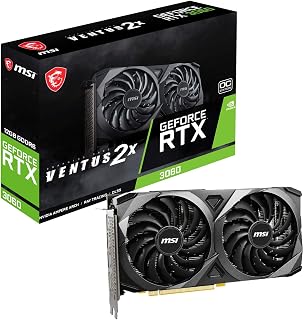
The MSI RTX 3060 VENTUS 2X is a solid mid-range graphics card built for gamers and content creators who want reliable performance without breaking the bank. This card targets 1080p gaming enthusiasts and those exploring 1440p gameplay, with 12GB of GDDR6 memory providing ample headroom for modern titles and creative software.
The standout features include exceptional cooling performance courtesy of the dual TORX 3.0 fans and large heatsink assembly, keeping temperatures capped around 70C even under sustained load. DLSS and ray tracing support deliver visual enhancements in supported games, while the 12GB memory pool exceeds many newer generation alternatives, offering better longevity for future gaming and professional applications.
MSI's industrial design prioritizes functionality over flashiness, with a compact form factor that fits virtually any PC case. The card requires just a single 8-pin power connector and pairs well with 650W PSU systems, making it ideal for budget builds or upgrades. MSI's Dragon Center software provides intuitive real-time monitoring and performance tuning with minimal effort.
The main limitation is the lack of native frame generation support, which matters primarily for users chasing ultra-high frame rates in demanding AAA titles. As an older generation architecture, future driver support will eventually wind down, though buyers can expect several years of active optimization from NVIDIA and MSI.
Overall, the RTX 3060 VENTUS 2X delivers excellent value for 1080p gaming, esports titles on high/ultra settings, and creative workflows. The strong thermal performance, power efficiency, and proven reliability make it a trustworthy choice for builders prioritizing performance-per-dollar and system longevity over cutting-edge capabilities.
GPU: NVIDIA GeForce RTX 3060 (Ampere architecture)
Memory: 12GB GDDR6
Memory Bus: 192-bit
Memory Speed: 15 Gbps effective
Core Clock: 1807 MHz
Outputs: 3x DisplayPort 1.4a, 1x HDMI 2.1
Power Connector: 1x 8-pin PCIe
TDP: 170W
Cooling: Dual TORX 3.0 fans with large heatsink
Dimensions: 9.25" L x 4.88" W
Weight: 675g
Warranty: 2-year manufacturer guarantee
Ideal For: Budget-conscious gamers building or upgrading a PC for 1080p gaming, esports players, entry-level 1440p gaming, casual content creators, and anyone seeking proven reliability with solid performance over cutting-edge capabilities.
Not Ideal For: Professional 4K video editors and 3D artists requiring higher VRAM and compute performance, competitive gamers demanding maximum frame generation and ray-tracing performance, and users planning to keep their system at peak performance beyond 3-4 years.


Buying Guide
Architecture and Ray Tracing Capability
Current-generation cards like the NVIDIA Blackwell and AMD RDNA 4 architectures bring meaningful improvements over older designs. The ASUS Prime GeForce RTX 5050 8GB GDDR6 OC Edition and PNY NVIDIA GeForce RTX 5050 Dual-Fan Graphics both leverage fifth-generation Tensor Cores and fourth-generation ray tracing cores, delivering AI performance measured at 439 AI TOPS and transformative DLSS 4 capabilities that boost frame rates while maintaining visual fidelity.
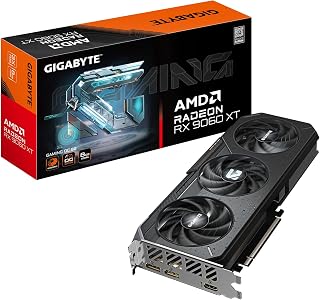
AMD’s RDNA 4 cards like the ASRock Radeon RX 9060 XT Steel Legend 8GB GDDR6 OC counter with third-generation ray tracing and second-generation AI accelerators, factory-overclocked to 3320 MHz for dominant frame rates. If ray tracing is secondary to raw rasterization performance, older architectures still deliver value, but newer cards provide better efficiency and longevity as games increasingly adopt ray-traced lighting and shadows.
Memory Configuration and Bandwidth
Memory capacity directly impacts your ability to handle high-resolution textures and future-proof your investment. The MSI GeForce RTX 3060 Ventus 2X 12G OC stands out with 12GB GDDR6 on a 192-bit bus, offering breathing room for texture-heavy titles and creative applications like video editing or 3D rendering. This extra capacity matters more than raw bandwidth for workloads that keep large datasets in VRAM.
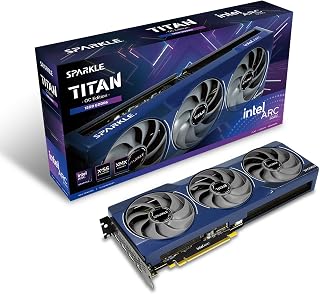
Cards with 8GB configurations still handle 1080p and 1440p gaming comfortably in 2026, but you’ll need to manage texture settings more carefully in demanding titles. The Sparkle Intel Arc B580 Titan OC, 12GB GDDR6 also provides 12GB, making it a compelling option if you prioritize memory over brand recognition. When evaluating memory, consider your target resolution and whether you multitask with streaming or recording software running simultaneously.
Cooling Solution and Build Quality
Thermal design determines how quietly your card runs and how long it sustains peak clocks under load. The ASRock Radeon RX 9060 XT Steel Legend 8GB GDDR6 OC employs Striped Ring Fans with ultra-fit heatpipes and a 0dB mode that stops fans completely during light workloads, delivering absolute silence when browsing or watching videos. Its military-grade metal backplate prevents PCB flex and enhances long-term reliability.
Dual-fan designs like the MSI Ventus series use TORX Fan 3.0 technology with curved fan blades for high static pressure, balancing noise and cooling efficiency in compact cases. If you’re considering a portable build for LAN parties, verify card length and slot width, as some models like the ASUS Prime occupy 2.5 slots. Triple-fan configurations offer superior cooling headroom but require adequate case airflow to shine.
Display Outputs and Future Connectivity
Modern GPUs ship with HDMI 2.1 and DisplayPort 1.4a or newer, enabling high refresh rates and variable refresh rate technologies. The newer RDNA 4 cards feature DisplayPort 2.1a and HDMI 2.1b, supporting 8K at 120Hz or 4K at 240Hz, making them ideal if you plan to upgrade your monitor in the next few years. Three DisplayPort outputs on most cards let you run multi-monitor setups without adapters.
PCIe 5.0 support appears on the latest models, though current games rarely saturate PCIe 4.0 bandwidth. This forward-looking feature ensures compatibility with next-generation motherboards and SSDs. If you’re building a versatile system that doubles as a productivity machine for tasks like editing travel content or streaming, verify the card supports hardware encoding for efficient video compression.
Final Thoughts
Choosing the right graphics card in this price bracket depends on whether you prioritize raw memory capacity for creative work or cutting-edge AI features for gaming. The MSI GeForce RTX 3060 Ventus 2X 12G OC delivers exceptional value with 12GB VRAM for multitasking and future-proofing, while the ASRock Radeon RX 9060 XT Steel Legend 8GB GDDR6 OC brings RDNA 4 architecture with silent cooling and factory overclocking for gamers who want the latest technology. Both cards represent smart investments that balance performance, thermals, and connectivity for builds that will remain relevant through the next generation of games and applications.
Frequently Asked Questions
Is 8GB VRAM enough for gaming in 2026?
Eight gigabytes remains adequate for 1080p gaming and most 1440p titles when you use high or ultra texture settings. Demanding games with ray tracing enabled or running at 4K may require lowering texture quality or using upscaling technologies like DLSS or FSR to maintain smooth frame rates. If you frequently stream, record gameplay, or use creative applications alongside gaming, 12GB configurations provide noticeably better headroom.
What power supply do I need for these graphics cards?
Most cards in this range operate between 160W and 220W, requiring a 550W to 650W power supply for typical builds with mid-range processors. Verify your PSU includes the correct PCIe power connectors, typically one or two 8-pin cables. Cards like the RTX 5050 and RX 9060 XT use modern power delivery that’s more efficient than older architectures, but always check the manufacturer’s recommended wattage and leave overhead for system stability.
Should I buy a renewed or refurbished GPU?
Renewed cards from reputable programs like Amazon Renewed undergo professional inspection and come with return policies, making them viable options if you want premium models at reduced cost. Cards like the ASUS TUF Gaming RTX 3070 Ti deliver higher performance than new budget cards but lack manufacturer warranties. Evaluate whether the performance gain justifies the tradeoff in warranty coverage, and avoid renewed cards if you plan intensive workloads that stress components continuously.
How do NVIDIA DLSS and AMD FSR compare?
DLSS 4 uses dedicated AI hardware to upscale lower resolutions with minimal quality loss, often producing images that rival native resolution while doubling frame rates. AMD’s FSR works across more hardware but relies on algorithmic upscaling without dedicated AI cores, resulting in slightly softer images at equivalent quality presets. Both technologies significantly improve performance, but DLSS generally delivers superior image quality in supported titles. Game support varies, so check whether your favorite games implement one or both technologies when choosing between NVIDIA and AMD architectures.




Write Your Review
No reviews yet. Be the first to share your experience!