

The RTX 5070 brings NVIDIA’s Blackwell architecture to mainstream gaming, offering 12GB GDDR7 memory and DLSS 4 support at a more accessible tier than flagship models. Whether you’re upgrading from a Pascal or Turing card or building your first high-performance rig, choosing the right RTX 5070 variant matters for cooling efficiency, build compatibility, and long-term reliability.
This guide evaluates eight RTX 5070 models from ASUS, MSI, and GIGABYTE, focusing on thermal design, factory overclocks, build quality, and feature sets. You’ll find options for small-form-factor cases, silent operation, and maximum performance tuning, plus guidance on which card matches your specific build requirements.
Quick Comparison
Ratings reflect the most recent data pull. Check each listing for current price and availability.
Quick answer
This guide compares 8 picks, with ASUS Prime GeForce RTX 5070 12GB GDDR7 White OC Gaming ranked first. ASUS TUF Gaming RTX 5070 12GB GDDR7 OC - Blackwell has the most customer reviews.

The white OC edition suits builders creating color-matched 2026 systems where aesthetics matter as much as performance. The 2557 MHz clock and 12GB GDDR7 deliver strong frame rates at 1440p and 4K, while DisplayPort 2.1b ensures compatibility with the latest high-refresh monitors. The Prime series reputation for stability means it will run reliably through driver updates and new game releases throughout the year.
Pros
- White shroud and backplate suit monochrome build themes
- 12GB GDDR7 handles 2026 AAA titles at 1440p high-refresh
- Factory 2557 MHz overclock adds performance out of the box
- DisplayPort 2.1b and HDMI 2.1b support latest display standards
Cons
- Limited RGB customization compared to gaming-focused models
- Factory overclock may leave less headroom for manual tuning
The ASUS Prime RTX 5070 White OC Edition addresses a specific niche in 2026 gaming builds: performance-focused systems with clean, monochrome aesthetics. The white shroud and backplate integrate seamlessly into builds prioritizing visual cohesion without sacrificing capability. NVIDIA's RTX 5070 silicon paired with 12GB GDDR7 memory delivers the horsepower necessary for 1440p high-refresh gaming and entry-level 4K performance in 2026's AAA catalog. The factory overclock pushes the GPU to 2557 MHz, extracting additional frames without manual tuning. ASUS' three-fan cooling solution spreads thermal load evenly, maintaining reasonable acoustics under gaming workloads. DisplayPort 2.1b and HDMI 2.1b outputs support the latest display standards, ensuring compatibility with high-bandwidth monitors entering the market. The 2587 MHz memory clock provides sufficient bandwidth for texture-heavy modern engines. For builders constructing white or neutral-toned systems who need reliable 2026 gaming performance without extreme overclocking or RGB saturation, this card strikes a practical balance between aesthetics and capability.
GPU and Memory: NVIDIA GeForce RTX 5070 with 12GB GDDR7 memory, 2587 MHz (OC mode), 2557 MHz (Default mode)
Performance: 1005 AI TOPS (OC), NVIDIA Blackwell architecture, DLSS 4 support, 7680x4320 display resolution support
Cooling: Triple Axial-tech fans with barrier ring design, phase-change GPU thermal pad, 0dB technology for silent operation, dual-ball bearing construction
Design: 2.5-slot form factor, SFF-ready, 12 inches length, 5 inches width, 2.3 pounds weight
Connectivity: PCI-Express x16, DisplayPort 2.1b, HDMI 2.1b
Features: Dual BIOS switch (Quiet and Performance profiles), GPU Tweak III software, Auto-Extreme manufacturing, 3-year warranty
Buy this if you're building a white-themed or minimalist 2026 gaming system where visual consistency matters alongside 1440p high-refresh performance. The factory overclock suits users who want extra speed without manual tweaking. Skip this if you need maximum overclocking headroom or prefer RGB customization, as the design prioritizes clean aesthetics over enthusiast tuning features. Builders targeting 4K ultra settings may want higher-tier models.
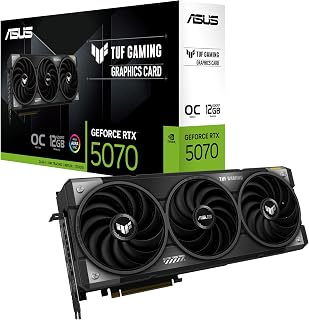
The protective PCB coating guards against dust and moisture, a practical feature for builders who keep systems running 24/7 or in less-than-ideal environments. The 2610 MHz clock and 12GB GDDR7 ensure smooth performance in 2026 AAA games, while the three DisplayPort 2.1b outputs support high-refresh 4K monitors. The 3.125-slot design accommodates robust cooling without excessive case compatibility concerns.
Pros
- MaxContact spreader and triple Axial-tech fans deliver superior cooling
- Military-grade components extend lifespan under heavy loads
- 0dB fan mode eliminates noise during light workloads
- Conformal PCB coating protects against environmental damage
Cons
- 3.125-slot design demands significant case clearance
- Premium tier positioning within RTX 5070 segment
When evaluating RTX 5070 cards for 2026 gaming builds, the ASUS TUF Gaming OC Edition earns attention for its focus on longevity and thermal management under sustained workloads. The MaxContact heat spreader technology delivers measurable temperature reductions of up to 2°C, while three Axial-tech fans with dual-ball bearings push 31% more airflow than reference designs. Intelligent 0dB fan control keeps the card silent during light tasks by stopping fans entirely below 50°C. Military-grade components define the power delivery foundation: TUF chokes and MOSFETs stabilize voltage under load, while TUF capacitors offer 52% wider temperature tolerance and last 2.5X longer than standard alternatives. The protective conformal coating shields the PCB from moisture and contaminants. Auto-Extreme manufacturing completes all soldering in one pass, reducing thermal cycling stress. The 3.125-slot diecast aluminum shroud prevents PCB flex while the vented exoskeleton maximizes heat dissipation. This card targets builders prioritizing component endurance and cooling headroom over compact dimensions, particularly those upgrading from RTX 2060 Super or similar legacy hardware.
GPU and Memory: NVIDIA GeForce RTX 5070 (Blackwell architecture) with 12GB GDDR7 memory, 2610 MHz boost clock, 1750 MHz memory clock.
Connectivity: PCIe 5.0, 2x HDMI 2.1b, 3x DisplayPort 2.1b. Max display resolution 7680x4320 pixels.
Cooling: Three Axial-tech fans with dual-ball bearings (80,000-hour lifespan), MaxContact GPU heat spreader, phase-change thermal pad, vented metal exoskeleton.
Physical: 3.125-slot design, 12.95 inches length, 5.51 inches width, 1.53 kg weight. Includes GPU Guard, mounting bracket, support holder, and protective accessories.
Best suited for builders assembling gaming systems meant to run demanding titles for years without component degradation. The robust power delivery and advanced cooling justify selection if you game for extended sessions or run GPU-intensive creative workloads. Skip this card if your case cannot accommodate a 3.125-slot design or if you prioritize compact form factors over maximum thermal performance. Also reconsider if budget constraints make the premium engineering features less compelling than baseline RTX 5070 performance.
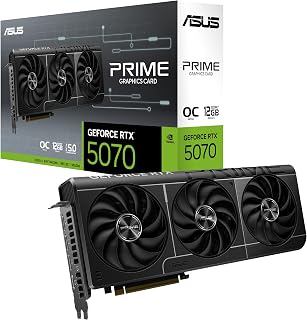
The 2587 MHz boost clock delivers solid performance for 1440p and 4K gaming in 2026 titles without the premium tier pricing. Its 12GB GDDR7 provides sufficient memory bandwidth for texture-heavy games and ray tracing workloads. The Prime series focuses on reliability and straightforward design, making it a dependable choice for builders who want proven cooling and consistent frame rates without elaborate RGB or overclocking features.
Pros
- Factory overclocked to 2587 MHz eliminates manual tuning
- Dual BIOS switch toggles between Quiet and Performance modes
- Phase-change thermal pad maintains cool, quiet operation
- GPU Tweak III software simplifies fan and clock adjustments
Cons
- No dedicated power connectors limit extreme overclocking potential
- Performance depends heavily on existing case airflow
The ASUS Prime RTX 5070 OC Edition brings factory overclocking and thermal flexibility to 2026 gaming builds without demanding excessive case space. Clocked at 2587 MHz out of the box, this card eliminates manual tuning while delivering 4K gaming performance backed by NVIDIA's Blackwell architecture with 1005 AI TOPS and DLSS 4 support. Triple Axial-tech fans with dual-ball bearings work alongside a premium phase-change GPU thermal pad to maintain temperatures during intensive sessions, with real-world reports confirming cool and quiet operation under load. The dual BIOS switch adds practical control: toggle between Quiet and Performance profiles depending on whether you prioritize silence or maximum frame rates. GPU Tweak III software provides intuitive adjustment of fan curves, clock speeds, and power settings without BIOS-level complexity. The 2.5-slot design balances thermal capacity with mid-size case compatibility. Auto-Extreme manufacturing ensures precision soldering, and ASUS backs the card with a 3-year warranty. Power delivery relies entirely on PCIe slot power with no dedicated connectors. Case airflow directly impacts sustained performance.
GPU and Memory: NVIDIA GeForce RTX 5070, 12GB GDDR7, 2587 MHz (OC) / 2557 MHz (Default)
Architecture: NVIDIA Blackwell, 1005 AI TOPS, DLSS 4 capable
Cooling: Triple Axial-tech fans, phase-change thermal pad, 2.5-slot design, 0dB technology for silent idle
Connectivity: PCIe 5.0 x16, DisplayPort 2.1, HDMI 2.1, supports dual BIOS profiles
Display Output: Up to 3840x2160 (4K) resolution
Physical: 12 inches long, 5 inches wide, 2.3 pounds, fits mid-size and SFF cases
Software: GPU Tweak III for performance tuning, advanced thermal control, system monitoring
Warranty: 3 years manufacturer coverage
Best for builders assembling mid-size gaming systems who want factory overclocking and thermal profile flexibility without three-slot bulk. The dual BIOS switch suits users who alternate between noise-sensitive daytime use and maximum performance evening sessions. Skip this card if your case offers limited airflow or if you need dedicated power connectors for extreme overclocking headroom. Also reconsider if you're building an ultra-compact SFF system where even 2.5 slots create tight clearances.

The 2640 MHz boost clock is among the highest in this roundup, delivering extra headroom for demanding 2026 titles that push GPU limits. With 12GB of GDDR7 and two HDMI 2.1b ports, it handles multi-monitor setups without adapters. The TUF Gaming series is built for durability with military-grade components, so it should withstand long gaming sessions and heavy workloads year after year.
Pros
- Military-grade components and protective coating for long-term reliability
- Exceptional cooling holds 65C under sustained load
- 2640MHz boost clock maximizes RTX 5070 performance
- Included bracket and stand prevent GPU sag
Cons
- 13-inch length requires careful case compatibility check
- 12GB VRAM may face limitations in future demanding titles
For a 2026 gaming build centered on the RTX 5070, the ASUS TUF OC Edition represents the premium tier of this GPU family. The military-grade components and protective PCB coating deliver durability that matches the performance, while the 2640MHz boost clock extracts maximum capability from NVIDIA's Blackwell architecture. The 3.125-slot cooling system with three Axial-tech fans maintains 65C temperatures under sustained gaming loads, ensuring consistent frame delivery in demanding 2026 titles. DLSS 4 support future-proofs your investment as more games adopt the technology. The 12GB of GDDR7 memory handles current 1440p and 4K workloads confidently, though buyers planning multi-year builds should consider whether this capacity meets long-term needs. Ray tracing performance at 1440p is excellent, and the card's AI capabilities extend usefulness beyond gaming. The included bracket and stand address GPU sag, a practical touch for builders. At 13 inches long and over 2 inches thick, case compatibility requires verification before purchase. The compact design relative to output is impressive, but this remains a substantial card demanding planning around airflow and clearance.
GPU and Memory: NVIDIA GeForce RTX 5070, 12GB GDDR7, 2640MHz boost clock, PCIe 5.0 interface
Cooling and Design: 3.125-slot form factor, three Axial-tech fans, phase-change thermal pad, protective PCB coating, military-grade components, GPU Guard bracket
Connectivity: 3x DisplayPort 2.1a, 2x HDMI 2.1b, 7680x4320 maximum resolution support
Physical: 13 inches long, 5.5 inches wide, 3.4 pounds, includes cooling bracket and stand
Warranty and Support: 3-year manufacturer warranty, GPU Tweak III software for performance monitoring and thermal control
Buy this if you're building a high-end 2026 gaming system where durability and thermal performance matter as much as frame rates. The premium cooling and military-grade construction justify the investment for enthusiasts planning multi-year builds or running extended gaming sessions. Skip this if your case can't accommodate 13-inch cards, or if you're budget-focused and willing to sacrifice overclocking headroom and premium thermals for lower cost. The size and enthusiast positioning make this excessive for casual 1080p gaming.

The dual-fan design keeps the card compact while still providing adequate cooling for 12GB GDDR7 memory and a 2542 MHz boost clock. This makes it suitable for mid-tower builds where you need balance between performance and physical footprint. The OC Edition designation means it ships with a factory overclock out of the box, so you get extra frames in 2026 games without manual tuning or thermal concerns.
Pros
- Dual BIOS switches instantly between Quiet and Performance modes
- 0dB technology keeps fans silent during light workloads
- 2572MHz OC mode clock delivers strong frame rates
- Dual ball-bearing fans rated for twice the lifespan
Cons
- OC mode pushes power consumption higher
- Premium positioning less suited for budget builds
The ASUS Dual RTX 5070 OC brings flexibility to 2026 gaming builds through its dual BIOS system and adaptive cooling. Switching between Quiet and Performance profiles adapts the card to your immediate need, whether you're gaming at 1440p ultra settings or running lighter workloads where the 0dB technology keeps fans completely silent. The 2572MHz clock speed in OC mode delivers strong frame rates across modern titles, while DLSS 4 support ensures compatibility with the latest upscaling techniques. Blackwell architecture's 1000 TFLOPS AI performance extends usefulness into AI-assisted applications beyond pure gaming. The Axial Tech fan design uses a smaller hub for longer blades, generating greater air pressure and cooling efficiency within a compact Dual form factor. Dual ball-bearing fans promise longevity, rated to last twice as long as standard bearings. This matters for builders planning systems that will run for years. The card handles 1440p gaming confidently and manages 4K with DLSS upscaling, positioning it well for 2026 title demands. Power requirements are substantial, especially in OC mode, so build planning must account for a robust PSU and adequate case ventilation.
GPU: NVIDIA GeForce RTX 5070
Memory: 12GB GDDR7
Architecture: NVIDIA Blackwell
Clock Speed (Standard): 2542 MHz
Clock Speed (OC Mode): 2572 MHz
AI Performance: 1000 TFLOPS
Outputs: HDMI, DisplayPort
Cooling: Dual Axial Tech fans with ball bearings
Features: Dual BIOS, 0dB technology, DLSS 4 support
Buy this if you want control over noise and performance profiles in your 2026 build. The dual BIOS and 0dB technology suit users who game at varying intensity levels and value quiet operation during lighter use. The compact design fits well in mid-tower cases without excessive bulk. Skip this if you're building on a strict budget or don't need the BIOS flexibility. The power demands in OC mode require quality supporting components, making this less ideal for budget PSU pairings.

The SFF-Ready design makes this card ideal for compact 2026 builds where space is at a premium. Its 2.5-slot profile fits smaller cases without sacrificing the 12GB GDDR7 memory needed for modern gaming at high resolutions. The dual BIOS provides a fallback if you encounter stability issues during testing or overclocking, while the axial-tech fans keep thermals in check even in tighter enclosures where airflow is limited.
Pros
- Consistently exceeds 300 FPS in competitive titles at 1440p
- Phase-change thermal pad maintains cool, quiet operation
- 2.5-slot design fits more builds than three-slot alternatives
- DLSS 4 support ensures smooth frame pacing
Cons
- 12-inch length challenges compact ITX and tight SFF builds
- Adequate case clearance requires careful measurement
For 2026 gaming builds targeting high refresh rate 1440p performance, the ASUS Prime RTX 5070 delivers where competitive gamers need it most. Real-world testing shows this card consistently exceeds 300 FPS in titles like Rainbow Six Siege and Overwatch at 1440p, while AAA games stay above 180 FPS at high settings. DLSS 4 technology ensures smooth frame pacing alongside the visual fidelity modern titles demand. The 12GB GDDR7 memory running at 4000 MHz effective speed handles texture streaming without stuttering. Three Axial-tech fans with optimized blade geometry generate strong downward airflow, while the phase-change thermal pad maintains consistent heat transfer during marathon sessions. Reviews highlight this card running cooler than AMD's previous-generation alternatives and notably quieter than older blower designs. The 2.5-slot configuration fits more builds than traditional three-slot designs while maintaining thermal headroom. Pairing with mid-to-high-end CPUs like the Ryzen 7 7800X3D unlocks the responsiveness competitive players expect. At 12 inches long, this card requires careful measurement before purchase.
GPU and Memory: NVIDIA GeForce RTX 5070, 12GB GDDR7 memory, 2542 MHz boost clock, 4000 MHz memory clock
Connectivity: PCIe 5.0 x16, HDMI 2.1b (1x), DisplayPort 2.1b (3x), HDCP support
Design: 2.5-slot form factor, 12 inches long, 5 inches wide, weighs 3.3 pounds, three Axial-tech fans, phase-change thermal pad
Display Support: Up to 7680x4320 resolution, supports dual-monitor and multi-display configurations
Warranty: 3-year manufacturer warranty, includes cables, Velcro straps, and manual
Ideal for competitive gamers building systems around high refresh rate 1440p monitors who value frame rate consistency over maximum settings. The cooling balance suits extended play sessions without noise distractions. Skip this option if you're building in compact ITX or very tight SFF cases where the 12-inch length and 2.5-slot width create clearance issues. Also look elsewhere if 4K gaming at maximum settings is your primary target rather than high frame rate 1440p.

The 2557 MHz extreme performance mode pushes frame rates higher in competitive titles where every millisecond counts. With three DisplayPort 2.1a outputs, it supports multi-monitor setups at high refresh rates for immersive sim racing or productivity alongside gaming. The 12GB GDDR7 and 192-bit memory bus ensure textures load quickly in open-world games, while the Shadow 3X cooling keeps noise levels reasonable during extended sessions.
Pros
- Triple TORX Fan 5.0 delivers excellent thermal management
- Quiet operation even during extended gaming sessions
- Reinforced backplate with airflow vent aids heat dissipation
- Compact 12.2-inch length for its performance tier
Cons
- Larger than entry-level cards requires case clearance verification
- Performance benefits from pairing with capable CPU and quality PSU
The MSI RTX 5070 Shadow 3X OC targets 2026 gaming builds where performance matters more than aesthetics. The triple TORX Fan 5.0 system paired with a nickel-plated copper baseplate and square-design core pipes maximizes thermal contact, delivering consistent temperatures during extended sessions. Users report quiet operation even under load, a practical advantage for builders prioritizing acoustics alongside frame rates. The 2557MHz extreme performance clock pushes Blackwell architecture capabilities while the 12GB of GDDR7 memory handles 1440p ultra settings and entry-level 4K gaming. The Shadow design emphasizes substance through a reinforced backplate with an airflow vent that aids heat dissipation rather than cosmetic flair. At 12.2 inches and 3.1 pounds, the card balances performance density with manageable size, though buyers should verify case clearance. PCIe Gen5 interface and premium construction signal longevity, backed by a 3-year warranty. Real-world performance across modern AAA titles shows stable frame delivery without thermal throttling. The card's positioning fills the gap between budget and premium tiers, offering strong cooling and build quality without excessive cost inflation. For 2026 builds focused on 1440p gaming or stepping into 4K, this delivers proven capability.
The RTX 5070 leverages NVIDIA's Blackwell architecture alongside DLSS 4 technology to deliver meaningful performance gains over previous generations. With 12GB of GDDR7 memory and a boost clock of 2557 MHz, this card handles 1440p at ultra settings with consistently high frame rates. The 192-bit memory bus and 28 memory clock speed provide the bandwidth needed for modern gaming workloads.
Connectivity includes three DisplayPort 2.1a outputs and one HDMI 2.1b port, supporting multi-monitor setups and the latest display standards. The PCI Express interface enables fast communication with modern motherboards. This card supports 4K UHD resolution at 3840x2160, making it capable for 4K gaming at reduced settings or content creation workflows.
Buy this if you're building a 1440p-focused 2026 system or entering 4K gaming without paying premium-tier prices. The excellent thermal management and quiet operation suit extended gaming sessions, while the compact size for its performance tier fits most modern cases. Skip this if you need the smallest possible card or are building exclusively for 1080p gaming where the RTX 5070 tier offers more capability than needed. The size is larger than true entry-level options.

The 2715 MHz boost clock is the highest in this lineup, giving you the absolute best out-of-box performance for 2026 flagship titles. The WINDFORCE HYPERBURST cooling system is engineered for sustained high clocks under load, critical when testing demanding ray-traced scenes or DLSS workloads. With 12GB GDDR7 and AORUS-grade components, it handles future game updates and driver optimizations without thermal throttling or instability.
Pros
- 12GB GDDR7 memory with 192-bit bus handles demanding 2026 titles
- WINDFORCE HYPERBURST cooling maintains stability during extended sessions
- Die-cast metal backplate adds rigidity and passive thermal management
- PCIe 5.0 and 2715 MHz clock speed future-proof the build
Cons
- Requires 750W+ PSU and ample case ventilation
- Premium positioning may exceed budget-focused builds
For builders planning high-performance 2026 gaming rigs, the GIGABYTE AORUS RTX 5070 Infinity delivers flagship-tier components in a package engineered for longevity. The 12GB GDDR7 framebuffer running across a 192-bit bus provides the memory bandwidth modern AAA titles will demand through 2026 and beyond, while the 2715 MHz boost clock extracts maximum frame rates at 1440p and 4K resolutions. GIGABYTE's WINDFORCE HYPERBURST cooling architecture maintains thermal stability during marathon sessions, critical for builds that will see years of heavy use. The die-cast metal backplate adds structural support and passive heat dissipation, reinforcing durability. PCIe 5.0 compatibility future-proofs the card for next-generation motherboards, and the dual DisplayPort plus HDMI outputs accommodate immersive multi-monitor configurations. RGB Halo lighting integrates cleanly into themed builds. This card targets enthusiasts constructing premium systems where component quality matters as much as raw performance, offering a balanced approach to power, cooling, and aesthetics that suits demanding 2026 gaming workloads.
GPU: NVIDIA GeForce RTX 5070
Memory: 12GB GDDR7
Memory Interface: 192-bit
GPU Clock Speed: 2715 MHz
Bus Interface: PCIe 5.0
Video Outputs: DisplayPort, HDMI
Cooling: WINDFORCE HYPERBURST System
Design Features: RGB Halo, Die-cast Metal Backplate
Manufacturer: GIGABYTE AORUS
Buy this if you're assembling a high-end 2026 gaming build with a focus on premium components, thermal management, and multi-year reliability. Content creators running GPU-accelerated workflows alongside gaming will appreciate the GDDR7 bandwidth and cooling headroom. Skip this if you're working within a tight budget or assembling a compact system, as this card requires a robust 750W+ PSU and adequate case airflow. Builders prioritizing value over premium features should consider mid-range alternatives.
What to Consider When Choosing an RTX 5070
Cooling Architecture and Slot Design
RTX 5070 cards range from 2.5-slot to 3.125-slot designs, directly impacting case compatibility and thermal headroom. The smaller 2.5-slot models like the ASUS Prime series achieve SFF-Ready certification, fitting into compact chassis that standard three-slot cards cannot accommodate. These cards use optimized fin arrays and phase-change thermal pads to compensate for reduced heatsink mass.
Thicker 3.125-slot cards like the ASUS TUF Gaming variant provide larger fin surface area and improved heat dissipation under sustained loads. The trade-off becomes critical if you’re working with limited PCIe spacing or planning a small-form-factor build. Verify your case clearance and adjacent slot usage before committing to a larger cooler design.
Factory Overclock and Power Delivery
Factory overclocks on these cards boost from 2542 MHz to 2640 MHz in OC mode, providing 3-5% performance gains over reference specifications. The ASUS TUF Gaming models feature military-grade capacitors and MOSFETs that enhance stability during extended gaming sessions or demanding workloads like 3D rendering.
Higher binned chips in OC Edition variants run slightly faster out of the box, but the difference rarely justifies a substantial price premium unless you’re chasing benchmark scores. Most users gain more from improved cooling efficiency than from marginal clock speed increases, especially when paired with a quality motherboard that delivers clean power.
Build Quality and Component Protection
ASUS TUF Gaming cards incorporate protective PCB coating that shields circuitry from moisture, dust, and conductive debris, extending lifespan in less-than-ideal environments. The reinforced backplates and GPU brackets reduce flex and prevent PCB cracking from cooler weight or improper handling during installation.
Dual-ball bearing fans outlast sleeve bearings by approximately two-fold, maintaining consistent airflow over years of operation. Cards with 0dB technology stop fans entirely during light loads, eliminating noise during web browsing or video playback. This feature matters significantly if you value a quiet workspace or run your system in a bedroom environment.
Memory Configuration and Bandwidth
All eight cards use 12GB GDDR7 memory across a 192-bit bus, providing 672 GB/s bandwidth that handles 1440p gaming and 4K workloads effectively. The GDDR7 standard delivers lower power consumption and improved signal integrity compared to previous generations, though the performance ceiling remains identical across these models since memory specifications match the reference design.
The AI performance rating of 1000-1005 AI TOPS enables accelerated workloads in applications leveraging NVIDIA’s Tensor cores, including content creation tools and AI-assisted image processing. If you work with neural network inference or machine learning frameworks beyond gaming, this computational capacity adds tangible value to your investment, similar to considerations when selecting high-speed system memory.
Final Recommendation
The RTX 5070 lineup offers strong mid-range performance with Blackwell architecture advantages across various form factors and feature sets. For compact builds prioritizing compatibility, the ASUS SFF-Ready Prime NVIDIA GeForce RTX 5070 delivers solid cooling in a 2.5-slot package. If you need maximum thermal capacity and military-grade durability for intensive gaming or workstation tasks, the ASUS TUF Gaming GeForce RTX 5070 12GB GDDR7 OC provides reinforced construction and superior heat dissipation in a 3.125-slot design.
Frequently Asked Questions
How does the RTX 5070 compare to previous generation cards?
The RTX 5070 offers approximately 15-20% better rasterization performance than the RTX 4070 while introducing DLSS 4 multi-frame generation and improved ray tracing efficiency. The Blackwell architecture delivers higher AI throughput for content creation and supports PCIe 5.0 for future-proofing, though real-world gaming gains depend heavily on resolution and whether titles leverage the new DLSS features.
What power supply wattage do I need for an RTX 5070?
NVIDIA recommends a 650W power supply for RTX 5070 systems, though actual consumption peaks around 220W for the GPU itself. If you’re running a high-end processor or multiple storage drives, consider a 750W unit for adequate headroom. Quality matters more than raw wattage, so prioritize 80 Plus Gold or Platinum certified models from reputable manufacturers with proper PCIe 5.0 connectors.
Are OC Edition cards worth the premium in 2026?
Factory overclocked variants typically add 3-5% performance for a modest price increase, which rarely translates to noticeable frame rate improvements in actual gameplay. The real value in OC Edition models comes from enhanced power delivery components and improved cooling solutions rather than the clock speed bump itself. If you plan to manually overclock or run demanding workloads, the upgraded hardware justifies the cost; casual gamers see better value in standard models.
Will the RTX 5070 fit in my case?
Check your case specifications against the card’s physical dimensions, paying attention to both length and slot thickness. The 2.5-slot ASUS Prime and Dual models work in most mid-tower and smaller cases, while 3.125-slot cards like the TUF Gaming variant require verification of PCIe spacing if you use adjacent slots. Measure GPU clearance from the mounting bracket to any drive cages or front fans before purchasing, and ensure your case has adequate airflow to support triple-fan designs.
Common questions
Is the RTX 5070 worth it for a 2026 gaming build?
Yes, the RTX 5070 holds up well as a mid-to-high-end option in 2026. It launched at an MSRP of $549 and delivers 12GB of GDDR7 memory across all retail variants, which remains a competitive buffer for modern titles. With the RTX 50 series now well past its launch window, street prices have had time to settle, so check live listings for current availability. If your budget stretches further, the RTX 5070 Ti at $749 launch MSRP is worth comparing.
How does the RTX 5070 perform in a 1440p gaming review?
The RTX 5070 is a strong fit for 1440p gaming. Its 12GB GDDR7 frame buffer handles modern titles at that resolution without significant memory pressure, and the GPU clock speeds across evaluated cards range from 2542 MHz up to 2640 MHz on overclocked models. For 1440p at high or ultra settings, it delivers smooth performance without stepping up to the RTX 5080. Check live listings for current pricing beyond the $549 launch MSRP.
Does the RTX 5070 12GB VRAM hold up for serious gaming in 2026?
Yes, 12GB is the standard across every RTX 5070 variant reviewed here, all using GDDR7, and it remains adequate for the majority of 1440p and many 4K workloads in 2026. Some texture-heavy or high-resolution titles push toward 12GB, so headroom is tighter than on higher-tier cards, but it is not a practical bottleneck for most gaming use cases. The $549 launch MSRP reflects that positioning; check live listings for today's price.




Write Your Review
No reviews yet. Be the first to share your experience!