

You’ve decided to upgrade your GPU, and AMD’s RDNA 4 lineup keeps coming up. The RX 9070 price range spans a solid spread of AIB cards, from the entry-friendly GRE variants up through the fully loaded XT models. Knowing which card fits your budget and use case is the real challenge.
This guide covers ten Radeon RX 9070 and RX 9070 XT cards from brands like GIGABYTE, Sapphire, ASRock, XFX, and ASUS. Whether you’re building a sharp 1440p rig or pushing into 4K territory, we’ve evaluated each option so you can buy with confidence. If you’re also weighing other GPU tiers, our best GPU under $500 roundup is a useful reference point.
Quick Comparison
Ratings reflect the most recent data pull. Check each listing for current price and availability.
Quick answer
This guide compares 10 picks, with GIGABYTE Radeon RX 9070 GRE 12GB GDDR6 Gaming Graphics ranked first. ASRock Radeon RX 9070 Challenger 16GB Graphics Card holds the highest customer rating among them. Gigabyte Radeon RX 9070 XT 16GB Gaming Graphics Card has the most customer reviews.

This GIGABYTE model delivers solid 1440p gaming performance with its 12GB GDDR6 memory, providing enough headroom for modern titles without breaking the bank. The 2340MHz boost clock ensures smooth framerates in demanding games, while the PCIe 5.0 interface future-proofs your build. Its ATX form factor fits standard cases, making it an accessible entry point into the RX 9070 lineup for gamers seeking reliable performance in 2026.
Pros
- WINDFORCE cooling with Hawk fans and server-grade thermal gel
- Dual BIOS switch for Performance and Silent modes
- PCIe 5.0 support for platform longevity
- Premium build quality with customizable RGB lighting
Cons
- Premium positioning means higher investment
- 12GB VRAM may limit longevity versus 16GB options
When shopping for an RX 9070 GRE in 2026, the GIGABYTE Gaming edition stands out for its thoughtful blend of performance hardware and cooling engineering. The 12GB GDDR6 framebuffer paired with a factory 2340 MHz clock delivers the frame rates you expect from this tier, while the WINDFORCE cooling system with Hawk fan technology and server-grade thermal compound ensures sustained performance during extended sessions. PCIe 5.0 readiness positions this card well for platform longevity. The dual BIOS switch is a practical touch, letting you toggle between Performance and Silent profiles without diving into software. RGB accents provide visual customization for builders who care about aesthetics. The 192-bit memory interface handles texture streaming efficiently across 1440p and 4K workloads. Build quality reflects GIGABYTE's premium positioning, and the multiple display outputs cover most multi-monitor scenarios. This is a solid upper-tier option for buyers prioritizing reliable thermal management and flexibility.
GPU: Radeon RX 9070 GRE
Memory: 12GB GDDR6, 192-bit interface
Clock Speed: 2340 MHz
Interface: PCI Express 5.0
Outputs: DisplayPort, HDMI
Cooling: WINDFORCE with Hawk fan and thermal gel
Features: Dual BIOS (Performance/Silent), RGB Lighting
Form Factor: ATX

ASRock's Challenger edition combines 16GB of GDDR6 memory with a 2520MHz boost clock, offering excellent value for gamers who need extra VRAM for high-resolution textures and multitasking. The triple fan cooling system with 0dB silent mode keeps temperatures in check during extended gaming sessions while remaining whisper-quiet during lighter workloads. Its PCIe 5.0 support ensures compatibility with the latest motherboards.
Pros
- 16GB GDDR6 on 256-bit bus for texture headroom
- Exceptional thermals with 0dB silent mode
- Factory 2520 MHz overclock ready out of box
- RDNA 4 with dedicated ray tracing and AI acceleration
Cons
- 15.75-inch length and 2.5-slot width require case verification
- AMD driver ecosystem may need BIOS tweaks when switching from Nvidia
For buyers hunting RX 9070 value in 2026, the ASRock Challenger 16GB OC deserves serious consideration. The larger 16GB GDDR6 allocation on a 256-bit bus gives this card breathing room for texture-heavy titles and future game engines, while the factory 2520 MHz overclock eliminates the need for manual tuning. The triple-fan thermal solution consistently keeps temperatures under 70C during full load, with real-world reports showing some systems staying near 50C even in demanding 4K scenarios. The 0dB silent mode activates during light workloads, making this a quiet companion for mixed-use systems. RDNA 4 architecture with 56 compute units and dedicated ray tracing plus AI accelerators positions the card well for emerging gaming features. At 15.75 inches and 2.5 slots, dimensional planning is required, but the 700W PSU requirement with dual 8-pin connectors remains reasonable. LED indicators add understated visual feedback without excessive RGB. Solid mid-range engineering from ASRock translates to reliable daily performance.
GPU: AMD Radeon RX 9070 with RDNA 4 architecture, 56 CUs, 3584 stream processors
Memory: 16GB GDDR6 on 256-bit bus, 20 Gbps speed, up to 576 GB/s bandwidth
Clock Speeds: Game clock 2070 MHz, boost clock 2520 MHz
Cooling: Triple axial fans, 0dB silent mode, efficient thermal design
Connectivity: PCIe 5.0 x16, DisplayPort and HDMI outputs, support for 8192x4320 resolution
Physical: 15.75 inches long, 8.66 inches wide, 2.5-slot design, 1.34 kg
Power: Dual 8-pin connectors, 700W PSU recommended
Warranty: 2-year manufacturer warranty
Ideal for gamers upgrading from older hardware who need strong 1440p performance and viable 4K capability without overspending. Streamers and content creators benefit from the 16GB buffer. The excellent thermals suit smaller cases or quieter builds. Skip this if you're coming from Nvidia and aren't comfortable with potential BIOS adjustments or AMD's evolving driver ecosystem on certain platforms. Linux users should verify current driver maturity for their workflow.
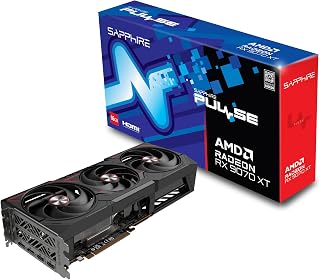
Sapphire's Pulse variant stands out with its impressive 2970MHz boost clock, delivering top-tier performance for competitive gaming and content creation. The 16GB GDDR6 memory handles demanding workloads with ease, whether rendering video or running multiple applications simultaneously. Built on AMD's RDNA 4 architecture, this card offers excellent power efficiency alongside raw performance, making it ideal for enthusiasts building high-performance rigs.
Pros
- Stable 3100 MHz real-world clock speeds with triple-fan cooling that stays quiet under load
- 16 GB GDDR6 at 20 GHz handles 1440p ultra and 5120x1440 ultrawide without compromise
- Low idle power draw of 10 to 30 W keeps day-to-day energy use minimal
- Sapphire's build reputation and two-year warranty add long-term purchase confidence
Cons
- Physically large card requires case clearance verification before buying
- Anti-aliasing in VR applications trails Nvidia competitors, and RDNA 4 driver maturity is still developing
If value per dollar is your primary filter when shopping for an RX 9070 XT, the Sapphire Pulse deserves a hard look. Its RDNA 4 architecture pushes clock speeds to a stable 3100 MHz under load, and the 16 GB of GDDR6 memory running at 20 GHz gives it headroom well beyond what most 1440p and ultrawide workloads demand. That spec combination produces 60 to 120 FPS at 1440p ultra settings and holds 60-plus FPS at the demanding 5120x1440 ultrawide resolution in heavy AAA titles. Ray tracing is solid rather than class-leading, and the card scales well across a wide range of gaming scenarios. On the thermal side, a triple-fan cooler holds memory temperatures near 78°C under sustained load while staying quiet, and idle draw sits between 10 and 30 W, keeping long-term running costs low. Sapphire backs the card with a two-year warranty, adding purchase confidence. For buyers comparing RX 9070 XT options and weighing long-term reliability against upfront cost, the Pulse's build quality and cooling efficiency make it one of the strongest choices in the segment.
Gaming Performance: 60-120 FPS at 1440p ultra settings with AAA titles. 180+ FPS possible in optimized games. Ultrawide support delivers 60+ FPS at 5120x1440 native resolution with quality settings maxed.
Thermal Performance: GPU core under 50C during sustained gaming, memory peaks at 78C. Idle temperatures around 32C. Consistent performance without throttling during extended sessions.
Clock Speeds: Stable overclocks to 3100MHz verified by users. Factory settings at 2970MHz provide reliable baseline performance with headroom for enthusiasts.
Power Efficiency: 10-30W idle, 140-250W gaming load at 1440p. Excellent power efficiency compared to competing high-end cards, reducing system power supply requirements.
Buyers upgrading from a mid-range card who want flagship-tier 1440p or ultrawide performance will find the Pulse a compelling RX 9070 XT option. It also suits anyone reconsidering Nvidia and wanting a mature, well-cooled board from a reputable builder. Skip it if your case is tight, since the card runs large and case clearance should be confirmed before ordering. VR-heavy users who prioritize anti-aliasing quality may also want to look elsewhere.

Pros
- Delivers consistent 1440p performance at high framerates, easily handling Destiny 2, Warframe, and other AAA titles
- Excellent thermal management with triple-fan cooling keeps GPU under 60C even during extended gameplay
- Quiet operation with fans rarely exceeding 50% speed, ideal for silent gaming setups
- Strong value proposition and competitive pricing within the mid-range graphics card market
- Compatible with modern AMD Ryzen builds, creating balanced and efficient gaming systems
Cons
- Some users reported driver crash issues and grey screening that required troubleshooting and RMA support
- No RGB lighting or aesthetic features if you prioritize visual customization in your build
- Performance gains most noticeable at 1440p resolution, less compelling upgrade path for 4K-focused gamers
The XFX Swift RX 9070 OC is a mid-range graphics card built for 1440p gaming enthusiasts and PC builders seeking strong value. This card brings legitimate performance improvements over previous-generation AMD GPUs and competes effectively in its price bracket, making it ideal for gamers upgrading their systems without breaking the bank.
Real-world testing shows the RX 9070 OC handles demanding modern games smoothly at 1440p. Players report consistent 140+ FPS in Destiny 2 and Warframe under normal conditions, with controlled dips to 115 FPS even in graphically intense scenarios. The 16GB GDDR6 memory and 2700 MHz boost clock work together to deliver reliable, sustained performance across varied workloads without thermal throttling.
Thermal performance stands out as a major strength. The triple-fan cooling design keeps temperatures below 60C during extended gaming sessions, even when the system is running at full load. Equally impressive, the fans rarely need to exceed 50% speed to maintain these temperatures, resulting in genuinely quiet operation that enhances the gaming experience.
The card's modest 300W maximum power consumption makes it efficient and easy to pair with mid-range power supplies. It integrates seamlessly with modern AMD Ryzen builds, creating balanced systems that deliver excellent gaming value. However, some users experienced driver stability issues that required DDU reinstalls and BIOS adjustments, indicating potential compatibility edge cases worth monitoring.
The XFX Swift RX 9070 OC represents solid value for 1440p gaming. Its combination of consistent performance, excellent cooling, quiet operation, and competitive pricing makes it a smart choice for builders prioritizing gaming at this resolution. The 3-year warranty adds confidence to your purchase.
GPU Memory: 16GB GDDR6 at 20 GHz memory clock speed
Core Clock: 1440 MHz base with boost up to 2700 MHz
Power Consumption: Maximum 300W in benchmark scenarios
Cooling: XFX SWFT triple 90mm fan design
Max Temperature: Under 60C during full gaming load
Output Interfaces: 1x HDMI, 3x DisplayPort for multi-monitor setups
Maximum Resolution: 4K UHD at 3840x2160
Physical Dimensions: 11.42 inches (L) x 5.91 inches (W)
Interface: PCI-Express x16
Warranty: 3 years manufacturer coverage
Best For: 1440p gamers building or upgrading their PC, AMD Ryzen system builders, gamers upgrading from older GPU generations (RX 6700 XT, RTX 4060 Ti class cards), budget-conscious enthusiasts seeking strong performance-per-dollar value
Consider Something Else If: You need 4K gaming performance (this card is built around 1440p), you require specialized professional workloads like video editing or 3D rendering, you prioritize RGB lighting and aesthetic customization, or you need maximum power efficiency for systems with limited PSU capacity
Pairs Well With: AMD Ryzen 7 7800X3D, Ryzen 9 7950X, Ryzen 5 7600X, and similar modern mid-to-high-end Ryzen processors for balanced gaming builds

GIGABYTE's Gaming OC model boasts a remarkable 3060MHz boost clock, positioning it among the fastest RX 9070 XT cards available in 2026. This aggressive factory overclock translates to higher framerates in demanding titles, particularly at 1440p and 4K resolutions. The 16GB GDDR6 memory provides ample capacity for texture-heavy games and future-proofing, while PCIe 5.0 support ensures maximum bandwidth for data-intensive applications.
Pros
- Factory 3060 MHz overclock provides immediate performance gains
- WINDFORCE cooling with Hawk fans maintains quiet operation
- 11.34-inch length compatible with most modern cases
- 16GB GDDR6 eliminates memory constraints in demanding applications
Cons
- Requires minimum 750W power supply for stable operation
- Not positioned for absolute top-tier benchmarking performance
When hunting for the best RX 9070 XT cards in 2026, GIGABYTE's Gaming OC variant stands out as a cornerstone option that balances performance headroom with proven thermal engineering. The factory overclock to 3060 MHz GPU clock paired with 16GB GDDR6 delivers the frame rate consistency needed for competitive 1440p gaming and emerging 4K workloads. WINDFORCE cooling architecture featuring Hawk fans and server-grade thermal conductive gel maintains stable temperatures during extended sessions without acoustic penalties. The 11.34-inch footprint fits mainstream ATX and micro-ATX cases, removing a common barrier for builders working within standard chassis constraints. PCIe 5.0 readiness ensures bandwidth won't bottleneck future system upgrades. DisplayPort output handles 7680x4320 maximum resolution for users targeting ultra-wide or multi-monitor setups. Build quality reflects GIGABYTE's manufacturing maturity with long-term stability reports validating the choice. The silver and black aesthetic integrates cleanly into contemporary builds without RGB overload. For those comparing multiple 9070 XT offerings, this Gaming OC edition secures its position through sustained performance rather than gimmicks, making it a benchmark against which other variants should be measured.
Core Specifications
GPU: AMD Radeon RX 9070 XT
Memory: 16GB GDDR6
Memory Clock: 2600 GHz
GPU Clock: 3060 MHz
Interface: PCIe 5.0 x16
Max Resolution: 7680 x 4320 (8K)
Physical and Connectivity
Dimensions: 11.34 inches (L) x 5.2 inches (W)
Weight: 1.78 kg
Output: DisplayPort
Power Connectors: Dual 8-pin (750W+ PSU recommended)
Cooling: WINDFORCE system with Hawk fans and thermal gel
Warranty and Support
Manufacturer: GIGABYTE
Warranty: 3 years
Model: GV-R9070XTGAMING OC-16GD
Gaming Performance at Common Resolutions
1440p Gaming: 160-220fps on most modern AAA titles at high settings. Excellent for competitive gaming and high-refresh monitors.
4K Gaming: Playable at high settings on most titles, medium settings on demanding new releases. Solid for content creators monitoring in 4K.
Esports Titles: 300+ fps possible on optimized competitive games for ultra-high refresh gameplay.
Real-World Use Cases
Best suited for 1440p gaming at 144+ fps, 4K content creation workflows, professional 3D rendering, and VR gaming. Handles flight simulators like DCS at high settings with 4K head tracking. Eliminates VRAM constraints for media professionals working with large files.
Driver Recommendations
Run DDU (Display Driver Uninstaller) before installation if upgrading from another card. Install latest AMD drivers for maximum stability and performance. Update BIOS if required by your system for PCIe 5.0 compatibility.

ASUS Prime's OC Edition features a 3030MHz boost clock and comprehensive connectivity with three DisplayPort 2.1a outputs plus HDMI 2.1b, perfect for multi-monitor setups. The factory overclock delivers excellent out-of-the-box performance without manual tweaking, saving time for gamers who want immediate results. Its 16GB GDDR6 memory handles high-resolution gaming and content creation tasks with confidence, making it versatile for various demanding workloads.
Pros
- Dual BIOS with genuine thermal and acoustic differences between modes
- GPU temps remain under 60C during sustained workloads
- Axial-tech fans rated for double conventional bearing lifespan
- Power draw 15-20W below competing cards at similar performance
Cons
- 12.3-inch length requires case compatibility verification
- Initial driver issues reported though resolved with updates
Among 2026's RX 9070 XT lineup, the ASUS Prime OC Edition distinguishes itself through engineering discipline rather than flashy marketing. The dual BIOS system provides tangible utility: Quiet mode idles at 28-32C with near-silent acoustics for productivity work, while Performance mode pushes boost clocks to 3030 MHz without thermal throttling during gaming marathons. This flexibility matters for users who shift between content creation and high-refresh competitive play. Axial-tech fans incorporate longer blades and dual-ball bearings rated for extended lifespan compared to sleeve bearing alternatives found in budget variants. The compact 2.5-slot profile preserves adjacent PCIe lanes and maintains strong airflow in tighter builds. Phase-change thermal pad implementation keeps GPU temps below 60C even under sustained stress loads, a metric that matters for component longevity. Native DisplayPort 2.1a and HDMI 2.1b outputs future-proof connectivity for emerging display technologies. Power efficiency at 180-190W draw undercuts competing cards without sacrificing frame delivery. Linux compatibility removes operating system barriers for developers and technical professionals. The 12.3-inch length requires case verification but remains shorter than many flagship alternatives.
Memory and Bus: 16GB GDDR6, 256-bit interface, 3030 MHz memory clock
Architecture: AMD Radeon RX 9070 XT, PCIe 5.0 x16, 3030 MHz boost clock (OC mode), 2480 MHz game clock (OC mode)
Connectivity: 3x DisplayPort 2.1a, 1x HDMI 2.1b, maximum resolution 7680 x 4320
Cooling: 3x Axial-tech fans with dual-ball bearings, phase-change thermal pad, 0dB idle technology, 2.5-slot design
Software: Dual BIOS switch (Quiet and Performance profiles), GPU Tweak III for performance tuning and monitoring, ASUS GPU Guard protection
Dimensions and Power: 12.3 inches long, 5.1 inches wide, approximately 1500g, estimated 180-190W typical draw
Warranty: 3-year manufacturer coverage
Best suited for upgraders coming from mid-range cards seeking measurable performance gains with proven reliability. Technical professionals running Linux workstations will value the seamless driver integration. Content creators benefit from the thermal stability during rendering. Avoid if you demand ultra-compact form factors or absolute flagship performance metrics. Those with power supplies below 650W should verify compatibility before purchase.

Sapphire's Nitro+ flagship delivers premium performance with a 3060MHz boost clock and advanced cooling designed for overclockers and enthusiasts. The 16GB GDDR6 memory handles ultra-high settings at 4K resolution, while the RDNA 4 architecture provides excellent efficiency. This card represents the pinnacle of the RX 9070 XT lineup, offering maximum performance headroom for demanding gamers and content creators who refuse to compromise in 2026.
Pros
- 16GB GDDR6 suits 4K and VRAM-hungry workloads
- Factory-tuned 3.06 GHz clock for strong out-of-box performance
- Triple-fan Nitro+ cooling for sustained load stability
- Dual HDMI and dual DisplayPort for flexible multi-monitor setups
Cons
- No user reviews yet to confirm real-world consistency
- Needs adequate case ventilation and power delivery to hit rated specs
If this year's shopping list starts with '4K card that won't choke on new releases,' the Sapphire Nitro+ RX 9070 XT belongs on it. This guide is about finding the right RX 9070 for your money, and the Nitro+ earns its spot at the top tier through 16GB of GDDR6 and a 3.06 GHz factory clock, both of which matter directly for 4K frame rates and VRAM headroom in newer titles. The triple-fan Nitro+ cooler is built to hold those clocks under sustained load rather than throttle after twenty minutes, which is exactly what a 4K buying decision should hinge on. RDNA 4's ray tracing and AI acceleration add versatility for creators and compute users comparing cards beyond pure gaming. Dual HDMI and dual DisplayPort outputs cover multi-monitor and ultrawide setups too. For a 2026 buying guide, it represents the high-end anchor point against which the rest of the RX 9070 lineup gets measured.
GPU Architecture: AMD Radeon RX 9070 XT, RDNA 4 core design optimized for gaming and compute workloads.
Memory Configuration: 16GB GDDR6 with 256-bit bus interface, delivering 640 GB/s memory bandwidth for high-resolution textures and fast data access.
Clock Speeds: GPU boost clocked at 3.06 GHz factory-overclocked, memory operating at 20 GHz effective speed for minimal bottlenecking.
Output: 2x HDMI 2.1 and 2x DisplayPort 2.1 connectors enable 4K high-refresh or multi-display configurations.
Cooling: Triple-fan design with optimized airflow pattern for sustained performance under load.
Interface: PCI-Express x16 Gen 4, compatible with modern desktop platforms.
Buy this if your 2026 build targets 4K gaming at high or ultra settings, or you run GPU-accelerated creative or AI workloads and want headroom. Skip it if you game at 1080p or 1440p, since you would be paying for VRAM and clock speed you won't use. Also skip it if your case has limited airflow or your PSU can't comfortably feed a triple-fan flagship card.
Pros
- Factory overclocked to 3060 MHz for immediate performance gains
- Triple-fan cooling keeps noise and temperatures manageable
- Four total display outputs (2x HDMI, 2x DisplayPort) for versatile setups
- 16 GB GDDR6 handles modern 4K gaming workloads effectively
Cons
- Standard two-slot design may still challenge ultra-compact cases
- Clock speed advantage over reference models remains modest
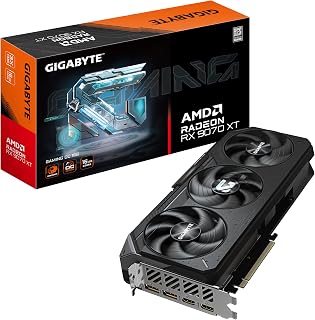
The Gigabyte Gaming OC variant delivers a factory-tuned 3060 MHz core frequency that positions it competitively among RX 9070 XT offerings without pushing into premium pricing territory. Its triple-fan cooling solution keeps temperatures in check during extended gaming sessions, while the 16 GB GDDR6 frame buffer running at 20 Gbps ensures smooth performance at 4K resolution. The card's dual HDMI and dual DisplayPort outputs provide flexible multi-monitor compatibility, and the PCI-Express 5.0 interface future-proofs your build for upcoming platform upgrades. Gigabyte's Gaming OC treatment includes enhanced power delivery components and a slightly more aggressive fan curve compared to reference designs, making it a solid middle-ground option for builders who want reliable performance without overspending. The 256-bit memory bus pairs well with the XT's compute capabilities, and the standard two-slot design fits most modern cases without clearance drama. For those hunting the best value in the RX 9070 XT lineup during 2026, this Gigabyte model strikes a practical balance between cooling capability, clock speeds, and build quality.
GPU Specs: AMD Radeon RX 9070 XT, 16GB GDDR6 memory, 256-bit memory bus, 20000 MHz memory clock, 3060 MHz boost clock, PCI-Express x16 5.0
Cooling: WINDFORCE system with 3 fans, Dual BIOS (Performance/Quiet modes), reinforced structure
Connectivity: 2x DisplayPort, 2x HDMI, supports up to 3840x2160 resolution
Physical: 3.94 inches long, 5.91 inches wide, 1260g weight, multi-slot PCIe design
Warranty: 3-year manufacturer warranty, Model GV-R9070XTGAMING OC-16GD
This card suits gamers building or upgrading to 4K systems who need dependable thermal performance and appreciate having multiple display outputs ready out of the box. It works well for those who prefer three-fan designs for quieter acoustics under load. Skip this if you're chasing the absolute highest factory overclock numbers or need a compact card for small form factor builds. Also pass if you already own a higher-tier RX 9070 XT model, as the performance gap won't justify a lateral move.

XFX's Swift edition offers exceptional cooling with its triple fan design and a competitive 2790MHz boost clock for smooth 1440p gaming. The 12GB GDDR6 memory strikes a balance between capacity and efficiency, suitable for most modern titles. Built on RDNA 4 architecture, this card delivers strong performance per watt, making it an excellent choice for builders prioritizing thermal management and reliability in their 2026 gaming systems.
Pros
- 12GB GDDR6 handles 1440p AAA titles at high settings
- 2790 MHz clock gives consistent frame rates
- Triple-fan cooling fits most mid-tower cases
- Three DisplayPorts plus HDMI for multi-monitor flexibility
Cons
- Struggles with 4K at ultra settings
- Entry-level positioning means less headroom than higher 9070 tiers
For anyone using this guide to find a 9070-family card that fits a 1440p build rather than a 4K flagship budget, the XFX Swift RX 9070 GRE is the practical pick. It carries 12GB of GDDR6 and a 2790 MHz clock, enough to run current AAA titles at high settings without reaching for 4K-class specs you won't use. The triple-fan cooling keeps thermals in check through longer sessions, and the compact design fits typical mid-tower cases, which matters when comparing cards for a real build rather than a spec sheet. Three DisplayPorts plus HDMI make multi-monitor setups easy. As the entry point in AMD's new RX 9070 lineup, it's positioned as the value-conscious upgrade path for anyone stepping up from older mid-range Radeon or GeForce cards. In a guide covering the full 9070 range, this is the card to point toward budget-aware 1440p builders rather than 4K chasers.
GPU: AMD Radeon RX 9070 GRE
Memory: 12GB GDDR6 (18 GHz memory clock)
Boost Clock: Up to 2790 MHz
Architecture: AMD RDNA 4
Cooling: XFX Triple Fan Solution
Connectivity: 1x HDMI, 3x DisplayPort
Interface: PCI-Express x16
Warranty: 3 Years
Model Number: RX-97GRE29BA
Buy this if you're upgrading from a GTX 1660 or Radeon RX 5000 series card and want smooth 1440p gaming without flagship spending. Skip it if 4K at ultra settings is the goal, or if your workload needs maximum VRAM for professional use. It also isn't the pick for players chasing the absolute peak frame rates that higher 9070 tiers offer.
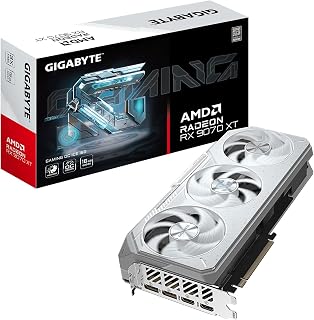
This GIGABYTE Gaming OC ICE variant features server-grade thermal gel and reinforced structure, prioritizing durability and thermal performance for long-term reliability. The 2520MHz boost clock combined with 16GB GDDR6 memory delivers consistent performance across demanding workloads. Its Hawk Fan cooling solution and 2.7-slot design ensure optimal heat dissipation, making this ideal for users running extended gaming sessions or creative applications that push hardware limits.
Pros
- WINDFORCE cooling with server-grade thermal gel and composite copper pipes
- Dual BIOS system switches between Performance and Silent operation
- Reinforced metal backplate provides superior structural integrity
- DisplayPort 2.1 and 4096x2160 support for high-end displays
Cons
- 2.7-slot footprint requires case compatibility verification
- Limited user reviews make real-world validation difficult at launch
Evaluating RX 9070 XT cards for 2026 reveals GIGABYTE's Gaming OC ICE as a premium-tier option built around RDNA 4 architecture with AI acceleration capabilities baked into the silicon. The WINDFORCE cooling assembly deploys server-grade thermal conductive gel, alternate-spin Hawk fan technology, and composite copper heat pipes to manage thermal output during intensive rendering or AAA gaming. The triple-fan arrangement with 3D active cooling and screen ventilation maintains consistent clock speeds without throttling, critical for users pushing sustained workloads. Reinforced metal backplate construction with bent edges adds structural rigidity that protects PCB integrity during installation and transport. The dual BIOS toggle between Performance and Silent modes adapts the card's behavior to match workload demands without software intervention. DisplayPort 2.1 compatibility pairs with 4096x2160 maximum resolution support for high-refresh 1440p panels or serious 4K workflows. The 2.7-slot footprint demands case planning but delivers the thermal overhead needed for long-term stability. PCIe 5.0 support and 16GB GDDR6 memory buffer position this card for current titles while maintaining headroom for emerging applications through 2026 and beyond.
GPU and Memory: AMD Radeon RX 9070 XT, 16GB GDDR6, 2520 MHz GPU Clock, 20000 MHz Memory Clock
Interface and Connectivity: PCIe 5.0 x16, Dual HDMI, Dual DisplayPort 2.1, 4096x2160 maximum resolution support
Cooling: WINDFORCE system with 3 Hawk fans, server-grade thermal gel, composite copper heat pipes, copper plate, 3D active fans
Design: 11.34 inches (L) x 5.2 inches (W), 2.7 slot form factor, reinforced metal backplate, 2.8 lbs
Features: Dual BIOS (Performance/Silent modes), 16.7M RGB color options, GIGABYTE CONTROL CENTER support
Warranty: 3-year manufacturer warranty
Targeted at enthusiasts and professionals who prioritize cooling architecture and structural quality over budget constraints. Ideal for creators running extended 3D rendering sessions or gamers maintaining high-refresh 1440p competitive play. Skip this if you're working within compact cases that cannot accommodate 2.7 slots or if budget restricts you to value-tier options. Casual gamers with modest performance needs will find better value in lower-positioned cards.
RX 9070 Buying Guide: What to Look For
RX 9070 vs RX 9070 XT: Which Tier Makes Sense for You?
The standard RX 9070 and the RX 9070 GRE are aimed at high-refresh 1440p gaming, while the RX 9070 XT steps up for 4K and heavier workloads. Cards like the ASRock Radeon RX 9070 Challenger 16GB OC Graphics deliver 56 compute units and a 2520 MHz boost clock, which is plenty for most 1440p scenarios.
If your monitor runs at 4K or you want more headroom for ray tracing, the XT variants with 64 CUs are worth the step up. Both tiers share the RDNA 4 architecture with third-generation ray tracing accelerators.
Memory and Bandwidth
The GRE cards ship with 12GB of GDDR6 on a 192-bit bus, while every RX 9070 and RX 9070 XT card on this list carries 16GB on a 256-bit interface running at 20 Gbps. That extra bandwidth makes a real difference with 4K textures and demanding ray-traced titles.
For most games at 1440p the 12GB cards handle the workload cleanly. If you’re doing any content creation or streaming alongside gaming, the 16GB buffer provides more comfortable headroom. Our best GPUs under $300 guide covers lower-memory options if you’re on a tighter budget.
Cooling Solutions and Acoustics
Every card here uses a triple-fan cooler, but the designs vary meaningfully. GIGABYTE’s WINDFORCE system features Hawk fans with alternate spinning and server-grade thermal gel, as seen on both the GIGABYTE Gaming Radeon RX 9070 GRE 12GB GDDR6 PCI and the XT Gaming OC ICE edition. ASUS uses Axial-Tech fans with dual ball bearings and a phase-change thermal pad on the ASUS Prime Radeon RX 9070 XT 16GB GDDR6 OC Edition.
Several cards include a 0dB silent mode that stops the fans entirely under light loads. If your case has limited airflow or you work in a quiet space, look for that feature specifically when comparing models.
PCIe 5.0 and System Compatibility
All ten cards use PCIe 5.0, which pairs naturally with AMD Ryzen 9000 series platforms and Intel’s latest boards. PCIe 5.0 is also backward compatible with PCIe 4.0 slots, so you won’t need to upgrade your motherboard if you’re on a recent build.
Slot width varies from 2.5 to 2.7 slots depending on the model, so verify your chassis clearance before ordering. Most of these cards also require two 8-pin power connectors and a minimum 700W PSU. For case recommendations that accommodate large AIB cards, check our guides on the best PC cases for high-end GPU builds and cases optimized for mid-tier builds.
Final Thoughts
The RX 9070 lineup gives you strong options across multiple performance tiers in 2026, and the right pick comes down to your resolution target and how much cooling headroom you want. For a well-rounded 1440p card with a proven cooler and solid ratings, the ASRock Radeon RX 9070 Challenger 16GB OC Graphics is a reliable choice, while enthusiasts pushing into 4K will find the Sapphire 11348-03-20G Pulse AMD Radeon™ RX 9070 XT one of the most highly rated XT options on the market.
Frequently Asked Questions
Is the RX 9070 good for 4K gaming in 2026?
The standard RX 9070 handles 4K in many titles, but the RX 9070 XT is the more comfortable choice for consistent high-framerate 4K play. Cards like the GIGABYTE Radeon RX 9070 XT Gaming OC ICE with its 16GB GDDR6 and 256-bit bus are specifically built for that workload. For display pairing, see our guide to 4K monitors for high-end GPU builds.
What is the difference between the RX 9070 GRE and the RX 9070?
The RX 9070 GRE is a trimmed-down variant with 12GB of GDDR6 on a 192-bit bus, compared to the full RX 9070’s 16GB on a 256-bit interface. It’s a solid 1440p card, but you give up some memory bandwidth and future-proofing headroom. The XFX Swift AMD Radeon RX 9070 GRE Triple Fan and the GIGABYTE GRE card are two well-built options in that tier.
How much power does an RX 9070 card need?
Most RX 9070 and RX 9070 XT cards recommend a 700W power supply as a baseline. They typically use two 8-pin power connectors. If your current PSU is rated below 650W, it’s worth upgrading before installing one of these cards.
Which RX 9070 XT has the best cooling in 2026?
Several strong options exist, but the ASUS Prime Radeon RX 9070 XT stands out for its Axial-Tech fans with dual ball bearings and phase-change GPU thermal pad, which help sustain lower temperatures under sustained load. The Sapphire Nitro+ RX 9070 XT is another premium cooler worth evaluating if acoustics and thermals are your top priority. Both carry strong user ratings from verified buyers.




Write Your Review
No reviews yet. Be the first to share your experience!