

Once your game library, camera footage, and active project files all compete for space, 8TB stops feeling excessive. The right high-capacity drive lets you keep the files you use close at hand instead of constantly deleting, transferring, and reorganizing data.
This guide to the best 8tb ssd options is for gamers, creators, and professionals who need serious room without settling for slow day-to-day storage. It also separates true 8TB SSD choices from hard drives and lower-capacity alternatives, which matters if you are comparing them with a high-capacity internal hard drive for gaming.
Quick answer
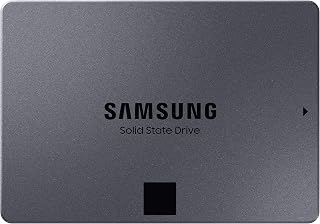
This guide compares 8 picks, with Samsung 870 QVO 8TB SATA III 2.5-Inch Internal SSD ranked first. Seagate BarraCuda 8TB Internal Hard Drive - 190MB/s holds the highest customer rating among them.
Pros
- Very large 8TB capacity for extensive files, applications, games, and media collections.
- Strong SATA-class performance with up to 560MB/s read and 530MB/s write speeds.
- Compact 2.5-inch form factor fits many desktops, laptops, and compatible enclosures.
- AES 256-bit encryption adds useful protection for stored data.
Cons
- SATA performance is significantly slower than modern PCIe NVMe SSDs.
- QLC-based storage may be less suitable for consistently heavy, sustained write workloads.
- The supplied specifications contain inconsistent endurance figures, so buyers should verify the applicable TBW rating before purchase.
The Samsung 870 QVO is a high-capacity 8TB internal solid-state drive for compatible desktops, laptops, and other systems with a 2.5-inch SATA bay. It is especially well suited to creators, IT professionals, gamers, and everyday users who need substantial storage without relying on multiple smaller drives.
Sequential performance reaches up to 560MB/s for reads and 530MB/s for writes, which is near the practical limit of the SATA interface. Compared with a traditional hard drive, this can provide faster application loading, quicker file access, and a more responsive overall system.
Its 2.5-inch, 7mm design makes installation straightforward in many desktop and laptop configurations. Samsung V-NAND 4-bit MLC technology, AES 256-bit full-disk encryption, and compatibility with SATA 3Gbps and 1.5Gbps interfaces add useful flexibility for both newer and older systems.
The main limitation is that this is a SATA SSD rather than an NVMe model, so it cannot deliver the much higher bandwidth available from PCIe storage. QLC technology can also be less ideal for users who regularly perform very large, sustained write operations, and the supplied specifications list conflicting endurance figures that should be confirmed before buying.
For users prioritizing capacity, broad compatibility, and a meaningful speed improvement over hard drives, the 870 QVO is a practical storage upgrade. It is a strong choice for large libraries and everyday workloads, while demanding workstation users may prefer a higher-end TLC or NVMe SSD.
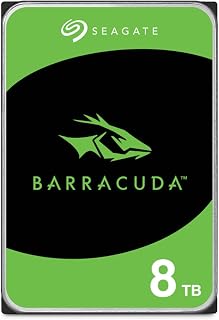
This 3.5-inch SATA drive offers straightforward bulk storage for desktop systems where raw capacity matters more than extreme speed. At 8TB, it provides ample room for extensive game archives and project backups that don't require the instant loading of an SSD, making it a practical secondary drive for storing older titles or completed projects you want to keep accessible.
Pros
- Massive 8TB capacity for large libraries
- Steady 190MB/s sequential transfer rate
- Straightforward internal SATA installation
- Proven, long-running mechanical design
Cons
- Mechanical drive, slower than SSD for random access
- Internal only, no portability
When your game library and project files balloon past a few terabytes, raw capacity matters more than anything else, and that's where this Seagate BarraCuda 8TB earns its spot. Built as a standard 3.5 inch internal drive for SATA 6 Gb/s, it drops into any desktop tower and gives you 8TB of space to archive installed games, project backups, and media without juggling external drives. The 190MB/s sustained transfer rate keeps large sequential operations, like copying big game installs or exporting project files, moving at a steady clip, even if it won't match flash-based speeds for random access. It's a practical secondary or bulk drive for builders who want one big pool of storage rather than several smaller expensive ones. Installation is simple, and Seagate's mechanical design has a long track record inside desktop and gaming console setups. If your goal is maximizing storage for a sprawling library or ongoing creative projects on a budget, this drive is built for exactly that job, even though it's a hard disk drive rather than solid-state.
Storage Capacity: 8 TB
Interface: SATA 6 Gb/s
Form Factor: 3.5 inches
Drive Type: Mechanical Hard Disk
Sustained Transfer Rate: 190 MB/s
Compatible Devices: Desktop, Gaming Console
Installation: Internal Hard Drive
Included Services: Data Recovery Service
Packaging: Frustration Free (anti-static bag)
Good for builders who need to house a huge, growing game or project library on a desktop and don't need instant load times from every title. Skip it if you want SSD-level speed for your active games or need a portable drive, since this is an internal 3.5 inch mechanical drive with no external connectivity. Best treated as bulk storage alongside a faster drive for what you're actively playing or editing.

At 2TB, this drive falls short of the 8TB capacity needed for extensive game libraries and large-scale projects outlined in this guide. While its PCIe 5.0 speeds reach 14,700 MB/s, the limited storage means frequent uninstalls or moving files to external drives, making it unsuitable for users seeking to maintain big collections of modern games and creative work simultaneously.
Pros
- Exceptional build quality with sturdy heat spreader and well-engineered PCB that inspires confidence
- Sequential read speeds consistently meet or exceed advertised 14,700MB/s in real-world testing
- Excellent thermal management keeps drive cool even under sustained heavy workloads
- Five-year manufacturer warranty and proven track record of reliability from reviews
- Hardware encryption and continual health monitoring via included software add security and peace of mind
Cons
- Premium pricing reflects flagship status, making it a significant investment for budget-conscious builders
- Requires PCIe 5.0 motherboard support to unlock full performance potential, limiting compatibility with older systems
- Real-world performance gains over PCIe 4.0 drives may be subtle for everyday computing tasks outside of specialized workloads
The Samsung 9100 PRO is a premium NVMe SSD engineered for professionals and power users who demand cutting-edge speed. It targets AI researchers, video editors, 3D artists, and hardcore gamers who work with massive file sets and cannot tolerate storage bottlenecks. This is not a mainstream consumer drive, but rather a specialized tool for compute-intensive applications.
Performance is the standout feature. Sequential read speeds of 14,700MB/s and write speeds of 13,400MB/s are not marketing exaggeration, as confirmed by multiple reviewers who report boot times that feel instantaneous and file transfers that complete almost unnoticed. Random IOPS reaching 2,600K for writes ensure that complex workloads like AI model training, video rendering, and large database operations maintain smooth, uninterrupted performance. The advanced 5nm controller is architecturally superior to previous generations, delivering nearly twice the performance of the 990 PRO while consuming 49% less power.
Build quality is exceptional. Users consistently praise the sturdy heat spreader and well-engineered PCB that inspire confidence in long-term durability. The drive weighs just 9.07 grams and measures 3.2 inches in length, maintaining the standard M.2 2280 form factor. Thermal management is notably effective, with intelligent power and thermal control preventing throttling even under sustained heavy loads, a critical advantage for workstations that run around the clock.
The main drawback is cost. At this price point, the 9100 PRO demands significant investment, and real-world speed gains diminish for users whose workflows remain within PCIe 4.0 capabilities. Additionally, full performance potential requires a PCIe 5.0 motherboard, which limits compatibility with systems built around older chipsets and processors.
Verdict: The Samsung 9100 PRO is a legitimate flagship SSD that delivers on its performance promises. For professionals operating in domains where speed directly impacts productivity and output quality, the investment is justified. For general computing, it represents overkill. Buy this drive if you work with large datasets, perform heavy video or 3D rendering, develop AI applications, or simply refuse to let storage speed limit your ambitions.
Storage Capacity: 2TB (1TB and 4TB options available, 8TB coming 2025)
Interface: NVMe PCIe 5.0x4
Form Factor: M.2 2280
Sequential Read Speed: Up to 14,700MB/s
Sequential Write Speed: Up to 13,400MB/s
Random Read IOPS: Up to 1,850K
Random Write IOPS: Up to 2,600K
Cache Memory: 2GB
Controller: 5nm Samsung controller
Warranty: 5 years manufacturer warranty
Compatibility: Desktop PCs, Laptops, PlayStation 5
Weight: 9.07 grams
Dimensions: 3.2 inches L x 0.9 inches W x 0.09 inches thickness
Best For: Content creators, AI engineers, video production professionals, data scientists, competitive gamers building high-end systems, and power users who demand maximum performance.
System Requirements: Motherboard with PCIe 5.0 support (Intel Z790 and newer, AMD X870/X870E and newer platforms recommended). Windows 10/11 or Linux systems with compatible BIOS/UEFI support for NVMe drives.
Not Recommended For: Budget builders prioritizing value over performance, systems without PCIe 5.0 motherboard support, users whose workloads do not exceed PCIe 4.0 capabilities, or general productivity computing where speed does not directly impact workflow productivity.

The SN850X delivers 7,300 MB/s read and 6,300 MB/s write speeds via PCIe Gen4, cutting load times significantly for expansive game libraries that demand fast asset streaming. Its M.2 2280 form factor fits most modern motherboards and laptops, making installation straightforward whether you're expanding a desktop rig or upgrading a gaming laptop's storage for AAA titles and creative projects.
Pros
- Legitimate 7,300 MB/s performance verified by multiple reviewers in real-world testing
- 8TB capacity provides massive storage for game libraries, multimedia, and creative projects
- Game Mode 2.0 delivers measurable performance benefits in gaming scenarios
- Excellent thermal stability with optional heatsink for sustained performance
- Outstanding 4.8/5 rating backed by nearly 18,000 verified customer reviews
Cons
- Premium pricing positions it above mainstream alternatives, making it less accessible for budget builds
- Dashboard software is Windows-only, limiting utility for Mac and Linux users
- Heatsink version incompatible with certain external enclosures like the Sabrent, requiring careful selection
The WD_Black SN850X 8TB is a top-tier Gen4 NVMe SSD engineered for gamers and creators who demand extreme speed and massive capacity. This drive targets serious PC enthusiasts and competitive gamers who need lightning-fast load times and a massive game library at their fingertips.
Real-world performance testing confirms the 7,300 MB/s read speeds advertised for 1TB to 4TB models, with sustained speeds holding above 6,500 MB/s even under continuous load. Reviewers report perfectly consistent performance without the throttling or slowdowns common on lesser drives. The Game Mode 2.0 feature, enabled through the WD_Black Dashboard, provides tangible benefits for competitive gaming beyond basic marketing claims.
Build quality is solid with excellent thermal characteristics. The optional heatsink version maintains peak performance during extended gaming sessions, while Adaptive Thermal Management prevents throttling. At just 5 grams, the drive remains lightweight and easy to install in any M.2 2280 slot on compatible motherboards.
The main drawback is pricing, which sits well above mid-range competitors, making it a luxury choice rather than a budget solution. Additionally, the WD_Black Dashboard software only works on Windows, leaving Mac and Linux users without access to Game Mode 2.0 optimization. The heatsink variant shows incompatibility with certain external enclosures, so verify compatibility if you plan external expansion.
The WD_Black SN850X 8TB delivers exceptional value for anyone who can justify the investment. Its combination of genuine extreme performance, massive capacity, proven reliability, and real-world consistency make it the right choice for serious gamers, content creators, and professionals who refuse compromise on storage speed.
Storage Capacity: 8TB
Interface: NVMe PCIe Gen4 x16
Form Factor: M.2 2280
Read Speed: 7,200 MB/s (up to 7,300 MB/s on 1TB-4TB models)
Write Speed: 6,300 MB/s
Cache Memory: 8GB
NAND Type: SanDisk TLC 3D NAND
Compatible Devices: PC, Laptops, PlayStation 5
Special Features: Game Mode 2.0, Predictive Loading, Overhead Balancing, Adaptive Thermal Management
Warranty: 5-year limited warranty
Weight: 5g
Color: Black
Perfect for: Competitive gamers who play demanding AAA titles, content creators handling large video or game development projects, esports competitors needing every performance advantage, and users building high-end gaming PCs or workstations where storage speed is critical.
Consider alternatives if: You have a tight budget under $300, primarily use Mac or Linux systems and need dashboard software, or plan to use the drive in external enclosures like the Sabrent where the heatsink version won't fit.
Best use cases: Gaming PC primary drive for fast boot and load times, PS5 expansion storage for next-gen games, professional workstation for video editing or 3D rendering, and streaming or content creation where fast file transfers matter.

With PCIe Gen5 connectivity pushing read speeds to 14,900 MB/s, the SN8100 handles the massive file transfers and real-time asset loading that large game libraries and 4K video projects require. The included heatsink keeps temperatures in check during sustained workloads, essential when you're simultaneously running games with high-resolution texture packs or rendering complex project files without thermal throttling.
Pros
- Exceptional sequential read speeds of 14,900MB/s reduce load times and accelerate file operations
- Generous 8TB capacity combined with high endurance rating supports professional and enthusiast workflows
- Elegant heatsink design with customizable RGB lighting enhances build aesthetics without adding bulk or noise
- Low-profile form factor fits most modern systems without clearance issues or thermal throttling
- Reliable TLC 3D NAND with proven performance track record from SanDisk manufacturing
Cons
- No active cooling means sustained writes at extreme speeds may eventually thermal throttle without adequate case airflow
- Overkill performance for general productivity tasks, gaming on 1080p displays, or basic content creation
The WD_BLACK SN8100 is a premium PCIe 5.0 NVMe SSD designed for high-performance computing environments. This drive targets gamers building enthusiast systems, professional content creators working with massive video files, and AI researchers running intensive model training workloads. At 8TB, it provides substantial storage capacity without compromising speed.
The standout performance metric is the 14,900MB/s sequential read speed, which translates to near-instant game loading and rapid file transfers. Real-world applications like copying large project files, booting into resource-heavy creative suites, and training machine learning models all benefit from this throughput. The 4,800 TBW endurance rating indicates this drive is built to handle sustained, demanding workloads across its entire lifespan.
Design and thermal management reflect premium engineering. The anodized aluminum heatsink maintains a low profile while passively dissipating heat, eliminating the need for fans or additional power draw. Customizable RGB lighting allows personalization to match gaming rigs or creative workstation aesthetics. The sleek appearance and integrated design feel substantial and professional.
The main drawback is cost. At nearly $1,800, this drive represents a significant investment that only makes sense for users who truly need PCIe 5.0 performance. General users, casual gamers, and productivity-focused professionals will find excellent value in lower-tier alternatives. Additionally, achieving peak performance in all scenarios depends on adequate case airflow and a compatible motherboard with robust power delivery.
The WD_BLACK SN8100 8TB is a tier-one choice for performance-focused professionals and enthusiasts. Its combination of extreme speed, substantial capacity, reliable TLC NAND, and elegant design justifies the premium for those building high-end systems. For everyone else, it remains an aspirational upgrade that delivers impressive but not essential performance gains.
Best for: Professional video editors and 3D animators working with 4K/8K footage, AI and machine learning researchers training large models, competitive gamers with ultra-high-end systems, and content creators managing massive project libraries requiring minimal latency.
Consider alternatives if: Your primary use is gaming at 1080p or 1440p, general office productivity, photo editing with moderate file sizes, or casual content creation. Entry-level PCIe 4.0 drives or even SATA SSDs often provide superior value for these workloads.
Requires: PCIe 5.0 compatible motherboard with M.2 slot, adequate system airflow, and a use case that genuinely benefits from extreme sequential throughput to justify the premium pricing.
Storage Capacity: 8TB
Interface: PCIe 5.0x4 (NVMe)
Form Factor: M.2 2280 (22mm x 80mm)
Sequential Read Speed: Up to 14,900MB/s
Sequential Write Speed: Up to 14,000MB/s
Random IOPS: Over 2,300,000 (2TB-4TB models)
Endurance: 4,800 TBW (8TB)
NAND Type: TLC 3D CBA
Heatsink: Anodized aluminum with RGB lighting
Warranty: 5-year limited
Weight: 31.2g
Compatibility: Desktop and laptop systems with PCIe 5.0 support

The 9100 PRO's 14,800 MB/s read speed via PCIe 5.0x4 ensures near-instant game launches and rapid project file access, critical when working with multi-gigabyte game installs or large creative assets. Hardware encryption protects your valuable game saves and project data without sacrificing performance, while the M.2 2280 format integrates cleanly into desktop and laptop builds focused on maximum storage and speed.
Pros
- Exceptional PCIe 5.0 speeds provide noticeable performance gains for video editing, gaming, and large file transfers
- 8TB capacity eliminates frequent storage management for power users and content creators
- Superior power efficiency reduces heat output and extends component lifespan
- Comprehensive Magician Software suite includes firmware updates and encryption features
- Highly rated by customers with 4.7 out of 5 stars from thousands of verified purchases
Cons
- Requires PCIe 5.0 compatible motherboard to achieve advertised maximum speeds, limiting compatibility with older systems
- Performance benefits are most noticeable in specific workloads like 4K video or AI tasks, less impactful for everyday computing
The Samsung 9100 PRO is a flagship NVMe SSD designed for professionals and enthusiasts demanding maximum performance and capacity. This drive targets content creators working with 4K/8K video, AI specialists handling large datasets, competitive gamers, and power users who need ultra-fast storage without compromise.
The standout feature is undeniable speed. With sequential read/write speeds up to 14,800/13,400MB/s and random performance reaching 2,200K/2,600K IOPS, this drive handles massive file transfers and complex multitasking seamlessly. In real-world usage, these speeds translate to lightning-fast game loads, rapid video rendering, and smooth AI application performance that noticeably outpaces previous generation drives.
Design and reliability are solid. The compact M.2 2280 form factor fits standard slots, weighs just 9.07 grams, and features a 5nm controller that runs 49% more efficiently than its predecessor while maintaining cool operating temperatures. Samsung's Magician Software provides automatic firmware updates, hardware encryption, and continuous drive health monitoring for peace of mind.
The primary limitation is compatibility. PCIe 5.0 motherboards are still relatively new, meaning older systems won't access these maximum speeds. Additionally, the $2,440 price point is substantial and justified only for users whose workflows genuinely benefit from top-tier performance.
Verdict: The 9100 PRO is an exceptional choice for demanding professionals and enthusiasts with compatible systems. The 8TB capacity, exceptional speed, and proven Samsung reliability make it worth the investment for serious content creation, gaming, and AI workloads.
Speed and IOPS: Sequential read up to 14,800MB/s, sequential write up to 13,400MB/s. Random read/write performance reaches 2,200K/2,600K IOPS respectively, enabling smooth handling of concurrent tasks and complex file operations.
Storage and Memory: 8TB total capacity with 8GB DRAM cache ensures consistent performance during large transfers and sustained workloads. The 5nm controller architecture provides a 49% improvement in power efficiency compared to the 990 PRO generation.
Compatibility and Interface: Uses PCIe 4.0x4 NVMe interface with full PCIe 5.0 backward compatibility. Requires a motherboard with PCIe 5.0 support to achieve maximum advertised speeds. Works with both desktop PCs and laptops with M.2 slots.
Who Should Buy: Professional video editors, 3D artists, AI researchers, competitive gamers, and content creators who work with large files regularly and benefit from maximum speed. Users with PCIe 5.0 motherboards get full performance; those with PCIe 4.0 systems still receive excellent speeds but won't maximize the investment.
System Requirements: M.2 2280 slot, PCIe 5.0 motherboard for maximum performance (PCIe 4.0 compatible but limited to lower speeds), adequate cooling airflow around the drive. Check your motherboard manual to confirm PCIe 5.0 support before purchasing.
Alternative Consideration: If your system lacks PCIe 5.0 support, Samsung's 990 PRO remains an excellent alternative at a lower price point. For budget-conscious buyers, mainstream 4TB SSDs provide solid performance at significantly reduced cost.
Pros
- Exceptional transfer speeds make large file handling nearly instantaneous compared to standard external drives
- Excellent thermal management prevents throttling during long editing sessions or file transfers
- Wide device compatibility eliminates the need for separate storage solutions across ecosystems
- Compact, portable design fits easily in bags while maintaining rugged construction
- Samsung's reputation for reliability and in-house component manufacturing ensure consistent quality
Cons
- Requires USB 3.2 Gen 2x2 host device and UASP support to achieve maximum performance speeds
- No user reviews available yet, so real-world durability and long-term performance feedback is limited
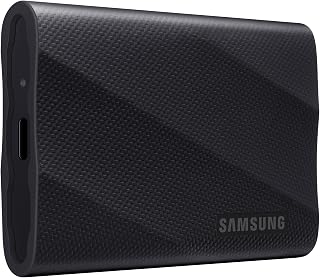
The Samsung T9 Portable SSD is a premium external storage solution engineered for creative professionals, video editors, photographers, and gamers who demand both speed and capacity. With 4TB of storage and transfer speeds up to 2,000MB/s, this drive is built for workflows involving large video files, high-resolution photo libraries, and demanding applications that can't tolerate slow storage.
The standout feature is sustained performance even under heavy load. The Advanced Thermal Guard technology actively manages heat generation, keeping the drive at optimal temperatures during extended editing sessions or massive file transfers. This means no performance throttling when you need it most, whether you're offloading 4K footage, backing up a photo shoot, or transferring game libraries.
Design-wise, the T9 balances portability with durability. Its compact 2.4-inch form factor and 4.32-ounce weight make it genuinely portable, yet the rugged construction withstands drops up to 9.8 feet. The included USB cable and broad device compatibility (Windows, macOS, PlayStation 5, Xbox Series X/S, and iPhone 15/16 Pro) mean this single drive replaces multiple storage solutions across your entire digital ecosystem.
The main considerations are the premium price and the requirement for compatible host devices. You need USB 3.2 Gen 2x2 support to unlock maximum speeds, and UASP mode must be enabled. For most modern computers and gaming consoles this isn't an issue, but older systems may bottleneck performance. Additionally, at $949.99 for 4TB, this sits at the premium end of the market.
The Samsung T9 is an excellent choice if you value speed, capacity, and reliability over budget. The 5-year warranty, Magician software monitoring, and hardware encryption add genuine value for professionals handling sensitive work. For casual users, a more affordable drive may suffice, but for creative professionals, content creators, and serious gamers, the T9 delivers the performance and reliability that justifies its premium positioning.
Storage and Interface: 4TB capacity, USB 3.2 Gen 2x2 interface, USB connectivity
Performance: Up to 2,000MB/s read/write speeds, 4GB cache memory
Physical Design: 3.46 inches length, 2.36 inches width, 0.55 inches thickness, weighs 4.32 ounces
Security and Durability: AES 256-bit hardware encryption, rugged design survives 9.8-foot drops, Advanced Thermal Guard thermal management
Compatibility: Windows PC, Mac, PlayStation 5, Xbox Series X and S, iPhone 15/16, and most USB 3.2 Gen 2x2 devices
Warranty and Support: 5-year limited warranty, Samsung Magician software for firmware updates and drive health monitoring
Best For: Video editors working with 4K footage, photographers managing large RAW libraries, content creators needing portable backup, gamers expanding console storage, and professionals requiring secure, portable file storage.
Before You Buy: Verify your device supports USB 3.2 Gen 2x2 and UASP mode to achieve advertised speeds. Standard USB 3.0 ports will work but deliver significantly slower performance. Confirm your device has available USB ports that support the full speed specification.
Alternative Considerations: If budget is your primary concern, look at earlier Samsung portable SSD models like the T7 Shield for lower prices with still-excellent performance. If you need maximum capacity with less speed requirement, consider traditional mechanical external hard drives. For those needing the fastest speeds with slightly less capacity, the 2TB version costs less upfront.
Long-Term Value: The 5-year warranty and Samsung Magician software provide ongoing protection and monitoring. The premium upfront cost is offset by durability, reliability, and the universal compatibility that eliminates needing multiple drives for different devices and ecosystems.

The D10's USB 3.2 interface and portable 2.5-inch design let you carry your entire game library or project collection between desktop, console, and laptop setups without reinstalling. Its compatibility with PlayStation, Xbox, PC, and Mac means you can store games and files from multiple platforms on one device, ideal for users juggling large libraries across different systems.
Pros
- 8TB in a portable 2.5 inch enclosure
- 7200 RPM with up to 259MB/s read speed
- Works across PlayStation, Xbox, PC, and Mac
- Dual USB charging ports for peripherals
Cons
- Mechanical drive, more shock sensitive than SSD
- Heavier than typical portable drives
Big game libraries need big external storage, and the WD_BLACK D10 targets that exact scenario with 8TB in a portable 2.5 inch enclosure. It connects over USB 3.2 and spins at 7200 RPM, delivering read speeds up to 259MB/s and media speeds around 250MB/s, quick enough for smooth game installs and load times across PlayStation, Xbox, PC, and Mac. For anyone juggling projects or a library that has outgrown internal storage, this drive lets you offload titles or files and plug it into whichever system you're using that day. The dual USB Type-A ports for charging controllers or headsets are a nice bonus for gamers who move between setups. The metal enclosure is built solidly, and while it's on the heavier side for a portable drive, that weight comes from construction meant to survive being tossed in a bag. It's a strong pick specifically for people who need serious capacity that travels between console, PC, and Mac without sacrificing much speed.
Storage Capacity: 8TB
Interface: USB 3.2
Speed: 7200 RPM with 250MB/s transfer rate
Form Factor: 2.5 inches, portable
Dimensions: 7.68in L x 4.92in W x 1.73in Thickness
Weight: 0.98kg
Connectivity: USB Type-A cable included
Cache Memory: 8TB
Cooling: Active cooling technology
Compatibility: PlayStation 4, Xbox One, PC, Mac
Warranty: 3-year manufacturer's limited warranty
Model: WDBA3P0080HBK-NESN
Ideal for gamers with sprawling libraries across multiple platforms who need portable, high-capacity storage that moves with them. Also fits anyone with growing project files who wants one drive that works across PC, Mac, and console. Skip it if you need internal installation or want SSD-level random access speed, since this remains a mechanical drive, just a fast, well-built one for its category.
How to Choose an 8TB SSD
Capacity alone does not determine the right drive. Your system interface, workload, thermals, and physical space all shape whether a SATA model or a modern M.2 NVMe drive will serve you better.
Match the Interface to Your System
A 2.5-inch SATA SSD is the straightforward choice for many older desktops, laptops, and storage-heavy builds. The SAMSUNG 870 QVO SATA III SSD 8TB 2.5" Internal fits this role, with SATA sequential speeds up to 560 MB/s for reads and 530 MB/s for writes.
M.2 NVMe drives use a compact 2280 form factor and depend on a compatible motherboard or laptop slot. The WD_Black SN850X 8TB NVMe SSD – M.2 2280 targets high-performance PC storage, while the Samsung SSD 9100 PRO 8TB, PCIe 5.0×4 M.2 2280 needs a PCIe 5.0-capable platform to reach its potential. If you want to reuse an M.2 drive externally, see our NVMe enclosure recommendations before choosing a case and connection standard.
Compare Capacity-Specific Performance and Endurance
Do not assume that a speed figure quoted for one capacity applies identically to every version in a product family. WD_BLACK lists up to 7,300 MB/s sequential reads for the 1TB through 4TB SN850X models, so confirm the specifications attached to the 8TB version you plan to buy.
Endurance is equally important when you edit large videos, compile projects, or move multi-terabyte archives often. Samsung rates the 8TB 870 QVO for up to 2,880 TBW, while WD_BLACK specifies up to 4,800 TBW for the 8TB SN8100. An 8TB SSD is excellent for active files, but a separate backup remains essential, especially alongside a RAID enclosure for redundant storage.
Plan for PCIe 5.0 Heat and Sustained Workloads
PCIe 5.0 drives deliver remarkable bandwidth, but they also need thoughtful cooling and clear airflow. The Samsung SSD 9100 PRO 8TB, PCIe 5.0×4 M.2 2280 advertises sequential reads up to 14,800 MB/s, making it geared toward demanding editing, AI, and workstation workloads on compatible hardware.
The WD_Black SN8100 8TB NVMe SSD with Heatsink includes a low-profile aluminum heatsink with customizable RGB lighting, which helps simplify thermal planning in a desktop build. Its product listing also notes that it has been replaced by a newer generation, so verify availability and compare the current model before committing. A motherboard M.2 shield can help, but avoid stacking a second heatsink where clearances are tight.
Separate True 8TB SSDs From Other Storage Types
Several items in the comparison serve different needs and should not be treated as direct 8TB SSD equivalents. The Samsung SSD 9100 PRO 2TB, PCIe 5.0×4 M.2 2280 is a speedy 2TB option, not an 8TB drive, while the Samsung T9 Portable SSD 4TB prioritizes portable USB storage and transfer speeds up to 2,000 MB/s.
The Seagate 8TB BarraCuda Internal Hard Drive and WD_BLACK 8TB D10 Game Drive are mechanical hard drives, not SSDs. They offer large-capacity storage for desktop and console libraries, but their operating characteristics differ significantly from solid-state storage. Creators who also need removable media should pair their main drive with the right SD card for camera work, rather than relying on an internal SSD for every stage of capture.
Final Thoughts
Huge capacity is most valuable when it removes daily file juggling: choose the SAMSUNG 870 QVO SATA III SSD 8TB 2.5" Internal if your system is built around a 2.5-inch SATA bay, while the Samsung SSD 9100 PRO 8TB, PCIe 5.0×4 M.2 2280 makes more sense for a compatible PCIe 5.0 workstation where peak throughput matters. Confirm the form factor, host interface, cooling space, and backup plan before installing either drive.
Frequently Asked Questions
Is an 8TB SSD worth it for gaming in 2026?
An 8TB SSD is worthwhile when you keep a large installed library, play games with sizable texture packs, or want room for game captures and mods. NVMe storage can improve load behavior compared with a hard disk, although in-game results vary by title and platform. For handheld expansion rather than PC storage, consider these microSD cards for handheld gaming.
Is an 8TB SATA SSD still a good choice?
Yes, especially when your computer lacks an open M.2 slot or you are upgrading an existing SATA system. SATA has a lower speed ceiling than NVMe, but it still feels highly responsive for game libraries, media collections, and general productivity. A 2.5-inch SATA drive also avoids the cooling considerations associated with high-bandwidth PCIe 5.0 hardware.
Can I install an 8TB M.2 SSD in any laptop?
No. Check that your laptop has an available M.2 slot, supports the 2280 length, and accepts the drive’s PCIe generation and capacity. Also review internal clearance, since some laptops have limited room around the M.2 area. Your manufacturer documentation is the most reliable source for supported configurations.
Are the Seagate BarraCuda and WD_BLACK D10 SSDs?
No, both are hard disk drives with spinning platters. They can be sensible choices for large libraries and backups when SSD-level responsiveness is not your priority, but they are not substitutes for an 8TB NVMe or SATA SSD. Browse the wider storage category to compare drives, enclosures, and memory card options for different setups.




Write Your Review
No reviews yet. Be the first to share your experience!