

At a trailhead or an open field, a great drone can still feel awkward if its controller has a dim display, a fussy phone clamp, or stick response that does not suit your hands. The best drone controller is not a one-size-fits-all purchase: an FPV pilot needs a different radio from a traveler who wants a simple camera-drone screen. This guide helps you match the control setup to the way you actually fly.
We compared the listed compatibility, displays, transmission systems, stick designs, and beginner-friendly features across DJI, SKYROVER, and Radiomaster options. Whether you fly for aerial video, casual trips, or manual FPV practice, the right choice should make each command feel predictable. Pilots who regularly transfer clips after a trip can also benefit from our SSD upgrade recommendations for laptops when planning a compact editing setup.
Quick answer
This guide compares 10 picks, with DJI RC-N3 Remote Controller for DJI Mini 4 Pro, Air 3 ranked first. DJI FPV Remote Controller 3 with O4 Video Transmission holds the highest customer rating among them. DJI Neo Fly More Combo: Ultra-Portable 4K Drone has the most customer reviews.

Pros
- Dramatically extends drone control range compared to smartphone-only operation
- Pre-packaged with both USB-C and Lightning cables, compatible with most devices
- Excellent battery life supports multiple flight sessions without recharging
- Intuitive controls make it accessible to drone beginners and experienced pilots
- Genuine DJI product ensures quality and warranty support
Cons
- Device size limit of 180x86x10mm may not accommodate larger phones or cases
- Requires separate Micro-USB cable purchase for non-USB-C or Lightning devices
- Maximum 100-meter range may be insufficient for advanced long-range applications
The DJI RC-N3 remote controller is a dedicated flight control solution designed for pilots who want enhanced range and precision beyond smartphone-only operation. It's ideal for anyone flying the DJI Mini 4 Pro, Air 3, Air 3S, Neo, or Flip who values extended control distance and professional-grade reliability.
The standout feature is its impressive 100-meter control range, which gives pilots significantly more freedom during flight operations. Real-world testing from verified users confirms rock-solid connectivity with no pairing issues, while the 3.5-hour battery life supports multiple flight sessions without interruption. The included dual cables handle both iOS and Android ecosystems right out of the box.
Build quality reflects DJI's reputation for durability and precision engineering. The 318-gram weight remains comfortable for extended holding, and the ergonomic button layout ensures intuitive control even for beginners. The mobile device holder securely grips phones within the 180x86x10mm size range, displaying real-time HD video from your drone via the DJI Fly app.
The primary limitation is the device size constraint, which may require removing bulky cases before mounting. Users with larger phones or non-standard USB connectors will need to purchase a separate Micro-USB cable. The 100-meter range, while excellent for most recreational flying, won't satisfy professionals requiring longer-distance operations.
The RC-N3 delivers outstanding value for DJI drone pilots seeking an affordable way to extend their flight capabilities and gain precise control. With proven reliability and strong user satisfaction, it's a smart investment for upgrading your drone experience.
Connectivity: USB-C, Lightning (Micro-USB available separately)
Control Range: Maximum 100 meters
Battery: 1 Lithium Ion battery included
Operating Time: Approximately 3.5 hours (without charging mobile device)
Charging Time: Approximately 2 hours
Weight: 318g
Mobile Device Compatibility: Devices up to 180x86x10mm (L x W x H)
Supported Devices: Maximum 4 simultaneous device connections
Included Accessories: Remote controller, USB-C cable, Lightning cable
Color: Gray
Warranty: DJI standard warranty included
Who Should Buy: This controller is perfect for DJI Mini 4 Pro, Air 3, Air 3S, Neo, and Flip owners who want extended flight range and dedicated physical controls. It's especially valuable for users who find smartphone-only control limiting or want the reliability of a dedicated remote.
Compatibility Check: Verify your drone model is on the supported list before purchasing. Ensure your mobile device fits the 180x86x10mm size requirement, and consider whether you'll need a Micro-USB cable in addition to the included USB-C and Lightning options.
Setup: The remote pairs seamlessly with DJI drones and integrates directly with the DJI Fly app. Most users report immediate connectivity without complications. New pilots should take time to familiarize themselves with the button layout before their first flight.
Alternatives: DJI offers other controller options with extended range and additional features, but the RC-N3 provides exceptional value for most recreational and semi-professional pilots. Compare based on your specific drone model and required control distance.

Pros
- Exceptional build quality and ergonomic design for comfortable extended flying sessions
- Precise, smooth control response that directly translates pilot input to drone movement
- Superior O4 transmission system provides reliable long-range connectivity
- Lightweight construction reduces fatigue during practice and competition
- Full customization options with included screwdriver for adjusting stick resistance
Cons
- Steep learning curve for beginners; simulator practice of 6-8 hours recommended before real flights
- Requires compatible DJI drone with O4 Air Unit or specific drone models for full functionality
- May not fit certain drone travel bags or cases depending on configuration
The DJI FPV Remote Controller 3 is purpose-built for experienced drone pilots and competitive FPV racers who demand precision, customization, and reliability. This controller bridges the gap between recreational drone flying and professional-grade FPV racing, making it ideal for serious enthusiasts ready to unlock advanced flying techniques and competitive performance.
What truly sets this controller apart is its combination of hardware refinements and advanced control options. The O4 video transmission system with integrated antenna design delivers a rock-solid connection at distances up to 13,000 meters, while the extended 2mm control sticks provide finer input resolution for complex aerial maneuvers. The addition of Manual mode gives experienced pilots the tools to practice and master sophisticated flying techniques, and the ability to connect via USB-C to desktop simulators means you can practice anywhere without risking your drone.
Build quality and ergonomics are excellent. The controller feels premium in hand with a solid, well-balanced design that remains comfortable even during extended flying sessions. The customizable control stick feel, adjustable via the included screwdriver, allows pilots to dial in the exact resistance and sensitivity that matches their flying style. These aren't cosmetic touches; they directly impact your ability to execute precise movements and maintain consistent control.
The main consideration is that this controller targets advanced users. It's not a plug-and-play device for casual flyers. You'll want to invest time in simulator practice before attempting real flights, and you'll need compatible DJI drones with O4 capability or specific models like the Avata 2 or Neo to access all its features. Additionally, the compact form factor, while praised by most, may not fit all travel cases depending on your storage setup.
The DJI FPV Remote Controller 3 represents genuine quality and purpose-driven engineering. For competitive pilots, FPV racing enthusiasts, and advanced hobbyists ready to master complex flying techniques, this controller delivers the precision, customization, and reliability that justifies its investment. It's a serious tool for serious flyers.
Connectivity and Range: O4 video transmission, Wi-Fi connectivity, maximum operating range of 13,000 meters
Control Interface: 7-button joystick controller, extended control sticks (2mm longer than predecessor), customizable stick resistance and feel
Compatibility: Supports up to 3 devices simultaneously, compatible with DJI Neo, DJI Avata 2, DJI O3 Air Unit, DJI O4 Air Unit Pro, and DJI O4 Air Unit
Power and Battery: 1 Lithium-Ion or Lithium-Ion Polymer D battery (included), extended operating time compared to previous generation
Physical Specs: Item weight 0.24 kg, dimensions 6.5 inches L x 4.68 inches W x 2.44 inches H, gray color finish
Included Accessories: DJI FPV Remote Controller 3, replacement control stick pair, L-shaped adjustment screwdriver
Simulator Support: Compatible with Liftoff, Uncrashed, DCL, and The Drone Racing League simulators via USB-C connection
Is This Controller Right for You? The DJI FPV Remote Controller 3 is ideal if you are an experienced drone pilot seeking advanced control options, a competitive FPV racer wanting precision and customization, or an enthusiast ready to progress from recreational flying to competitive or technical FPV disciplines. If you are a beginner, start with flight simulators and the motion controller that comes with entry-level FPV drones before investing in this unit.
Simulator Practice is Essential: Customer reviews strongly recommend 6-8 hours of simulator practice before flying this controller with a real drone. Use the USB-C connection to practice on Liftoff, Uncrashed, or other supported simulators. This investment prevents expensive drone crashes and accelerates your skill development significantly.
Drone Compatibility Check: Verify your drone supports this controller. It works with DJI Avata 2, DJI Neo, and drones equipped with O4 Air Units. The O4 transmission system is a key feature, so confirm your drone hardware matches before purchasing.
Customization Advantage: Unlike fixed controllers, this unit allows you to adjust control stick resistance and feel using the included screwdriver. Spend time dialing in your preferred settings, as this customization directly impacts your control precision and comfort during long sessions.
Storage Considerations: The compact form factor is generally praised, though some users report fit concerns with specific drone cases. If storage space is critical, verify dimensions against your existing bags before purchase.
Pros
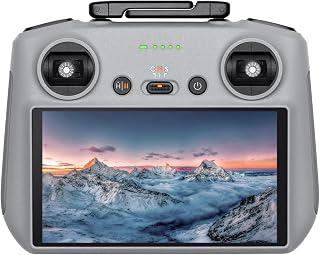
- Crystal-clear 5.5-inch FHD screen with 700-nit brightness eliminates smartphone dependency
- Powerful O4 transmission and 2T4R antenna array ensure rock-solid connections over 20km range
- Lightning-fast next-gen processor makes navigation and app response instantaneous
- Lightweight and compact design is comfortable to hold and easy to carry
- Works with multiple DJI drone models, maximizing your investment
Cons
- Limited to compatible DJI models, reducing universal appeal
- Requires charging and adds another device to manage during drone operations
The DJI RC 2 is a premium standalone remote controller designed for drone pilots who want freedom from smartphone dependency. Whether you're a hobbyist looking to upgrade from basic controllers or a serious enthusiast seeking professional-grade equipment, this controller delivers a significantly more autonomous flying experience. It's particularly appealing to users of the DJI Neo, Mini 4 Pro, Air 3, Air 3S, and Flip models.
The standout feature is undoubtedly the integrated 5.5-inch FHD touchscreen with 700-nit brightness, which remains crystal-clear even in direct sunlight. Combined with the next-gen 6nm 8-core processor, every interaction feels snappy and responsive. The O4 video transmission technology with its four-antenna system (2T4R) delivers impressive range up to 20km while maintaining stable, interference-resistant feeds, a substantial upgrade over traditional smartphone-based setups.
Build quality reflects DJI's reputation for engineering excellence. At just 420 grams, the controller feels premium without being cumbersome. The ten-button layout provides comprehensive control options, and the ergonomic design supports comfortable operation during extended flight sessions. The battery life has earned consistent praise from users, allowing for full flying days without interruption.
The primary consideration is cost, at $375 this represents a meaningful investment. However, customer reviews consistently highlight that you get what you pay for, with the controller enabling more precise flying than single-hand alternatives and broader compatibility than proprietary options. The lightweight, compact form factor also excels at portability compared to larger controllers.
The DJI RC 2 is the controller for pilots who prioritize independence, clarity, and control. If you're tired of managing smartphone connections or seeking a more professional flying experience, this controller justifies its premium positioning through superior transmission reliability, exceptional screen quality, and genuine ease of use that new and experienced pilots alike appreciate.
Display: 5.5-inch FHD touchscreen, 700-nit brightness, 1080p resolution
Processor: 6nm 8-core next-generation processor
Transmission: O4 technology, maximum 20km range, 2T4R antenna system (2 internal, 2 external)
Connectivity: Bluetooth, Wi-Fi
Physical: 420 grams, 6.6 inches L x 5.2 inches W x 2.5 inches H, black color
Controls: 10-button layout with comprehensive drone control functionality
Compatibility: DJI Flip, DJI Mini 4 Pro, DJI Air 3, DJI Air 3S, DJI Neo
Power: 1 CR5 lithium-based battery included
Model: RC331, Manufacturer part number CP.RC.00000020.01
Who Should Buy This: Drone pilots who want independence from smartphones, outdoor enthusiasts filming in bright conditions, users of compatible DJI drones seeking better control and visibility, and anyone upgrading from basic single-hand controllers.
Why Choose DJI RC 2: This controller eliminates setup complexity by combining the remote and display into one device. The O4 transmission handles interference better than WiFi-only systems, and the 700-nit screen performs where smartphone screens fail in sunlight. The next-gen processor ensures lag-free operation, crucial for precision flying.
Key Considerations: Ensure your drone model is on the compatibility list (Flip, Mini 4 Pro, Air 3, Air 3S, or Neo). The $375 price reflects premium components and transmission technology, not budget-friendly positioning. You'll gain a dedicated device to charge and manage, which is a trade-off some users accept happily for the clarity and control benefits.
Value Proposition: Compared to smartphone mounts on standard controllers, you get superior screen brightness, more stable transmission, dedicated processing power, and a more compact overall package. Users consistently report it transforms their flying experience, particularly with entry-level drones like the Neo that benefit most from better control precision.

Pros
- Exceptional portability with lightweight build and foldable antenna design
- Reliable ExpressLRS connectivity with proven 2km maximum range
- Hall gimbal delivers smooth, precise control for demanding flight applications
- Extensive 16-channel support accommodates complex drone and aircraft setups
- Pre-installed EdgeTX firmware offers powerful customization straight out of the box
Cons
- Not water resistant, so outdoor use requires protection from rain and moisture
- Requires matching ExpressLRS receiver protocol for successful binding and operation
- No built-in battery included, necessitating separate 18650 cell purchase
The RadioMaster Pocket is a compact radio transmitter engineered for FPV drone pilots and RC enthusiasts who demand portability without compromising control quality. This charcoal-colored unit combines advanced hall-effect gimbal technology with modern ExpressLRS connectivity, making it an excellent choice for pilots seeking reliable long-range communication in a pocket-sized package.
The standout feature is undoubtedly the 16-channel capability paired with hall effect gimbals, delivering precise, responsive control for complex flight maneuvers and multi-rotor configurations. The ExpressLRS protocol ensures a solid 2km communication range with minimal latency, while the pre-loaded EdgeTX firmware allows experienced users to fine-tune every aspect of their flying experience. The foldable antenna and removable stick ends make transportation effortless, and the backlit LCD screen provides excellent visibility in various lighting conditions.
Build quality is impressive for the price point. The lightweight construction doesn't feel cheap or flimsy, and the included custom carry pouch, screen protector, and cable demonstrate attention to user experience. The external module bay adds versatility, allowing compatibility with RadioMaster Nano-size modules and TBS Crossfire systems for users wanting to expand capabilities.
The main drawback is the lack of water resistance, meaning this transmitter requires careful handling in wet conditions. Additionally, successful operation requires a matching ExpressLRS receiver, and users must complete the binding procedure correctly following the provided instructions. Battery life reaches 10 hours on standard 18650 cells, though batteries are sold separately.
The RadioMaster Pocket is a compelling choice for competitive and casual pilots alike. It delivers professional-grade features in a highly portable form factor, backed by solid build quality and an active user community. The combination of advanced Hall gimbals, extensive channel support, and proven ExpressLRS technology makes this transmitter exceptional value for anyone serious about RC flying.
Connectivity and Control: 16 channels, 2.4GHz-2.48GHz frequency range, ExpressLRS protocol, 2km maximum range, Hall effect gimbal sticks
Power and Battery: Compatible with 18650 batteries, 10-hour average battery life, requires external battery purchase
Physical Design: Lightweight and portable, foldable antenna, removable stick ends, backlit LCD screen, charcoal color
Firmware and Features: Pre-installed EdgeTX firmware, external module bay compatible with RadioMaster Nano-size modules and TBS Nano Crossfire/Tracer, Mode 2 configuration
Durability: Not water resistant, includes custom carry pouch and screen protector
Model Information: Brand: RadioMaster (Greathobby RC), Model: Pocket Radio, ASIN: B0DXPLH726, Manufacturer Part Number: BR0054
Who Should Buy This: FPV drone pilots, RC aircraft enthusiasts, competitive racers, and hobbyists who prioritize portability and reliability. Perfect for pilots upgrading from entry-level transmitters and those who fly in multiple locations or travel frequently.
Who Might Wait: Users requiring water resistance should look elsewhere. Beginners without ExpressLRS receivers should confirm receiver compatibility before purchasing. Those needing integrated batteries should consider alternative options.
Essential Accessories: Purchase 18650 batteries separately (rechargeable lithium cells recommended). A quality charger is essential for daily use. Matching ExpressLRS receivers are required for operation.
Setup and Binding: Follow the provided binding instructions carefully, ensuring receiver and transmitter protocols match. Access ExpressLRS LUA tools through the EdgeTX menu for binding and configuration. The learning curve is moderate for users familiar with EdgeTX firmware.

Pros
- Significantly lighter than traditional smart controllers, improving portability and convenience
- Crystal-clear built-in screen provides excellent visibility in bright outdoor conditions
- Superior range and transmission quality, especially compared to older O2-based controllers
- Precision control sticks offer noticeably smoother and more responsive flying experience
- Seamless compatibility across multiple DJI drone models with automatic transmission switching
Cons
- Built-in screen size may feel cramped for users accustomed to larger smartphone displays
- Not designed for FPV racing or extreme close-proximity flying applications
- Limited to compatible DJI drones, reducing flexibility if you own non-DJI unmanned aircraft
The DJI RC is a purpose-built remote controller designed for drone pilots who want a self-contained flying experience. Unlike traditional setups that require mounting a smartphone, this controller integrates a 5.5-inch FHD screen directly into the handset, making it ideal for serious hobbyists and professionals flying Mavic or Mini series drones.
The standout features deliver real-world benefits that reviewers consistently praise. The 700-nit brightness screen remains perfectly visible in sunlight, the dual-spring precision sticks provide exceptional flight control finesse, and the O3+ transmission system handles 1080p video at 60fps with minimal latency. At just 390 grams, it feels noticeably lighter than previous-generation smart controllers, reducing fatigue during extended flying sessions. The 4-hour battery life matches longer drone flights, keeping pace with your aerial missions.
Build quality is solid throughout. The controller feels well-made and reliable, with responsive customizable buttons and dual USB-C ports that offer operational flexibility. Setup is straightforward, with automatic pairing and transmission technology switching when connecting to compatible drones. The included spare control stick pair adds practical value.
The main limitation is that the integrated screen, while excellent, cannot match the real estate of a large smartphone. Additionally, this controller works exclusively with compatible DJI drones, so it is not a universal solution. It is also not optimized for FPV racing or extreme close-range flying scenarios.
The DJI RC represents a mature, well-executed solution for remote drone operation. If you own a compatible DJI drone and value convenience, performance, and portability, this controller transforms your flying experience. Upgrading from older controllers or traditional phone-based setups yields immediate, noticeable improvements.
The DJI RC works with a comprehensive range of modern DJI drones, including the Mavic 3 Pro, Mavic 3 Classic, Mavic 3, Mini 3 Pro, Mini 3, and Air 2S. The controller automatically detects and switches to the appropriate transmission technology for each drone, so you do not need to manually configure anything.
Users upgrading from older DJI Smart Controllers or standard RC-N1 controllers will notice significant performance gains, particularly regarding transmission range and video latency. The O3+ transmission on supported models outperforms older O2 and O1 standards considerably. If you currently use a smartphone controller, the integrated screen eliminates the need for cables, cradles, and phone mounting hardware entirely.

This compact choice fits readers seeking a beginner-friendly DJI control experience with flexibility beyond a conventional remote. Its multiple control methods, Bluetooth and Wi-Fi connectivity, and hand-start-and-landing design make quick, low-friction flights practical. When footage matters, ultra-stabilized 4K video, 12 MP stills, AI subject tracking, and propeller protection support safer, polished captures.
Pros
- Includes the RC-N3 remote controller
- Multiple control methods available
- Ultra-stabilized 4K video
- Three batteries and charging hub included
Cons
- Average battery life is 10 to 15 minutes per charge
- Not centered solely on controller-based flying
For a controller-focused drone roundup, the Neo Fly More Combo earns its place by giving pilots a conventional RC-N3 remote while retaining less formal ways to get airborne. Its radio-frequency remote control suits users who want direct flight input, and Bluetooth and Wi-Fi support the other control options listed for the Neo. Palm takeoff and landing makes short, spontaneous flights simple, while AI-based subject tracking and QuickShots shift some of the framing work to the drone. The compact 135-gram Neo pairs ultra-stabilized 4K video with a 12 MP still camera, so this controller package offers more than a basic training setup. Full 3D propeller guards add protection around the rotors. Three intelligent flight batteries and a two-way charging hub distinguish the Fly More Combo, addressing the stated 10-to-15-minute average per-charge flight time with spares. A 10 km maximum range is listed, although short creative flights are its clearest fit. It is a strong choice for buyers who value having a remote alongside palm launching, app control, and voice commands.
Buy the Neo Fly More Combo if a traditional remote is important but you also want the option of palm launches and alternative control methods. It makes particular sense for beginning pilots and casual creators seeking stabilized 4K clips, subject tracking, QuickShots, protective rotor guards, and three included batteries. Skip it if your priority is long, uninterrupted flights or if you want a drone package defined solely by a dedicated controller experience. It is a weaker match for long flights, given the 10-to-15-minute average battery life per charge.
Physical: Weight 135g, Dimensions 6.18x5.12x1.9 inches, Color gray, Material plastic
Camera: 4K UHD video, 12MP still images, CMOS sensor, MP4 format, JPEG support
Battery: 31,500 mAh capacity, Lithium ion cells, 10-15 minute flight time per charge
Connectivity: Wi-Fi, Bluetooth, 2.4GHz radio frequency, maximum 10km range
Package Includes: DJI Neo aircraft, RC-N3 remote, 3 intelligent batteries, 2-way charging hub, gimbal protector, propeller guards, spare propellers and screws, USB-C cables

The 5.5-inch HD touchscreen remote puts all controls and live view at your fingertips without requiring a smartphone. Its 4K/60fps video capability with 360-degree obstacle avoidance makes it suitable for advanced FPV-style flying while maintaining cinematic quality. The 9.32-mile transmission range with 1080p/60fps live view ensures you maintain clear visuals even at distance, and the sub-249g weight keeps regulatory requirements minimal.
Pros
- Under-249g weight eliminates FAA registration and Remote ID requirements in the US
- Integrated 5.5-inch touchscreen controller with 700-nit brightness removes smartphone dependency
- Exceptional value compared to DJI Mini 4 Pro with comparable performance and features
- Extended battery life with three included batteries supports longer creative sessions
- Intuitive interface and stable flight characteristics make it beginner-friendly without sacrificing capability
Cons
- Manual documentation could be more comprehensive for new pilots unfamiliar with drone terminology
- Replacement parts and accessory ecosystem is smaller than established DJI alternatives
- Some users noted the bundle lacks extras like landing pad or spare propeller protection
The SKYROVER X1 is a purpose-built travel drone designed for photographers, content creators, and enthusiasts who want professional-grade video capabilities without the regulatory burden. At under 249g, it sidesteps FAA registration in the US while delivering specs that compete directly with premium competitors. The package includes three batteries, a touchscreen remote, protective accessories, and a carrying bag, making it ready to fly out of the box.
Performance is the X1's strongest selling point. The 4K/60fps HDR video with a 1/1.32-inch CMOS sensor produces cinematic, vibrant footage suitable for travel vlogs and professional projects. The 48MP still photography captures fine detail, while the 3-axis gimbal keeps every shot smooth and stable. Real-world users praise the 8K photo mode, AI night mode, and creative features like AI Auto Track and Dual Tracking, which simplify capturing dynamic content. The 9.32-mile transmission range with 1080p/60fps live view gives you practical distance for landscape shots and environmental exploration.
The integrated 5.5-inch touchscreen remote is a genuine differentiator. Its 700-nit brightness makes it readable in direct sunlight, eliminating the need to squint at a phone screen. Flying is intuitive: tap, fly, capture. The interface appeals equally to beginners experimenting with aerial photography and experienced pilots who appreciate responsive controls. Build quality feels solid, though at 249g it's clearly engineered for portability rather than ruggedness.
The main limitation is documentation. While the quick guide covers basics, new pilots may need to supplement learning with YouTube tutorials or community resources. Additionally, the accessory ecosystem is less developed than DJI's. That said, the X1 holds its own against comparable alternatives and earns genuine loyalty from owners who value its balance of capability, travel-friendliness, and price.
Verdict: The SKYROVER X1 is a smart choice for anyone seeking pro-level aerial video in a travel-friendly package. Beginners appreciate the stability and intuitive controls, while content creators love the video quality and creative modes. If you value portability, integrated display convenience, and strong value over brand prestige, this drone deserves serious consideration.
Camera and Video: 4K/60fps HDR video, 48MP photos, 8K photo mode, 1/1.32-inch CMOS sensor, f/1.7 aperture, 3-axis gimbal stabilization, 4K/100fps slow motion, timelapse modes, AI Night Mode.
Flight Performance: Up to 96 minutes total flight time with three included batteries, 9.32-mile transmission range, 1080p/60fps live view, 360-degree obstacle avoidance, smart return to home.
Controller and Display: 5.5-inch HD touchscreen remote, 700-nit brightness, 60Hz refresh rate, no smartphone required, 5G connectivity.
Physical: Weight 249g, dimensions 5.9L x 3.66W x 2.6H inches, yellow color, includes charging hub, gimbal protector, three propeller pairs, shoulder bag, three intelligent flight batteries, and quick guide.
Who Should Buy: Ideal for travel photographers, vloggers, content creators, and drone enthusiasts who prioritize portability and regulatory simplicity. Also excellent for beginners seeking a capable, intuitive first drone with strong build quality and performance.
When It Makes Sense: Purchase the X1 if you value the integrated touchscreen experience, need extended battery life for creative sessions, want to avoid FAA registration in the US, or seek a DJI alternative with proven performance and strong user reviews.
When to Consider Alternatives: If you require specialized features like longer range, heavier payloads, thermal imaging, or prefer the established support ecosystem of major brands, explore other options. If a smartphone-based controller feels natural to you, budget drones with app control may suit your needs.
Getting Started: Charge the batteries fully before first flight. Download the companion app for flight logs and data, but note the touchscreen remote works independently. Join the SKYROVER community online for tips from other users and refer to YouTube tutorials to master creative modes quickly.

Pros
- Outstanding display brightness and color accuracy eliminates need for phone mounting
- Exceptional build quality and comfortable ergonomics for extended flight sessions
- Wide drone compatibility maximizes versatility across your DJI fleet
- Reliable long-range connectivity with stable signal transmission
- Fast charging minimizes downtime between shoots
Cons
- Premium pricing may challenge budget-conscious pilots upgrading from standard controllers
- Bulkier form factor compared to earlier RC models limits portability for mobile operations
- Compatibility issues reported with third-party apps, though primarily a DJI software limitation
The DJI RC Pro 2 is a flagship remote controller designed for professional and advanced amateur aerial cinematographers who demand premium display quality and extended operational range. This controller targets content creators and technical pilots who need reliable performance during critical shoots and value precise visual feedback during flight operations.
The standout feature is undoubtedly the 7-inch Mini-LED display with 2000 nits peak brightness, delivering exceptional visibility in challenging sunlight conditions where most drone operators struggle. The 1920x1200 resolution, 10-bit color support, and 98% DCI-P3 color gamut enable accurate composition evaluation and D-Log video monitoring, essential for professional post-production workflows. Real-world user feedback consistently highlights how the bright, sharp display becomes the controller's defining advantage during outdoor flights.
Build quality impresses with its carbon fiber and durable plastic construction, offering a comfortable grip for extended flight sessions. The intelligent collapsible design automatically powers on when extended while deploying control sticks, eliminating fumbling with separate startup sequences. The 4-hour battery life supported by rapid 1.5-hour charging keeps operational momentum strong throughout typical shooting days.
The primary drawback is the substantial premium pricing compared to standard DJI controllers, plus increased bulk that affects portability during mobile operations. Additionally, some users report complications with third-party software integration, though this appears rooted in DJI firmware rather than hardware limitations. These trade-offs matter mainly for casual flyers or those prioritizing lightweight portability.
The RC Pro 2 represents a meaningful leap forward for professionals and enthusiasts invested in DJI's multi-drone ecosystem. Its superior display technology, extended range, and multi-platform compatibility justify the investment for serious creators unwilling to compromise on operational efficiency and visual precision during critical aerial work.
Display: 7.02-inch Mini-LED, 1920x1200 resolution, 2000 nits peak brightness, 1,000,000:1 contrast ratio, 10-bit color, 98% DCI-P3 gamut
Connectivity: O4/O4+ video transmission on 2.4/5.1/5.8 GHz, maximum range 18.6 miles, Bluetooth and Wi-Fi
Compatibility: Works with Mavic 4 Pro, Mini 4 Pro, Air 3S, and Air 3 drones
Performance: 4-hour battery life, 1.5-hour fast charging with 65W charger, 128GB internal storage with microSD expansion
Physical: Carbon fiber and plastic construction, 1.7 pounds, dimensions 7.2in L x 5.5in W x 2.4in H, collapsible design
Professional Aerial Cinematographers: The RC Pro 2 excels for professionals managing client shoots where display reliability directly impacts production quality and efficiency. The superior brightness and color accuracy eliminate compromises on location.
Multi-Drone Operators: Content creators maintaining multiple DJI drones benefit from unified controller compatibility across their equipment fleet, reducing training overhead and simplifying kit management.
Outdoor and Adventure Creators: If you frequently fly in bright sunlight conditions, the 2000-nit display alone justifies the upgrade, as competing controllers become nearly impossible to read in direct sun.
Technical Pilots Seeking Longevity: Premium construction quality and enterprise-grade components appeal to serious hobbyists planning extended controller ownership and frequent operational use.
NOT Recommended For: Casual weekend flyers, travelers prioritizing portable equipment, or pilots on strict budgets should consider entry-level controllers offering essential functionality at lower cost.

Pros
- Exceptional build quality with metal throttle structure and non-slip grips designed for extended flying sessions
- Lightweight at 200g without sacrificing durability or ergonomic comfort
- ExpressLRS compatibility and EdgeTX ecosystem provide future-proof customization and broad device support
- Sub-5ms latency and Hall-effect gimbals eliminate drift for professional-grade control
- Compact form factor with LED indicators and backlit LCD screen for real-time switch visualization
Cons
- Batteries not included, requiring separate purchase of two unprotected flat-top 18650 batteries
- Learning curve for pilots new to EdgeTX firmware customization and advanced features
- Only supports one device connection at a time, limiting flexibility for multi-drone operations
The Radiomaster Pocket is a compact transmitter designed for serious FPV pilots, RC racers, and drone enthusiasts who demand precision without the weight of larger controllers. Built on the ExpressLRS protocol, it delivers the stability and low-latency control needed for competitive flying, freestyle maneuvers, and fixed-wing operations.
Performance is where this controller shines. Hall-effect gimbals eliminate stick drift entirely, while the sub-5ms response time ensures your inputs translate to immediate, precise movements. The 16-channel output and EdgeTX 2.10.5 firmware offer deep customization options, allowing pilots to tailor controls, screens, and automation through Lua scripts. Compatibility with Crossfire and other RC systems keeps your options open.
Portability and durability balance well here. At just 200g, the Pocket fits easily in a gear bag, yet the reinforced ABS housing, metal throttle structure, and non-slip grips feel robust enough for serious use. The foldable antenna and removable stick ends add to its travel-friendly design, while the built-in LED lights and backlit LCD screen provide useful feedback during flight sessions.
The main limitation is that batteries are not included, and you'll need specific unprotected flat-top 18650 cells to get going. Additionally, the EdgeTX firmware, while powerful, has a steeper learning curve than stock controllers, making it less ideal for complete beginners despite being suitable for them with patience.
Verdict: The Radiomaster Pocket is an excellent choice for intermediate to advanced FPV pilots who value precision, customization, and portability. If you already own 18650 batteries or are willing to invest in them, this transmitter delivers professional-grade performance at a compelling price point.
Connectivity and Protocol: ExpressLRS protocol for long-range, low-latency control
Control Features: 16 channels output, Hall-effect gimbals, 17 programmable buttons, sub-5ms latency, TRIM button
Firmware: EdgeTX 2.10.5 pre-installed with Lua scripting support and Crossfire compatibility
Power: Two 18650 batteries (not included), 6-hour runtime, USB-C charging, supports unprotected flat-top cells only
Physical: 200g weight, Black color, reinforced ABS housing, metal throttle structure, removable stick ends, foldable antenna
Display: Backlit LCD screen with LED switch indicators
Modes: Switchable Mode 1 and Mode 2 for left and right-handed pilots
Included Accessories: Custom carry pouch, USB-C cable, manual
Warranty: 2-year manufacturer warranty
Is This Right for You? Choose the Radiomaster Pocket if you fly FPV drones, race RC cars, or operate fixed-wing aircraft and prioritize precision control and customization. It's ideal for pilots with intermediate to advanced skills or those willing to learn EdgeTX. If you need simplicity out of the box, look elsewhere.
What You Need to Buy Separately: Two unprotected flat-top 18650 batteries are essential to use this controller. Protected button-top batteries will not fit. Budget an additional $15-25 for quality cells and consider a charger if you don't already have one.
Setup and Learning: The controller arrives ready to use but benefits from firmware customization through EdgeTX. Expect a 1-2 hour learning curve to configure screens, switches, and flight modes to your preference. Online tutorials and the EdgeTX community are excellent resources.
Compatibility Check: Verify your FPV system, receiver, or RC device supports ExpressLRS or Crossfire protocols before purchasing. This controller works best within the RadioMaster and TBS ecosystems.
Long-Term Value: The 2-year warranty, durable build quality, and active firmware support mean this transmitter will serve you reliably for years of flying. The customization depth makes it a solid investment for pilots committed to the hobby.

The integrated 4.5-inch HD screen controller eliminates the need for a separate phone mount, giving you a dedicated display for live feed monitoring. The brushless motor ensures quieter operation and longer lifespan compared to brushed alternatives, while the 60-minute flight time provides extended sessions without frequent battery swaps. At under 249g, it avoids FAA registration requirements in the US, making it ideal for casual pilots.
Pros
- Built-in screen controller eliminates phone dependency and provides crystal-clear FPV video in bright sunlight without screen glare issues
- Excellent value proposition with dual batteries, 4K camera, and advanced features at an accessible price point for entry-level pilots
- Lightweight and foldable design makes it genuinely portable for travel, camping, and outdoor adventures without cumbersome transport
- Stable flight performance in both outdoor GPS mode and indoor optical flow mode, adapting to various flying environments seamlessly
- Comprehensive safety features and beginner-friendly controls make it suitable for teens and adults new to drone flying
Cons
- Limited user reports of connectivity issues and occasional calibration requirements before first flight
- One documented unit failure on first flight suggests potential quality control inconsistencies, though reviews are predominantly positive
- GPS mode cannot easily be toggled off indoors, requiring pilot familiarity with mode switching for indoor-only sessions
The sllcll GPS drone is specifically engineered for beginner to intermediate pilots who want to explore aerial photography and drone flying without the steep learning curve or equipment complexity. This under-249g foldable quadcopter removes common barriers to entry by eliminating the need for smartphone app management, offering instead a dedicated 4.5-inch HD screen controller that makes real-time flight control and video monitoring straightforward and distraction-free.
The standout feature is undoubtedly the built-in screen controller combined with genuine 4K UHD video capture. The 90-degree adjustable camera lens provides flexibility for different shooting angles during flight, while FPV real-time transmission delivers an intuitive first-person view experience. Dual 7.4V batteries provide approximately 60 minutes of combined flight time, a significant advantage over single-battery drones that require constant recharging between sessions. The brushless motor operates quietly and efficiently, supporting stable altitude hold and smooth hovering.
Build quality reflects the beginner positioning, with a foldable design that compresses into a highly portable package suitable for travel or outdoor adventures. The drone includes propeller guards for learning flights and supports progressive skill development through features like one-key takeoff/landing, headless mode, waypoint flying, and gesture photography. GPS auto return functionality offers three safety modes to recover your investment even if connection is lost or battery runs critically low.
The primary concern is consistency, with one documented unit failure on initial flight, though the overwhelming majority of user feedback reports reliable performance and strong stability. Indoor flying requires some adjustment to GPS mode switching, and some users report a slightly longer pairing process between remote and drone. These are minor drawbacks in an otherwise feature-rich package.
This drone represents exceptional value for beginners and hobbyists seeking a capable, stable flyer with professional-grade video without requiring a smartphone ecosystem. The dual batteries and built-in screen justify the investment for anyone serious about learning drone piloting without unnecessary complications or distractions.
Physical Specifications: Weight 220g (under 249g limit), Dimensions 12.28 inches L x 8.27 inches W x 3.15 inches H, Color black, Foldable design for portability.
Flight Specifications: Flight time approximately 60 minutes total with dual batteries, Connectivity Wi-Fi and GPS positioning, Indoor optical flow mode for stable hovering, Outdoor GPS mode with three return-to-home options, Brushless motor for efficient operation.
Camera & Controller: 4K UHD camera with 90-degree adjustable lens, FPV real-time video transmission, 4.5-inch HD built-in screen controller, No smartphone or app required, Altitude hold and stable hovering capabilities.
Battery: Two 7.4-volt 1600mAh rechargeable lithium ion batteries included, Model HC018, Brand sllcll.
Features: One-key takeoff and landing, Headless mode, Tap fly, Point of interest, Waypoint flying, 3 speed modes, Gesture photography, Propeller guards included.
How to Choose the Best Drone Controller
Controller shopping becomes much easier when you start with your aircraft and your flying goals. Focus on compatibility first, then decide whether a phone, integrated screen, or configurable FPV radio will give you the clearest and most comfortable experience.
Match the Controller to Your Aircraft and Receiver
Start with the drone, not the remote. DJI RC-N3 supports DJI Flip, DJI Neo, DJI Mini 4 Pro, DJI Air 3, and DJI Air 3S, while DJI RC 2 covers that same family and removes the need to connect a phone. DJI RC, Remote Controller with Lightweight Body, is designed for a different group that includes the Mavic 3 series, Mini 3 models, and Air 2S.
FPV compatibility follows a separate path because the transmitter protocol must match the receiver. The Radiomaster Pocket Hall Gimbal Transmitter Remote in its ELRS version needs an ExpressLRS-ready receiver, while the STARDRONE Radiomaster Pocket ELRS Remote Controller also relies on ELRS and EdgeTX. These radios can serve many RC models, but the binding process and receiver protocol deserve careful confirmation before you fly.
Decide Whether a Built-In Screen Is Worth It
A phone-connected controller can keep your kit familiar and compact, but its live view depends on your handset, cable, app, battery level, and sunlight readability. DJI RC 2 adds a 5.5-inch full-HD display rated at 700 nits, while DJI RC Pro 2 Controller for Mavic 4 Pro Drone goes further with a 7.02-inch Mini-LED display rated at 2000 nits. A self-contained screen helps you launch more quickly and keeps notifications away from the flight view.
Screen brightness matters most when you fly outdoors in changing light. The display priorities overlap with those in our glossy gaming monitor guide, although a controller screen must also balance glare control, battery draw, and portability. SKYROVER X1 Drone with Camera Combo with Screen includes a 5.5-inch touchscreen, while GPS Drone with 4K Camera for Adults uses a 4.5-inch controller display for a phone-free beginner setup.
Prioritize Stick Feel for Your Flying Style
For cinematic camera flights, smooth centering sticks and a comfortable grip often matter more than extensive switch layouts. DJI FPV Remote Controller 3 is built for Manual mode, uses sticks extended by 2 mm, and permits stick-tension adjustments with the included screwdriver. It also supports popular flight simulators, making it a strong fit for pilots who want to build muscle memory before attempting more demanding maneuvers outdoors.
For freestyle, racing, fixed-wing models, or multirotors, Hall-effect gimbals and EdgeTX customization provide more control over the radio itself. The Pocket models add a compact form factor, removable stick ends, a foldable antenna, and an external module bay. If you build a dedicated simulator station, a custom keyboard kit with configurable shortcuts can keep supporting commands organized while your transmitter remains the primary flight input.
Look Beyond Range Claims to Practical Safety
Reliable video transmission is valuable for framing footage and maintaining awareness, but a listed maximum range does not replace local rules or visual line-of-sight flying. DJI RC 2 uses O4 transmission and a four-antenna design, while DJI RC Pro 2 supports O4 and O4+ transmission across multiple frequency bands. SKYROVER X1 lists SkyBridge transmission with a 1080p/60fps live view, which can be especially useful when shaping moving shots.
Consider the controller as part of a larger safety system. SKYROVER X1 pairs its screen remote with 360-degree obstacle sensing and Smart Return to Home, while GPS Drone with 4K Camera for Adults includes low-battery, signal-loss, and one-button return functions in GPS mode. DJI Neo Fly More Combo, Mini Drone With 4K UHD, gives casual pilots controller-free and RC-based options, plus protective propeller guards for more approachable flying. For a tidy simulator desk, a separate number pad for mapped camera and menu commands can also reduce keyboard clutter.
Final Thoughts
Choose the DJI FPV Remote Controller 3 if Manual-mode flying, adjustable sticks, and simulator support are central to your goals. Choose the SKYROVER X1 Drone with Camera Combo with Screen if you prefer a travel-ready camera drone package with a bright integrated display and additional flight-assistance features.
Frequently Asked Questions
Do I need a drone controller with a built-in screen?
Not necessarily. A phone-connected controller is a sensible choice if you already have a bright, reliable phone and prefer to travel light. An integrated screen is more convenient when you want fewer cables, faster setup, and a flight view free of calls and notifications.
Can I use an FPV radio with any drone?
No, the transmitter and receiver must use compatible protocols. An ELRS radio needs a suitable ExpressLRS receiver, and DJI camera-drone controllers work only with their stated DJI aircraft. Confirm the protocol, firmware guidance, and binding instructions before committing to a radio.
What makes a drone controller beginner-friendly?
A beginner-friendly setup reduces extra steps without hiding useful safety functions. Look for an uncluttered display, stable hovering support, clear return-to-home options, and simple takeoff and landing controls. A controller included with a drone package can also simplify compatibility compared with mixing parts from separate ecosystems.
Can I practice with a controller before flying outdoors?
Yes, simulator compatibility is a practical way to learn stick movements, orientation, and Manual-mode habits in 2026. DJI FPV Remote Controller 3 supports simulators including Liftoff, Uncrashed, DCL, and The Drone Racing League. For a more comfortable desktop practice space, consider the display options in our 1080p gaming monitor guide.


Write Your Review
No reviews yet. Be the first to share your experience!