

You’ve seen the announcements, read the specs, and now you’re ready to pull the trigger on an NVIDIA Blackwell GPU. But with so many RTX 5060 and RTX 5060 Ti variants flooding the market in 2026, understanding the RTX 5060 price range and what each card actually delivers can feel overwhelming. This guide is built for builders who want a clear, no-fluff breakdown of every major option before spending their hard-earned money. Whether you’re chasing maximum VRAM for future-proofing or just want the leanest, most capable card for 1080p and 1440p gaming, you’ll find your answer here. If you’re also weighing options further down the stack, our roundup of the best GPU under $500 covers some excellent alternatives worth considering alongside these picks.
Quick Comparison
Ratings reflect the most recent data pull. Check each listing for current price and availability.
Quick answer
This guide compares 10 picks, with ASUS TUF Gaming RTX 5060 Ti 8GB GDDR7 Graphics Card ranked first. ASUS Dual GeForce RTX 5060 Ti 8GB GDDR7 OC Gaming holds the highest customer rating among them. GIGABYTE RTX 5060 WINDFORCE OC 8GB Graphics Card - PCIe has the most customer reviews.

Pros
- Three-fan cooling
- All-aluminum shroud
- GPU holder included
- DisplayPort and HDMI outputs
Cons
- Requires 3.1 slots
- 8GB may limit future AAA games
Within an RTX 5060 buying guide, this ASUS TUF model separates itself through the hardware surrounding its RTX 5060 Ti GPU rather than a barebones design. Its three-fan cooling arrangement, all-aluminum shroud, protective PCB coating, GPU Guard reinforcement, and included GPU holder put the focus on durability and physical support. ASUS also uses Auto-Extreme precision manufacturing and military-grade components, features intended to support long-term reliability. The 8GB of GDDR7 memory and 2692 MHz GPU clock suit its stated role in 1440p gaming and productivity work, while DisplayPort and HDMI cover common display connections. DLSS 4, frame generation, and AI-enhanced performance supply the principal gaming draw, and the fans remain silent under light loads. It is not an automatic fit for every RTX 5060 Ti shopper: its 3.1-slot space requirement can rule out tighter desktops, and 8GB may be limiting in future demanding AAA games. Choose it when robust construction, cooling, and included support hardware matter alongside the core GPU.
GPU Specifications: NVIDIA GeForce RTX 5060 Ti with Blackwell architecture, 8GB GDDR7 memory, 2692 MHz boost clock in OC mode.
Cooling and Power: Triple Axial-tech fans, 3.1-slot design with optimized fin array, military-grade power delivery components, protective PCB coating against moisture and debris.
Connectivity: PCIe 5.0 interface, DisplayPort 2.1, HDMI 2.1, supports up to 7680 x 4320 resolution output.
Physical: 11.9 inches length, 5.3 inches width, 4 pounds weight, requires adequate case ventilation.
Warranty: 3-year manufacturer coverage included.
Buy this version if your desktop can accommodate a 3.1-slot card and you want an RTX 5060 Ti configured for 1440p gaming or productivity work, with three fans, reinforced construction, and a bundled GPU holder. It also suits builders who value HDMI and DisplayPort outputs and quiet behavior during light use. Skip it if case clearance is tight, if 8GB of memory feels too restrictive for future AAA games, or if your priority is simply a basic dual-fan alternative.
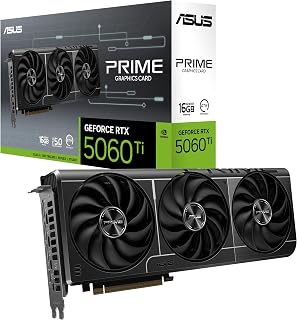
The Prime model delivers 16GB GDDR7 memory at a 2602 MHz clock speed, providing ample headroom for modern gaming at high settings without the premium OC branding adds. This capacity ensures texture-heavy titles and multitasking scenarios run smoothly through 2026 and beyond, making it a practical choice for builders prioritizing longevity over benchmark-topping frequencies.
Pros
- 16GB GDDR7 memory handles AI workloads and texture-heavy games
- Triple Axial-tech fans with 0dB idle run quietly under sustained load
- Dual BIOS switch toggles between quiet and performance profiles
- Compact 2.5-slot design with reinforced backplate prevents GPU sag
Cons
- Pure rasterization at 4K lags behind flagship cards
- Positioned above some competing options in the market
For buyers researching RTX 5060 cards in 2026, the ASUS Prime RTX 5060 Ti 16GB offers a compelling blend of capacity and cooling that justifies its position in the competitive mid-range segment. Built on NVIDIA's Blackwell architecture with 758 AI TOPS and DLSS 4, this card delivers strong 1440p gaming while handling ray tracing and AI workloads with ease. The triple Axial-tech fan configuration stands out for its engineering: dual-ball bearings rated for twice the lifespan of standard fans combined with 0dB idle technology keep the system silent during light tasks and whisper-quiet under load. The 16GB GDDR7 memory buffer is unusually generous at this tier, providing headroom for texture-heavy games, simultaneous creative applications, and AI model inference without stuttering. PCIe 5.0 connectivity and a reinforced metal backplate add future-proofing and structural integrity. The dual BIOS switch offers real flexibility between quiet and performance profiles. Where it trails is pure rasterization at 4K resolutions in flagship titles, though DLSS 4 largely compensates. The 2.5-slot compact design ensures compatibility across most chassis without sacrificing thermal performance.
GPU Specs: NVIDIA GeForce RTX 5060 Ti with Blackwell architecture, 2602 MHz boost clock, 2572 MHz default clock
Memory: 16GB GDDR7 at 2602 MHz memory clock speed
Design: 2.5-slot form factor with triple Axial-tech fans, dual BIOS switch, reinforced metal backplate
Connectivity: PCIe 5.0 x16 interface, dual DisplayPort 2.1, HDMI 2.1
Performance: 758 AI TOPS, supports DLSS 4 with OC mode up to 2602 MHz
Cooling: Dual-ball fan bearings, 0dB idle technology, GPU Tweak III thermal control software
Dimensions: 12 inches length, 4.7 inches width, 800g weight
Display Support: Up to 7680 x 4320 pixel resolution output
Warranty: 3-year coverage with ASUS registration
This card suits gamers upgrading from two-generation-old hardware who want 1440p excellence and content creators needing AI acceleration alongside gaming. The 16GB VRAM handles design software, large models, and multitasking workflows that lighter cards struggle with. Skip it if you're targeting 4K native rasterization in the most demanding AAA titles without upscaling, or if you're shopping strictly for the lowest entry point into RTX 5060 performance and don't need the extra memory capacity or premium cooling features.

GIGABYTE's WINDFORCE cooling system pairs with a 2512 MHz clock and 8GB GDDR7 to deliver dependable airflow at moderate boost speeds. This card suits budget-conscious builders in 2026 who need effective thermal management without elaborate RGB or extreme factory overclocks, focusing resources on core gaming capability.
Pros
- Most affordable entry to RTX 50 Series features
- WINDFORCE cooling provides proven thermal management
- PCIe 5.0 interface for latest motherboard compatibility
- Straightforward design without unnecessary premium features
Cons
- 8GB VRAM limits headroom for demanding textures
- Dual-fan setup less elaborate than triple-fan competitors
The GIGABYTE WINDFORCE RTX 5060 8G represents the most accessible entry point into the RTX 50 Series for 2026 buyers seeking current-generation features without premium pricing. Built on the same Blackwell architecture as higher-tier models, it delivers DLSS 4 upscaling and modern ray tracing capabilities in a straightforward package. The dual-fan WINDFORCE cooling system handles thermal management across the 8GB GDDR7 memory running at 28000 MHz effective speed, while the 2512 MHz boost clock provides solid baseline performance for 1080p and 1440p gaming. The PCIe 5.0 interface ensures compatibility with the latest motherboards, and DisplayPort plus HDMI outputs cover standard multi-monitor configurations. What makes this card particularly relevant for a 2026 buying guide is its position as a no-frills workhorse that gets you into NVIDIA's latest feature set without paying for elaborate RGB lighting, massive coolers, or extreme factory overclocks. The WINDFORCE branding indicates GIGABYTE's proven thermal design rather than experimental cooling. For shoppers who prioritize getting a current-generation card over maximum performance or aesthetic flourishes, this represents the most direct path to RTX 50 Series ownership.
GPU: NVIDIA GeForce RTX 5060 (Blackwell architecture)
Memory: 8GB GDDR7, 128-bit interface
Memory Clock: 28,000 MHz
GPU Clock: 2,512 MHz
Interface: PCIe 5.0 x16
Cooling: Dual-fan WINDFORCE system
Outputs: DisplayPort, HDMI
Max Resolution: 7680 x 4320 pixels
Dimensions: 7.83 inches L x 4.57 inches W
Power Profile: Dedicated graphics
Warranty: 3-year manufacturer coverage
Best for budget-focused gamers who want DLSS 4 and Blackwell architecture features in 2026 without paying for premium coolers or factory overclocks. Ideal if you're building a straightforward 1080p gaming system or upgrading an aging card to access modern rendering technologies. Skip this if you play at 4K, need VRAM for content work beyond basic video editing, or want ultra-quiet operation with 0dB fan modes. Also pass if RGB lighting and premium aesthetics matter to your build.
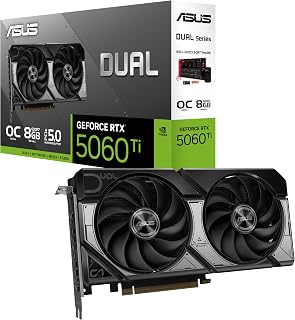
With an 8GB configuration and 2632 MHz boost clock, the Dual OC Edition targets gamers seeking solid 1080p and 1440p performance in a compact package. The triple DisplayPort 2.1b outputs future-proof multi-monitor setups, while the factory overclock provides extra frames without requiring manual tuning or voltage adjustments.
Pros
- Compact 2.5-slot design fits micro-ATX and SFF cases easily
- 2632 MHz OC boost clock delivers strong 1440p gaming
- Dual Axial-tech fans with 0dB idle mode run quietly
- Triple DisplayPort 2.1b and HDMI 2.1b with PCIe 5.0 support
Cons
- 8GB VRAM may limit future AAA titles and 4K workloads
- Fresh installs may need DDU cleanup for proper driver recognition
Shoppers hunting for RTX 5060 value in 2026 should consider the ASUS Dual RTX 5060 Ti 8GB as a space-conscious, price-aware entry into Blackwell architecture. This card targets 1440p gaming and small-form-factor builds where every millimeter counts. The 2632 MHz OC boost clock and 8GB GDDR7 memory deliver smooth frame rates across popular titles while keeping thermal output modest: users report 30-40 degrees Celsius during light loads and around 50 degrees during gaming sessions. The dual Axial-tech fans support 0dB idle mode, shutting down completely during web browsing or media playback for fanless silence. Beyond gaming, the card handles GPU-accelerated tasks like AI inference with models such as Llama3, making it versatile for hobbyist developers and creators. The 2.5-slot form factor is the real advantage here, fitting micro-ATX and SFF chassis without blocking adjacent PCIe slots or RAM access. Connectivity includes triple DisplayPort 2.1b and HDMI 2.1b outputs with PCIe 5.0 support. Dual ball bearings extend fan lifespan, and the dual BIOS feature allows instant toggling between Quiet and Performance modes. The 8GB VRAM ceiling is the primary constraint, potentially limiting headroom in future AAA titles or demanding 4K workloads.
Ideal for small-form-factor enthusiasts building compact systems, budget-conscious gamers upgrading from cards two to three years old, and users who value efficient cooling in tight spaces. The 8GB VRAM and strong 1440p performance make it suitable for mainstream gaming libraries and light AI work. Avoid if you're planning heavy 4K gaming, working with VRAM-intensive creative applications, or want maximum future-proofing at the 5060 Ti tier. Systems with residual AMD drivers may require DDU cleanup for proper recognition.
GPU Specs: NVIDIA GeForce RTX 5060 Ti, Blackwell architecture, 2632 MHz (OC), 2602 MHz (default)
Memory: 8GB GDDR7
Connectivity: PCI-Express x16 Gen 5, 3x DisplayPort 2.1b, HDMI 2.1b
Design: 2.5-slot, dual Axial-tech fans, dual ball bearings, 0dB idle mode
Features: Dual BIOS (Quiet/Performance), DLSS 4 support, 767 AI TOPS
Dimensions: 9 inches L x 4.7 inches W
Weight: 0.66 kg
Max Resolution: 4K (3840x2160)
Warranty: 3 years
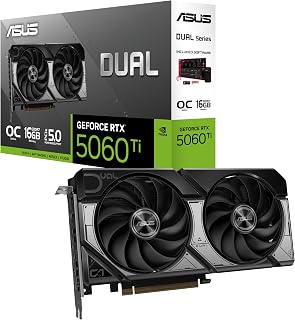
This Dual variant combines 16GB GDDR7 with a 2632 MHz overclock and triple DisplayPort 2.1b connectivity, addressing creators and enthusiasts who need both memory capacity and refresh flexibility. The extra VRAM handles demanding workloads like video editing or AI-assisted tasks that increasingly complement gaming in 2026.
Pros
- 16GB GDDR7 memory in a compact 2.5-slot form factor
- Axial-tech fans with barrier rings and 0dB idle mode
- Dual ball bearings rated for twice the lifespan of standard fans
- Dual BIOS toggles instantly between Quiet and Performance profiles
Cons
- Compact design limits extreme overclocking headroom
- Positioned above entry-level RTX 5060 options
Among RTX 5060 options in 2026, the ASUS Dual RTX 5060 Ti 16GB carves out a niche for buyers who refuse to compromise on VRAM but need compact dimensions. This card combines NVIDIA's Blackwell architecture with 767 AI TOPS and DLSS 4 support, targeting 1440p ultra settings and 4K high settings with confidence. The 16GB GDDR7 memory is the headline feature, providing capacity that outlasts most competing models at this performance tier. Axial-tech fan engineering is thoughtfully executed: smaller fan hubs enable longer blades that move more air, while barrier rings concentrate downward pressure onto the heatsink for efficient cooling. The 0dB technology shuts fans down during light gaming for complete silence, yet performance mode sustains the 2632 MHz boost clock under full load. Dual ball bearing fans promise twice the lifespan of sleeve bearings, and the 2.5-slot form factor maximizes case compatibility without sacrificing thermal efficiency. The dual BIOS design provides instant toggling between Quiet and Performance profiles tailored to your workload. PCIe 5.0 connectivity future-proofs the investment. The compact sizing prioritizes compatibility over extreme overclocking potential, and the positioning reflects strong performance rather than budget entry. Still, the combination of 16GB capacity and small footprint makes this a rare option for builders constrained by space but not ambition.
GPU and Memory: NVIDIA GeForce RTX 5060 Ti, 16GB GDDR7, 2632 MHz (OC Mode), 2602 MHz (Default Mode). Supports DLSS 4 and Blackwell architecture for AI-accelerated performance.
Connectivity and Cooling: 3x DisplayPort 2.1b, HDMI 2.1b, PCIe 5.0 x16 interface. Dual Axial-tech fans with dual ball bearings, 2.5-slot compact form factor, 0dB technology for silent idle operation.
Physical and System Requirements: Dimensions 9 inches long by 4.7 inches wide, weighs 0.66 kg. Supports maximum resolution of 7680x4320 pixels. Includes 3-year warranty and SpeedSetup manual. Compatible with standard desktop builds requiring adequate power supply and proper case ventilation.
Perfect for enthusiasts building powerful compact systems or upgrading small-form-factor PCs where VRAM capacity matters as much as physical dimensions. The 16GB buffer handles content creation, AI workloads, and high-texture gaming simultaneously. Skip if you're seeking the absolute lowest entry cost into RTX 5060 performance, prioritizing overclocking headroom over compact design, or building in a full tower where size constraints don't apply and larger cooling solutions are viable.
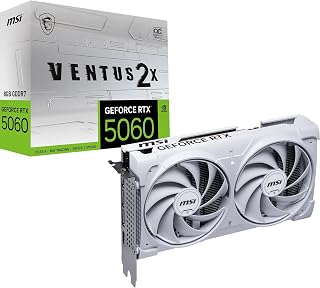
MSI's white Ventus aesthetic pairs dual TORX 5.0 fans with a 2527 MHz boost and 8GB GDDR7, appealing to builders matching specific case themes without sacrificing thermal performance. The PCIe 5.0 interface and modern display outputs ensure compatibility with current motherboards and monitors through the next upgrade cycle.
Pros
- Factory-overclocked Blackwell GPU at 2527MHz for strong 1080p performance
- GDDR7 memory at 28Gbps with DLSS 4.0 support for efficient frame generation
- Compact 197mm dual-slot design fits most mid-tower cases easily
- Low 145W TDP works with a 550W PSU, keeping total build cost down
Cons
- 8GB VRAM may struggle in texture-heavy AAA titles at ultra settings
- PCIe 5.0 x8 interface rather than full x16 bandwidth
When value is the primary filter, the MSI GeForce RTX 5060 Ventus 2X OC White earns its place near the top of any RTX 5060 shortlist. Built on NVIDIA's Blackwell architecture with 8GB of GDDR7 memory at 28Gbps, it punches well above entry-level expectations for 1080p gaming. The factory overclock pushes the GPU to 2527MHz, and DLSS 4.0 support further extends that headroom in compatible titles, making high-settings 1080p highly achievable without straining a modest PSU. At just 145W TDP and a 550W minimum system requirement, this card slots into budget builds without forcing a power supply upgrade. The 197mm dual-slot footprint fits virtually any mid-tower, and the dual TORX Fan 5.0 coolers with Zero Frozr mode keep things quiet during light use. Three DisplayPort 2.1b outputs plus one HDMI 2.1b future-proof the display setup. For shoppers comparing RTX 5060 options strictly on cost-efficiency, this MSI variant delivers modern ray tracing, efficient thermals, and compact dimensions at a sensible power budget.
GPU: NVIDIA GeForce RTX 5060 (Blackwell Architecture)
Memory: 8GB GDDR7, 28Gbps, 128-bit bus
Clock Speed: 2527 MHz (OC)
Power: 145W, 8-pin connector, 550W PSU recommended
Interface: PCIe 5.0 x8
Cooling: Dual TORX Fan 5.0, Zero Frozr, heat pipes, large heatsink
Dimensions: 197mm length, 2-slot design
Weight: 511 grams
Outputs: 3x DisplayPort 2.1b, 1x HDMI 2.1b
Max Resolution: 7680x4320
Best suited for budget builders upgrading from integrated graphics or an older entry-level card who want a no-fuss 1080p gaming experience with modern ray tracing. Also a good fit for compact mid-tower builds where card length is a concern. Skip it if you regularly play demanding AAA titles at ultra settings, as 8GB VRAM can become a bottleneck, or if your workloads require higher VRAM capacity at 1440p and above.
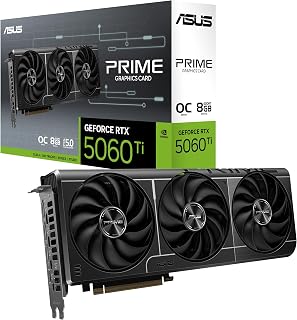
At 2647 MHz, this 8GB Prime Ti variant offers the same peak clock as its 16GB sibling but targets gamers who prioritize frame rates in competitive titles over VRAM capacity. The compact footprint and efficient cooling make it ideal for smaller cases where space constraints limit cooler size.
Pros
- 2647MHz boost clock delivers the highest out-of-box speed in the RTX 5060 tier
- Triple Axial-tech fans with 0dB mode balance sustained performance and near-silent idle
- Dual BIOS switch allows quick toggle between acoustic and performance profiles
- 2.5-slot compact profile maintains SFF compatibility without sacrificing cooling
Cons
- 8GB VRAM ceiling requires preset adjustments in the most demanding 1440p titles
- Not suited for professional GPU compute or 4K gaming workloads
Stepping up within the RTX 5060 family, the ASUS Prime RTX 5060 Ti OC Edition justifies the higher tier for buyers who want headroom beyond strict 1080p use. The boost clock reaches 2647MHz, backed by 8GB of GDDR7 memory, and DLSS 4 support makes 1440p gaming at high settings realistic rather than aspirational. For an RTX 5060-series price guide, this card occupies the upper end of the bracket and delivers measurably more performance to match. The Axial-tech triple-fan cooler with barrier rings and dual-ball bearings provides serious thermal overhead, and the 0dB fan-stop keeps the system silent during idle and light workloads. A dual BIOS switch lets buyers choose between an acoustic-focused and a performance-focused profile without software, which is a practical differentiator. The 2.5-slot compact profile also keeps this card compatible with Mini-ITX and small-form-factor cases. Connectivity includes both DisplayPort and HDMI outputs. For shoppers who want the best RTX 5060-tier card for the money rather than the cheapest entry point, the Prime RTX 5060 Ti OC Edition is the stronger long-term investment.
Ideal for 1080p and 1440p gamers who want extra performance headroom and plan to use DLSS 4 to maintain smooth frame rates. A strong pick for Mini-ITX and small-form-factor builders who need a compact card with capable cooling. Skip it if you are on the tightest possible budget or if you intend to push ultra settings across demanding new releases at 1440p, where the 8GB VRAM ceiling will require preset adjustments.
GPU: NVIDIA GeForce RTX 5060 Ti (Blackwell architecture)
Memory: 8GB GDDR7
Clock Speed: 2647 MHz (OC mode), 2617 MHz (default)
AI Performance: 772 AI TOPS
Interface: PCIe 5.0 x16
Output Ports: DisplayPort 2.1, HDMI 2.1
Cooling: Triple Axial-tech fans with dual-ball bearings, 0dB technology
Form Factor: 2.5-slot, SFF-ready
Power Input: Single 8-pin connector
Max Resolution: 7680 x 4320
Dimensions: 12 inches (L) x 4.7 inches (W)
Weight: 1200g
Warranty: 3 years

Featuring the highest factory overclock in the Prime lineup at 2647 MHz alongside 16GB GDDR7, this OC Edition maximizes frame rates while retaining the straightforward thermal design Prime cards are known for. It suits gamers who want performance gains without investing in bulkier triple-fan cooling solutions.
Pros
- 16GB GDDR7 provides exceptional headroom for longevity
- Triple-fan cooling with 0dB mode runs nearly silent
- Dual BIOS and accessible tuning software
- Compact 2.5-slot design with reinforced backplate
Cons
- Gaming gains over previous generation are incremental
- SFF-ready claim requires case compatibility verification
For a 2026 RTX 5060 purchase focused on value and longevity, the ASUS Prime RTX 5060 Ti 16GB stands out with its doubled memory configuration. That 16GB GDDR7 buffer is the key differentiator here, offering headroom that the standard 8GB models simply can't match as game textures and AI-assisted rendering features grow more demanding. The Blackwell architecture brings DLSS 4 support, ensuring compatibility with upscaling technology that will remain relevant through the card's lifespan. The triple Axial-tech fan cooling system delivers genuinely quiet operation thanks to 0dB technology during everyday use, while the 2.5-slot, 12-inch form factor keeps it compact enough for most builds. The dual BIOS switch and GPU Tweak III software provide accessible tuning without requiring deep technical knowledge. While gaming performance improvements over prior generations are incremental rather than transformative, the substantial VRAM makes this card particularly future-resistant for mixed workloads. The reinforced metal backplate adds durability. If you're planning to keep this card through 2028 or beyond, the memory investment pays dividends in sustained performance as software demands escalate.
GPU: NVIDIA GeForce RTX 5060 Ti (Blackwell Architecture)
Memory: 16GB GDDR7
GPU Clock: 2647 MHz (OC), 2617 MHz (Default)
Memory Clock: 2647 MHz
Cooling: Triple Axial-tech Fans, Dual-ball Bearings, Dual BIOS (Quiet/Performance)
Power: PCIe 5.0 x16 Interface
Outputs: DisplayPort 2.1, HDMI 2.1
Max Resolution: 7680x4320
Physical: 2.5-slot, 12 inches long, 4.7 inches wide, 3.2 pounds
AI Performance: 772 AI TOPS
Warranty: 3 Years
This card suits buyers who need VRAM headroom for content creation, local AI experimentation, or future-proofing their 1440p gaming setup through multiple upgrade cycles. It's also ideal for users upgrading from cards several generations old who want a meaningful performance leap with quiet operation. Skip this if you're purely chasing maximum gaming frame rates on a budget, as the 8GB models offer better cost-per-frame for today's titles. Also avoid if your case can't accommodate the 12-inch length or 2.5-slot width.
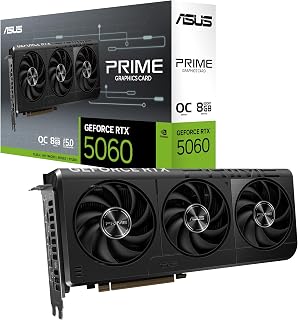
The 2.5-slot design keeps system compatibility broad while the 2565 MHz OC and 8GB GDDR7 handle current AAA titles efficiently. Triple DisplayPort 2.1b outputs support high-refresh monitors and VR setups, making this a versatile option for gamers upgrading compact or mid-tower builds in 2026.
Pros
- Triple-fan cooling in compact 10.55-inch, 2.5-slot design
- Dual BIOS with 0dB quiet mode for flexible operation
- Three DisplayPort 2.1b outputs for multi-monitor setups
- Axial-tech fans with directional airflow engineering
Cons
- 8GB VRAM requires setting compromises in demanding AAA titles
- No long-term customer reliability data yet available
Among RTX 5060 options available in 2026, the ASUS Prime 8GB OC Edition balances affordability with thoughtful engineering that extends beyond basic specifications. The triple Axial-tech fan configuration stands out in the 8GB segment, delivering cooling typically reserved for higher-tier models while maintaining a 2.5-slot profile that fits compact cases. The smaller fan hub with longer blades and directional airflow design represents deliberate thermal engineering rather than cost-cutting. At 10.55 inches long, it accommodates small-form-factor builds where larger cards won't fit. The dual BIOS system provides tangible flexibility, letting you prioritize silent operation via 0dB technology during everyday tasks or switch to performance mode when gaming. That 2565 MHz boost clock pairs with 8GB GDDR7 and DLSS 4 support to handle 1440p gaming smoothly in modern titles. The 623 AI TOPS processing capability brings AI-assisted rendering features without requiring flagship hardware. Three DisplayPort 2.1b outputs plus HDMI 2.1b future-proof your display connectivity. For buyers in 2026 who need a compact card with better-than-basic cooling and dual-mode operation, this represents the sweet spot between entry-level pricing and thoughtful feature implementation that enhances daily usability.
GPU Architecture: NVIDIA Blackwell (GeForce RTX 5060)
Memory: 8GB GDDR7 at 2565 MHz
Core Clock: 2535 MHz (Standard), 2565 MHz (OC Mode)
AI Performance: 623 AI TOPS
Outputs: 3x DisplayPort 2.1b, 1x HDMI 2.1b
Form Factor: 2.5-Slot, 10.55in x 4.72in x 4.3in (approx)
Cooling: Triple Axial-Tech Fans, 0dB Technology
Interface: PCIe 5.0
Max Resolution: 7680 x 4320 pixels
Weight: 0.7 kg
BIOS: Dual BIOS (Quiet and Performance profiles)
Perfect for small-form-factor builders who need triple-fan cooling in a compact footprint, or users in shared spaces where quiet operation during non-gaming tasks matters. Also suits 1440p gamers who want dual BIOS flexibility and future-ready display outputs without paying for 16GB VRAM they won't use. Avoid if you're targeting 4K gaming, working with high-resolution textures in content creation, or need a card for professional rendering workloads where the 8GB buffer becomes a bottleneck.

Pros
- Compact 8.19-inch form factor
- Dual-fan WINDFORCE cooling
- DLSS 4 support
- HDMI and DisplayPort
Cons
- 8GB can constrain 4K creation
- PCIe x8 interface
Small-form-factor concerns can shape an RTX 5060 choice as much as gaming features, and the WINDFORCE OC addresses that side of the decision. At 8.19 inches long, it is built around a dual-fan WINDFORCE cooling system rather than the larger three-fan layouts used by some alternatives. That makes its compact form factor a central reason to shortlist it for desktop builds, while still retaining an RTX 5060 Ti GPU with a 2587 MHz clock and 8GB of GDDR7 memory. For gaming, this card brings NVIDIA Blackwell architecture, enhanced RT Cores, Tensor Cores, and DLSS 4 support. The existing assessment places it at 1440p Ultra settings, with the AI features intended to raise supported-game frame rates. PCIe 5.0 is listed, although the card uses a PCIe x8 interface. HDMI and DisplayPort are available for displays, and the 28000 MHz memory speed adds another clear specification for comparison. The limitation is memory capacity: 8GB suits 1440p gaming and most creative work, but the write-up identifies 4K creation and very large datasets as scenarios where cards with more memory are preferable.
GPU and Memory: NVIDIA GeForce RTX 5060 Ti (Blackwell), 8GB GDDR7, 128-bit memory interface, 28000 MHz memory clock
Performance: 2587 MHz boost clock, PCIe 5.0 support, maximum resolution 7680 x 4320
Cooling and Power: Dual-fan WINDFORCE cooling system, compact design 8.19 inches long
Connectivity: DisplayPort and HDMI outputs for flexible multi-monitor support
Warranty and Support: 3-year manufacturer warranty, includes manual and documentation
Buy this card for a desktop where its 8.19-inch, dual-fan design is more practical than a larger model, and where 1440p gaming, DLSS 4 support, or most creative applications are the intended workloads. It is also a sensible match for users needing both HDMI and DisplayPort. Skip it for 4K content creation or work involving massive datasets, where the 8GB GDDR7 allocation may not be enough, or if you specifically need more than a PCIe x8 connection.
What to Look for When Buying an RTX 5060 or RTX 5060 Ti
8GB vs. 16GB VRAM: Which Capacity Do You Actually Need?
The RTX 5060 Ti comes in both 8GB and 16GB GDDR7 configurations, and the difference matters more than most buyers expect. If you game primarily at 1080p with some 1440p sessions, 8GB handles the vast majority of current titles without issue.
However, if you’re doing any content creation, running AI workloads, or want to stay ahead of rising VRAM demands in upcoming games, the 16GB variants like the ASUS Prime GeForce RTX 5060 Ti 16GB GDDR7 offer a meaningful buffer. The ASUS Dual and Prime 16GB models both sit in the same bracket and are worth comparing side by side.
Cooling Design and Slot Width
Most cards in this lineup use a 2.5-slot design, which strikes a solid balance between thermal headroom and case compatibility. The ASUS TUF Gaming GeForce RTX 5060 Ti 8GB GDDR7 OC steps up to a 3.1-slot footprint with three Axial-tech fans, which keeps temperatures lower under sustained load.
For small form factor builds, the SFF-Ready designation on ASUS Prime and Dual cards is a genuine advantage. The ASUS Dual GeForce RTX 5060 Ti 8GB GDDR7 OC Edition and the ASUS Prime variants are explicitly certified for compact chassis without sacrificing airflow.
Clock Speeds and OC Modes
Factory overclocked variants give you a modest but real performance edge out of the box. The ASUS TUF Gaming GeForce RTX 5060 Ti 8GB GDDR7 OC leads the Ti lineup with a 2692 MHz OC boost clock, while the ASUS Prime OC Edition cards hit 2647 MHz. The non-Ti RTX 5060 cards clock slightly lower but still benefit from DLSS 4 and the full Blackwell feature set.
If you want the most aggressive factory overclock on the base RTX 5060, the MSI GeForce RTX 5060 8G Ventus 2X OC White is a strong contender. It’s compact at 197mm and draws only 145W, making it ideal for mid-range systems with modest power supplies. Pair it with one of the options from our best 1440p monitor guide and you’ll have a well-matched setup.
PCIe 5.0 and Future Compatibility
Every card in this roundup supports PCIe 5.0, which ensures maximum bandwidth headroom on modern platforms. In practice, most gaming workloads won’t saturate PCIe 4.0 let alone 5.0, but the upgrade means these cards won’t bottleneck on next-generation motherboards either.
The GIGABYTE GeForce RTX 5060 WINDFORCE OC 8G and the GIGABYTE GeForce RTX 5060 Ti WINDFORCE OC 8G both confirm PCIe 5.0 support alongside WINDFORCE cooling. They represent some of the more value-focused options in this generation. Our picks for the best GPUs under $300 might also be worth a look if you’re building a secondary rig or a budget-first system.
Dual BIOS and Silent Mode
Several ASUS cards here include a Dual BIOS switch, letting you toggle between Quiet and Performance profiles without any software. Combined with 0dB technology that stops the fans entirely during light loads, this makes for a noticeably quieter desktop experience.
The ASUS Prime GeForce RTX 5060 8GB GDDR7 OC Edition brings this feature to the base RTX 5060 tier, making it one of the more refined choices if noise levels matter to you. If you’re also planning a new case around your GPU choice, our guide to the best PC cases for RTX 5070 builds covers many enclosures that work just as well with the 5060 series.
Final Thoughts
The RTX 5060 generation offers a strong range of options whether you’re building lean or going all-in on VRAM. For budget-conscious buyers who still want solid Blackwell performance, the GIGABYTE GeForce RTX 5060 WINDFORCE OC 8G Graphics delivers a clean, no-frills package that covers 1080p and 1440p gaming with room to spare. If you want the most headroom and the most refined cooling in the Ti lineup, the ASUS TUF Gaming GeForce RTX 5060 Ti 8GB GDDR7 OC stands out with its military-grade build, aggressive boost clocks, and durable three-fan thermal solution.
Frequently Asked Questions
What is the difference between the RTX 5060 and the RTX 5060 Ti?
The RTX 5060 Ti sits above the base RTX 5060 in NVIDIA’s Blackwell lineup, offering higher boost clocks, more AI TOPS, and availability in 16GB GDDR7 configurations. The base RTX 5060 is more compact and power-efficient, making it a better fit for smaller builds or anyone who doesn’t need the extra headroom. Both share the same Blackwell architecture and DLSS 4 support.
Is the RTX 5060 good for 1440p gaming in 2026?
Yes, the RTX 5060 handles 1440p gaming well in 2026, especially with DLSS 4 enabled. DLSS 4’s Multi Frame Generation can dramatically boost frame rates beyond what raw hardware alone would produce. For the smoothest 1440p experience, pairing your card with a high-refresh monitor is the next logical step, and our monitor guide for RTX 5070 Ti builds covers displays that also pair well with the 5060 series.
How much power does the RTX 5060 require?
The base RTX 5060, such as the MSI GeForce RTX 5060 8G Ventus 2X OC White, draws around 145W and is recommended with a 550W power supply. The RTX 5060 Ti variants draw more wattage depending on the cooler and OC profile. Always verify your PSU headroom before upgrading, especially in compact or older systems.
Should I buy an 8GB or 16GB RTX 5060 Ti in 2026?
For pure gaming at 1080p and 1440p, 8GB GDDR7 is sufficient for the current game library and then some. The 16GB variants like the ASUS Dual GeForce RTX 5060 Ti 16GB GDDR7 OC or the ASUS Prime GeForce RTX 5060 Ti 16GB GDDR7 OC make more sense if you run AI applications, stream, or do creative work alongside gaming. In 2026, the 16GB versions offer better long-term peace of mind as texture budgets in games continue to grow.




Write Your Review
No reviews yet. Be the first to share your experience!