

You have narrowed your next GPU upgrade down to two compelling options: the NVIDIA GeForce RTX 5070 Ti or the AMD Radeon RX 9070 XT. Both cards target high-performance 1440p and 4K gaming, but they take very different approaches to get there. Picking the wrong one for your setup could leave real performance on the table.
This guide compares the strongest models from each camp, covering NVIDIA Blackwell cards with DLSS 4 support alongside AMD RDNA 4 cards with FSR 4 upscaling. Whether you are building a compact rig or a full-tower powerhouse, you will find a clear recommendation here. If you are the type who researches every purchase carefully, you probably already appreciate a well-curated shortlist, much like a solid guide to top hardside spinner luggage options that cuts through the noise.
Quick Comparison
Ratings reflect the most recent data pull. Check each listing for current price and availability.
Quick answer
This guide compares 10 picks, with ZOTAC RTX 5070 Ti Solid SFF OC 16GB GDDR7 Compact ranked first. GIGABYTE Radeon RX 9070 XT Gaming OC 16GB GDDR6 PCIe holds the highest customer rating among them. Sapphire Pulse AMD Radeon RX 9070 XT 16GB Gaming GPU has the most customer reviews.

ZOTAC's compact design features GDDR7 memory running at 28 Gbps, offering significantly higher bandwidth than GDDR6 alternatives for better performance in memory-intensive scenarios. DLSS 4 technology provides AI-enhanced frame generation that dramatically boosts frame rates in supported titles. The IceStorm 2.0 cooling system keeps temperatures in check despite the small form factor, making this perfect for compact gaming builds without sacrificing performance.
Pros
- Full RTX 5070 Ti performance in a 2-slot, 12-inch form factor
- 16GB GDDR7 at 28 Gbps with PCIe 5.0 support
- DLSS 4 delivers significant performance multipliers in supported titles and apps
- Bundled GPU support stand and pass-through airflow design aid long-term system health
Cons
- Requires a robust PSU and careful case clearance planning despite its compact size
- Newer generation card means real-world long-term performance data is still limited
In a head-to-head between the RTX 5070 Ti and RX 9070 XT, the ZOTAC Gaming RTX 5070 Ti Solid SFF OC carves out a distinct niche: it brings full RTX 5070 Ti firepower to builders who can't fit a triple-slot behemoth. The 2-slot, 12-inch body houses 16GB of GDDR7 memory on a 256-bit bus running at 28 Gbps, backed by PCIe 5.0 bandwidth and DLSS 4 for AI-driven frame generation. IceStorm 2.0 cooling with three 90mm BladeLink fans manages thermals during sustained workloads, while the metal backplate and bundled GPU support stand show ZOTAC planned for long-term reliability. Owner reports highlight strong results in Blender rendering and Substance Painter, making it competitive for creative workloads alongside gaming. For anyone choosing between these two top-tier cards and also wrestling with a compact case, this is the only RTX 5070 Ti option that solves both problems simultaneously without surrendering the performance advantage Blackwell architecture delivers over the competing AMD offering.
GPU Architecture: NVIDIA GeForce RTX 5070 Ti, Blackwell generation
Memory: 16GB GDDR7, 256-bit interface, 28 Gbps bandwidth
Connectivity: PCIe 5.0 x16, 3x DisplayPort 2.1b, 1x HDMI 2.1b, supports 4 displays, 8K capable
Cooling: IceStorm 2.0 Advanced Cooling with 3x 90mm BladeLink fans, composite heatpipes, FREEZE Fan Stop, Active Fan Control
Physical: 12 inches long, 1.6 inches wide, 4.7 pounds, 2-slot design
Warranty: 3-year manufacturer warranty
Included Accessories: GPU Support Stand, 2x 8-pin-to-16-pin cable adapter, User Manual, Quick Start Guide
Best suited for SFF PC builders who want the RTX 5070 Ti's Blackwell performance and DLSS 4 support but are constrained by case dimensions. Also a strong pick for creators running Blender or Substance Painter inside a compact workstation. Skip it if you have a standard mid-tower with no space limitations and would rather pay for a larger cooler, or if your power supply and case clearance cannot comfortably support this card's demands.
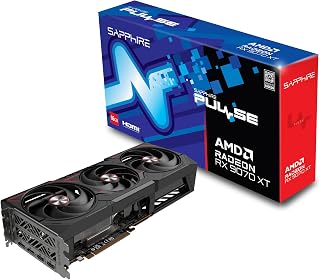
The Sapphire Pulse delivers strong 1440p and 4K gaming performance with its 16GB of GDDR6 memory, ensuring smooth frame rates in demanding titles throughout 2026. The 2970 MHz clock speed provides reliable performance for high-refresh-rate gaming, while AMD RDNA 4 architecture brings improved efficiency and modern features. Multiple DisplayPort and HDMI outputs make this card versatile for multi-monitor setups that serious gamers often prefer.
Pros
- Rivals RTX 5070 Ti frame rates at 1440p and ultrawide resolutions
- Triple-fan cooling maintains quiet operation and stable 3100MHz clocks
- 16GB GDDR6 with 8K output support covers demanding workloads
- Low idle power draw of 10 to 30W improves overall system efficiency
Cons
- Weaker anti-aliasing in VR applications compared to Nvidia alternatives
- Large physical size requires case clearance verification before purchase
In a direct shootout between the RTX 5070 Ti and the RX 9070 XT, the Sapphire Pulse RX 9070 XT makes a compelling case for Team Red. Powered by RDNA 4 architecture with 16GB of GDDR6 memory, it rivals the RTX 5070 Ti in real-world frame rates, hitting 60 to 120 FPS at 1440p ultra settings and sustaining 60-plus FPS at demanding 5120x1440 ultrawide resolutions in AAA titles. Clock speeds hold stable around 3100MHz under load, and the triple-fan cooling system keeps the card running quietly with memory temperatures near 78C. Idle draw sits between 10 and 30W, while gaming loads land in the 140 to 250W range, giving it a favorable efficiency profile against the 5070 Ti. Ray tracing performance is solid, and the RDNA 4 architecture scales well across varied gaming workloads. The 8K-capable output and PCIe x16 interface future-proof the build. For buyers weighing these two cards, the Pulse RX 9070 XT delivers flagship-tier gaming performance backed by Sapphire's strong thermal design and a 2-year warranty.
Gaming Performance: 60-120 FPS at 1440p ultra settings with AAA titles. 180+ FPS possible in optimized games. Ultrawide support delivers 60+ FPS at 5120x1440 native resolution with quality settings maxed.
Thermal Performance: GPU core under 50C during sustained gaming, memory peaks at 78C. Idle temperatures around 32C. Consistent performance without throttling during extended sessions.
Clock Speeds: Stable overclocks to 3100MHz verified by users. Factory settings at 2970MHz provide reliable baseline performance with headroom for enthusiasts.
Power Efficiency: 10-30W idle, 140-250W gaming load at 1440p. Excellent power efficiency compared to competing high-end cards, reducing system power supply requirements.
This card suits 1440p and ultrawide gamers who are choosing between AMD and Nvidia and want top-tier frame rates without committing to the RTX 5070 Ti. It is also a strong fit for those upgrading from mid-range cards who want a significant performance leap. Skip it if VR is a primary use case, since anti-aliasing in applications like VRChat trails Nvidia, or if you need a fully mature driver ecosystem, as RDNA 4 is still relatively new.

The ASUS Prime brings GDDR7 memory to the table, delivering superior bandwidth compared to GDDR6 cards for smoother performance in demanding titles. Running at 2482 MHz with 16GB capacity, this card handles modern games at high settings with ease. Five native video outputs including three DisplayPort 2.1a connections provide exceptional flexibility for multi-display setups that content creators and gamers appreciate.
Pros
- Boost clocks up to 2482 MHz with confirmed overclocking beyond 3300 MHz
- Phase-change thermal pad and Axial-tech fans hold temps in the 60 to 68 degree Celsius range
- Dual BIOS lets you choose quiet or maximum performance modes
- Five video outputs (3x DP 2.1a, 2x HDMI 2.1b) support flexible multi-monitor configs
Cons
- Requires a 750W PSU with a 16-pin 12VHPWR connector, which may mean a system upgrade
- SFF-optimized dimensions may feel like overkill for users in standard full-size cases
When stacking the RTX 5070 Ti against the RX 9070 XT, the ASUS Prime RTX 5070 Ti makes a compelling case on multiple fronts. The Blackwell GPU paired with 16GB of GDDR7 and boost clocks reaching 2482 MHz consistently pushes 100 to 150-plus fps in demanding titles at 1440p, with solid 4K output when DLSS 4 is active. Thermals are a genuine strength: the premium phase-change GPU thermal pad, Axial-tech fans with dual-ball bearings, and 2.5-slot heatsink keep the GPU in the 60 to 68 degree Celsius range across extended sessions. The dual BIOS setup lets you shift between quiet and performance profiles depending on the workload. Five video outputs including three DisplayPort 2.1a and two HDMI 2.1b ports cover virtually any multi-monitor configuration. Overclocking headroom is real, with users reporting stable clocks beyond 3300 MHz. For buyers comparing these two architectures directly, the ASUS Prime adds DLSS 4 and proven overclocking upside that AMD's offering cannot match.
GPU: NVIDIA GeForce RTX 5070 Ti (Blackwell architecture)
Memory: 16GB GDDR7
Memory Interface: 256-bit
Boost Clock: 2482 MHz (OC mode), 2452 MHz (default)
Memory Clock: 2482 MHz
Cooling: 3x Axial-tech fans with dual-ball bearings, premium phase-change thermal pad
Power Requirement: 750W PSU minimum with 16-pin 12VHPWR connector
Connectivity: 3x DisplayPort 2.1a, 2x HDMI 2.1b
Interface: PCI-Express 5.0 x16
Physical Dimensions: 304mm length, 2.5 slots, 2.6 lbs
Max Resolution: 7680x4320
Warranty: 3 years
Included Accessories: GPU bracket, Velcro hook and loop straps, 1-to-3 adapter cable, speed setup manual
Ideal for 1440p and 4K gamers who want high refresh-rate performance with DLSS 4 and room to overclock, packaged in a compact frame that also suits smaller cases. A strong pick for users running multi-monitor setups given its five output ports. Skip it if your case is not SFF optimized and you want a larger triple-slot cooler, or if your current PSU lacks a 16-pin 12VHPWR connector and you prefer to avoid that upgrade.
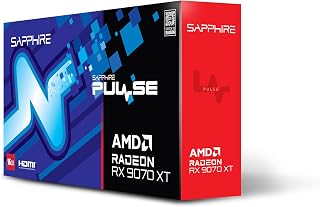
This Sapphire Pulse model offers dual HDMI and dual DisplayPort outputs, providing exceptional connectivity options for diverse monitor configurations. The 16GB GDDR6 memory ensures ample capacity for high-resolution textures in modern games. Multiple HDMI ports make this particularly useful for gamers who want to connect both a high-refresh gaming monitor and a TV without constantly swapping cables.
Pros
- Exceeds 200fps at 1440p in modern titles with overclocking potential to 3440MHz
- FSR 4 provides a competitive answer to Nvidia DLSS for image quality and performance
- Quiet, efficient cooling outperforms previous AMD generation cards
- Dual HDMI and dual DisplayPort outputs enable flexible multi-monitor configurations
Cons
- No RGB lighting, which may not suit aesthetics-focused builds
- Large form factor at roughly 11.81 inches demands careful case planning
When stacking the RX 9070 XT against the RTX 5070 Ti, this Sapphire Pulse variant stands out for its raw 1440p throughput and overclocking headroom. Users consistently report frame rates exceeding 200fps in modern titles at 1440p, and the card's architecture allows experienced builders to push clocks to 3440MHz and beyond, narrowing or erasing any gap with the 5070 Ti in workloads that scale with frequency. The 16GB GDDR6 buffer on a 256-bit bus handles both high-refresh gaming and 4K content creation without VRAM bottlenecks. FidelityFX Super Resolution 4 adds another lever for image quality and frame generation, a direct counterpoint to Nvidia's DLSS. Cooling and acoustics are competitive strengths: the Pulse thermal design runs noticeably cooler and quieter than older generation AMD cards. Dual HDMI and dual DisplayPort outputs support flexible multi-monitor setups, which is relevant for users considering whether the 5070 Ti's display connectivity justifies its position. The card measures approximately 11.81 inches, so case compatibility is a practical requirement rather than an afterthought.
Memory and Architecture: 16GB GDDR6 memory on 256-bit bus, AMD RDNA 4 architecture with 64 compute units, 2500 MHz memory clock speed
Display Output: Dual HDMI and Dual DisplayPort connections support up to 3840x2160 (4K) resolution
Power and Compatibility: PCIe x16 interface, compatible with desktop systems, professional and gaming-class performance tier
Overclocking Potential: Users report stable operation at 3440 MHz with -75mV undervolting and +10 power limit adjustments, indicating strong silicon quality and thermal headroom
Ideal for 1440p high-refresh gamers comparing AMD and Nvidia who want strong overclocking flexibility to extract maximum performance from their build. Content creators handling 4K workloads will also benefit from the 16GB buffer. Skip it if RGB lighting matters to your build aesthetic, as this card ships without it, or if your case cannot accommodate a card close to 12 inches in length.

GIGABYTE's Gaming OC variant pushes the envelope with a factory overclock to 3060 MHz, making it one of the fastest RX 9070 XT options available. This higher clock speed translates directly to better frame rates in GPU-intensive games, giving competitive players the edge they need. The 16GB GDDR6 memory ensures future-proofing for increasingly demanding textures and assets in upcoming AAA releases.
Pros
- Factory 3060MHz boost clock and PCIe 5.0 support target current and future platforms
- 160 to 220fps at 1440p high settings competes directly with the RTX 5070 Ti
- WINDFORCE cooling with Hawk fans runs quietly under sustained gaming loads
- 16GB GDDR6 removes VRAM constraints for both gaming and professional workloads
Cons
- Requires a minimum 750W power supply, which may necessitate an upgrade in older builds
- Raw benchmarking performance still trails the RTX 5090 for users prioritizing absolute peak output
The GIGABYTE Radeon RX 9070 XT Gaming OC enters the RTX 5070 Ti comparison with a factory-overclocked 3060MHz boost clock and PCIe 5.0 support, two specs that signal it is built for current and next-generation systems rather than legacy setups. At 1440p, users report 160 to 220fps in modern AAA titles at high settings, a frame-rate range that competes directly with the 5070 Ti in the resolutions most buyers actually target. The 16GB GDDR6 buffer eliminates the VRAM limitations that have defined older mid-range cards, and 4K gaming at medium to high settings extends its utility beyond pure 1440p use. WINDFORCE cooling with Hawk fans and server-grade thermal gel keeps temperatures in check while remaining quiet during sustained gaming sessions. At 11.34 inches long and 5.2 inches wide, it fits most contemporary cases. PCIe 5.0 compatibility distinguishes it from cards still relying on older interfaces, giving it a forward-looking edge in the 5070 Ti versus 9070 XT decision. Build stability after driver installation has been reported as reliable over the long term.
Core Specifications
GPU: AMD Radeon RX 9070 XT
Memory: 16GB GDDR6
Memory Clock: 2600 GHz
GPU Clock: 3060 MHz
Interface: PCIe 5.0 x16
Max Resolution: 7680 x 4320 (8K)
Physical and Connectivity
Dimensions: 11.34 inches (L) x 5.2 inches (W)
Weight: 1.78 kg
Output: DisplayPort
Power Connectors: Dual 8-pin (750W+ PSU recommended)
Cooling: WINDFORCE system with Hawk fans and thermal gel
Warranty and Support
Manufacturer: GIGABYTE
Warranty: 3 years
Model: GV-R9070XTGAMING OC-16GD
Gaming Performance at Common Resolutions
1440p Gaming: 160-220fps on most modern AAA titles at high settings. Excellent for competitive gaming and high-refresh monitors.
4K Gaming: Playable at high settings on most titles, medium settings on demanding new releases. Solid for content creators monitoring in 4K.
Esports Titles: 300+ fps possible on optimized competitive games for ultra-high refresh gameplay.
Real-World Use Cases
Best suited for 1440p gaming at 144+ fps, 4K content creation workflows, professional 3D rendering, and VR gaming. Handles flight simulators like DCS at high settings with 4K head tracking. Eliminates VRAM constraints for media professionals working with large files.
Driver Recommendations
Run DDU (Display Driver Uninstaller) before installation if upgrading from another card. Install latest AMD drivers for maximum stability and performance. Update BIOS if required by your system for PCIe 5.0 compatibility.

ASUS pushes the RX 9070 XT to 3030 MHz in this OC Edition, delivering some of the highest clock speeds available for maximum gaming performance. The combination of GDDR6 memory and this aggressive overclock ensures excellent frame rates at 1440p and competitive 4K performance. Three DisplayPort 2.1a outputs alongside native HDMI 2.1b support modern high-refresh displays and next-generation connectivity standards.
Pros
- 3030 MHz boost clock with dual BIOS for switching between quiet and performance profiles
- GPU temps under 60C during sustained stress tests, idle at 28-32C in Quiet mode
- 180-190W power draw runs 15-20W below competing cards at similar performance levels
- 16GB GDDR6 with PCIe 5.0 and native DisplayPort 2.1a handles 4K and 8K output
Cons
- At 12.3 inches, physical length requires case measurement before purchase
- Early driver issues were reported, though resolved through subsequent AMD updates
In a head-to-head against the RTX 5070 Ti, the ASUS Prime RX 9070 XT makes a strong case for the AMD side of this comparison. Its 16GB GDDR6 buffer and PCIe 5.0 interface keep it competitive at 4K, where users have documented 50% FPS improvements over previous mid-range hardware and smooth frame delivery in demanding titles. The boost clock reaches 3030 MHz in Performance mode without thermal throttling, while GPU temperatures stay below 60C under sustained load thanks to phase-change thermal pads. Quiet mode drops idle temps to 28-32C with near-silent fan operation, a meaningful advantage for all-day workstations. The Axial-tech fans with dual-ball bearings are engineered for twice the service life of standard designs, reinforcing long-term reliability. Power draw of 180-190W sits 15-20W below comparable cards at this performance tier, which matters when sizing a system around either this card or the RTX 5070 Ti. The 2.5-slot compact footprint also makes case compatibility less of a concern than many competitors in this class.
Memory and Bus: 16GB GDDR6, 256-bit interface, 3030 MHz memory clock
Architecture: AMD Radeon RX 9070 XT, PCIe 5.0 x16, 3030 MHz boost clock (OC mode), 2480 MHz game clock (OC mode)
Connectivity: 3x DisplayPort 2.1a, 1x HDMI 2.1b, maximum resolution 7680 x 4320
Cooling: 3x Axial-tech fans with dual-ball bearings, phase-change thermal pad, 0dB idle technology, 2.5-slot design
Software: Dual BIOS switch (Quiet and Performance profiles), GPU Tweak III for performance tuning and monitoring, ASUS GPU Guard protection
Dimensions and Power: 12.3 inches long, 5.1 inches wide, approximately 1500g, estimated 180-190W typical draw
Warranty: 3-year manufacturer coverage
Buyers who are choosing between this card and the RTX 5070 Ti and lean toward AMD's ecosystem will find strong value here, particularly those prioritizing power efficiency, silent operation, and proven thermal management. Linux users benefit from seamless driver integration. Skip it if you need absolute top-tier performance that rivals the upper range of the RTX 5070 Ti, or if you rely on NVIDIA-exclusive features like DLSS.

XFX's Swift edition combines a triple-fan cooling solution with AMD RDNA 4 architecture to maintain consistent performance during extended gaming sessions. The 16GB memory capacity handles modern games at high settings while the 2970 MHz clock delivers smooth gameplay at 1440p and 4K resolutions. Multiple display outputs including three DisplayPort connections make this ideal for enthusiasts running multi-monitor configurations.
Pros
- 16GB GDDR6 paired with RDNA 4 architecture handles both 4K gaming and creative workloads
- Triple-fan SWFT cooler runs quieter than reference designs during extended sessions
- HDMI plus three DisplayPort outputs support ultrawide and multi-monitor configurations
- Solid metal shroud and professional PCB layout reflect reliable AIB build standards
Cons
- Large cooler footprint demands case clearance verification before ordering
- Fewer third-party optimization tools available compared to NVIDIA-focused ecosystems
When stacked against the RTX 5070 Ti, the XFX Swift RX 9070 XT competes on AMD RDNA 4 efficiency and a generous 16GB GDDR6 memory pool that handles 1440p and 4K gaming alongside workloads like video editing and 3D rendering. The 2970 MHz boost clock delivers consistent frame rates across demanding AAA titles, and the triple-fan SWFT cooling system sustains those clocks through extended sessions without performance degradation. For this comparison specifically, the connectivity layout stands out: HDMI plus three DisplayPort outputs give multi-monitor and ultrawide users real flexibility that the RTX 5070 Ti will also need to match in a buyer's setup. The metal shroud and clean PCB construction reflect XFX's standing as an established AIB partner. Noise levels are noticeably lower than reference designs, an advantage for home office or streaming environments where the RTX 5070 Ti's acoustics may also be a deciding factor. AMD driver support has been solid, though the ecosystem is narrower than NVIDIA's for third-party optimization tools.
GPU: AMD Radeon RX 9070 XT (RDNA 4)
Memory: 16GB GDDR6
Boost Clock: Up to 2970 MHz
Cooling: XFX SWFT Triple Fan Design
Video Outputs: 1x HDMI, 3x DisplayPort
Brand: XFX
Model: RX-97TSWF3BA

The ROG Strix variant stands out with its aggressive 2625 MHz overclock and premium cooling featuring MaxContact design and phase-change thermal pads. This higher clock speed extracts maximum performance from the RTX 5070 Ti silicon for competitive gamers seeking every possible frame. GDDR7 memory delivers the bandwidth needed for ray tracing and DLSS 4, while the robust three-year warranty provides peace of mind.
Pros
- 2625 MHz OC Edition boost clock leads the RTX 5070 Ti lineup
- Vapor chamber plus phase-change thermal pad keeps temps below 60 degrees Celsius under load
- 3-year warranty with included graphics card holder and cable management accessories
- 1492 AI TOPS and DLSS 4 support gaming and GPU-accelerated creative workloads
Cons
- 13.1-inch length and 3.2-slot width require a mid-tower or larger case with ample clearance
- 3.6-pound weight means stable mounting support is essential to prevent sag
Against the RX 9070 XT, the ASUS ROG Strix RTX 5070 Ti OC Edition is the choice for enthusiasts who want every thermal and clock-speed advantage wrung from the Blackwell GPU. The OC Edition hits 2625 MHz in performance mode, meaningfully above the RX 9070 XT's competing specs, while a vapor chamber, phase-change GPU thermal pad, and three scaled-up Axial-tech fans keep temperatures consistently below 60 degrees Celsius under full load. That thermal headroom matters in a high-end comparison: it means sustained performance without throttling during long gaming or rendering sessions. Real-world use in Cyberpunk 2077 alongside older platforms like the Ryzen 9 5950X confirms the card holds its own across system generations. The 16GB GDDR7 buffer and 1492 AI TOPS position it well for both 4K gaming and content creation workflows. ASUS backs the investment with a 3-year warranty, and the included graphics card holder and cable management accessories reflect the card's premium build quality throughout.
Core Specs: NVIDIA GeForce RTX 5070 Ti, 16GB GDDR7 memory, 2625 MHz OC clock, 2602 MHz standard clock
Connectivity: PCIe 5.0 x16, 3x Native DisplayPort 2.1b, 2x Native HDMI 2.1b, maximum resolution 7680x4320
Cooling: 3x Axial-tech fans, vapor chamber, phase-change thermal pad, MaxContact design, 0dB technology
Physical: 3.2-slot design, 13.1 inches length, 5.8 inches width, 3.6 pounds weight
Software: GPU Tweak III, Aura Sync RGB customization
Warranty: 3-year limited warranty, includes card holder, magnet, velcro strips
The right buy for mid-tower or larger build owners who want the highest sustained clock speeds and coolest temperatures the RTX 5070 Ti family offers, plus a 3-year warranty. Also suits content creators doing video editing or 3D rendering who need reliable thermals over long sessions. Skip it if your case is a mid-tower or smaller with tight clearance, as the 13.1-inch length and 3.2-slot width demand generous interior space.

PowerColor's Reaper combines 16GB GDDR6 memory with DisplayPort 2.1 outputs for compatibility with the latest high-refresh monitors. While the 2400 MHz base clock is conservative, it leaves headroom for manual overclocking enthusiasts who want to tune performance themselves. The three DisplayPort connections plus HDMI 2.1 provide flexible connectivity for various monitor combinations that gamers commonly use.
Pros
- 16GB GDDR6 at 20 GHz memory clock supports demanding 4K and rendering workloads
- Three DisplayPort 2.1 and one HDMI 2.1 output cover displays up to 7680x4320
- Triple-fan cooling designed for sustained desktop operation
- PCIe x16 interface ensures full bandwidth compatibility with modern platforms
Cons
- 2400 MHz boost clock is lower than other RX 9070 XT variants in this comparison
- Limited additional specification detail makes direct performance benchmarking against the RTX 5070 Ti harder to assess
The PowerColor Reaper RX 9070 XT enters this RTX 5070 Ti comparison as the AMD option with the most conservative clock profile of the three RX 9070 XT cards here, with a 2400 MHz GPU clock alongside 16GB GDDR6 running at 20 GHz memory speed. The triple-fan cooling arrangement and PCIe x16 interface are consistent with the other AMD contenders, and the output configuration of one HDMI 2.1 and three DisplayPort 2.1 ports covers 4K and 8K displays up to 7680x4320. For buyers weighing this against the RTX 5070 Ti, the Reaper positions itself as a desktop-focused workstation option with broad display connectivity. The lower boost clock compared to the ASUS and XFX variants in this article is a relevant consideration when assessing sustained gaming performance at 4K, but the memory bandwidth from 20 GHz GDDR6 remains competitive for texture-heavy workloads and rendering tasks.
GPU Processor: AMD Radeon RX 9070 XT
Memory: 16GB GDDR6
GPU Clock Speed: 2400 MHz
Memory Clock Speed: 20 GHz
Interface: PCI-Express x16
Power Connectors: Two 8-pin PCI Express connectors
Minimum System Power: 750W
Display Outputs: 1x HDMI 2.1, 3x DisplayPort 2.1
Maximum Resolution: 7680x4320
Card Dimensions: 289 x 111 x 41mm
Card Length: 289mm
Cooling: Triple-fan design
Warranty: 2 Year Limited
Pros
- 3100 MHz boost clock is the highest stock OC in its class
- 16GB GDDR6 with 256-bit bus supports demanding 4K workloads
- Triple-fan Taichi cooler maintains low temperatures and quiet operation
- Dual BIOS and PCIe 5.0 add flexibility for enthusiast builds
Cons
- Three-slot 330mm footprint requires careful case and clearance verification
- Driver maturity on Linux trails NVIDIA's established support
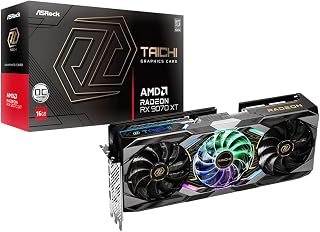
In a head-to-head matchup against the RTX 5070 Ti, the ASRock Radeon RX 9070 XT Taichi makes a strong case for the AMD side of the argument. Built on the RDNA 4 architecture, it packs 16GB of GDDR6 memory across a 256-bit bus and a factory boost clock of 3100 MHz, the highest stock overclock in its class. That frequency advantage translates directly into competitive 4K frame rates, with the card handling demanding titles at 3840x2160 with maximum detail settings. The triple-fan Taichi cooler keeps thermals in check even during extended sessions, and the PCIe 5.0 interface ensures the card is not bottlenecked by modern platforms. Dual BIOS support gives enthusiasts flexibility, and Polychrome SYNC RGB lighting fits the aesthetic of a high-end build. The card does occupy three slots and measures 330x140x61mm, so chassis compatibility is worth confirming. A quality 850W PSU is also required. For builders choosing between these two top-tier options, the RX 9070 XT Taichi delivers flagship-class 4K performance with an efficient power profile.
GPU Architecture: AMD Radeon RX 9070 XT, RDNA 4, 64 compute units, 4096 stream processors
Memory: 16GB GDDR6, 256-bit bus, 20 Gbps effective speed
Clock Speeds: Boost 3100 MHz, Game Clock 2570 MHz
Ray Tracing: 3rd generation RT accelerators
AI Accelerators: 2nd generation AI accelerators
Display Outputs: DisplayPort, HDMI
Max Resolution: 3840x2160 (4K)
Interface: PCIe x16 5.0
Power Requirements: 12V 2x6-pin connectors, 850W minimum PSU
Physical Dimensions: 330x140x61mm, 3-slot card, 2.18kg
Cooling: Triple-fan Taichi cooling system
Warranty: 2 years manufacturer support
Model Number: RX9070XT TC 16GO
This card suits PC builders who want flagship 4K gaming performance and are weighing AMD against NVIDIA in this generation. It is a strong fit for those with a capable 850W PSU and a full-size case that can accommodate a three-slot card. Buyers who prioritize the RDNA 4 architecture, a high factory overclock, or the Polychrome SYNC ecosystem will feel at home here. Linux users or anyone dependent on mature driver support may want to wait or consider the RTX 5070 Ti instead.
Buying Guide: What to Consider Before You Choose
Performance Tier and Use Case
The RTX 5070 Ti sits a clear step above the RX 9070 XT in raw rasterization and AI-accelerated workloads. Cards like the ASUS ROG Strix NVIDIA GeForce RTX 5070 Ti 16GB push an OC boost clock of 2625 MHz and deliver over 1400 AI TOPS, making them formidable for creative work and next-gen titles that lean on neural rendering.
The RX 9070 XT is no slouch, though. Cards like the ASRock Radeon RX 9070 XT Taichi 16GB OC, RDNA 4 hit a factory boost clock of 3100 MHz, the highest in this lineup, and handle 4K gaming with confidence. If pure rasterization value is your goal, RDNA 4 closes the gap significantly compared to prior AMD generations.
Upscaling and AI Feature Sets
NVIDIA DLSS 4 with Multi Frame Generation is a genuine differentiator for the RTX 5070 Ti. The ZOTAC Gaming GeForce RTX 5070 Ti Solid SFF OC DLSS and the ASUS Prime GeForce RTX 5070 Ti 16GB GDDR7 both leverage Blackwell Tensor Cores to multiply frame output in supported titles, which can dramatically raise perceived smoothness at 4K.
AMD counters with FSR 4, which brings AI-based upscaling to RDNA 4 hardware. The Sapphire Pulse AMD Radeon RX 9070 XT Gaming 16GB and Sapphire 11348-03-20G Pulse AMD Radeon RX 9070 XT both support FSR 4 with AI upscaling. It is a major step up from FSR 3, though DLSS 4 still holds the edge in image quality in most head-to-head comparisons.
Cooling Design and Form Factor
Thermal design varies significantly across models, and it matters more than many buyers realize. The ZOTAC Gaming GeForce RTX 5070 Ti Solid SFF OC DLSS is a standout for compact builds, fitting a 2-slot, SFF-ready design with IceStorm 2.0 cooling and three 90mm BladeLink fans. It is one of the few RTX 5070 Ti options that works in smaller chassis.
On the AMD side, the ASUS Prime Radeon RX 9070 XT 16GB GDDR6 OC Edition uses a 2.5-slot design with phase-change GPU thermal pad and 0dB fan stop technology. The GIGABYTE Radeon RX 9070 XT Gaming OC 16G Graphics goes a step further with its Hawk Fan and server-grade thermal conductive gel for aggressive heat dissipation. Think of it the way you would approach picking versatile travel gear: the right fit for your specific needs matters as much as raw specs.
Power Requirements and System Compatibility
Both GPU families require a capable power supply, but the RTX 5070 Ti variants generally demand more headroom. The ASUS Prime GeForce RTX 5070 Ti 16GB GDDR7 requires a minimum 750W PSU with a 16-pin 12V-2×6 connector, while the ASRock Radeon RX 9070 XT Taichi 16GB OC, RDNA 4 recommends 850W and ships with a 16-pin to 3×8-pin adapter.
Card dimensions are also worth double-checking. The ASUS ROG Strix NVIDIA GeForce RTX 5070 Ti 16GB uses a 3.2-slot design, which rules it out for tighter motherboard configurations. The PowerColor Reaper AMD Radeon RX 9070 XT 16GB GDDR6, at 289mm and a compact 2-slot profile, is one of the more case-friendly RX 9070 XT options available. Verifying clearance before you order is the same kind of due diligence you would apply when choosing checked luggage for international travel: dimensions always matter.
Final Thoughts
If you want the absolute ceiling of AI-accelerated gaming with DLSS 4 Multi Frame Generation and NVIDIA ecosystem features, the ASUS Prime GeForce RTX 5070 Ti 16GB GDDR7 delivers strong performance in a build-friendly 2.5-slot form factor. For buyers who want exceptional 4K rasterization performance on the AMD platform with impressive factory overclocking, the ASRock Radeon RX 9070 XT Taichi 16GB OC, RDNA 4 stands out as one of the most aggressively clocked RX 9070 XT cards you can buy right now.
Frequently Asked Questions
Is the RTX 5070 Ti significantly faster than the RX 9070 XT?
In raw rasterization, the RTX 5070 Ti holds a meaningful lead, particularly at 4K. The gap widens further when DLSS 4 with Multi Frame Generation is active in supported titles, where the Blackwell architecture’s AI capabilities have no direct AMD equivalent in 2026. For pure rasterization without upscaling, the RX 9070 XT closes the gap considerably.
Which RX 9070 XT model has the best cooling?
Several strong options exist in this roundup. The ASUS Prime Radeon RX 9070 XT 16GB GDDR6 OC Edition and the GIGABYTE Radeon RX 9070 XT Gaming OC 16G Graphics both use advanced thermal pads and multi-fan setups that keep temperatures well managed under sustained load. The ASRock Taichi model also benefits from its triple-fan Taichi 3X cooling system with solid real-world thermal performance, as confirmed by multiple verified buyer reports.
Does the RX 9070 XT support ray tracing in 2026?
Yes. RDNA 4 introduces third-generation ray tracing accelerators, which represent a substantial improvement over RDNA 3. The ASRock Radeon RX 9070 XT Taichi 16GB OC, RDNA 4 highlights 3rd-gen RT and 2nd-gen AI accelerators in its spec sheet, bringing AMD much closer to NVIDIA in ray-traced workloads than in previous generations. It is still not quite on par with the RTX 5070 Ti in the most demanding RT scenes, but the gap is narrower than ever. For buyers who enjoy researching gear decisions carefully, it is a similar mindset to evaluating the best wrinkle-free travel shirts: the right specs for your specific needs make all the difference.
Is the XFX Swift RX 9070 XT a good value compared to premium models?
The XFX Swift AMD Radeon RX 9070XT Triple Fan is a compelling mid-tier option in the RX 9070 XT lineup, with a boost clock up to 2970 MHz and a triple-fan SWFT cooling solution. It sits between the entry-level Sapphire Pulse cards and the flagship ASRock Taichi in terms of cooling ambition and factory overclock. If you want a well-rounded card without paying for top-tier branding, it is worth serious consideration in 2026.
More on the RTX 5070 Ti
- Best Monitor for RTX 5070 Ti: 10 Displays Worth Your GPU in 2026
- Best RTX 5070 Ti Model: 10 Top Graphics Cards for 2026
- RTX 5070 vs RTX 5070 Ti: Which GPU Is Right for You in 2026?
- RTX 5070 Ti vs RTX 5080: Which GPU Is Right for You in 2026?
- RTX 5070 Ti vs RX 9070: Best GPUs to Buy in 2026
- Best PSU for RTX 5070 Ti: 7 Power Supplies Reviewed (2026)
- Best CPU for RTX 5070 Ti: 7 Processors Reviewed for 2026




Write Your Review
No reviews yet. Be the first to share your experience!