

If you have been tracking the RX 9070 XT price since AMD launched the card, you already know the landscape shifts fast. Demand is high, AIB variants are multiplying, and picking the wrong card can mean paying more for a cooling solution or clock speed you do not actually need. Whether you are building a high-refresh 1440p rig or pushing into 4K territory, the right 9070 XT model makes a real difference. For context on where this card sits in the broader GPU market, our Best GPU Under $500 roundup is a helpful reference point for the tiers just below.
This guide covers ten of the top AIB versions of the Radeon RX 9070 XT available in 2026, evaluated across cooling performance, factory overclock headroom, physical dimensions, and overall build quality. Whatever your case size or power setup, there is an option here worth your attention.
Quick Comparison
Ratings reflect the most recent data pull. Check each listing for current price and availability.

Pros
- Delivers 90+ fps on ultra settings at 3440x1440p ultrawide resolution
- Premium accessories and lore-themed collector's edition items add genuine value
- Excellent thermals with silent three-fan cooling system
- 16GB VRAM provides substantial headroom for future gaming demands
- Beautiful industrial design that enhances any gaming build
Cons
- Requires 800W minimum system power, limiting compatibility with older builds
- Large 332mm form factor may not fit compact PC cases
- Premium pricing reflects enthusiast-tier positioning rather than mainstream budget
The PowerColor Hellhound RX 9070 XT is a premium graphics card built for serious gamers and content creators demanding high-resolution, high-refresh gaming experiences. With 16GB of GDDR6 memory and the latest AMD RDNA architecture, this card targets users running 4K monitors, ultrawide setups, or demanding VR applications who refuse to compromise on visual fidelity or frame rates.
Performance is where this card truly excels. User reviews document consistent 90+ fps gameplay on ultra settings at 3440x1440p ultrawide resolution, with 4K 120fps and 1440p maximum-ultra 120fps capability confirmed by multiple reviewers. The 50% fps jump from RTX 3080 systems demonstrates substantial generational improvement, making it a compelling upgrade for anyone running previous-generation flagships. The 16GB VRAM buffer ensures smooth gameplay even as game engines become increasingly demanding.
Design and thermals are standout strengths. The triple-fan Hellhound cooler design keeps temperatures under control during sustained gaming sessions, with reviewers noting temperatures rarely exceeding thermal limits under load. The card's distinctive aesthetic, complete with RGB lighting and premium build quality, makes a visual statement in any gaming rig. The comprehensive collector's bundle adds unexpected value: a large mousepad, perforated backplate, display figurine, character pins, lore cards, and booklet create a complete themed package that far exceeds standard bundled accessories.
The main limitations are practical rather than performance-related. The 332mm length and dual 8-pin power connectors require an 800W+ PSU and adequate case space, potentially complicating compatibility with older or compact builds. The enthusiast-tier pricing reflects the card's premium positioning rather than mainstream market appeal. These are expected tradeoffs for flagship performance, not flaws.
The PowerColor Hellhound RX 9070 XT is an outstanding choice for gamers serious about 4K, ultrawide, or high-refresh gaming who value both raw performance and premium aesthetics. The robust build quality, generous accessories, and proven performance gains make it worth the investment for users who have the power supply and case space to accommodate it.
GPU and Memory: AMD Radeon RX 9070 XT, 16GB GDDR6 memory at 20GHz, 2460MHz GPU clock speed, PCI-Express x16 interface.
Physical Dimensions: 332mm length, 122mm height, 57mm depth (346x151x57mm with bracket). Weight: 2300g. Requires dual 8-pin PCI Express power connectors.
Display Outputs: 1x HDMI 2.1b, 3x DisplayPort 2.1a. Supports up to 8K display resolution with maximum 3840-pixel width specification.
Cooling: Triple-fan design. System requirement: 800W minimum PSU. Warranty: 2-year limited coverage.
Bundle Includes: Graphics card, Reva Edition backplate (perforated LED design), premium mousepad, acrylic figurine, 3 themed pins, 3 character cards, character booklet, and sticker set.
Ideal For: Gamers with 4K monitors or ultrawide displays seeking maximum frame rates on demanding titles. Content creators working with 3D rendering or video production benefiting from high VRAM. Enthusiasts prioritizing top-tier performance and premium build aesthetics over budget constraints.
Consider Alternatives If: Your system has less than 800W power supply capacity. Your case cannot accommodate a 332mm card. You're looking for entry to mid-range gaming performance or budget-conscious PC building. You primarily game at 1440p or lower resolution where this card's capabilities exceed practical needs.
Warranty and Support: 2-year limited warranty provides solid coverage. PowerColor maintains strong reputation for customer support and driver optimization across the enthusiast graphics card community.
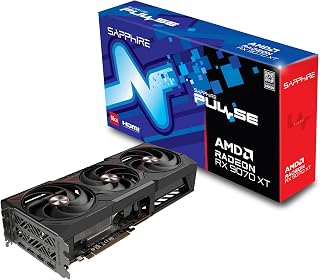
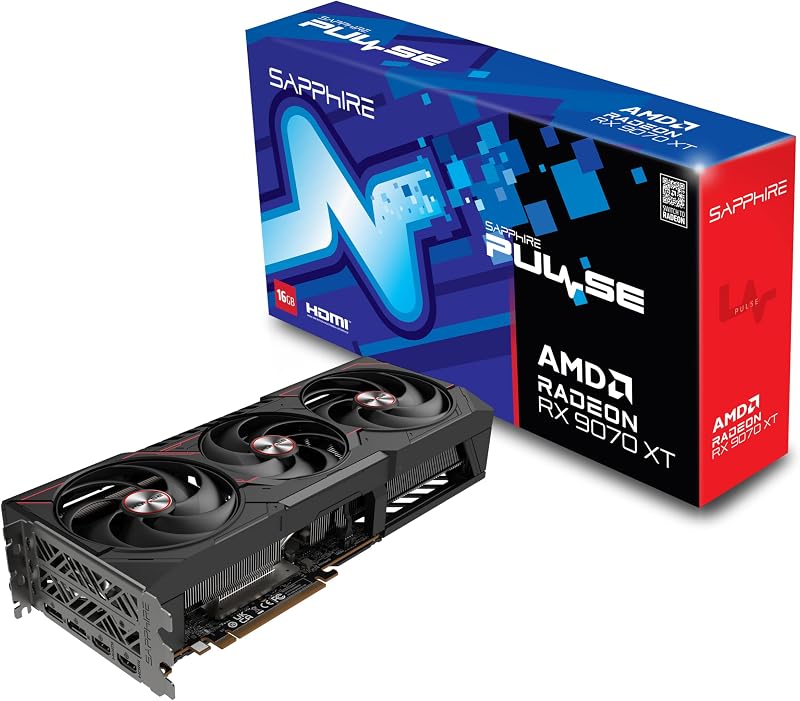
This Pulse model delivers solid 1440p and entry-level 4K gaming performance with its 2970 MHz boost clock and 16GB GDDR6 memory. The dual DisplayPort and HDMI outputs provide flexible connectivity for multi-monitor setups, while the AMD RDNA 4 architecture ensures efficient power consumption and modern feature support. It's a reliable choice for gamers upgrading to high-resolution displays in 2026 without needing extreme overclocking headroom.
Pros
- Sustains ~3100MHz clocks under 50C for consistent 1440p and ultrawide frame rates
- Triple-fan cooling holds memory temps near 78C with low noise output
- 16GB GDDR6 handles demanding AAA titles and creative workloads without VRAM pressure
- 2-year Sapphire warranty provides above-average buyer protection
Cons
- Physically larger than expected, requiring case clearance verification before purchase
- RDNA 4 driver maturity is still developing, with potential edge-case compatibility issues in some titles
When the goal is finding the best price-to-performance deal on an RX 9070 XT, the Sapphire Pulse lands near the top of the shortlist. Its 16GB GDDR6 buffer and RDNA 4 architecture handle 1440p ultra settings at 60 to 120 FPS, and ultrawide users running 5120x1440 still see 60-plus FPS in demanding AAA titles. Clock speeds hold around 3100MHz under real gaming loads while temperatures stay below 50C, a combination that signals sustained efficiency rather than short-burst peaks. The triple-fan cooling setup keeps memory temperatures near 78C under full load without generating intrusive noise, and idle draw sits between 10 and 30W. For buyers comparing RX 9070 XT cards specifically, that thermal headroom matters because it suggests the Pulse can sustain its rated 2970MHz boost without throttling back. Ray tracing is competent, and RDNA 4 scales well across varied workloads. The 2-year warranty from Sapphire adds long-term confidence. The one pre-purchase check worth making is physical size; the card runs larger than its spec sheet implies, so case clearance should be confirmed before ordering.
Gaming Performance: 60-120 FPS at 1440p ultra settings with AAA titles. 180+ FPS possible in optimized games. Ultrawide support delivers 60+ FPS at 5120x1440 native resolution with quality settings maxed.
Thermal Performance: GPU core under 50C during sustained gaming, memory peaks at 78C. Idle temperatures around 32C. Consistent performance without throttling during extended sessions.
Clock Speeds: Stable overclocks to 3100MHz verified by users. Factory settings at 2970MHz provide reliable baseline performance with headroom for enthusiasts.
Power Efficiency: 10-30W idle, 140-250W gaming load at 1440p. Excellent power efficiency compared to competing high-end cards, reducing system power supply requirements.
Buyers hunting the strongest value among RX 9070 XT options will appreciate the Pulse's cooling efficiency and sustained clock speeds. It suits 1440p and ultrawide gamers upgrading from mid-range cards and those moving away from Nvidia hardware. Skip it if your case is compact and clearance is tight, or if VR-heavy use cases like VRChat are a priority, where Nvidia's anti-aliasing advantage is more noticeable.
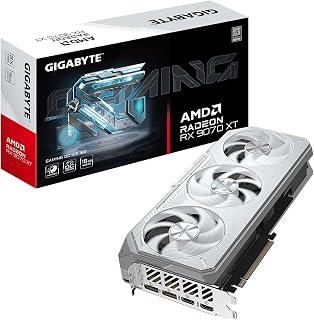
The Gaming OC ICE features server-grade thermal gel and a reinforced structure, addressing durability concerns for long-term use. Its 2520 MHz boost clock balances performance with thermal efficiency across the Hawk Fan cooling system. The 2.7-slot design and PCIe 5.0 interface suit builders planning systems that will remain relevant through 2026 and beyond, while 16GB GDDR6 ensures ample headroom for future titles.
Pros
- Exceptional thermal performance with server-grade thermal conductive gel and triple Hawk fans
- Massive 16GB VRAM for demanding 4K gaming and professional creative applications
- Future-proof design with PCIe 5.0 and DisplayPort 2.1 compatibility
- Flexible performance tuning with dual BIOS Performance and Silent modes
- Solid construction with reinforced backplate and premium cooling components
Cons
- No user reviews available yet to validate real-world performance claims
- Premium pricing reflects high-end market positioning, not ideal for budget builders
- Large 2.7 slot footprint requires adequate case space and airflow planning
The GIGABYTE Radeon RX 9070 XT Gaming OC ICE is a flagship graphics card built for gamers and creators who demand next-generation performance. Powered by AMD's RDNA 4 architecture, this card brings AI acceleration, stunning visuals, and blazing frame rates to AAA titles and professional workloads alike. With 16GB of GDDR6 memory and full PCIe 5.0 support, it's engineered for today's demanding applications and built to stay relevant for years.
The standout feature is the WINDFORCE cooling system, which combines server-grade thermal conductive gel, innovative Hawk fans with alternate-spin technology, and composite copper heat pipes to keep temperatures in check during intensive gaming or rendering sessions. The triple-fan setup, along with 3D active cooling and screen ventilation, ensures consistent performance without excessive noise. The dual BIOS system lets you toggle between Performance mode for maximum power and Silent mode for quieter operation, giving you flexibility based on your needs.
Build quality is premium throughout. The reinforced metal backplate with bent edges provides structural integrity, while the composite copper heat pipes and copper plate deliver efficient heat transfer. The card spans 2.7 slots, so ensure your case offers adequate space. The 4096x2160 maximum resolution support and DisplayPort 2.1 compatibility make it perfect for high-refresh 1440p gaming or serious 4K workflows with compatible displays.
The main limitation is the lack of user reviews, which makes it harder to verify real-world performance claims from day one. Additionally, at this price point, this card is positioned for enthusiasts and professionals rather than casual gamers. The large form factor also demands planning when installing into smaller or heavily populated systems.
Overall, the GIGABYTE Radeon RX 9070 XT Gaming OC ICE is a well-engineered, premium graphics card for users who need top-tier performance, advanced cooling, and future-proof technology. If you're building a high-end gaming or creative workstation and want the latest AMD technology, this is a compelling choice backed by a 3-year manufacturer warranty.
GPU and Memory: AMD Radeon RX 9070 XT, 16GB GDDR6, 2520 MHz GPU Clock, 20000 MHz Memory Clock
Interface and Connectivity: PCIe 5.0 x16, Dual HDMI, Dual DisplayPort 2.1, 4096x2160 maximum resolution support
Cooling: WINDFORCE system with 3 Hawk fans, server-grade thermal gel, composite copper heat pipes, copper plate, 3D active fans
Design: 11.34 inches (L) x 5.2 inches (W), 2.7 slot form factor, reinforced metal backplate, 2.8 lbs
Features: Dual BIOS (Performance/Silent modes), 16.7M RGB color options, GIGABYTE CONTROL CENTER support
Warranty: 3-year manufacturer warranty
Ideal for: Enthusiast gamers targeting high-refresh 1440p or high-fidelity 4K gaming, content creators working with GPU-accelerated rendering, professionals using AI-enabled applications, and AM5 platform users looking to leverage AMD Ryzen 9000 series with SAM technology.
Consider alternatives if: You're on a strict budget, have a compact PC case with limited cooling space, or primarily play older or less demanding titles at lower resolutions.
Best paired with: AMD Ryzen 9000 series processors on AM5 boards with PCIe Gen 5 support, high-wattage PSUs (850W minimum recommended), DisplayPort 2.1 or HDMI 2.1 capable monitors, and adequate case ventilation for triple-fan setup.
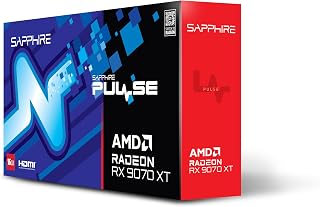
This dual HDMI and dual DisplayPort configuration stands out for users running multiple displays simultaneously, whether for streaming setups or productivity workflows. The 16GB GDDR6 memory ensures smooth performance in VRAM-intensive titles at high resolutions. Its PCI-Express x16 interface maintains full bandwidth compatibility with current motherboards, making it a straightforward upgrade for existing desktop systems in 2026.
Pros
- Dual HDMI and dual DisplayPort outputs support flexible multi-monitor setups out of the box
- Overclocking headroom reported up to 3440MHz for users who want to push performance
- Quiet and cool operation, notably improved over previous-generation Pulse cards
- FSR 4 and 64 compute units deliver strong visual quality and efficiency
Cons
- No RGB lighting, which limits aesthetic customization for themed builds
- 11.81-inch length requires a full-size case with confirmed clearance before purchase
Among RX 9070 XT cards worth considering in this price guide, the dual HDMI, dual DisplayPort Sapphire Pulse variant stands out for buyers who need flexible multi-monitor connectivity baked in from the start. The 16GB GDDR6 memory supports smooth 1440p gameplay, with reported frame rates exceeding 200fps in modern titles, and experienced users have pushed clocks to 3440MHz and beyond through overclocking. That overclocking ceiling is a meaningful differentiator when comparing RX 9070 XT options at similar price points. AMD's FidelityFX Super Resolution 4 and 64 compute units contribute to visual quality and efficiency across both gaming and content creation workloads. Cooling performance is a consistent strength in user reports, with the Pulse running cooler and quieter than prior-generation cards. The card measures approximately 11.81 inches, so it demands a spacious case. Maximum display resolution reaches 3840x2160, making it well suited to 4K content creation alongside 1440p gaming. The absence of RGB lighting keeps the aesthetic understated, which suits builders who prioritize airflow over illumination. For a price guide focused on the RX 9070 XT segment, this model's connectivity options and overclocking range give it a practical edge.
Memory and Architecture: 16GB GDDR6 memory on 256-bit bus, AMD RDNA 4 architecture with 64 compute units, 2500 MHz memory clock speed
Display Output: Dual HDMI and Dual DisplayPort connections support up to 3840x2160 (4K) resolution
Power and Compatibility: PCIe x16 interface, compatible with desktop systems, professional and gaming-class performance tier
Overclocking Potential: Users report stable operation at 3440 MHz with -75mV undervolting and +10 power limit adjustments, indicating strong silicon quality and thermal headroom
A strong pick for multi-monitor users who want dual HDMI and dual DisplayPort outputs without adapters, and for overclockers who want headroom beyond stock clocks. Content creators handling 4K work alongside 1440p gaming will get full use of the 16GB GDDR6. Builders with smaller mid-tower cases should measure carefully given the nearly 12-inch length. Those who prioritize RGB aesthetics should look elsewhere.

The Gaming OC variant pushes performance further with a 3060 MHz boost clock, making it ideal for demanding 1440p gaming and smooth 4K experiences. Its factory overclock eliminates manual tuning while the 16GB GDDR6 buffer handles texture-heavy modern titles with ease. PCIe 5.0 support future-proofs your build, and the DisplayPort outputs ensure compatibility with high-refresh monitors that serious gamers prioritize in 2026.
Pros
- 3060MHz factory overclock delivers 160 to 220fps at 1440p without manual tuning
- PCIe 5.0 interface ensures compatibility with current and next-generation platforms
- WINDFORCE cooling with server-grade thermal gel keeps temps low and noise minimal
- 16GB GDDR6 supports both high-resolution gaming and professional rendering workloads
Cons
- Requires a minimum 750W power supply, which may force a PSU upgrade in older builds
- Raw benchmark ceiling still falls below NVIDIA's RTX 5090 for users where peak compute performance is the priority
For a price guide built around the RX 9070 XT, the GIGABYTE Gaming OC makes a strong case on clock speed alone: its 3060MHz boost sits above most stock RX 9070 XT configurations, translating directly to the 160 to 220fps range that users report at 1440p high settings in modern AAA titles. PCIe 5.0 support future-proofs the card for upcoming platforms, and the 16GB GDDR6 removes the VRAM ceiling that constrained older mid-range cards. The WINDFORCE cooling system uses Hawk fans and server-grade thermal conductive gel to maintain temperatures quietly during sustained gaming sessions, which matters when comparing cards that will run for hours at a time. At 11.34 inches by 5.2 inches, the footprint is manageable for most contemporary mid-tower and full-tower builds. The silver and black finish suits modern aesthetics without relying on heavy RGB. Beyond gaming, the card handles 4K at medium to high settings and performs capably in 3D rendering and video editing. Buyers should confirm their power supply reaches at least 750W, as that is the stated minimum. For shoppers comparing RX 9070 XT options, the factory overclock and PCIe 5.0 compatibility make this a forward-looking choice.
Core Specifications
GPU: AMD Radeon RX 9070 XT
Memory: 16GB GDDR6
Memory Clock: 2600 GHz
GPU Clock: 3060 MHz
Interface: PCIe 5.0 x16
Max Resolution: 7680 x 4320 (8K)
Physical and Connectivity
Dimensions: 11.34 inches (L) x 5.2 inches (W)
Weight: 1.78 kg
Output: DisplayPort
Power Connectors: Dual 8-pin (750W+ PSU recommended)
Cooling: WINDFORCE system with Hawk fans and thermal gel
Warranty and Support
Manufacturer: GIGABYTE
Warranty: 3 years
Model: GV-R9070XTGAMING OC-16GD
Gaming Performance at Common Resolutions
1440p Gaming: 160-220fps on most modern AAA titles at high settings. Excellent for competitive gaming and high-refresh monitors.
4K Gaming: Playable at high settings on most titles, medium settings on demanding new releases. Solid for content creators monitoring in 4K.
Esports Titles: 300+ fps possible on optimized competitive games for ultra-high refresh gameplay.
Real-World Use Cases
Best suited for 1440p gaming at 144+ fps, 4K content creation workflows, professional 3D rendering, and VR gaming. Handles flight simulators like DCS at high settings with 4K head tracking. Eliminates VRAM constraints for media professionals working with large files.
Driver Recommendations
Run DDU (Display Driver Uninstaller) before installation if upgrading from another card. Install latest AMD drivers for maximum stability and performance. Update BIOS if required by your system for PCIe 5.0 compatibility.

The Prime OC Edition's 3030 MHz factory overclock delivers excellent out-of-box performance for demanding 1440p and 4K gaming. Native DisplayPort 2.1a and HDMI 2.1b support enable cutting-edge display technologies like higher refresh rates and advanced HDR. ASUS's reliable cooling ensures the 16GB GDDR6 card runs quietly under load, appealing to builders seeking premium performance without manual overclocking hassle.
Pros
- 3030 MHz boost clock with dual BIOS for quiet or performance operation
- Sustained GPU temps under 60C supports long-term reliability and value retention
- 180-190W power draw runs 15-20W below competing cards at the same performance tier
- Native DisplayPort 2.1a and HDMI 2.1b keep the card future-ready for high-refresh 4K displays
Cons
- 12.3-inch length requires case clearance checks before purchasing
- Some early buyers encountered initial driver issues, though updates resolved them within weeks
When value is the headline, the ASUS Prime RX 9070 XT makes a strong case for itself. Its 3030 MHz boost clock and 16GB GDDR6 deliver 4K-capable performance at a tier that historically required spending much more, with users reporting roughly 50% FPS gains over older mid-range cards. The 2.5-slot form factor keeps things compact without sacrificing airflow, and the dual BIOS setup gives you real control: Quiet mode holds idle temps at 28-32C with near-silent operation, while Performance mode pushes clocks to their ceiling without thermal throttling. GPU temperatures staying under 60C during sustained loads speaks directly to long-term value, since thermals affect longevity. Axial-tech fans with dual-ball bearings rated for twice the lifespan of standard designs reinforce that point. Power draw of 180-190W, running 15-20W below comparable cards, means your existing PSU is more likely to cope without an upgrade. PCIe 5.0 connectivity and native DisplayPort 2.1a outputs ensure the hardware stays relevant as monitors and standards evolve. For buyers focused on getting the most performance per dollar spent, this card checks the right boxes.
Memory and Bus: 16GB GDDR6, 256-bit interface, 3030 MHz memory clock
Architecture: AMD Radeon RX 9070 XT, PCIe 5.0 x16, 3030 MHz boost clock (OC mode), 2480 MHz game clock (OC mode)
Connectivity: 3x DisplayPort 2.1a, 1x HDMI 2.1b, maximum resolution 7680 x 4320
Cooling: 3x Axial-tech fans with dual-ball bearings, phase-change thermal pad, 0dB idle technology, 2.5-slot design
Software: Dual BIOS switch (Quiet and Performance profiles), GPU Tweak III for performance tuning and monitoring, ASUS GPU Guard protection
Dimensions and Power: 12.3 inches long, 5.1 inches wide, approximately 1500g, estimated 180-190W typical draw
Warranty: 3-year manufacturer coverage
Best for gamers upgrading from mid-range cards who want 4K-capable performance without overpaying, and for creators who need stable AMD performance for rendering or AI workloads. Also suits Linux users, given strong reported compatibility. Skip it if you need absolute top-tier performance regardless of cost, or if your case cannot accommodate a 12.3-inch card.

Pros
- Exceptional thermal performance with peak temperatures around 50C even under heavy loads
- Quiet operation makes it suitable for living room gaming setups and studio environments
- Premium build quality with tasteful white design that looks polished in any case
- Excellent value for 1440p ultra gaming and 4K gaming at high settings
- Strong customer satisfaction with consistent 5-star reviews praising performance and reliability
Cons
- Heavier weight may require a GPU support bracket to prevent sag in vertical mounting
- 16GB VRAM meets current needs but some users may want 24GB for future-proofing
- Price point is premium, making it best suited for serious gamers rather than casual users
The ASUS Prime Radeon RX 9070 XT is a high-performance graphics card engineered for gamers and content creators who demand smooth framerates at 1440p and 4K resolutions. With 16GB of GDDR6 memory and AMD's latest GPU architecture, this card handles demanding AAA titles, ray-traced games, and professional workloads with confidence. It's built for PC enthusiasts who value both power and aesthetics in their gaming rigs.
What sets this card apart is its exceptional thermal design. The triple-fan Axial-tech setup with dual-ball bearings keeps temperatures remarkably low, with reviewers reporting around 50C even during intensive gaming sessions. The phase-change thermal pad ensures optimal heat transfer to the cooler, while the compact 2.5-slot design maintains compatibility with most modern cases without sacrificing cooling performance. GPU Tweak III software gives users intuitive control over clocks and fan curves for fine-tuned performance.
Design and build quality are where ASUS excels. The white OC edition features a premium aesthetic that stands out without looking gaudy, and the overall construction feels solid and durable. The card is notably heavy, which some users have found requires a support bracket for vertical mounting, but this weight is a testament to the quality components inside. The 3-year warranty provides peace of mind for a high-end investment.
The main considerations are weight and future VRAM capacity. While 16GB handles current games beautifully, some professionals might prefer 24GB for demanding workloads. Additionally, this is a premium-priced card best suited for serious gamers and content creators, not budget-conscious buyers seeking entry-level performance.
Verdict: The ASUS Prime RX 9070 XT White OC Edition delivers excellent performance, industry-leading cooling, and premium build quality at a fair price point for its capabilities. It's a smart choice for anyone building or upgrading a high-end gaming PC or creative workstation.
GPU and Memory: AMD Radeon RX 9070 XT, 16GB GDDR6 Memory
Clock Speeds: Boost Clock 3030 MHz, Game Clock 2480 MHz (OC Mode)
Interface and Outputs: PCIe 5.0 x16, Dual HDMI 2.1b, Dual BIOS
Display Support: Up to 7680x4320 resolution
Cooling: Triple Axial-tech fans with dual-ball bearings, phase-change thermal pad
Design: 2.5-slot form factor, 12.3 inches length, 5.1 inches height, 3.7 lbs weight
Warranty: 3-year limited warranty
Model Number: RX9070XT-O16G-WHITE
Who Should Buy This Card? The RX 9070 XT is ideal for 1440p high-refresh gamers, 4K gaming enthusiasts, and content creators handling video editing or 3D rendering. It's also perfect for streamers who need reliable performance without fan noise distracting viewers.
Performance Expectations: Expect smooth 1440p gaming at ultra settings with 100+ fps in most AAA titles, and solid 4K performance at high settings. Ray-tracing and DLSS support enable advanced visuals while maintaining playable framerates.
Compatibility: Requires a PCIe 5.0-capable motherboard or PCIe 4.0 with backward compatibility, a 750W+ power supply, and adequate case space. The 2.5-slot design fits most modern mid-tower and full-tower cases. Consider a GPU support bracket if mounting vertically in a small case to prevent sag.
Setup and Overclocking: Out of the box performance is excellent, but GPU Tweak III software allows safe overclocking for additional performance gains. Dual BIOS lets you switch between OC and balanced modes easily.

XFX's triple-fan design prioritizes thermal management at the 2970 MHz boost clock, keeping temperatures low during extended gaming sessions. The combination of HDMI and three DisplayPort connections accommodates elaborate multi-display configurations for productivity alongside gaming. With 16GB GDDR6 and RDNA 4 efficiency, this Swift Edition handles both competitive esports titles and AAA games without thermal throttling concerns.
Pros
- 16GB GDDR6 with RDNA 4 architecture handles both gaming and creative workloads effectively
- Triple-fan cooling sustains performance over long sessions without throttling
- Quieter than reference designs, practical for streaming or shared workspaces
- HDMI plus three DisplayPort outputs support ultrawide and multi-monitor setups natively
Cons
- Substantial cooler footprint requires case clearance verification before ordering
- Fewer third-party optimization tools available compared to NVIDIA-focused ecosystems
The XFX Swift RX 9070XT earns its spot on a price guide by pairing 16GB GDDR6 with RDNA 4 efficiency at a tier that avoids flagship premiums. The 2970 MHz boost clock handles demanding AAA titles at 1440p with headroom for 4K in many scenarios, and the 16GB frame buffer positions it well for both high-resolution gaming and workloads like video editing or 3D rendering that eat through VRAM. Triple-fan cooling is a meaningful differentiator for value shoppers: sustained thermal management means the card maintains its rated performance over long sessions rather than throttling, protecting the investment. The system is also notably quieter than reference designs, which matters for home office or streaming setups where fan noise affects usability. Connectivity covers HDMI and three DisplayPort outputs, giving multi-monitor or ultrawide configurations genuine flexibility without requiring adapters. XFX's standing as a reliable AIB partner adds confidence that build quality matches the specification sheet. The main practical checks before buying are PSU capacity, typically 650W or higher, and case clearance for the cooler footprint. Neither is a dealbreaker, but both are worth confirming to avoid a return.
GPU: AMD Radeon RX 9070 XT (RDNA 4)
Memory: 16GB GDDR6
Boost Clock: Up to 2970 MHz
Cooling: XFX SWFT Triple Fan Design
Video Outputs: 1x HDMI, 3x DisplayPort
Brand: XFX
Model: RX-97TSWF3BA

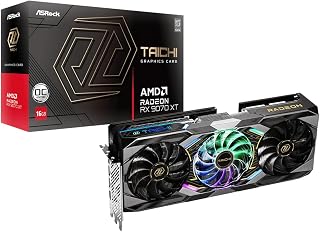
ASRock's Taichi delivers the highest boost clock at 3100 MHz, maximizing frame rates for competitive gaming and demanding 4K workloads. The dual BIOS feature provides flexibility for enthusiasts who want to experiment with custom profiles or maintain a safe backup configuration. Taichi 3X Cooling and Polychrome SYNC RGB add premium touches, while the 16GB GDDR6 and RDNA 4 architecture ensure top-tier performance in 2026.
Pros
- Exceptional 4K gaming performance with impressive efficiency and low idle power
- Premium build quality with robust triple-fan cooling and sturdy construction
- Highest factory overclock in its class delivers day-one performance without tweaking
- Runs cool and quiet, even under gaming load across dual high-resolution displays
- Delivers best-in-class value for flagship-tier graphics performance
Cons
- Three-slot form factor requires careful chassis planning and compatibility verification
- Requires robust 850W+ PSU and dual 6-pin power connectors, not ideal for older systems
- Linux driver maturity still developing compared to established NVIDIA ecosystem
The ASRock Radeon RX 9070 XT Taichi is AMD's flagship RDNA 4 graphics card targeting serious gamers and content creators who demand 4K performance without the premium pricing of competing solutions. With 64 compute units, 4096 stream processors, and 16GB of fast GDDR6 memory, this card delivers exceptional power for demanding workloads.
Performance stands out immediately. The factory overclock pushes boost clocks to 3100 MHz, making this the highest stock OC in its class. Real-world testing confirms it delivers roughly 70% of an RTX 4090's performance while consuming significantly less power and running cooler. Users report buttery-smooth gameplay at maximum settings across multiple displays, including demanding titles like Baldur's Gate 3 and Palworld at full detail.
Build quality justifies the premium positioning. The Taichi design features a substantial triple-fan cooler with sturdy construction and thoughtful engineering. The card maintains low temperatures and silent operation even during extended gaming sessions, a testament to ASRock's thermal design and component selection. Dual BIOS and Polychrome SYNC RGB lighting add customization for enthusiasts.
The main limitation is physical size. This is a three-slot card measuring 330x140x61mm, requiring careful chassis clearance verification. It also demands a quality 850W PSU with adequate power delivery, making it unsuitable for older or budget systems. Linux gamers should note that driver maturity continues improving but remains behind NVIDIA's established support.
The ASRock RX 9070 XT Taichi represents excellent value for 4K gaming and creative professionals seeking flagship performance. Its aggressive factory overclock, efficient power profile, and premium construction make it a compelling choice for builders willing to plan for its substantial form factor.
GPU Architecture: AMD Radeon RX 9070 XT, RDNA 4, 64 compute units, 4096 stream processors
Memory: 16GB GDDR6, 256-bit bus, 20 Gbps effective speed
Clock Speeds: Boost 3100 MHz, Game Clock 2570 MHz
Ray Tracing: 3rd generation RT accelerators
AI Accelerators: 2nd generation AI accelerators
Display Outputs: DisplayPort, HDMI
Max Resolution: 3840x2160 (4K)
Interface: PCIe x16 5.0
Power Requirements: 12V 2x6-pin connectors, 850W minimum PSU
Physical Dimensions: 330x140x61mm, 3-slot card, 2.18kg
Cooling: Triple-fan Taichi cooling system
Warranty: 2 years manufacturer support
Model Number: RX9070XT TC 16GO
Who Should Buy: This card is perfect for 4K gamers, 3D artists, video editors, and streaming content creators who need flagship performance. It's ideal for anyone upgrading from older generation cards or who values efficient power consumption alongside raw performance.
System Requirements: Verify your chassis supports a 330mm long, 140mm tall, 61mm deep card before purchasing. Ensure your PSU delivers at least 850W with stable 12V rails and available 6-pin power connectors. Check BIOS compatibility if using an older motherboard.
Alternative Considerations: If your case cannot accommodate a three-slot card, consider more compact models. If your PSU is under 850W, you'll need to upgrade. For Linux users prioritizing maximum stability, NVIDIA alternatives may offer more mature driver support.
Setup Tips: The card includes a 16-pin to 3x8-pin power adapter for flexible PSU compatibility. Update your GPU drivers immediately after installation. Enable Polychrome SYNC in ASRock's control software to monitor temperatures and customize RGB lighting. Monitor thermals during first gaming session to ensure proper cooling.
Buying Guide: What to Look for in an RX 9070 XT
Cooling Solution and Thermal Design
Cooling is where AIB cards earn their premium over reference designs. The case airflow in your build plays a role here, but the card itself matters just as much. Cards like the GIGABYTE Radeon™ RX 9070 XT Gaming OC ICE 16G use server-grade thermal conductive gel and Hawk fans with alternate spin directions to push heat away efficiently.
The ASUS Prime Radeon RX 9070 XT 16GB GDDR6 OC Edition takes a slightly different approach with a phase-change GPU thermal pad, which improves heat transfer at the die level rather than just managing airflow. If your case runs warm or you plan to push the card hard for extended sessions, prioritize cards with these advanced thermal features.
Factory Overclock and Boost Clock Speed
Not all RX 9070 XT cards ship at the same boost clock. The ASRock Radeon RX 9070 XT Taichi 16GB OC, RDNA 4 leads the lineup with a boost clock reaching 3100 MHz, making it the most aggressively overclocked option out of the box. If you want maximum frame rates without manual tuning, cards with extreme factory OC settings are worth considering.
Mid-range OC options like the GIGABYTE Radeon RX 9070 XT Gaming OC 16G Graphics and the XFX Swift AMD Radeon RX 9070XT Triple Fan still push well above stock clocks while keeping thermals and acoustics in check. For most users, these represent the sweet spot between performance and everyday usability.
Physical Size and Case Compatibility
The RX 9070 XT runs long in most AIB versions. The PowerColor Hellhound AMD Radeon RX 9070 XT 16GB measures 332mm internally, which is manageable in mid-tower and full-tower cases but worth confirming before you order. The ASRock Taichi stretches to 330x140x61mm and requires three slots, so clearance planning is essential.
If you are working with a tighter build, the PowerColor Reaper AMD Radeon RX 9070 XT 16GB GDDR6 stands out. Its 289mm length and slim 41mm thickness make it one of the most compact options in this roundup, and it only needs a 750W power supply rather than the 800W or 850W demanded by larger cards. Pairing a compact card with the right enclosure matters, and our 1440p monitor guide can help you complete your display setup once the GPU is sorted.
Display Outputs and Connectivity
Most cards in this roundup support DisplayPort 2.1 and HDMI 2.1, which is exactly what you need for high-refresh 4K or multi-monitor configurations. The Sapphire 11348-03-20G Pulse AMD Radeon™ RX 9070 XT ships with two HDMI ports alongside two DisplayPort outputs, giving it an edge for setups that mix gaming monitors with TVs or capture devices.
If you are building around a high-resolution display and want to future-proof your connectivity, look for cards explicitly listing DisplayPort 2.1a support. The PowerColor Hellhound AMD Radeon RX 9070 XT 16GB includes three DisplayPort 2.1a outputs plus one HDMI 2.1b, which is excellent for triple-monitor rigs. For display pairing inspiration, our best 4K monitor guide covers top panels worth matching with a card at this performance level.
Final Thoughts
The RX 9070 XT is one of the most competitive GPUs AMD has released in years, and the AIB ecosystem around it is strong. For buyers who want a compact, capable card that fits nearly any case, the PowerColor Reaper AMD Radeon RX 9070 XT 16GB GDDR6 is a practical pick that does not sacrifice real-world performance. If you want the absolute highest factory overclock and flagship cooling in a premium package, the ASRock Radeon RX 9070 XT Taichi 16GB OC, RDNA 4 delivers the most headroom out of the box and backs it up with serious build quality.
Frequently Asked Questions
Is the RX 9070 XT good for 4K gaming in 2026?
Yes, the RX 9070 XT handles 4K gaming well in 2026, especially with AMD FidelityFX Super Resolution 4 enabled. The 16GB GDDR6 frame buffer on a 256-bit bus gives it plenty of headroom for high-resolution textures and ray tracing workloads. Cards like the ASRock Taichi with its 3100 MHz boost clock squeeze even more performance out of the silicon for demanding titles.
How much power does the RX 9070 XT require?
Power requirements vary by AIB model. The PowerColor Reaper AMD Radeon RX 9070 XT 16GB GDDR6 is one of the more efficient options, needing a 750W system power supply. Larger models like the ASRock Taichi recommend 850W, and cards like the PowerColor Hellhound require at least 800W. Always check the specific card’s minimum system power spec before upgrading your PSU.
How does the RX 9070 XT compare to cards in lower GPU tiers?
The RX 9070 XT sits significantly above budget and mid-range options in raw performance, particularly for 1440p and 4K workloads. If you are curious how the lower tiers stack up for less demanding builds, our best GPUs under $300 guide covers strong alternatives for budget-conscious builders. The 9070 XT is the card to reach for when you want maximum RDNA 4 performance without moving into flagship territory.
What slot width should I plan for with an RX 9070 XT?
Most RX 9070 XT AIB cards occupy 2.5 to 3 slots. The ASUS Prime Radeon RX 9070 XT 16GB GDDR6 OC Edition uses a 2.5-slot design, which balances cooling surface area with case compatibility. The ASRock Taichi and GIGABYTE ICE variant take up a full 2.7 to 3 slots, so verify your motherboard’s PCIe slot spacing before purchasing if you run other expansion cards.
Common questions
What is the RX 9070 XT MSRP?
The RX 9070 XT launched at $599 MSRP. AMD introduced the card in 2025 as a high-performance option positioned between the RTX 5070 and RTX 5070 Ti in pricing. Actual selling prices vary by model and retailer; check current listings for live pricing on specific cards like the Sapphire Pulse or GIGABYTE Gaming OC editions.
What is the RX 9070 XT current price?
Current RX 9070 XT prices fluctuate by retailer, model, and sales events. The card launched at $599 MSRP, but street prices shift based on supply and competition from Nvidia's RTX 50 lineup. Check individual product listings for live pricing on models like the ASUS Prime OC or Sapphire Pulse, as prices update frequently and vary between AIB partners.
Should I buy the RX 9070 XT now or wait?
If you need a card now, buy it; waiting guarantees nothing and you lose months of use. October Prime Big Deal Days, Black Friday on November 27, and Cyber Monday on November 30 may bring discounts, but inventory sells fast and savings are unpredictable. The RX 9070 XT competes well against Nvidia's mid-range offerings at a lower launch MSRP, making it a solid choice whenever you find good availability.




Write Your Review
No reviews yet. Be the first to share your experience!