

Monster Hunter Wilds can make a new GPU decision feel less straightforward. Large areas, fast motion, visual effects, and high-resolution textures all compete for resources, so a card that feels comfortable at 1080p may need more compromises on a 1440p or 4K display.
For players comparing the best gpu for Monster Hunter Wilds, this guide narrows ten options by memory capacity, upscaling features, cooler size, and power requirements. If 1440p is your target, our budget 1440p monitor recommendations can help you pair the card with a display that makes sense for your build.
Quick Comparison
Ratings reflect the most recent data pull. Check each listing for current price and availability.
Quick answer
This guide compares 10 picks, with ASRock Radeon RX 9070 Challenger 16GB Graphics Card ranked first. ASUS TUF Gaming RTX 5070 Ti 16GB GDDR7 OC Graphics Card holds the highest customer rating among them. EVGA GeForce RTX 3060 XC Gaming 12GB GDDR6 Graphics has the most customer reviews.

The Challenger 16GB OC delivers solid 1080p to 1440p performance for Monster Hunter Wilds with its 16GB GDDR6 frame buffer, giving you breathing room for high texture settings without stuttering. The 0dB silent mode keeps noise down during menu screens or lighter moments, while the triple fan setup handles demanding hunts. PCIe 5.0 support means it will slot into modern builds without compatibility concerns.
Pros
- Sub-70C temperatures maintain performance during extended hunts
- 16GB VRAM handles high-resolution textures and future content
- Factory 2520 MHz overclock delivers immediate performance
- Triple-fan 0dB silent mode eliminates noise during village activities
Cons
- AMD driver ecosystem requires BIOS changes for some upgraders
- 15.75-inch length demands chassis clearance verification
Monster Hunter Wilds at 1440p requires a GPU that can maintain fluid frame rates during chaotic multi-monster encounters without thermal throttling or fan noise breaking immersion. The ASRock Radeon RX 9070 Challenger delivers competitive performance with 16GB of GDDR6 memory across a 256-bit bus, giving you texture headroom for maximum detail settings. The factory overclock to 2520 MHz provides immediate performance without manual tuning, letting you jump straight into hunts. Users consistently report sub-70C temperatures under full load, with some systems barely hitting 50C during intensive 4K sessions. This thermal efficiency matters during extended elder dragon sieges where sustained performance prevents dropped frames at critical moments. The triple-fan design runs remarkably quiet, and 0dB silent mode keeps the card inaudible during village activities and cutscenes. RDNA 4 architecture with 56 compute units and dual accelerators for ray tracing handles the game's lighting and particle effects capably. The 16GB VRAM buffer ensures high-resolution textures load without stuttering, particularly valuable as Capcom releases expansion content. At 15.75 inches and 2.5 slots, the card requires chassis clearance verification and a 700W PSU with two 8-pin connectors, but the cooling performance and VRAM capacity justify the physical footprint for hunters prioritizing smooth, quiet gameplay.
GPU: AMD Radeon RX 9070 with RDNA 4 architecture, 56 CUs, 3584 stream processors
Memory: 16GB GDDR6 on 256-bit bus, 20 Gbps speed, up to 576 GB/s bandwidth
Clock Speeds: Game clock 2070 MHz, boost clock 2520 MHz
Cooling: Triple axial fans, 0dB silent mode, efficient thermal design
Connectivity: PCIe 5.0 x16, DisplayPort and HDMI outputs, support for 8192x4320 resolution
Physical: 15.75 inches long, 8.66 inches wide, 2.5-slot design, 1.34 kg
Power: Dual 8-pin connectors, 700W PSU recommended
Warranty: 2-year manufacturer warranty
Ideal for hunters upgrading from older hardware who need smooth 1440p gameplay and playable 4K performance without premium pricing. The 16GB VRAM suits players maxing texture quality and planning for expansions. Streamers benefit from the quiet operation and thermal efficiency during long sessions. Skip this if you're already invested in NVIDIA's ecosystem and don't want to handle potential BIOS changes or driver adjustments. Compact case builders should verify the 15.75-inch length fits their chassis.

This TUF Gaming variant combines 16GB GDDR7 with a 2610MHz boost clock for excellent 1440p and capable 4K performance in Monster Hunter Wilds, handling the game's demanding lighting and particle effects without compromise. Three DisplayPort 2.1a ports accommodate multi-monitor setups. The generous memory buffer supports ultra texture quality across all biomes while maintaining high frame rates during chaotic multi-monster hunts.
Pros
- 16GB GDDR7 prevents VRAM bottlenecks in dense environments
- Factory overclock delivers gains without manual tuning
- Triple-fan cooling stays quiet during extended hunts
- Military-grade build handles long-term stress
Cons
- Requires 850W PSU with native 16-pin power
- 3.125-slot design demands spacious case clearance
Monster Hunter Wilds demands consistent frame delivery during chaotic multi-monster encounters, and the ASUS TUF Gaming RTX 5070 Ti handles those scenarios without breaking stride. The 16GB GDDR7 buffer eliminates texture streaming stutters in dense biomes, while the factory 2610MHz overclock ensures smooth performance whether you're tracking at 1440p ultrawide or pushing native 4K. The Blackwell architecture brings meaningful gains to particle-heavy effects and weather systems that define Wilds' environmental complexity. Triple Axial-tech fans with phase-change thermal pads keep the card stable during extended hunts, and users report whisper-quiet operation even when the action intensifies. The 3.125-slot cooler moves enough air to prevent throttling across marathon sessions, critical when carting means losing progress. Military-grade components and protective PCB coating add durability for long-term reliability. The understated metallic design fits builds that prioritize function over RGB excess. Native DisplayPort 2.1a and HDMI 2.1b support high-refresh displays without adapter hassles.
The RTX 5070 Ti OC leverages NVIDIA Blackwell architecture to deliver next-generation gaming performance. With 16GB of GDDR7 memory, a 2610MHz boost clock, and support for DLSS 4, this card handles extreme gaming scenarios: 4K at high refresh rates, ultrawide gaming at ultra settings, and 1440p competitive gaming with maximum frame rates and no bottlenecks.
Specifications include native DisplayPort 2.1a (3x) and HDMI 2.1b (2x) outputs for multi-monitor setups and high-refresh displays. The PCIe 5.0 interface ensures maximum bandwidth utilization. Maximum display resolution reaches 7680x4320 pixels, supporting dual 4K displays or single ultrawide configurations. Power delivery is robust with proper PSU support, enabling sustained high-performance operation.
Thermal specifications benefit from advanced engineering. The phase-change thermal pad outlasts traditional thermal paste during extended heavy loads, and the Axial-tech fan design provides superior cooling efficiency compared to traditional blower designs. GPU Tweak III software enables real-time performance monitoring, temperature control, and safe overclocking adjustments for users seeking additional performance margins.
Buy this if you're committed to high-refresh 1440p ultrawide hunting or smooth 4K at high settings, and you want a card that won't throttle during the longest expeditions. The cooling headroom and VRAM capacity make it ideal for players who refuse to compromise visual fidelity or frame consistency. Skip it if your power supply lacks native 16-pin 12VHPWR connectors or falls below 850W, or if 1080p gaming is your target and you'd rather save budget for other components.

This XC Gaming model offers 12GB GDDR6 for solid 1080p to 1440p performance in Monster Hunter Wilds, with enough memory to run high texture settings without stuttering during extended hunts. The dual-fan design and metal backplate provide adequate cooling for long sessions. While not cutting-edge, the 12GB buffer handles the game's asset streaming better than smaller configurations, keeping performance steady across varied biomes.
Pros
- 12GB VRAM handles high-resolution textures and draw distances
- DLSS and ray tracing improve visuals and performance
- Dual-fan cooling with metal backplate maintains thermal stability
- Strong 1440p high settings and 4K moderate performance
Cons
- Market pricing often exceeds original MSRP
- Not suited for maxed-out 4K ultra settings
Monster Hunter Wilds demands consistent frame rates and visual fidelity across sprawling open environments, and the EVGA GeForce RTX 3060 XC Gaming delivers both without breaking into flagship territory. Its 12GB GDDR6 memory provides headroom for high-resolution textures and draw distances critical in large-scale hunts, while 3584 CUDA cores and a 1882 MHz boost clock maintain smooth gameplay at 1440p high settings. The Ampere architecture brings real-time ray tracing and DLSS support, technologies that enhance atmospheric lighting and performance scaling in demanding scenes. Dual-fan cooling paired with an all-metal backplate ensures thermal stability during extended multiplayer sessions, and users report the card stays composed under load with moderate fan noise. For hunters upgrading from GTX 1000-series hardware, the performance jump is substantial. The generous VRAM buffer prevents stuttering when rendering complex monster models and environmental effects simultaneously. While it targets the mid-to-high tier rather than extreme 4K ultra settings, this card strikes a practical balance for Wilds at 1440p or 4K moderate, where visual quality and responsiveness matter equally.
GPU and Memory: NVIDIA GeForce RTX 3060 with 12GB GDDR6, 3584 CUDA cores, 1882 MHz boost clock, 2nd Gen Ray Tracing Cores, 3rd Gen Tensor Cores
Connectivity and Compatibility: PCI-Express x16 interface, DisplayPort and HDMI outputs, compatible with any motherboard featuring a PCI-e x16 slot, supports up to 7680x4320 display resolution
Cooling and Design: Dual-fan cooling system, all-metal backplate, dimensions 8.39L x 4.93W inches, weight 907g
Specifications: Memory clock speed 15000 MHz, 3-year manufacturer warranty included
This card suits hunters prioritizing 1440p high-refresh gameplay or 4K at moderate settings who want generous VRAM for future expansions and visual mods. Ideal for players upgrading from older GTX hardware seeking a meaningful leap in frame rates and image quality. Skip this if you demand locked 4K ultra performance across all scenarios or need flagship-tier compute power for content creation alongside gaming. Also reconsider if current market pricing significantly exceeds MSRP, as value diminishes when street prices climb.

The impressive 3250MHz boost clock paired with 16GB GDDR6 delivers smooth 1440p gameplay in Monster Hunter Wilds, with the generous memory supporting ultra textures across all environments. DisplayPort 2.1a and HDMI 2.1b outputs ensure modern display compatibility. The high clock speed maintains consistent frame rates during demanding scenarios like multi-monster hunts in weather-heavy biomes, where particle effects and complex geometry stress the GPU.
Pros
- 16GB VRAM handles high-resolution textures effortlessly
- Dual BIOS lets you toggle between silent and performance modes
- Compact 2.5-slot design fits mid-tower cases
- DisplayPort 2.1a and HDMI 2.1b future-proof connectivity
Cons
- Requires robust PSU and adequate case airflow
- Performance tier reflects mid-to-high range positioning
Monster Hunter Wilds benefits from AMD's latest Radeon architecture in the ASUS Dual RX 9060 XT, which delivers strong 1440p and 4K performance with 16GB GDDR6 backing the experience. The generous framebuffer handles Wilds' detailed creature models, expansive biomes, and high-resolution texture packs without stuttering or asset pop-in during fast traversal or combat. The dual Axial-tech fans with redesigned hubs and barrier rings maintain excellent thermal performance in a compact 2.5-slot form factor, making this card a strong fit for mid-tower builds where space is at a premium. The dual BIOS switch is genuinely practical for hunters: flip to 0dB mode for quiet exploration and gathering, then switch to the performance profile with 3250 MHz clocks when you're tackling difficult hunts or multiplayer sieges. Dual ball bearings extend fan longevity, and the overall build quality inspires confidence. DisplayPort 2.1a and HDMI 2.1b support ensure compatibility with high-refresh monitors for buttery-smooth animations and reaction time.
GPU and Memory: AMD Radeon RX 9060 XT with 16GB GDDR6 memory running at 3250 MHz
Clock Speeds: OC Mode: up to 3250 MHz boost, 2640 MHz game clock. Default Mode: up to 3230 MHz boost, 2620 MHz game clock
Connectivity: PCIe 5.0, 2x DisplayPort 2.1a, 1x HDMI 2.1b
Physical Design: 2.5-slot form factor, 8 inches long, 4.7 inches wide, 1.3 pounds, dual Axial-tech fans with ball bearings
Maximum Display Resolution: 7680 x 4320 at 60Hz
Warranty: 3 years manufacturer warranty
This card targets hunters playing at 1440p or 4K who value a compact build without sacrificing GPU performance. The dual BIOS and 16GB VRAM make it excellent for multitaskers who stream, record, or alt-tab frequently. Skip it if you're on a strict budget, play only at 1080p, or have case airflow limitations that can't support sustained GPU loads.
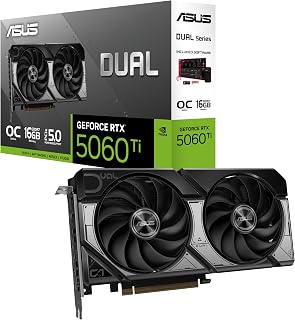
The 16GB GDDR7 configuration ensures Monster Hunter Wilds runs smoothly at 1440p with high to ultra textures, while the 2632MHz boost maintains consistent frame rates during complex hunts. Three DisplayPort 2.1b outputs support modern high refresh displays. The doubled memory over the base 5060 Ti eliminates texture streaming issues in the game's expansive environments and keeps performance steady during extended sessions.
Pros
- 16GB GDDR7 handles high-resolution textures and future content
- 0dB fan mode delivers silence during exploration phases
- Compact 2.5-slot design fits small-form-factor builds
- DLSS 4 ensures smooth 1440p ultra settings performance
Cons
- Compact sizing limits extreme overclocking potential
- Higher price point compared to entry-level alternatives
Monster Hunter Wilds demands consistent frame rates and visual clarity to track fast-moving creatures across dense, detailed environments. The ASUS Dual RTX 5060 Ti delivers exactly that with 16GB of GDDR7 memory and 767 AI TOPS from NVIDIA's Blackwell architecture. DLSS 4 support ensures smooth 1440p gameplay at ultra settings while maintaining the visual fidelity needed to spot tells and environmental hazards. The 2632 MHz boost clock handles the game's demanding particle effects and weather systems without stuttering. What sets this card apart for hunters is the 0dB technology paired with Axial-tech fans. During exploration and gathering phases, the fans shut down completely for silent operation, then spin up instantly when combat intensifies. The compact 2.5-slot design fits into smaller cases without sacrificing cooling efficiency, and dual ball bearing fans ensure reliability through hundreds of hours of hunts. Dual BIOS profiles let you switch between quiet village sessions and performance-focused elder dragon encounters. The 16GB VRAM buffer handles high-resolution textures and future updates without compromise, while PCIe 5.0 connectivity eliminates any bottleneck concerns.
GPU and Memory: NVIDIA GeForce RTX 5060 Ti, 16GB GDDR7, 2632 MHz (OC Mode), 2602 MHz (Default Mode). Supports DLSS 4 and Blackwell architecture for AI-accelerated performance.
Connectivity and Cooling: 3x DisplayPort 2.1b, HDMI 2.1b, PCIe 5.0 x16 interface. Dual Axial-tech fans with dual ball bearings, 2.5-slot compact form factor, 0dB technology for silent idle operation.
Physical and System Requirements: Dimensions 9 inches long by 4.7 inches wide, weighs 0.66 kg. Supports maximum resolution of 7680x4320 pixels. Includes 3-year warranty and SpeedSetup manual. Compatible with standard desktop builds requiring adequate power supply and proper case ventilation.
Perfect for hunters building compact gaming rigs or upgrading small-form-factor systems who need reliable 1440p performance and silent operation during downtime. The 16GB memory suits players who plan to max out texture quality and want headroom for expansions. Skip this if you're chasing extreme 4K frame rates at native resolution or need maximum overclocking headroom. Budget-conscious hunters waiting for entry-level options should also look elsewhere, though the VRAM and cooling justify the investment for serious players.

This TUF Gaming card pairs a 2640MHz boost clock with 12GB GDDR7 memory, delivering strong frame rates at 1440p in Monster Hunter Wilds while the newer memory standard ensures fast texture streaming during intense multi-monster encounters. Three DisplayPort 2.1a outputs give you flexibility for high refresh rate setups. The GDDR7 technology provides headroom for the game's demanding visual effects and large open areas.
Pros
- Flawless 1440p ray tracing with high settings maintained
- Military-grade components ensure long-term reliability
- Consistent 65C temperatures under sustained hunting loads
- Included bracket prevents GPU sag in larger builds
Cons
- Substantial 13-inch length requires case compatibility verification
- 12GB VRAM may face pressure from future expansions
Monster Hunter Wilds throws everything at your GPU simultaneously: weather effects, creature physics, environmental destruction, and ray-traced lighting across sprawling biomes. The ASUS TUF RTX 5070 OC handles this chaos with authority thanks to its 12GB GDDR7 memory and 2640 MHz boost clock built on Blackwell architecture. Users report flawless high-setting performance with ray tracing enabled at 1440p, exactly what you need to appreciate the game's atmospheric lighting while maintaining combat readiness. The card pushes solid 4K capability for hunters prioritizing visual spectacle over competitive frame rates. Military-grade components and protective PCB coating ensure stability during marathon hunting sessions, while phase-change thermal pads keep temperatures at 65C under sustained load. The triple Axial-tech fan design in a 3.125-slot body delivers exceptional cooling without excessive noise, critical when you're listening for audio cues during hunts. DLSS 4 support future-proofs performance as Capcom releases expansions and graphical updates. The included bracket and stand prevent GPU sag in larger builds, and the exceptional build quality means this card will handle thousands of hours without thermal degradation or component failure affecting your hunts.
GPU and Memory: NVIDIA GeForce RTX 5070, 12GB GDDR7, 2640MHz boost clock, PCIe 5.0 interface
Cooling and Design: 3.125-slot form factor, three Axial-tech fans, phase-change thermal pad, protective PCB coating, military-grade components, GPU Guard bracket
Connectivity: 3x DisplayPort 2.1a, 2x HDMI 2.1b, 7680x4320 maximum resolution support
Physical: 13 inches long, 5.5 inches wide, 3.4 pounds, includes cooling bracket and stand
Warranty and Support: 3-year manufacturer warranty, GPU Tweak III software for performance monitoring and thermal control
Built for serious hunters investing in 1440p ray tracing or 4K gaming who value durability and thermal performance over budget constraints. The military-grade construction suits players logging hundreds of hours in demanding conditions. Content creators capturing hunts for streaming or video production benefit from the rendering stability and AI workload handling. Skip this if your case can't accommodate 13 inches of length and over 2 inches of thickness. Budget builders and those satisfied with 1080p should consider lighter options.
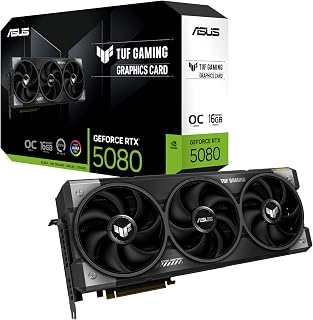
The 2730MHz boost clock and 16GB GDDR7 make this a strong 4K contender for Monster Hunter Wilds, pushing high frame rates with maxed settings across the game's visually demanding environments. Three DisplayPort 2.1a outputs support cutting-edge displays. The card handles the game's complex weather effects, dense foliage, and large monster animations without frame drops, even during the most chaotic hunts.
Pros
- DLSS 4 and Blackwell architecture excel at 4K
- Phase-change thermal pad prevents throttling during long hunts
- Military-grade build quality ensures long-term durability
- GPU Tweak III provides real-time monitoring and tuning
Cons
- Requires 850W PSU minimum
- 348mm length and 3.6-slot design demand spacious case
For hunters who demand Monster Hunter Wilds at 4K with maximum settings and every visual flourish enabled, the ASUS TUF Gaming RTX 5080 is a flagship solution. NVIDIA's Blackwell architecture and DLSS 4 support allow this card to maintain high frame rates even when the screen fills with particle effects, weather systems, and multiple large monsters simultaneously. The 16GB GDDR7 framebuffer handles the highest resolution textures and environmental assets without compromise. The phase-change GPU thermal pad is a standout for extended hunts, maintaining consistent performance without thermal throttling during those marathon sessions chasing endgame tempered investigations. Three Axial-tech fans with an optimized fin array keep the card running cool and quiet, while GPU Tweak III lets you monitor thermals and tweak performance profiles on the fly. Military-grade components and protective PCB coating ensure the card survives years of intensive use. The 3.6-slot design and 348mm length demand a spacious case, and the 850W PSU minimum is non-negotiable.
GPU: NVIDIA GeForce RTX 5080
Memory: 16GB GDDR7
Boost Clock: 2730 MHz (OC Mode), 2700 MHz (Default Mode)
Physical Dimensions: 348mm length, 3.6-slot design, 4.3 lbs
Video Outputs: 3x DisplayPort 2.1a, 2x HDMI 2.1b
Power Requirement: Minimum 850W PSU with 16-pin 12V-2x6 (12VHPWR) connector
Manufacturing: Auto-Extreme precision automated manufacturing
Cooling: Three Axial-tech fans, phase-change GPU thermal pad, protective PCB coating
Power Supply: Verify your PSU is rated for 850W minimum and includes the required 16-pin 12V-2x6 (12VHPWR) connector. Standard 6-pin or 8-pin connectors are insufficient for this card.
Physical Clearance: Confirm your case accommodates the 348mm length and can support the 3.6-slot width requirement. Measure internal dimensions and account for storage drives, fans, and other components that may interfere with the card's placement.
System Integration: The card includes a GPU bracket for secure installation. Ensure your motherboard provides adequate PCIe slot access and that your monitor cables support DisplayPort 2.1a or HDMI 2.1b for optimal performance.

This budget option offers 6GB GDDR6 and a 1500MHz clock, making it suitable for 1080p medium settings in Monster Hunter Wilds if you prioritize smooth frame rates over visual fidelity. The smaller memory footprint means you will need to dial back texture quality, but the card handles the core gameplay loop competently. It is a practical choice for entry-level builds focused on playability.
Pros
- Compact 20cm length fits small cases and pre-builts
- DLSS 3 provides useful frame rate uplift in Wilds
- Dual Axial-tech fans maintain cool, quiet operation
- IP5X dust resistance protects against buildup
Cons
- 6GB VRAM limits texture quality headroom
- Ray tracing performance is secondary
Monster Hunter Wilds at 1080p is well within reach for the ASUS Dual RTX 3050 6GB, especially when you lean on DLSS 3 to recover frame rates during intense hunts. The Ampere architecture handles the game's mix of environmental detail and creature physics competently at medium settings, and the 6GB framebuffer is sufficient for the textures and effects Wilds throws at you in single-player and co-op expeditions. The compact 20cm, 2-slot design fits into the small-form-factor builds and pre-built towers that many hunters are upgrading, and the dual Axial-tech fans with barrier ring design keep temperatures controlled during long sessions tracking elder dragons across varied biomes. The stainless steel bracket and IP5X dust resistance add durability for a card that will see sustained use. If you're moving up from integrated graphics or an older GPU and want smooth 1080p Monster Hunter without rebuilding your entire rig, this card delivers that experience without demanding a new PSU or case.
This card suits hunters upgrading older systems or small-form-factor PCs who play at 1080p and prioritize fitting the GPU into tight physical and power budgets. It's perfect for those who want DLSS support and modern driver optimization for Wilds without overspending. Skip it if you're targeting 1440p or 4K hunts, streaming while playing, or running max settings with ray tracing enabled, as the 6GB VRAM and entry-level architecture won't keep up.
GPU Architecture: NVIDIA GeForce RTX 3050 with Ampere SM, 2nd Gen RT Cores, and 3rd Gen Tensor Cores for DLSS 3 support.
Memory: 6GB GDDR6 with 1500 MHz memory clock speed, delivering adequate bandwidth for 1080p and light 1440p workloads.
Clock Speeds: OC Mode: 1500 MHz boost clock, Default Mode: 1470 MHz boost clock for flexible performance tuning.
Thermal Design: Dual Axial-tech fans, 2-slot form factor (20cm length, 7.9in x 4.7in), IP5X dust resistance, and stainless steel bracket.
Power: No external power connector required. PCIe x16 slot power delivery only, making it ideal for systems with limited PSU capacity.
Connectivity: HDMI 2.1, DisplayPort 1.4a, and DVI-D for multi-monitor setups and modern display standards.

With a 3060MHz boost clock and 16GB GDDR6, this Gaming OC variant pushes high frame rates at 1440p in Monster Hunter Wilds while the generous memory capacity handles ultra texture settings across the game's varied biomes. PCIe 5.0 compatibility future-proofs your build. The higher clock speed translates to smoother performance during visually dense hunts with multiple large monsters on screen.
Pros
- 16GB VRAM eliminates texture streaming bottlenecks
- Consistent 1440p high-refresh performance in demanding titles
- WINDFORCE cooling stays quiet under load
- PCIe 5.0 support for future system compatibility
Cons
- 4K performance requires settings compromises
- 750W PSU minimum may require upgrades
Monster Hunter Wilds at 1440p high refresh rates is where the GIGABYTE Radeon RX 9070 XT finds its purpose. The 16GB GDDR6 memory handles texture variety across Wilds' sprawling ecosystems without the VRAM choking that hampers smaller buffers, and PCIe 5.0 ensures bandwidth headroom as asset complexity scales. AMD's latest architecture delivers consistent frame pacing during encounters where particle effects and monster animations pile up simultaneously. Real-world reports confirm 160-220fps capability in modern demanding titles translates directly to smooth hunting at high settings, where maintaining visual clarity during fast repositioning matters more than benchmark peaks. The WINDFORCE cooling with Hawk fans and server-grade thermal gel keeps temperatures controlled without fan noise creeping into gameplay audio. The 11.34-inch length fits standard ATX cases, and the silver-black aesthetic integrates cleanly without demanding RGB coordination. For hunters building new rigs or upgrading from older hardware, this card hits the performance tier where Wilds plays as intended without requiring flagship investment.
Core Specifications
GPU: AMD Radeon RX 9070 XT
Memory: 16GB GDDR6
Memory Clock: 2600 GHz
GPU Clock: 3060 MHz
Interface: PCIe 5.0 x16
Max Resolution: 7680 x 4320 (8K)
Physical and Connectivity
Dimensions: 11.34 inches (L) x 5.2 inches (W)
Weight: 1.78 kg
Output: DisplayPort
Power Connectors: Dual 8-pin (750W+ PSU recommended)
Cooling: WINDFORCE system with Hawk fans and thermal gel
Warranty and Support
Manufacturer: GIGABYTE
Warranty: 3 years
Model: GV-R9070XTGAMING OC-16GD
Gaming Performance at Common Resolutions
1440p Gaming: 160-220fps on most modern AAA titles at high settings. Excellent for competitive gaming and high-refresh monitors.
4K Gaming: Playable at high settings on most titles, medium settings on demanding new releases. Solid for content creators monitoring in 4K.
Esports Titles: 300+ fps possible on optimized competitive games for ultra-high refresh gameplay.
Real-World Use Cases
Best suited for 1440p gaming at 144+ fps, 4K content creation workflows, professional 3D rendering, and VR gaming. Handles flight simulators like DCS at high settings with 4K head tracking. Eliminates VRAM constraints for media professionals working with large files.
Driver Recommendations
Run DDU (Display Driver Uninstaller) before installation if upgrading from another card. Install latest AMD drivers for maximum stability and performance. Update BIOS if required by your system for PCIe 5.0 compatibility.

With a 3030MHz boost clock and 16GB GDDR6, this Prime edition delivers strong 1440p performance in Monster Hunter Wilds while the ample memory handles ultra textures and asset streaming across the game's vast maps. DisplayPort 2.1a and HDMI 2.1b outputs ensure compatibility with modern displays. The high clock speed provides smooth frame pacing during intense encounters with multiple large monsters.
Pros
- Dual BIOS offers quiet exploration and performance modes
- 50% FPS gains over older mid-range cards
- Efficient 180-190W power draw under competing options
- Compact 2.5-slot design fits most modern cases
Cons
- 12.3-inch length requires case clearance verification
- Initial driver releases may need updates for stability
The ASUS Prime Radeon RX 9070 XT delivers the performance Monster Hunter Wilds needs without the expense of top-tier hardware. Its 16GB GDDR6 capacity prevents the memory pressure that causes stuttering when Wilds loads multiple large monsters and environmental detail simultaneously. Users moving from older mid-range cards report 50% FPS improvements, translating to smooth hunts at resolutions and settings that previously caused frame drops. The dual BIOS setup proves practical: Quiet mode handles exploration and gathering at near-silent operation with 28-32C idle temps, while Performance mode pushes the 3030MHz boost for intense multi-target encounters without thermal throttling. Phase-change thermal pads keep GPU temperatures below 60C even during extended expeditions. The compact 2.5-slot design maintains airflow in tighter builds, and Axial-tech fans with dual-ball bearings suggest long-term reliability through thousands of hunting hours. Power draw stays efficient at 180-190W, typically 15-20W below competing options at similar capability. Native DisplayPort 2.1a and HDMI 2.1b outputs support modern high-refresh displays directly.
Memory and Bus: 16GB GDDR6, 256-bit interface, 3030 MHz memory clock
Architecture: AMD Radeon RX 9070 XT, PCIe 5.0 x16, 3030 MHz boost clock (OC mode), 2480 MHz game clock (OC mode)
Connectivity: 3x DisplayPort 2.1a, 1x HDMI 2.1b, maximum resolution 7680 x 4320
Cooling: 3x Axial-tech fans with dual-ball bearings, phase-change thermal pad, 0dB idle technology, 2.5-slot design
Software: Dual BIOS switch (Quiet and Performance profiles), GPU Tweak III for performance tuning and monitoring, ASUS GPU Guard protection
Dimensions and Power: 12.3 inches long, 5.1 inches wide, approximately 1500g, estimated 180-190W typical draw
Warranty: 3-year manufacturer coverage
This card suits hunters upgrading from aging mid-range GPUs who want meaningful performance gains at 1440p or 4K with balanced settings. The dual BIOS flexibility appeals to players who value quiet operation during solo exploration but want performance headroom for multiplayer chaos. Skip it if you're building for absolute maximum settings at 4K native, or if your case can't accommodate the 12.3-inch length. Also pass if you need guaranteed day-one driver perfection, as initial releases sometimes lag.
How to Choose a GPU for Monster Hunter Wilds
Match the card to your target resolution
Start with the resolution you use, not simply the graphics card tier. At 1080p, the ASUS Dual GeForce RTX 3050 6GB GDDR6 OC Edition is a constrained option that calls for conservative settings and upscaling, while the EVGA GeForce RTX 3060 XC Gaming, 12G-P5-3657-KR has more memory headroom despite its older architecture.
For 1440p, a 16GB card such as the ASUS Dual GeForce RTX 5060 Ti 16GB GDDR7 OC or ASUS Dual Radeon RX 9060 XT 16GB GDDR6 is the more balanced starting point. Moving to 4K increases the workload sharply, so compare your panel with our 32-inch 4K monitor picks and 4K 240Hz monitor options before committing to a GPU.
Prioritize VRAM and your upscaling ecosystem
Graphics memory matters when you want detailed textures, higher resolutions, and extra visual effects without constantly reducing image-quality settings. The 16GB configurations in the Radeon RX 9070, RX 9070 XT, RTX 5070 Ti, RTX 5080, RTX 5060 Ti, and RX 9060 XT families offer a more relaxed foundation for demanding games.
The ASUS TUF Gaming GeForce RTX 5070 12GB GDDR7 OC has less memory than the 16GB alternatives, but it brings NVIDIA Blackwell architecture and DLSS 4 support. NVIDIA’s DLSS tools and AMD’s FSR options can both be useful, so choose the platform whose image quality, features, and software experience best fit the rest of your library.
Confirm case clearance, slots, and power connectors
Physical fit is a purchase-critical detail. The ASUS TUF Gaming GeForce RTX™ 5080 16GB GDDR7 OC is 348mm long and uses a 3.6-slot cooler, while the ASUS TUF Gaming GeForce RTX 5070 Ti 16GB GDDR7 OC occupies 3.125 slots. Compact ASUS Dual models use 2.5-slot designs, which can be easier to accommodate in smaller cases.
Power requirements deserve the same attention. The TUF RTX 5070 Ti and TUF RTX 5080 call for a minimum 850W PSU with a 16-pin 12V-2×6 connector, whereas the ASRock Radeon RX 9070 Challenger 16GB OC Graphics uses two 8-pin connectors and has a recommended 700W PSU. Check our 80 Plus Gold power supply guide if your current unit is due for an upgrade.
Choose a cooler and feature set that suit your build
For a compact 1080p or 1440p system, the ASUS Dual GeForce RTX 5060 Ti 16GB GDDR7 OC stands out for its 2.5-slot layout, dual BIOS modes, and 0dB operation during light workloads. The ASUS Dual Radeon RX 9060 XT 16GB GDDR6 takes a similarly space-conscious approach, with axial-tech fans, dual ball bearings, and a Quiet or Performance BIOS choice.
For more ambitious builds, the ASRock Radeon RX 9070 Challenger 16GB OC Graphics combines 16GB of GDDR6 memory with a triple-fan layout, while the GIGABYTE Radeon RX 9070 XT Gaming OC 16G Graphics adds WINDFORCE cooling and RGB lighting. The ASUS Prime Radeon RX 9070 XT 16GB GDDR6 OC Edition offers a 2.5-slot design with a phase-change thermal pad, while the TUF RTX 5070 Ti and RTX 5080 prioritize DLSS 4, oversized heatsinks, and reinforced construction for high-end systems.
Final Thoughts
If you want a well-rounded 16GB card with conventional dual 8-pin power, the ASRock Radeon RX 9070 Challenger 16GB OC Graphics is a confident match for a serious 1440p-focused build. For a roomier case and high-end 4K ambitions, the ASUS TUF Gaming GeForce RTX™ 5080 16GB GDDR7 OC brings Blackwell features, DLSS 4, and substantial cooling, provided your power setup meets its requirements.
Frequently Asked Questions
Is 16GB of VRAM enough for Monster Hunter Wilds in 2026?
A 16GB GPU is a sensible target for 1440p players who want room for detailed textures and long-term flexibility. It does not guarantee a specific frame rate, since your CPU, settings, display resolution, and upscaling mode still matter. It does, however, provide a stronger buffer than 6GB or 12GB cards when you raise visual demands.
Should I choose an NVIDIA or AMD GPU for Monster Hunter Wilds?
NVIDIA Blackwell options, including the RTX 5070 series and RTX 5080, emphasize DLSS 4 support and AI-driven features. AMD Radeon RX 9000-series cards offer compelling 16GB configurations and a strong range of cooler designs. Choose based on the specific card’s dimensions, power connection, VRAM, and the upscaling features you prefer to use.
Can I play Monster Hunter Wilds with an RTX 3050 or RTX 3060?
You can build around either card, but they require more careful expectations than newer 16GB options. The RTX 3050’s 6GB memory capacity makes reduced settings and upscaling particularly important, while the RTX 3060’s 12GB provides more texture-memory flexibility. If your goal is high-detail 1440p or 4K play, a more current GPU is the safer direction.
What else should I upgrade alongside my graphics card?
Confirm that your CPU, system memory, case airflow, and power supply are appropriate for the GPU you select. A capable display matters too, and our competitive FPS monitor guide explains useful refresh-rate and response considerations. For online hunts, higher GPU performance improves visual smoothness, while a stable connection can benefit from a gaming WiFi extender.




Write Your Review
No reviews yet. Be the first to share your experience!