

Law school is relentless. Between reading dense case law, drafting memos, running legal research platforms like Westlaw, and sitting through long lecture recordings, your laptop takes a beating every single day. The wrong machine can slow you down at the worst possible moment.
This guide covers eight of the top laptops suited for law students in 2026, ranging from budget-friendly workhorses to high-performance machines built for serious multitasking. Whether you are a 1L on a tight budget or a 3L who needs something that keeps up with moot court prep, you will find a solid option here. If you are also building out a study workspace, check out our Home Office category for desk accessories and productivity gear.

Windows 11 Pro provides the enterprise-grade security law students need for handling confidential case materials and client information. The 16GB RAM ensures smooth multitasking between legal research databases, document editors, and citation tools during intensive study sessions. The numeric keypad streamlines data entry for case citations and billing hours, while the lightweight design makes it easy to carry between classes, library, and internships.
Pros
- Windows 11 Pro included out of the box, useful for law school IT environments
- 16GB RAM handles multitasking across research tools, PDFs, and productivity apps
- 3.5-pound weight and slim profile make it easy to carry between classes
- MicroSD slot expands storage up to 1TB for growing case file libraries
Cons
- Battery life around four hours is too short for full days away from an outlet
- M3-6Y30 processor is efficiency-focused and will struggle with heavier workloads
Law school demands long reading sessions, constant research across multiple tabs, and document-heavy workflows, and the NAIKLULU 15.6-inch handles all of that at an entry-level price point. Windows 11 Pro is a meaningful inclusion here, offering the professional-grade features law students may need for campus IT systems or remote access tools. The M3-6Y30 processor running at 2.2GHz manages typical legal research tasks, document drafting, and video lectures without noticeable slowdown. Sixteen gigabytes of RAM means juggling Westlaw, a PDF reader, Word, and email simultaneously stays manageable. The 256GB SSD keeps things snappy for boot times and file access, and the microSD slot lets you expand storage up to 1TB as your case files and course materials accumulate. At 3.5 pounds and under an inch thick, it fits easily into a law school backpack alongside textbooks. The FHD display is clear enough for reading dense legal text. The main caveat for law students is battery life, capping around four hours, which means you will need a charger for full class days.
Best suited for budget-conscious law students who primarily study in campus buildings or locations with easy access to outlets. Also a solid pick for first-year students who want a capable, portable machine without a large upfront investment. Students who rely on a single laptop through long court clinic days or back-to-back evening seminars should look elsewhere, since the short battery life will be a recurring frustration.
Processor: M3-6Y30 dual-core, quad-thread, 2.2GHz max frequency, 7W TDP
Display: 15.6-inch FHD LCD, 1920x1080 resolution, 250 nit brightness, glossy finish
Memory: 16GB RAM (SODIMM)
Storage: 256GB SSD, expandable up to 1TB via microSD card
Battery: 7.7V 5000mAh lithium-polymer, up to 4 hours runtime
Connectivity: WiFi 5 (802.11ac), Bluetooth 4.2, dual USB 3.0, mini HDMI
Operating System: Windows 11 Pro
Security: Fingerprint recognition, front-facing camera
Weight: 3.5 pounds
Dimensions: 14.09 x 9.89 x 0.78 inches
Other: Built-in stereo speakers, analog microphone, numeric keypad

Windows 11 Pro offers the security features necessary for handling sensitive legal documents and client information during internships and clinical work. The AMD Ryzen 5 7520U processor paired with 16GB DDR5 RAM delivers reliable performance for legal research and document preparation. The spill-resistant keyboard provides protection during long study sessions, while the numeric keypad facilitates quick entry of case citations and billing codes.
Pros
- MIL-SPEC 810H certification and spill-resistant keyboard built for daily wear
- Ryzen 5 7520U with 16GB DDR5 RAM handles legal research and multitasking smoothly
- Anti-glare, low blue light display reduces fatigue during extended reading sessions
- Webcam privacy shutter is useful for confidential clinic and moot court sessions
Cons
- Integrated graphics only, so any coursework involving data visualization software may feel limited
- No mention of backlit keyboard, which can be an inconvenience in dimly lit lecture halls or libraries
Law students need a machine that holds up through three years of demanding use, and the Lenovo V15 is built with exactly that kind of longevity in mind. Its MIL-SPEC 810H certification means it can absorb the daily wear of commuting between campus, courthouses, and coffee shops without the build quality degrading over time. The spill-resistant keyboard is a practical feature for anyone eating lunch while reviewing case notes. On the performance side, the AMD Ryzen 5 7520U paired with 16GB DDR5 RAM and a 512GB NVMe SSD handles the core law school workload well: legal research platforms, large PDF documents, video conferencing with professors and clinic supervisors, and running a full productivity suite simultaneously. The 15.6-inch FHD display with anti-glare coating and TUV-certified low blue light technology reduces eye strain during the long reading sessions that define legal education. The privacy shutter on the webcam is a thoughtful detail for students participating in sensitive clinic or moot court sessions. USB-C with DisplayPort support means easy connection to external monitors in study rooms or offices.
Processor: AMD Ryzen 5 7520U with Radeon 610M integrated graphics
Memory: 16GB DDR5 RAM
Storage: 512GB PCIe NVMe M.2 SSD
Display: 15.6-inch FHD (1920x1080) anti-glare LCD with TUV Low Blue Light certification
Operating System: Windows 11 Pro 64-bit with Microsoft Copilot
Connectivity: Wi-Fi 6E, Bluetooth 5, USB-C 3.2 Gen 1 with DisplayPort 1.2, two USB-A 3.2 Gen 1, HDMI 1.4b, Gigabit Ethernet
Security: BitLocker encryption, Remote Desktop, privacy webcam shutter
Keyboard: Full-size with dedicated numeric keypad, spill-resistant
Durability: Military-grade MIL-SPEC 810H tested
Weight: 3.6 pounds
Dimensions: 14.14 inches L x 9.28 inches W x 0.78 inches Th
Color: Gray
Warranty: One-year limited warranty from Lenovo
A strong fit for law students who want a durable, business-grade machine that will stay reliable across all three years of school and into early practice. Particularly well suited to clinic students and those doing remote internships who need dependable video conferencing and solid build quality. Students prioritizing cutting-edge processing power or a premium display over ruggedness will find better options at higher price points.
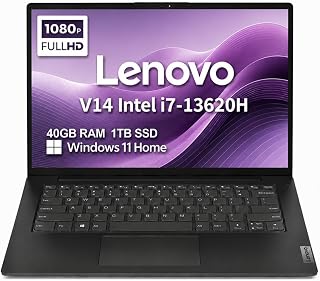
The massive 40GB RAM capacity eliminates performance bottlenecks when running multiple virtual machines for legal technology courses or managing dozens of research tabs simultaneously. The Intel i7-13620H processor powers through document-heavy workflows involving large PDF case files and complex legal databases. The 1TB SSD ensures you never face storage constraints with an expanding library of case materials, textbooks, and legal briefs throughout law school.
Pros
- 40GB DDR4 RAM handles heavy multitasking across legal research and productivity apps
- MIL-STD-810H durability rating suits the daily wear of student life
- Anti-glare, low blue light display reduces eye strain during long study sessions
- At 3.2 pounds it is easy to carry across campus all day
Cons
- Integrated Intel UHD graphics limit any creative or visual work beyond basic tasks
- 1080p resolution is adequate but not standout on a 14-inch panel compared to higher-res rivals
Law school demands long reading sessions, constant tab switching between case databases, citation tools, and word processors, and the Lenovo V14 handles all of it without breaking a sweat. The Intel Core i7-13620H with 10 cores and a generous 40GB of DDR4 RAM means you can have Westlaw, a 50-page PDF, your notes, and a video call open simultaneously without slowdowns. The 1TB PCIe NVMe SSD keeps everything loading fast, which matters when you are scrambling between sources during an exam or moot court prep. At 3.2 pounds with a compact footprint, carrying it between the library, lecture halls, and clinic rotations is painless. The 14-inch FHD anti-glare display with TÜV-certified low blue light technology is a genuine asset for students logging four or five hours of screen time daily. MIL-STD-810H certification adds confidence for a laptop that lives in a backpack. Integrated graphics are not a concern for legal work, and the HD privacy shutter camera is a thoughtful touch for remote classes and client calls.
A strong fit for law students who multitask heavily across research platforms, drafting tools, and video conferencing and need a lightweight laptop that can survive daily commutes. The 40GB RAM is overkill for light users, so students who primarily take notes and browse may not need this level of hardware. Anyone expecting gaming capability should look elsewhere, but for purely academic and professional legal work, this is well matched.
Processor and Memory: Intel Core i7-13620H (10-core), 40GB DDR4 RAM
Storage: 1TB PCIe NVMe M.2 SSD
Display: 14" FHD (1920x1080) anti-glare, 45% NTSC, 250 nits, TÜV Low Blue Light certified
Graphics: Intel UHD Graphics (integrated)
Camera: 720p HD with privacy shutter
Connectivity: Wi-Fi 6 (802.11ax), Bluetooth 5.2, USB-C 3.2, USB-A 3.2, USB 2.0, HDMI 1.4b, Ethernet, 3.5mm audio jack
External Display Support: Two monitors up to 4K (3840x2160) at 60Hz via HDMI and USB-C
Operating System: Windows 11 Home 64-bit with AI Copilot
Design: 3.15 lbs, 12.76" x 8.47" x 0.68", military-grade MIL-STD-810H durability
Warranty: 3-year on upgraded memory/SSD, 1-year on remaining components

The 17.3-inch FHD display provides ample screen real estate for viewing lengthy case law documents and statutes side-by-side with notes. With 512GB SSD storage, you can maintain extensive libraries of legal briefs, case files, and research materials locally. The AMD Ryzen 3 30 processor handles demanding legal research platforms and document management software efficiently, while multiple USB ports accommodate external drives for backup and secure file transfer.
Pros
- 17.3-inch anti-glare IPS display is well suited for reading dense legal text all day
- Up to 14-plus hours of battery life covers a full day of classes and study sessions
- 45W fast charger reaches 50% in 45 minutes for quick top-ups between commitments
- Wi-Fi 6 and dual USB-C with DisplayPort offer flexible, fast connectivity
Cons
- Keyboard lacks backlighting, a real limitation for evening lectures and low-light study environments
- Ryzen 3 processor and 8GB RAM may feel constrained when running several research tools and video calls simultaneously
The HP OmniBook 3 makes a case for law students who spend serious hours reading statutes, case law, and law review articles on screen. The 17.3-inch FHD IPS display with a 300-nit panel and anti-glare coating gives you a noticeably larger canvas for legal documents than the standard 15-inch laptop, reducing the need to constantly scroll or zoom. For students with any eye strain concerns, that extra screen real estate matters. Battery life is the other standout: up to 14 hours and 15 minutes of real-world use means the OmniBook 3 can handle a full day of classes, library sessions, and an evening study block without hunting for an outlet. The 45W fast charger hits 50% in 45 minutes, so short breaks are enough for a meaningful top-up. The AMD Ryzen 3 processor with 512GB SSD manages the core law school stack, including research platforms, Word, and video calls, reliably. At 4.4 pounds with a 0.65-inch profile, it remains portable despite the large footprint. Wi-Fi 6 and dual USB-C with DisplayPort round out a well-connected package.
Display: 17.3-inch FHD IPS, 1920x1080, 300 nits, 62.5% sRGB, anti-glare, 178-degree viewing angles
Processor: AMD Ryzen 3 30, 4 cores, 8 threads, up to 4.1 GHz boost, 4MB L3 cache
Memory: 8GB LPDDR5-5500 MT/s onboard
Storage: 512GB PCIe NVMe M.2 SSD
Graphics: AMD Radeon 610M integrated
Connectivity: Wi-Fi 6 (802.11ax), Bluetooth 5.4, 2x USB-A 5Gbps, 2x USB-C 10Gbps (USB-PD 3.1, DisplayPort 1.4), 1x HDMI 2.1, 1x 3.5mm audio jack
Camera: 1080p FHD with HDR auto-switch, dual array microphones
Battery: Up to 14 hours 15 minutes, 45W USB-C GaN fast charger (0-50% in 45 minutes)
Weight: 4.4 pounds
Dimensions: 15.65" x 10.09" x 0.65"
Operating System: Windows 11 Home with Copilot Key
Sustainability: EPEAT Silver Climate+ registered, ENERGY STAR certified

Windows 11 Pro and included MS Office Pro Plus deliver the professional tools law students require for drafting briefs, memoranda, and legal correspondence without additional software costs. The integrated Copilot AI assists with research summarization and document drafting tasks. Wi-Fi 6 connectivity ensures reliable access to online legal databases and virtual court proceedings, while the 4-core Intel processor manages multiple browser tabs and research applications simultaneously during case preparation.
Pros
- Lifetime Microsoft Office 2024 Pro Plus included eliminates subscription costs
- Bundled accessories cover most day-one needs without extra spending
- 9-hour battery life and 3.2-pound weight suit full days on campus
- Wi-Fi 6 ensures reliable connectivity in busy campus networks
Cons
- 4GB RAM and 128GB internal storage are limiting for heavier academic workloads
- Intel N150 integrated graphics and modest specs leave little headroom for demanding applications
For a first-year law student managing a tight budget while covering the basics, this HP 14-inch laptop covers a lot of ground in one purchase. It ships with Windows 11 Pro, lifetime Microsoft Office 2024 Professional Plus, a 500GB external drive, a wireless mouse, earbuds, and cables, so there is very little additional spending required out of the box. Microsoft Copilot AI is built in, which can help with drafting and research organization. The Intel quad-core N150 processor and 4GB LPDDR5 RAM are sufficient for document work, web research, and video classes, which describes the bulk of a 1L's daily computing. Wi-Fi 6 keeps connectivity stable in crowded campus environments. The anti-glare 14-inch display and 9-hour battery life mean you can sit through a full day of classes and a library session without hunting for an outlet. At 3.2 pounds it travels easily. The trade-off is clear: 128GB of internal UFS storage and 4GB RAM create real limits if you start accumulating large case file downloads or run several applications simultaneously.
Processor: 13th Gen Intel Core N150, quad-core, up to 3.6 GHz Turbo Boost, 6MB cache, 4 threads
Memory: 4GB LPDDR5 RAM, power-efficient design supports high data rates
Storage: 128GB UFS SSD built-in, 500GB portable external drive included
Display: 14-inch HD LED, 1366x768 resolution, anti-glare micro-edge, 250 nits brightness
Graphics: Integrated Intel Graphics
Operating System: Windows 11 Pro with Copilot AI integration
Battery: 3-cell 41Wh lithium-ion, up to 9 hours per charge, HP Fast Charge capable
Connectivity: Wi-Fi 6 (802.11ax), Bluetooth 5.4, USB-C 5Gbps, dual USB-A 5Gbps, HDMI 1.4b, SD card reader, 3.5mm audio jack
Camera: 720p HD True Vision with temporal noise reduction, dual-array digital microphones
Keyboard: Full-size English layout, natural silver finish
Weight: 3.24 lbs (1.47 kg)
Dimensions: 12.76 x 8.86 x 0.71 inches (32.4 x 22.5 x 1.8 cm)
Color: Willow Green
A practical pick for budget-conscious law students who need a capable everyday machine for writing, research, and online classes and value the bundled software and accessories. Students in upper-level years handling large document sets, specialized legal software, or heavy multitasking will likely feel constrained by the 4GB RAM and 128GB internal storage. Not recommended for anyone expecting future-proof longevity under increasingly demanding workloads.

The Intel 10-core i7-13620H processor delivers exceptional performance for running resource-intensive legal research platforms like Westlaw and LexisNexis simultaneously with document editing software. With 24GB RAM, you can effortlessly manage dozens of browser tabs filled with case law, statutes, and academic articles without slowdown. The 1TB NVMe SSD provides rapid access to extensive case file libraries and accommodates years of coursework, briefs, and reference materials.
Pros
- 15.6-inch anti-glare display is comfortable for reading long legal documents
- 10-core CPU at 4.9GHz and 24GB RAM handle heavy multitasking cleanly
- Bundled 8-in-1 port expander adds practical connectivity for classrooms and offices
- MIL-STD-810H certification adds durability confidence for daily student use
Cons
- Integrated graphics rule out any serious creative or 3D workloads
- FHD resolution is standard rather than premium for a display this size
The Lenovo V15 G4 gives law students a larger canvas to work with without giving up the performance needed for demanding academic workloads. The 15.6-inch FHD anti-glare display is well suited to reading lengthy case documents, law review articles, and statutory text side by side, and the 87% screen-to-body ratio keeps the physical footprint reasonable for a 15-inch machine. Under the hood, the i7-13620H reaches 4.9GHz across 10 cores, and 24GB of dual-channel RAM paired with a PCIe 4.0 NVMe SSD delivers fast application switching between research databases, word processors, and reference tools. The included 8-in-1 port expander is practically minded for students connecting to projectors during presentations or external monitors in a study carrel. Military-grade MIL-STD-810H certification means it holds up to the daily grind of campus life. Dolby Audio speakers and an HD privacy shutter camera round out the package for online classes and virtual clinic meetings. Weighing 1.65kg, it is lighter than many 15-inch laptops in this category.
Processor: Intel Core i7-13620H (10 cores, 6P+4E, 16 threads, up to 4.9GHz)
Memory: 24GB DDR4 RAM (dual-channel)
Storage: 1TB PCIe 4.0 NVMe SSD
Display: 15.6-inch FHD (1920x1080) anti-glare, 87% screen-to-body ratio
Graphics: Integrated Intel Graphics
Operating System: Windows 11 Home
Connectivity: WiFi 6, Bluetooth 5.2, Gigabit Ethernet, USB-C with Power Delivery and DisplayPort, HDMI 1.4b, multiple USB 3.0 ports, SD card slot, Micro SD card slot
Audio: Dolby Audio stereo speakers
Camera: HD 720p with privacy shutter
Security: TPM 2.0, Kensington lock slot, MIL-STD-810H durability tested
Weight: 1.65kg
Accessories: 8-in-1 USB Type-C port expander included
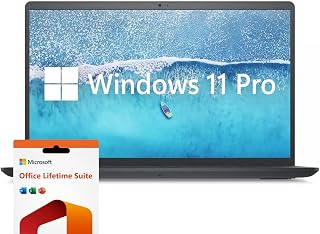

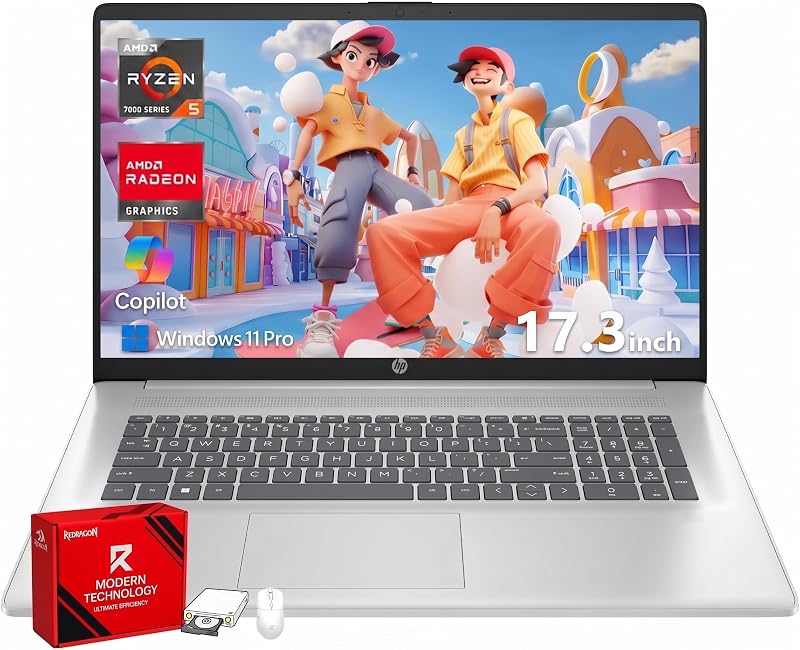
The 17.3-inch FHD IPS display minimizes eye fatigue when reviewing lengthy contracts, case opinions, and statutory texts for extended periods. Windows 11 Pro provides the professional-grade platform law firms expect from incoming clerks and associates. The Intel i3-N305 8-core processor handles simultaneous access to legal databases, video conferencing for remote classes, and document editing, while Wi-Fi 6 ensures stable connectivity during virtual court observations.
Pros
- 17.3-inch anti-glare IPS display is well suited to long reading and side-by-side document work
- 8-core Intel i3-N305 with 16GB RAM handles everyday law school workloads reliably
- Built-in Copilot key provides quick access to AI tools for summarizing and drafting
- HP Fast Charge reaches 50% battery in 45 minutes, practical between back-to-back classes
Cons
- Entry-level i3 processor will struggle with any resource-intensive tasks beyond standard coursework
- 17-inch footprint is less practical for cramped classroom desks or frequent commuting
For law students who spend long hours parsing case law, drafting briefs, and toggling between a PDF reader and a word processor, screen size matters more than most people admit. The HP 17.3-inch FHD IPS display gives that extra breathing room, letting you keep a statute and a draft side by side without constantly resizing windows. The anti-glare coating holds up under fluorescent library lighting, and 178-degree viewing angles make it comfortable whether you are at a desk or in a seminar room. The Intel Core i3-N305 with 8 cores and 16GB of DDR4 RAM handles the everyday workload of a law student well: research platforms, video lectures, and long documents all run without hesitation. The 512GB NVMe SSD keeps things quick on startup and file access. Windows 11 Pro brings the security and remote desktop tools that law school IT environments often require. The built-in Copilot key offers fast access to AI tools for summarizing readings or drafting outlines, which can shave time off heavy reading weeks. HP Fast Charge is a practical detail for students moving between classes.
Processor: Intel Core i3-N305, 8-core, up to 3.8GHz
Memory: 16GB DDR4 RAM
Storage: 512GB PCIe NVMe SSD
Display: 17.3-inch Full HD (1920 x 1080) IPS anti-glare, 250 nits brightness
Graphics: Intel integrated graphics
Connectivity: Wi-Fi 6 (802.11ax), Bluetooth 5.4, 1x USB-C, 2x USB-A, 1x HDMI 1.4b, 1x headphone/microphone combo jack
Operating System: Windows 11 Pro
Keyboard: Full-size with numeric keypad
Battery: Supports HP Fast Charge (50% in 45 minutes)
Weight: 4.98 pounds
Dimensions: 14.12 x 9.24 x 0.75 inches
Warranty: Limited warranty
Best suited for law students who value a large, easy-to-read display and do most of their work in documents, research databases, and video calls. It also suits those who want AI productivity tools built in from day one. Students who need to run demanding software, carry a light bag above all else, or want strong long-term performance headroom will likely outgrow the i3-N305 and should consider a Core i5 or i7 option instead.
What to Look for in a Law School Laptop
Processing Power and Multitasking Ability
Law students routinely have a dozen browser tabs open alongside PDF readers, word processors, and video conferencing tools all at once. A processor with multiple cores and a healthy amount of RAM keeps everything running without lag or freezing mid-research session.
Options like the Lenovo Laptop Computer, 14″ FHD, Intel i7-13620H with 40GB RAM and a 10-core processor, or the Lenovo Laptop, 15.6″ FHD, Intel 10-Core i7-13620H with 24GB RAM, are built specifically for that kind of demanding parallel workload.
Battery Life and Portability
A laptop that dies before your afternoon seminar is useless. Law school days are long, and campus outlets are rarely available when you need them. Look for machines that promise at least eight hours of real-world battery life, and consider weight if you are commuting.
The HP OmniBook 3 17.3 inch Laptop PC, FHD Display stands out here with up to 14 hours and 15 minutes of battery life and HP Fast Charge support. For students who value a lighter load, the Lenovo Laptop Computer, 14″ FHD, Intel i7-13620H weighs just 3.15 lbs and slips easily into any bag. You can also browse more options in our Laptops category.
Display Quality and Screen Real Estate
Long hours reading case briefs and annotating PDFs demand a display that is easy on the eyes. Anti-glare coatings and low blue light certification reduce eye strain during marathon study sessions. A Full HD resolution keeps text crisp and readable at any font size.
The Dell Inspiron 15.6″ Laptop Computer features a 120Hz IPS anti-glare display, which adds noticeable smoothness when scrolling through lengthy documents. For those who want maximum screen space, the HP 17 Inch FHD Laptop Computer for Business offers a generous 17.3-inch workspace ideal for side-by-side document comparison.
Storage and Security Features
Legal documents, research archives, and case study libraries pile up fast. A fast NVMe SSD with at least 512GB keeps your workflow snappy and your files accessible without long load times. Security features like TPM chips and privacy shutter cameras are worth prioritizing when handling sensitive client materials during clinics.
The Lenovo Laptop Computer V15, AMD Ryzen 5 7520U runs Windows 11 Pro with BitLocker encryption and privacy shutter webcam, making it a security-conscious choice. The Lenovo Laptop, 15.6″ FHD, Intel 10-Core i7-13620H pairs a 1TB PCIe 4.0 NVMe SSD with a TPM 2.0 chip for both speed and data protection. For students building a full workstation setup, our guide on best silent mechanical keyboards is worth a look too.
Final Thoughts
Every laptop on this list brings something valuable to the law school experience, but two stand out for different kinds of students. If raw performance and ample RAM for heavy multitasking are your priority, the Lenovo Laptop Computer, 14″ FHD, Intel i7-13620H delivers exceptional processing muscle in a compact, portable frame. If you want an all-day battery, a massive display, and a security-ready operating system without stretching your budget too far, the HP OmniBook 3 17.3 inch Laptop PC, FHD Display is a compelling pick that handles everything from morning lecture notes to late-night brief drafting.
Frequently Asked Questions
What specs does a law student actually need in a laptop?
For most law students, 16GB of RAM is a comfortable baseline, though 24GB or more gives you extra headroom when running research databases alongside multiple applications. A fast NVMe SSD of at least 512GB keeps load times short, and a Full HD anti-glare display reduces eye strain during long reading sessions. Processor performance matters more than graphics power for this use case.
Is a 15-inch or 14-inch laptop better for law school?
It depends on how you work. A 14-inch laptop like the Lenovo Laptop Computer, 14″ FHD, Intel i7-13620H is lighter and more backpack-friendly for commuting students. A 15.6-inch model gives you more screen space for side-by-side documents, which is useful when comparing cases or editing long briefs. Many students find 15.6 inches to be the sweet spot between portability and workspace.
Do law students need Windows 11 Pro or is Home sufficient?
Windows 11 Home handles everyday law school tasks just fine, including research platforms, Microsoft Office, and video conferencing. Windows 11 Pro adds BitLocker encryption, Remote Desktop, and enhanced security management, which becomes more relevant during law clinic work or internships handling sensitive client data. If your school or employer has IT requirements, Pro is the safer long-term choice.
Which laptop brand is most reliable for law students in 2026?
Lenovo, HP, and Dell all have strong reputations for reliability in academic and professional settings. Lenovo’s V-series laptops are validated to MIL-STD-810H durability standards, making them particularly durable for daily campus use. HP offers excellent battery life and display quality across its lineup, while Dell’s Inspiron series consistently delivers solid build quality with business-ready features. You can explore more electronics picks in our Electronics category for complementary gear recommendations.
Common questions
What are the best laptops for lawyers in 2026?
The best laptops for lawyers are the same models recommended for law students: devices with strong battery life, professional build quality, comfortable keyboards for drafting documents, and enough performance for research, video calls, and document management. Look for at least 16 GB of RAM and a recent Intel Core i5 or i7, or AMD Ryzen 5 or 7 processor. Models like the Dell Inspiron with 32 GB RAM and the Lenovo V15 G4 with an Intel Core i7-13620H offer excellent multitasking for legal work, while the HP OmniBook 3 provides a larger 17.3-inch display ideal for reviewing lengthy contracts and case files.





Write Your Review
No reviews yet. Be the first to share your experience!