

When one DDR5 kit is rated at 6000 MT/s CL30 and another at 6000 MT/s CL36, the higher number is not capacity or transfer speed. It represents a timing delay, and that small detail can make a routine memory upgrade feel more complicated than it needs to be.
This cl30 vs cl36 ram guide explains what those ratings mean for gamers, creators, and everyday desktop builders. We compare the timing math, platform profiles, and practical fit of the listed kits, whether you are pairing new memory with a graphics card from our Baldur’s Gate 3 GPU guide or refreshing an existing PC.
Quick answer
This guide compares 10 picks, with TEAMGROUP T-Create Expert DDR5 32GB 6000MHz CL30 ranked first. Crucial Pro 32GB DDR5 6000MHz Overclocking RAM Kit holds the highest customer rating among them. CORSAIR Vengeance RGB DDR5 32GB 6000MHz CL30 AMD EXPO has the most customer reviews.

Rated CL30 at 6000MHz with XMP 3.0 and EXPO support, this kit targets overclockers who want to push past stock settings while still benefiting from the lower base latency. Its lightweight design is a secondary perk, but the CL30 rating is what matters for readers chasing responsiveness over raw bandwidth.
Pros
- CL30 latency with both XMP 3.0 and EXPO support
- Compact, lightweight modules ease cooler clearance
- Built-in temperature monitoring software included
- Clean white finish without RGB clutter
Cons
- Premium pricing for the CL30 timing tier
- Requires a DDR5-capable motherboard and CPU
The T-Create Expert gives this article a second CL30 data point, and the detail that stands out for a timings-focused comparison is its dual XMP 3.0 and EXPO support at that same tight CL30 latency. That's notable because it means you don't have to pick a platform to get the lower CAS number, unlike single-ecosystem CL30 kits. Running 6000MHz with CL30 timings, it's built for the exact scenario this article covers: builders deciding whether the latency gain from CL30 over CL36 is worth it. The lightweight, compact module design is a practical note for anyone pairing tight timings with tall air coolers or water blocks, since fitment shouldn't be a separate obstacle on top of the timing decision. Built-in temperature monitoring software adds a way to watch how the tighter timing performs under load without extra tools. The tradeoff is the same one that applies to CL30 generally: it costs more than looser-timing alternatives, so the latency benefit needs to matter for your workload before you pay the premium.
Core Specs: Memory Technology: DDR5, Speed: 6000MHz (PC5-48000), Capacity: 32GB (2x16GB), Latency: CL30, Voltage: 1.35V
Form Factor: DIMM, UDIMM with 288 pins, designed for desktop systems
Compatibility: Intel XMP 3.0 certified, AMD EXPO compatible, works with DDR5-enabled Intel and AMD platforms
Warranty: Lifetime manufacturer warranty included
Model: CTCWD532G6000HC30DC01
Worth considering if you want CL30 performance but aren't locked into AMD or Intel yet, since both XMP 3.0 and EXPO are supported. Also fits builds with tall coolers thanks to the compact module size. Skip it if you've already decided CL36 is good enough for your workload, since you'd be paying the CL30 premium without using the benefit.

At CL36 and 1.35V, this kit represents the looser-timing side of the comparison. It supports both XMP 3.0 and EXPO, so readers weighing whether CL36 is a meaningful tradeoff can see it paired with broad platform compatibility rather than being a budget-only compromise at 6000MHz.
Pros
- Works with both Intel XMP 3.0 and AMD EXPO
- Clear CL36 example at 6000MHz for timing comparison
- Extended 36-38-38-80 timings aid sustained stability
- Heat spreaders manage thermal load under sustained use
Cons
- CL36 means higher latency per cycle than CL30 kits
- Heat spreaders are large, check cooler clearance
This Crucial Pro kit is the article's natural CL36 reference point, and it earns that spot by supporting both Intel XMP 3.0 and AMD EXPO at the same 6000MHz speed. Where the Trident Z5 Neo and T-Create Expert chase CL30, this kit runs CL36 with extended timings of 36-38-38-80, the configuration this article is built to explain. Looser CAS latency doesn't mean worse performance outright, it means a different point on the latency-versus-compatibility curve, and this kit's cross-platform support shows why some builders choose CL36 deliberately: it opens the door to Intel 13th gen and AMD Ryzen 9000 systems alike without being locked to one ecosystem's overclocking profile. The origami-style aluminum heat spreaders handle heat under sustained load, which matters since looser timings still run at the same 6000MHz frequency and generate comparable heat. If you're trying to understand what CL36 actually costs you versus CL30, this kit is a fair baseline since everything else about it mirrors the CL30 competition in frequency and voltage.
Memory Configuration: 2x16GB (32GB total) DDR5 DIMM modules
Performance Specs: 6000MHz speed, CL36 latency, 36-38-38-80 extended timings, 1.35V operating voltage
Compatibility: Intel Core 12th gen and newer, AMD Ryzen 7000 series and newer desktop platforms. Supports Intel XMP 3.0 and AMD EXPO profiles
Physical: 288-pin DIMM form factor, aluminum heat spreaders, 33g per unit
Warranty: Limited lifetime warranty with component and module-level testing by Crucial
Good fit if you want DDR5 that works across both Intel XMP 3.0 and AMD EXPO platforms and are fine with CL36 timings in exchange for that flexibility. Skip it if your build is locked to one platform already and you'd rather chase the tighter CL30 latency available from platform-specific kits, or if your CPU cooler has tight clearance, since these heat spreaders are substantial.

This kit runs at 6000MHz on a standard desktop platform, giving readers comparing CL30 and CL36 a baseline mainstream option. Since Corsair doesn't list a CAS latency up front, it illustrates why shoppers need to dig into timings rather than just MHz, reinforcing the article's point that speed alone doesn't tell the whole story.
Pros
- 32GB (2x16GB) capacity suits multitasking and content creation
- Dual AMD EXPO and Intel XMP 3.0 profiles simplify setup
- Screened memory chips offer overclocking headroom via iCUE
- Works across modern AMD Ryzen and Intel Core DDR5 platforms
Cons
- Specific CAS latency not detailed, limiting direct CL30/CL36 comparison
- Full 6000MHz speed depends on compatible motherboard and CPU
This Vengeance DDR5 kit is useful in the CL30 vs CL36 conversation mainly as a capacity and platform-flexibility pick rather than a timings specialist, since detailed CAS latency figures aren't specified here. What is confirmed is 32GB (2x16GB) at up to 6000MHz with dual AMD EXPO and Intel XMP 3.0 support, letting either platform select a BIOS profile without manual configuration. For readers whose priority is matching capacity and speed to a DDR5 platform rather than chasing the tightest possible CAS number, this kit covers that ground. CORSAIR's screened memory chips and iCUE-based voltage regulation give advanced users some overclocking headroom, though achieving the full 6000MHz ceiling still depends on your specific motherboard and CPU. If your decision in this comparison ultimately hinges on exact CL30 or CL36 timings, you'll want to check the specific SKU's listed latency before buying, since this one is positioned more broadly around capacity and dual-platform compatibility.
Capacity: 32GB (2x16GB dual channel)
Speed: Up to 6000MHz (requires overclocking)
Memory Type: DDR5
Compatibility: AMD EXPO, Intel XMP 3.0
Platform: Desktop only
Special Features: Onboard voltage regulation, tightly screened memory chips
Overclocking: Requires BIOS adjustments, compatible motherboard and CPU
Good for builders who want 32GB of DDR5 at up to 6000MHz with dual-platform EXPO/XMP support and aren't making their decision purely on CAS latency numbers. Skip it if your comparison is specifically about CL30 versus CL36 performance differences, since exact timings aren't specified for this listing and you'll want that confirmed before purchase.

Supporting both AMD EXPO and Intel XMP 3.0 with CL30-38-38-96 timings, this kit works for readers who haven't settled on a platform yet but know they want the tighter CAS latency side of the CL30 versus CL36 debate at 6000MT/s and 1.35V.
Pros
- Exceptional performance at 6000MT/s with responsive CL30 timings for gaming and productivity
- Proven Hynix A-die binned for reliability and consistency across sample variance
- Comprehensive overclocking support covers both AMD Ryzen and Intel platforms
- Excellent thermal design with low-profile heat spreaders that stay cool during heavy use
- Vibrant RGB syncs seamlessly with SignalRGB and other RGB ecosystem software
Cons
- Requires BIOS tweaking or compatible motherboard to reach rated 6000MT/s speeds, not plug-and-play
- Premium pricing reflects the high-performance positioning, not ideal for budget builds
- Dual-kit matching means you cannot upgrade incrementally without replacing the entire kit
The G.SKILL Trident Z5 Neo RGB is a premium DDR5 memory kit engineered for enthusiasts, content creators, and competitive gamers who demand maximum bandwidth and low latency. This 32GB dual-channel kit combines Hynix A-die quality with aggressive 6000MT/s timing to deliver genuine performance gains in CPU-intensive and GPU-bound workloads.
Performance stands out as the core strength. At CL30, this kit delivers responsive latency that translates to smoother frame rates in gaming and faster project rendering in creative applications. The dual AMD EXPO and Intel XMP 3.0 profiles ensure one-click compatibility with the latest Ryzen 7000 and Intel 12th/13th-gen platforms. Users consistently report stable operation at rated speeds after simple BIOS adjustments, with thermal performance remaining excellent even under sustained load.
Build quality reflects G.SKILL's reputation for excellence. The matte black aluminum heat spreaders provide effective thermal dissipation while maintaining a professional aesthetic. The low-profile design clears most CPU coolers, and RGB lighting is bright and vibrant without being garish. The matched pair arrives pre-binned and tested for consistency, reducing compatibility headaches.
The main limitation is that this kit requires BIOS configuration to unlock its full potential. Default JEDEC profiles run stable but at slower speeds. Additionally, the premium price point targets serious builders rather than budget shoppers, and the matched-pair design means future upgrades require replacing the entire kit rather than adding modules incrementally.
Verdict: The G.SKILL Trident Z5 Neo RGB is an excellent choice for anyone building or upgrading a high-end gaming or workstation system. Proven stability, versatile platform support, and genuine performance benefits make it a smart investment for future-proofing your DDR5 platform.
Memory Type: DDR5 SDRAM, Non-ECC, 288-pin U-DIMM
Capacity: 32GB total (2x16GB matched pair)
Speed: 6000MT/s (Maximum with overclocking)
Timings: CL30-38-38-96
Voltage: 1.35V nominal
Die Type: Hynix A-die
Form Factor: U-DIMM with low-profile heat spreaders
Compatible Platforms: AMD Ryzen 7000 series with EXPO support, Intel 12th/13th-gen with XMP 3.0 support
Warranty: Limited Lifetime from G.SKILL
Model Number: F5-6000J3038F16GX2-TZ5NR

With CL30-38-38-96 timings at 1.35V, this kit sits squarely in the tight-latency camp the article contrasts against CL36. AMD EXPO support means Ryzen builders get the lower-latency profile without manual tuning, making it a direct real-world example of what CL30 buys you over looser timings at the same 6000MT/s speed.
Pros
- CL30 timing for lower latency per cycle
- AMD EXPO one-click profile at 6000MT/s
- Durable aluminum heatspreader with effective cooling
- Matte black finish with tasteful RGB
Cons
- AMD EXPO only, no listed Intel XMP profile
- Premium pricing tier for the CL30 timing
When you're weighing CL30 against CL36, this Trident Z5 Neo kit is the clearest CL30 example to point to. At 6000MT/s with CAS latency 30, it sits on the tighter-timing side of the debate, the side that trades a bit of convenience for lower latency per clock cycle. AMD EXPO support means getting to that CL30-38-38-96 profile is a one-click BIOS task rather than manual tuning, which matters if you're testing whether tighter timings are worth chasing on your own AMD Ryzen build. The brushed aluminum heatspreader and matte black finish are secondary to the point of this article, but worth noting since you're paying a premium for the lower CAS number. The real story here is latency: CL30 means fewer clock cycles between command and response compared to CL36 parts at the same frequency, and this kit is a straightforward way to see that difference in an AMD EXPO context rather than a theoretical one.
This memory kit is optimized for AMD Ryzen 7000 and 9000 series processors paired with AM5 socket motherboards. Supported chipsets include X870, X870-E, X870E-E, X670, X670-E, B850, B840, B650, B650-E, and A620. G.SKILL maintains a comprehensive QVL (Qualified Vendor List) and RAM Configurator tool on their website for verified motherboard compatibility.
For best results, use a single kit of matched memory. Do not mix this kit with other memory modules, as this can cause instability or system failure. The 32GB capacity (2x16GB configuration) provides ample headroom for current and near-future applications. If you need more capacity, purchase a second identical kit rather than mixing brands or specifications.
Memory will boot at safe JEDEC default speeds with compatible hardware and default BIOS settings. To achieve the 6000MT/s rating, enable the AMD EXPO profile in BIOS. Some older motherboard BIOS versions may require updates for full EXPO support, check your motherboard manufacturer's website for latest BIOS releases.

Carrying CL36-36-36-96 timings with dual OC profile support for both XMP 3.0 and EXPO, this kit shows how CL36 behaves across Intel and AMD platforms alike. It's a clean reference point for readers trying to isolate whether the latency difference versus CL30 actually matters for their specific CPU platform.
Pros
- Dual AMD EXPO and Intel XMP 3.0 support for either platform
- Lower 1.35V reduces heat and power draw versus higher-voltage CL30 kits
- Matched 32GB (2x16GB) pair with G.SKILL QVL validation
- Lifetime warranty backs long-term reliability
Cons
- CL36 latency is looser than CL30 alternatives at the same speed
- Rated 6000MT/s requires manual BIOS profile activation
When the CL30 vs CL36 question comes up, this Flare X5 kit is the clearest CL36 example worth considering. At 6000MT/s with CL36-36-36-96 timings and 1.35V, it trades some raw latency for lower voltage and heat output compared to tighter-timed kits. For most everyday workloads the real-world gap between CL30 and CL36 is small, and this kit's dual EXPO/XMP 3.0 support means AMD and Intel builders both get a validated profile rather than guesswork. The matched 32GB (2x16GB) pair and G.SKILL's QVL validation reduce compatibility risk, which matters more for stability than a few nanoseconds of latency. If your build prioritizes cooler running temps, broad platform support, and a dependable dual-channel kit over chasing the lowest CAS number, CL36 at this speed is a reasonable, lower-voltage alternative to CL30 options. It won't win a pure latency benchmark, but it covers gaming and multitasking needs without added thermal headache.
Memory Type: DDR5 Non-ECC UDIMM
Capacity: 32GB total (2x16GB modules)
Speed: 6000MT/s (with overclocking profile)
CAS Latency: CL36
Voltage: 1.35V
Form Factor: 288-pin DIMM
Part Number: F5-6000J3636F16GX2-FX5
Warranty: Limited Lifetime
Platform Compatibility: Intel Z890, Z790, Z690, B860, B760, B660, and AMD X870, X670, B850, B840, B650, A620 chipsets. Check G.SKILL QVL for specific motherboard validation.
Buy this if you want a DDR5 kit that favors lower voltage and heat over the tightest possible latency, and you're comparing CL30 versus CL36 for a build where stability and platform flexibility matter more than squeezing out maximum timing performance. Skip it if you've specifically decided CL30's lower latency is worth the tradeoff, or if you need RGB lighting, since this kit is matte black with no lighting features.
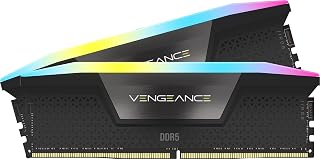
With CL30-36-36-76 timings at 1.40V, this kit leans into the lower-latency profile while adding RGB lighting for builders who want aesthetics alongside performance. It gives readers a concrete look at how CL30 kits are tuned differently from the looser secondary timings found in some CL36 alternatives.
Pros
- CL30 timings offer tighter latency than CL36 alternatives at 6000MHz
- Ten addressable RGB zones per module with panoramic lighting
- AMD EXPO and Intel XMP support for easy profile setup
- iCUE software adds frequency and voltage monitoring control
Cons
- 1.4V voltage is higher than lower-latency comparisons, meaning more heat
- Full rated speed depends on compatible motherboard and CPU
If the CL30 vs CL36 debate is central to your decision, this Vengeance RGB kit is the direct CL30 comparison point. At 6000MHz with CL30-36-36-76 timings, it delivers tighter first-number latency than CL36 kits at the same speed, which translates to small but real responsiveness gains in gaming and latency-sensitive tasks. The tradeoff is the 1.4V operating voltage, higher than CL36 alternatives, so expect somewhat more heat under sustained load. Setup is straightforward with EXPO or XMP profiles, and most users reach advertised speeds without manual tweaking. Beyond the timings question, this kit adds ten addressable RGB zones per module and CORSAIR iCUE integration for lighting and voltage monitoring, which CL36 competitors in this lineup typically skip. For readers weighing timings purely on performance, CL30 here is the tighter option; just factor in the voltage and software dependency before committing.
Memory Type: DDR5 SDRAM
Capacity: 32GB (2x16GB modules)
Speed: 6000MHz
Timings: CL30-36-36-76
Voltage: 1.40V
Form Factor: DIMM (288-pin)
Compatibility: AMD EXPO, Intel XMP 3.0
Features: Dynamic Ten-Zone RGB Lighting, Onboard Voltage Regulation, Custom PCB
Warranty: Limited Lifetime
Choose this if you've concluded CL30's tighter latency is worth the higher 1.4V operating voltage, and you also want RGB aesthetics as part of the build. Skip it if you prioritize lower heat and power draw over latency, if you don't want to rely on iCUE software for full lighting and monitoring control, or if your platform struggles to hit full rated frequencies.

At CL30 and 1.35V with 6000MT/s speed, this kit demonstrates that tight timings aren't exclusive to premium RGB lines. Its shock-resistant build is a bonus, but for readers comparing CL30 and CL36 on a budget, the CAS latency spec here matches pricier kits without extra frills.
Pros
- CL30 latency at 6000MT/s on a value-oriented kit
- Works with both Intel XMP 3.0 and AMD EXPO
- On-die ECC and PMIC support stability at tighter timings
- Lifetime warranty backs the purchase
Cons
- Full speed requires XMP or EXPO BIOS support
- Performance still depends on CPU and motherboard quality
When you're comparing CL30 to CL36, price-to-latency tradeoffs matter as much as the raw numbers, and this Silicon Power kit represents the value side of a CL30 purchase. It hits CL30 at 6000MT/s, matching the tighter latency tier discussed in CL30 vs CL36 debates, but does so with both Intel XMP 3.0 and AMD EXPO support, so either platform can reach that timing without manual sub-timing work. The on-die ECC and integrated PMIC are there to keep the kit stable at that latency rather than just rated for it on paper, which matters since lower latency kits can be pickier about stability than looser CL36 timings. The aluminum heatsink handles the heat that comes with pushing tighter timings at high frequency. For anyone deciding if CL30 is worth seeking out at all, or if CL36 is the safer and often cheaper route, this kit shows that CL30 doesn't have to mean a premium-only purchase, since it's positioned as a value-oriented entry into that latency class.
Memory Type: DDR5 UDIMM
Capacity: 32GB (2x16GB)
Speed: 6000MT/s
Timings: CL30-38-38-96
Voltage: 1.35V
Form Factor: 288-pin DIMM
Data Transfer Rate: 6000 MB/s
Features: Intel XMP 3.0, AMD EXPO, On-Die ECC, PMIC, Aluminum Heatsink
Compatibility: DDR5-compatible systems, Intel Core 13th Gen and above
Warranty: Lifetime
Good fit for Intel 13th Gen or AMD builders who've decided CL30 is worth it over CL36 but don't want to pay flagship pricing for it. The dual XMP/EXPO support makes it flexible across platforms. Skip it if your board doesn't support XMP 3.0 or EXPO, since you'd only get JEDEC speeds, or if you're fine with CL36 and prioritizing other specs instead.
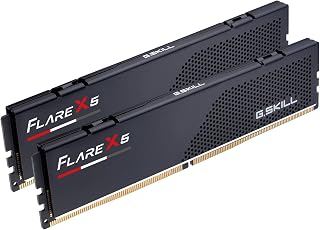
This kit's CL30-38-38-96 profile at 1.35V puts it on the tighter-latency end the article highlights as the performance-oriented choice. Labeled for high performance, it gives readers chasing lower latency at 6000MT/s a concrete EXPO-ready option to weigh against the CL36 alternatives covered elsewhere.
Pros
- CL30 latency at 6000MT/s for lower-latency comparisons
- AMD EXPO one-click profile reaches rated timings
- 32GB dual-channel kit for bandwidth-heavy workloads
- Matte black finish fits most build themes
Cons
- Needs EXPO support or BIOS tuning to hit CL30 speeds
- Falls back to conservative JEDEC speeds without EXPO
CL30 versus CL36 isn't an abstract spec debate once you're picking real sticks, and this Flare X5 kit is a clean example of what the lower-latency side buys you. At 6000MT/s with a CL30-38-38-96 timing set, it sits at the tighter end of the DDR5 spectrum, which means fewer clock cycles between a memory request and the response. For AMD Ryzen 7000 builds, that lower CAS latency shows up as quicker frame delivery in games and shorter render queues in creative apps compared to a CL36 kit running the same speed. AMD EXPO support means you don't have to hand-tune sub-timings to actually reach CL30 in practice, since the profile loads the full timing table in one step. The 1.35V operating voltage keeps this within normal thermal and power expectations for a CL30 kit. If you're trying to decide whether the jump from CL36 to CL30 is worth it on paper, this kit is a solid reference point for what that tighter latency segment looks like at 6000MT/s.
Memory Configuration: 32GB total (2x16GB DIMMs), DDR5 U-DIMM, 288-pin
Performance Specs: 6000MT/s rated speed, CL30-38-38-96 timings, 1.35V operating voltage
Compatibility: AMD X870, X670, B850, B840, B650, A620 platforms with compatible motherboards
Features: AMD EXPO memory overclock profile, JEDEC default profile, Non-ECC certified
Physical: Matte black finish, 4.48 ounces, Limited Lifetime Warranty
Buy this if you're specifically weighing CL30 against CL36 for an AMD Ryzen 7000 system and want the lower-latency option with EXPO support built in. Content creators and gamers chasing responsiveness benefit most. Skip it if your motherboard lacks EXPO support, since you'd fall back to JEDEC speeds and lose the whole point of comparing CL30 to CL36, or if you're on an Intel platform instead.

Running at 6400MT/s with CL30-39-39-102 timings and 1.40V, this kit shows that tight CAS latency isn't limited to 6000MT/s kits. For readers deciding whether to chase both higher frequency and low latency simultaneously, it's a useful data point on where EXPO-tuned CL30 kits scale.
Pros
- Verified 6400MT/s performance with strong overclocking headroom for enthusiasts
- Eye-catching Royal Neo design enhances premium build aesthetics
- AMD EXPO profile delivers plug-and-play optimization without manual tweaking
- Stable performance across validated AMD Ryzen 7000 and 9000 series systems
- Limited lifetime warranty provides long-term confidence
Cons
- Current market pricing significantly higher than historical street prices from 2024-2025
- Requires compatible AM5 motherboard and CPU for full performance potential
- Overclocking benefits demand BIOS knowledge and stable silicon binning
The G.SKILL Trident Z5 Royal Neo is a premium DDR5 memory kit designed for AMD Ryzen 7000 and 9000 series builders who demand both performance and visual presence. This 32GB dual-kit configuration targets gamers, content creators, and overclockers seeking the latest generation memory technology with proven stability.
Performance-wise, the kit ships at 6400MT/s with a CL30 latency profile and includes the AMD EXPO profile for single-click optimization. Real-world testing from users shows exceptional overclocking potential, with stable configurations at 6000MHz CL28 and reports of CL26 viability. The JEDEC default SPD ensures compatibility even with conservative BIOS settings, while the matched-pair configuration eliminates compatibility concerns on compatible AM5 platforms.
Design is where the Royal Neo truly stands out. The premium silver finish and distinctive aesthetic make these modules ideal for showcase builds or high-end systems where component appearance matters. Each module reflects the premium positioning of this product, appealing to builders who view RAM as a visual component rather than purely functional hardware.
The main consideration is platform-specific compatibility. The kit requires AMD X870, X670, or B650 chipset motherboards and performs best on validated hardware. Additionally, achieving speeds beyond 6400MT/s requires manual BIOS adjustments and some technical expertise. The current market price reflects DDR5 inflation since 2024, so budget accordingly.
Verdict: The Trident Z5 Royal Neo delivers exceptional DDR5 performance with proven overclocking credentials and stunning aesthetics, making it ideal for serious AM5 builders. Recommended for enthusiasts prioritizing both performance and visual appeal, though prospective buyers should evaluate current pricing against their budget constraints.
Memory Type: Non-ECC DDR5 U-DIMM, 288-pin, dual-kit (2x16GB)
Speed: 6400 MT/s (with overclocking), JEDEC default SPD at stock settings
Latency: CL30-39-39-102
Voltage: 1.40V nominal
Compatibility: AMD X870, X670, B650 platforms with AM5 socket
Profiles: JEDEC default SPD + AMD EXPO overclock profile
Warranty: Limited Lifetime Manufacturer Warranty
Model: F5-6400J3039G16GX2-TR5NS
Who Should Buy: AM5 platform builders, Ryzen 7000/9000 series users, enthusiasts seeking premium DDR5 with strong aesthetics and overclocking potential.
Compatibility Check: Verify your motherboard on the G.SKILL memory QVL or use the RAM Configurator tool on the official G.SKILL website. Ensure your motherboard supports AMD EXPO for optimized performance, though JEDEC profiles work on all compatible boards.
Important Notes: Do not mix this kit with other memory kits, as mismatched modules cause stability issues. Performance depends on system components including motherboard, BIOS version, and CPU quality. Users should consult their motherboard manual for proper DIMM slot population and enable XMP/EXPO profiles in BIOS for specified performance.
Alternatives Consideration: Compare against other high-speed DDR5 options if budget is primary concern. Evaluate historical pricing trends before purchase, as DDR5 memory has experienced significant price volatility since 2024.
Buying Guide: Choosing Between CL30 and CL36 DDR5
Memory labels make more sense when you evaluate the whole rated profile instead of fixating on a single number. Start with transfer rate and capacity, then look at latency, motherboard support, profile type, physical clearance, and whether the kit suits the software you use each day.
Convert CL ratings into real latency
CAS latency, or CL, is the number of clock cycles the memory needs before returning requested data. At DDR5-6000, the actual clock is 3000 MHz, so the formula is CL × 2000 ÷ data rate: CL30 works out to about 10 nanoseconds, while CL36 is about 12 nanoseconds.
That 2-nanosecond gap is meaningful, but it is not a guarantee of dramatically higher frame rates in every game or application. At equal speed, a 6000 CL30 kit such as the TEAMGROUP T-Create Expert CL30 Overclocking 10L, G.SKILL Trident Z5 Neo RGB Series DDR5 RAM, or Silicon Power Value Gaming DDR5 32GB (2x16GB) has the tighter first-word response.
Look beyond the first timing number
The CL figure is only the first number in a timing string. A profile such as 30-38-38-96 includes additional delays that affect memory behavior, which is why comparing full specifications is smarter than declaring every CL30 kit identical to every other CL30 kit.
For example, the Crucial Pro 32GB DDR5 RAM Kit (2x16GB),CL36 is rated at 6000 MT/s with 36-38-38-80 timings, while the G.SKILL Flare X5 Series DDR5 RAM uses a 6000 MT/s CL36-36-36-96 profile. Your processor, game engine, and task mix determine how much those secondary figures matter, especially alongside a demanding GPU setup like those covered in our Helldivers 2 graphics card recommendations.
Match EXPO or XMP to your motherboard platform
EXPO and XMP are BIOS memory profiles that apply the advertised data rate, timings, and voltage. Without selecting the appropriate profile, a compatible kit normally starts at a conservative JEDEC setting, which leaves much of its rated performance unused.
For an AMD build, EXPO support is the priority, while Intel users should seek XMP 3.0 support. The CORSAIR Vengeance DDR5 32GB (2 x 16GB) offers both profile families, and the G.SKILL Flare X5 Series DDR5 RAM also supports AMD EXPO and Intel XMP 3.0; still, confirm your exact board in the manufacturer QVL before buying. Memory capacity matters even more if you work with virtual machines, a need also discussed in our laptop guide for cybersecurity students.
Choose a matched 32GB kit and check physical fit
For many gaming and productivity PCs, 32GB arranged as two 16GB modules provides a balanced starting point. A two-module kit enables dual-channel operation and gives modern games, browser tabs, creative apps, and background utilities more room to run together without constant memory pressure.
Buy the full matched kit rather than combining separate memory packages, even when the labels appear similar. Also check CPU cooler clearance, because taller RGB designs such as the CORSAIR Vengeance RGB DDR5 RAM 32GB (2x16GB) and G.SKILL Trident Z5 Neo RGB Series DDR5 RAM may influence your component layout; for a broader upgrade plan, fast project-file access can complement memory capacity, as covered in our M.2 to USB adapter guide.
Final Thoughts
For equal-speed DDR5 kits, CL30 is usually the stronger choice when its profile is validated for your motherboard, while CL36 remains a sensible route when platform support, styling, or configuration fit guides the purchase. Choose the TEAMGROUP T-Create Expert CL30 Overclocking 10L for a 6000 MT/s CL30 setup, or the G.SKILL Flare X5 Series DDR5 RAM for a versatile 6000 MT/s CL36 kit with both AMD EXPO and Intel XMP 3.0 support.
Frequently Asked Questions
Is CL30 noticeably better than CL36 RAM at 6000 MT/s?
At the same 6000 MT/s data rate, CL30 has roughly 10ns of CAS latency and CL36 has roughly 12ns. CL30 can provide a small advantage in latency-sensitive games and some processor-limited workloads, but the change is often modest when the graphics card is the primary performance limit. Capacity, CPU performance, and memory profile compatibility still deserve equal attention.
Should I buy 6000 CL30 or a faster CL36 DDR5 kit?
Compare real latency instead of assuming the lower CL value always wins. A higher-transfer-rate kit can offset a higher CL rating, while a kit such as the G.SKILL Trident Z5 Royal Neo Series DDR5 RAM combines 6400 MT/s with CL30 timings for an enthusiast-oriented option. Confirm that your CPU and motherboard support the intended profile before choosing higher frequencies.
Do I need to enable EXPO or XMP after installing DDR5 RAM?
Yes, if you want the kit to run at its advertised overclock profile. Enter the BIOS after installation, select the EXPO or XMP profile that suits your platform, save the changes, and verify that the displayed memory rate matches the kit specification. If the PC does not start normally, return to the default setting and consult the motherboard compatibility list.
Is 32GB of DDR5 RAM enough for gaming in 2026?
A 32GB DDR5 kit is a practical capacity for most gaming PCs in 2026, including systems that run a game, voice chat, a browser, and recording software at the same time. Consider more memory for large video projects, numerous virtual machines, or expansive professional workloads. Before making hardware changes, keeping a current backup on a dock is also wise, and our hard drive dock guide can help you select one for that job.


Write Your Review
No reviews yet. Be the first to share your experience!