

You have decided to upgrade your GPU, and AMD’s RDNA 4 lineup has caught your attention. The question almost every builder is asking right now is whether the RX 9070 delivers enough performance for the money or if stepping up to the RX 9070 XT is worth the extra investment. Both chips share the same architecture and memory standard, but the differences in compute units, boost clocks, and partner card designs add up in real gameplay.
This guide covers ten of the most available cards built on both GPUs, from value-oriented RX 9070 options to fully loaded RX 9070 XT flagships. Whether you are gaming at 1440p or pushing into 4K territory, the breakdown below will help you match the right card to your build.
Quick Comparison
Ratings reflect the most recent data pull. Check each listing for current price and availability.
Quick answer
This guide compares 10 picks, with GIGABYTE Radeon RX 9070 GRE 12GB GDDR6 Gaming Graphics ranked first. GIGABYTE Radeon RX 9070 XT Gaming OC 16GB GDDR6 PCIe holds the highest customer rating among them. Sapphire Pulse AMD Radeon RX 9070 XT 16GB Gaming GPU has the most customer reviews.

The GRE model offers 12GB GDDR6 memory with a 2340 MHz clock speed, making it a capable option for 1440p gaming without stepping up to the full 9070. If you're evaluating whether the standard 9070 or 9070 XT fits your needs, this variant sits below both tiers but delivers solid performance for less demanding workloads where the extra 4GB and higher clocks of premium models aren't necessary.
Pros
- WINDFORCE cooling with server-grade thermal gel maintains low temperatures
- Dual BIOS switch for instant Performance or Silent mode changes
- PCIe 5.0 support prepares your system for next-gen platforms
- Strong 1440p gaming capability with modern architecture
Cons
- 12GB VRAM and 192-bit interface lag behind the standard 9070 models
- Verify PSU compatibility for power requirements
When choosing between AMD's RX 9070 models, the GIGABYTE GRE variant occupies interesting territory below both standard and XT versions. Its 12GB GDDR6 memory and 2340 MHz clock speed position it as the entry point into this generation, ideal for gamers who want modern architecture without flagship expense. The WINDFORCE cooling with Hawk fan technology and server-grade thermal gel ensures sustained performance during extended sessions, while the dual BIOS switch lets you toggle between Performance and Silent modes based on your immediate priorities. PCIe 5.0 readiness future-proofs your build as the platform matures. The 192-bit memory interface handles 1440p gaming confidently and tackles 4K in less demanding titles. RGB lighting integrates cleanly into themed builds. If your monitor targets 1440p primarily and you value thermal management alongside solid frame rates, this GRE model delivers capable performance at a more accessible tier than the full 9070 or 9070 XT.
GPU: Radeon RX 9070 GRE
Memory: 12GB GDDR6, 192-bit interface
Clock Speed: 2340 MHz
Interface: PCI Express 5.0
Outputs: DisplayPort, HDMI
Cooling: WINDFORCE with Hawk fan and thermal gel
Features: Dual BIOS (Performance/Silent), RGB Lighting
Form Factor: ATX

The Mercury edition lists an 1870 MHz clock with 16GB memory and RGB lighting features. This notably lower clock speed suggests either conservative factory settings or a potential listing error, but the 16GB capacity still supports high-resolution gaming. For those comparing tiers, verify the actual specifications before purchasing, as this clock rate falls well below typical XT performance targets.
Pros
- 3100 MHz boost clock and RDNA 4 architecture excel at native 4K
- Maintains 60 fps in ray-traced titles like Dragon's Dogma 2
- Magnetic air triple-fan cooling runs quietly under load
- 16GB GDDR6 with 20 GHz memory clock handles demanding workloads
Cons
- Requires three 8-pin PSU connectors and robust power delivery
- Runs warmer than some competitors with proper case ventilation needed
The XFX Mercury RX 9070 XT stands as the flagship choice in this comparison, engineered for gamers who demand native 4K performance with ray tracing enabled. Its 16GB GDDR6 memory matches the standard 9070, but the RDNA 4 architecture with 3100 MHz boost clock creates the generational leap that separates this XT model from its siblings. Users achieve 60 fps stability in demanding titles like Dragon's Dogma 2 at native 4K with ray tracing active, performance the GRE and standard models cannot replicate consistently. The magnetic air triple-fan system operates quietly while managing the thermal load, and subtle RGB lighting integrates without overwhelming your aesthetic. At 14.17 inches long and 2.33 kg, it demands adequate case space and airflow planning. The 20 GHz memory clock ensures bandwidth keeps pace with the GPU's capability. Three 8-pin power connectors signal the robust PSU this card requires. For those choosing between AMD's 9070 tiers, the XT justifies its position only if your monitor and ambitions center on 4K gaming.
Core Specifications: GPU Architecture: AMD RDNA 4, Chipset: RX 9070 XT, Memory: 16GB GDDR6 at 20 GHz, Memory Bus: 256-bit. Base Clock: 1870 MHz, Game Clock: 2570 MHz, Boost Clock: 3100 MHz. Display Output: 3x DisplayPort + 1x HDMI supporting up to 3840x2160 resolution.
Physical Dimensions: Length: 14.17 inches, Width: 6.3 inches, Weight: 2.33 kg. Interface: PCI-Express x16. Power Requirements: Three 8-pin PCIe connectors required. Cooling: Triple magnetic air fans with customizable RGB lighting system.
Compatibility and Warranty: Compatible with desktop systems only. Supports Windows, Linux, and professional APIs. Includes 3-year XFX manufacturer warranty plus extended fan coverage. Model Number: RX-97TMARGB9, UPC: 840191502590.
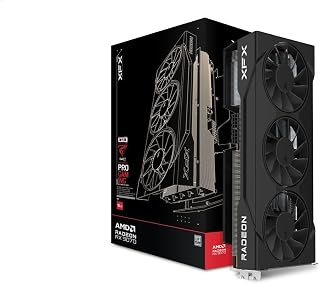
This XFX variant delivers 16GB GDDR6 and a 2700 MHz boost clock, positioning it as a strong contender in the standard 9070 category. For users comparing base and XT models, this card provides ample memory for high-resolution textures and respectable clock speeds that close the gap somewhat with XT variants, making it suitable for those who prioritize VRAM capacity over absolute peak performance.
Pros
- Triple-fan cooling keeps temperatures below 60C under load
- 16GB GDDR6 and 2700 MHz boost clock balance performance and cost
- Compact 2-slot design fits more case configurations
- Strong power efficiency reduces energy costs
Cons
- Cases with poor airflow may see higher temperatures
- Not the maximum VRAM option if comparing across brands
The XFX Swift RX 9070 represents the standard model in AMD's lineup, sitting between the GRE and XT variants for this comparison. Its 16GB GDDR6 memory and 2700 MHz boost clock deliver the balance most gamers actually need: excellent 1440p performance with credible 4K capability. The triple-fan SWFT cooling solution consistently holds temperatures below 60C during demanding workloads, a meaningful advantage for long-term reliability and system acoustics. This 2-slot compact design fits more builds than larger alternatives, addressing practical installation concerns. Power efficiency combines with high clocks to create sustained frame rates without excessive energy draw. DisplayPort and HDMI outputs accommodate modern monitor setups, and the PCI-Express x16 interface works with current desktop platforms. The 20 GHz memory clock ensures data moves quickly for texture-heavy environments. For those upgrading from older generation cards, this standard 9070 offers clearer performance gains than the GRE while costing less than the XT, making it the logical middle choice.
Core Specifications
Graphics Processor: AMD Radeon RX 9070
Memory: 16GB GDDR6
Memory Clock: 20 GHz
Boost Clock: Up to 2700 MHz
Display Resolution: Up to 3840x2160 (4K)
Video Outputs: HDMI, 3x DisplayPort
Physical Design
Form Factor: 2-slot design
Cooling Solution: XFX SWFT Triple 90mm Fan System
Weight: 1.74 kg
Interface: PCI-Express x16
Warranty: 3 years manufacturer coverage
Ideal for 1440p enthusiasts who occasionally play at 4K and want the best balance between capability and investment. The 16GB VRAM and strong thermals suit gamers upgrading from 6800 XT or earlier generations. Skip this if you already settled on the GRE for budget reasons or need the XT's extra horsepower for native 4K gaming with ray tracing. Also reconsider if your case has severely restricted airflow, though most report excellent thermal behavior.
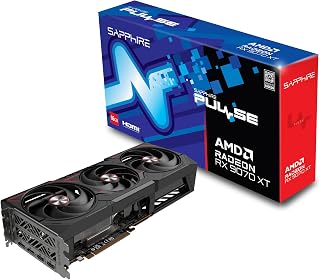
The Sapphire Pulse XT runs at 2970 MHz with 16GB GDDR6, delivering the higher performance tier that defines the 9070 XT lineup. If you're deciding between standard and XT models, this clock speed advantage translates directly to better frame rates in demanding games at 1440p and 4K, making it the right choice when you need that extra headroom without compromise.
Pros
- Stable 3100MHz clocks with triple-fan cooling staying quiet under load
- 16GB GDDR6 handles ultrawide and 1440p ultra without VRAM limits
- Ray tracing performance scales well on RDNA 4 architecture
- Minimal idle power draw of 10-30W reduces overall system energy use
Cons
- Large physical footprint requires case clearance verification before buying
- RDNA 4 driver maturity means occasional edge-case game compatibility issues are possible
When choosing between the RX 9070 and RX 9070 XT, the Sapphire Pulse version of the XT makes a strong case for spending up. Its RDNA 4 architecture pushes clock speeds to a stable 3100MHz under load, and the 16GB GDDR6 frame gives it room to breathe at 1440p ultra settings and beyond. Ultrawide gamers get 60+ FPS at 5120x1440 in demanding AAA titles, which the standard 9070 cannot reliably match. The triple-fan cooling setup keeps memory temperatures around 78C while staying quiet, and idle draw sits at just 10-30W. Ray tracing scales well across multiple scenarios, giving the XT a meaningful edge over the base card in that specific workload. For anyone on the fence between the two, the XT's thermal headroom and higher clock ceiling translate to tangible real-world gains rather than just spec-sheet wins. The 2-year Sapphire warranty adds peace of mind, and the build quality is consistent with the brand's track record. RDNA 4 driver maturity is still developing, so minor edge-case game compatibility quirks are possible.
Gaming Performance: 60-120 FPS at 1440p ultra settings with AAA titles. 180+ FPS possible in optimized games. Ultrawide support delivers 60+ FPS at 5120x1440 native resolution with quality settings maxed.
Thermal Performance: GPU core under 50C during sustained gaming, memory peaks at 78C. Idle temperatures around 32C. Consistent performance without throttling during extended sessions.
Clock Speeds: Stable overclocks to 3100MHz verified by users. Factory settings at 2970MHz provide reliable baseline performance with headroom for enthusiasts.
Power Efficiency: 10-30W idle, 140-250W gaming load at 1440p. Excellent power efficiency compared to competing high-end cards, reducing system power supply requirements.
Buyers who game at 1440p ultra or ultrawide resolutions and want headroom for years to come should pick the XT over the base 9070. It is also the right call for anyone who does light creative work alongside gaming. Skip it if your display tops out at 1080p or your case cannot fit a large triple-fan card, where the standard 9070 offers better size-to-performance value.
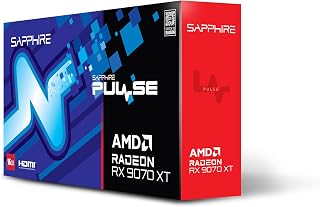
This Sapphire Pulse XT includes dual HDMI and dual DisplayPort outputs with 16GB GDDR6, offering enhanced connectivity flexibility. When choosing between standard and XT models, the dual HDMI configuration benefits multi-monitor setups or users connecting to TVs and displays simultaneously, though note the listing shows Radeon VII as the coprocessor, which warrants specification verification.
Pros
- Exceeds 200 fps at 1440p in modern titles with strong overclocking potential
- 64 compute units and FSR 4 support widen the gap over the base 9070
- Dual HDMI and dual DisplayPort outputs support flexible multi-monitor setups
- Quiet and cool thermals improve on previous generation cards noticeably
Cons
- 11.81-inch length limits compatibility with smaller or tightly packed cases
- No RGB lighting, which may matter to builders focused on case aesthetics
In the 9070 vs 9070 XT comparison, this Sapphire Pulse variant of the XT earns its place on the higher-performance side of the divide. The 16GB GDDR6 buffer on a 256-bit bus sustains frame rates above 200 fps at 1440p in modern titles, a figure the base 9070 typically cannot reach. AMD's RDNA 4 architecture with 64 compute units and FidelityFX Super Resolution 4 support pushes visual quality and efficiency further than the standard card's configuration. Overclocking headroom is a notable differentiator here: experienced users can push clocks past 3440MHz, widening the gap over the base 9070 in sustained workloads. Dual HDMI and dual DisplayPort outputs make multi-monitor setups straightforward, which matters for users running productivity displays alongside a primary gaming screen. Thermal performance mirrors Sapphire's reputation, with the Pulse cooler running noticeably quieter and cooler than prior generation cards. The 11.81-inch length is the main practical hurdle and demands a spacious case. The absence of RGB lighting keeps the aesthetic understated, which suits some builds and frustrates others.
Memory and Architecture: 16GB GDDR6 memory on 256-bit bus, AMD RDNA 4 architecture with 64 compute units, 2500 MHz memory clock speed
Display Output: Dual HDMI and Dual DisplayPort connections support up to 3840x2160 (4K) resolution
Power and Compatibility: PCIe x16 interface, compatible with desktop systems, professional and gaming-class performance tier
Overclocking Potential: Users report stable operation at 3440 MHz with -75mV undervolting and +10 power limit adjustments, indicating strong silicon quality and thermal headroom
This XT variant suits 1440p gamers chasing high refresh rates and creators handling video or 3D workloads who want the extra compute headroom the XT provides over the base 9070. It is also a strong pick for multi-monitor users who need dual HDMI alongside DisplayPort. Skip it if your case is compact or if your workloads are light enough that the base 9070 already covers them.

GIGABYTE's XT variant boasts a 3060 MHz clock speed, the highest among these options, paired with 16GB GDDR6. For buyers weighing standard versus XT models, this represents peak 9070 XT performance with factory overclocking that pushes frame rates further in intensive gaming scenarios, ideal when you want maximum capability from the XT tier without manual tuning.
Pros
- 3060MHz factory overclock leads non-OC XT models from the start
- PCIe 5.0 support ensures platform compatibility with current and future systems
- 16GB GDDR6 removes VRAM constraints at 1440p and in creative workloads
- WINDFORCE cooling with Hawk fans maintains quiet operation during sustained loads
Cons
- 750W power supply is the minimum requirement, raising the bar over the base 9070
- Case size compatibility requires checking given the 11.34-inch card length
Choosing the XT over the base RX 9070 gets more compelling when the card in question is the GIGABYTE Gaming OC variant, which ships with a 3060MHz boost clock out of the box. That factory overclock puts distance between this card and both the standard 9070 and non-OC XT models from the first benchmark run. At 1440p, users consistently report 160 to 220 fps across modern AAA titles at high settings, a range the base 9070 does not sustain as reliably. The 16GB GDDR6 allocation eliminates the VRAM ceiling that constrained older cards, and PCIe 5.0 support keeps the card relevant for upcoming platform upgrades. For creators, the card handles 3D rendering and video editing workloads without stepping up to more expensive hardware. GIGABYTE's WINDFORCE system with Hawk fans and server-grade thermal gel keeps temperatures controlled and acoustics subdued during extended sessions. At 11.34 inches, it fits most contemporary cases without modification. The main practical consideration is power supply sizing, with 750W as the stated minimum, and the base 9070 draws less power for buyers with constrained PSU headroom.
Core Specifications
GPU: AMD Radeon RX 9070 XT
Memory: 16GB GDDR6
Memory Clock: 2600 GHz
GPU Clock: 3060 MHz
Interface: PCIe 5.0 x16
Max Resolution: 7680 x 4320 (8K)
Physical and Connectivity
Dimensions: 11.34 inches (L) x 5.2 inches (W)
Weight: 1.78 kg
Output: DisplayPort
Power Connectors: Dual 8-pin (750W+ PSU recommended)
Cooling: WINDFORCE system with Hawk fans and thermal gel
Warranty and Support
Manufacturer: GIGABYTE
Warranty: 3 years
Model: GV-R9070XTGAMING OC-16GD
Gaming Performance at Common Resolutions
1440p Gaming: 160-220fps on most modern AAA titles at high settings. Excellent for competitive gaming and high-refresh monitors.
4K Gaming: Playable at high settings on most titles, medium settings on demanding new releases. Solid for content creators monitoring in 4K.
Esports Titles: 300+ fps possible on optimized competitive games for ultra-high refresh gameplay.
Real-World Use Cases
Best suited for 1440p gaming at 144+ fps, 4K content creation workflows, professional 3D rendering, and VR gaming. Handles flight simulators like DCS at high settings with 4K head tracking. Eliminates VRAM constraints for media professionals working with large files.
Driver Recommendations
Run DDU (Display Driver Uninstaller) before installation if upgrading from another card. Install latest AMD drivers for maximum stability and performance. Update BIOS if required by your system for PCIe 5.0 compatibility.

The ASUS Prime XT reaches 3030 MHz with 16GB GDDR6 and native DisplayPort 2.1a outputs. For buyers evaluating 9070 versus 9070 XT, this high factory overclock places it among the fastest XT variants available, delivering maximum gaming performance and supporting the latest display standards for high refresh rate monitors at 4K resolutions.
Pros
- 3030 MHz boost clock is the highest in this roundup, favoring the XT over the base 9070
- Dual BIOS lets you switch between near-silent idle and full Performance mode
- Phase-change thermal pad keeps GPU under 60C during sustained loads
- Power draw runs 15-20W below competing cards at similar performance tiers
Cons
- 12.3-inch length requires case clearance verification before purchase
- Early driver releases had instability issues, though updates resolved them
When choosing between the RX 9070 and RX 9070 XT, the ASUS Prime lands firmly on the XT side of the debate and makes a compelling case for the upgrade. Its 3030 MHz boost clock represents the ceiling of what the RX 9070 XT architecture can deliver, and the dual BIOS design lets you tune the experience precisely: Quiet mode holds idle temps at 28-32C with near-silent operation, while Performance mode pushes that full clock speed without thermal throttling. GPU temps stay under 60C even through sustained stress tests, a result of the phase-change thermal pad setup. The 16GB GDDR6 buffer and PCIe x16 interface give it headroom for 4K gaming and creative workloads alike. Users coming from older mid-range cards have reported FPS gains around 50%, which illustrates the generational gap this card bridges. The 2.5-slot compact footprint fits most modern cases, and power draw typically lands 15-20W below competing cards at comparable performance levels, making the XT premium easier to justify.
Memory and Bus: 16GB GDDR6, 256-bit interface, 3030 MHz memory clock
Architecture: AMD Radeon RX 9070 XT, PCIe 5.0 x16, 3030 MHz boost clock (OC mode), 2480 MHz game clock (OC mode)
Connectivity: 3x DisplayPort 2.1a, 1x HDMI 2.1b, maximum resolution 7680 x 4320
Cooling: 3x Axial-tech fans with dual-ball bearings, phase-change thermal pad, 0dB idle technology, 2.5-slot design
Software: Dual BIOS switch (Quiet and Performance profiles), GPU Tweak III for performance tuning and monitoring, ASUS GPU Guard protection
Dimensions and Power: 12.3 inches long, 5.1 inches wide, approximately 1500g, estimated 180-190W typical draw
Warranty: 3-year manufacturer coverage
Gamers upgrading from mid-range cards who want the full RX 9070 XT performance ceiling will appreciate the headroom the 3030 MHz BIOS unlocks. The quiet mode also suits creators or home-office users who need sustained GPU performance without fan noise. Those already on a recent high-end card or strictly gaming at 1080p will find the XT tier harder to justify over the base RX 9070.
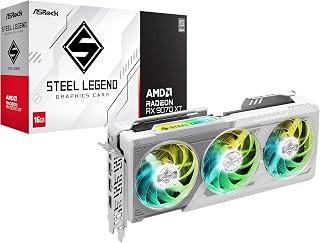
ASRock's Steel Legend runs at 2970 MHz with 16GB GDDR6 and lists compatibility with both desktop and laptop systems. When comparing base and XT tiers, this standard XT clock speed provides the expected performance uplift over non-XT models, while the unusual laptop compatibility mention suggests potential use in external GPU enclosures for mobile workstations.
Pros
- Consistent 100-plus FPS at 1440p ultra settings confirms the XT advantage over the base 9070
- Adrenalin tuning can bring temperatures below 50C for thermally sensitive builds
- 640 GB/s bandwidth handles memory-intensive workloads and high-resolution gaming
- At 11.73 inches it fits comfortably in standard mid-tower cases
Cons
- RGB software has occasional hiccups that can require troubleshooting
- Fan noise becomes audible at maximum load settings
In a direct comparison between the RX 9070 and RX 9070 XT, the ASRock Steel Legend argues for the XT by delivering consistent 100-plus FPS at 1440p ultra settings on demanding AAA titles while also handling 4K capably. The 2.97 GHz boost clock sits just below the ASUS Prime's peak but still provides meaningful overclocking headroom, and the 640 GB/s bandwidth keeps memory-intensive scenes smooth regardless of resolution. The 64 compute units and Infinity Cache architecture are the architectural advantages the XT holds over the base 9070, and they show in sustained frame delivery. Thermal performance is a genuine differentiator: standard gaming sessions land between 65-75C, and careful Adrenalin software tuning can push that below 50C. At 11.73 inches the card is slightly more compact than some XT competitors, easing installation into mid-tower cases. For buyers deciding whether the XT justifies itself over the base 9070, the Steel Legend's real-world frame rates at 1440p and 4K make the strongest practical argument.
GPU Architecture: AMD Radeon RX 9070 XT with 64 compute units and Infinity Cache technology
Memory Configuration: 16GB GDDR6 at 20 Gbps with 256-bit bus width and 640GB/s bandwidth
Clock Speeds: 2.4 GHz base clock, 2.97 GHz boost clock for responsive performance
Interface: PCIe 5.0 x16 for maximum bandwidth compatibility with modern motherboards
Outputs: DisplayPort and HDMI for flexible monitor connectivity up to 3840x2160 resolution
Cooling: Steel Legend dual-fan design with optimized thermal solution
Power Requirements: Standard 8-pin or 6+2 pin PCIe power connectors
Physical Dimensions: 11.73 inches length, 2.28 inches width, weighing 1155 grams
Compatibility: Desktop systems with PCIe 5.0 or PCIe 4.0 slots
The Steel Legend suits 1440p gamers and ultrawide monitor users who want smooth performance on current AAA titles without moving to a top-tier card. It also works well for anyone upgrading from 2020-era hardware who needs a significant generational leap. Buyers who primarily game at 1080p or who require absolute fan silence at maximum settings may find the base RX 9070 a more proportionate choice.

This XFX Swift XT edition features 16GB GDDR6 and runs at 2970 MHz, matching the reference XT specification. When comparing base and XT models, this card delivers the performance boost that justifies the XT designation with higher clocks than standard 9070 cards, making it suitable for gamers who need consistent high frame rates at maximum settings.
Pros
- RDNA 4 architecture gives the XT a clear efficiency and performance edge over the base RX 9070
- Triple-fan SWFT cooler runs noticeably quieter than reference designs during extended sessions
- Three DisplayPort outputs support ultrawide and multi-monitor configurations
- 16GB GDDR6 buffer handles both gaming and creative workloads at this performance tier
Cons
- Substantial cooler footprint requires case clearance verification before ordering
- Requires a 650W or higher power supply, limiting compatibility with older system builds
Deciding between the RX 9070 and the RX 9070 XT often comes down to how much you value the XT's extra clock headroom and memory bandwidth, and the XFX Swift makes that case through sustained real-world performance. The 2970 MHz boost clock and 16GB GDDR6 buffer work together to keep frame rates stable across demanding AAA titles at 1440p, with 4K remaining a practical option for less taxing workloads. What separates the XFX from a base RX 9070 at this performance tier is the combination of RDNA 4 efficiency gains and the triple-fan SWFT cooler, which maintains low temperatures during extended sessions without becoming intrusive in quieter environments. Three DisplayPort outputs plus HDMI give flexibility for ultrawide or multi-monitor setups, a practical edge over simpler configurations. The metal shroud and clean PCB reflect solid build quality. For buyers on the fence about whether the XT is worth choosing over the base 9070, the XFX Swift's thermal headroom and memory capacity tip the balance toward the XT for anyone running demanding titles or creative applications consistently.
GPU: AMD Radeon RX 9070 XT (RDNA 4)
Memory: 16GB GDDR6
Boost Clock: Up to 2970 MHz
Cooling: XFX SWFT Triple Fan Design
Video Outputs: 1x HDMI, 3x DisplayPort
Brand: XFX
Model: RX-97TSWF3BA

The PowerColor Reaper XT features 16GB GDDR6 but lists a 2400 MHz clock speed, significantly lower than other XT models. For those deciding between standard and XT variants, this reduced clock rate undermines the typical XT performance advantage despite carrying the XT designation, making it worth confirming actual specifications as it may perform closer to base 9070 levels.
Pros
- Full RX 9070 XT specification with 2400 MHz boost clock
- 16 GB GDDR6 at 20 GHz handles memory-intensive workloads
- Triple-fan cooler manages XT-level heat output effectively
- Four display outputs including HDMI 2.1 and three DisplayPort 2.1 up to 8K
Cons
- Three-fan footprint requires adequate case clearance
- Represents the higher power and thermal commitment of the XT tier compared to the base 9070
When the question is RX 9070 vs RX 9070 XT, the PowerColor Reaper lands firmly on the XT side of the argument. Its 16 GB of GDDR6 running at 20 GHz feeds the full RX 9070 XT silicon, which boosts to 2400 MHz, giving it a meaningful performance ceiling above the base 9070. The triple-fan cooling setup is particularly relevant here: the XT chip runs hotter under sustained load than its sibling, and three fans keep thermals in check without requiring an exotic case. Three DisplayPort 2.1 outputs plus an HDMI 2.1 port mean you can drive up to 8K resolution at 7680x4320, something the XT's additional headroom makes more realistic for demanding workloads. As a PCI-Express x16 card it drops into any modern desktop without fuss. If you are trying to decide between the two AMD GPUs and want the higher-tier option without moving to a different product family, the Reaper XT packages the flagship configuration in a straightforward, triple-fan design built around the 9070 XT's full spec sheet.
GPU Processor: AMD Radeon RX 9070 XT
Memory: 16GB GDDR6
GPU Clock Speed: 2400 MHz
Memory Clock Speed: 20 GHz
Interface: PCI-Express x16
Power Connectors: Two 8-pin PCI Express connectors
Minimum System Power: 750W
Display Outputs: 1x HDMI 2.1, 3x DisplayPort 2.1
Maximum Resolution: 7680x4320
Card Dimensions: 289 x 111 x 41mm
Card Length: 289mm
Cooling: Triple-fan design
Warranty: 2 Year Limited
Buying Guide: What to Consider Before You Choose
Compute Units and Raw GPU Performance
The RX 9070 ships with 56 compute units while the RX 9070 XT bumps that to 64, a meaningful jump that translates to noticeably higher frame rates at demanding settings. If you primarily play at 1440p on High or Ultra, the base RX 9070 handles that workload without breaking a sweat.
Step up to 4K or enable ray tracing at high quality, and the RX 9070 XT’s additional compute units start earning their keep. Cards like the Sapphire Pulse AMD Radeon RX 9070 XT Gaming 16GB and the GIGABYTE Radeon RX 9070 XT Gaming OC 16G Graphics both run at boost clocks close to 3 GHz, which keeps frame times tight in the most demanding titles.
Memory Configuration and Bandwidth
Most RX 9070 XT cards ship with 16 GB of GDDR6 on a 256-bit bus, delivering up to 640 GB/s of bandwidth on boards like the ASRock Graphics Board Steel Legend RX 9070 XT 16G. That headroom matters when running high-resolution textures or working in creative applications alongside gaming.
The RX 9070 GRE variant, represented here by the GIGABYTE Gaming Radeon RX 9070 GRE 12GB GDDR6 PCI, uses a narrower 192-bit interface and 12 GB of VRAM. That is sufficient for 1440p gaming but can feel constrained in VRAM-heavy scenarios at higher resolutions.
Cooling Solutions and Thermal Design
Partner card coolers vary significantly across this lineup. The ASUS Prime Radeon RX 9070 XT 16GB GDDR6 OC Edition uses Axial-Tech fans with dual ball bearings and a phase-change GPU thermal pad, which contributes to lower operating temperatures over long sessions. ASUS also includes a 0dB mode for silent operation during lighter loads.
XFX takes a similar triple-fan approach with both the XFX Mercury AMD Radeon RX 9070XT OC Magnetic Air and the XFX Swift AMD Radeon RX 9070XT Triple Fan, pairing larger heatsinks with RGB accents. GIGABYTE’s WINDFORCE system uses Hawk fans and server-grade thermal conductive gel for consistent heat dissipation on both its RX 9070 and RX 9070 XT models.
Card Size, Power, and Build Compatibility
These are large cards. The PowerColor Reaper AMD Radeon RX 9070 XT 16GB GDDR6 measures 289 mm in length and requires two 8-pin power connectors with a 750W minimum system power recommendation. Before ordering, confirm your case clearance, PSU wattage, and available PCIe connectors.
The ASUS Prime is a 2.5-slot design, which is a bit slimmer than many triple-slot competitors and can help in tighter mid-tower builds. Dual BIOS switches, available on several cards including the GIGABYTE models, let you toggle between Performance and Silent profiles without any software, which is a handy feature for anyone who wants flexibility without overclocking tools.
AMD Software Features: FSR 4 and RDNA 4 Extras
Every card on this list benefits from AMD’s Adrenalin Edition software suite and FSR 4 with AI upscaling, which can meaningfully boost frame rates in supported titles without a noticeable drop in image quality. Cards like the Sapphire Pulse AMD Radeon RX 9070 XT Gaming 16GB make FSR 4 and AMD’s ray-tracing improvements a core part of their value proposition.
The XFX Swift AMD Radeon RX 9070 OC Triple 90mm Fan brings all of those same driver-level benefits at a lower entry point on the base RX 9070 chip, making it a strong option for builders who want RDNA 4 features without committing to the full XT configuration.
Final Thoughts
If your priority is solid 1440p performance with efficient cooling and competitive specs, the XFX Swift AMD Radeon RX 9070 OC Triple 90mm Fan represents a well-rounded entry into the RX 9070 generation. For those who want every bit of RDNA 4 performance, full 4K capability, and a thoroughly refined cooling solution, the ASUS Prime Radeon RX 9070 XT 16GB GDDR6 OC Edition stands out as one of the most polished XT builds available right now.
Frequently Asked Questions
Is the RX 9070 XT worth the upgrade over the RX 9070 in 2026?
For 1440p gaming, the base RX 9070 handles the workload confidently and leaves headroom for demanding titles. The RX 9070 XT becomes significantly more compelling when you target 4K resolution or rely heavily on ray tracing, where its additional compute units and higher boost clocks produce a more consistent frame rate advantage.
What is the difference between the RX 9070 and RX 9070 GRE?
The RX 9070 GRE is a slightly trimmed variant of the base RX 9070, most notably using 12 GB of VRAM on a 192-bit memory bus rather than the 16 GB, 256-bit configuration found on standard RX 9070 cards. This makes it a capable 1440p performer but a tighter fit for VRAM-heavy workloads or high-resolution texture packs. The GIGABYTE Gaming Radeon RX 9070 GRE 12GB GDDR6 PCI is the primary GRE option in this lineup.
How much power does an RX 9070 XT system require?
Most RX 9070 XT partner cards, including the PowerColor Reaper, specify a 750W minimum system power requirement. If your current PSU is in the 650W range, it is worth confirming its actual output headroom before upgrading, especially with a modern CPU that also draws significant power under load.
Do RX 9070 XT cards support AMD FSR 4?
Yes, all RDNA 4 cards, including every RX 9070 and RX 9070 XT model in this guide, support AMD FidelityFX Super Resolution 4 with AI-based upscaling. FSR 4 delivers a sharper upscaled image than previous versions and works across a broad range of supported titles. In 2026, the list of FSR 4-compatible games continues to grow with each AMD Adrenalin driver update.
More on the RX 9070 XT
- Best RX 9070 XT Model Picks for 2026: Top Cards Ranked
- RX 9070 XT vs RX 7900 XTX: Top Cards to Buy in 2026
- RTX 5070 vs RX 9070 XT: Top Cards Compared for 2026
- RTX 5070 Ti vs RX 9070 XT: Top Cards to Buy in 2026
- RTX 5080 vs RX 9070 XT: Which GPU Should You Buy in 2026?
- Best PSU for RX 9070 XT: Power Supply Picks for 2026
- Best CPU for RX 9070 XT: Performance Pairing Guide (2026)




Write Your Review
No reviews yet. Be the first to share your experience!