

You’re building or upgrading a gaming PC and the core count question keeps coming up: is a 6 core processor enough, or do you need 8 cores to stay ahead of the curve? It is one of the most practical decisions you can make before committing to a platform, and the answer depends on more than raw specs. This guide is for gamers who want a straight comparison between 6 core and 8 core CPUs, backed by real products and honest context. If you want a broader look at top picks across all tiers, our best CPU for gaming guide covers the full spectrum.
The short answer is that both configurations can deliver excellent gaming performance in 2026, but the gap between them matters more in some scenarios than others. Modern games are getting better at using additional threads, and future-proofing your build has become a real consideration. Read on to see which products stand out and why.
Quick Comparison
Ratings reflect the most recent data pull. Check each listing for current price and availability.
Quick answer
This guide compares 9 picks, with AMD Ryzen 5 9600X 6-Core Zen 5 Processor, 5.4 GHz ranked first. AMD Ryzen 7 7800X3D 8-Core Processor 5nm Socket AM5 has the most customer reviews. Intel Core i5-14600KF 14-Core Gaming Processor 5.3GHz leads this list on clock speed.

If you're weighing six cores against eight, this 6-core 12-thread chip makes the case that fewer cores can still deliver smooth frame rates. Running at 3.9 GHz on Socket AM5, it keeps pace with newer platforms while sipping just 65 watts. For gamers who prioritize efficiency and don't run heavy background multitasking, this is a strong argument for the 6-core side of the debate.
Pros
- Strong 100+ FPS gaming performance on 6 cores
- Low 65W power draw keeps heat and noise down
- Unlocked multiplier for overclocking headroom
- AM5 platform supports DDR5 and PCIe 5.0
Cons
- No cooler included in the box
- 6 cores can limit heavily threaded professional apps
If the 6-core vs 8-core debate has you leaning toward 6, the Ryzen 5 9600X is the chip that makes that choice easy to defend. Modern games lean on the GPU far more than the CPU, and this 6-core, 12-thread Zen 5 part keeps up at 100+ FPS in popular titles without breaking a sweat. The 3.9 GHz base and 5.4 GHz boost clock give it plenty of headroom, and running on just 65 watts means less heat and quieter cooling needs than higher core count chips. Socket AM5 keeps you on current platform tech with DDR5 and PCIe 5.0 support on compatible boards. For gaming specifically, where extra cores often sit idle, this is the sensible pick rather than paying for threads you won't use. The unlocked multiplier also leaves room to tune for more performance later. Just know that if your use case stretches beyond gaming into heavy multitasking or rendering, the core count ceiling here is the tradeoff worth weighing against the 8-core options in this comparison.
Processor Details: AMD Ryzen 5 9600X, 6 cores, 12 threads, Zen 5 architecture, Socket AM5
Clock Speeds: Base 3.9 GHz, Max Boost 5.4 GHz, unlocked multiplier
Power and Thermal: 65W TDP, air cooling recommended, efficient thermal design
Memory and Cache: 38 MB total cache (6 MB L2), DDR5-5600 support
Platform: Socket AM5 compatible, PCIe 5.0 ready on select motherboards, Windows 11 optimized
Package: 3-year manufacturer warranty, cooler not included
Buy this if gaming is the primary workload and you want strong FPS without paying for cores that sit unused. It suits budget-conscious builds and anyone upgrading an older system onto AM5. Skip it if your sessions mix in heavy video editing, 3D rendering, or other multi-threaded work, where the 8-core options in this comparison will show a clearer advantage. Also note no cooler is included.
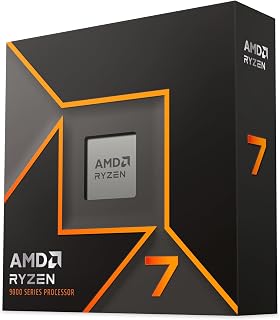
For the core count debate, this 8-core 16-thread option balances power draw against performance at 105 watts. Running at 3.8 GHz with a 40 MB cache pool on Socket AM5, it gives multitaskers and gamers alike enough headroom for background apps while gaming, making the case that 8 cores earn their keep without excessive power demands.
Pros
- 8 cores and 16 threads for gaming plus multitasking
- 40 MB cache and DDR5-5600 support for smooth data flow
- AM5 platform with PCIe 5.0 and future upgrade path
- 105W TDP keeps power and thermal demands in check
Cons
- No integrated graphics, so a dedicated GPU is required
- Ships without a cooler, adding another purchase
In the 6 core vs 8 core debate, the Ryzen 7 9700X makes the strongest case for going with 8. Built on Zen 5, it pairs an 8-core, 16-thread layout with a 3.8 GHz base clock and 40 MB of combined cache, giving it enough headroom to handle both gaming and the background tasks that pile up during streaming or multitasking. The AM5 socket keeps you on a current platform with PCIe 5.0 support and room to upgrade later, so choosing 8 cores here doesn't lock you into aging infrastructure. At 105 watts, it stays efficient despite the added core count, which matters if you're weighing whether extra cores come with extra heat and power draw. The tradeoff for this core-count decision is clear: no integrated graphics and no included cooler, so budget for both. If your use case leans toward streaming while gaming or running creative apps alongside games, the extra threads tip the scales toward 8 cores over 6.
Cores and Threads: 8 cores, 16 threads on Zen 5 architecture
Clock Speed: 3.8 GHz base, 5.5 GHz max boost (unlocked)
Cache: 40 MB L3 cache, 8 MB L2 cache
Power Consumption: 105 watts TDP
Memory Support: DDR5-5600
Socket: Socket AM5 with PCIe 5.0 support on select motherboards
Warranty: 3-year manufacturer warranty
Buy this if you stream, record, or edit while gaming and want the extra threads for background tasks. It also suits anyone building a new AM5 system who wants upgrade room later. Skip it if you only play games without multitasking, since a 6-core chip may cover that need for less, and skip it if you don't already have a dedicated GPU and aftermarket cooler ready.

This 8-core 16-thread processor shows what the extra cores bring to gaming beyond raw count. Clocked at 4.2 GHz on Socket AM5, it pairs modern platform support with the thread headroom that helps during streaming or multitasking alongside gameplay. For readers deciding if 8 cores justify themselves, its 3D cache architecture answers with real frame rate consistency.
Pros
- 8 cores and 16 threads cover gaming and creative work
- 96 MB L3 cache improves responsiveness and frame rates
- 89 degree C max temp keeps cooling demands reasonable
- Integrated Radeon Graphics as a fallback option
Cons
- Requires Socket AM5, a possible platform upgrade
- Needs adequate cooling and power delivery to perform best
Comparing 6-core and 8-core chips for gaming eventually raises the question of whether extra cores pay off beyond frame rates, and the Ryzen 7 7800X3D answers that with its 96 MB of L3 cache. The 8-core, 16-thread layout at 4.2 GHz is built to handle gaming and CPU-intensive work like video editing or 3D rendering in the same chip, which matters if your PC does more than play games. The large cache is the real differentiator versus a 6-core part, since it reduces wait times and keeps frame rates consistent in modern titles while also speeding up render and export tasks. Thermally it stays reasonable, with a 89 degree Celsius max operating temperature that keeps cooling demands in check relative to its core count. Integrated AMD Radeon Graphics is a nice fallback for basic tasks, though a dedicated GPU is still the right call for gaming. The tradeoff for stepping up from a 6-core chip is platform cost if you're not already on AM5, plus the need for adequate cooling and motherboard power delivery to get the most from it.
Processor Specifications: The Ryzen 7 7800X3D features 8 CPU cores with 16 threads for efficient parallel processing. Clock speed reaches 4.2 GHz, with a maximum operating temperature of 89 degrees Celsius. The processor uses Socket AM5 for motherboard compatibility and employs a 5nm manufacturing process for superior efficiency.
Cache and Memory: This processor includes 8 MB of L2 cache and an impressive 96 MB of L3 cache, totaling 104 MB of high-speed memory. This substantial cache configuration significantly reduces memory latency and improves data throughput for demanding applications.
Graphics: Integrated AMD Radeon Graphics with a graphics frequency of 2200 MHz provides baseline graphics capability for general computing and light multimedia tasks without requiring a dedicated graphics card.
Buy this if you want the extra 2 cores and larger cache to cover both gaming and content creation work like editing or rendering, not just frame rates. It fits users upgrading into AM5 who plan to use the CPU for more than games. Skip it if gaming is your only workload and you don't need the extra threads, since a 6-core chip would cover that need for less.

Comparing core counts matters less than how each core performs, and this 8-core 16-thread chip proves it at 4.7 GHz. Its 8 MB secondary cache and 140-watt envelope reflect a design built for sustained gaming loads rather than idle efficiency. Readers torn between 6 and 8 cores will see here exactly what extra threads deliver under real workloads.
Pros
- 96MB L3 cache with 3D V-Cache for consistent frame times
- 8 cores and 16 threads suit gaming and content creation
- 140W power draw manageable with aftermarket cooling
- Drop-in upgrade for existing AM5 motherboard owners
Cons
- No cooler included, must be purchased separately
- Gains over 7800X3D are mixed, especially at high resolutions
For anyone deciding between 6 and 8 cores and leaning toward the higher end for the best possible gaming result, the Ryzen 7 9800X3D is the 8-core answer built specifically for that priority. Its 96MB L3 cache combined with 3D V-Cache technology is designed to deliver consistent frame times and remove bottlenecks in demanding AAA and esports titles, which is the core argument for choosing 8 cores over 6 when top-tier gaming performance is the goal. The 8-core, 16-thread setup with boost up to 5.2GHz also handles creative workflows like video editing, giving it versatility a 6-core chip can't match. At 140 watts it stays manageable with quality aftermarket cooling despite the performance on tap, and the AM5 platform means current AM5 owners can upgrade without a motherboard change. The honest caveat for this comparison is that at high resolutions, GPU limitations often become the real bottleneck, so the gap over a 6-core chip or even the previous 7800X3D narrows depending on your resolution and GPU pairing. Still, for maximizing CPU-side gaming performance, this is the 8-core option built for exactly that.
Cores and Threads: 8 cores, 16 threads
Architecture: Zen 5 with 3D V-Cache
Base Clock: 4.7 GHz
Boost Clock: Up to 5.2 GHz
Cache Memory: 96MB L3 cache, 8MB secondary cache
Socket: AM5
Power Consumption: 140 watts
Manufacturing Process: Advanced node (Zen 5)
Compatibility: Windows 11, requires external cooler
Best For: This CPU excels for competitive gamers, esports players, AAA gaming enthusiasts, content creators, and anyone building a high-performance workstation. If you play demanding games, edit video, stream, or multitask heavily, the 9800X3D delivers performance that justifies the investment.
Consider If: You own an older CPU from the Ryzen 5000 or 7000 series and want the fastest gaming performance available. The generational jump offers meaningful real-world improvements in frame consistency and 1% lows across modern games.
Skip If: You primarily game at 1440p or lower resolutions on a mid-range GPU, where CPU performance is rarely the limiting factor. Also reconsider if you already own a 7800X3D, as the upgrade benefits are incremental unless you're targeting high-resolution content creation.

Pros
- Exceptional value for 14-core performance at mid-range pricing
- Outstanding gaming performance across competitive and AAA titles
- Excellent thermal efficiency; many users report no cooler upgrade needed
- Future-proof compatibility with both 600 and 700-series motherboards
- Strong CPU-intensive workload handling for streaming and content creation
Cons
- Requires discrete graphics since it lacks integrated GPU
- May need BIOS update on some 600-series motherboards for full compatibility
- Higher wattage than some competing processors in similar price range
The Intel Core i5-14600KF is a powerhouse mid-range processor designed for gamers and productivity users who demand high performance without enterprise-level pricing. With 14 cores and support for the latest DDR5 memory, this unlocked processor puts serious computing power in reach for budget-conscious builders and upgraders.
The standout feature is its exceptional core configuration: 6 performance cores paired with 8 efficiency cores, plus a 5.3 GHz Max Turbo Frequency that delivers snappy responsiveness in gaming and creative applications. Real-world testing shows smooth frame rates in demanding titles like Fortnite and complex workloads benefit from the generous thread count. DDR4 and DDR5 support keeps your options open regardless of your motherboard choice.
Build quality matches Intel's high standards, and the processor integrates well with mid-range coolers, surprising many users who expected thermal challenges. PCIe 5.0 support future-proofs your system for upcoming storage and graphics upgrades. The 125W base power draw remains reasonable for most enthusiast builds.
The main consideration: you'll need discrete graphics and may require a BIOS update on older motherboards. Some competing processors consume slightly less power, though the performance gains typically justify the trade-off.
The i5-14600KF represents smart value engineering. It crushes gaming workloads, handles content creation competently, and overclocks well for those seeking extra performance. Recommended for anyone building a capable gaming or productivity PC on a realistic budget.
Core Configuration: 14 cores (6 P-cores + 8 E-cores) with 20 threads
Clock Speed: Base frequency up to 5.3 GHz Max Turbo Frequency
Cache: 24 MB total cache memory
Socket: LGA 1700 for Intel 600 and 700-series motherboards
Memory Support: DDR4 and DDR5 compatible platforms
Power: 125W Processor Base Power, 250W TDP
Graphics: No integrated graphics, discrete GPU required
PCIe Support: PCIe 5.0 and 4.0 support for maximum bandwidth flexibility
Warranty: 3-year manufacturer warranty included
Ideal For: PC gamers seeking high performance gaming without flagship pricing, content creators balancing budget and capability, streamers handling CPU-intensive encoding, and enthusiasts exploring overclocking on a reasonable budget.
Consider Alternatives If: You need integrated graphics without purchasing a separate GPU, you want ultra-low power consumption, or you're building a purely productivity workstation where gaming performance is irrelevant.
Perfect Pairing: This processor shines with mid-range graphics cards (RTX 4060 Ti and up) and 32GB DDR5 memory for balanced gaming systems around 1500 to 2000 dollars.

Pros
- Excellent multi-core performance for gaming, streaming, and content creation workloads
- Great value for AM4 socket users avoiding expensive platform transitions to AM5
- Unlocked multiplier enables fine-tuning and overclocking for enthusiasts
- Proven Zen 3 architecture offers stability and mature driver support
- Included cooler and RGB lighting add perceived value to the package
Cons
- Runs noticeably hot under load, typically requiring aftermarket cooling solutions for optimal performance
- Idle power consumption is higher than competing budget options
- AM4 platform is aging as industry shifts toward newer AM5 socket infrastructure
The AMD Ryzen 7 5800XT is an 8-core, 16-thread processor designed for gamers and creative professionals seeking high performance on the mature AM4 platform. It delivers strong single and multi-threaded performance through proven Zen 3 architecture, making it ideal for users wanting to maximize their existing AM4 systems without migrating to newer, more expensive platforms.
Performance stands out in gaming and multitasking scenarios. The 4.8 GHz boost clock combined with 36 MB of cache handles demanding games and professional workloads with ease. Users report noticeable improvements in frame rates, responsiveness, and ability to stream or create content simultaneously, making it versatile for mixed-use computing.
The main consideration is thermal management. This CPU runs hot under sustained loads, typically in the 70s celsius range even with quality aftermarket coolers. The included Wraith Prism is functional but basic, and many reviewers recommend upgrading to solutions like the Peerless Assassin or Phantom Spirit for better temperatures and quieter operation.
Build quality is solid with the unlocked multiplier enabling overclocking experimentation for enthusiasts. The 105-watt TDP is reasonable for its performance tier, and optional 65-watt eco modes can reduce power draw if needed, though with some performance trade-off.
The Ryzen 7 5800XT represents strong value for AM4 upgraders seeking flagship-class performance without the cost of platform migration. Recommended for gaming-focused builders and creators who can manage thermal requirements with adequate cooling solutions.
Processor Details: AMD Ryzen 7 5800XT, 8 cores, 16 threads, Socket AM4
Clock Speeds: 3.8 GHz base, 4.8 GHz max boost
Cache: 36 MB total (4 MB L2 per core)
Memory Support: DDR4-3200
Architecture: Zen 3, 7nm process
TDP: 105 watts
Cooling: AMD Wraith Prism with RGB LED included
Connectivity: PCIe 4.0 support
Warranty: 3 years manufacturer
Platform Compatibility: Windows 11, AM4 socket only
Who Should Buy: This CPU suits gamers playing modern AAA titles at 1440p, content creators doing video editing or streaming, and AM4 platform users extending system lifespan without costly upgrades. It excels when paired with quality DDR4 RAM and a discrete GPU.
Cooling Recommendation: Plan for an aftermarket cooler budget of 30-60 dollars for optimal performance. The included cooler is adequate for basic use but won't maintain ideal temperatures during sustained gaming or rendering. Popular choices among reviewers include air coolers like the Peerless Assassin 120 SE or liquid coolers for maximum thermal performance.
Platform Considerations: This is an excellent choice if you already own AM4 components and want a performance boost without full platform replacement. If building new, evaluate AM5 options as the industry shifts toward that socket, though AM4 support will remain viable for several years.
Best Use Cases: 1440p high-refresh gaming, 4K 60fps gaming, concurrent streaming and gaming, video editing, 3D rendering, multitasking workflows with multiple applications running simultaneously.

This complete gaming tower settles the core count question by pairing an 8-core Ryzen 7 chip with a GeForce RTX 5060 Ti, showing how core count only matters alongside GPU power. With SSD storage and Ethernet for stable connections, it's built for gamers who want the 8-core answer already validated against a capable graphics card in one package.
Pros
- Excellent value for the performance tier, offering strong gaming capabilities at an accessible price
- Proven durability with customers reporting 6+ years of reliable performance from previous CyberPowerPC models
- Fast shipping and easy setup, even for first-time PC builders
- Attractive design with customizable RGB lighting appeals to aesthetics-conscious gamers
- Lifetime tech support removes barriers to getting help when needed
Cons
- WiFi performance issues reported by some users, potentially requiring ethernet for optimal connectivity
- RTX 5060 Ti may struggle with max settings in demanding AAA games at high resolutions
- 16GB RAM is adequate but may require future upgrades for demanding workloads beyond gaming
The CyberPowerPC Gamer Master is a turnkey gaming solution designed for budget-conscious enthusiasts, first-time PC buyers, and anyone seeking a reliable pre-built system without the complexity of component selection. It arrives fully assembled, tested, and ready to deliver solid gaming performance straight out of the box.
At its heart, the Ryzen 7 8700F processor provides excellent multithreaded performance with its 8 cores and 4.1GHz base speed, handling gaming, streaming, and multitasking with ease. The RTX 5060 Ti 8GB GPU delivers consistent frame rates in popular esports titles and modern AAA games at 1440p, making it a practical choice for gamers seeking smooth gameplay without premium pricing. The combination of 16GB DDR5 RAM running at 4800MHz and a 1TB PCIe 4.0 NVMe SSD ensures fast boot times, quick game loading, and responsive system behavior.
Build quality and aesthetics shine through with the tempered glass side panel, custom RGB lighting, and professional black design that looks at home on any gaming desk. Connectivity options are comprehensive: WiFi 6, Bluetooth 5.3, multiple USB-A and USB-C ports, and Ethernet connectivity. The system includes a keyboard and mouse, eliminating the need for additional peripheral purchases.
One notable drawback centers on WiFi performance, with some customers reporting significantly reduced speeds compared to their internet plans. Users experiencing this issue found that using an ethernet connection resolved the problem entirely, suggesting it may be specific to certain network configurations rather than a universal fault.
The Gamer Master is a smart choice for gamers prioritizing reliability, out-of-the-box convenience, and lifetime technical support. Its proven track record, attractive design, and balanced performance make it a compelling option in the budget-to-mid-range gaming PC category.
Processor: AMD Ryzen 7 8700F (8 cores, 4.1GHz, AM5 socket)
Graphics: NVIDIA GeForce RTX 5060 Ti 8GB GDDR6
Memory: 16GB DDR5 (4800MHz), expandable to 192GB maximum
Storage: 1TB PCIe 4.0 NVMe SSD
Motherboard: AMD B850 Chipset
Operating System: Windows 11 Home
Connectivity: WiFi 6, Bluetooth 5.3, 2x USB-C 3.2, 4x USB-A 3.2, 2x USB-A 2.0, 1x Gigabit Ethernet
Display Outputs: 1x HDMI, 2x DisplayPort
Audio: 7.1 Channel
Case: Tempered glass side panel with custom RGB lighting
Warranty: 1 year parts and labor, lifetime free technical support

Rather than debating a bare chip, this prebuilt pairs a 12-core processor with a Radeon RX580 and SSD storage inside a ready-to-game tower. For readers who want to see core count debates play out in a complete system, Windows 11 Pro and SSD-backed storage mean the extra cores actually get put to use without a storage bottleneck.
Pros
- Exceptional value for a 12-core system with dedicated graphics under $600
- Abundant 64GB RAM eliminates bottlenecks for gaming, streaming, and productivity
- Liquid cooling solution keeps components running cool and stable
- White tower with RGB lighting offers clean aesthetics and modern appeal
- Ships ready to use with Windows 11 Pro, keyboard, and mouse included
Cons
- Radeon RX580 is aging hardware, limiting high-refresh gaming on newer AAA titles
- 3.6-star rating suggests some customers experienced reliability or build quality issues
- Limited upgrade paths due to Xeon processor platform constraints
The Poweryouplay Gaming Desktop PC is a prebuilt tower designed for budget-conscious gamers, streamers, and content creators seeking a complete, ready-to-use system. With a 12-core Xeon processor, Radeon RX580 8GB graphics, and 64GB RAM, it targets users who need reliable performance without extensive configuration or upgrades.
Performance-wise, the RX580 graphics card handles 1080p gaming smoothly on esports titles and older AAA games, while the 12-core Xeon excels at multitasking, streaming, and creative workflows. The combination of a fast 512GB SSD and large 1TB HDD provides responsive boot times and ample storage for games and media. Liquid cooling keeps thermals stable during extended sessions, a practical feature for sustained gaming or streaming.
Design and build quality feel professional with the clean white tower aesthetic and integrated RGB lighting. The system ships fully assembled with Windows 11 Pro, a gaming keyboard, and mouse, eliminating setup friction. WiFi 6 and Bluetooth 5.4 connectivity ensure modern wireless capabilities right out of the box.
The main drawback is the Radeon RX580's age, which limits high-refresh-rate performance on demanding current-generation games. The 3.6-star customer rating hints at potential reliability or quality control concerns worth researching before purchase. Additionally, the Xeon platform offers limited upgrade flexibility compared to consumer-grade processors.
This tower is best suited for 1080p gaming, content creation, business applications, and everyday computing. It delivers strong value at its price point and represents a practical entry point for those transitioning from console gaming or older systems.
Processor: Intel Xeon 12-Core E5 Series
Graphics: AMD Radeon RX580 8GB GDDR5
Memory: 64GB DDR DRAM
Storage: 512GB SSD + 1TB HDD (1.5TB total)
Cooling: Liquid cooling system
Connectivity: WiFi 6, Bluetooth 5.4
Display Outputs: 1x HDMI, 2x DisplayPort
Operating System: Windows 11 Pro
Included Peripherals: Gaming keyboard and mouse
Warranty: 30-day free return
Dimensions: 20 x 20 x 10 inches
Color: White with RGB lighting
Who Should Buy This: This system is ideal for 1080p gamers, Twitch streamers, video editors, 3D designers, and professionals needing multi-core processing power at an affordable price. It suits anyone upgrading from aging gaming consoles or prebuilts and those avoiding complex PC assembly.
Who Should Skip This: Buyers seeking high-refresh 1440p or 4K gaming performance should look for newer graphics cards like the RTX 4060 or RX 7600. Those planning extensive hardware upgrades may find the Xeon platform limiting compared to modern consumer CPUs.
Key Considerations: Review the customer feedback regarding build quality before ordering. Consider your gaming resolution and frame rate targets, as the RX580 performs best at 1080p. Verify that the liquid cooling system aligns with your durability expectations given the mixed reviews.

This 8-core 16-thread chip brings a massive 100 MB cache into the 6 vs 8 core conversation, running at 4.5 GHz on the older but still capable Socket AM4. For gamers upgrading an existing AM4 build who want to see if more cores plus deep cache beats a 6-core refresh, this chip's cache size alone changes the calculus.
Pros
- 8 cores, 16 threads with 100 MB cache for low-latency gaming
- 4.5 GHz clock speed for consistently smooth frame rates
- 105W TDP keeps cooling and power needs modest
- Works with existing AM4 boards supporting PCIe 4.0
Cons
- No cooler included, so one must be budgeted separately
- 8-core layout can feel limiting for heavy multithreaded workloads
If the 6 core vs 8 core question for gaming comes down to raw frame rates, the Ryzen 7 5800X3D answers it with its 8-core, 16-thread design built around AMD's 3D V-Cache. The 100 MB of cache cuts memory latency in a way that benefits gaming specifically, rather than general multitasking, which is worth noting if you're deciding how many cores you actually need for this use case. A 4.5 GHz boost clock keeps pace with demanding titles, and the 105-watt TDP means this core count doesn't demand heavy-duty cooling or a bigger power supply. It runs on the AM4 socket with PCIe 4.0 support on X570 and B550 boards, making it a practical pick if you already have an AM4 system and are deciding whether to add cores or stay lean. The main consideration is that the 8 cores here are tuned for gaming responsiveness more than heavy multithreaded work, so if your workload leans toward production tasks, that's worth weighing against pure gaming needs.
Processor Details: AMD Ryzen 7 5800X3D, Model 100-100000651POF, UPC 730143318471
Core Configuration: 8 cores, 16 threads with 3D V-Cache technology
Performance: 4.5 GHz max boost clock, 100MB cache (96MB L3 plus standard), DDR4-3200 support
Power & Efficiency: 105W TDP, 3.5 ounces
Compatibility: Socket AM4 platform, PCIe 4.0 on X570 and B550 motherboards, Windows compatible
Warranty: 3-year manufacturer coverage, cooler not included
Buying Guide: What to Look For When Choosing Between 6 and 8 Cores
Gaming Performance Per Core
Most games still rely heavily on single-core speed rather than spreading the load evenly across every core. A fast 6 core chip can outperform a slower 8 core chip in many titles, which is exactly why the AMD Ryzen™ 5 9600X 6-Core is such a compelling option. Built on AMD’s “Zen 5” architecture with a 5.4 GHz max boost, it delivers smooth 100+ FPS performance in the world’s most popular games.
On the 8 core side, the AMD RYZEN 7 9800X3D 8-Core takes per-core performance even further with AMD’s 3D V-Cache technology and up to 5.2 GHz. It is widely recognized as one of the fastest gaming processors available, and the massive L3 cache advantage shows up clearly in CPU-limited scenarios.
Architecture and Generation Matter More Than Core Count Alone
A newer 6 core chip built on a modern node can easily beat an older 8 core processor. The jump from Zen 3 to Zen 5, for example, brings a meaningful IPC uplift that changes how cores translate into real-world frame rates. The AMD Ryzen™ 7 9700X 8-Core pairs 8 Zen 5 cores with a 5.5 GHz max boost and DDR5 support, giving you both headroom and efficiency in a single package.
Older platforms like AM4 still offer strong value. The AMD Ryzen™ 7 5800XT 8-Core runs on Zen 3 with DDR4 support, making it a practical upgrade for anyone already on that platform. Browse the full processors category if you want to explore platform compatibility across different generations.
3D V-Cache and Its Impact on Gaming
If gaming is your primary workload, V-Cache variants deserve a separate look. The AMD Ryzen 7 7800X3D 8-Core stacks 96 MB of L3 cache on top of 8 Zen 4 cores, reducing memory latency in cache-sensitive games by a significant margin. The result is noticeably higher and more consistent frame rates in titles like strategy games, open-world RPGs, and simulation titles.
The AMD Ryzen 7 5800X3D 8-core brings the same concept to the AM4 platform, making it one of the best upgrade paths for gamers who do not want to switch motherboards. It carries 100 MB of total cache and a 4.5 GHz boost clock, which is still competitive for gaming even against newer non-V-Cache chips. For builds pairing one of these with a high-end card, our guide to the best CPU for RTX 5080 offers useful pairing context.
Prebuilt vs. DIY: Knowing What You Are Getting
Not everyone wants to build from scratch, and prebuilt systems can simplify the decision. The CyberPowerPC Gaming PC, AMD Ryzen 7 8700F pairs an 8 core Ryzen processor with an NVIDIA GeForce RTX 5060 Ti, 16GB of DDR5, and WiFi 6 in a ready-to-run package. It comes with a one-year warranty and lifetime tech support, which adds real value for buyers who prioritize convenience.
At the other end of the prebuilt spectrum, the Gaming Desktop PC Computer 12-Core Processor from Poweryouplay offers a Xeon-based 12 core configuration with an RX580 GPU and 64GB of RAM. It is worth noting that Xeon processors, while high in core count, are not optimized for gaming the way consumer Ryzen or Intel gaming CPUs are. For gaming workloads, per-core speed and architecture matter more than raw core count here. If you are evaluating GPU pairings alongside your CPU choice, check out our breakdown of the best CPUs for the RX 9070 XT for a performance-matched approach.
The Intel® Core™ i5-14600KF New Gaming Desktop takes a hybrid approach with 6 performance cores and 8 efficiency cores, totaling 14 cores and 20 threads. With up to 5.3 GHz turbo and support for both DDR4 and DDR5, it is a flexible option for gamers who also do content creation or streaming on the side. Pairing it with a capable graphics card will let it stretch its legs fully.
Final Thoughts
For pure gaming in 2026, 8 cores with fast architecture or V-Cache technology gives you the best combination of current performance and future headroom, and the AMD RYZEN 7 9800X3D 8-Core sits at the top of that conversation. If you want strong gaming performance at a lower entry point without sacrificing modern architecture, the AMD Ryzen™ 5 9600X 6-Core proves that 6 well-designed cores on Zen 5 can hold their own against older 8 core chips in most titles. Your final choice comes down to your platform, your budget, and how much you expect your usage to shift toward multithreaded workloads over time.
Frequently Asked Questions
Is 6 cores enough for gaming in 2026?
Yes, 6 cores is still enough for the vast majority of games in 2026, especially if you are running a modern architecture like AMD’s Zen 5. Most titles are optimized around 6 to 8 core configurations, so a high-frequency 6 core chip will not leave you bottlenecked in typical gaming sessions. Where you might feel the limitation is in heavily threaded games or when streaming and gaming simultaneously.
Does more cores mean better gaming performance?
Not automatically. Gaming performance depends more on single-core speed, cache size, and memory bandwidth than on total core count. An 8 core processor with a slower clock and older architecture can underperform a 6 core chip built on a newer node. That is why architecture generation and features like 3D V-Cache often matter more than the number printed on the box.
Should I go with AMD or Intel for a gaming CPU?
Both are competitive in 2026, and the right answer depends on your platform and budget. AMD’s Ryzen 9000 series on AM5 offers strong Zen 5 performance with DDR5 support, while Intel’s 14th Gen chips provide flexible DDR4 and DDR5 compatibility with broad motherboard support. For a deeper breakdown across more options, our best CPU for gaming guide compares top picks from both camps.
What is AMD 3D V-Cache and does it help in games?
3D V-Cache is AMD’s technology that stacks extra L3 cache directly on top of the CPU die, dramatically increasing the amount of fast memory the processor can access. In gaming, this reduces how often the CPU has to reach out to slower system RAM, which lowers latency and raises frame rates in cache-sensitive titles. Processors like the AMD Ryzen 7 7800X3D and the AMD RYZEN 7 9800X3D are the clearest examples of how much this technology can shift gaming rankings relative to raw clock speed alone.


Write Your Review
No reviews yet. Be the first to share your experience!