

Warzone punishes slow hardware. Whether you are dropping into Urzikstan or grinding ranked, lag and low frame rates will get you eliminated before you even spot an enemy. A capable gaming laptop is the difference between winning gunfights and watching a killcam. If you are shopping for a machine that can handle the game’s demanding engine without compromise, you are in the right place.
This guide covers eight of the top gaming laptops for Warzone in 2026, ranging from capable entry-level machines to flagship rigs with the latest NVIDIA Blackwell GPUs. Whether you play casually or grind for high placement, there is a strong option here for you. For ideas on pairing your new laptop with a full setup, check out the Laptops category for more gear recommendations.
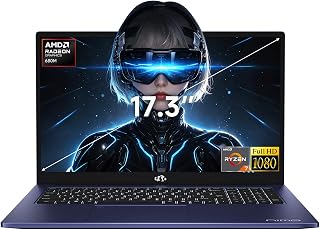
The integrated Radeon 680M GPU limits this laptop to lower settings and reduced resolution for acceptable Warzone performance, making it suitable only if you prioritize portability and budget over competitive frame rates. The 32GB RAM helps with multitasking, but the lack of dedicated graphics means you'll struggle to maintain smooth gameplay during graphically intense moments.
Pros
- Exceptional screen real estate at 17.3 inches without excessive weight or bulk
- Strong CPU performance handles coding, content creation, and multitasking with ease
- 32GB DDR5 memory provides abundant capacity for demanding professional workflows
- Integrated fingerprint reader and hardware TPM security offer genuine peace of mind for business use
- Premium metal chassis with backlit keyboard feels more upscale than the price suggests
Cons
- Integrated Radeon 680M graphics limit gaming performance to casual titles and esports at lower settings
- No dedicated graphics card means photo and video editing workflows run slower than workstation alternatives
- Battery life at under 10 hours requires daily charging for all-day remote work scenarios
The NIMO 17.3-inch laptop targets students, remote workers, and small business professionals seeking a portable workstation with a large screen. It strikes a practical balance between desktop usability and laptop portability, making it ideal for anyone tired of squinting at 14-inch displays during eight-hour work days.
Performance hinges on the AMD Ryzen 7 7735HS, an 8-core processor that genuinely competes with Intel's i7-12650H in real-world tasks. The 32GB DDR5 RAM and dual PCIe 4.0 SSD slots deliver snappy responsiveness across multitasking workflows. Boot times are nearly instantaneous, and switching between 20 browser tabs feels effortless. The Radeon 680M integrated graphics handle light gaming, video playback, and casual photo editing, though serious gamers or video professionals should look elsewhere.
Build quality impresses at this price. The dual-sided metal chassis feels solid without excessive heft, and the 18.8mm profile belies the generous 17.3-inch display. The 180-degree lay-flat hinge is genuinely useful for collaborative work. The backlit keyboard provides comfortable typing in dim environments, and the integrated fingerprint reader adds biometric security that feels more premium than budget competitors.
Battery life remains the primary weakness. Expect 9-10 hours of mixed usage, which realistically means daily charging for full-time remote workers. The under-2.1kg weight helps with portability, but hauling this larger laptop around campus or between offices requires accepting daily charging as routine.
The NIMO represents thoughtful engineering at an accessible price. It delivers desktop-class productivity in a portable form factor, backed by genuine warranty support and flexible return terms. This laptop suits anyone who values screen real estate and processing power over gaming performance.
Processor: AMD Ryzen 7 7735HS (8-core, up to 4.75 GHz, 54W TDP)
Memory: 32GB DDR5 SDRAM at 4800 MHz, expandable to 64GB via dual SO-DIMM slots
Storage: 1TB PCIe 4.0 SSD (dual M.2 2280 slot design for future upgrades)
Display: 17.3-inch FHD (1920x1080) IPS panel with 16:9 aspect ratio
Graphics: Integrated AMD Radeon 680M (RDNA 2 architecture, shared VRAM)
Connectivity: WiFi 6E (2.4GHz, 5GHz, 6GHz), Bluetooth 5.2, Dual USB Type-C with Power Delivery and DisplayPort, HDMI output
Battery: 58Wh Li-polymer (approximately 10 hours mixed use)
Security: Fingerprint reader, Kensington lock slot, hardware TPM 2.0, physical camera shutter
Audio: Dual 2W stereo speakers
Webcam: 2MP HD front-facing with privacy shutter
Dimensions: 15.66"L x 9.99"W x 0.74"Th
Weight: 4.6 pounds (2.1kg)
Operating System: Windows 11
Warranty: 2-year limited warranty with 90-day return/exchange policy
Best For: Students handling heavy coursework, remote professionals requiring screen real estate, small business owners needing portable productivity, content creators working with documents and spreadsheets.
Not Ideal For: Hardcore gamers seeking high refresh rate gaming, video editors requiring dedicated graphics, anyone unable to charge daily, buyers who prioritize ultra-portability over screen size.
Key Considerations: The 17.3-inch display is a major selling point, but verify it fits your typical carrying bag or backpack before purchase. The integrated graphics handle light creative work but won't accelerate professional video or 3D work meaningfully. Battery life at under 10 hours means planning charging access during the workday. The DDR5 memory and dual SSD slots provide genuine upgrade paths if you need expanded capacity later.
Compared To Alternatives: Against similarly priced 15.6-inch laptops, this NIMO offers superior screen real estate despite identical weight. Against 17-inch competitors, it delivers more modern connectivity and security features. The Ryzen 7 processor outperforms Intel i5 alternatives in most workflows while consuming less power than H-series chips.


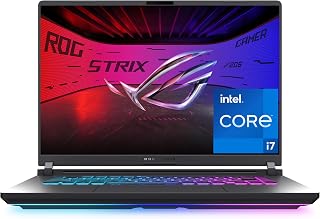
The RTX 5060 GPU provides the horsepower needed for high settings in Warzone, and the 165Hz refresh rate gives you smoother target tracking in intense engagements. ROG's Tri-Fan Technology keeps thermals under control during extended gaming sessions, preventing the performance throttling that can cost you kills in the final circle.
Pros
- Tri-fan cooling with liquid metal maintains stable performance during extended matches
- 165Hz FHD+ display with 3ms response eliminates motion blur in fast engagements
- DLSS 4 support pushes frame rates past 100 fps consistently
- Wi-Fi 7 reduces connection latency and improves lobby stability
Cons
- 2-hour battery life restricts unplugged gaming to brief sessions
- RTX 5060 requires occasional setting adjustments for ultra-demanding scenarios
Warzone demands consistent frame rates and thermal stability during extended drops, and the ROG Strix G16 delivers both through its tri-fan cooling system with vapor chamber and liquid metal thermal compound. The 165Hz FHD+ display with 3ms response time gives you the visual clarity needed to track enemies across Verdansk or Al Mazrah without motion blur, while the Intel Core i7 14650HX and RTX 5060 with 8GB VRAM push 100+ fps at high settings in most engagements. DLSS 4 support extends that performance headroom when action intensifies. The 16GB DDR5 RAM handles background apps like Discord without stuttering, and the 1TB Gen 4 SSD cuts lobby-to-match times significantly. Wi-Fi 7 connectivity reduces latency spikes during crucial firefights. The ROG Intelligent Cooling keeps noise levels reasonable even during long sessions, preventing thermal throttling that could cost you critical milliseconds. At 2.65kg, it remains portable enough for LAN events or travel without sacrificing the screen real estate needed for situational awareness in battle royale gameplay.
Processor: Intel Core i7 14650HX (16 cores, 2.2 GHz base)
Graphics: NVIDIA GeForce RTX 5060 (8GB GDDR5, DLSS 4)
Display: 16 inch FHD+ (1920x1200) 165Hz IPS LED, 3ms response time
Memory: 16GB DDR5-5600MHz (upgradeable)
Storage: 1TB PCIe Gen 4 SSD (upgradeable)
Connectivity: Wi-Fi 7 (802.11be), USB ports, HDMI output
Audio: Dolby Atmos speakers
Keyboard: Gaming-grade QWERTY with RGB
Battery: 90Wh Lithium-Ion, 2 hours gaming, 50 hours standby
Weight: 2.65kg
Dimensions: 13.94 x 10.55 x 0.9 inches
OS: Windows 11 Home
Warranty: Limited
Competitive Warzone players who prioritize consistent high frame rates and thermal performance over maximum portability will appreciate this laptop's cooling design and 165Hz display. Esports-focused gamers who need reliable performance during tournaments or long grinding sessions benefit from the stable thermals and fast storage. Skip this if you demand ultra settings at 1440p or need all-day battery life for gaming away from outlets, as the 2-hour unplugged runtime limits mobile sessions.

The RTX 5060 GPU delivers strong performance for Warzone at high settings, and the MUX switch lets you bypass integrated graphics for direct GPU output, boosting frame rates by up to 15 percent. The Ryzen 7 260 processor ensures you won't face CPU bottlenecks even in chaotic late-game scenarios with multiple squads.
Pros
- Excellent value with RTX 5060 and high-refresh display at this price point
- 165Hz panel and slim bezels create an immersive gaming experience
- Versatile 180-degree hinge design works for gaming, productivity, and presentations
- Strong multi-core CPU keeps up with streaming, recording, and heavy multitasking
- Wi-Fi 7 and comprehensive ports (4 USB, HDMI, Ethernet) provide excellent connectivity
Cons
- No dedicated touchscreen limits note-taking and digital interaction capabilities
- 4.9-pound weight and 16-inch size make it less portable than smaller gaming laptops
- 1TB SSD storage may require upgrades for large game libraries or content creators
The GIGABYTE Gaming A16 is a 16-inch gaming laptop designed for casual gamers, students, and content creators seeking a balance between performance and portability. It combines an AMD Ryzen 7 260 processor, RTX 5060 GPU, and a 165Hz display to handle modern games, streaming, and creative work without compromise.
The standout feature is the 165Hz display paired with the RTX 5060, which delivers smooth, responsive gameplay at high visual fidelity. The Ryzen 7 260 ensures smooth multitasking, making it capable of running games while streaming or recording simultaneously. GiMATE, GIGABYTE's AI assistant, learns your usage patterns and optimizes system performance dynamically, adding a layer of personalization rare at this price point.
Design-wise, the 19.45mm slim chassis feels premium without being overly thin or fragile. The 180-degree hinge is genuinely versatile, laying flat for presentations or angling into a tent for streaming setups. The Golden Curve keyboard provides comfortable long gaming sessions, while Dolby Atmos audio creates an immersive experience.
Drawbacks include the lack of a touchscreen, which may disappoint users who work with digital art or note-taking. The 1TB SSD is adequate but might fill quickly if you maintain a large game library. At 4.9 pounds with a 16-inch screen, it leans toward desktop replacement rather than ultra-portable gaming.
Verdict: The GIGABYTE Gaming A16 is a solid mid-range gaming laptop that delivers real performance and thoughtful design. It excels for players and creators who value screen size, refresh rate, and versatility over lightweight portability. Recommended for students, casual gamers, and anyone exploring generative AI workloads on a budget.
Processor: AMD Ryzen 7 260 with AI capabilities
Graphics: NVIDIA GeForce RTX 5060 with 8GB GDDR7 VRAM
Display: 16-inch IPS LCD, 1920x1200 resolution, 165Hz refresh rate, matte finish
Memory: System RAM not specified in available data
Storage: 1TB SSD with solid-state interface
Operating System: Windows 11 Home
Weight: 4.9 pounds
Dimensions: 14.11 inches L x 0.9 inches W x 10.33 inches Thick
Connectivity: Wi-Fi 7, Bluetooth 5.0, Gigabit Ethernet, 4 USB ports, HDMI output
Features: MUX Switch, 180-degree hinge, GiMATE AI agent, Golden Curve keyboard, Dolby Atmos audio
Gaming Performance: The RTX 5060 excels at 1440p gaming and handles 1080p gaming at ultra settings with frame rates well above 60fps. At the native 1920x1200 resolution, expect high frame rates in modern AAA titles with medium-to-high settings. NVIDIA DLSS 4 further boosts performance by intelligently upscaling lower-resolution renders, allowing ultra-quality visuals with minimal performance cost.
Multitasking & Streaming: The Ryzen 7 260 has the multi-core muscle to game while streaming to Twitch or YouTube. Its architecture supports simultaneous encoding for recordings without stuttering your in-game performance.
Content Creation: The RTX 5060 and NVIDIA Studio drivers provide hardware acceleration for video editing, 3D rendering, and image generation. GiMATE's AI optimization ensures your workload gets the system resources it needs when it matters most.
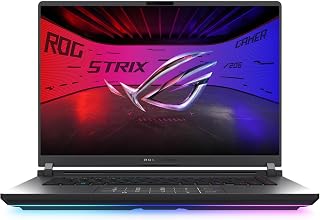

The integrated Radeon RX Vega 8 graphics fall short for Warzone, forcing you to play at low settings with compromised visual clarity that makes spotting distant enemies difficult. While the 24GB RAM is generous, the lack of dedicated GPU means you'll struggle to maintain playable frame rates in demanding areas of the map.
Pros
- Ryzen 7 H255 up to 4.9GHz handles Warzone's CPU demands capably
- 24GB DDR5 RAM provides headroom for the game and background tasks
- WiFi 6 support reduces lag and connection drops in online matches
- Dual-fan cooling sustains performance during extended play sessions
Cons
- Integrated Radeon RX Vega 8 graphics require low settings to achieve playable Warzone frame rates
- 1920x1200 resolution is modest and limits visual fidelity compared to higher-end options
Warzone is a demanding title, and the KAIGERR 16-inch laptop is honest about where it stands in that conversation. The AMD Ryzen 7 H255 with 8 cores and a boost clock up to 4.9GHz handles the game's CPU workload reasonably well, and 24GB of DDR5 RAM means the system won't bottleneck on memory. The dual-fan cooling setup helps sustain that performance during longer sessions without throttling. Where things get complicated is the graphics side: the integrated Radeon RX Vega 8 is not built for Warzone at competitive settings. You can get the game running, but expect to drop resolution and detail levels significantly to hit playable frame rates. The 16-inch IPS panel with 100% color gamut at least gives you a clear picture of what's happening on screen. WiFi 6 is a genuine plus for online play, keeping your connection stable. At 1.75kg, it's portable enough to take to a friend's setup. Think of this as a Warzone-capable machine for players who prioritize budget over performance ceiling.
Processor: AMD Ryzen 7 H255, 8-core/16-thread, up to 4.9GHz, 16MB L3 Cache
Memory: 24GB DDR5 SDRAM, dual-channel, upgradeable to 64GB
Storage: 512GB M.2 2280 NVMe SSD, upgradeable to 4TB
Graphics: Integrated AMD Radeon RX Vega 8
Display: 16-inch IPS LCD, 1920x1200 native resolution, 100% color gamut
Battery: Lithium-ion, 38 watt-hours, up to 8 hours battery life
Connectivity: WiFi 6 (802.11ax), Bluetooth, HDMI, USB ports
Weight: 1.75kg, Dimensions: 14.52" L x 9.19" W x 0.74" Th
Operating System: Windows 11
Keyboard: Backlit, numeric keypad included
Best suited for casual Warzone players who are just getting started and can't yet invest in a dedicated GPU laptop. Students who also game on the side will find it pulls double duty well. Competitive players chasing high frame rates or anyone expecting smooth performance at medium-to-high settings should skip this and step up to a laptop with a discrete GPU.

What to Look for in a Warzone Gaming Laptop
Warzone is more CPU- and GPU-intensive than most battle royale titles. Before you commit to a purchase, a few key specs will determine whether your sessions are smooth or frustrating. Here is what actually matters for this specific game.
GPU Performance and Architecture
The GPU is the single most important component for hitting high frame rates in Warzone. Options like the NVIDIA GeForce RTX 5060 found in the Acer Nitro V 16S AI Gaming Laptop and the ASUS ROG Strix G16 (2025) leverage the new NVIDIA Blackwell architecture with DLSS 4 support, which uses AI to multiply frame output without a proportional hit to visual quality.
If your budget stretches further, the RTX 5070 or RTX 5070 Ti found in machines like the msi Katana 15 HX 15.6″ 165Hz QHD+ Gaming Laptop and the premium ASUS ROG Strix G16 deliver exceptional ray tracing and AI-upscaled visuals. For Warzone specifically, any RTX 50 Series chip gives you a serious competitive edge.
Display Refresh Rate
Warzone rewards players who can react in milliseconds. A display with at least a 165Hz refresh rate ensures motion stays fluid and target tracking stays accurate. The Acer Nitro V Gaming Laptop ships with a 165Hz panel, which hits a solid sweet spot for competitive play without being overkill.
If you want the sharpest edge possible, the ASUS ROG Strix G16 (2025) with the RTX 5070 Ti pushes up to 240Hz on its ROG Nebula display. At that refresh rate, every movement on screen is noticeably smoother, which translates directly into faster reaction times during engagements. For a comparison of display-focused builds, the best PC build for RTX 5070 ti is worth a look.
RAM and System Memory
Warzone’s recommended spec is 16GB of RAM, but in 2026 you really want 32GB to avoid stutters during large-scale firefights and to keep Discord, streaming software, or a browser running in the background. The Acer Nitro V 16S AI Gaming Laptop and the msi Katana 15 HX both ship with 32GB DDR5, which is the configuration we recommend as a baseline for serious players.
Budget options like the KAIGERR Gaming Laptop, 24GB DDR5 512GB NVMe SSD and the NIMO 17.3″ FHD IPS Gaming Laptop offer 24GB and 32GB DDR5 respectively, which is still functional for Warzone at moderate settings. Just be aware that integrated graphics on those machines will cap your performance ceiling compared to dedicated GPUs.
Cooling and Sustained Performance
Warzone sessions can run for hours, and thermal throttling is a silent frame rate killer. The ASUS ROG Strix G16 uses an end-to-end vapor chamber with tri-fan technology and Conductonaut extreme liquid metal on the CPU die, which is among the most aggressive cooling solutions in consumer gaming laptops right now. The msi Katana 15 HX relies on a Cooler Boost 5 system with dual fans and five heat pipes to maintain stable clocks under sustained load.
Even the more affordable GIGABYTE Gaming A16 – AMD Ryzen 7 260 GeForce RTX features a slim 19.45mm chassis while keeping thermals in check during gameplay. Good cooling means your CPU and GPU hold their boost clocks longer, which directly translates to consistent frame rates rather than occasional spikes followed by dips. If you are building a full desktop alternative, the best PC build for RX 9070 explores cooling-focused desktop components worth considering.
Final Thoughts
For most Warzone players who want a strong balance of performance and value, the Acer Nitro V 16S AI Gaming Laptop is a compelling all-rounder with its RTX 5060, 32GB DDR5, and 180Hz display. If you want to push frame rates to their absolute limit and future-proof your setup, the ASUS ROG Strix G16 (2025) Gaming Laptop with the RTX 5070 Ti and 240Hz Nebula display is the premium choice for competitive players who refuse to compromise.
Frequently Asked Questions
What specs do you need to run Warzone smoothly on a laptop?
For smooth gameplay at high settings in 2026, you want at least a dedicated mid-range GPU like the RTX 5060, a modern 8-core CPU, and 32GB of DDR5 RAM. A display running at 165Hz or higher will make the frame rate advantage visible during fast-paced engagements. Storage speed also matters since Warzone has long load times on slower drives, so a PCIe Gen 4 SSD is worth prioritizing.
Can an integrated graphics laptop run Warzone?
Technically yes, but the experience will be limited. Machines with integrated graphics like AMD Radeon 680M or Radeon RX Vega 8, found in the NIMO 17.3″ FHD IPS Gaming Laptop and the KAIGERR Gaming Laptop respectively, can run Warzone at low settings, but you will not hit competitive frame rates. For casual play at reduced resolution it is possible, but dedicated GPU laptops are strongly recommended for a consistent experience.
Is a 15-inch or 17-inch laptop better for Warzone?
It depends on your priorities. A 15- or 16-inch laptop like the Acer Nitro V Gaming Laptop or the GIGABYTE Gaming A16 is easier to carry and typically runs cooler due to modern thermal designs. A 17-inch option like the NIMO 17.3″ FHD IPS Gaming Laptop gives you a larger viewing area that reduces eye strain during long sessions. For competitive play, screen size matters less than refresh rate and GPU power.
Does DLSS 4 make a real difference in Warzone?
Yes, noticeably so. DLSS 4 with Multi Frame Generation, available on RTX 50 Series laptops like the ASUS ROG Strix G16 (2025) and the msi Katana 15 HX, can multiply your rendered frame count significantly using AI rather than brute-force GPU rendering. This means you get higher frame rates with minimal visual quality loss, which is a genuine competitive advantage in a fast-paced game like Warzone. For more on building around these GPUs, the best PC build for RTX 5070 covers the full picture in a desktop context.
Common questions
What are the best gaming laptops for World of Warcraft?
Laptops with an RTX 5060 or better handle World of Warcraft comfortably at high settings. The Acer Nitro V 16S with RTX 5060 and 32GB RAM offers smooth performance for WoW's demanding raids and cities, while the MSI Katana 15 HX with RTX 5070 provides extra headroom for max settings at higher resolutions. WoW is less GPU-intensive than modern shooters, so mid-range options deliver excellent results without requiring top-tier hardware.
What are the best gaming laptops for Call of Duty?
The MSI Katana 15 HX with RTX 5070 and the ASUS ROG Strix G16 with RTX 5070 Ti both excel at Call of Duty titles, delivering high frame rates at 1440p for competitive advantage. Call of Duty games demand strong GPU performance for smooth gameplay at higher refresh rates, and these laptops pair their graphics cards with fast 165Hz and 240Hz displays respectively to maximize responsiveness in multiplayer matches.





Write Your Review
No reviews yet. Be the first to share your experience!