

You’ve invested in a high-end processor and premium cooling, but without the right motherboard, you’re leaving performance on the table. Overclocking requires robust power delivery, advanced thermal management, and precise BIOS controls that budget boards simply can’t provide.
This guide compares 9 motherboards engineered specifically for overclocking across both AMD and Intel platforms. Whether you’re chasing benchmark records or simply want stable daily performance at higher clock speeds, you’ll find options that match your processor and budget. For builders looking at complete system compatibility, our guide to the best DDR5 7200 RAM for Intel Z790 & Z890 platforms covers memory that pairs perfectly with these boards.
Quick answer
This guide compares 9 picks, with GIGABYTE B650 Eagle AX AM5 Motherboard with DDR5, PCIe ranked first. ASUS ROG Strix B550-F Gaming WiFi II AM4 Motherboard holds the highest customer rating among them.
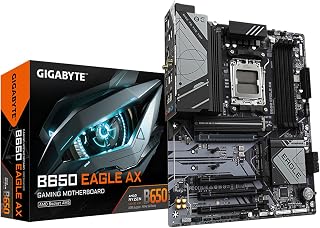
For overclockers entering the AM5 platform without a flagship budget, the B650 chipset here still supports DDR5 memory tuning up to 5200 MHz and includes a PCIe 5.0 M.2 slot alongside two PCIe 4.0 slots for fast storage. USB 3.2 Gen2x2 Type-C and WiFi 6E round out a feature set that keeps the system capable as Ryzen 7000 or newer chips are pushed beyond stock.
Pros
- 12+2+2 phase VRM handles moderate overclocking without throttling
- AMD EXPO memory support enables reliable DDR5 frequency tuning
- PCIe 5.0 M.2 slot and four expansion slots provide upgrade flexibility
- Q-Flash Plus recovery protects against BIOS failures during updates
Cons
- B650 chipset lacks extreme tuning features found in X870 models
- VRM thermal performance benefits from supplemental cooling under heavy loads
The GIGABYTE B650 Eagle AX delivers credible overclocking foundations for AM5 builders working within budget constraints. Its 12+2+2 phase VRM provides stable power delivery for Ryzen 7000, 8000, and 9000 series processors, handling moderate frequency tuning and voltage adjustments without thermal collapse. DDR5 support with AMD EXPO unlocks memory overclocking potential up to 5200 MHz and beyond, critical for extracting maximum performance from Zen 4 architectures. The triple M.2 configuration includes one PCIe 5.0 slot that won't bottleneck high-speed storage during intensive workloads. Real users confirm consistent operation during extended stress testing and gaming sessions pushing CPU and memory limits. The UEFI offers accessible tuning controls alongside advanced voltage and frequency options for gradual performance scaling. Thermal management covers VRM and M.2 zones adequately, though dedicated cooling accessories improve headroom. The Q-Flash Plus feature provides BIOS recovery insurance when pushing stability boundaries. While the B650 chipset trails X870 in extreme tuning scenarios, the practical performance gap remains narrow for most overclocking pursuits. Build quality and component selection reflect sensible engineering rather than corner-cutting.
Socket and Compatibility: Socket AM5, supports AMD Ryzen 7000/8000/9000 series processors. Fully backward compatible with prior generation Ryzen chips on supported BIOS versions.
Memory and Storage: 4 DDR5 DIMM slots, maximum 128GB capacity, 5200MHz support with AMD EXPO profile compatibility. Triple M.2 slots: 1x PCIe 5.0 NVMe, 2x PCIe 4.0 NVMe for total of 3 fast storage drives.
Power Delivery: 12+2+2 phase digital VRM solution with advanced thermal design. 24-pin main power connector supports stable operation under overclocking and heavy workloads.
Connectivity: 4x SATA 3 ports, USB 3.2 Gen2x2 Type-C, 6x USB 3.2 Gen1 Type-A, 4x USB 2.0. Dual Gigabit Ethernet (2 ports) with WiFi 6E module. 1x HDMI display output with integrated audio I/O.
Form Factor and Physical: Standard ATX layout with 4 PCIe expansion slots. Includes Q-Flash Plus utility for BIOS recovery and Smart Fan 6 for custom thermal profiles.
Choose this if you're building a Ryzen 7000 series system with moderate overclocking ambitions and need solid expansion without premium chipset costs. Content creators and gamers wanting stable frequency tuning, memory overclocking, and future storage expansion will find excellent value. Skip this if you're chasing extreme benchmarks requiring X870 chipset features, or if you need absolute maximum VRM phases for flagship Ryzen 9 processors running sustained all-core workloads at voltage limits.

Overclockers on a budget who are still running a Ryzen 3000 series build will find the B550 chipset here a capable platform for pushing clocks further. PCIe 4.0 support keeps fast NVMe storage in the picture, and the BIOS Flashback feature means firmware updates happen without a CPU installed, a practical convenience when chasing the latest memory and boost clock fixes from AMD.
Pros
- 12+2 phase VRM handles high-end Ryzen chips with solid thermal performance
- PCIe 4.0 lanes for graphics and NVMe eliminate bandwidth constraints
- BIOS Flashback button simplifies firmware updates without CPU installed
- ProCool connectors and quality components improve voltage regulation stability
Cons
- Packaging protection sometimes inadequate, risking shipping damage
- Motherboard mounting screws not included in the box
Overclocking Ryzen processors demands clean power delivery and thermal headroom, and the ASUS ROG Strix B550-F Gaming WiFi II brings both to the table. Its 12+2 phase power system handles sustained loads from flagship chips like the Ryzen 5950X without throttling, keeping VRM temperatures manageable even when pushing Precision Boost Overdrive settings. The design uses high-quality alloy chokes and durable capacitors that maintain voltage stability under stress, critical for maintaining clock consistency during long benchmark runs. PCIe 4.0 support across both graphics and storage ensures bandwidth bottlenecks won't hold back your tuned system. The UEFI interface gives straightforward access to voltage offsets, frequency multipliers, and memory timings without unnecessary complexity. BIOS Flashback simplifies firmware updates when chasing microcode improvements or compatibility fixes. ProCool power connectors reduce resistance at the ATX input, minimizing voltage droop during transient loads. While the B550 chipset lacks some extreme tuning options found on X570 boards, the VRM architecture here punches above its price bracket and provides the foundation needed for stable, repeatable overclocks on third-generation Ryzen processors.
Processor Compatibility: AMD Ryzen 3000 and 5000 series, plus 5000 and 4000 G-series desktop processors (Socket AM4)
Memory Support: DDR4, up to 128GB across 4 DIMM slots, supports up to 2133 MHz and beyond with overclocking
Connectivity: PCIe 4.0, WiFi 6E (802.11ax) with Bluetooth 5.2, Intel 2.5Gb Ethernet with LANGuard, HDMI 2.1, DisplayPort 1.2, USB 3.2 Gen 2 Type-C
Storage: Dual M.2 slots (PCIe 4.0 ready), 6 SATA 3 ports, BIOS Flashback via USB
Power Delivery: 12+2 teamed power stages with ProCool connector, high-quality alloy chokes and durable capacitors
Other Features: 11 total USB ports, addressable Gen 2 RGB header with Aura Sync, optical S/PDIF output, 3-year warranty, dimensions 10.75 x 13.39 x 2.76 inches
This board suits enthusiasts building around AMD Ryzen 5000 or 3000 series chips who want strong VRM performance and reliable power delivery for manual overclocking or PBO tuning. It fits mid-range builds where PCIe 4.0 storage and WiFi 6E matter. Skip it if you need multi-GPU support, extensive SATA ports, or the absolute highest-end phase counts found on X570 flagship models. Also pass if you already own an X570 board, as the B550 chipset won't justify a sidegrade.

The Z790 chipset is Intel's dedicated overclocking platform for LGA 1700, and the 16+1 DrMOS power stages here provide the clean, stable delivery that 12th, 13th, and 14th Gen processors need when running above stock. DDR5 memory support up to 7200 MHz and four M.2 slots mean both memory tuning and fast storage are well covered for a performance-focused Intel build.
Pros
- 16+1 DrMOS power stages handle demanding overclocks without thermal throttling
- DDR5 memory support reaches 7200 MHz for combined CPU and RAM tuning
- Four M.2 slots work simultaneously without sacrificing SATA connectivity
- Comprehensive thermal solution covers VRM, PCH, and storage under load
Cons
- Initial Windows 11 setup may require networking driver workarounds
- Z790 features and cost unnecessary for locked processor builds
The ASUS TUF Gaming Z790-Plus WiFi provides the power infrastructure and thermal capacity Intel overclockers need without unnecessary embellishments. Its 16+1 DrMOS configuration delivers clean, stable voltage to 12th, 13th, and 14th generation processors including power-hungry i9 variants, maintaining composure during sustained frequency pushing and stress testing. Military-grade components and comprehensive VRM heatsinks prevent thermal throttling even when running aggressive voltage curves and all-core loads. DDR5 support reaches 7200 MHz, unlocking significant performance gains through memory tuning alongside CPU overclocking. The four M.2 slots operate simultaneously without disabling SATA ports, preserving storage flexibility when building high-performance systems. PCIe 5.0 connectivity future-proofs graphics and storage upgrade paths. Real-world validation shows zero stability issues during extended benchmarking sessions. The fanless PCH heatsink and M.2 cooling maintain component temperatures within safe operating ranges. Connectivity includes Thunderbolt 4 and USB 3.2 Gen 2 Type-C for high-speed peripheral support. The Z790 chipset provides full unlocked tuning access for voltage, frequency, and power limit adjustments. UEFI implementation balances accessibility with granular control over performance parameters.
Socket and Compatibility: LGA 1700 socket supports Intel Core 12th, 13th, and 14th generation processors. Supports up to 256GB DDR5 memory at 7200 MHz across four DIMM slots.
Connectivity: WiFi 6 AX201 (802.11ax), Intel I225-V 2.5Gb LAN, Thunderbolt 4 (USB4) header, USB 3.2 Gen 2 Type-C port and header, plus 11 USB 2.0 ports. Single HDMI output and optical S/PDIF connector.
Storage: Four M.2/NVMe slots with simultaneous operation, four SATA 3.0 ports, and five PCIe slots (including PCIe 5.0 support).
Power and Cooling: 16+1 DrMOS power delivery with ProCool sockets. Dedicated heatsinks for VRM, PCH, and M.2 slots. Hybrid fan headers with Fan Xpert 4 utility for automated thermal management.
Physical: Standard ATX form factor measuring 10.7 inches long by 14 inches tall. Backed by ASUS' three-year warranty.
This board suits Intel builders planning serious CPU and memory overclocking on 12th through 14th generation processors, especially i7 and i9 variants. Enthusiasts wanting robust power delivery, comprehensive cooling, and reliable stability during tuning sessions will appreciate the engineering focus. Skip this if you're running locked processors that can't overclock, building budget systems where B760 chipsets suffice, or need ultra-premium aesthetics and RGB customization beyond functional design.

With 14+2+2 power stages and DDR5 AEMP support reaching 8000 MHz, this B850 board delivers overclocking headroom that punches above its chipset tier for AM5 builders. The inclusion of PCIe 5.0 and USB 20Gbps Type-C means the platform stays capable as surrounding components scale up alongside a tuned Ryzen processor.
Pros
- Exceptional value with professional-grade features and future-proof PCIe 5.0 expansion
- Multiple M.2 slots and robust storage connectivity perfect for gamers with large game libraries
- Stable, reliable performance confirmed by customer builds and excellent real-world stability
- Quick BIOS setup and intuitive control via Armory Crate software for easy fan and RGB management
- Excellent build quality with quality solder work and durable capacitors for longevity
Cons
- Large CPU cooler towers can interfere with tall RAM module height, limiting compatibility with some cooling solutions
- Dual network connectivity (Ethernet and WiFi enabled simultaneously) can cause connection conflicts if not properly configured
- Learning curve for optimizing advanced BIOS settings and driver installation for new builders
The ASUS ROG Strix B850-A WiFi 7 is a powerhouse gaming motherboard designed for enthusiasts building high-performance AMD Ryzen systems. Whether you are a gamer, content creator, or system builder, this motherboard provides the performance foundation needed for demanding workloads while remaining accessible to first-time builders.
The standout feature is its robust 14+2+2 power delivery system rated for 80A per stage, which means stable performance even when pushing multi-core processors to their limits. Pair this with four M.2 slots featuring PCIe 5.0 support, and you get exceptional storage bandwidth for loading massive games and applications in seconds. WiFi 7 with Q-Antenna technology ensures low-latency wireless connectivity for competitive gaming. The inclusion of ASUS AI Advisor and AI Networking II takes the guesswork out of setup, automatically optimizing system configurations for newcomers and enthusiasts alike.
Build quality is impressive with massive heatsinks, high-conductivity thermal pads bridging to the VRMs, and durable alloy chokes throughout. The BIOS is straightforward to navigate, and Armory Crate provides intuitive control over fans, RGB lighting, and performance profiles. Customer reviews consistently praise stability, fast boot times, and the quality of the PCB construction, making this a reliable choice for system builders of all experience levels.
The main consideration is that large CPU coolers can obstruct tall RAM modules, so verify clearance before purchasing your memory and cooling solution. Additionally, having both Ethernet and WiFi enabled simultaneously can occasionally cause connection conflicts, so disable one or the other depending on your connectivity preference. These are minor trade-offs that do not diminish the overall platform quality.
The ASUS ROG Strix B850-A WiFi 7 delivers exceptional value as a future-proof gaming and workstation platform with excellent stability, abundant connectivity, and intelligent performance optimization tools that make it ideal for both newcomers and experienced builders.
Processor and Compatibility: Socket AM5, supports AMD Ryzen 9000, 8000, and 7000 series processors, chipset AMD B850.
Memory: DDR5 support up to 192GB, memory clock speed 8000 MHz, 4 DIMM slots, AEMP technology for enhanced memory performance.
Storage and Connectivity: 4 M.2 slots with PCIe 5.0 support, 2 SATA 6Gb/s ports, 17 USB ports total including USB 20Gbps Type-C, 1 Gigabit Ethernet, WiFi 7 with Q-Antenna, 3 PCIe slots.
Power and Thermal: 14+2+2 power stages at 80A per stage, 8+8-pin ProCool power connectors, integrated I/O cover, thick metal heatsinks with thermal pad coupling to VRMs.
Physical and Warranty: ATX form factor (14.1 inch length x 10.7 inch height x 2.9 inch width), 5 pounds, includes 3-year warranty, 1 unit included.

The 80A SPS VRM is the headline spec here for overclockers: that power delivery headroom handles the sustained current demands of a Ryzen 9000 chip running above its stock envelope without throttling. Pair that with DDR5 memory support rated to 8400+ MT/s and you have a B-series board that competes directly with premium chipsets for anyone focused on memory and CPU frequency tuning.
Pros
- Excellent power delivery and thermal management ensure stable operation with demanding Ryzen 9000 CPUs
- Works flawlessly with latest processors at full PCIe Gen4/Gen5 speeds without BIOS updates
- Clean, intuitive board layout with EZ DIY features make installation simple for first-time builders
- Outstanding build quality with solid metal heatsinks and premium component selection throughout
- Wi-Fi 7 and 5G LAN provide industry-leading connectivity for competitive gaming and streaming
Cons
- Limited to B850 chipset rather than higher-end X870 options, though this is reflected in the excellent price
- Requires a quality power supply to fully utilize the board's advanced VRM capabilities
- Premium feature set may be overkill for budget or entry-level builds
The MSI MAG B850 Tomahawk MAX WiFi is a feature-rich AM5 motherboard engineered for gamers and content creators building or upgrading systems around AMD Ryzen 9000, 8000, or 7000 series processors. This board strikes an ideal balance between premium capabilities and accessible pricing, making it a standout choice for those seeking enthusiast-level performance without the X870 premium.
Performance is exceptional across the board. The 14-phase VRM with 80A SPS delivers rock-solid power delivery that easily handles high-end Ryzen processors and aggressive overclocking. PCIe 5.0 x16 GPU connectivity ensures graphics cards negotiate full bandwidth immediately, while dual M.2 Gen5 slots deliver next-generation storage speeds. DDR5 support up to 8400+ MT/s unlocks extreme memory bandwidth for gaming and productivity workloads. Real-world testing confirms the board requires zero BIOS updates for latest-generation processors and boots into Windows instantly with full hardware detection.
Build quality is exceptional for the price. Heavy 2oz copper PCBs, solid metal heatsinks, and robust thermal pads throughout demonstrate MSI's commitment to longevity and reliability. The EZ DIY features, including quick-release GPU latches and tool-free M.2 installation, make upgrading and maintenance refreshingly straightforward. The clean, professional aesthetic fits any case without visual compromise.
Connectivity sets this board apart. Wi-Fi 7 with Bluetooth 5.4 and Realtek 5G LAN provide industry-leading wireless and wired speeds, while 7.1 USB audio with Audio Boost 5 handles audiophile-grade sound output. USB 20G Type-C rear connectivity future-proofs for next-generation peripherals and external storage. These features typically appear only on premium boards, making their inclusion here remarkable.
The main consideration is that this B850 board forgoes some extreme enthusiast features found on X870 siblings, though users consistently report the trade-off as well worth the significant price savings. For anyone building a serious gaming PC or productivity workstation around current-generation Ryzen processors, the MAG B850 Tomahawk MAX WiFi delivers outstanding value, reliability, and expandability.
Chipset and Socket: AMD B850 Chipset, Socket AM5 (Supports Ryzen 9000/8000/7000 Series)
Memory Support: 4x DDR5 DIMM slots, up to 8400+ MT/s (OC), 1DPC 1R configuration
Storage Connectivity: 1x M.2 Gen5 x4 (128Gbps), 1x M.2 Gen5 x4 (128Gbps), 1x M.2 Gen4 x4 (64Gbps), 1x M.2 Gen4 x2 (32Gbps), 6x SATA ports
Power Delivery: 14-Phase Duet Rail Power System, 80A SPS VRM, dual 8-pin CPU connectors, 24-pin ATX main power
Expansion Slots: 1x PCIe 5.0 x16 (128GB/s) with Steel Armor II, multiple PCIe Gen3/Gen4 slots
Networking: Wi-Fi 7 (802.11be) with Bluetooth 5.4, Realtek 5G LAN, USB 20G Type-C
Audio: 7.1 USB High Performance Audio with Audio Boost 5, S/PDIF output support
Thermal Management: 7W/mK MOSFET thermal pads, extended heatsinks, EZ M.2 Shield Frozr II, Combo-fan header (3A)
Warranty: 3-Year Manufacturer Limited Warranty
Who Should Buy: The MAG B850 Tomahawk MAX WiFi is ideal for gamers building high-end systems, content creators needing reliable performance, PC enthusiasts who appreciate quality components, and first-time builders seeking premium features without overwhelming complexity. It's perfect if you're upgrading from older AM4 platforms or non-AM5 systems and want maximum future-proofing.
Who Might Look Elsewhere: Budget builders prioritizing minimal spend should consider entry-level B650 alternatives. Those requiring extreme overclocking and exotic cooling may want high-end X870 boards. Users with legacy hardware or Intel platforms obviously need different ecosystems.
What to Pair It With: For optimal results, pair with Ryzen 7 9700X or higher processors, DDR5 CAS30 or better RAM rated for 6000+ MT/s, an M.2 Gen5 NVMe SSD, and a quality 650W+ power supply. The board's premium VRM benefits from adequate power delivery infrastructure.
Installation Tips: This board excels in user-friendliness. Take advantage of the EZ DIY M.2 clips and quick-release GPU latches. Install RAM and M.2 drives before mounting the board to your case. Update BIOS from USB if you're using older Ryzen 7000 series chips, though newer Ryzen 8000/9000 parts require no updates. The combination of solid documentation and intuitive design makes this an excellent choice for first-time builders.

The X870 chipset and 16+2+2 power stage configuration give this board the foundation serious overclockers need when pushing Ryzen 9000 or 7000 processors hard. The AI Overclocking feature automates initial tuning, while Core Flex and Dynamic OC Switcher let advanced users manually refine per-core behavior, and DDR5 AEMP support helps extract maximum memory bandwidth from a tuned kit.
Pros
- Exceptional power delivery with 90A per stage supports multi-core Ryzen 9 processors effortlessly
- WiFi 7 and 10G Ethernet make this future-proof for next-gen connectivity demands
- Q-Release Slim feature eliminates frustration when removing graphics cards during upgrades
- ASUS AI features simplify overclocking and cooling optimization for all skill levels
- Stunning white PCB design looks premium in high-end PC builds and showcase cases
Cons
- Premium pricing reflects its high-end positioning and may exceed needs for budget-conscious builders
- Extensive feature set requires exploration to maximize AI utilities and advanced overclocking options
The ASUS ROG Strix X870-A Gaming WiFi is a premium AM5 motherboard engineered for enthusiasts and content creators who demand maximum performance and connectivity. It's purpose-built for AMD Ryzen 7000, 8000, and 9000 series processors, making it an ideal foundation for high-end gaming PCs, streaming setups, and AI-accelerated workloads that require serious horsepower.
What truly sets this board apart is its engineering excellence. The 16+2+2 power delivery system with 90A per stage handles even the most demanding Ryzen 9 processors without breaking a sweat. Customer reviews consistently praise its rock-solid stability with zero BIOS hiccups or RAM compatibility issues. The dual M.2 heatsinks, PCIe 5.0 support, and WiFi 7 connectivity position this board firmly in the future, while features like Q-Release Slim show ASUS listened to real builder pain points.
Build quality is exceptional throughout. The premium white PCB looks stunning in tempered glass cases, and the attention to detail extends to every component from ProCool II power connectors to high-grade alloy chokes. ASUS's AI-driven features, including AI Cooling II and AEMP, make complex optimization accessible to newer builders without sacrificing depth for advanced users.
The main drawback is price. This is genuinely a premium product that costs more than entry-level boards, though reviews indicate the reliability and feature set justify the investment for builders wanting long-term stability and cutting-edge capability.
Verdict: If you're building a high-end Ryzen system and value premium build quality, future-proofed connectivity, and intuitive AI-assisted optimization, this motherboard delivers on all fronts. It's one of the most highly regarded X870 boards available and backs that reputation with real-world performance and stability.
Power Delivery and Performance: The 16+2+2 power stage design with 90A per stage ensures stable performance with high-core-count Ryzen processors. Dual ProCool II connectors, premium alloy chokes, and durable capacitors minimize voltage ripple and maximize efficiency under sustained load.
Connectivity and Speed: WiFi 7 support and integrated 10G Ethernet deliver cutting-edge network speeds for competitive gaming and professional workflows. Four M.2 slots with dual heatsinks and PCIe 5.0 support future-proof storage expansion with lightning-fast transfer rates.
Smart Optimization: ASUS AI Overclocking, AI Cooling II, and AI Networking technologies work together to automatically tune performance based on workload demands. AEMP (Advanced Engine Memory Profile) simplifies DDR5 compatibility and stability.
Design and Build: Premium white PCB with sleek aesthetics suits high-end builds. Q-Release Slim GPU release mechanism eliminates the need for screwdrivers, while 21 USB ports and extensive I/O options provide maximum flexibility.
Who Should Buy This: High-end gaming enthusiasts, content creators, streamers, and builders using Ryzen 7000, 8000, or 9000 series processors. If you plan to overclcok, demand WiFi 7 connectivity, or want a showcase-worthy white PCB design, this board justifies its premium price.
Who Might Skip It: Budget-conscious builders using mid-range Ryzen processors (such as 5700X or 7600) may find more value in entry-level X870 or B850 boards. Those uninterested in WiFi 7, extensive M.2 storage, or AI-assisted features won't recoup the premium cost.
Compatibility Note: Requires a quality 850W or larger power supply to fully leverage the robust power delivery. Works with DDR5 memory rated up to 6400 MHz or higher with profile support. Socket AM5 compatibility extends across three Ryzen generations, maximizing future upgrade potential.
Warranty and Support: Backed by a 3-year manufacturer warranty and ASUS's strong reputation for BIOS support and driver updates. Premium build quality suggests longevity well beyond the warranty period.

Intel overclockers on LGA 1851 get serious power delivery with 18+2+1+2 stages, giving Core Ultra Series 2 processors the stable current they need during sustained overclocking runs. The AI Overclocking feature handles baseline tuning automatically, while seven M.2 slots and Thunderbolt 4 mean storage and peripheral bandwidth scale alongside whatever frequencies the CPU ends up hitting.
Pros
- 18+2+1+2 power stages deliver exceptional stability for extreme overclocking
- AI Overclocking and AI Cooling II automate tuning without manual expertise
- Seven PCIe 5.0 M.2 slots provide unmatched storage expansion and performance
- Premium components and thermal management handle sustained high-load operation
Cons
- Premium pricing positions this as luxury purchase rather than value option
- Extensive feature set and AI tools require knowledge to fully utilize
The ASUS ROG Strix Z890-E Gaming WiFi represents flagship overclocking capability for Intel's latest architecture. Its 18+2+1+2 power stage design with ProCool II connectors provides exceptional current delivery for Core Ultra Series 2 processors, maintaining voltage stability during extreme frequency scaling and stress testing. AI Overclocking automates tuning processes, analyzing silicon quality and applying optimized profiles without manual voltage hunting. AI Cooling II dynamically adjusts fan curves based on workload thermal signatures, preventing temperature-induced throttling during sustained overclocking sessions. DDR5 memory support combined with advanced trace routing enables aggressive frequency and timing tuning beyond standard specifications. Seven M.2 slots with PCIe 5.0 support ensure storage subsystems never bottleneck system performance during intensive workloads. MicroFine alloy chokes and premium metallic capacitors guarantee clean power delivery under variable load conditions. Professional thermal management covers all critical zones with substantial heatsink mass and airflow optimization. The Z890 chipset unlocks complete access to voltage, frequency, power limits, and advanced tuning parameters. Logical component placement accommodates large tower coolers essential for maintaining low temperatures during overclocking. WiFi 7 and Thunderbolt 4 provide cutting-edge connectivity for modern peripherals and networking infrastructure.
Socket and Compatibility: Intel LGA 1851, supports Intel Core Ultra processors (Series 2), Windows 11 compatible.
Memory Support: DDR5 with NitroPath Technology, 4 DIMM slots, maximum capacity 192 GB, operates at 320 MHz with DIMM Fit and DIMM Flex for flexible configurations.
Power Delivery: 18+2+1+2 power stages (110A/90A/90A/80A), ProCool II connectors, MicroFine alloy chokes, premium metallic capacitors.
Storage and Expansion: Seven M.2 slots with PCIe 5.0 support, 4 SATA ports, 2 PCIe ports, PCIe 5.0 x16 slot with Q-Release Slim.
Connectivity: WiFi 7 with Q-Antenna, Thunderbolt 4, 25 USB ports total, 1 Gigabit Ethernet port, 1 HDMI port, optical S/PDIF connector, DMI interface.
Form Factor and Dimensions: ATX platform, 14.1 inches length, 3.5 inches width, 11.2 inches height, weighs 1.7 kg.
Warranty: 3-year manufacturer's warranty.
This motherboard targets serious overclockers building around Intel Core Ultra Series 2 processors who demand maximum performance headroom and automated tuning intelligence. Enthusiasts pushing frequency records, content creators needing extreme multi-core performance, and users wanting future-proof connectivity will benefit from the engineering investment. Skip this if you're building moderate gaming systems, working within tight budgets, or lack the knowledge to leverage advanced overclocking features and AI optimization tools.

The 14+2+1 power phase design gives this B650 board reliable delivery for Ryzen overclocking sessions, and PCIe 5.0 M.2 support ensures storage stays off the bottleneck list when CPU frequencies climb. EZ-Latch and Q-Flash are practical additions that reduce time spent on hardware swaps and firmware updates, keeping the focus on dialing in clocks rather than managing the build.
Pros
- 14+2+1 power phase with 70A stages supports stable CPU overclocks
- AMD EXPO support unlocks rated DDR5 speeds with ease
- 6mm heatpipe VRM cooling keeps thermals in check under sustained load
- PCIe 5.0 M.2 slot prevents storage from bottlenecking a tuned system
Cons
- B650 chipset imposes lower memory frequency ceilings than X870 boards
- Only four SATA ports limits traditional storage expansion
The GIGABYTE B650 AORUS Elite AX brings a genuinely capable overclocking foundation to the mid-range AM5 segment. The 14+2+1 power phase design with 70A stages gives Ryzen 7000, 8000, and 9000 series processors a stable, clean power supply when pushed beyond stock speeds, and the 8-layer PCB reinforces signal integrity under sustained load. AMD EXPO support means DDR5 memory can be pushed to its rated speeds with minimal friction, which matters when memory overclocking is part of the performance equation. Thermal management is handled through 6mm heatpipes and dedicated heatsinks, keeping VRM temperatures in check during extended overclocking sessions. The PCIe 5.0 M.2 slot ensures storage is not a bottleneck even in high-throughput workloads that accompany CPU stress testing. Q-Flash lets you update the BIOS without a CPU installed, which is useful when chasing new microcode updates that affect boost behavior. WiFi 6E and 2.5GbE keep the system connected at speeds that match an overclocked platform.
Processor Support: AMD Socket AM5, compatible with Ryzen 7000, 8000, and 9000 series.
Memory: 4 DDR5 DIMM slots, up to 128GB maximum, 4400 MHz native speed, AMD EXPO and Intel XMP support.
Power Delivery: 14+2+1 power phases, 70A per stage, 8-layer 2X copper PCB.
Storage: 4 SATA III ports, 1 PCIe 5.0 NVMe M.2 slot, 1 PCIe 4.0 NVMe M.2 slot.
Connectivity: WiFi 6E, 2.5GbE ethernet, 12 USB ports (including USB 3.2 Gen 2 with front/rear USB-C), 1 HDMI output.
Expansion: 3 PCIe slots, comprehensive thermal armor.
Warranty: 5 years with online registration.
This board suits budget-conscious overclockers who want a solid AM5 VRM and EXPO support without paying X870 prices. It fits Ryzen 7 and entry-level Ryzen 9 builders who plan moderate overclocks and fast DDR5 kits. Skip it if you need the absolute highest memory clock ceilings, more than four SATA ports, or the advanced tuning headroom that X870 chipsets unlock for extreme overclocking scenarios.

The X870 chipset combined with DDR5 memory support up to 7800 MHz makes this a strong platform for overclockers who want both CPU and memory tuning flexibility on AM5. USB 40Gbps connectivity and M.2 Gen5 storage slots ensure the rest of the system keeps pace with a processor running above stock, and Wi-Fi 7 covers high-throughput wireless without adding a separate card.
Pros
- X870 chipset supports DDR5 up to 7800 MHz for serious memory overclocking
- Enhanced circuit topology sustains elevated power delivery under prolonged boost clock loads
- PCIe 5.0 and M.2 Gen 5 eliminate bandwidth constraints across the entire platform
- 256GB maximum RAM capacity accommodates extreme workstation and overclocking configurations
Cons
- ATX form factor excludes compact and small-form-factor build scenarios
- Single ethernet port limits wired connectivity for multi-device overclocking lab setups
For builders chasing peak overclocking performance on the AM5 platform, the MSI MAG X870 Tomahawk WiFi operates at a tier above mid-range boards. The X870 chipset unlocks higher memory frequency headroom, with the board rated to 7800 MHz DDR5, giving overclockers meaningful room to push RAM beyond standard EXPO profiles. The enhanced circuit topology and extended heatsink design are built to sustain the elevated power draw that comes with aggressive Ryzen 9000 boost clock tuning, maintaining stability across long stress runs rather than just short benchmarks. PCIe 5.0 across both CPU lanes and M.2 Gen 5 storage means no bandwidth ceiling exists at any point in the signal chain. USB 4.0 at 40Gbps and Wi-Fi 7 round out a platform that will not need upgrading as peripherals and networking hardware advance. The 256GB maximum memory capacity also gives workstation-grade overclockers room that a 128GB board simply cannot match. Real-world reliability is backed by a strong verified buyer rating across a large sample.
Core Specifications: Socket AM5, AMD X870 chipset, ATX form factor (13.4" x 10.9"), 24-pin main power connector, 3-year warranty
Memory Support: 4 DIMM slots, DDR5 support up to 256GB capacity, 7800MHz memory clock speed
Connectivity: WiFi 7, Bluetooth 5.4, 5Gbps Ethernet (1 port), USB 4.0 (40Gbps), 13 total USB ports, 1 HDMI, 1 DisplayPort, 4 SATA 6Gb/s ports, 3 PCIe slots (including PCIe 5.0 M.2)
CPU Compatibility: AMD Ryzen 9000, 8000, and 7000 series desktop processors. Note: Does not support older AM4 generation CPUs
Dimensions: 13.4" length x 10.9" width x 3" height. Verify clearance in your PC case before purchase
This board is the right pick for serious overclockers targeting high DDR5 frequencies, sustained CPU boost clocks, and a platform that accommodates future hardware without a board swap. Ryzen 9000 enthusiasts and content creators running heavy parallel workloads will get the most from it. Skip it if you are overclocking a mid-tier Ryzen 7 on a tight budget or building in a compact case, since the ATX format requires a full-size chassis.
What to Look for in an Overclocking Motherboard
Power Delivery Architecture
The voltage regulator module (VRM) is the heart of any overclocking motherboard. Look for boards with at least 12+2 power stages for AMD Ryzen or 16+1 for Intel Core processors. Higher stage counts distribute heat more effectively and provide cleaner power under load.
Premium boards like the ASUS ROG Strix Z890-E Gaming WiFi Intel® Z890 LGA feature 18+2+1+2 stages with 110A capacity per stage, which translates to rock-solid voltage delivery even when pushing a Core Ultra processor to its thermal limits. The ASUS ROG Strix X870-A Gaming WiFi AMD AM5 X870 ATX offers 16+2+2 stages rated at 90A for AMD systems, providing similar headroom for Ryzen 9000 series chips.
Thermal Management Systems
Sustained overclocking generates significant heat across the VRM, chipset, and M.2 drives. Effective cooling prevents thermal throttling that kills your performance gains. Examine heatsink coverage, thickness, and whether the design includes heat pipes connecting multiple zones.
The MSI MAG B850 Tomahawk MAX WiFi Motherboard, ATX incorporates 7W/mK MOSFET thermal pads and an extended heatsink design that keeps VRM temperatures in check during extended stress runs. If you’re building a system focused on Intel’s Z890 platform, prioritize boards with integrated I/O covers that improve airflow across the entire power delivery zone.
BIOS Features and Controls
Manual overclocking requires granular control over voltages, frequencies, and load line calibration. The best boards provide per-core tuning, memory timings down to sub-timing levels, and real-time monitoring of temperatures and power draw.
ASUS boards in this lineup offer AI Overclocking that learns your chip’s characteristics and suggests stable settings, while MSI’s approach emphasizes manual control through Core Boost architecture. The MSI MAG X870 Tomahawk WiFi Gaming Motherboard supports AMD’s Precision Boost Overdrive with enhanced curve optimizer access for fine-tuning per-CCX behavior on Ryzen processors.
Memory Overclocking Support
RAM speed directly impacts gaming performance and application responsiveness, especially on AMD platforms. DDR5 boards should support at least 6400 MT/s with XMP/EXPO profiles, while top-tier options push beyond 8000 MT/s with proper tuning.
The ASUS TUF Gaming Z790-Plus WiFi LGA 1700 handles DDR5 with solid trace layouts optimized for high-frequency stability. For AMD builders, the GIGABYTE B650 AORUS Elite AX AMD AM5 ATX supports AMD EXPO profiles that automatically configure compatible memory kits to their rated speeds without manual tweaking. Those serious about memory performance should explore our recommendations for compatible RAM options that complement these boards.
Connectivity and Future-Proofing
Overclocking enthusiasts typically upgrade GPUs and storage more frequently than motherboards. PCIe 5.0 support ensures your board won’t bottleneck next-generation graphics cards, while multiple M.2 slots with Gen 5 support prevent storage from becoming a limiting factor.
The Asus ROG Strix B550-F Gaming WiFi II AMD AM4 offers PCIe 4.0 for older AM4 Ryzen builds, while newer boards like the ASUS ROG Strix B850-A Gaming WiFi AMD AM5 B850 ATX provide four M.2 slots with Gen 5 on the primary slot. USB connectivity matters too: look for USB 3.2 Gen 2×2 Type-C or Thunderbolt 4 for fast external storage and peripheral connections.
Final Thoughts
The right motherboard transforms overclocking from a risky experiment into a reliable performance boost. For AMD Ryzen 9000 series builders seeking maximum headroom, the ASUS ROG Strix X870-A Gaming WiFi delivers exceptional VRM design and comprehensive cooling at a reasonable entry point. Intel enthusiasts pushing Core Ultra processors should consider the ASUS ROG Strix Z890-E Gaming WiFi for its 18-stage power delivery and advanced AI tuning features that simplify the process without sacrificing manual control.
Frequently Asked Questions
Do I need an X870 or Z890 chipset for overclocking in 2026?
Not necessarily. While X870 and Z890 offer the most features, B850 and B650 boards with strong VRM designs handle overclocking well. The MSI MAG B850 Tomahawk MAX WiFi Motherboard, ATX proves that mid-tier chipsets can support serious overclocking when manufacturers prioritize power delivery. Premium chipsets mainly add extra PCIe lanes, USB ports, and multi-GPU support rather than better overclocking capability.
How much does VRM quality actually matter for daily overclocking?
VRM quality determines both stability and longevity when running elevated voltages 24/7. Weak power delivery causes voltage droop under load, forcing you to set higher voltages that generate more heat and wear components faster. A board with adequate phase count and proper cooling lets you run lower voltages for the same performance, improving efficiency and component lifespan. If you’re only overclocking occasionally for benchmarks, almost any board works; daily use demands better VRM architecture.
Can B550 motherboards still overclock Ryzen 5000 processors effectively?
Absolutely. The Asus ROG Strix B550-F Gaming WiFi II AMD AM4 handles Ryzen 5000 overclocking without issue thanks to its 12+2 power stage design and robust cooling. B550 boards lack PCIe 5.0 but that doesn’t affect CPU overclocking performance. If you’re building around Ryzen 5000 series chips, B550 boards offer excellent value compared to X570, especially since the platform is mature with thoroughly optimized BIOS releases. For those considering complete system upgrades, reviewing options across our motherboard category helps identify the best match for your processor generation.
What’s the minimum power supply wattage I need for an overclocked system?
Plan for at least 850W for high-end overclocked builds, though 1000W provides better headroom. An overclocked Ryzen 9 or Core i9 can draw 200-300W under full load, while a high-end GPU adds another 350-450W. Factor in motherboard VRM losses, storage, cooling, and peaks during transient loads. Quality matters more than raw wattage: choose 80 Plus Gold or Platinum units from reputable brands to ensure stable voltage delivery. Our power supply recommendations cover options that pair well with these overclocking-focused motherboards.


Write Your Review
No reviews yet. Be the first to share your experience!