

Building a PC on a budget doesn’t mean you have to sacrifice quality or features. The motherboard forms the foundation of your system, connecting every component and determining upgrade potential for years to come.
Whether you’re assembling a capable gaming rig, a productivity workstation, or a reliable everyday machine, the right board can unlock performance from your processor while keeping dollars in your pocket for other components. This guide covers six verified options that deliver where it matters most.
Quick answer
This guide compares 6 picks, with ASUS TUF Gaming B650E-PLUS WiFi AM5 Motherboard ranked first. GIGABYTE B650 Eagle AX AM5 Motherboard with DDR5, PCIe holds the highest customer rating among them. GIGABYTE B650 AORUS Elite AX AM5 Motherboard - PCIe has the most customer reviews.

The B650E chipset brings PCIe 5.0 readiness to both the primary M.2 slot and GPU lane, giving builders upgrade flexibility as next-generation components arrive. Twelve 80A DrMOS power stages deliver clean power delivery for Ryzen 9000 series processors, supporting sustained performance in multi-threaded workloads. Three M.2 slots and WiFi 6E connectivity make this a well-rounded choice for users who need both storage capacity and wireless bandwidth.
Pros
- PCIe 5.0 M.2 slot and triple storage configuration
- Robust 12+2+1 power delivery handles demanding CPUs
- WiFi 6E and 2.5Gb Ethernet included
- Q-Release and BIOS Flashback simplify building
Cons
- B650E chipset limits expansion versus X870
- Basic RGB implementation compared to premium boards
Budget builders targeting the AM5 platform get a rare combination of features and build quality in the ASUS TUF Gaming B650E-PLUS WiFi. The 12+2+1 power stages with 80A DrMOS components handle even demanding Ryzen 9000 series chips reliably, backed by enlarged VRM heatsinks and an 8-layer PCB that prioritizes thermal performance. WiFi 6E and 2.5Gb Ethernet cover modern networking needs, while the pre-mounted I/O shield and Q-Release mechanisms simplify assembly for first-time builders. BIOS Flashback lets you update firmware without a CPU installed, addressing compatibility concerns with newer processors. The TUF series emphasizes durability over flashy aesthetics, using military-grade components and protective circuits throughout. Real-world stability is excellent across gaming and productivity workloads, with hybrid fan headers providing intelligent cooling control. The B650E chipset delivers the core functionality most users need, and the four DIMM slots support up to 256GB of DDR5 at 6000MHz, leaving headroom for future upgrades.
Processor and Memory: Socket AM5 for AMD Ryzen 7000, 8000, 9000 series. Supports DDR5 up to 6000 MHz across four DIMM slots with 256GB maximum capacity.
Power and Thermal: 12+2+1 80A DrMOS with 8-layer PCB, 8+8 pin ProCool connectors, enhanced VRM heatsink, and hybrid fan headers for comprehensive cooling control.
Storage and Connectivity: One PCIe 5.0 M.2 slot, two PCIe 4.0 M.2 slots, four SATA ports, Wi-Fi 6E, 2.5Gb Realtek Ethernet, USB 20Gbps Type-C rear port, USB 10Gbps Type-C front connector, Thunderbolt (USB4) header support. Features 23 total ports including 17 USB ports and one HDMI output.
Expansion: Five PCIe slots including one PCIe 5.0 x16 SafeSlot. AMD B650 chipset with PCIe 4.0 and 5.0 support. 3-year warranty included.
Buy this board if you're building a Ryzen 7000 or 9000 series gaming PC on a strict budget and want reliable performance with PCIe 5.0 readiness. It suits first-time builders who value straightforward assembly features and don't need RGB lighting or extreme overclocking headroom. Skip it if you plan to use four memory sticks at maximum capacity, need more than basic RGB control, or want the additional USB and PCIe lanes that come with X870 chipsets. Competitive overclockers chasing benchmark records should look at higher-tier VRM configurations.
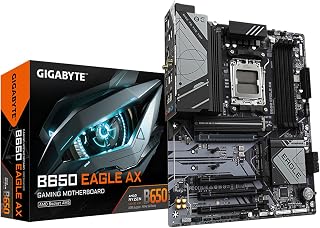
Three M.2 slots, including one PCIe 5.0 and two PCIe 4.0, provide flexible storage expansion for multi-drive configurations without sacrificing SATA ports. The 5200 MHz DDR5 memory support balances cost and performance for AM5 builds targeting mainstream Ryzen 7000 or 8000 series CPUs. WiFi 6E and USB 3.2 Gen2x2 Type-C deliver modern connectivity standards, making this a practical foundation for productivity and gaming builds alike.
Pros
- Four PCIe slots and triple M.2 configuration
- Dual Gigabit Ethernet plus WiFi 6E
- Q-Flash Plus prevents BIOS update failures
- 5-year warranty backs reliability
Cons
- 128GB memory ceiling limits future expansion
- B650 chipset lacks some X870 connectivity features
Four PCIe slots and triple M.2 storage (including PCIe 5.0) give you room to add graphics cards, capture devices, and fast NVMe drives as your needs evolve. The 12+2+2 phase VRM handles Ryzen 7000, 8000, and 9000 series processors with consistent voltage delivery, backed by thermal solutions covering both power delivery and storage areas. DDR5 memory support with AMD EXPO profiles simplifies achieving rated speeds, while dual Gigabit Ethernet ports provide network redundancy or link aggregation options rarely seen at this tier. WiFi 6E rounds out connectivity for wireless setups. USB 3.2 Gen2x2 Type-C on the rear panel handles modern peripherals and high-speed external storage. The UEFI firmware balances accessibility for newcomers with depth for experienced tweakers, and Q-Flash Plus recovery prevents bricked boards during updates. Build quality exceeds expectations for the segment, with solid component selection and a 5-year warranty backing your investment. The B650 chipset covers essential features without the premium positioning of X870, making strategic compromises that rarely affect gaming or content creation workflows.
Socket and Compatibility: Socket AM5, supports AMD Ryzen 7000/8000/9000 series processors. Fully backward compatible with prior generation Ryzen chips on supported BIOS versions.
Memory and Storage: 4 DDR5 DIMM slots, maximum 128GB capacity, 5200MHz support with AMD EXPO profile compatibility. Triple M.2 slots: 1x PCIe 5.0 NVMe, 2x PCIe 4.0 NVMe for total of 3 fast storage drives.
Power Delivery: 12+2+2 phase digital VRM solution with advanced thermal design. 24-pin main power connector supports stable operation under overclocking and heavy workloads.
Connectivity: 4x SATA 3 ports, USB 3.2 Gen2x2 Type-C, 6x USB 3.2 Gen1 Type-A, 4x USB 2.0. Dual Gigabit Ethernet (2 ports) with WiFi 6E module. 1x HDMI display output with integrated audio I/O.
Form Factor and Physical: Standard ATX layout with 4 PCIe expansion slots. Includes Q-Flash Plus utility for BIOS recovery and Smart Fan 6 for custom thermal profiles.
This board targets builders who prioritize expansion slots and storage flexibility over cutting-edge chipset features. It's ideal if you're planning a multi-GPU setup, need several M.2 drives, or want dual wired network connections for streaming or file server duties. The straightforward BIOS and Q-Flash Plus make it suitable for first-time AM5 builders. Avoid it if you need maximum memory capacity beyond 128GB, require more than basic RGB synchronization, or want the latest USB 4.0 connectivity that higher-end boards provide.
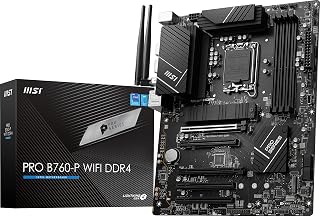
DDR4 memory compatibility makes this board ideal for builders reusing existing RAM from previous Intel systems, significantly reducing total platform cost. Support for 12th, 13th, and 14th Gen Intel processors provides broad CPU flexibility, while PCIe 4.0 and 2.5Gbps LAN cover current performance needs. The WiFi 6E and Bluetooth 5.3 integration eliminates the need for separate adapters, keeping the build streamlined and budget-focused.
Pros
- Rock-solid stability and reliable performance across demanding workloads and gaming scenarios
- Excellent value for money compared to competitor boards at similar price points
- Integrated WiFi 6E connectivity eliminates clutter and extra costs
- Extended heatsinks and M.2 thermal solution keep storage and power components cool
- Supports multi-GPU setups for content creators and professionals with x16 and x4 slots
Cons
- BIOS updates via MSI Center can be risky, requiring Flash BIOS method for reliability
- WiFi drivers must be installed manually after initial setup for connectivity
- Limited to 4 memory slots with 128GB maximum capacity compared to some higher-end boards
The MSI PRO B760-P WiFi DDR4 is a solid mid-range ATX motherboard designed for Intel's latest processors. It's ideal for builders who want modern features without premium pricing, whether you're assembling a productivity workstation, a gaming PC, or a content creation rig.
This board excels in thermal management and connectivity. The extended heatsink design and dedicated M.2 thermal solution keep components running cool during intensive tasks. WiFi 6E and Bluetooth 5.3 are built in, saving you money on separate expansion cards while providing reliable wireless connectivity for everyday use.
Build quality is impressive for the price point. The 6-layer PCB uses 2oz thickened copper and server-grade materials, and the 12+1 Duet Rail power system with dual CPU connectors ensures stable power delivery to newer processors. Users report instant boot times, smooth multitasking between heavy applications, and reliable operation straight out of the box.
The main drawback involves BIOS updates. Some users have experienced issues updating firmware through MSI Center, though the traditional Flash BIOS method works perfectly. Additionally, WiFi drivers require manual installation after setup. The board also maxes out at 128GB RAM across 4 slots, which may limit future upgrades for power users.
Overall, this is a dependable, feature-rich motherboard that delivers excellent performance and stability for the price. If you're building a 12th, 13th, or 14th Gen Intel system and value reliability and wireless connectivity over cutting-edge extras, this board is a smart choice.
Core Specs: Socket LGA 1700, Intel B760 chipset, supports 12th/13th/14th Gen Intel Core, Pentium Gold, and Celeron processors.
Memory: 4 DDR4 DIMM slots, supports up to DDR4-5333MHz (OC), maximum 128GB capacity.
Power Delivery: 12+1 Duet Rail Power System with P-PAK, 8-pin and 4-pin CPU power connectors, Core Boost and Memory Boost features.
Storage and Expansion: 4 SATA 3 ports, 5 PCIe slots (x16 and x4 configuration), M.2 support with thermal shielding. PCIe 4.0 bandwidth reaches 64GB/s.
Connectivity: 1x 2.5Gbps Ethernet, WiFi 6E (802.11ax), Bluetooth 5.3, 1x HDMI, 1x DisplayPort, 12x USB 2.0 ports, 12 total USB ports including USB 3.2 Gen 2.
Form Factor: ATX, dimensions 13.62 inches x 10.06 inches x 2.8 inches, weight 2.7 pounds. Includes 3-year warranty.
Who Should Buy: This motherboard is perfect for budget-conscious builders, content creators needing stable multitasking, gamers with dual-GPU setups, and anyone upgrading from older Intel platforms who wants to reuse existing DDR4 RAM.
Who Should Look Elsewhere: If you need maximum memory capacity (over 128GB), require the absolute latest PCIe 5.0 support, or prefer premium aesthetics and RGB lighting, consider higher-end alternatives. This board prioritizes functionality over frills.
Setup Tips: Plan to install WiFi and chipset drivers from MSI's website after initial boot. For BIOS updates, use the traditional Flash BIOS method rather than MSI Center for best results. The straightforward layout makes installation easy even for first-time builders.
Value Proposition: At this price point, you're getting professional-grade build quality, modern connectivity features, and proven stability with real-world reviews backing up performance claims. The bang for the buck is exceptional for mid-range and enthusiast builds.
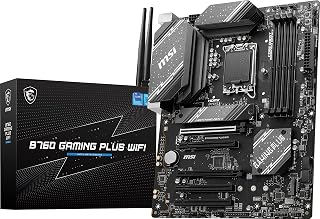
DDR5-6800 memory support extracts maximum performance from 13th and 14th Gen Intel processors, particularly benefiting integrated graphics and memory-intensive applications. The LGA 1700 socket ensures compatibility across three Intel generations, while PCIe 4.0 M.2 slots handle current NVMe drives without bottlenecks. WiFi 6E and 2.5Gbps Ethernet deliver robust networking for online gaming and large file transfers in a well-rounded ATX package.
Pros
- Excellent value for a DDR5-capable gaming motherboard at competitive pricing
- Wi-Fi 6E connectivity ensures next-generation wireless speeds for seamless online performance
- Robust thermal solution with MOSFET pads rated for 7W/mK keeps the system cool under sustained loads
- Extensive connectivity options including PCIe 4.0, M.2 NVMe, and multiple USB 3.2 Gen2 ports
- Wide processor compatibility spanning three generations of Intel chips minimizes upgrade hassles
Cons
- DDR5-only memory support means no backward compatibility with DDR4 systems, requiring new RAM investment
- Mid-range B760 chipset lacks some premium overclocking features found on Z790 boards
- Limited to single Ethernet port for users requiring redundant or high-speed network connections
The MSI B760 Gaming Plus WiFi is a well-rounded DDR5 motherboard designed for gamers and content creators building or upgrading their systems with 12th, 13th, or 14th Gen Intel processors. This ATX board bridges the gap between budget options and premium models, offering genuine gaming performance enhancements without excessive cost.
The standout features include PCIe 4.0 support for high-speed graphics cards, a dedicated M.2 slot rated for lightning-fast NVMe drives, and dual-channel DDR5 memory support at speeds up to 6800MHz. The thermal design is particularly impressive for this price point, with extended heatsinks and specialized thermal pads rated for 7W/mK, ensuring your CPU stays cool during competitive gaming or rendering tasks.
Build quality is solid throughout, with a professional appearance befitting the Gaming Plus lineup. The 2.5G LAN combined with Wi-Fi 6E represents a significant networking upgrade, delivering low-latency connections crucial for online gaming and fast file transfers for creative professionals. The motherboard provides ample I/O with 12 USB ports, 4 SATA connectors, and multiple high-speed connections for modern peripherals and storage devices.
The primary limitation is the DDR5-only memory requirement, which means upgrading forces a complete RAM investment. The B760 chipset sits below Z790 in the performance hierarchy, so extreme overclocking enthusiasts may feel restricted compared to higher-end options. Additionally, a single Ethernet port could be limiting for network-intensive professional setups.
Overall, the MSI B760 Gaming Plus WiFi deserves consideration if you are building a gaming PC or workstation around current-generation Intel processors and want reliable performance with modern connectivity features at a reasonable price point.
Core Specs: Intel B760 chipset, LGA 1700 socket, ATX form factor, supports 12th/13th/14th Gen Intel Core, Pentium Gold, and Celeron processors.
Memory: Dual-channel DDR5 support, 4 DIMM slots, up to 128GB capacity, speeds up to 6800MHz (OC).
Storage and Connectivity: 5 PCIe slots (PCIe 4.0), 1 M.2 NVMe slot (Gen 4 x4), 4 SATA 3.0 ports, 2.5G Ethernet, Wi-Fi 6E with Bluetooth 5.3.
Ports: 1 HDMI, 1 DisplayPort, 12 USB 2.0 ports, 4 USB 3.2 Gen2 ports, 1 optical S/PDIF connector.
Power: 24-pin main power connector, support for 7W/mK thermal pads on MOSFETs and chokes.
Warranty: 3-year manufacturer warranty. Dimensions: 13.06" x 10.01" x 2.01", weight 1.49 kg.
Ideal For: PC gamers building systems around Intel 12th-14th Gen processors, content creators needing multitasking capability with DDR5 memory, streamers and esports enthusiasts wanting reliable networking features, and system builders prioritizing value and stability over extreme premium features.
Consider Alternatives If: You need DDR4 compatibility for budget reasons, require extreme overclocking capabilities found on Z790 boards, operate multiple Ethernet connections simultaneously, or prefer Intel's latest LGA1851 platform for maximum future-proofing.
Best Value Proposition: This motherboard offers the sweet spot between cost and capability, delivering genuine modern features like PCIe 4.0, Wi-Fi 6E, and DDR5 support without premium pricing, making it ideal for mid-range gaming and creative workstations.

Support for DDR5-6400 memory speeds unlocks higher bandwidth for Ryzen processors, benefiting both gaming frame rates and content creation workflows. The 12+2 power stage configuration handles Ryzen 7000 series chips efficiently, while three M.2 slots accommodate multiple NVMe drives for large media libraries or game installations. WiFi 6E and 2.5G LAN ensure strong network performance whether using wired or wireless connections in a home setup.
Pros
- PCIe 5.0 M.2 plus two PCIe 4.0 slots
- WiFi 6E and extensive USB connectivity
- ROG aesthetic with Aura Sync RGB
- Strong VRM cooling for sustained loads
Cons
- Requires BIOS flash for newer Ryzen CPUs
- Some users report LAN driver issues
PCIe 5.0 M.2 support positions your storage for next-generation drives, while two additional PCIe 4.0 M.2 slots and four SATA ports handle extensive libraries and legacy drives. The 12+2 power stage configuration with dedicated VRM cooling manages heat effectively during extended gaming sessions or rendering jobs. WiFi 6E networking reduces latency in competitive online play, and abundant USB connectivity including 3.2 Gen 2x2 Type-C accommodates modern peripherals without hub clutter. ROG aesthetic elements like Aura Sync RGB integration appeal to builders creating visually cohesive systems. Component quality and PCB construction exceed typical budget expectations, with clear header labeling simplifying cable routing during assembly. The B650 chipset balances features against cost, omitting only specialized connectivity that most gaming builds don't require. DDR5 support reaches 6400MHz, providing headroom for performance-focused memory configurations. Physical build quality earns consistent praise from users, with solid mounting and durable connectors throughout.
Socket and Compatibility: AM5 socket supports AMD Ryzen 9000, 8000, and 7000 series processors with BIOS update for newer generations. Supports up to 128GB DDR5 memory at speeds up to 6400 MHz across 4 DIMM slots.
Storage and Expansion: One PCIe 5.0 M.2 slot, two PCIe 4.0 M.2 slots, all with heatsinks. Includes 4 SATA 6Gb/s ports for traditional drives. Four PCIe slots total provide GPU and expansion card compatibility.
Power Delivery: 12+2 power stages with 8+4 pin ProCool connectors. Premium alloy chokes and durable capacitors ensure stable multi-core performance and overclocking headroom.
Connectivity: WiFi 6E, 2.5G LAN, 9 USB ports including USB 3.2 Gen 2x2 Type-C, 1 HDMI output, and optical S/PDIF. Comprehensive I/O covers gaming, streaming, and content creation needs.
Form Factor and Design: ATX motherboard with dimensions 10.8in L x 13.4in H. Massive VRM heatsinks with airflow channels and thermal pads maintain cool operating temperatures. Includes 3-year warranty from ASUS.
This board suits gamers and content creators building mid-range Ryzen systems who want ROG branding and features without flagship pricing. Buy it if you value strong connectivity options, RGB integration, and reliable component quality for gaming-focused builds. It works well if you're comfortable with BIOS updates and basic troubleshooting. Skip it if you need plug-and-play simplicity with zero configuration, want more than 128GB memory capacity, or prefer spending less on a board with fewer aesthetic features and basic connectivity.

The 14+2+1 power phase design delivers stable voltage for Ryzen 9000 series processors under sustained workloads, critical for builders who need reliable performance without premium X670 pricing. PCIe 5.0 M.2 support future-proofs storage expansion, while WiFi 6E and 2.5GbE networking cover both wireless and wired connectivity. The EZ-Latch mechanism simplifies GPU installation, a practical feature for first-time builders assembling systems in this price range.
Pros
- Robust 14+2+1 phase power delivery handles high-end Ryzen CPUs reliably
- PCIe 5.0 M.2 slot and DDR5 support with AMD EXPO for future-ready performance
- WiFi 6E, 2.5GbE ethernet, and multiple USB-C ports cover modern connectivity needs
- Q-Flash BIOS update works without CPU installation
Cons
- Only four SATA ports limit traditional storage expansion
- Single HDMI output restricts multi-monitor configurations
The 14+2+1 phase power design with 70A stages and 8-layer PCB construction provides stable voltage delivery for Ryzen 7000, 8000, and 9000 series processors, ensuring you won't bottleneck even higher-end CPUs. PCIe 5.0 support for the primary M.2 slot future-proofs storage performance, while DDR5 compatibility with AMD EXPO lets you maximize memory speeds up to 128GB across four DIMM slots. Thermal management is thoroughly addressed through 6mm heatpipes and comprehensive heatsink coverage, preventing throttling during intensive workloads. Connectivity includes WiFi 6E and 2.5GbE ethernet for modern networking, plus front and rear USB-C ports via USB 3.2 Gen 2. The Q-Flash feature simplifies BIOS updates without CPU installation, and the EZ-Latch Plus system makes GPU swaps tool-free. PCIe ultra-durable armor reinforces the graphics card slot, while M.2 thermal guards protect SSDs under load. This board brings premium-tier features down to a budget-friendly price point without compromising build quality.
Processor Support: AMD Socket AM5, compatible with Ryzen 7000, 8000, and 9000 series.
Memory: 4 DDR5 DIMM slots, up to 128GB maximum, 4400 MHz native speed, AMD EXPO and Intel XMP support.
Power Delivery: 14+2+1 power phases, 70A per stage, 8-layer 2X copper PCB.
Storage: 4 SATA III ports, 1 PCIe 5.0 NVMe M.2 slot, 1 PCIe 4.0 NVMe M.2 slot.
Connectivity: WiFi 6E, 2.5GbE ethernet, 12 USB ports (including USB 3.2 Gen 2 with front/rear USB-C), 1 HDMI output.
Expansion: 3 PCIe slots, comprehensive thermal armor.
Warranty: 5 years with online registration.
This motherboard suits gamers and content creators building mid-range to high-end Ryzen systems who need modern connectivity and solid power delivery without overspending. It works particularly well for users planning DDR5 adoption, PCIe 5.0 storage, or WiFi 6E networking. Skip this if you require extensive SATA storage arrays beyond four drives, need multiple video outputs for complex display setups, or want the absolute top-tier features found on X870 chipsets. Builders focused strictly on basic functionality without wireless or advanced connectivity may find better value elsewhere.
Buying Guide
Socket Compatibility and Platform
Your processor choice dictates which socket you need. AMD’s AM5 platform supports Ryzen 7000, 8000, and 9000 series chips, while Intel’s LGA 1700 works with 12th, 13th, and 14th generation Core processors.
AM5 boards like the ASUS TUF Gaming B650E-PLUS WiFi AMD B650 ATX bring PCIe 5.0 readiness and DDR5 support as standard. Intel B760 options such as the MSI PRO B760-P WiFi DDR4 ProSeries Motherboard offer flexibility with DDR4 compatibility, which can lower your initial memory investment.
Power Delivery and VRM Quality
Voltage regulator modules determine how efficiently your board can feed power to demanding processors. A robust VRM keeps temperatures manageable and maintains stable performance under sustained loads.
The GIGABYTE B650 AORUS Elite AX AMD AM5 ATX features a 14+2+1 phase design with 70A power stages, while the ASUS ROG Strix B650-A Gaming WiFi AMD B650 AM5 delivers 12+2 phases with substantial heatsinks. These configurations handle mid-range and even some high-end processors without throttling.
Storage and Expansion
Modern builds demand fast storage, and M.2 slots have become essential. Look for boards offering at least two M.2 slots with heatsinks to prevent thermal throttling during intensive file operations.
Several options here provide PCIe 5.0 M.2 support, future-proofing your system for next-generation SSDs. The GIGABYTE B650 Eagle AX AM5 LGA 1718 ATX includes one PCIe 5.0 slot and two PCIe 4.0 slots, giving you flexibility for current drives and room to upgrade. When planning a GPU upgrade, verify your board includes a full-length PCIe slot with proper mechanical reinforcement.
Connectivity and Networking
Wireless capability eliminates cable routing headaches, especially in spaces where ethernet runs aren’t practical. WiFi 6E support appears across several boards in this range, delivering faster speeds and reduced latency compared to older standards.
Rear I/O matters for daily convenience. USB 3.2 Gen 2×2 Type-C ports enable rapid file transfers to external drives, while multiple USB-A connections handle peripherals without requiring a hub. The MSI B760 Gaming Plus WiFi Gaming Motherboard pairs WiFi 6E with 2.5Gb ethernet, giving you wired and wireless options for demanding workloads. If you’re building a system with high-speed DDR5 memory, confirm your board supports the speeds you plan to run.
Final Thoughts
The motherboards in this range prove you don’t need to spend extravagantly to build a capable system in 2026. For AMD builders seeking a balance of features and upgrade potential, the ASUS TUF Gaming B650E-PLUS WiFi AMD B650 ATX delivers PCIe 5.0 readiness and robust power delivery at an accessible price point. Intel users who want to keep memory costs down while maintaining strong performance should consider the MSI PRO B760-P WiFi DDR4 ProSeries Motherboard, which supports DDR4 and includes WiFi 6E without compromise. Each board here brings specific strengths to different build scenarios, so match your choice to your processor platform, connectivity needs, and future upgrade plans.
Frequently Asked Questions
Can these motherboards handle overclocking?
Yes, most B650 and B760 boards support memory overclocking through AMD EXPO or Intel XMP profiles. Processor overclocking capabilities vary by chipset, with B650 offering more flexibility for CPU tuning than B760. The VRM configurations on boards like the GIGABYTE B650 AORUS Elite AX provide adequate headroom for moderate overclocks on mid-range processors.
Do I need a BIOS update for newer processors?
AMD Ryzen 9000 series and Intel 14th generation processors may require a BIOS update depending on when your motherboard was manufactured. Most boards include BIOS FlashBack or Q-Flash features that let you update firmware without a CPU installed. Check the manufacturer’s website for the latest BIOS version before purchasing if you’re using the newest processor generation.
What’s the real difference between DDR4 and DDR5 boards in 2026?
DDR5 offers higher bandwidth and better efficiency, but DDR4 remains viable for most workloads in 2026. DDR4 boards cost less upfront and memory prices are more favorable, making them attractive for budget builds. DDR5 boards provide better future-proofing and measurable performance gains in memory-intensive tasks like video editing or heavily modded gaming. For general use and mainstream gaming, both perform well. If you’re also considering a graphics card upgrade, allocate your budget accordingly since GPU choice typically impacts gaming performance more than memory type.
Are WiFi models worth the extra cost?
WiFi-equipped motherboards save you the hassle of buying a separate adapter and eliminate an extra device taking up a PCIe slot. WiFi 6E models offer faster speeds, lower latency, and access to the 6GHz band for reduced interference in crowded wireless environments. If your router supports WiFi 6E and you can’t run ethernet cable to your PC, the integrated solution is both cleaner and more reliable than USB dongles.


Write Your Review
No reviews yet. Be the first to share your experience!