

Picture this: you’re in the middle of a video call or a critical file transfer when the power flickers and your entire network goes dark. A quality UPS keeps your router, modem, switch, and NAS running through brief outages and protects them from the surges that can quietly fry sensitive electronics. Whether you’re running a home office or managing a small business network, the right uninterruptible power supply is one of the smartest investments you can make for your setup.
This guide breaks down the six best UPS options for network equipment available right now. We’ve evaluated each unit on runtime, outlet count, voltage regulation, and how well it handles the specific demands of always-on networking gear. If you’re also building out your network with new hardware, check out our picks for the best network switch for home to pair with your new backup power setup.
Quick answer
This guide compares 6 picks, with APC BE425M 425VA Compact UPS Battery Backup ranked first.
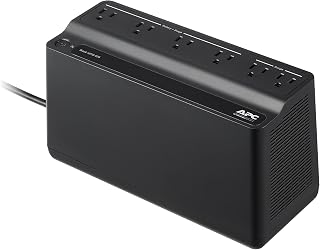
The 255-watt capacity handles lightweight network gear like a single router and modem without overspending on unused power. Its compact form factor fits easily on a desk or shelf near your equipment, while the 8-hour recharge time means it recovers quickly after brief outages. The 6-amp rating provides enough overhead for typical home networking setups that draw minimal continuous power.
Pros
- Dedicated outlet split between battery backup and surge-only
- Building Wiring Fault Indicator flags dangerous wall wiring
- Compact size fits tight spaces near routers and modems
- Audible alarm and LED status keep you informed during outages
Cons
- 255W capacity too low for computers or monitors
- Only about 15 minutes of runtime at 100W load
If your network gear is the one thing that absolutely cannot go dark, the BE425M earns its spot on a short list. This compact APC unit splits its outlets between battery backup and pure surge protection, so you can dedicate backed-up power specifically to a router and modem while surge-only outlets handle secondary gear. At a 100W load it holds roughly 15 minutes, plenty of runway to keep a connection alive through a short blip or shut down cleanly during a longer one. The 180-joule surge rating adds a layer of defense against the electrical spikes that quietly wear down networking hardware over time. What makes it stand out for this use case is the Building Wiring Fault Indicator, a safety check most competing units skip entirely. Its small footprint means it tucks behind a router or modem without stealing desk space. For anyone whose priority is uptime for connectivity rather than powering a full workstation, this is a lean, purpose-built option.
Power Specifications: 425VA output with 255W maximum power capacity. Input and output voltage: 120V AC, 6A. Battery charge time: 8 hours for full recharge. Runtime approximately 4 hours at minimal load, 15 minutes at 100W load.
Outlets and Protection: 6 total outlets, including 4 with battery backup and surge protection plus 2 surge-only outlets. 180-joule surge protection rating against power spikes and lightning. NEMA connector type with Type B 3-pin North American plug.
Physical and Battery: Dimensions 9.98W x 5.52H x 4.13D inches, weighing 5.7 pounds. Lead-acid battery with approximately 4-year service life. Compact form factor supports wall mounting or floor placement in tight spaces.
Warranty and Certification: 3-year limited warranty with $75,000 equipment protection policy. UL certified. Model BE425M, ASIN B01HDC236Q.
Buy this if your goal is strictly keeping a router, modem, or small networking setup online during brief outages, especially in a home office or remote work setup. Skip it if you need to back up a desktop, monitor, or NAS device, since 255 watts and 15 minutes of runtime won't cover heavier loads. It's built for connectivity continuity, not general-purpose desktop protection.

With 330 watts of maximum power, this unit supports a router, modem, and small network switch simultaneously. The 12-amp rating gives headroom for startup surges common in networking hardware. Its compact design saves space in equipment closets or home offices, and the model is specifically marketed for routers and NAS devices, indicating appropriate runtime for these applications.
Pros
- 3 to 4 hours of real-world runtime for routers and modems
- 490-joule surge rating protects against voltage spikes
- User-replaceable battery cartridge extends unit lifespan
- Built-in USB port for charging phones during outages
Cons
- Rated runtime of just 23 minutes at 100W load
- Only 1.5A output current limits it to low-draw devices
For network equipment specifically, the BE600M1 offers something rare: real-world runtime that far outpaces its rated spec. While the official rating is 23 minutes at 100W, routers and modems draw so little power that verified users report 3 to 4 hours of actual backup during outages. That is a meaningful difference if your goal is staying connected, not just shutting down gracefully. Five outlets carry full battery backup and surge protection, ideal for splitting power between a router, modem, and maybe a small switch, while two surge-only outlets cover secondary devices. The 490-joule surge rating is more than double the entry-level option in this lineup, giving stronger protection against voltage spikes that can quietly degrade networking hardware. A user-replaceable battery cartridge means the unit has a longer useful life than sealed alternatives, and the built-in 1.5A USB port keeps a phone charged when you might need it most during an outage. For anyone building a network-focused backup setup, this hits a strong balance of runtime, protection, and long-term serviceability.
Buy this if you want a UPS focused on keeping networking gear, and only networking gear, running for hours rather than minutes during outages. It also suits anyone who wants to avoid replacing the whole unit when the battery eventually wears out. Skip it if you need to power a computer or other higher-draw device, since the extended runtime advantage only applies to low-power equipment like routers and modems.
Power Capacity: 600VA, 330W maximum output
Battery Type: Lead-acid, 12V 6.5Ah (user-replaceable)
Runtime: 23 minutes at 100W load, typically 3-4 hours with router and modem
Outlets: 7 total (5 battery-backed, 2 surge-only)
Surge Protection: 490 joules
USB Charging: 1.5A output
Charge Time: 10 hours (full battery)
Dimensions: 10.79 x 4.13 x 5.47 inches
Weight: 7.5 pounds
Warranty: 3 years repair or replace

The 900-watt capacity and 15-amp rating support larger network closets with multiple switches, patch panels, and access points. Its intelligent LCD panel displays runtime estimates and power draw, helping you monitor whether your equipment stays within safe operating limits during outages. The mini-tower form factor fits standard equipment racks or sits beside server cabinets.
Pros
- 900W capacity covers computers and network gear together
- AVR corrects voltage sags without draining the battery
- 12 outlets plus dual USB ports for flexible setups
- Color LCD display shows real-time power status
Cons
- Only about 3 minutes of runtime, suited for shutdowns not extended backup
- Simulated sine wave output may not suit all sensitive devices
The CP1500AVRLCD3 makes sense for this list when your network setup includes more than just a router and modem, think a desktop, NAS, or full home office rig that needs protecting alongside your connectivity gear. Its 900W capacity and 1500VA rating give it far more headroom than compact backup units, and Automatic Voltage Regulation quietly corrects minor voltage sags before they ever touch the battery, which matters in areas with frequent brownouts that can otherwise disrupt sensitive network hardware. Twelve outlets split evenly between battery backup and surge protection, plus dual USB ports, give you room to organize a router, modem, computer, and peripherals without running out of connections. The color LCD display makes it easy to monitor power conditions at a glance rather than guessing from LED patterns. Runtime is short at 3 minutes, so this is built for a clean shutdown during longer outages rather than extended standalone operation, but for equipment protection and voltage stability it covers more ground than smaller network-only backups.
Power Capacity: 1500VA / 900W output
Output Type: Simulated sine wave
Outlets: 12 total (NEMA 5-15R): 6 battery backup and surge protected, 6 surge protected only
USB Ports: 1 Type-A, 1 Type-C for device charging
Input/Output Voltage: 120V AC, 15A maximum
Battery Runtime: 3 minutes at full load
Battery Charge Time: 8 hours to full capacity
Battery Life: 3 years average
Surge Protection: 1500 Joules
Form Factor: Mini-tower
Dimensions: 13.78 inches deep x 3.94 inches wide x 10.2 inches high
Weight: 23.8 pounds
Operating Temperature: 32 to 104 degrees Fahrenheit
Certifications: UL listed, Energy Star compliant, RoHS compliant
Warranty: 3-year limited warranty including battery coverage
Equipment Guarantee: $500,000 Connected Equipment Guarantee
Buy this if your network setup shares space with a computer, NAS, or other equipment that needs both surge protection and AVR against voltage sags. It suits home offices with mixed hardware rather than a router-only setup. Skip it if you only need to keep a modem and router online during outages, since smaller compact units offer longer relative runtime for that specific job at a fraction of the size.

Pure sine wave output protects sensitive networking equipment with switching power supplies from potential interference or premature failure. The 900-watt capacity handles prosumer setups including managed switches and small business routers. While the 16-hour battery charge time is lengthy, the clean power output justifies the tradeoff for equipment sensitive to wave distortion.
Pros
- Pure sine wave output protects sensitive network hardware and Active PFC power supplies
- 73-minute runtime at 100W supports small network stacks through extended outages
- Coaxial and Ethernet surge protection defends connected network lines
- Automatic Voltage Regulation handles grid fluctuations without battery drain
Cons
- Tower form factor lacks rack-mounting options for server closets
- 27.6-pound weight and desk footprint require dedicated floor or shelf space
Network equipment demands clean, stable power, and the APC BR1500MS2 delivers exactly that with its pure sine wave output and 1500VA/900W capacity. Line-interactive topology with Automatic Voltage Regulation handles brownouts and spikes without switching to battery, keeping routers, switches, managed PoE devices, and network-attached storage running smoothly through minor grid instability. The 6 battery-backed outlets accommodate a full rack of networking gear, while dedicated coaxial and Ethernet surge protection guards against line-borne threats. Runtime scales impressively: 73 minutes at 100W loads covers typical small office network stacks through extended outages, while the 4-minute full-load performance handles brief interruptions. The LCD panel provides real-time monitoring of load and battery health, critical for managing network uptime. At 27.6 pounds in a tower form, it requires floor or shelf mounting rather than rack integration. User-replaceable batteries and a 5-year service life make long-term ownership practical for dedicated network closets or home lab environments where equipment protection justifies the footprint.
Best for home offices and small businesses running managed switches, PoE access points, NAS systems, and other network infrastructure requiring pure sine wave power and extended runtime. The capacity handles 4 to 6 networked devices comfortably. Skip this if you need rackmount form factor, run only basic consumer routers and modems that a smaller UPS can cover, or operate in spaces where the 27.6-pound tower footprint creates placement challenges.
Real-World Runtime Expectations: The listed 4-minute runtime is at full 900W load. At typical office loads of 300-500W, expect 15-30 minutes. At light loads under 100W, the unit can run for over an hour, making it excellent for saving work and gracefully shutting down systems.
What It Can Power: A desktop computer and monitor typically draw 300-400W combined. Add a router (15W), external drive (10W), and network equipment, and you're at 400-500W total. This gives you 20-40 minutes of runtime, plenty of time to save files and power down.
Best Practice: Use battery-backed outlets for your core devices (PC, monitor, router, NAS) and reserve surge-only outlets for chargers and peripherals that don't need UPS backup during outages.

At 260 watts maximum power, this standby unit covers basic setups like a cable modem and wireless router. The 2.17-amp rating suits low-draw devices typical in residential networking. Its compact footprint keeps it unobtrusive near your internet entry point, though the standby topology means a brief transfer time when switching to battery during outages.
Pros
- Compact 3.8-pound footprint fits easily near network entry points
- Eight outlets with four on battery backup handle typical home network setups
- Transformer-spaced outlets accommodate network equipment wall adapters
- Budget-friendly protection for basic modem and router combinations
Cons
- One-minute runtime only covers momentary outages, not extended blackouts
- Simulated sine wave may not suit high-end managed network equipment
For basic network connectivity during power failures, the CyberPower ST425 keeps your modem, router, and one additional device running just long enough to maintain connection through brief outages. The 425VA/260W standby UPS provides approximately one minute of battery power, sufficient for riding out momentary grid hiccups that would otherwise reset your network equipment and drop active sessions. Four battery-backed outlets handle a typical home network setup: cable or fiber modem, wireless router, and a VoIP adapter or small switch. The remaining four surge-only outlets protect secondary devices. At 3.8 pounds and 8.3 inches wide, it mounts easily near your network entry point without occupying valuable equipment space. The compact design and transformer-spaced outlets accommodate wall warts common in network gear. LED indicators show power status at a glance. The simulated sine wave output works fine for standard networking hardware but lacks the refinement premium equipment may require. Runtime is strictly emergency-grade, designed for shutdown protection rather than sustained operation through longer blackouts.
Power Specifications: 425VA/260W standby capacity with simulated sine wave output. Input voltage ranges from 47 to 63 Hz on 120V AC standard North American power. Maximum output wattage is 260W with 2.17A current output.
Outlets and Connections: Eight total NEMA 5-15R outlets consisting of four battery backup and surge protected outlets plus four surge-protected-only outlets. Accepts standard Type B (3-pin) North American power plugs via right-angle input connector with five-foot power cord.
Protection and Safety: 890 Joules surge protection rating defends against lightning-induced surges and electrical spikes. UL safety certified and tested to meet or exceed industry standards. Includes LED power-on indicator and wiring fault detection.
Physical and Performance: Compact plastic enclosure measures 3.2 inches deep by 8.3 inches wide by 4.5 inches high, weighing just 3.8 pounds. Battery average life is three years. Operating temperature range spans 32 to 104 degrees Fahrenheit.
Ideal for home users and renters who need basic network uptime protection for modem, router, and one auxiliary device during brief power interruptions. Works well in apartments or home offices where space is tight and network needs are straightforward. Skip this if you run managed switches, PoE devices, NAS systems, or need more than one minute of runtime for graceful network shutdown during extended outages.

The 900-watt capacity and 7.5-amp continuous rating accommodate mid-sized networks with several devices including PoE switches that power access points or IP cameras. Its tower form factor provides more battery capacity than compact models, extending runtime for critical infrastructure. The 8-hour recharge ensures the unit is ready for the next outage relatively quickly.
Pros
- Automatic Voltage Regulation protects against brownouts without draining battery
- 68-minute runtime at 100W sustains small network stacks through typical outages
- LCD display provides real-time monitoring of load and battery status
- User-replaceable battery extends unit lifespan beyond 3 years
Cons
- Stepped sine wave output may not suit premium managed network equipment
- Tower form factor requires floor or shelf space rather than rack integration
The APC BX1500M balances network protection and affordability with its 1500VA/900W line-interactive design and Automatic Voltage Regulation. Five battery-backed outlets support a modest network stack: router, managed switch, cable modem, and a couple of PoE devices or a small NAS. AVR technology corrects voltage fluctuations without engaging the battery, protecting network gear from the gradual degradation brownouts and overvoltages cause while preserving runtime for actual outages. At 100W load, the 68-minute runtime sustains a home office network through most residential power interruptions, providing enough window to complete critical transfers or remote sessions before graceful shutdown. The LCD display tracks battery charge, load percentage, and input voltage in real time, useful for monitoring network infrastructure health. Ten total outlets and tower form factor suit small office or home lab deployments where a dedicated network shelf or closet floor space is available. User-replaceable battery design extends the unit's operational life beyond the typical 3-year battery cycle. The stepped sine wave output handles standard networking hardware but may not suit premium managed equipment or servers with Active PFC supplies.
Power Capacity: 1500VA / 900W maximum output
Runtime: Up to 68 minutes at 100W load, 5 hours at typical home office load
Battery: Lead-acid, 3-year average lifespan, user-replaceable (APCRBC124 sold separately)
Charge Time: 8 hours to full capacity
Outlets: 10 total (5 battery backup + 5 surge-only), NEMA 5-15R standard receptacles
Surge Protection: 789 joules with coaxial and Ethernet data line protection
Voltage Regulation: Automatic Voltage Regulation (AVR) corrects +/- 13% variance
Input Voltage: 120V AC, 57-63 Hz
Output Voltage: 120V AC (stepped sine wave)
Dimensions: 15.04" (D) x 3.94" (W) x 9.84" (H)
Certifications: UL 508, Energy Star, RoHS, REACH
Warranty: 3 years
Includes: USB cable, coaxial cable, user manual
Right for home offices and small businesses protecting 4 to 5 network devices including routers, switches, modems, and basic NAS or server hardware where budget and stepped sine wave compatibility align. The 68-minute runtime and AVR suit environments with frequent but brief power quality issues. Skip this if you require pure sine wave for high-end managed gear, need rackmount form, or run only a modem and router that smaller units cover adequately.
Buying Guide: What to Look for in a UPS for Network Equipment
VA Capacity and Runtime
VA (volt-ampere) rating determines how much load a UPS can handle and for how long. For a basic home network with just a router and modem, a 425VA unit like the APC BE425M UPS Battery Backup and Surge Protector or the CyberPower ST425 Standby UPS Battery Backup delivers up to 15 minutes of runtime at a modest load, which is plenty of time to ride out a brief outage.
If you’re running a NAS, a managed switch, and multiple access points, step up to a 1500VA model. Units like the APC BX1500M UPS Battery Backup & Surge Protector can sustain your full network rack for over an hour at lighter loads, giving you real breathing room during extended outages.
Topology: Standby vs. Line-Interactive
Standby UPS units are the most affordable option. They sit idle until power fails, then switch to battery. That brief transfer time is usually imperceptible for routers and modems, making units like the CyberPower ST425 a solid value pick for basic home networking.
Line-interactive units, such as the CyberPower CP1500AVRLCD3 Intelligent LCD UPS, use Automatic Voltage Regulation (AVR) to correct brownouts and overvoltages without ever touching the battery. This matters a lot if your area sees frequent voltage sags, since those chronic fluctuations cause long-term damage to networking hardware. For a deeper look at the gear these UPS units protect, browse our best access points for home roundup.
Pure Sine Wave vs. Simulated Sine Wave
Most network gear runs fine on simulated sine wave output. Routers, modems, and unmanaged switches are not particularly sensitive to waveform shape, so a simulated sine wave UPS gets the job done at a lower cost.
However, if your network rack includes a NAS with modern power supplies or any Active PFC equipment, pure sine wave output is the safer choice. The APC BR1500MS2 Pure Sine Wave UPS Battery Backup is purpose-built for this use case, delivering clean power that won’t stress sensitive components during the switch to battery.
Outlets, Data Line Protection, and Charging Ports
Count your connected devices before choosing a unit. Network setups often include a router, modem, switch, NAS, IP camera, and maybe a VoIP adapter. A UPS with only four battery-backed outlets can fill up fast. The APC BR1500MS2 and APC BX1500M both offer ten total outlets, with dedicated battery-backup positions for your most critical gear.
Built-in Ethernet and coax surge protection is worth paying attention to. Surges travel through data lines just as easily as power lines, and many people overlook this. Models like the APC BX1500M and APC BR1500MS2 include both coaxial and Ethernet surge protection ports, which adds a meaningful layer of defense for your network infrastructure. A USB charging port is a handy bonus that lets you keep a phone or tablet powered without using a protected outlet. If you’re expanding your home network alongside a new UPS, our guide to the best modem router combo units is worth a read.
Final Thoughts
For most home network setups, the APC BE600M1 UPS Battery Backup & Surge Protector hits a practical sweet spot with reliable battery backup, solid runtime, and a USB charging port in a compact form factor. If you’re running a more demanding setup with a NAS or Active PFC equipment, the APC BR1500MS2 Pure Sine Wave UPS Battery Backup is the clear upgrade, delivering clean pure sine wave output, AVR, and enough capacity to keep a full rack alive through nearly any short-term outage.
Frequently Asked Questions
Do I really need a UPS for my home router and modem?
If you work from home, rely on VoIP calls, or simply can’t afford unexpected downtime, a UPS is worth it. Even a compact 425VA unit keeps your router and modem running through short outages and protects them from the voltage spikes that quietly degrade hardware over time. In 2026, with so many households depending on a stable connection for work and school, it’s a low-cost insurance policy that pays for itself quickly.
How long will a UPS keep my network running during a power outage?
Runtime depends on the UPS capacity and the total wattage of your connected devices. A 425VA unit powering just a router and modem can typically sustain them for 15 to 20 minutes. A 1500VA unit running the same light load could last well over an hour. The key is to calculate your actual load and match it to the UPS wattage rating rather than just the VA number.
What is the difference between a standby UPS and a line-interactive UPS?
A standby UPS stays inactive until power fails, then switches to battery within a few milliseconds. A line-interactive UPS actively regulates incoming voltage using AVR, correcting brownouts and overvoltages before they reach your equipment, without depleting the battery. For network equipment in areas with unstable power, line-interactive is the better long-term choice. You can learn more about protecting your full home network setup in our guide to the best WiFi extenders for gaming, which pairs well with a solid backup power strategy.
Can I use any UPS with a NAS drive?
Most modern NAS devices use power supplies with Active Power Factor Correction (Active PFC), which can behave unpredictably when paired with a simulated sine wave UPS. For NAS drives, a pure sine wave UPS like the APC BR1500MS2 is strongly recommended to avoid potential data corruption or hardware stress during the switchover to battery. Always check your NAS manufacturer’s documentation for power supply compatibility before choosing a UPS in 2026.


Write Your Review
No reviews yet. Be the first to share your experience!