

You’re building a gaming PC and you’ve narrowed it down to AMD’s Ryzen lineup, but now you’re stuck at a fork in the road: Ryzen 7 or Ryzen 9. It’s one of the most common dilemmas for PC builders right now, and the answer isn’t as obvious as it used to be. If you’re pairing your chip with a capable GPU and pushing for high frame rates, the core count advantage of Ryzen 9 doesn’t always translate to better in-game performance.
This guide walks you through the best options from both families, from budget-friendly Ryzen 7 chips to the flagship Ryzen 9 powerhouses. Whether you’re gaming at 1080p, streaming, or running a hybrid gaming-and-creation workstation, you’ll find a clear recommendation here. If you’re also evaluating your GPU pairing, check out our guide on the best GPU for Baldur’s gate 3 for matching hardware advice.
Quick Comparison
Ratings reflect the most recent data pull. Check each listing for current price and availability.
Quick answer
This guide compares 10 picks, with AMD Ryzen 9 7900X 12-Core Processor 5.6GHz Socket AM5 ranked first. AMD Ryzen 7 7800X3D 8-Core Processor 5nm Socket AM5 holds the highest customer rating among them.

For readers who want Ryzen 9's multitasking muscle without the 3D V-Cache premium, 12 cores and 24 threads at 5.6 GHz handle gaming plus background apps capably. The 170 watt wattage signals it favors raw throughput over efficiency, fitting a build where gaming shares the CPU with streaming or compiling tasks.
Pros
- 12 cores and 24 threads for serious multitasking beyond gaming
- 5.6 GHz boost clock keeps gaming performance smooth
- 76 MB cache helps both single and multi-threaded tasks
- Socket AM5 keeps you on a current platform
Cons
- 170W TDP needs a more capable cooler than basic tower options
- Overkill if gaming is the only demanding task on the machine
If you're deciding between Ryzen 7 and Ryzen 9 for gaming, the 7900X is the case for going bigger. Its 12 cores and 24 threads push well past what gaming alone needs, which matters if your sessions double as streaming, recording, or running Discord and a browser full of tabs in the background. The 5.6 GHz boost clock keeps frame rates sharp, so you're not sacrificing gaming performance to get there. Where it separates itself from Ryzen 7 is headroom: video editing, 3D rendering, or compiling in the background won't bog down your gameplay. The 76 MB of cache and Zen 4 architecture give it an edge in multi-threaded scenarios that a Ryzen 7 chip would struggle to match. Socket AM5 keeps it on current platform, so you're not buying into aging infrastructure. The tradeoff for that extra core count is a 170W TDP that demands a proper cooling setup. For gamers who also create, stream, or multitask heavily, the 9 justifies itself over the 7.
Architecture and Cores: 12 cores, 24 threads, Zen 4 architecture, 5nm process technology
Clock Speeds: Base 4.7 GHz, Max Boost 5.6 GHz
Cache: 12 MB L2 Cache, 64 MB L3 Cache (76 MB total)
Socket: Socket AM5, compatible with AM5 motherboards
Power and Thermal: 170W TDP, integrated Radeon Graphics
Compatibility: Linux and Windows platforms
Packaging: Includes processor only, cooler sold separately
Buy this if gaming is one of several demanding things you do on the same PC, like streaming, editing, or rendering alongside play. The extra cores pay off in those mixed workloads. Skip it if you're building a dedicated gaming rig with no multitasking ambitions; a Ryzen 7 chip will handle frame rates just as well for less cooling hassle and lower power draw.

Readers weighing Ryzen 9 for gaming plus streaming or editing will appreciate 12 cores and 24 threads clocked at 4.4 GHz. That extra thread count helps when a game runs alongside OBS or a Discord overlay, giving this chip an edge over Ryzen 7 options whenever the use case stretches beyond pure gaming into multitasking.
Pros
- 12 cores and 24 threads for serious multitasking
- Smooth triple-digit frame rates in demanding games
- Unlocked multiplier for enthusiast tuning
- Mature Socket AM5 platform support
Cons
- Runs warm under sustained load, needs quality cooling
- No cooler included despite 120-watt power draw
If this comparison comes down to whether you actually need Ryzen 9 over Ryzen 7, the 9900X is the clearest argument for stepping up. Twelve cores and 24 threads on Zen 5 give it genuine headroom beyond gaming, with a 4.4 GHz base and unlocked multiplier for enthusiasts who want to tune further. In gaming specifically, it holds its own at smooth triple-digit frame rates, so you are not sacrificing gaming performance to gain the extra cores. Where it separates from Ryzen 7 chips is multitasking and production work: compile jobs and heavier workflows benefit directly from the thread count in a way cache-heavy gaming chips cannot match. The catch for a gaming-focused buyer is the 120-watt power draw and reported temperatures near 95 degrees Celsius under sustained load, which means a quality aftermarket cooler is mandatory, not optional. Socket AM5 compatibility is mature, though 800-series boards need current BIOS versions for full support. For this article's question, the 9900X earns its place when gaming is only part of what the build needs to do.
Consider this if you want strong gaming performance plus real multithreaded capability for development, rendering, or heavy multitasking. It fits builders planning to invest in serious cooling. Skip it if gaming is your only priority and you are not using the extra cores, since a cache-focused Ryzen 7 chip may deliver similar or better frame rates with less thermal overhead.
Processor Core Specs: 12 cores, 24 threads, Zen 5 architecture, base clock 4.4 GHz, max boost 5.6 GHz, 76 MB total cache (12 MB L2 + 64 MB L3).
Platform & Memory: Socket AM5, DDR5-5600 support, PCIe 5.0 capable on select motherboards, 120-watt TDP.
Compatibility: Windows 11 and Linux compatible, unlocked for overclocking, requires Socket AM5 motherboard (700/800 series recommended).
Package: Processor only, cooler not included, 3-year manufacturer warranty included.
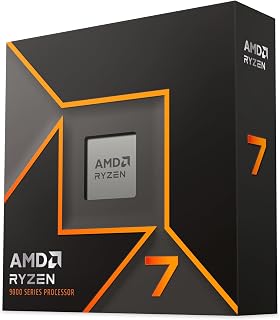
Budget-focused readers comparing Ryzen 7 to Ryzen 9 will find 8 cores and 16 threads on Socket AM5 enough for most current titles, even at a modest 3.8 GHz base. Its 105 watt rating keeps cooling simpler than Ryzen 9 chips, a practical point for anyone building a gaming rig without a high-end cooler.
Pros
- 5.5 GHz boost clock supports 100+ FPS in demanding games
- Lower 105W TDP eases cooling and PSU requirements
- 16 threads handle streaming and editing alongside gaming
- AM5 platform supports future upgrades and PCIe 5.0
Cons
- No included cooler, requires an aftermarket solution
- No integrated graphics, so a dedicated GPU is required
In the Ryzen 7 vs Ryzen 9 conversation, the 9700X represents the practical middle ground: Ryzen 7 gaming performance without stretching into Ryzen 9 power and cooling demands. Its 5.5 GHz boost clock and 40MB L3 cache deliver 100+ FPS in demanding games, which covers the vast majority of gaming needs without the 170W thermal load that comes with higher-end Ryzen 9 chips. At 105W TDP, it's noticeably easier to cool and power than its bigger sibling, making it a sensible pick if your case or PSU isn't built around a high-wattage CPU. The 8-core, 16-thread layout also leaves room for streaming or video editing on the side, so you're not purely gaming-limited. It ships without a cooler, so factor an aftermarket solution into your build. For anyone comparing Ryzen 7 against Ryzen 9 and deciding they don't need 16 cores to hit strong frame rates, the 9700X makes that case well, especially if efficiency and lower cooling demands matter as much as raw numbers.
Cores and Threads: 8 cores, 16 threads on Zen 5 architecture
Clock Speed: 3.8 GHz base, 5.5 GHz max boost (unlocked)
Cache: 40 MB L3 cache, 8 MB L2 cache
Power Consumption: 105 watts TDP
Memory Support: DDR5-5600
Socket: Socket AM5 with PCIe 5.0 support on select motherboards
Warranty: 3-year manufacturer warranty
Buy this if you want strong gaming performance without the heat and power demands of a Ryzen 9 chip, especially for 1440p gaming or light content creation on the side. Skip it if you're set on maximum multi-threaded performance for heavy production work, or if you want integrated graphics, since this processor requires a dedicated GPU and a separate cooler.

AMD Ryzen 7 7800X3D 8-Core Processor 5nm Socket
Gamers chasing frame rates without overspending on cores will like the 3D V-Cache design paired with 8 cores and 16 threads at 4.2 GHz. Most games still lean on a handful of fast cores rather than dozens of threads, so this chip's cache-heavy architecture translates directly into smoother minimums, making it the benchmark Ryzen 7 gaming CPUs get measured against.
Pros
- 96 MB L3 cache boosts gaming frame rates
- Runs cooler than many competing chips
- 8-core, 16-thread setup handles multitasking well
- Integrated Radeon Graphics for basic use
Cons
- Requires a Socket AM5 motherboard
- Fewer cores than Ryzen 9 options for heavy multithreaded work
In the Ryzen 7 vs Ryzen 9 debate, the 7800X3D makes the case for the Ryzen 7 side on pure gaming merit. Its 96 MB of L3 cache is the key number here: that cache depth is what feeds frame rates rather than raw core count, which is why an 8-core, 16-thread chip can hang with higher core count Ryzen 9 parts in games. At 4.2 GHz on Socket AM5, it pairs cutting edge 5nm architecture with a thermal ceiling of 89 degrees Celsius, meaning it runs cooler and quieter than many rivals, Ryzen 9 included. For this comparison, it represents the 'enough cores, more cache' philosophy: you are not getting 9900X-level multitasking muscle, but for a gaming-first build it closes much of the frame rate gap while asking less of your cooling budget. Built in Radeon Graphics adds a safety net for basic tasks. The tradeoff is platform cost of entry on AM5 and the fact that heavier content creation work will favor the extra threads of a Ryzen 9 chip instead.
Processor Specifications: The Ryzen 7 7800X3D features 8 CPU cores with 16 threads for efficient parallel processing. Clock speed reaches 4.2 GHz, with a maximum operating temperature of 89 degrees Celsius. The processor uses Socket AM5 for motherboard compatibility and employs a 5nm manufacturing process for superior efficiency.
Cache and Memory: This processor includes 8 MB of L2 cache and an impressive 96 MB of L3 cache, totaling 104 MB of high-speed memory. This substantial cache configuration significantly reduces memory latency and improves data throughput for demanding applications.
Graphics: Integrated AMD Radeon Graphics with a graphics frequency of 2200 MHz provides baseline graphics capability for general computing and light multimedia tasks without requiring a dedicated graphics card.
Buy this if your build is primarily about gaming frame rates and you want AM5 performance without pushing thermal and power limits as hard as higher-tier chips. It also suits light-to-moderate content creation alongside gaming. Skip it if your work leans heavily on multithreaded tasks like 3D rendering or large compile jobs, where the Ryzen 9's extra cores and threads will matter more than cache alone.

Anyone deciding between Ryzen 7 and Ryzen 9 purely for gaming should note this chip hits 4.7 GHz with the same 3D V-Cache approach that boosts in-game latency. Socket AM5 keeps it on current motherboards, and because gaming rarely needs more than 8 cores, it often outpaces higher core-count Ryzen 9 chips in actual frame rates.
Pros
- 96 MB L3 cache delivers top-tier gaming frame times
- Strong 1% lows in CPU-heavy and esports titles
- Boosts up to 5.2 GHz for high performance
- Drop-in compatibility with existing AM5 motherboards
Cons
- Cooler not included despite 140-watt draw
- Limited upgrade benefit for 7800X3D owners at high resolution
For an article asking which CPU wins for gaming, the 9800X3D is the strongest Ryzen 7 answer and arguably settles the debate outright. It carries the same 96 MB L3 cache approach as its predecessor but adds Zen 5 architecture and a higher 4.7 GHz speed with boost up to 5.2 GHz, which shows up directly in consistent frame times and strong 1% lows across both AAA and esports titles. That is the exact profile this comparison is looking for: an 8-core, 16-thread chip that prioritizes gaming smoothness over raw core count, often matching or beating higher core count Ryzen 9 chips in-game. Power draw sits at 140 watts, manageable with a solid aftermarket cooler, which is not included and must be purchased separately. Socket AM5 compatibility means existing AM5 owners can drop it in without a platform change. The one nuance worth weighing is that owners upgrading from the 7800X3D report mixed gains, especially at higher resolutions where the GPU becomes the limiting factor rather than the CPU. Still, for gaming-first builds, this is the chip the Ryzen 7 side of the comparison is built around.
Cores and Threads: 8 cores, 16 threads
Architecture: Zen 5 with 3D V-Cache
Base Clock: 4.7 GHz
Boost Clock: Up to 5.2 GHz
Cache Memory: 96MB L3 cache, 8MB secondary cache
Socket: AM5
Power Consumption: 140 watts
Manufacturing Process: Advanced node (Zen 5)
Compatibility: Windows 11, requires external cooler
Best For: This CPU excels for competitive gamers, esports players, AAA gaming enthusiasts, content creators, and anyone building a high-performance workstation. If you play demanding games, edit video, stream, or multitask heavily, the 9800X3D delivers performance that justifies the investment.
Consider If: You own an older CPU from the Ryzen 5000 or 7000 series and want the fastest gaming performance available. The generational jump offers meaningful real-world improvements in frame consistency and 1% lows across modern games.
Skip If: You primarily game at 1440p or lower resolutions on a mid-range GPU, where CPU performance is rarely the limiting factor. Also reconsider if you already own a 7800X3D, as the upgrade benefits are incremental unless you're targeting high-resolution content creation.
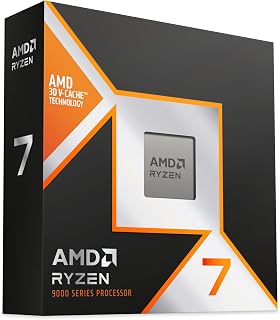
For readers comparing the newest Ryzen 7 against Ryzen 9 for gaming, the 104 MB cache pool paired with a 4.7 GHz clock on Socket AM5 stands out. That much cache keeps frequently used game data close to the cores, which matters more for frame rates than the extra cores a Ryzen 9 chip offers.
Pros
- 3D V-Cache architecture tuned specifically for gaming frame rates
- Strong 1% lows and frame pacing in demanding titles
- Standard AM5 socket with manageable 140W TDP
- Eliminates CPU bottlenecks even with flagship GPUs
Cons
- Idle temperatures run warmer than typical CPUs
- Fewer cores and threads than Ryzen 9 limit heavy multi-threaded work
When the Ryzen 7 vs Ryzen 9 debate comes up for gaming specifically, the 9850X3D is the answer that ends the argument. Its 3D V-Cache design is built around one job: feeding frames to your GPU without hiccups. That matters more for gaming than raw core count, which is why this 8-core, 16-thread chip can outpace bigger Ryzen 9 parts in frame rates and frame pacing. If your build exists mainly to push high refresh rates in competitive titles or squeeze every drop of performance from a flagship GPU in AAA games, the core-count advantage of Ryzen 9 simply doesn't translate into a better gaming experience. The AM5 socket and 140W TDP keep it within reach of a well-cooled standard build, though idle temperatures run warm so case airflow matters. For this article's exact question, gaming performance alone, this is the Ryzen 7 chip that justifies choosing fewer cores over more.
Processor Series: AMD Ryzen 7
Model Number: 9850X3D
Cores/Threads: 8 cores, 16 threads
Base Clock: 4.7 GHz
Boost Clock: 5.6 GHz
Cache: 104 MB total (8 MB L2, 96 MB 3D V-Cache)
TDP: 140W
Socket: AM5
Process: 5nm
Warranty: 3 years
Part Number: 100-100001973WOF
Readers who want Ryzen 9 headroom for gaming alongside heavy workloads like video rendering will value 16 cores and 32 threads at 4.3 GHz. That core count outclasses any Ryzen 7 option for parallel tasks, making this chip the pick when gaming is only part of a build meant for creation work too.
Pros
- 16 cores and 32 threads for serious multitasking alongside gaming
- Consistent high FPS and flat frame pacing in AAA titles
- Efficient power scaling from idle to full load
- AM5 platform with PCIe 5.0 support on select boards
Cons
- Runs hot under full load, peaking near 200W
- Overkill for gaming-only builds compared to Ryzen 7 options
The Ryzen 7 vs Ryzen 9 question usually comes down to whether you need more than gaming from your CPU, and the 9950X is the clearest case for Ryzen 9. With 16 cores and 32 threads, it has far more headroom than any Ryzen 7 chip, which matters if your gaming rig also handles 3D modeling, video editing, or other core-hungry work. For gaming alone it still holds up well, with reports of consistent high FPS and flat frame pacing in demanding titles, so you're not sacrificing gaming performance to get the extra cores. The AM5 platform supports PCIe 5.0 on select boards, and the chip scales its power draw intelligently, idling low and ramping up only when the workload demands it. The tradeoff for that extra core count is heat under full load and a 170W TDP that calls for serious cooling and a capable PSU. If your build needs to do more than game, this is the side of the Ryzen 7 vs Ryzen 9 decision that makes sense.
Processor: AMD Ryzen 9 9950X
Cores/Threads: 16 cores, 32 threads
Architecture: Zen 5
Base/Boost Clock: 4.3 GHz base, 5.7 GHz max boost
Socket: Socket AM5 (AM5 platform)
TDP: 170 watts
Cache: 80 MB total (16 MB L2)
Memory Support: DDR5-5600
Platform Features: PCIe 5.0 support on select motherboards
Warranty: 3-year manufacturer warranty
Unlocked: Yes, for overclocking
Buy this if your gaming PC doubles as a workstation for content creation, 3D work, or other multi-threaded tasks alongside gaming. It also fits builders who want headroom for future workloads. Skip it if gaming is your only concern, since a gaming-focused Ryzen 7 chip will deliver similar or better frame rates without the extra heat, power draw, and cooling requirements this chip demands.

Readers torn between Ryzen 9's core count and Ryzen 7's gaming efficiency get both here, with 12 cores, 24 threads, and a 5.6 GHz clock backed by 140 MB of cache. That cache depth is what actually drives gaming performance, so this chip answers the Ryzen 7 vs Ryzen 9 question by delivering strong frame rates and multitasking headroom together.
Pros
- Outstanding gaming performance with consistently smooth frame rates in AAA titles
- Excellent multi-tasking capability with 12 cores making professional workflows seamless
- 3D V-Cache technology provides noticeable performance advantage over previous generation
- Low power consumption at 105 watts makes it more efficient than competing high-end processors
- Supports latest technologies including DDR5 memory and PCIe 5.0 for longevity
Cons
- Runs hot under load and requires a quality tower cooler or 240mm+ AIO to prevent thermal throttling
- Cooler not included, adding to total system cost
- Premium pricing reflects high performance but may not be necessary for casual users
The AMD Ryzen 9 7900X3D is a flagship desktop processor designed for gamers and creative professionals who demand both gaming prowess and productivity performance. With 12 cores, 24 threads, and 140MB of cache including AMD's innovative 3D V-Cache technology, this processor strikes a unique balance between entertainment and work.
In real-world testing, the 7900X3D delivers exceptional gaming performance with smooth frame rates in demanding AAA titles, while simultaneously handling CPU-intensive tasks like video editing, 3D rendering, and streaming without breaking a sweat. The massive cache pool and 3D V-Cache technology provide a tangible performance advantage, making it noticeably faster than previous generation processors. Users report seamless multitasking and the ability to run rendering software alongside editing applications without performance drops.
The processor features a robust Socket AM5 platform with DDR5 memory support and PCIe 5.0 compatibility on select 600-series motherboards, ensuring longevity and upgrade potential. The design is compact at just 1.57 inches square, and the 105-watt TDP keeps power consumption reasonable for a high-performance chip, improving efficiency compared to competing flagship processors.
The primary drawback is thermal management. This processor runs hot under sustained loads and requires a high-quality tower cooler or 240mm or larger AIO liquid cooler to maintain safe operating temperatures. Standard coolers may cause thermal throttling during stress tests, and the cooler is not included with the processor, adding to the total system cost.
Verdict: The Ryzen 9 7900X3D is an excellent choice for enthusiasts and professionals who need a processor that excels at both gaming and creative work. It offers better versatility than gaming-specific alternatives and delivers genuine performance advantages justifying its premium positioning. Budget accordingly for cooling and ensure your motherboard meets the requirements.
Core Configuration: 12 cores, 24 threads
Clock Speed: 5.6 GHz maximum boost, 2200 MHz base graphics frequency
Cache Memory: 140MB total (includes 3D V-Cache L3 cache)
Socket: Socket AM5
Memory Support: DDR5
TDP: 105 watts
Max Temperature: 89 degrees Celsius
Platform Features: PCIe 5.0 support on select 600-series motherboards, unlocked memory overclocking
Compatibility: Windows 10 and Windows 11
Warranty: 3-year manufacturer coverage
Package Contents: Processor only (cooler not included)
Who Should Buy: Gamers seeking the best frame rates in competitive and AAA titles, content creators who need strong gaming performance alongside productivity capabilities, streamers and video editors working with demanding projects, and enthusiasts building high-end systems.
Cooler Requirements: This processor requires substantial cooling investment. Plan for either a quality dual-tower air cooler or a 240mm or larger AIO liquid cooler. Budget an additional $50-150 for proper thermal management to avoid performance throttling.
Platform Considerations: Ensure your motherboard is a Ryzen 7000-compatible Socket AM5 board. For PCIe 5.0 support, select a 600-series chipset board. Factor in DDR5 memory cost, which is necessary for this platform.
Value Assessment: This processor sits at a premium price point. It delivers genuine performance advantages for mixed workloads and gaming. For exclusively gaming, more affordable alternatives exist. For purely productivity work, different options may offer better value.
System Integration: Pair with a modern mid-range to high-end GPU to fully utilize this processor's capabilities and avoid bottlenecks. Ensure adequate power supply capacity, as the 105-watt TDP requires headroom.

Readers building a budget or compact gaming PC will value the integrated Radeon graphics alongside 8 cores and 16 threads at 4.6 GHz. Since it skips a discrete GPU requirement, it suits entry-level gaming setups where comparing Ryzen 7 to Ryzen 9 performance tiers matters less than getting a functional system running.
Pros
- Integrated graphics capable of handling esports titles and popular games at 1080p without discrete GPU investment
- Excellent value at under $200 for an 8-core, 16-thread processor with graphics
- Low 65-watt TDP keeps cooling costs down and works in compact builds
- Strong multitasking and streaming capability, proven effective for home servers and Docker workloads
- Unlocked multiplier allows overclocking for performance enthusiasts
Cons
- Integrated graphics cannot match dedicated GPUs for high-resolution gaming or demanding 3D applications
- Monolithic die design differs from higher-end Ryzen chips, limiting some advanced scaling scenarios
- Not ideal for professional GPU-accelerated workloads requiring discrete graphics hardware
The AMD Ryzen 7 5700G is a hybrid processor built for users who want powerful CPU performance without the added cost of a discrete graphics card. It combines 8 cores and 16 threads with integrated Radeon Vega 8 graphics, making it perfect for gamers, content creators, and budget-conscious builders who need a complete system without compromise.
Where this processor truly shines is its gaming capability. The integrated iGPU handles popular esports titles like Valorant, CS:GO, and Dota 2 comfortably at 1080p. Real-world user feedback confirms it works as a capable test bench processor and home server powerhouse, with the 8-core configuration handling Docker containers, Plex streaming, and light virtualization without breaking a sweat.
Built on AMD's proven Zen 3 architecture with a 7nm manufacturing process, the 5700G runs at 3.8 GHz base with a 4.6 GHz boost clock. The 65-watt TDP is remarkably efficient, making it suitable for compact builds and keeping power bills low. The chip includes a Wraith Stealth cooler and locks into the Socket AM4 platform with DDR4-3200 support, giving builders flexibility for upgrades.
The main limitation is that integrated graphics cannot match dedicated GPUs for demanding 3D games or professional GPU-accelerated workflows. If you need 4K gaming or serious GPU compute power, you will want a discrete card. However, for 1080p gaming and mixed workloads, this processor delivers exceptional value.
The AMD Ryzen 7 5700G is a smart choice for anyone building a capable PC on a budget or needing solid performance without GPU investment. With a 4.8-star user rating and strong real-world performance reports, it represents outstanding value in the processor market.
Processor Specifications
Model: AMD Ryzen 7 5700G
Cores/Threads: 8 cores, 16 threads
Base Clock: 3.8 GHz
Max Boost: 4.6 GHz
Cache: 20 MB
TDP: 65 watts
Socket: Socket AM4
Architecture: Zen 3, 7nm process
Integrated Graphics: Radeon Vega 8
Memory Support: DDR4-3200
Max Operating Temperature: 95 degrees C
Cooling Solution: AMD Wraith Stealth cooler included
Warranty: 3-year manufacturer
Compatibility: Windows and Linux

Readers wanting Ryzen 7 gaming performance without stepping up to Ryzen 9 pricing tiers will note the 5.4 GHz clock and 32 MB cache on Socket AM5. That clock speed rivals pricier chips in single-threaded game performance, making it a straightforward pick for anyone whose build is gaming-first rather than workload-heavy.
Pros
- Exceptional gaming performance with consistent high frame rates in current-gen titles
- Strong multithreaded performance for streaming, video editing, and 3D rendering
- Unlocked for overclocking with headroom for experienced users
- Excellent value proposition for high-end gaming and professional workloads
- Compatible with DDR5 memory and PCIe 5.0 for future-proofing
Cons
- CPU cooler not included in the box, requiring separate purchase
- Requires a compatible AM5 motherboard and DDR5 RAM for full platform upgrade
- Base clock of 4.5 GHz means sustained performance requires proper cooling and power delivery
The AMD Ryzen 7 7700X is a flagship 8-core processor designed for gamers, streamers, and content creators who demand top-tier performance. Built on AMD's Zen 4 architecture with a 5 nm manufacturing process, this processor targets users building high-end AM5 systems who want to maximize frame rates and reduce rendering times.
The standout feature is raw gaming prowess, with the 7700X capable of delivering 100+ FPS in popular AAA titles at high settings. Its 5.4 GHz max boost clock, combined with 8 cores and 16 threads, ensures smooth performance in both gaming and parallel workloads like streaming or video encoding. The unlocked multiplier lets enthusiasts push performance even further through overclocking.
Design and platform compatibility are excellent. The processor includes 80 MB of cache (32 MB L3, 40 MB L2 total when combined correctly) and supports DDR5-5200 memory, enabling faster data throughput. On compatible 600 Series motherboards, you gain PCIe 5.0 support for next-gen graphics cards and storage devices. The 105W TDP is reasonable given the performance output.
The main drawback is that no cooler is bundled, making this a component for builders who understand the full system cost. Additionally, this is a platform purchase, not just a chip upgrade, since you'll need a new AM5 motherboard and DDR5 RAM to realize its benefits.
Verdict: The Ryzen 7 7700X is a high-value flagship processor for anyone building a premium gaming or workstation PC. Its performance-per-dollar and gaming dominance make it a top choice in the high-end market segment.
Core Architecture: 8 cores, 16 threads, Zen 4 (5 nm process)
Clock Speeds: 4.5 GHz base, 5.4 GHz max boost
Cache: 32 MB L3, 40 MB L2 (80 MB total)
Socket: AM5
Memory Support: DDR5-5200
Thermal Design Power: 105W
Unlocked: Yes (overclocking capable)
Compatibility: Linux, Windows
Best For: High-end gamers targeting 1440p and 4K gaming, content creators doing video editing or 3D rendering, streamers encoding while playing, and PC enthusiasts who enjoy overclocking.
Not Ideal For: Budget builders, casual users, office work only, or anyone upgrading from a recent high-end processor where the performance gain may not justify the cost and platform migration.
Buying Guide: What to Look for When Choosing Between Ryzen 7 and Ryzen 9
Gaming Performance vs. Core Count
Most games don’t scale well beyond 8 cores. That’s a key reason why the AMD RYZEN 7 9800X3D 8-Core consistently ranks as one of the fastest gaming processors available, despite having fewer cores than any Ryzen 9. The 3D V-Cache technology stacks extra L3 cache directly on the die, reducing latency in cache-sensitive game engines dramatically.
Ryzen 9 processors like the AMD Ryzen™ 9 9900X 12-Core pull ahead when you’re running multiple demanding tasks simultaneously, such as gaming while streaming or rendering. For pure gaming, the extra cores are often idle.
3D V-Cache: A Game-Changer Worth Knowing About
AMD’s X3D processors carry a massive on-chip cache advantage that most standard CPUs can’t match. The AMD Ryzen 7 7800X3D 8-Core and the newer AMD Ryzen™ 7 9850X3D Desktop Processor both leverage this architecture to deliver frame rates that regularly exceed what higher-tier non-X3D chips can produce in gaming workloads.
If your primary goal is frames per second in competitive or AAA titles, an X3D Ryzen 7 will outperform a non-X3D Ryzen 9 in the majority of game benchmarks. This is one of the most important distinctions to understand before committing to either line.
Platform and Socket Compatibility
Not all of these processors drop into the same motherboard. The AMD Ryzen™ 7 5700G 8-Core uses the older AM4 socket, which pairs well with existing 500-series boards and is a solid upgrade path for current AM4 users. Every other chip on this list uses the AM5 platform, which supports DDR5 memory and PCIe 5.0.
If you’re building fresh, AM5 is the forward-looking choice. The AMD Ryzen 7 7700X 8-Core and the AMD Ryzen™ 7 9700X 8-Core are both strong AM5 entry points with DDR5-5200 and DDR5-5600 support respectively. Planning your storage setup too? Our breakdown of the best M.2 to USB adapters covers fast portable SSD options that complement any AM5 build.
Power Draw and Cooling Requirements
Ryzen 9 chips demand significantly more power. The AMD Ryzen 9 7900X 12-Core carries a 170W TDP, while the AMD Ryzen™ 9 9950X 16-Core is explicitly recommended for liquid cooling. These are not chips you want to pair with a mediocre air cooler in a compact case.
Ryzen 7 chips are generally more thermally forgiving. The 9800X3D runs cooler than previous X3D generations thanks to its redesigned cache placement, which also enables higher boost clocks up to 5.2 GHz. If your case airflow or cooling budget is limited, Ryzen 7 is the more practical choice. If you’re building a workstation-class rig, don’t overlook backup storage options like the best hard drive docks for managing large game libraries and creative assets.
Final Thoughts
For most gamers, the AMD RYZEN 7 9800X3D 8-Core is the clear top pick in 2026, delivering the highest gaming frame rates of any chip on this list thanks to its Zen 5 architecture and next-gen 3D V-Cache. If you need a processor that handles both demanding creative workloads and serious gaming without compromise, the AMD Ryzen™ 9 9950X 16-Core is the one to reach for, provided you have the cooling and power delivery to back it up.
Frequently Asked Questions
Is Ryzen 9 better than Ryzen 7 for gaming in 2026?
Not necessarily. In pure gaming workloads, Ryzen 7 processors with 3D V-Cache technology often outperform Ryzen 9 chips that lack it. Most games are optimized for 8 cores or fewer, so the extra cores in Ryzen 9 go unused during gameplay. Ryzen 9 pulls ahead when you’re multitasking heavily alongside gaming, such as live streaming or rendering in the background.
What is AMD 3D V-Cache and does it matter for gaming?
3D V-Cache is AMD’s technology for stacking additional L3 cache memory directly on top of the processor die, dramatically reducing the latency between the CPU and frequently accessed game data. It matters a great deal for gaming because many modern game engines are bottlenecked by cache latency rather than raw compute throughput. Chips like the AMD RYZEN 7 9800X3D 8-Core demonstrate this advantage clearly, delivering frame rates that exceed non-X3D competitors with more cores.
Do I need a Ryzen 9 if I also stream while gaming?
Streaming adds a real encoding workload on top of your game, which is one of the few scenarios where Ryzen 9’s extra cores provide a measurable benefit. If you stream at high quality using software encoding, a 12-core chip like the AMD Ryzen™ 9 9900X 12-Core gives you headroom that an 8-core Ryzen 7 might not. That said, modern GPU-based encoding has reduced this gap considerably, so evaluate your specific streaming setup before assuming you need more cores. For display advice to pair with a high-performance CPU, our roundup of the best monitors offers useful context on output quality.
Which Ryzen 7 processor is best for gaming on a budget?
The AMD Ryzen 7 7700X 8-Core is a strong value option on the AM5 platform, offering Zen 4 architecture with a 5.4 GHz max boost and DDR5 support at an approachable point in the Ryzen 7 lineup. For users on AM4 boards who want an upgrade without a platform change, the AMD Ryzen™ 7 5700G 8-Core remains a compelling choice with integrated Radeon graphics as a bonus. Both deliver solid 100-plus FPS gaming in popular titles when paired with a capable GPU.


Write Your Review
No reviews yet. Be the first to share your experience!