

You’re mid-match, your connection stutters, and you watch your character freeze on screen. If you’re gaming in a larger home or dealing with thick walls between you and your router, a single router will never solve the problem. A mesh WiFi system blankets every room in reliable, low-latency coverage so your setup stays competitive no matter where you play. If you’re also building out a full gaming station, check out these top picks for esports fans to round out your space.
This guide covers the best mesh WiFi systems for gaming available right now, ranging from solid everyday performers to cutting-edge WiFi 7 flagships. Whether you game on a console, a dedicated PC, or both, there’s a system here that fits your home and your habits.
Quick answer
This guide compares 10 picks, with NETGEAR Orbi 970 WiFi 7 Mesh System: 27 Gbps, 10,000 sq ranked first. TP-Link Deco S4 Mesh WiFi System 3-Pack AC1900 Whole has the most customer reviews.
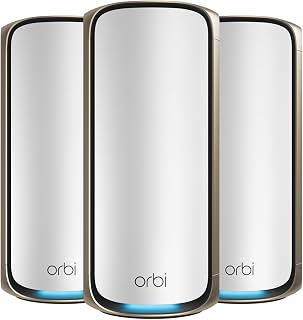
Pros
- Exceptional speed and throughput with WiFi 7 makes this future-proof for demanding applications
- Quad-band dedicated backhaul ensures consistent performance even with 200+ connected devices
- Massive 10,000 sq ft coverage eliminates dead zones for most residential and multi-story homes
- Premium wired connectivity with 10 Gig ports caters to power users and content creators
- Built-in security suite with automatic updates keeps your network protected without extra subscription
Cons
- Requires a separate modem, adding to overall setup complexity and total system cost
- Performance gains depend on having multiple WiFi 7 devices and a robust internet plan over 500 Mbps to justify the investment
The NETGEAR Orbi 970 Series represents the cutting edge of home networking, built for users who demand blazing speeds, rock-solid reliability, and future-proof technology. This premium mesh system is ideal for large homes, tech enthusiasts, gamers, content creators, and anyone running a heavy-traffic household with dozens of connected devices. If you stream 8K video, work from home on video calls, game online, or manage smart home systems across 5,000+ sq ft, this system is engineered to handle it all.
What sets the Orbi 970 apart is its exclusive quad-band technology paired with enhanced dedicated backhaul, which essentially reserves one full WiFi band exclusively for communication between the router and satellites. This architectural advantage keeps your network humming even during peak usage. With up to 27 Gbps total throughput, you're getting 2.4x the speed of WiFi 6 systems, and the ability to connect 200 devices simultaneously without bottlenecking. Real-world performance shines when you pair the system with a multi-gig internet connection and WiFi 7 client devices.
The three-unit package includes one router and two satellites, providing seamless coverage across 10,000 sq ft. Each unit features a clean white design and can blend into most home environments. The real differentiator is the connectivity hardware: a 10 Gig WAN port on the router plus dual 10 Gig and 2.5 Gig LAN ports across the system mean you can wire your gaming PC, NAS storage, or home office directly for ultra-low latency and maximum throughput. Setup via the Orbi app is straightforward, and remote management keeps everything under control from your phone.
On the downside, the $2,000 price tag is substantial and limits accessibility for average users. You'll also need to purchase a separate modem, adding to total costs. The system's advanced capabilities only shine if you actually have multi-gig internet speeds and multiple WiFi 7 devices; on slower plans, you won't see the full benefit of this premium investment. Additionally, the warranty is limited to one year, which is standard but not reassuring given the price point.
The Orbi 970 is the best mesh system on the market for power users willing to invest in premium home networking. If you need enterprise-grade performance, flawless reliability under heavy load, and room to grow, this system delivers. For typical households with standard internet plans and fewer connected devices, a mid-range mesh system would serve you just as well at a fraction of the cost.
Network Performance: WiFi 7, up to 27 Gbps total throughput, 2.4x faster than WiFi 6. Quad-band with dedicated backhaul. Supports up to 200 simultaneous device connections.
Coverage: 10,000 sq ft with router and 2 satellites. Each additional satellite adds 3,300 sq ft. Backwards compatible with WiFi 6, WiFi 5, and older WiFi devices.
Connectivity Ports: 10 Gig internet port, 10 Gig LAN ports, 2.5 Gig LAN ports across router and satellites. Supports internet plans up to 10 Gbps. Compatible with any cable or fiber ISP.
Package Contents: 1 Orbi WiFi 7 Router (RBE971), 2 Orbi WiFi 7 Satellites (RBE970), 1 ethernet cable, 3 power adapters, quick start guide. Dimensions: 11.58 x 5.68 x 5.15 inches per unit.
Security: Advanced Router Protection enabled out of box, automatic firmware updates, NETGEAR Armor 30-day free trial. Warranty: 1 year limited. Model: RBE973-200NAS. Made for US use only.
Is the Orbi 970 right for you? This system is purpose-built for power users in large homes or demanding environments. Choose the Orbi 970 if you have a home over 5,000 sq ft, work from home on video calls, game competitively online, stream 4K/8K content regularly, run a smart home with 50+ devices, or need ultra-reliable networking for business use. You should also have or plan to upgrade to multi-gig internet speeds (500 Mbps+) to justify the premium investment.
When to choose something else: If you rent, live in a small apartment or home under 2,000 sq ft, have standard broadband under 300 Mbps, or simply need reliable WiFi for email and social media, a mid-range mesh system will save you $1,000+ with no practical downside. Similarly, if you're budget-conscious or new to mesh networking, consider entry-level alternatives that cover your space adequately.
Setup and Support: The Orbi app guides you through setup step-by-step, typically taking 15 minutes. You'll need a separate modem, which adds complexity but gives you flexibility. NETGEAR offers online support, firmware updates, and a one-year limited warranty. The included 30-day trial of NETGEAR Armor adds basic cybersecurity protection before you decide whether to subscribe.

For gamers building a budget mesh setup, dual-band AC1900 coverage with Access Point Mode gives a stable foundation for wired consoles and PCs across a house. Ethernet ports on each unit let you hardwire a gaming rig directly, bypassing WiFi congestion entirely, which matters more for latency than raw wireless throughput on this class of system.
Pros
- Affordable way to add mesh coverage for gaming rooms
- Access Point Mode adds setup flexibility
- Ethernet backhaul option via 6 ports
- Simple, straightforward 3-pack whole-home coverage
Cons
- Dual-band only, no dedicated backhaul channel
- 802.11ac standard lags behind WiFi 6 mesh systems for gaming
If your gaming setup is more about killing dead zones than chasing the fastest possible ping, the Deco S4 gives you a budget-friendly way to get a stable signal to the console or gaming PC in the back room. This is a dual-band AC1900 system, so it lacks the dedicated backhaul band that higher-end tri-band mesh systems use to keep gaming traffic separate from everything else in the house. For casual online play, streaming matches, or a household with one or two gaming devices, it can still do the job. The three-pack covers a decent amount of square footage, and Access Point Mode gives you flexibility if you already have a router you want to keep in the mix. It supports Ethernet backhaul through its six ports, which helps offset the dual-band limitation if you can run a wire to at least one satellite. It is not built for competitive gaming, but for lag-light everyday play, it is a reasonable entry point.
Coverage and Performance: Up to 5,500 sq ft coverage, AC1900 WiFi speeds (1200 Mbps), 3x3 6-stream wireless, maximum upstream 950 Mbps.
Connectivity: WiFi 5 (802.11ac), dual-band, 6 total gigabit ethernet ports (2 per unit), WAN/LAN auto-sensing, supports wired ethernet backhaul.
Device Support: Connects up to 100 WiFi-enabled devices, works with all major ISPs including AT&T, Verizon, Xfinity, Spectrum, and others.
Features: Single unified network with automatic roaming, robust parental controls, guest WiFi management, Alexa voice control, intuitive mobile app setup.
Package Contents: 3 Deco S4 units, 1 ethernet cable, 3 power adapters, quick installation guide. 2-year manufacturer warranty included.

Serious gamers chasing minimal lag will appreciate the tri-band WiFi 6E design, which opens a dedicated 6GHz lane free from older device interference. The 1 GHz dual-core processor keeps mesh routing snappy under load, and listing Gaming explicitly under antenna location signals this system was tuned with low-latency, high-device-count sessions in mind.
Pros
- Tri-band WiFi 6E with dedicated backhaul reduces gaming lag
- 1 GHz dual-core processor handles heavy multi-device load
- Gaming explicitly listed as a supported use case
- WPA3 security plus free HomeShield Basic protection
Cons
- Wi-Fi only connectivity listed, no direct Ethernet spec noted
- Overkill for smaller homes or single-device gaming setups
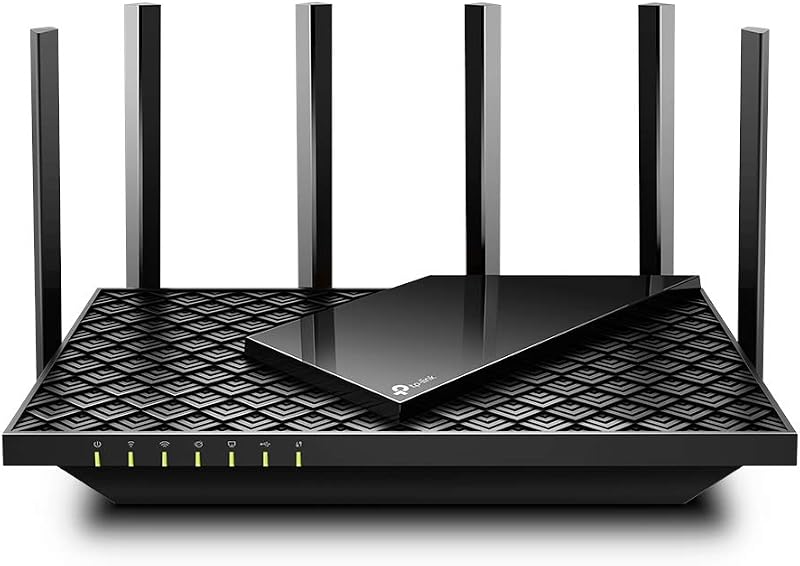
For gamers who want the network working in their favor rather than against them, the Deco XE70 Pro is built with the right ingredients: tri-band WiFi 6E with dedicated wireless and wired backhaul support, so game traffic does not have to compete with the rest of the household for bandwidth. The 1 GHz dual-core processor helps the system handle multiple connected devices without choking under load, which matters if gaming happens alongside streaming and smart home traffic. WPA3 security keeps the network locked down without added configuration hassle. The Antenna Location listing even calls out Gaming specifically, and with 9 ports across the 3-pack, there is plenty of room to hardwire a console or PC directly for the most consistent connection. HomeShield Basic adds security monitoring at no extra cost. This is the pick for a household treating mesh WiFi as gaming infrastructure rather than just internet coverage.
Network Performance: WiFi 6E tri-band system with 4.9 Gbps combined speeds across 2.4 GHz, 5 GHz, and 6 GHz bands. Two Gigabit ports plus one 2.5 Gbps port per unit enable wired backhaul and device connections.
Coverage and Capacity: Up to 7,200 square feet coverage per three-pack. Supports up to 200 connected devices simultaneously with AI-powered roaming and self-learning mesh optimization.
Hardware: 1 GHz dual-core processor, 512 MB RAM, 12 internal antennas per unit. Supports 802.11ax (WiFi 6E), 802.11ac, 802.11n, 802.11g, and 802.11b standards. Universal compatibility with all ISPs and internet services.
Security: WPA3, WPA2-PSK, and WPA-PSK encryption. CISA secure-by-design signatory. HomeShield Basic premium security suite included with network protection, parental controls, and IoT security features. 2-year manufacturer warranty.
Setup and Control: App-based management via Deco app for iOS and Android. Voice control compatible with Alexa and Google Assistant. Access Point Mode for integration with existing routers.
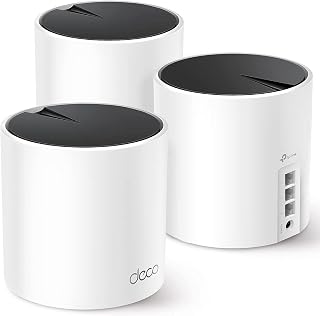
This system fits gamers with a crowded smart home, since compatibility explicitly spans gaming consoles alongside smart TVs, security cameras, and PCs on one WiFi 6 network. AX3000 speeds paired with 802.11ax support help keep ping steady when multiple devices compete for bandwidth, while wired Ethernet backhaul options add a reliable path for latency-sensitive play.
Pros
- WiFi 6 (802.11ax) support for modern devices
- Gaming Console explicitly listed as compatible device
- WPA3 security included
- Ethernet and WiFi connectivity with Guest Mode option
Cons
- Dual-band only, not tri-band
- Only 3 ports total across the system
The Deco X55 lands in a practical middle ground for gaming households: it is WiFi 6, it lists Gaming Console directly among its compatible devices, and it supports modern WPA3 security without the premium tri-band price tag of higher-end mesh systems. Dual-band AX3000 speeds are enough for most online gaming scenarios, especially in homes without a heavy stack of simultaneous 4K streams and smart devices competing for bandwidth. The Deco app ecosystem (running on TP-Link's Omada platform) makes setup and monitoring straightforward, and Guest Mode is a nice touch if you have friends over for local multiplayer sessions who need internet access without touching your main network. With Ethernet and WiFi connectivity plus 3 ports for wired connections, you can hardwire a console directly to a node for the most stable connection possible. It is a sensible pick for gamers who want current WiFi standards without paying for tri-band overhead they may not need.
Good fit for gamers with mid-sized homes and a moderate number of connected devices who want WiFi 6 performance and WPA3 security at a reasonable tier. Also useful if you want Ethernet backhaul options for a console. Skip it if you have a large home with heavy simultaneous device use, since the dual-band setup may bottleneck under very high traffic compared to tri-band alternatives.
Coverage and Performance: Up to 6500 square feet, AX3000 WiFi 6, 2402 Mbps (5GHz) plus 574 Mbps (2.4GHz), supports 802.11ax, 802.11ac, 802.11n, 802.11g, 802.11b. Three internal antennas per unit.
Connectivity and Ports: Three gigabit ethernet ports per unit (nine total in 3-pack), supports wired and wireless backhaul, compatible with all major ISPs. Works with smartphones, computers, tablets, printers, gaming consoles, smart TVs, and security cameras.
Security and Control: WPA3-Personal, WPA2-Personal, WPA-Personal encryption, High-level firewall, HomeShield service included, parental controls, guest mode, app-based control and remote management. Operates on TP-Link's Omada system.
Specifications: 12-volt power adapters included, 2-year manufacturer warranty, 24/7 technical support. Package includes three Deco X55 units, three power adapters, one ethernet cable, and quick installation guide.
Pros
- Exceptional real-world performance, especially for wired gigabit connections and wireless gaming
- 6GHz band technology provides cleaner airspace and superior capacity for crowded networks
- Reliable stability with 75+ connected devices including smart home and IoT systems
- Affordable entry point to WiFi 6E technology compared to competing mesh systems
- Works with all major ISPs and includes professional 24/7 technical support
Cons
- Advanced networking features like VLAN segmentation and encrypted DNS not available
- Requires ethernet backhaul connection to achieve maximum advertised speeds in some setups
- App-only configuration with no traditional web dashboard interface for power users
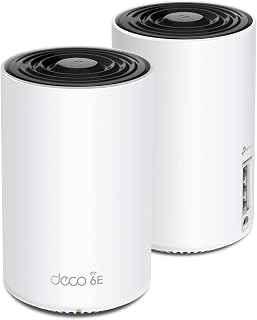
The TP-Link Deco XE75 represents a significant leap forward in home networking, bringing WiFi 6E technology to the mainstream market at an accessible price point. This 2-pack mesh system targets homeowners with medium to large properties, gaming enthusiasts, and anyone struggling with dead zones in their current setup. If you stream 4K video, game competitively, or operate a smart home with dozens of connected devices, this system was designed with your needs in mind.
What makes the XE75 stand out is its implementation of the 6GHz band, which creates a dedicated, interference-free channel for WiFi 6E devices. Combined with tri-band processing delivering up to 5,400 Mbps total speeds, real-world testing shows dramatic improvements over previous-generation systems. Users report consistent 930+ Mbps speeds on wired connections with gigabit fiber, while wireless performance remains stable even with 75+ devices connected. The AI-driven mesh automatically optimizes connections based on your usage patterns and network conditions, meaning less manual tweaking and more reliable performance day-to-day.
The system impresses with practical design choices like internal antennas that blend into any décor and dual gigabit ports on each unit for flexible placement. Setup through the Deco app takes minutes, while voice control integration with Alexa adds convenience for managing guest networks. Security features include WPA3 encryption and TP-Link HomeShield, offering parental controls, network scanning, and IoT device identification to protect your connected ecosystem.
Some power users may find limitations in the software, particularly the lack of VLAN support or encrypted DNS options for advanced network segmentation. Additionally, achieving maximum speeds requires strategic placement or ethernet backhaul between units rather than pure wireless mesh operation. The app-only interface means traditional web-based configuration is unavailable, which some technical users prefer.
The Deco XE75 delivers genuine WiFi 6E performance at a competitive price, backed by TP-Link's reputation for reliability and two-year warranty support. For most households seeking future-proof whole-home coverage with excellent gaming and streaming performance, this mesh system represents outstanding value and a meaningful upgrade from aging routers or lower-tier mesh systems.
Technical Specs: WiFi Generation: WiFi 6E (802.11ax) with tri-band support. Total Speed: 5,400 Mbps (6GHz: 2,402 Mbps, 5GHz: 2,402 Mbps, 2.4GHz: 574 Mbps). Coverage: 5,500 square feet per 2-pack. Device Capacity: 200+ simultaneous connections.
Hardware: 3 internal antennas per unit. 512MB RAM. 6 ports total per unit (ethernet). Frequency bands: 2.4GHz, 5GHz, 6GHz. Security protocols: WPA3-Personal, WPA2-Personal, WPA-Personal.
Connectivity: Ethernet (10/100/1000 Mbps) and WiFi 6E. Compatible with all major ISPs. Requires modem for most internet service providers. Wireless compatibility: 802.11b, 802.11g, 802.11n, 802.11ac, 802.11ax.
Warranty and Support: 2-year manufacturer warranty. 24/7 technical support. Operating System: Linux 4.4.60. Included: 2 Deco XE75 units, 2 power adapters, 1 ethernet cable, quick installation guide.
Competitive Gamers: Low-latency connections and dedicated 6GHz band eliminate WiFi lag. Wired and wireless devices both benefit from reduced interference and optimized bandwidth allocation.
Streamers and Content Creators: Handles 4K video streaming, uploads, and downloads simultaneously without buffering. Tri-band architecture prevents bandwidth congestion across multiple devices.
Smart Home Enthusiasts: Stable connections for 75+ connected IoT devices including HomeKit, Sonos, smart cameras, and home automation systems. Dedicated band reduces dropouts common in crowded networks.
Large Homes and Multi-Story Properties: 5,500 sq ft coverage replaces traditional routers and extenders. AI mesh automatically roams devices to strongest signal without manual intervention.
Future-Proofing: WiFi 6E adoption prepares your network for next-generation devices entering the market. Significantly cheaper than waiting for WiFi 7 while delivering immediate performance benefits.

Pros
- Exceptional dead zone elimination with consistent signal in large homes and challenging layouts
- Hassle-free setup process simpler than Google WiFi or competitors like Netgear Nighthawk
- AI-driven roaming keeps devices seamlessly connected without dropping or switching delays
- Built-in 6GHz band provides noticeably faster speeds for compatible WiFi 6E devices
- Comprehensive security suite and 2-year warranty offer strong value and peace of mind
Cons
- Premium pricing may be steep for budget-conscious buyers compared to older mesh systems
- Roaming performance reported as inconsistent by some power users with demanding connectivity needs
- Maximum range of 60+ feet per unit is comparable to competitors, not significantly better
The TP-Link Deco XE75 is a WiFi 6E mesh system designed for homeowners seeking reliable coverage across large spaces. It's particularly well-suited for two+ story homes, properties with detached structures, or users frustrated by dead zones in their current networks. The 3-pack replaces traditional router and extender setups with a single unified solution.
The standout feature is the new 6GHz band, which eliminates interference from older devices while delivering noticeably faster speeds to compatible WiFi 6E gadgets. Real-world performance shows consistent signal throughout 7,200+ square feet, with users reporting stable connections in previously problematic areas like back bedrooms and detached garages. Tri-band operation ensures smart home devices don't compete with laptops and phones for bandwidth, a common pain point in busy households.
Setup is genuinely effortless. The mobile app walks users through placement and configuration in under 15 minutes, significantly faster than competing systems like Netgear or older mesh networks. AI-driven features automatically optimize roaming, reducing the lag some experience when moving between mesh nodes. Voice control integration with Alexa adds convenience for smart home users.
The main drawbacks are the premium price point and mixed reports on roaming performance from power users with intensive connectivity demands. Some network professionals report inconsistency when rapidly switching between nodes with demanding applications. For most households with standard usage patterns, these issues don't materialize.
The Deco XE75 represents strong value for anyone upgrading from aging mesh systems or struggling with dead zones. The combination of WiFi 6E capability, generous coverage area, simple setup, and built-in security makes it a top choice for whole-home connectivity without technical complications.
Coverage and Performance: Up to 7,200 square feet, 5,400 Mbps total tri-band speeds (6GHz: 2,402 Mbps, 5GHz: 2,402 Mbps, 2.4GHz: 574 Mbps), supports 200+ devices.
Connectivity: WiFi 6E with 6GHz band, tri-band mesh, 802.11ax/ac/n/g/b compatible, Ethernet and WiFi connectivity, 9 ports total with 10/100/1000 Mbps LAN.
Technical Features: 512 MB RAM, internal antennas, WPA3 security, advanced firewall, QoS traffic management, app-based control with Alexa integration.
Package Contents: 3x Deco XE75 units, 3x power adapters, 1x Ethernet cable, quick start guide. 2-year manufacturer warranty included.
Best For: Large homes over 3,000 sq ft, multi-story properties, homes with detached structures like garages, households with 50+ WiFi devices, users upgrading from older mesh systems, anyone seeking WiFi 6E future-proofing.
Consider Alternatives If: You need a budget option under $150, your home is under 2,000 sq ft, you require enterprise-grade roaming for mobile devices with extreme demands, or you already have a newer mesh system performing well.
Key Questions: Does your ISP's modem support DOCSIS 3.1 or higher for full speed potential? Do you have WiFi 6E compatible devices to take advantage of the 6GHz band? Is your home over 5,000 sq ft where 3-pack coverage becomes essential? Can you place one node centrally and the other two at opposite ends for optimal performance?

Pros
- Exceptional real-world performance with speeds consistently hitting gigabit range on wireless connections
- 2.5G wired ports maximize fiber and multi-gig internet speeds without traditional 1G bottlenecks
- Excellent coverage throughout larger homes with minimal dead zones reported by users
- Intuitive mobile app makes setup, monitoring, and network management straightforward for all skill levels
- Strong beam forming and multi-link operation (MLO) deliver stable connections in challenging environments
Cons
- Firmware updates have caused stability issues for some users requiring troubleshooting and device resets
- Web interface lacks the depth and customization options available in the mobile app
- Premium pricing positions this as a high-end investment compared to WiFi 6 alternatives
The Deco BE63 is TP-Link's flagship WiFi 7 mesh system designed for homeowners and gamers who refuse to compromise on speed and coverage. This 2-pack system blankets 5,800 square feet with tri-band connectivity spanning 6GHz, 5GHz, and 2.4GHz bands, making it particularly valuable for users upgrading from older mesh systems or finally taking full advantage of fiber internet plans.
Performance is where this system genuinely impresses. The BE10000 specification delivers real-world wireless speeds in the gigabit range, a massive leap from traditional WiFi 6 systems capped at 1 Gbps. The four 2.5G Ethernet ports eliminate the longstanding bottleneck plaguing mesh networks on fiber connections, allowing you to actually use your multi-gig internet speeds. AI-driven roaming technology keeps your device connected to the optimal band and unit as you move room to room, with users reporting seamless transitions during video calls and gaming sessions.
Build quality is solid with four internal antennas and a clean, cylindrical design. Setup takes approximately 15 minutes using the Deco app, which deserves special mention for being one of the best router companion apps available. Network monitoring, device management, and settings adjustments are all accessible through the mobile interface, though the web dashboard lacks equivalent depth and customization options.
The system's main weakness appears around firmware stability. Several users report issues following updates that required factory resets and extended troubleshooting. Additionally, this premium system carries premium pricing, making it a significant investment compared to solid WiFi 6 alternatives. HomeShield security features add value for concerned households, though they require understanding what protections you actually need.
The Deco BE63 represents genuine performance progress in mesh networking, particularly for demanding homes with fiber connections, multiple gamers, or 4K video requirements. If firmware stability improves through patches and your network demands justify the cost, this is one of the most capable mesh systems available today.
This system is best suited for tech-forward households with fiber or multi-gig internet connections, gamers requiring low-latency connections throughout the home, and users managing 100+ connected smart home devices. If you have gigabit-plus internet speeds, the 2.5G ports justify the premium price by actually delivering those speeds wirelessly and wired.
Buyers upgrading from older mesh systems (WiFi 5 or early WiFi 6) will see dramatic improvements in both speed and coverage. Users with large homes above 4,000 square feet will appreciate the expansive coverage. Those prioritizing network control and advanced settings over simplicity will prefer this to consumer-focused alternatives that limit customization.
This is not ideal for budget-conscious buyers, basic internet users under 500 Mbps, or those unwilling to maintain routers through firmware updates. Casual users with basic WiFi needs can find excellent value in less expensive options.
Coverage and Performance: 5,800 square feet (2-pack), BE10000 WiFi 7 with speeds up to 5,188 Mbps (6GHz), 4,324 Mbps (5GHz), and 574 Mbps (2.4GHz). Supports 200+ simultaneous device connections.
Ports and Connectivity: Four 2.5G WAN/LAN ports plus one USB 3.0 port on each unit. 10G Ethernet backhaul support for multi-unit mesh configurations. Compatible with all WiFi standards back through 802.11g.
Security and Features: WPA3 security protocol, HomeShield comprehensive protection, VPN client and server support, Access Point mode, Guest networks, QoS traffic management, and remote access capabilities.
Physical Specifications: Each unit measures 4.23 x 4.23 x 6.93 inches with 4 internal antennas. Total 2-pack weight is 3.3 pounds. Includes 2 power adapters, Ethernet cable, and quick setup guide. 2-year manufacturer warranty.
Pros
- Next-generation WiFi 7 performance at an entry-level price point with noticeable speed improvements over older systems
- Dual-band system keeps costs down while delivering reliable coverage across most home layouts and materials
- Straightforward app-based setup and management, with multiple 5-star reviews praising the installation experience
- Multi-gig Ethernet ports enable you to take full advantage of high-speed fiber internet subscriptions
- Backward compatible architecture means existing WiFi 5 and WiFi 6 devices connect without any modifications
Cons
- Dual-band design lacks the third or fourth band found in premium systems, potentially limiting advanced use cases
- Some users report satellites dropping offline intermittently, though this appears tied to placement and initial setup
- Setup can fail silently if satellites are placed too far from the router initially, requiring troubleshooting to resolve
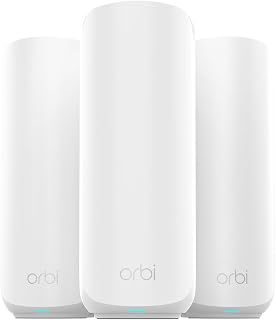
The Orbi 370 is a three-piece mesh WiFi 7 system designed for larger homes and households with heavy device usage. It targets families tired of dead zones and network slowdowns who want future-proof connectivity without spending over a thousand dollars. The system includes one router and two satellite units that form a seamless mesh network, making it a plug-and-play upgrade for anyone moving from older WiFi standards.
The standout feature is WiFi 7 performance delivering up to 5 Gbps of throughput, roughly 2.4 times faster than WiFi 6. Real-world testing shows dramatic speed improvements for compatible devices, and the Enhanced Backhaul technology prioritizes bandwidth between router and satellites so gaming, video calls, and 4K streaming maintain quality even with 70+ devices connected. The 2.5 Gbps multi-gig ports position this system to grow with your internet speeds if you upgrade to high-speed fiber plans.
Build and design are solid with understated tower-style units that blend into most home decor. Setup through the Orbi app is genuinely straightforward for most users, though some have encountered issues when satellites are placed too far from the router during initial pairing. Once configured correctly, the system stays stable with automatic firmware updates and included security features that run without extra effort on your part.
The main tradeoff is the dual-band configuration rather than tri-band or quad-band found in premium alternatives. This design choice keeps costs reasonable but limits advanced segmentation and optimization for heavy power users. A small number of owners report occasional satellite dropout issues, typically linked to placement or device interference rather than hardware defects.
The Orbi 370 delivers excellent value for households that need WiFi 7's speed advantage today and want room to grow tomorrow. It excels at coverage and performance for the price, making it a smart choice for anyone upgrading from five-year-old systems or dealing with persistent weak signals in larger homes.
Coverage and Performance: Up to 6,000 sq ft coverage area, supports up to 70 connected devices, WiFi 7 dual-band with speeds up to 5 Gbps.
Hardware: Router model RBE371, two satellite units model RBE370, 10 total Ethernet ports, 2.5 Gbps LAN and WAN ports, internal antennas, includes one Ethernet cable and three power adapters.
Connectivity: 802.11be wireless standard, compatible with WiFi 6 and WiFi 5 devices, works with any cable or fiber ISP supporting plans up to 2.5 Gbps.
Security: WPA3 and WPA2-PSK encryption, Advanced Router Protection enabled by default, automatic firmware updates, 30-day NETGEAR Armor trial included, high-level router firewall.
Control and Compatibility: Managed via Orbi app, compatible with gaming consoles, PCs, printers, and security cameras, suitable for both home and business use.
Ideal For: Families and households with multiple users and devices, large homes or multi-story layouts experiencing dead zones, anyone upgrading from WiFi 5 or older WiFi 6 systems, users with high-speed fiber connections who want to maximize their investment.
Consider If: You stream 4K or 8K content regularly, run a mix of gaming, video conferencing, and smart home devices simultaneously, need coverage across 5,000-6,000+ square feet, want to future-proof your network with the latest wireless standard.
May Not Be Best If: You have a small apartment under 1,500 sq ft (single router may suffice), need tri-band or quad-band for advanced network segmentation, require guaranteed ultra-reliable satellite connections for critical connected devices like medical equipment.

Pros
- Excellent coverage for large homes and multi-story properties without dead zones
- Blazing fast speeds ideal for 4K streaming, gaming, and simultaneous video calls
- Handles 160+ connected devices with stable performance for busy households
- User-friendly mesh setup with app control and automatic optimization
- Strong signal stability thanks to high-gain antennas and power amplifiers
Cons
- Does not support 6GHz band, limiting future-proofing compared to full WiFi 7 systems
- Not compatible with older Tenda MW3 or MW6 series routers if upgrading
- 4.1-star rating suggests some users experience connectivity or app stability issues
The Tenda ME3 Pro is a dual-band WiFi 7 mesh system designed for large homes and demanding households. It comes as a 2-pack with each node covering up to 4,600 sq ft total, making it perfect for families, remote workers, and gamers who need reliable whole-home connectivity without dead zones.
Performance is the standout here. With WiFi 7 technology, MLO optimization, and 4K-QAM encoding, the system delivers 3.6 Gbps of combined bandwidth (2,882 Mbps on 5GHz plus 688 Mbps on 2.4GHz), which is nearly 48% faster than WiFi 6 systems. Each node features 5 high-gain antennas and 5 high-power FEMs for extended range and consistent signal strength. The system intelligently routes devices to the strongest node in milliseconds, keeping streams smooth and calls drop-free as you move throughout your home.
Supporting 160+ devices simultaneously, the ME3 Pro handles busy households with multiple family members working, learning, and streaming at once. The three auto-sensing Gigabit ports make connecting bandwidth-hungry devices like NAS drives or gaming consoles straightforward. WPA3 security, parental controls, and app-based management add practical value for home security and device oversight.
The main drawbacks are that this system lacks 6GHz band support (which some newer WiFi 7 routers offer) and uses different technology than older Tenda MW3 or MW6 models, so upgrading users cannot reuse existing equipment. Some reviewers note occasional app stability issues or setup hiccups, though most report solid long-term performance.
The Tenda ME3 Pro offers strong value for large homes needing fast, reliable WiFi 7 coverage at an accessible price point. It excels for families, remote workers, and power users who demand both speed and stability across a sprawling home.
Wireless Performance: WiFi 7 (802.11be) dual-band, 3.6 Gbps total speed (2,882 Mbps on 5GHz + 688 Mbps on 2.4GHz), MLO and 4K-QAM support.
Coverage and Capacity: Up to 4,600 sq ft coverage area, supports 160+ connected devices, 5 high-gain antennas with 5 high-power FEMs per node.
Connectivity: 3 x 1G auto-sensing Gigabit ports, access point mode, Alexa compatible, WPA3 security protocol, app and remote control options.
Physical and Power: Item weight 782g per unit, dimensions 3.39" L x 7.48" W x 3.39" H, 12V power input, includes 2 mesh units, 2 power adapters, and 1 Gigabit Ethernet cable.
Warranty and Support: 2-year manufacturer warranty, Linux-based operating system, compatible with PCs and smartphones.
Best For: Large homes (3,500+ sq ft), multi-story properties, households with 50+ connected devices, remote workers needing stable video calls, and gamers requiring low-latency connections across different rooms.
Consider This If: You need next-generation WiFi 7 speeds, want to eliminate dead zones without upgrading individual routers, or support multiple simultaneous high-bandwidth activities like 4K streaming and online gaming.
Not Ideal If: You need 6GHz band support for future-proofing, plan to expand with older Tenda mesh models, or have a small apartment where a single router suffices. Also worth noting: this system requires app setup, so basic tech comfort is expected.
Setup and Support: Mesh setup is plug-and-play with app guidance. The system automatically optimizes node placement and device switching. Three Gigabit ports offer flexibility for wired connections to demanding devices.

Pros
- Next-gen WiFi 7 technology with real speeds that significantly outperform WiFi 6 systems
- Eliminates dead zones in large homes with strong signal reach from basement to rooftop
- Handles 100 connected devices with no performance degradation thanks to tri-band architecture
- Intuitive mobile app setup takes minutes, not hours like traditional routers
- Future-proof investment built for emerging high-bandwidth applications
Cons
- Premium pricing may be difficult to justify if your current WiFi 6 system meets basic needs
- Real-world speeds depend heavily on ISP plan and number of connected devices in use
- Requires powered outlets for all three units, which may limit placement flexibility in some homes
The NETGEAR Orbi 770 is a premium mesh WiFi system engineered for large homes and power users who demand consistent, fast connectivity across every corner of their space. This 3-pack includes one router and two satellites, making it ideal for households with 100+ devices, serious gamers, content creators, and families running multiple 4K streams simultaneously.
What sets the Orbi 770 apart is its tri-band WiFi 7 architecture with an enhanced backhaul dedicated solely to router-satellite communication. This means your devices get full bandwidth access without competing with mesh traffic. Real-world speeds approach the advertised 11 Gbps in optimal conditions, particularly noticeable when running bandwidth-intensive tasks like 8K video streaming, VR applications, or competitive gaming.
The system is thoughtfully designed for practical use. Setup through the NETGEAR app takes just minutes of guided steps rather than manual configuration. The 2.5 Gbps LAN port future-proofs your investment for fiber internet plans, and backward compatibility with WiFi 5 and WiFi 6 devices means you do not need to replace existing equipment.
Security features are enabled out of the box with WPA3 encryption, Advanced Router Protection, and a 30-day NETGEAR Armor trial covering malware and identity theft protection. Automatic firmware updates handle security patches without user intervention. The main limitation is that real-world performance depends on your ISP plan speed and home construction. Dense walls or unusual layouts may reduce the theoretical 8,000 sq ft coverage.
Verdict: The Orbi 770 delivers genuine WiFi 7 performance for homes where coverage and simultaneous device support matter. It is a solid choice for large properties and heavy-use households, though smaller spaces or budget-conscious buyers may find WiFi 6 systems perfectly adequate.
Coverage and Performance: Up to 8,000 sq ft, supports 100 devices, 11 Gbps data rates, tri-band WiFi 7 with 6 GHz support.
Connectivity: 802.11be standard, 2.5 Gbps LAN port, 7 total ports, compatible with cable and fiber ISP equipment up to 2.5 Gbps plans.
Security: WPA3 encryption, Advanced Router Protection, automatic firmware updates, 30-day NETGEAR Armor trial included.
Box Contents: 1 router (RBE771), 2 satellites (RBE770), 3 power adapters, 2m Ethernet cable, quick start guide.
Warranty: 1 year limited. Model number RBE773-100NAS.
What to Look For in a Mesh WiFi System for Gaming
WiFi Generation and Maximum Throughput
The WiFi generation your mesh system uses has a direct impact on latency and peak speeds. WiFi 6 systems like the TP-Link Deco X55 AX3000 WiFi 6 Mesh System deliver strong, reliable performance for most gaming households and handle up to 150 devices with ease.
If your home is packed with devices or you want to future-proof your setup, WiFi 6E and WiFi 7 systems unlock dedicated 6 GHz spectrum and significantly higher aggregate speeds. The NETGEAR Orbi 970 Series (2026 Release) pushes up to 27 Gbps with quad-band WiFi 7, which puts it in a league of its own for demanding, high-device households.
Dedicated Backhaul
Backhaul is the communication channel between your mesh nodes. When it shares bandwidth with your gaming devices, speeds drop. A dedicated backhaul, whether wired or via a reserved wireless band, keeps node-to-node traffic separate from your gaming traffic.
The TP-Link Deco XE75 AXE5400 Tri-Band WiFi 6E Mesh uses its 6 GHz band as a dedicated backhaul by default, leaving the 5 GHz band wide open for your devices. Systems like the NETGEAR Orbi 770 Series WiFi 7 Mesh System take this further with tri-band WiFi 7 and enhanced backhaul technology that keeps whole-home performance steady even under heavy load. For more on building a high-performance gaming environment, have a look at gaming gear picks that complement a strong network setup.
Wired Ethernet Ports and LAN Flexibility
No wireless connection beats a wired one for raw stability, so LAN port availability matters. The TP-Link Deco X55 includes three Gigabit ports per unit, which is useful for connecting a gaming PC, a console, and a NAS drive directly without an extra switch.
At the high end, the NETGEAR Orbi 970 Series (2026 Release) includes a 10 Gig WAN port along with 10 Gig and 2.5 Gig LAN ports across the system, giving serious PC gamers a dedicated high-speed wired path that’s separate from the rest of the household. The TP-Link Deco 7 Pro BE63 Tri-Band WiFi 7 BE10000 also includes a future-ready 10G WAN/LAN port for users who want that headroom without the flagship price tag.
Coverage Area and Node Count
A three-pack almost always outperforms a two-pack in larger or multi-story homes, simply because the nodes can be positioned to eliminate signal gaps between floors. The TP-Link Deco XE75 AXE5400 Tri-Band WiFi 6E System in its three-pack configuration covers up to 7,200 sq. ft., while the two-pack version handles up to 5,500 sq. ft. Both are solid options depending on your floor plan.
For apartments or smaller homes, the TP-Link Deco S4 Mesh AC1900 WiFi System delivers reliable coverage up to 5,500 sq. ft. with three units and has earned strong real-world validation from a large pool of user reviews. It won’t keep pace with WiFi 6E or WiFi 7 systems, but it’s a dependable entry point. If you’re shopping for a gaming-ready home setup on a tighter budget, these affordable gaming accessories under a budget threshold pair well with a capable mesh system.
Final Thoughts
For most gamers, the sweet spot sits with a WiFi 6E tri-band mesh like the TP-Link Deco XE70 Pro AXE4900 Tri-Band WiFi 6E, which delivers strong coverage, dedicated backhaul, and 2.5 Gbps wired ports without requiring a top-of-the-line budget. If your home is large, your device count is high, and you want the absolute ceiling in performance, the NETGEAR Orbi 970 Series (2026 Release) is the most capable system on this list and will stay ahead of your internet plan for years to come.
Frequently Asked Questions
Is mesh WiFi actually better than a single router for gaming?
For single-room setups close to the router, a high-end single router can match or beat mesh performance. But the moment you add distance, walls, or floors between your gaming space and your router, a mesh system wins. It places signal sources closer to your devices, which directly reduces latency and improves stability.
Does WiFi 7 make a noticeable difference for gaming in 2026?
For competitive gaming, the biggest gains from WiFi 7 come from lower latency and Multi-Link Operation (MLO), which lets devices connect across multiple bands simultaneously. Systems like the TP-Link Deco 7 Pro BE63 Tri-Band WiFi 7 BE10000 and the Tenda WiFi 7 Mesh System BE3600 both support MLO, which translates to more consistent connections during peak usage. If your gaming device supports WiFi 7, the upgrade is worth it. If not, a strong WiFi 6E system still covers you well.
Should I use a wired or wireless backhaul for gaming?
Wired Ethernet backhaul is the most stable option when you can run cables between nodes. Both the TP-Link Deco X55 AX3000 WiFi 6 Mesh System and the TP-Link Deco S4 Mesh AC1900 WiFi System support wired Ethernet backhaul, which frees up the wireless bands entirely for client devices. If running cables isn’t practical, a dedicated wireless backhaul band, like the 6 GHz channel on WiFi 6E systems, is the next best choice. For more peripherals that benefit from a rock-solid network, check out this roundup of router deals worth bookmarking.
How many mesh nodes do I need for a gaming home setup?
Two nodes work well for homes up to about 4,500 to 5,500 sq. ft. with an open layout. Three nodes are a better fit for larger homes, multi-story buildings, or spaces with lots of walls and interference. The NETGEAR Orbi 370 Series WiFi 7 Mesh System covers up to 6,000 sq. ft. with its three-pack, while the NETGEAR Orbi 770 Series WiFi 7 Mesh System extends that to 8,000 sq. ft., both with room to add satellites if your needs grow.


Write Your Review
No reviews yet. Be the first to share your experience!