

You’ve narrowed your next GPU upgrade down to two strong contenders: NVIDIA’s RTX 5060 Ti and AMD’s RX 9060 XT. Both target the 1440p sweet spot, both launched with competitive specs, and both have compelling reasons to buy. The real question is which one fits your workflow, your case, and your priorities.
This guide walks through ten of the best cards built on these two architectures, covering everything from cooling quality and VRAM capacity to AI acceleration and connectivity. Whether you game competitively, create content, or just want the most capable GPU at a reasonable entry point, you’ll find a clear pick here.
Quick Comparison
Ratings reflect the most recent data pull. Check each listing for current price and availability.
Quick answer
This guide compares 10 picks, with ASRock Radeon RX 9060 XT Challenger 16GB GDDR6 PCIe 5.0 ranked first. GIGABYTE Radeon RX 9060 XT Gaming OC 16GB PCIe 5.0 has the most customer reviews.

The Challenger 16GB OC delivers excellent value in the RX 9060 XT comparison with its 3290MHz boost clock, one of the highest in this class. That clock speed translates to better frame rates in competitive gaming and content creation workloads. The dual-fan 0dB silent mode keeps noise down during lighter tasks, while DisplayPort 2.1a support ensures compatibility with the latest high-refresh monitors that serious gamers demand.
Pros
- 16GB GDDR6 offers double the memory of competing 8GB cards
- Efficient cooling keeps temps in mid-60s with minimal noise
- Single 8-pin connector works with 550W power supplies
- Compact 249mm length fits most standard cases
Cons
- VRAM ceiling may constrain 4K gaming and professional rendering
- Dual-fan design less aggressive than triple-fan premium alternatives
For gamers weighing the RX 9060 XT against the RTX 5060 Ti in 2026, the ASRock Challenger variant brings compelling arguments to the table. The 16GB GDDR6 memory provides double the capacity of competing 8GB cards, a meaningful advantage as modern titles increasingly demand more VRAM at higher resolutions. The RDNA 4 architecture with 32 compute units and ray tracing support ensures compatibility with current gaming standards while the 3290 MHz boost clock delivers frame rates above 60 fps on high settings in demanding games. Thermal engineering deserves attention: sustained mid-60s temperatures under load and the 0dB silent idle mode create a genuinely quiet gaming experience. The compact 249mm length fits most chassis without drama, and the single 8-pin connector requires only a 550W power supply, making this an accessible upgrade path. The dual-fan cooler strikes a practical balance between cooling capacity and cost, keeping the card affordable while delivering consistent thermal performance. Build quality from ASRock's Challenger series has earned positive feedback from users of previous generation cards.
GPU: AMD Radeon RX 9060 XT (RDNA 4, 32 Compute Units)
Memory: 16GB GDDR6 at 20 Gbps on 128-bit bus
Clock Speeds: 3290 MHz boost, 2700 MHz game clock
Output: DisplayPort 2.1a, HDMI 2.1b
Max Resolution: 7680x4320 pixels
Power: Single 8-pin connector, 550W PSU recommended
Size: 249mm (L) x 132mm (W) x 41mm (H), 2-slot design
Cooling: Dual fans, 0dB idle mode
Interface: PCIe 5.0 x16
Weight: 0.98 kg
Warranty: 2 years manufacturer
1440p gamers seeking strong performance with generous VRAM headroom should consider this card, especially those upgrading from older mid-range GPUs like the RTX 3060 Ti. The efficient power draw and compact dimensions make it ideal for system builders working with existing 550W PSUs or smaller cases. Skip this if you primarily game at 4K or work with intensive 3D rendering and heavy video effects, where the 16GB VRAM ceiling may limit headroom despite adequate performance at 1440p resolutions.

This triple-fan design prioritizes thermal management, important for sustained gaming sessions where the article's target GPUs compete. The 16GB GDDR6 provides ample headroom for high-resolution textures and multitasking. RDNA 4 architecture brings efficiency improvements that matter for 1440p gaming, the sweet spot for cards in this comparison. The triple-fan configuration also means quieter operation under load compared to dual-fan alternatives in this segment.
Pros
- 16GB GDDR6 handles demanding textures without bottlenecks
- Triple fans maintain cool, quiet operation under load
- RDNA 4 delivers efficient 1440p and strong VR performance
- Compact 11.42-inch design fits most standard cases
Cons
- Ray tracing performance trails comparable NVIDIA cards
- AMD driver software less refined than alternatives
The XFX Swift RX 9060 XT positions itself as the value champion in this comparison, offering 16GB GDDR6 and triple-fan cooling in a straightforward package. AMD's RDNA 4 architecture runs efficiently at 1900 MHz base with a 3320 MHz memory clock, targeting gamers who prioritize 1440p performance over bleeding-edge features. The generous 16GB framebuffer handles texture-heavy modern titles and provides headroom for future releases without memory bottlenecks. Triple fans keep thermals controlled while maintaining low noise levels, a balance that real-world users consistently praise. The 11.42-inch length fits standard ATX and many micro-ATX cases without chassis wrestling. Against the RTX 5060 Ti, this card sacrifices ray tracing prowess and AI acceleration but compensates with more VRAM and typically lower cost. RDNA 4 handles rasterized gaming smoothly at 1440p high settings and dominates 1080p across virtually all titles. VR performance receives strong feedback for stability and responsiveness. The minimalist black aesthetic disappears into builds rather than demanding attention, letting other components shine.
Core Specifications: AMD Radeon RX 9060 XT chipset, RDNA 4 architecture, 1900MHz base clock, 3320MHz boost clock, 16GB GDDR6 memory at 20GHz, PCI-Express x16 interface.
Display Outputs: 1x HDMI 2.0, 2x DisplayPort connectors support up to 3840x2160 resolution. Optimal for 1440p gaming or multi-monitor setups.
Thermal Design: XFX SWFT triple-fan cooling solution, compact 11.42-inch length, 1.5kg weight. Fits standard mid-tower cases with typical clearance requirements.
Warranty: 3-year manufacturer protection covers defects and failures, providing peace of mind for multi-year ownership.

With 8GB GDDR7, this base RTX 5060 sits below the Ti variant but still brings next-gen memory technology to the comparison. The 2512MHz boost clock and WINDFORCE cooling handle 1080p gaming admirably, which matters for budget-conscious readers evaluating whether the Ti or XT premium justifies the cost. PCIe 5.0 ensures compatibility with current platforms, though the reduced memory capacity is the tradeoff for lower entry pricing.
Pros
- GDDR7 memory at 28,000 MHz delivers strong bandwidth for its class
- Factory overclocked to 2512 MHz out of the box
- PCIe 5.0 interface is ready for current and next-generation platforms
- Dual-fan WINDFORCE cooler supports sustained performance
Cons
- 128-bit memory bus limits headroom at higher resolutions compared to wider-bus competitors
- 8GB VRAM may feel constrained in memory-heavy modern titles
In the RTX 5060 Ti vs RX 9060 XT conversation, the GIGABYTE GeForce RTX 5060 WINDFORCE OC 8G sits just below Ti territory while still representing NVIDIA's RTX 50-series architecture. Built on PCIe 5.0 and equipped with 8GB of GDDR7 memory running at a rapid 28,000 MHz, it brings modern memory bandwidth to a 128-bit bus. The factory-overclocked boost clock of 2512 MHz gives it a meaningful edge over reference RTX 5060 designs. The dual-fan WINDFORCE cooling setup is designed to keep thermals in check during sustained workloads. DisplayPort and HDMI outputs cover both monitor and TV setups. For buyers who find the 5060 Ti a stretch but still want NVIDIA's latest-generation features, including DLSS 4 support and the RTX 50-series neural rendering capabilities, this card offers a pathway into that ecosystem at a lower tier. It is a desktop-only solution targeting 1080p and entry-level 1440p gaming.
GPU: NVIDIA GeForce RTX 5060 (Blackwell architecture)
Memory: 8GB GDDR7, 128-bit interface
Memory Clock: 28,000 MHz
GPU Clock: 2,512 MHz
Interface: PCIe 5.0 x16
Cooling: Dual-fan WINDFORCE system
Outputs: DisplayPort, HDMI
Max Resolution: 7680 x 4320 pixels
Dimensions: 7.83 inches L x 4.57 inches W
Power Profile: Dedicated graphics
Warranty: 3-year manufacturer coverage
Best suited for desktop builders who want NVIDIA RTX 50-series features without stepping up to Ti pricing, particularly those gaming at 1080p or light 1440p. GIGABYTE's WINDFORCE cooling adds reliability for longer sessions. Skip it if you need more than 8GB of VRAM for demanding titles or if you are comparing directly against the RX 9060 XT and prioritizing raw memory bandwidth at higher resolutions.
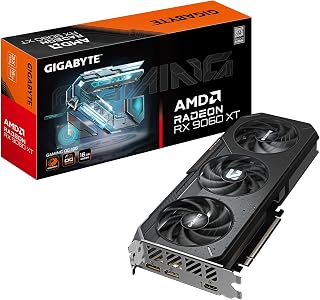
GIGABYTE's Gaming OC variant offers a balanced 2700MHz clock speed and 16GB GDDR6, hitting the core specifications readers need when evaluating this tier. The PCIe 5.0 support ensures full bandwidth utilization on modern motherboards, eliminating potential bottlenecks. For those comparing the RX 9060 XT directly against the RTX 5060 Ti, this model represents the mainstream configuration that most reviews benchmark, making performance comparisons straightforward.
Pros
- 16GB GDDR6 provides ample memory for demanding games
- Exceptional cooling keeps temperatures under 68u00b0C
- Quiet fan operation during intensive workloads
- PCIe 5.0 support for modern platform compatibility
Cons
- Single HDMI port limits multi-monitor configurations
- 4K high-refresh performance trails higher-end options
When comparing the RTX 5060 Ti to AMD's RX 9060 XT lineup, GIGABYTE's Gaming OC variant stands as a formidable contender for 1440p gaming dominance. The 16GB GDDR6 memory pool outpaces many competitors in this segment, ensuring textures and assets load without stuttering even in memory-intensive titles. AMD's RDNA 4 architecture delivers consistent frame rates at 1440p with high to ultra presets, while 1080p gaming runs flawlessly at maximum settings. The WINDFORCE cooling solution proves its worth here, keeping GPU temperatures below 68 degrees Celsius during extended sessions while maintaining near-silent operation. This thermal efficiency matters when pushing the card through back-to-back gaming marathons or lengthy creative workflows. The 2700 MHz GPU clock and 20000 MHz memory clock provide snappy responsiveness, and PCIe 5.0 compatibility future-proofs the investment. For builders choosing between NVIDIA's RTX 5060 Ti and AMD's offerings, this card makes a compelling case with its generous VRAM allocation and stable thermal performance, though potential buyers must consider connectivity needs before committing.
GPU Architecture: AMD RDNA 4, Radeon RX 9060 XT with 16GB GDDR6 memory and 20,000 MHz memory speed. Clock speed reaches 2,700 MHz with PCIe 5.0 interface for maximum bandwidth.
Gaming Performance: Delivers smooth 1080p gaming at ultra settings with frame rates exceeding 100 FPS in most titles. At 1440p on high to ultra settings, frame rates remain consistent and smooth. Esports games run at very high FPS with minimal temperature impact.
Display Support: Supports 7680x4320 resolution output via DisplayPort and HDMI, accommodating ultra-wide and professional multi-monitor configurations. Compact dimensions (11.06 inches length) fit most standard desktop cases.
Thermal Performance: The WINDFORCE cooling system excels, maintaining temperatures under 68 degrees Celsius during intensive workloads. Fans operate quietly throughout normal gaming and even demanding professional applications.
This GPU suits gamers prioritizing 1440p performance with plenty of VRAM headroom for texture-heavy titles and creative users needing reliable performance for rendering tasks. The generous 16GB buffer appeals to those working with high-resolution assets. Skip this if your monitor setup demands multiple HDMI connections simultaneously, as the single HDMI port creates limitations. Also avoid if 4K high-refresh gaming represents your primary goal, where higher-tier models deliver better results.

The Steel Legend's 3275MHz boost clock positions it at the top end of RX 9060 XT performance, delivering tangible FPS gains in the 1440p gaming scenarios this article addresses. The triple-fan cooling and 0dB mode provide versatility between silent productivity and aggressive gaming profiles. DisplayPort 2.1a output supports the high-refresh 1440p monitors that buyers in this segment typically pair with these cards, maximizing your display investment.
Pros
- 3275 MHz boost clock delivers over 100 fps at 1440p
- 0dB fan mode provides silent operation during light use
- 16GB GDDR6 handles memory-intensive workloads
- Black and white design suits modern build aesthetics
Cons
- ARGB cable not included in packaging
- Some units require BIOS tweaks for PCIe detection
ASRock's Steel Legend variant enters the RTX 5060 Ti versus RX 9060 XT debate with a compelling feature set that emphasizes both performance and user experience. The 3275 MHz boost clock pushes ahead of reference specifications, translating to frame rates exceeding 100 fps in modern titles at 1440p resolution with high settings enabled. This overclocked configuration, combined with 32 compute units and third-generation ray tracing, positions the card competitively against NVIDIA's RTX 5060 Ti in this crucial resolution bracket. The triple-fan cooling system with 0dB technology separates itself from the competition by going completely silent during lighter workloads and casual gaming sessions, a feature that matters for users who value quiet operation. The black and white aesthetics appeal to builders crafting visually cohesive systems, while the reinforced metal backplate and military-grade components suggest durability beyond typical mid-range offerings. PCIe 5.0 interface and DisplayPort 2.1a ensure modern connectivity standards. AMD FidelityFX Super Resolution 4 adds flexibility for demanding scenarios. However, the missing ARGB cable frustrates some customization efforts, and occasional PCIe detection quirks require BIOS attention during initial setup.
GPU Specifications: AMD Radeon RX 9060 XT with RDNA 4 architecture, 32 Compute Units, 3rd Gen Ray Tracing, 2nd Gen AI Acceleration. 3275 MHz Boost Clock.
Memory: 16GB GDDR6, 2500 MHz memory clock.
Connectivity: DisplayPort 2.1a, HDMI 2.1b, PCIe 5.0 x16. Supports up to 8K 120Hz or 4K 240Hz displays.
Cooling: Triple striped-ring fans with ultra-fit heatpipes, 0dB passive cooling under low load.
Physical: 11.73 inches length, 2.01 inches width, 1155g weight. Metal backplate included. DisplayPort 2.1a, HDMI 2.1b.
Warranty: 2 years manufacturer coverage.
Ideal for gamers upgrading from older generation GPUs like 10-series or 3050-class cards who want dramatic performance improvements at 1440p resolution. Content creators and streamers needing balanced GPU capability without flagship pricing will appreciate the 16GB memory buffer. Those who value silent operation during lighter tasks benefit from the 0dB fan mode. Skip if RGB customization without BIOS tweaking matters significantly, or if you prefer plug-and-play simplicity without potential PCIe detection adjustments.

This white-themed edition appeals to builders matching aesthetics while delivering core RX 9060 XT specifications: 16GB GDDR6 and solid 1900MHz boost performance. The dual DisplayPort outputs plus HDMI 2.1b cover most monitor configurations readers considering this tier will use. RDNA 4 architecture brings improved efficiency that translates to lower power consumption and heat output, important factors for compact or thermally-constrained builds in this performance class.
Pros
- Clock speeds from 1900 MHz base to 3320 MHz boost ensure consistent performance
- Triple-fan cooling maintains stability during extended gaming sessions
- White gaming aesthetic offers visual distinction for showcase builds
- 16GB GDDR6 with 20 GHz memory clock handles high-resolution workloads
Cons
- Requires robust power supply for stable operation
- Older games may not fully leverage RDNA 4 capabilities
The XFX Swift stands as the premium contender in this RX 9060 XT versus RTX 5060 Ti comparison, targeting buyers who want top-tier RDNA 4 performance with refined cooling and aesthetics. The clock architecture spans from 1900 MHz base to 3320 MHz boost, ensuring consistent frame rates across demanding scenarios whether gaming at 1440p or pushing into 4K territory. That 16GB GDDR6 configuration with 20 GHz memory clock speed provides the bandwidth needed for high-resolution textures and complex scenes. The triple-fan cooling system maintains thermal stability during extended sessions, a key consideration when comparing sustained performance against competing cards. Build quality reflects XFX's attention to detail, with the white gaming aesthetic offering visual distinction for builders prioritizing case presentation. The 10.63-inch length keeps the card manageable compared to oversized flagship models, simplifying installation and cable routing. Dual DisplayPort and HDMI outputs accommodate multi-monitor setups without adapters. The RDNA 4 architecture delivers strong compatibility with modern AAA titles, though older or poorly optimized games may not fully exploit its capabilities. Power supply requirements need consideration during system planning to ensure stable operation under load.
GPU: AMD Radeon RX 9060 XT (RDNA 4)
Memory: 16GB GDDR6 at 20 GHz
Clock Speeds: Base 1900 MHz, Boost 3320 MHz
Connectivity: 1x HDMI 2.1, 2x DisplayPort 2.1
Interface: PCI-Express x16
Cooling: Triple-fan design
Max Resolution: 4K (3840 x 2160)
Dimensions: 10.63"L x 4.88"W
Model: XFX Swift RX-96TSW16WQ
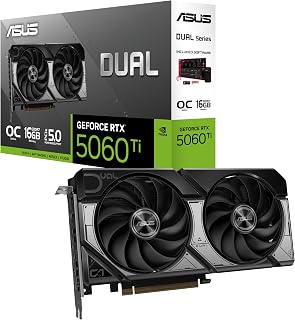
The ASUS Dual stands out with 16GB of faster GDDR7 memory instead of GDDR6, providing bandwidth advantages in memory-intensive scenarios like ray tracing and 4K texture streaming. At 2632MHz boost clock, it competes directly with the RX 9060 XT in real-world gaming. Three DisplayPort 2.1b outputs offer flexibility for multi-monitor setups that content creators and productivity users in this market segment often require alongside gaming performance.
Pros
- 767 AI TOPS with DLSS 4 for superior frame generation
- 0dB mode delivers silent operation during light gaming
- 16GB GDDR7 and PCIe 5.0 future-proof the investment
- Dual BIOS toggles between Quiet and Performance instantly
Cons
- Compact design limits extreme overclocking potential
- Higher entry cost than budget alternatives
When comparing flagship cards in 2026, the ASUS Dual RTX 5060 Ti 16GB stands out as a compact powerhouse that doesn't sacrifice capability for size. NVIDIA's Blackwell architecture delivers 767 AI TOPS and DLSS 4 support, putting smooth 1440p ultra gaming and capable 4K high-setting performance into a 2.5-slot package. The Axial-tech fans with 0dB technology offer a unique advantage: complete silence during lighter loads, then aggressive cooling up to 2632 MHz when you push demanding titles. Dual ball bearing construction outlasts sleeve alternatives by 2x, while the barrier ring design focuses airflow precisely where thermal management matters most. PCIe 5.0 connectivity and 16GB GDDR7 memory ensure this card won't become obsolete as game requirements climb. The dual BIOS switch gives instant profile changes between Quiet and Performance modes without software. Against the RX 9060 XT, this card trades raw VRAM capacity for superior AI acceleration, better ray tracing, and more mature driver stability. Small-form-factor builders gain maximum performance per cubic inch, while the compact dimensions leave breathing room for other components.
GPU and Memory: NVIDIA GeForce RTX 5060 Ti, 16GB GDDR7, 2632 MHz (OC Mode), 2602 MHz (Default Mode). Supports DLSS 4 and Blackwell architecture for AI-accelerated performance.
Connectivity and Cooling: 3x DisplayPort 2.1b, HDMI 2.1b, PCIe 5.0 x16 interface. Dual Axial-tech fans with dual ball bearings, 2.5-slot compact form factor, 0dB technology for silent idle operation.
Physical and System Requirements: Dimensions 9 inches long by 4.7 inches wide, weighs 0.66 kg. Supports maximum resolution of 7680x4320 pixels. Includes 3-year warranty and SpeedSetup manual. Compatible with standard desktop builds requiring adequate power supply and proper case ventilation.
Perfect for builders prioritizing compact cases without compromising 1440p or 4K gaming, plus content creators leveraging AI-accelerated workflows. The 16GB GDDR7 buffer handles demanding textures and multitasking. Skip this if you need maximum overclocking headroom beyond the factory 2632 MHz or if your budget demands the absolute lowest entry point. Those running ITX or micro-ATX systems will appreciate the 2.5-slot fit and dual BIOS flexibility.

Pros
- Excellent value-to-performance ratio, roughly 30% less expensive than competing 12GB models
- Quiet and cool operation with effective dual-fan thermal management
- DLSS 4 and AI features provide meaningful performance gains in modern titles
- Easy installation and straightforward setup for users of all levels
- Proven performance in popular games including Helldivers 2, Fortnite, and simulation titles
Cons
- 8GB VRAM may be limiting for future AAA titles or heavy creative workloads, 16GB variants worth considering
- Occasional reports of returns or non-new stock from certain sellers
- Requires adequate PSU and case space due to dual-fan design
The PNY RTX 5060 Ti is a mid-range gaming GPU built on NVIDIA's new Blackwell architecture, designed for 1440p gaming and AI-accelerated creative work. It targets budget-conscious gamers upgrading from older cards and content creators looking to leverage NVIDIA Studio benefits without premium pricing.
Performance shines with DLSS 4 technology, which uses neural rendering to boost frame rates while maintaining image quality. The fifth-gen Tensor Cores accelerate AI workloads, and fourth-gen Ray Tracing Cores handle lighting effects efficiently. Customer feedback confirms smooth gameplay at high settings in popular titles like Helldivers 2, Fortnite, and simulation games, making it a solid choice for 1440p resolution.
Build quality reflects PNY's OC (overclocked) tuning, with a boost clock of 2692 MHz and a compact dual-fan design that runs quietly and stays cool. The card fits small-form-factor builds and supports modern connectivity via PCIe 5.0 and DisplayPort 2.1, future-proofing your system.
The primary trade-off is 8GB VRAM, which works well today but may feel limited in three to five years as games demand more memory. If you can find a 16GB variant for $100-150 more, it's worth the investment for longevity. Some buyers have received returns rather than new stock, so verify with your seller.
Overall, the RTX 5060 Ti delivers strong value for 1440p gaming and creator workflows. It excels at its price point and earns its 4.6-star rating. Buy it if you want proven performance now and can accept potential VRAM constraints later. Consider stepping up to 16GB if future-proofing matters more than cost.
GPU and Memory: NVIDIA GeForce RTX 5060 Ti, 8GB GDDR7 memory, 128-bit interface, 2407 MHz base clock, 2692 MHz boost clock
Architecture: NVIDIA Blackwell, Fifth-gen Tensor Cores, Fourth-gen Ray Tracing Cores, DLSS 4 support
Connectivity: PCIe 5.0, DisplayPort 2.1, HDMI 2.1, supports up to 7680x4320 resolution
Design: Dual-fan OC cooler, 2-slot form factor, SFF-ready, low power consumption
Compatibility: Desktop PC, Windows operating system, requires PCIe x8 or higher slot
Warranty: 3-year manufacturer warranty from PNY
Best For: 1440p gaming at high settings, AI-powered creative software, budget-conscious upgrades from older GPUs, small-form-factor builds
Consider Instead If: You play demanding AAA titles at 4K resolution (consider RTX 5070 or higher), need maximum VRAM for professional 3D work (explore 16GB variants), or want future-proof capacity for the next five years (16GB models offer better longevity)
Installation Tips: Ensure your PSU has adequate power (typically 550W minimum recommended), verify your case has room for a dual-fan card, and install NVIDIA's latest drivers before your first game launch for optimal DLSS 4 performance.
Warranty and Support: PNY includes a 3-year warranty and provides driver updates through NVIDIA. Register your card with PNY for warranty coverage documentation. Customer support is available through PNY's official channels.

While this card sits above the RX 9060 XT tier, the 16GB GDDR6 and 3060MHz boost clock make it a compelling alternative for readers comparing these segments. The extra memory capacity ensures smoother performance in demanding modern titles, and the PCIe 5.0 interface future-proofs your build. If you're deciding between mid-range options and can stretch your budget slightly, this offers meaningful performance headroom without jumping to flagship pricing.
Pros
- Delivers 160-220 fps at 1440p high settings
- 16GB GDDR6 eliminates VRAM constraints
- Handles 4K gaming at medium to high presets
- WINDFORCE cooling maintains quiet operation
Cons
- Requires minimum 750W power supply
- 11.34-inch length demands case compatibility verification
The GIGABYTE RX 9070 XT Gaming OC escalates the RTX 5060 Ti versus AMD discussion into higher performance territory, offering users a glimpse at what sits one tier above the 9060 XT family. Real-world frame rates between 160 and 220 fps on AAA titles at 1440p high settings demonstrate substantial headroom over mid-range alternatives, making this card relevant for gamers who demand ultra-smooth high-refresh experiences. The 3060 MHz GPU clock and 16GB GDDR6 memory eliminate VRAM bottlenecks that constrained previous generation cards, while PCIe 5.0 readiness ensures platform longevity. This GPU also handles 4K gaming at medium to high settings, expanding versatility beyond pure 1440p focus. The WINDFORCE cooling with Hawk fans and server-grade thermal conductive gel maintains quiet operation while managing thermals effectively, and the 11.34-inch length fits most contemporary cases without spatial conflicts. For buyers weighing RTX 5060 Ti against AMD's stack, this 9070 XT variant demonstrates what additional investment brings: significantly higher frame rates, improved 4K capability, and professional application performance for rendering and video editing tasks. Build quality remains solid throughout, with users confirming stability after proper driver installation and adequate power supply provisioning.
Core Specifications
GPU: AMD Radeon RX 9070 XT
Memory: 16GB GDDR6
Memory Clock: 2600 GHz
GPU Clock: 3060 MHz
Interface: PCIe 5.0 x16
Max Resolution: 7680 x 4320 (8K)
Physical and Connectivity
Dimensions: 11.34 inches (L) x 5.2 inches (W)
Weight: 1.78 kg
Output: DisplayPort
Power Connectors: Dual 8-pin (750W+ PSU recommended)
Cooling: WINDFORCE system with Hawk fans and thermal gel
Warranty and Support
Manufacturer: GIGABYTE
Warranty: 3 years
Model: GV-R9070XTGAMING OC-16GD
Gaming Performance at Common Resolutions
1440p Gaming: 160-220fps on most modern AAA titles at high settings. Excellent for competitive gaming and high-refresh monitors.
4K Gaming: Playable at high settings on most titles, medium settings on demanding new releases. Solid for content creators monitoring in 4K.
Esports Titles: 300+ fps possible on optimized competitive games for ultra-high refresh gameplay.
Real-World Use Cases
Best suited for 1440p gaming at 144+ fps, 4K content creation workflows, professional 3D rendering, and VR gaming. Handles flight simulators like DCS at high settings with 4K head tracking. Eliminates VRAM constraints for media professionals working with large files.
Driver Recommendations
Run DDU (Display Driver Uninstaller) before installation if upgrading from another card. Install latest AMD drivers for maximum stability and performance. Update BIOS if required by your system for PCIe 5.0 compatibility.

GIGABYTE RTX 5060 Ti Gaming OC 8GB GDDR7 Graphics
GIGABYTE's Gaming OC delivers 2647MHz boost clock and the newer GDDR7 memory that defines the RTX 5060 Ti generation. That memory technology provides bandwidth advantages in DirectX 12 titles with heavy texture streaming, scenarios common in the gaming workloads this article targets. The WINDFORCE cooling system handles the thermal load while the 8GB capacity fits most 1440p gaming needs, making it a practical choice for performance-focused buyers.
Pros
- DLSS 4 and enhanced RT Cores deliver strong ray tracing performance
- GDDR7 memory provides cutting-edge bandwidth at 28000 MHz
- WINDFORCE triple-fan cooling stays quiet under sustained load
- PCIe 5.0 support future-proofs for next-generation applications
Cons
- 8GB VRAM capacity half that of 16GB competitors
- 11.06-inch length and 1.12 kg weight require case compatibility verification
When comparing the RTX 5060 Ti against the RX 9060 XT, the GIGABYTE Gaming OC brings Nvidia's Blackwell architecture into sharp focus. DLSS 4 technology combined with enhanced RT Cores and Tensor Cores delivers substantial ray tracing performance and frame generation capabilities that directly impact real-world gaming. Users upgrading from cards like the RTX 3070 report immediate frame rate improvements even at maximum graphics settings, demonstrating tangible gains from the new architecture. The 8GB GDDR7 memory running at 28000 MHz memory clock provides cutting-edge bandwidth, though half the capacity of 16GB competitors. The WINDFORCE triple-fan system manages heat effectively while remaining quiet under sustained load, addressing thermal concerns without acoustic penalties. PCIe 5.0 support future-proofs the card as next-generation games and applications arrive. The 2647 MHz GPU clock speed ensures strong performance across 1440p and 4K resolutions. At 11.06 inches length and 1.12 kg weight, case compatibility verification becomes important before purchase. This card targets serious gamers and creative professionals working with AI-accelerated applications rather than casual 1080p users. The Blackwell architecture positions this GPU for the evolving demands of modern gaming and content creation workflows.
GPU Specifications: RTX 5060 Ti with Blackwell architecture, 8GB GDDR7 memory, 128-bit memory interface. GPU clock speed reaches 2647 MHz with memory clock at 28000 MHz. PCIe 5.0 interface provides maximum bandwidth.
Display and Resolution: Supports DisplayPort and HDMI outputs. Maximum resolution of 7680x4320 pixels enables multi-monitor setups and ultra-high-definition content creation. Compatible with desktop systems only.
Cooling and Design: Triple-fan WINDFORCE cooling system with dimensions of 11.06 inches length by 4.69 inches width. Total weight is 1.12 kg. Includes 3-year manufacturer warranty for comprehensive coverage.
Buying Guide: What to Look for in a Mid-Range GPU
VRAM Capacity and Memory Architecture
VRAM is one of the sharpest dividing lines in this comparison. The RX 9060 XT cards, including the ASRock Radeon RX 9060 XT Challenger 16GB OC and the ASRock Radeon RX 9060 XT Steel Legend 16GB GDDR6, come with 16GB of GDDR6 across the board. That headroom matters at 1440p and when running texture-heavy workloads or AI applications alongside your game.
RTX 5060 Ti cards split into 8GB and 16GB variants. The 8GB options use faster GDDR7 memory, which partially offsets the capacity gap through higher bandwidth. If you’re choosing an 8GB RTX card, confirm that the titles you play most don’t regularly breach that threshold under high-quality settings.
Cooling Solution and Thermal Design
A GPU’s cooler determines how long it sustains peak performance under load. Dual-fan designs like the ASUS Dual GeForce RTX 5060 Ti 16GB GDDR7 OC use Axial-tech fans with a barrier ring for focused downward airflow, fitting into a compact 2.5-slot footprint. Triple-fan options such as the XFX Swift AMD Radeon RX 9060 XT OC Triple Fan and the ASRock Steel Legend distribute heat across a larger surface area, which generally results in lower peak temps and quieter sustained operation.
Zero-RPM or 0dB modes are worth noting if your PC sits in a quiet space. Both ASRock RX 9060 XT models and the ASUS RTX 5060 Ti include this feature, meaning the fans stay completely off under light loads. It’s a small quality-of-life detail that adds up over time.
AI and Upscaling Platform
This is where the two architectures diverge most sharply. NVIDIA’s Blackwell-based RTX 5060 Ti cards support DLSS 4 with Multi Frame Generation, which can deliver dramatically higher frame rates in supported titles. The PNY NVIDIA GeForce RTX 5060 Ti 8GB OC Dual-Fan and the GIGABYTE GeForce RTX 5060 Ti Gaming OC 8G Graphics both leverage fifth-generation Tensor Cores for AI workloads beyond gaming, including Studio-class creative acceleration.
AMD counters with FSR 4 and RDNA 4’s second-generation AI Accelerators. While FSR 4 works across a wider range of hardware, the on-card AI performance of RDNA 4 cards is a meaningful step up from the previous generation. If you use AI-assisted tools outside of gaming, both platforms now offer real, measurable capability rather than a marketing footnote.
Display Connectivity and Future-Proofing
Both the RTX 5060 Ti and RX 9060 XT generations ship with PCIe 5.0 support, so neither will be the bottleneck in current or near-future platforms. The RX 9060 XT cards stand out with DisplayPort 2.1a and HDMI 2.1b outputs, enabling 8K at 120Hz or 4K at 240Hz. That’s meaningful if you’re eyeing a high-refresh 4K monitor down the road.
RTX 5060 Ti cards offer solid display output options as well, though the exact specification varies by board partner. Check the individual card’s output count before purchasing, especially if you plan to run a multi-monitor setup. The XFX Swift AMD Radeon RX 9060 XT OC White offers HDMI plus dual DisplayPort, keeping the rear bracket clean and practical.
Final Thoughts
Both GPU families deliver strong 1440p performance, and your best choice really comes down to priorities. If DLSS 4 and a proven AI ecosystem matter most to you, the ASUS Dual GeForce RTX 5060 Ti 16GB GDDR7 OC is the standout pick for its 16GB capacity, refined cooling, and dual-BIOS flexibility. If you want a generous VRAM buffer, next-gen display outputs, and AMD’s RDNA 4 efficiency, the ASRock Radeon RX 9060 XT Steel Legend 16GB GDDR6 brings premium build quality and triple-fan cooling to a competitive platform that continues to gain software momentum.
Frequently Asked Questions
Is the RTX 5060 Ti better than the RX 9060 XT for gaming in 2026?
It depends on the workload and the specific card variant. At 1440p, both architectures deliver smooth, high-framerate gameplay in most modern titles. The RTX 5060 Ti gains a meaningful edge in games with robust DLSS 4 support, particularly through Multi Frame Generation. In rasterization-only workloads, the gap narrows considerably, and the 16GB RX 9060 XT cards hold an advantage when VRAM usage is high.
Which GPU should I choose if I also do content creation or AI work?
NVIDIA’s ecosystem currently has broader software support for AI-assisted creative workflows, including NVIDIA Studio drivers and compatibility with a wider range of inference tools. The RTX 5060 Ti’s fifth-generation Tensor Cores make it the stronger choice for tasks like AI image generation, video upscaling, and creative app acceleration. That said, AMD’s RDNA 4 AI Accelerators are a genuine improvement and suitable for many common creative tasks in 2026.
Does the 8GB vs 16GB VRAM difference matter for 1440p gaming?
For most titles at 1440p with high settings, 8GB of fast GDDR7 memory is sufficient today. However, a growing number of games, particularly open-world and texture-heavy titles, are pushing past 8GB under maximum quality settings. If you plan to keep your GPU for several years, the 16GB variants on both the RX 9060 XT and select RTX 5060 Ti cards offer more headroom and longer relevance. It’s a worthwhile consideration rather than a dealbreaker.
Are these GPUs good for 4K gaming or just 1440p?
Both the RTX 5060 Ti and RX 9060 XT are optimized primarily for 1440p, where they shine at high refresh rates. At 4K native, performance in demanding titles will require quality or performance upscaling modes like DLSS or FSR to stay smooth. The RX 9060 XT’s DisplayPort 2.1a output does support 4K at 240Hz for those with capable monitors, making it a forward-looking option even if native 4K rasterization isn’t the card’s primary strength.
More on the RTX 5060 Ti
- Best Monitor for RTX 5060 Ti: Top Displays for Peak Performance in 2026
- Best RTX 5060 Ti Models: Top Graphics Cards for 2026
- RTX 5060 vs RTX 5060 Ti: Which GPU Should You Buy in 2026?
- RTX 5060 Ti vs RTX 5070: Which GPU Should You Buy in 2026?
- RTX 5060 Ti 8GB vs 16GB: Which Version Should You Buy in 2026?
- RTX 5060 Ti 16GB vs RX 9060 XT 16GB: Best GPUs of 2026
- RTX 5060 Ti vs RX 9070: Which GPU Wins in 2026?
- Best PSU for RTX 5060 Ti: Top Picks for 2026
- Best CPU for RTX 5060 Ti: Top Picks for 2026




Write Your Review
No reviews yet. Be the first to share your experience!