

You have narrowed your next GPU upgrade down to two strong contenders: a Blackwell-based RTX 5060 Ti with 16GB of GDDR7 or an RDNA 4 powered RX 9060 XT with 16GB of GDDR6. Both camps offer cards built for smooth 1440p gaming, capable ray tracing, and AI-accelerated features, but they serve different priorities. This guide walks you through the best models from each side so you can match the right card to your build and budget.
Whether you game on a compact SFF rig or a full-tower with room to breathe, the ten cards reviewed here cover a wide range of cooling configurations, clock speeds, and form factors. Read on for a curated breakdown of what each model brings to the table.
Quick Comparison
Ratings reflect the most recent data pull. Check each listing for current price and availability.
Quick answer
This guide compares 10 picks, with ASRock Radeon RX 9060 XT Challenger 16GB GDDR6 PCIe 5.0 ranked first. Gigabyte Radeon RX 9060 XT 16GB GDDR6 Gaming Graphics has the most customer reviews.

The Challenger OC model delivers a 3290MHz boost clock that pushes RDNA 4 performance higher than baseline RX 9060 XT cards, giving you faster frame rates in demanding 2026 titles. Its dual-fan 0dB silent mode means the fans stop completely during light gaming or desktop use, keeping your system whisper-quiet when you're not pushing maximum loads.
Pros
- Compact 249mm length and single 8-pin connector simplify installation in existing builds
- Sustained mid-60s thermals under load from an efficient dual-fan cooler
- RDNA 4 architecture with 32 compute units and hardware ray tracing support
- 0dB idle mode keeps the system silent during non-gaming use
Cons
- Dual-fan cooling is less aggressive than triple-fan designs in premium RX 9060 XT cards
- 1440p is the practical performance ceiling; 4K and heavy professional workloads strain the 128-bit bus
When comparing the RX 9060 XT field against the RTX 5060 Ti 16GB, the ASRock Challenger variant stands out for buyers who want the RDNA 4 architecture in the most straightforward package possible. The 3290 MHz boost clock and 16GB GDDR6 keep it in the same performance tier as the other RX 9060 XT cards reviewed here, with 32 compute units and ray tracing support handling both gaming and lighter professional workloads. Thermally, sustained mid-60s temperatures under full load is a strong result for a dual-fan cooler, and the 0dB idle mode keeps the system silent during desktop use. The compact 249mm length and single 8-pin power connector make it the easiest of this group to fit into existing builds, requiring only a 550W PSU. The LED indicator adds minimal visual flair without committing to full RGB. PCIe 5.0 and DisplayPort 2.1a with a listed maximum resolution of 7680x4320 show the spec sheet reaches beyond its practical 1440p sweet spot. Against the RTX 5060 Ti 16GB, the main question is architecture preference: the Challenger offers AMD's RDNA 4 efficiency in a no-frills, compact form that prioritizes accessibility over premium aesthetics.
GPU: AMD Radeon RX 9060 XT (RDNA 4, 32 Compute Units)
Memory: 16GB GDDR6 at 20 Gbps on 128-bit bus
Clock Speeds: 3290 MHz boost, 2700 MHz game clock
Output: DisplayPort 2.1a, HDMI 2.1b
Max Resolution: 7680x4320 pixels
Power: Single 8-pin connector, 550W PSU recommended
Size: 249mm (L) x 132mm (W) x 41mm (H), 2-slot design
Cooling: Dual fans, 0dB idle mode
Interface: PCIe 5.0 x16
Weight: 0.98 kg
Warranty: 2 years manufacturer
Ideal for gamers upgrading existing mid-range systems where case space or PSU headroom is limited, and for those who want RDNA 4 performance without paying for triple-fan coolers or RGB lighting. The compact length and low power requirements make it uniquely accessible. Skip it if you want aggressive 4K performance or need the Nvidia-specific software ecosystem that the RTX 5060 Ti provides.

This triple-fan design offers superior cooling headroom for extended gaming sessions, which matters when comparing thermal performance between the RX 9060 XT and RTX 5060 Ti architectures. The Swift edition's 16GB GDDR6 memory ensures you won't hit VRAM limits in modern games that increasingly demand more than 12GB, making it a solid choice for high-texture workloads.
Pros
- 16GB GDDR6 matches the RTX 5060 Ti's frame buffer directly
- Triple-fan cooling runs cool and quiet under sustained load
- RDNA 4 architecture delivers competitive 1440p rasterization performance
- Compact 11.42-inch form factor fits a wide range of cases
Cons
- Raytracing performance lags behind the RTX 5060 Ti
- AMD driver software is less polished than Nvidia's equivalent
In a head-to-head comparison between the RTX 5060 Ti and RX 9060 XT, the XFX Swift RX 9060 XT makes a compelling case for the AMD side. Its RDNA 4 architecture delivers strong 1440p performance across demanding titles like Cyberpunk at high settings, and the 16GB GDDR6 frame buffer matches the Nvidia competitor directly. The triple-fan cooling setup keeps thermals impressively low under sustained load while staying quiet, a real advantage during long gaming sessions. At 1440p the card handles virtually any modern title, and it scales down to 1080p without issue. VR gaming is another area where users report stable, responsive results with minimal thermal throttling. The compact 11.42-inch length makes it easier to fit into mid-tower builds than many competing cards. Where the RX 9060 XT concedes ground to the RTX 5060 Ti is raytracing and driver polish. AMD's software ecosystem remains less refined than Nvidia's, and raytracing performance trails the green team's offering. For rasterization-focused gaming at 1440p, though, the XFX card holds its own convincingly in this matchup.
Core Specifications: AMD Radeon RX 9060 XT chipset, RDNA 4 architecture, 1900MHz base clock, 3320MHz boost clock, 16GB GDDR6 memory at 20GHz, PCI-Express x16 interface.
Display Outputs: 1x HDMI 2.0, 2x DisplayPort connectors support up to 3840x2160 resolution. Optimal for 1440p gaming or multi-monitor setups.
Thermal Design: XFX SWFT triple-fan cooling solution, compact 11.42-inch length, 1.5kg weight. Fits standard mid-tower cases with typical clearance requirements.
Warranty: 3-year manufacturer protection covers defects and failures, providing peace of mind for multi-year ownership.
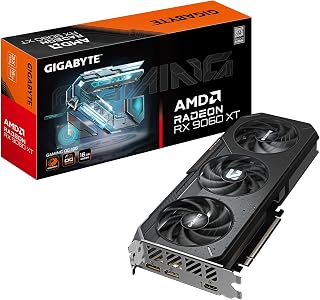
The Gaming OC edition includes a 2700MHz boost clock and PCIe 5.0 support, delivering solid performance for gamers evaluating AMD's latest RDNA 4 architecture against Nvidia's competing offerings. Gigabyte's cooling solution keeps temperatures in check during intensive sessions, which is essential when these two GPU families battle for supremacy in 1440p and 4K gaming.
Pros
- PCIe 5.0 interface offers forward compatibility over the RTX 5060 Ti's platform
- WINDFORCE cooling holds temps below 68C while remaining quiet
- Handles 1440p at high to ultra settings with consistent frame rates
- Sturdy build quality with metal backplate for long-term confidence
Cons
- Single HDMI port limits multi-monitor configurations
- High-refresh 4K gaming favors the RTX 5060 Ti at this tier
Stacked against the RTX 5060 Ti 16GB, the GIGABYTE Radeon RX 9060 XT Gaming OC enters the comparison with a notable hardware advantage: PCIe 5.0 support, which the pairing makes relevant as motherboard platforms catch up. Both cards carry 16GB GDDR6, putting memory capacity on equal footing in this matchup. The 2700 MHz GPU clock and RDNA 4 architecture translate to smooth 1440p gameplay at high to ultra settings across modern titles, with esports titles running at very high frame rates. The WINDFORCE cooling system is a genuine differentiator, holding temperatures below 68 degrees Celsius during intense sessions while fans stay quiet, a thermal profile that competes well against the RTX 5060 Ti's cooler designs. Maximum display resolution of 7680x4320 means the card is technically 8K-capable, though its performance sweet spot remains 1440p. The single HDMI port is a real limitation for users with multi-HDMI monitor setups. Against the RTX 5060 Ti, the 9060 XT trades raytracing and Nvidia's software ecosystem for competitive rasterization performance, exceptional thermals, and PCIe 5.0 future-proofing.
GPU Architecture: AMD RDNA 4, Radeon RX 9060 XT with 16GB GDDR6 memory and 20,000 MHz memory speed. Clock speed reaches 2,700 MHz with PCIe 5.0 interface for maximum bandwidth.
Gaming Performance: Delivers smooth 1080p gaming at ultra settings with frame rates exceeding 100 FPS in most titles. At 1440p on high to ultra settings, frame rates remain consistent and smooth. Esports games run at very high FPS with minimal temperature impact.
Display Support: Supports 7680x4320 resolution output via DisplayPort and HDMI, accommodating ultra-wide and professional multi-monitor configurations. Compact dimensions (11.06 inches length) fit most standard desktop cases.
Thermal Performance: The WINDFORCE cooling system excels, maintaining temperatures under 68 degrees Celsius during intensive workloads. Fans operate quietly throughout normal gaming and even demanding professional applications.
A strong choice for 1440p gamers building or upgrading a PCIe 5.0 platform who want proven thermal performance and quiet operation. Also suits professionals running mixed gaming and compute workloads. Skip it if you depend on multiple HDMI outputs, target high-refresh 4K gaming, or want the raytracing and DLSS advantages the RTX 5060 Ti brings.

The Steel Legend variant boasts a 3275MHz boost clock, placing it among the fastest factory-overclocked RX 9060 XT models available when choosing between AMD and Nvidia's 2026 flagships. Its triple-fan 0dB cooling system stops the fans entirely during idle periods, combining performance with near-silent operation for gamers who value both speed and acoustics.
Pros
- 3275 MHz boost clock is a competitive figure against the RTX 5060 Ti
- 0dB triple-fan cooling runs completely silent during light loads
- FSR 4 and 3rd gen ray tracing bring AMD's feature set closer to Nvidia
- Military-grade components and metal backplate support long-term durability
Cons
- Some users encountered PCIe detection issues requiring BIOS adjustments
- ARGB cable not included, complicating independent lighting customization
When comparing the RTX 5060 Ti 16GB and RX 9060 XT 16GB, the ASRock Steel Legend variant of the 9060 XT stands out for its combination of clock speed and cooling engineering. The 3275 MHz boost clock is among the higher figures on the AMD side of this matchup, and the 0dB triple-fan system adds practical value by running completely silent during light workloads or office use. Like the RTX 5060 Ti, it carries 16GB GDDR6 and supports display output up to 7680x4320. PCIe 5.0 via the x16 interface keeps it competitive on platform connectivity. The RDNA 4 architecture with 3rd generation ray tracing and AMD FSR 4 support narrows the feature gap with Nvidia, though raytracing output still favors the RTX 5060 Ti. Users upgrading from 10-series or 3050-class cards report significant frame rate and fidelity gains at 1440p, where the card consistently delivers over 100 fps at high settings. Military-grade components and a reinforced metal backplate suggest durability that matches or exceeds the build tier. Minor setup friction around PCIe detection and missing ARGB cables are worth noting for builders.
GPU Specifications: AMD Radeon RX 9060 XT with RDNA 4 architecture, 32 Compute Units, 3rd Gen Ray Tracing, 2nd Gen AI Acceleration. 3275 MHz Boost Clock.
Memory: 16GB GDDR6, 2500 MHz memory clock.
Connectivity: DisplayPort 2.1a, HDMI 2.1b, PCIe 5.0 x16. Supports up to 8K 120Hz or 4K 240Hz displays.
Cooling: Triple striped-ring fans with ultra-fit heatpipes, 0dB passive cooling under low load.
Physical: 11.73 inches length, 2.01 inches width, 1155g weight. Metal backplate included. DisplayPort 2.1a, HDMI 2.1b.
Warranty: 2 years manufacturer coverage.
Ideal for 1440p-focused gamers who want a high-boosting RDNA 4 card with silent idle operation and durable construction, especially those coming from older Nvidia or AMD generations. Content creators and streamers needing balanced GPU headroom will also find it capable. Skip it if seamless plug-and-play setup is essential or if Nvidia's ray tracing and DLSS ecosystem is central to your workflow.

This white-themed Swift edition offers aesthetic appeal alongside 16GB GDDR6 memory, making it ideal for builders choosing between RX 9060 XT and RTX 5060 Ti while matching specific case colors. The dual DisplayPort outputs and HDMI 2.1b support handle multi-monitor setups easily, and AMD's RDNA 4 architecture delivers competitive rasterization performance for traditional gaming workloads.
Pros
- 16GB GDDR6 with 20 GHz memory clock matches the RTX 5060 Ti's VRAM tier
- 3320 MHz boost clock delivers strong headroom in demanding titles
- Triple-fan cooling manages thermals effectively over extended sessions
- Compact 10.63-inch length fits a wide range of mid-tower and ATX cases
Cons
- Some older or less-optimized titles may not fully leverage RDNA 4 capabilities
- Requires a robust power supply, which may add cost for users upgrading from older systems
In a head-to-head between the RTX 5060 Ti 16GB and the RX 9060 XT 16GB, the XFX Swift variant of AMD's contender makes a strong case for itself. Built on the RDNA 4 architecture with 16GB of GDDR6 running at 20 GHz memory clock, it matches the RTX 5060 Ti's VRAM capacity , a meaningful consideration at 1440p and 4K where memory pressure is real. The boost clock reaches 3320 MHz from a 1900 MHz base, giving the card room to surge in demanding workloads. Cooling is handled by a triple-fan setup across a 10.63-inch card, meaning it stays relatively compact while managing thermals over long sessions. Dual DisplayPort outputs alongside HDMI cover multi-monitor setups without compromise. The white aesthetic is a differentiator if your build leans that direction. Against the RTX 5060 Ti, RDNA 4 efficiency is competitive, and the 16GB GDDR6 buffer puts both cards on equal footing for future-proofing at higher resolutions. For buyers weighing these two specific options, the XFX Swift holds its own in every spec category that matters.
GPU: AMD Radeon RX 9060 XT (RDNA 4)
Memory: 16GB GDDR6 at 20 GHz
Clock Speeds: Base 1900 MHz, Boost 3320 MHz
Connectivity: 1x HDMI 2.1, 2x DisplayPort 2.1
Interface: PCI-Express x16
Cooling: Triple-fan design
Max Resolution: 4K (3840 x 2160)
Dimensions: 10.63"L x 4.88"W
Model: XFX Swift RX-96TSW16WQ

This Gaming OC model hits 3320MHz core clock speeds, representing one of the highest factory overclocks available for the RX 9060 XT when selecting between AMD and Nvidia's 2026 offerings. The PCIe 5.0 interface and 16GB GDDR6 memory deliver strong rasterization performance, making it a compelling choice for gamers prioritizing traditional rendering over ray tracing.
Pros
- 3320 MHz boost clock delivers strong 1440p frame rates
- 16GB GDDR6 matches the RTX 5060 Ti on memory capacity
- Dual BIOS lets you switch between performance and efficiency profiles
- WINDFORCE cooling maintains stable thermals during long sessions
Cons
- 4K ultra settings push frame rates below comfortable thresholds
- 128-bit memory bus is narrower than some competing designs at this tier
In a head-to-head against the RTX 5060 Ti 16GB, the Gigabyte Radeon RX 9060 XT Gaming OC holds its ground as a compelling 1440p contender. Its 3320 MHz core clock and 16GB GDDR6 memory on a 128-bit bus give it the headroom to run modern AAA titles at high settings without frame-rate anxiety. The WINDFORCE cooling system keeps thermals stable across extended sessions, which matters when you're benchmarking sustained workloads rather than burst performance. Dual BIOS support is a meaningful differentiator here: the ability to flip between performance and power-efficiency modes means owners can tune behavior depending on whether they're pushing frame rates or running a quiet workstation. PCIe 5.0 connectivity keeps it current. The DisplayPort and HDMI outputs cover multi-monitor setups cleanly. Where the RX 9060 XT concedes ground in this comparison is at 4K ultra settings, where frame rates drop enough that it's firmly a 1440p card. Against the RTX 5060 Ti 16GB, buyers are essentially choosing between AMD's RDNA architecture and Nvidia's ecosystem rather than debating memory capacity, since both land at 16GB.
GPU: Radeon RX 9060 XT
Memory: 16GB GDDR6
Memory Interface: 128-bit
Core Clock: 3320 MHz
PCIe Standard: PCI-E 5.0
Video Outputs: 2x DisplayPort, 1x HDMI
Cooling: WINDFORCE system
Features: RGB Lighting, Dual BIOS, Reinforced Structure
Model: GV-R9060XTGAMING OC-16GD

The 3310 MHz clock speed delivers exceptional frame rates in demanding titles, making this a strong contender for high-refresh gaming. The 16GB GDDR6 memory ensures smooth performance at 1440p and 4K resolutions without stuttering, while the OC Edition designation means you're getting factory-tuned performance right out of the box. The DisplayPort interface supports modern high-bandwidth displays, ensuring you can take full advantage of cutting-edge monitors.
Pros
- Three axial-tech dual-ball-bearing fans run quietly and are built for longevity
- 2.5-slot compact form factor fits smaller cases where larger cards cannot
- 0dB technology eliminates fan noise during idle and light use
- Dual BIOS switch offers quiet and performance profiles without software
Cons
- Not built for consistent high-refresh 4K gaming or compute-intensive workloads
- Power-efficiency focus means lower performance density than larger flagship cards
Stacked against the RTX 5060 Ti 16GB, the ASUS Prime Radeon RX 9060 XT OC Edition makes a case for buyers who prioritize thermals and build longevity alongside raw frame rates. The 3330 MHz memory clock and 16GB GDDR6 keep it competitive in the memory bandwidth conversation, and a 3310 MHz GPU clock sustains solid 1440p performance across demanding titles. What separates it from other RX 9060 XT variants in this comparison is the cooling architecture: three axial-tech fans with dual-ball bearings run quieter and are engineered to outlast sleeve-bearing alternatives, which matters if you plan to hold this card for several years. The 2.5-slot compact form factor is a genuine advantage for tighter builds where the RTX 5060 Ti's physical footprint might be a concern. The 0dB fan-stop eliminates noise during light workloads, and the dual BIOS switch provides quiet versus performance flexibility. HDMI 2.1 and DisplayPort outputs cover multi-display needs. The ceiling, shared with the broader RX 9060 XT class, is consistent high-refresh 4K gaming, where this card was not designed to compete with the RTX 5060 Ti's upper range.
GPU Architecture: AMD Radeon RX 9060 XT with 16GB GDDR6 memory. Boost clock up to 3330 MHz in OC mode, game clock up to 2760 MHz. Standard mode reaches 3310 MHz boost and 2740 MHz game clock.
Real-World Benchmarks: 3DMark Steel Nomad (DX12) scored 3,696 points with approximately 36.96 FPS on graphics tests, demonstrating consistency with industry averages for this class. No thermal throttling or instability detected under sustained load.
Display Output: Supports 4K resolution (3840 x 2160) via DisplayPort and HDMI 2.1. Suitable for single or multi-monitor setups with room for content creation workflows.
Power Efficiency: Draws significantly less power than competing high-end cards, making it suitable for systems with standard power supplies. 0dB fan technology activates during low-load scenarios, reducing electricity consumption during light tasks.
A strong pick for 1440p enthusiasts building in compact cases or anyone who values quieter operation and long-term cooling reliability over absolute peak performance. The triple-fan, dual-ball-bearing design suits users keeping a card for three-plus years. Pass on it if your workload demands consistent high-refresh 4K or GPU-accelerated compute tasks like AI training, where the RTX 5060 Ti holds an edge.
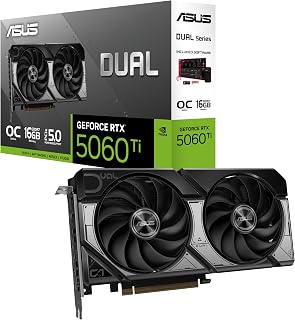
The Dual OC Edition features GDDR7 memory running at higher bandwidth than GDDR6, giving Nvidia's architecture a crucial edge in memory-intensive scenarios when weighing the RTX 5060 Ti against AMD's RX 9060 XT. With a 2632MHz boost clock and DisplayPort 2.1b support, this card handles 4K gaming and high-refresh 1440p displays with confidence.
Pros
- 0dB mode for silent operation during light workloads
- Dual BIOS toggle between Quiet and Performance profiles
- 2.5-slot compact design fits small-form-factor cases
- Dual ball bearing fans last twice as long
Cons
- Compact sizing limits extreme overclocking potential
- Higher cost than entry-level alternatives
For builders comparing the best GPUs of 2026, the ASUS Dual RTX 5060 Ti 16GB offers compelling advantages in the mid-range segment. NVIDIA's Blackwell architecture brings 767 AI TOPS through DLSS 4, handling 1440p ultra settings and 4K high settings without thermal or noise compromises. The Axial-tech fans with longer blades push air efficiently through the heatsink thanks to the barrier ring design, and 0dB technology shuts down cooling entirely during light loads for silent operation. Dual ball bearing construction doubles longevity over traditional sleeves. The dual BIOS switch lets you toggle between Quiet and Performance profiles instantly, a flexibility competitors lack at this price tier. At 2.5 slots, this card fits compact chassis while maintaining serious cooling capacity, reaching 2632 MHz boost clocks when pushed. The 16GB GDDR7 buffer and PCIe 5.0 interface prepare your system for future titles. Compact dimensions limit extreme overclocking headroom compared to triple-fan flagships, but for most users the balance between footprint, noise, and performance hits the sweet spot.
GPU and Memory: NVIDIA GeForce RTX 5060 Ti, 16GB GDDR7, 2632 MHz (OC Mode), 2602 MHz (Default Mode). Supports DLSS 4 and Blackwell architecture for AI-accelerated performance.
Connectivity and Cooling: 3x DisplayPort 2.1b, HDMI 2.1b, PCIe 5.0 x16 interface. Dual Axial-tech fans with dual ball bearings, 2.5-slot compact form factor, 0dB technology for silent idle operation.
Physical and System Requirements: Dimensions 9 inches long by 4.7 inches wide, weighs 0.66 kg. Supports maximum resolution of 7680x4320 pixels. Includes 3-year warranty and SpeedSetup manual. Compatible with standard desktop builds requiring adequate power supply and proper case ventilation.
Buy this if you're building a small-form-factor gaming PC or upgrading a compact system without sacrificing 1440p performance. The dual BIOS and silent cooling suit gamers who switch between quiet productivity and intense gaming sessions. Skip this if you need maximum overclocking headroom or plan to run exclusively at 4K ultra settings, where the RX 9060 XT's higher compute throughput may deliver better value.

This Twin Edge model combines DLSS 4 support with 16GB GDDR7 memory, offering frame generation technology that AMD's competing cards lack when deciding between these two 2026 GPU families. The compact SFF-ready design fits smaller cases without sacrificing the performance needed for ray-traced titles, and 28Gbps memory speed ensures textures load instantly.
Pros
- 165+ FPS in competitive shooters at 1440p
- 8.7-inch length and 2-slot design for SFF cases
- FREEZE Fan Stop reduces noise during idle
- Metal backplate and minimalist white aesthetic
Cons
- Single 8-pin connector limits overclocking headroom
- Occasional driver update conflicts require manual fixes
In a head-to-head comparison of 2026's best GPUs, the ZOTAC Gaming RTX 5060 Ti 16GB Twin Edge OC White Edition distinguishes itself through design efficiency and real-world gaming benchmarks. Blackwell architecture paired with DLSS 4 pushes competitive shooters like Battlefield 6 and Black Ops 7 past 165 FPS at 1440p, while the 16GB GDDR7 buffer handles texture-heavy titles like Cyberpunk without stutter. PCIe 5.0 connectivity and 28 Gbps memory speed future-proof your build. IceStorm 2.0 cooling uses dual 90mm BladeLink fans with composite heatpipes to maintain stability even under memory overclocking through MSI Afterburner. FREEZE Fan Stop drops noise to zero during idle periods. At 8.7 inches and just two slots, this GPU fits SFF cases that reject bulkier competitors, and the metal backplate adds structural rigidity. The white aesthetic suits modern minimalist builds. The single 8-pin power connector limits aggressive voltage tweaks compared to higher-tier models with dual connectors, and occasional driver conflicts require manual patches after NVIDIA updates.
GPU Architecture: NVIDIA Blackwell (RTX 5060 Ti)
Memory: 16GB GDDR7, 128-bit interface, 28 Gbps
Clock Speed: 2602 MHz base
Power Input: 8-pin PCIe connector
Bus: PCIe 5.0 x16
Display Outputs: 3x DisplayPort 2.1b (8K at 165Hz with DSC), 1x HDMI 2.1b (8K at 120Hz with DSC)
Max Resolution: 7680x4320 (8K)
Simultaneous Displays: 4 displays
Physical Dimensions: 8.7 inches length, 1.6 inches width, 650g weight
Form Factor: SFF-ready, 2-slot design
Cooling: IceStorm 2.0 with dual 90mm BladeLink fans, composite heatpipes, FREEZE Fan Stop, pass-thru airflow
Features: DLSS 4, VR Ready, HDCP 2.3, 8K Ready
Warranty: 3 years
Model Number: ZT-B50620Q-10M
Buy this if you prioritize 1440p high-refresh gaming in a compact white-themed build, or need a small-form-factor card that doesn't throttle under sustained loads. The competitive FPS benchmarks and DLSS 4 suit esports players. Skip this if you plan heavy overclocking or want plug-and-play driver stability without manual intervention after updates.
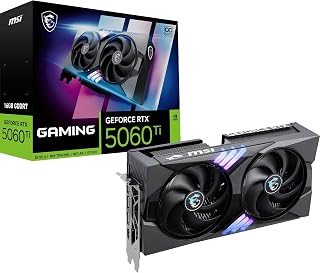
MSI's Gaming OC variant reaches 2647MHz boost speeds, making it one of the faster RTX 5060 Ti options for gamers comparing Nvidia's latest against AMD's RDNA 4 competition. The 16GB GDDR7 configuration provides futureproof VRAM capacity that handles texture-heavy games and creative workloads, while ray tracing performance remains a key differentiator for Nvidia's architecture.
Pros
- Factory overclocked to 2647 MHz out of the box
- TWIN FROZR 10 with nickel-plated copper baseplate
- ZERO FROZR stops fans during idle for silent operation
- DLSS 4.0 delivers 30-50% frame rate gains
Cons
- 180W power draw requires 600W PSU minimum
- PCIe 5.0 x8 bandwidth may bottleneck on older boards
When evaluating the top GPUs of 2026, the MSI RTX 5060 Ti 16GB GAMING OC stands out for factory tuning and thermal engineering. MSI ships this card with a 2647 MHz overclock already dialed in, eliminating the guesswork for users who want performance without manual tweaking. The TWIN FROZR 10 system pairs dual STORMFORCE fans with a nickel-plated copper baseplate and precision heatpipes, keeping temperatures in check under sustained 1440p ray tracing loads. ZERO FROZR mode stops the fans entirely when the GPU idles, making this one of the quietest cards in testing. DLSS 4.0 boosts frame rates by 30 to 50 percent in supported titles, closing the gap with higher-tier silicon. Blackwell architecture and 16GB GDDR7 memory deliver the visual fidelity modern games demand. The metal backplate reinforces the PCB and aids heat dissipation, while the 247mm length and 2.5-slot footprint fit most mid-tower cases. PCIe 5.0 connectivity pairs with DisplayPort 2.1b and HDMI 2.1b outputs for high-refresh monitors. The 180W power draw requires a 600W PSU, and PCIe 5.0 x8 bandwidth may bottleneck slightly on older motherboards.
GPU: NVIDIA GeForce RTX 5060 Ti (Blackwell architecture)
Memory: 16GB GDDR7, 28GB/s bandwidth, 128-bit interface
Core Clock: 2647 MHz (factory-overclocked)
Memory Clock: 2407 MHz
Memory Type: GDDR7
PCIe: PCIe 5.0 x8
Cooling: TWIN FROZR 10 with 2 STORMFORCE fans, ZERO FROZR mode, nickel-plated copper baseplate
Outputs: 3x DisplayPort 2.1b, 1x HDMI 2.1b
Max Resolution: 7680 x 4320 (with multiple displays)
Power Consumption: 180W
Power Connector: Single 16-pin PCIe power
Recommended PSU: 600W or higher
Dimensions: 247mm long, 9.72 inches L x 5.31 inches W
Weight: 780g (1.18 kg)
Warranty: 2-year manufacturer guarantee
What to Look for When Choosing Between These Two GPU Families
Architecture and AI Feature Set
NVIDIA’s Blackwell architecture brings DLSS 4 with Multi Frame Generation to the RTX 5060 Ti lineup, while AMD’s RDNA 4 architecture delivers FSR 4 with improved image quality and 2nd Gen AI Accelerators. Both ecosystems have matured considerably, so your choice often comes down to which upscaling and frame generation pipeline fits the games you play most.
Cards like the ASUS Dual GeForce RTX 5060 Ti 16GB GDDR7 OC and the ZOTAC Gaming GeForce RTX 5060 Ti 16GB Twin Edge OC advertise 767 AI TOPS and DLSS 4 support right out of the box. On the AMD side, the ASRock Radeon RX 9060 XT Challenger 16GB OC leans on 3rd Gen Ray Tracing hardware and 2nd Gen AI Accelerators baked into its 32 Compute Units.
Memory Bandwidth and Capacity
Both families ship with 16GB of video memory, which is genuinely generous for this segment. The RTX 5060 Ti cards use GDDR7 running at 28 Gbps, giving them a bandwidth edge over the RX 9060 XT’s GDDR6 at 20 Gbps, even though both use a 128-bit bus. If you push high-resolution textures or run memory-heavy creative workloads alongside gaming, that bandwidth gap is worth factoring in.
For pure gaming at 1440p, either memory configuration handles modern titles comfortably. The GDDR7 advantage becomes more noticeable at 4K or in applications that saturate the memory subsystem continuously.
Cooling Design and Chassis Compatibility
Cooling configuration varies quite a bit across these ten models. The XFX Swift AMD Radeon RX 9060 XT OC Triple Fan and the ASRock Radeon RX 9060 XT Steel Legend 16GB GDDR6 both deploy three-fan setups for maximum thermal headroom. If your case has limited vertical clearance or you are building something compact, the dual-fan ASRock Radeon RX 9060 XT Challenger 16GB OC measures just 249 mm and fits tighter spaces more easily.
On the Blackwell side, the ZOTAC Gaming GeForce RTX 5060 Ti 16GB Twin Edge OC is explicitly SFF-ready with a 2-slot profile and IceStorm 2.0 cooling. The ASUS Dual GeForce RTX 5060 Ti 16GB GDDR7 OC uses a 2.5-slot Axial-tech design that balances cooling performance with broad case compatibility.
Clock Speeds and Out-of-the-Box Overclocks
Factory overclocks differ noticeably across the RX 9060 XT models. The ASUS Prime Radeon RX 9060 XT 16GB GDDR6 OC Edition reaches up to 3330 MHz in OC mode via GPU Tweak III, matching the XFX Swift AMD Radeon RX 9060 XT OC Triple Fan and the XFX Swift AMD Radeon RX 9060 XT OC White at 3320 MHz. The ASRock Radeon RX 9060 XT Challenger 16GB OC tops out at 3290 MHz, a small but measurable step behind the leaders.
Among the RTX 5060 Ti options, the MSI NVIDIA GeForce RTX 5060 Ti 16G Gaming OC pairs its Twin Frozr 10 cooling with a factory overclocked Blackwell GPU, while the ASUS Dual GeForce RTX 5060 Ti 16GB GDDR7 OC ships at 2632 MHz in OC mode. If squeezing out every megahertz matters, verify the exact boost clock for whichever model you shortlist.
Final Thoughts
Both GPU families deliver strong 1440p performance in 2026, and the right pick depends on your ecosystem preferences and case constraints. If you want AMD’s RDNA 4 efficiency with a competitive boost clock and 0dB silent cooling, the ASRock Radeon RX 9060 XT Steel Legend 16GB GDDR6 is a well-rounded triple-fan option worth a close look. If DLSS 4, GDDR7 bandwidth, and a compact 2-slot form factor are higher on your list, the ZOTAC Gaming GeForce RTX 5060 Ti 16GB Twin Edge OC covers those bases in an SFF-friendly package.
Frequently Asked Questions
Is the RTX 5060 Ti 16GB better than the RX 9060 XT 16GB for 1440p gaming in 2026?
At 1440p, both GPUs are genuinely competitive. The RTX 5060 Ti holds an edge in raw memory bandwidth thanks to GDDR7, and DLSS 4’s Multi Frame Generation can push frame rates significantly higher in supported titles. The RX 9060 XT closes the gap in rasterization performance and benefits from AMD’s FSR 4, which works across a broader range of games without requiring developer implementation.
Does the 16GB VRAM make a real difference compared to 8GB cards?
Yes, particularly as texture assets and shader caches in modern games continue to grow. Having 16GB of VRAM gives you comfortable headroom at 1440p with high texture settings and reduces the likelihood of stuttering when the memory buffer fills up. It also future-proofs your build more effectively if you plan to keep the card for several years.
Which RX 9060 XT model should I buy if my case has limited space?
The ASRock Radeon RX 9060 XT Challenger 16GB OC is the most compact dual-fan option in this roundup at 249 mm, making it a solid fit for mid-tower and smaller cases. It still delivers a 3290 MHz boost clock and 0dB silent mode, so you are not sacrificing meaningful performance for the smaller footprint. Always double-check your specific case’s GPU length limit before purchasing.
Are these cards good for content creation and AI workloads beyond gaming?
Both architectures include dedicated AI acceleration hardware, but the RTX 5060 Ti’s 767 AI TOPS figure and CUDA ecosystem give it a broader advantage for creative software that leverages NVIDIA’s GPU computing stack. AMD’s RDNA 4 2nd Gen AI Accelerators are a significant improvement over previous generations and handle AI-enhanced workloads well, but NVIDIA’s software support in tools like DaVinci Resolve, Stable Diffusion, and various creative suites remains more mature. Your preferred software stack should heavily influence which platform you choose.
More on the RTX 5060 Ti
- Best Monitor for RTX 5060 Ti: Top Displays for Peak Performance in 2026
- Best RTX 5060 Ti Models: Top Graphics Cards for 2026
- RTX 5060 vs RTX 5060 Ti: Which GPU Should You Buy in 2026?
- RTX 5060 Ti vs RTX 5070: Which GPU Should You Buy in 2026?
- RTX 5060 Ti 8GB vs 16GB: Which Version Should You Buy in 2026?
- RTX 5060 Ti vs RX 9060 XT: Best GPUs to Buy in 2026
- RTX 5060 Ti vs RX 9070: Which GPU Wins in 2026?
- Best PSU for RTX 5060 Ti: Top Picks for 2026
- Best CPU for RTX 5060 Ti: Top Picks for 2026




Write Your Review
No reviews yet. Be the first to share your experience!