

Building a PC around Intel’s Core Ultra Series 2 processors means choosing between two chipset options: Z890 and B860. Both support the same CPUs and DDR5 memory, but they differ in overclocking capability, expansion options, and connectivity features that directly impact your build’s performance and future upgrade path.
This guide compares ten motherboards across both chipsets to show you what each platform delivers. Whether you need maximum overclocking headroom or a cost-effective foundation for gaming, you’ll find the right fit here. If you’re also planning your display setup, check out our guide to the best 4K monitors for RTX 5080 to match your new motherboard with a worthy screen.
Pros
- Excellent stability and durability with premium capacitors and comprehensive power delivery
- Outstanding connectivity including Thunderbolt 4, multiple USB ports, and PCIe 5.0 support
- Highly competitive price point for a full-featured Z890 chipset motherboard
- Strong customer satisfaction reflected in near-perfect ratings
- BIOS Flashback and Memory OC Shield features simplify setup and customization
Cons
- Limited to single Ethernet port, which may be restrictive for networking-intensive workstations
- Only 4 SATA ports reduce expandability for legacy storage devices
- DDR5 memory remains expensive compared to older DDR4 alternatives
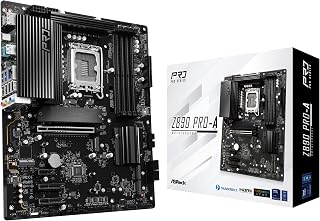
The ASRock Z890 Pro-A is a feature-rich ATX motherboard designed for Intel Core Ultra processor builds seeking reliable performance without breaking the bank. This board targets enthusiasts and professionals who want stability-focused components with modern connectivity standards, making it ideal for content creators, gamers, and system builders.
The standout technical features include robust 16+1+1+1+1 power delivery with Dr.MOS components, ensuring clean power distribution for stable operation even under load. DDR5 memory support up to 8666+ MHz enables faster data throughput for demanding applications, while PCIe 5.0 support future-proofs your build for next-generation graphics cards and NVMe SSDs. The inclusion of Thunderbolt 4 is particularly valuable for professional workflows involving high-speed external connectivity.
Build quality reflects ASRock's commitment to durability, with durable capacitors rated at 1000uF and comprehensive thermal management. The board provides 18 USB ports, 4 SATA connections, and generous I/O options that cover most user needs. Memory OC Shield and BIOS Flashback features make system configuration more approachable for less experienced builders.
The primary limitations involve I/O choices rather than quality concerns. A single Ethernet port may frustrate network-heavy deployments, and limited SATA ports restrict legacy storage expansion. DDR5 platform costs remain higher than DDR4 alternatives, which impacts total system budget.
The Z890 Pro-A delivers exceptional value for LGA1851 builds, combining reliable components, modern connectivity, and budget-friendly pricing. It's the smart choice for anyone building an Intel Core Ultra system who prioritizes stability and feature completeness over premium overclocking enhancements.
Processor Socket: LGA1851 for Intel Core Ultra Series 2
Chipset: Intel Z890
Memory Support: 4x DDR5 DIMM slots, up to 8666+ MHz (OC), maximum 256GB
Power Delivery: 16+1+1+1+1 phases with Dr.MOS VCore+GT
Storage: 4x SATA 3 ports for conventional drives and SSDs
Connectivity: 18 USB ports, 1 Gigabit Ethernet, 1 HDMI, 1 DisplayPort, 1 Thunderbolt 4 Type-C
Expansion: 4x PCIe slots with PCIe 5.0 support
Form Factor: ATX standard size
Warranty: 3-year coverage
Weight: 1kg
Who Should Buy: System builders upgrading to Intel Core Ultra, content creators needing fast memory and reliable performance, gamers seeking cost-effective high-performance builds, and enthusiasts wanting modern connectivity without premium pricing.
When to Consider Alternatives: If you need multiple Ethernet ports for network applications, require extensive SATA storage without additional cards, or want maximum overclocking headroom with premium power delivery beyond this board's capabilities.
Best Used With: Intel Core Ultra Series 2 processors, DDR5 memory kits rated 6000-8666 MHz, modern NVMe SSDs for boot and applications, and current-generation graphics cards supporting PCIe 5.0. Pairs well with quality power supplies rated 650W or higher for stable operation.

This B860 board delivers excellent value for mainstream builds where extreme overclocking isn't essential. The DDR5 Memory Boost reaching 9200+ MT/s OC provides substantial headroom for performance enthusiasts who want faster memory without paying Z890 premiums. Wi-Fi 7 and 5G LAN ensure future-proof connectivity, while the single PCIe 5.0 x16 slot and M.2 Gen5 support cover modern graphics cards and storage without unnecessary extras.
Pros
- Excellent value for a feature-packed ATX board with PCIe 5.0 and Gen5 NVMe support
- CMOS auto-reset on failed overclock prevents system lockouts and simplifies troubleshooting
- Abundant connectivity with Thunderbolt 4, USB 20G Type-C, and 7.1 HD Audio
- Robust VRM and thermal design ensures stable performance during sustained gaming and overclocking
- Clean aesthetic design without excessive RGB appeals to professional and enthusiast builds
Cons
- Wi-Fi 7 and Bluetooth connectivity issues reported in some units, may require BIOS updates or replacement
- ATX form factor limits compatibility with smaller PC cases compared to micro-ATX alternatives
- No integrated graphics support limits troubleshooting options without a dedicated GPU
The MSI MAG B860 Tomahawk WiFi is a full-size ATX motherboard designed for builders upgrading to Intel's Core Ultra Processors (Series 2). It combines mainstream accessibility with premium features typically found in higher-end boards, making it ideal for gamers, content creators, and enthusiasts who want modern connectivity and overclocking flexibility without excessive cost.
The standout features revolve around next-generation support. The single PCIe 5.0 x16 slot provides bandwidth for future graphics cards, while DDR5 memory optimization to 9200+ MT/s and triple M.2 connectors (including one Gen5 slot) future-proof your build. The 12 Duet Rail VRM with 60A delivery handles the power demands of Intel's newer chips reliably, and the FROZR Guard cooling system with thermal pads and extended heatsinks keeps components running cool during sustained workloads.
Build quality is solid. The 6-layer PCB with thickened 2oz copper and PCIe Steel Armor II provide durability and signal integrity. The CMOS auto-reset feature is a thoughtful inclusion for overclockers, automatically returning to defaults if a clock configuration fails, eliminating the need to pull the battery. Overall design avoids excessive RGB, keeping the aesthetic clean and professional.
The primary concern is reported Wi-Fi 7 and Bluetooth connectivity issues in some units. While early reviewers praised the board, later feedback suggests these features may require driver updates or could indicate hardware inconsistencies in certain batches. This warrants investigation before purchase and potential RMA consideration if problems arise.
Verdict: The B860 Tomahawk WiFi delivers strong performance and modern features at an accessible price point. It's well-suited for Intel Core Ultra builds that prioritize gaming, streaming, and content creation. Verify Wi-Fi/BT functionality upon arrival, and you'll have a dependable platform that balances value, connectivity, and overclocking potential effectively.
Consider this motherboard if you're building or upgrading with an Intel Core Ultra Processor (Series 2) and want strong core features without premium pricing. The PCIe 5.0 and Gen5 NVMe support provide longevity, while Wi-Fi 7 and extensive USB connectivity cover most use cases.
Skip this board if you need ultra-compact form factors (micro-ATX or mini-ITX), require integrated graphics for troubleshooting, or prioritize maximum power delivery for extreme overclocking. Also verify hardware compatibility with your GPU and storage devices before purchase, as some users report connectivity quirks.
Setup is straightforward with comprehensive manual documentation. The EZ M.2 Clip II simplifies storage installation, and the auto-CMOS reset feature removes guesswork from overclocking trials. Budget for a quality CPU cooler and ensure your case accommodates the full ATX layout.
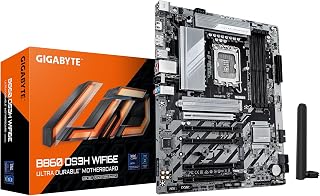
Budget-conscious builders get solid fundamentals with this B860 option, including three M.2 slots for ample storage expansion. The DDR5-5600 base speed meets standard requirements without overclocking complications, while PCIe 5.0 support ensures compatibility with current graphics cards. WIFI6E and 2.5GbE LAN provide modern connectivity, and the EZ-Latch simplifies installation, making this practical for straightforward builds prioritizing reliability over extreme performance.
Pros
- Outstanding value for the price with premium features like WiFi 6E and PCIe 5.0
- Easy installation and setup, with reviewers praising the straightforward BIOS flashing process
- Solid power delivery design ensures stable performance under load and overclocking
- Multiple PCIe slots offer excellent expansion flexibility for graphics cards and storage devices
- Reliable performance verified by customer feedback after weeks of real-world use
Cons
- Lacks integrated graphics, requiring a discrete GPU for display output
- Limited to one display port, restricting multi-monitor setups without additional adapters
- Quality control concerns reported with bent USB 3 header pins on some units
The GIGABYTE B860 DS3H WIFI6E is a compelling mid-range ATX motherboard designed for Intel Core Ultra Series 2 processors. This board targets budget to mid-tier builders who want a modern, feature-rich platform without premium pricing. It successfully delivers on connectivity and expandability while maintaining the affordability that makes it attractive to DIY enthusiasts and first-time builders.
The standout features center around future-proofing your build. PCIe 5.0 support ensures your high-end graphics cards and NVMe drives will operate at full capacity, while WiFi 6E delivers blazingly fast wireless speeds compared to older standards. DDR5 memory compatibility with four DIMM slots future-proofs your system and provides ample upgrade potential. The power delivery system, rated at 8+1+2+2 with 50A PPAK VRM, demonstrates GIGABYTE's commitment to stable performance even during heavy workloads or moderate overclocking.
Build quality appears solid based on customer feedback. Users consistently praise the installation experience, particularly the EZ-Latch connectors that eliminate the frustration of traditional release mechanisms. Thermal management components including MOSFET heatsinks and M.2 thermal guards show attention to longevity. The 3-year manufacturer warranty provides additional peace of mind, though one user did report bent USB 3 header pins on arrival, suggesting variable quality control in some units.
Real-world drawbacks deserve mention. The board lacks integrated graphics, making a dedicated GPU mandatory. Additionally, the single display port limits multi-monitor configurations. These limitations are typical for B-series boards at this price point but may frustrate users accustomed to higher-end models. One buyer experienced header pin damage that disabled USB 3 front panel connectivity, highlighting the importance of careful handling during unboxing.
The GIGABYTE B860 DS3H WIFI6E represents excellent value for builders seeking a modern, feature-packed foundation for Intel Core Ultra Series 2 systems. Its combination of PCIe 5.0, WiFi 6E, DDR5 support, and user-friendly design outweighs its modest drawbacks. Recommended for anyone building a balanced performance machine without unlimited budget.
Socket and Compatibility: LGA 1851 socket supporting Intel Core Ultra Processors (Series 2). Compatible with Windows 11 platforms.
Memory Support: Four DDR5 DIMM slots supporting up to 192GB total, with memory clock speeds up to 5600 MHz for high-performance configurations.
Expansion: One PCIe 5.0 slot for graphics or storage expansion. Four additional PCIe slots provide flexibility for networking cards, audio interfaces, or other peripherals. Two M.2 slots with thermal guards support NVMe SSD storage.
Connectivity: WiFi 6E for wireless networking. Single 2.5GbE Ethernet port for wired connections. Six USB ports plus USB-C support. One display port output.
Power and Thermal: 24-pin main power connector with 8+1+2+2 power delivery using 50A PPAK VRM. Integrated MOSFET heatsinks and M.2 thermal guards manage heat effectively.
Physical Specifications: Standard ATX form factor measuring 12 inches by 9.6 inches by 1 inch. Weighs 2.9 pounds. Includes 3-year manufacturer warranty.
Who Should Buy: Budget-conscious builders upgrading to Intel Core Ultra Series 2. Users wanting modern features like WiFi 6E and PCIe 5.0 without premium pricing. First-time builders attracted to the EZ-Latch design simplicity. Content creators valuing the 2.5GbE LAN for file transfers and uploads.
Consider Alternatives If: You require integrated graphics or multiple display outputs. You need extensive USB 3 connectivity and want maximum port count. You're building a high-end gaming rig where premium motherboards offer better power delivery and additional features.
Installation Tips: Users report excellent BIOS flashing experiences, so don't hesitate to update to the latest firmware. The EZ-Latch connectors are genuinely easy to use, but take care when handling the USB 3 header pins. Allow adequate airflow around M.2 slots since the thermal guards help but don't eliminate heat concerns.
Performance Expectations: This board excels at delivering stable, everyday performance. It handles gaming and productivity workloads admirably. Expect solid WiFi 6E performance in optimal conditions and reliable power delivery for moderate overclocking. The 2.5GbE LAN provides noticeably faster file transfers compared to 1GbE alternatives, beneficial for large file workflows.

The white aesthetic distinguishes this Z890 board for builders prioritizing visual presentation alongside overclocking potential. DDR5 support up to 8600+ MT/s OC provides strong memory performance, while dual PCIe slots (5.0 x16 and 4.0 x16) enable multi-GPU or additional expansion card configurations. Wi-Fi 7 and M.2 Gen5 ensure cutting-edge connectivity and storage speeds, justifying Z890 selection for enthusiasts wanting style with substance.
Pros
- DDR5 overclocking up to 8600+ MT/s, well beyond B860 capabilities
- PCIe 5.0 x16 slot with Steel Armor for current and future GPUs
- Three M.2 slots including Gen5 support with thermal shielding
- Wi-Fi 7, Thunderbolt 4 Type-C, and 2.5G LAN all included
Cons
- MSI RGB software reported as unstable with limited customization
- Most units need a BIOS update before booting Windows 11, requiring USB preparation
When the debate is Z890 versus B860, the MSI PRO Z890-S WiFi White illustrates exactly what you gain by stepping up to Intel's enthusiast chipset. B860 locks down overclocking, but this board's Z890 foundation lets DDR5 memory run at 8600+ MT/s, a headroom B860 simply cannot match. The 12 Duet Rail Power System VRM handles the sustained loads that Intel Core Ultra Series 2 processors can demand, and the PCIe 5.0 x16 slot with Steel Armor keeps the platform relevant for next-generation graphics cards. Three M.2 slots with Gen5 support and M.2 Shield Frozr thermal protection round out the storage story. On the connectivity side, Wi-Fi 7, Bluetooth 5.4, Thunderbolt 4 Type-C, and 2.5G LAN are all present, features that B860 boards at comparable prices rarely bundle together. For a builder who wants Z890's unlocked performance without paying flagship prices, this ATX board in white delivers a feature-complete package that justifies the chipset premium over B860.
Processor and Chipset: Socket LGA 1851, Intel Z890 chipset, supports Intel Core Ultra Processors Series 2
Memory: 4 x DDR5 DIMM slots, supports up to 256GB, overclocking to 8600+ MT/s, 1DPC 1R configuration
Storage: 1 x M.2 Gen5 x4 (128Gbps) with Shield Frozr, 2 x M.2 Gen4 x4 (64Gbps), 4 x SATA ports
Expansion: 1 x PCIe 5.0 x16 with Steel Armor, 2 x PCIe 4.0 x16, 1 x PCIe 4.0 x1
Connectivity: Wi-Fi 7, Bluetooth 5.4, 2.5G LAN, Thunderbolt 4 Type-C (40Gbps with 8K display support), 7.1 HD Audio with Audio Boost, 10 USB ports total, 1 x HDMI
Power Delivery: 12 Duet Rail Power System VRM, dual 8-pin CPU power connectors, 24-pin main power
Cooling: Extended heatsink, chipset heatsink, M.2 Shield Frozr, 7W/mK MOSFET thermal pads, combo-fan header (3A)
Physical: ATX form factor, 13.5" W x 10.6" H x 2.8" D, 1.61 kg, white design
Warranty: 3-year manufacturer warranty
Best for builders who want Z890's memory overclocking and PCIe 5.0 benefits without flagship board costs, particularly those pairing an Intel Core Ultra Series 2 chip with a high-end GPU and fast NVMe storage. Also suits content creators who need Thunderbolt 4 and Wi-Fi 7. Skip it if you plan to stay at stock CPU and memory speeds, since B860 covers that use case for less.

For gamers prioritizing network performance on a B860 platform, the Intel Killer 5G LAN offers optimized traffic management that reduces latency during online play. The 8800+ MT/s DDR5 overclocking capability still provides ample memory bandwidth for gaming workloads, while Wi-Fi 7 and PCIe 5.0 support ensure compatibility with current-gen graphics cards and SSDs without the cost premium associated with Z890 chipsets.
Pros
- PCIe 5.0 support future-proofs your build for next-generation hardware
- Multiple M.2 slots including Gen5 provide exceptional storage flexibility and performance
- Wi-Fi 7 delivers cutting-edge wireless speeds for uninterrupted online gaming
- Robust power delivery system ensures stable performance for Intel's latest processors
- Comprehensive cooling solution keeps components running cool during intense sessions
Cons
- Single PCIe 5.0 x16 slot limits multi-GPU configurations for enthusiasts
- Requires DDR5 memory which remains more expensive than DDR4 alternatives
- Limited USB port count compared to higher-end Z890 platforms
The MSI B860 Gaming Plus WiFi is a comprehensive gaming motherboard engineered for Intel Core Ultra Series 2 processors on the LGA 1851 socket. This ATX platform combines modern connectivity standards, premium power delivery, and aggressive thermal management into a single package. It caters to enthusiast gamers, streaming content creators, and PC builders who demand reliability without excessive cost.
The standout feature is undoubtedly the PCIe 5.0 x16 slot with Steel Armor, which enables modern graphics cards to operate at full bandwidth capacity. DDR5 memory support up to 8800+ MT/s unlocks performance gains in gaming and creative applications, while the triple M.2 configuration, including one Gen5 slot, delivers exceptional storage speeds. Wi-Fi 7 and Intel Killer 5G LAN eliminate connectivity bottlenecks during competitive play and content uploads.
Build quality reflects MSI's gaming pedigree with a durable 6-layer PCB, advanced Surface Mount Technology soldering for signal integrity, and comprehensive thermal solutions including high-conductivity MOSFET thermal pads and an extended heatsink array. The EZ M.2 Shield Frozr II actively prevents thermal throttling on high-performance NVMe drives. The 12 Duet Rail Power System with 8+4 pin CPU connectors provides stable power delivery even during overclocking attempts.
The main limitation is the single PCIe 5.0 slot, which restricts multi-GPU setups for professional workloads. Additionally, the motherboard requires DDR5 memory, which remains a premium investment compared to legacy DDR4 platforms. The relatively modest port count may also frustrate users with extensive peripheral collections.
For gamers and creators seeking a balanced, future-ready Intel platform with excellent value, the B860 Gaming Plus WiFi delivers compelling performance and features. It represents a smart foundation for building a capable gaming rig that won't become obsolete in the near term.
Chipset and Socket: Intel B860 chipset, Socket LGA 1851
Memory Support: 4x DDR5 DIMM slots, up to 8800+ MT/s (OC), maximum 256GB capacity
Storage Connectivity: 1x M.2 Gen5 x4 (128Gbps), 1x M.2 Gen4 x4 (64Gbps), 1x M.2 Gen4 x2 (32Gbps), 1x SATA port
Expansion Slots: 1x PCIe 5.0 x16 with Steel Armor, 1x PCIe port
Power Delivery: 12 Duet Rail Power System VRM, 8+4 pin CPU connectors
Networking: Wi-Fi 7 with Bluetooth 5.4, Intel Killer 5G LAN
Audio: 7.1 HD Audio with Audio Boost
Video Outputs: Thunderbolt 4 Type-C with 4K/60Hz display support
Physical: ATX form factor, 6-layer PCB, weighs 1.59 kg
Warranty: 3-year manufacturer warranty
Who Should Buy: This motherboard suits enthusiast gamers, content creators, and builders upgrading to Intel Core Ultra Series 2. It's ideal if you want PCIe 5.0 graphics support, fast DDR5 memory, and premium connectivity without Z890 pricing. It works well for streaming setups, video editing workstations, and high-refresh gaming rigs.
Who Might Want to Look Elsewhere: If you need multiple PCIe 5.0 slots for professional GPU setups, consider Z890 alternatives. Budget-conscious builders should evaluate B850 boards if DDR5 costs are prohibitive. Those requiring extensive USB connectivity may find the port selection limiting.
Key Compatibility Notes: Requires Intel Core Ultra Series 2 processors and DDR5 memory modules. Compatible with modern graphics cards supporting PCIe 4.0 and 5.0. Supports Windows 11 platforms and modern gaming ecosystems.
Best Uses: High-refresh gaming at 1440p and 4K, 1080p streaming while gaming, 4K video editing with NVMe storage acceleration, competitive esports titles, music production, and general high-performance computing tasks.

Pros
- Compact mini-ITX form factor packs flagship features without compromising performance or connectivity
- Excellent power delivery with 110A SPS VRM and 10-phase design ensures stable overclocking headroom
- Wi-Fi 7 and Killer 5G LAN combination offers industry-leading wireless and wired speeds
- Comprehensive storage options with Gen5 and Gen4 M.2 slots plus dedicated Shield Frozr protection
- Thunderbolt 4 support adds professional I/O capabilities uncommon in ITX-segment boards
Cons
- Premium pricing reflects its feature set, making it less accessible than budget-friendly Z890 alternatives
- Limited to 2 DDR5 DIMM slots, capping maximum RAM at 128GB, which may constrain enthusiast builds
- Mini-ITX form factor limits expandability compared to full-size ATX or E-ATX boards
The MSI MPG Z890I Edge TI WiFi is a premium mini-ITX motherboard engineered for Intel Core Ultra Series 2 processors on the Z890 chipset. It targets enthusiast gamers and content creators who demand high performance and cutting-edge features in a space-constrained build, such as compact gaming PCs, streaming setups, or small-form-factor workstations.
The standout features center on next-generation connectivity and bandwidth. PCIe 5.0 x16 GPU support delivers double the bandwidth of PCIe 4.0, future-proofing your graphics investment. The inclusion of Wi-Fi 7 and Intel Killer 5G LAN provides exceptional wireless and wired speeds for competitive gaming and content uploads. DDR5 support reaching 8600+ MT/s enables significant memory overclocking, while the quadruple M.2 configuration (one Gen5, three Gen4) with Shield Frozr cooling addresses modern storage demands.
Build quality reflects MSI's premium positioning. The 14-layer server-grade PCB, direct 10-phase 110A power delivery, and extensive passive cooling via heatsinks and heat pipes ensure rock-solid stability even under overclocking stress. Thunderbolt 4 Type-C with 40Gbps bandwidth and 8K display output adds professional-grade I/O rarely seen in mini-ITX boards, making this platform versatile beyond gaming.
Realistic limitations exist. The mini-ITX form factor inherently restricts expandability compared to larger boards, and the 2 DIMM slot design caps RAM at 128GB, which may disappoint extreme workstation builders. Premium positioning commands a higher price point than mainstream Z890 offerings.
The MPG Z890I Edge TI WiFi excels for builders who prioritize cutting-edge performance, wireless connectivity, and professional I/O in a compact package. It delivers flagship capabilities in a mini-ITX envelope, making it an excellent choice for high-end small-form-factor systems.
Socket and Chipset: LGA 1851, Intel Z890 chipset, supports Intel Core Ultra Processors Series 2 with Core Boost architecture.
Memory: 2 x DDR5 DIMM slots (1DPC 1R configuration), up to 128GB capacity, native speeds with overclocking support to 8600+ MT/s. Memory Boost technology enables extreme tuning.
Storage: 1 x M.2 Gen5 x4 (128Gbps) slot with Shield Frozr II, 3 x M.2 Gen4 x4 (64Gbps) slots (one via 5-in-1 XPANDER Card), 2 x SATA ports for legacy drives.
Expansion and Connectivity: PCIe 5.0 x16 GPU slot with Steel Armor, Wi-Fi 7 with Bluetooth 5.4, Intel Killer 5G LAN, Thunderbolt 4 Type-C (40Gbps, 8K@60Hz display support), 8 USB ports, 1 Gigabit Ethernet, 7.1 audio with Audio Boost 5 and S/PDIF output.
Power Delivery: Direct 10-phase SPS VRM design with 110A capacity, 24-pin main power connector. Thermal management includes 7W/mK MOSFET thermal pads, Extended Heatsink with heat-pipe, Frozr Heatsink, and chipset heatsink.
Physical: Mini-ITX form factor, 10.7L x 2.4W x 9.1H inches, 2.5 pounds. 3-year manufacturer warranty.
Is this board right for me? Choose this motherboard if you are building a high-performance, compact gaming or content creation PC and prioritize PCIe 5.0 graphics, Wi-Fi 7 connectivity, DDR5 overclocking, and professional I/O in a mini-ITX form factor. It suits enthusiasts and professionals willing to invest in premium features.
Processor Compatibility: This board exclusively supports Intel Core Ultra Processors Series 2 on LGA 1851. Verify your CPU generation before purchasing. It does not support older Intel platforms.
Cooling Considerations: Mini-ITX cases impose spatial constraints on CPU cooler height and RAM clearance. Verify your case supports tall tower coolers and tall RAM modules before purchase. The board's passive VRM and chipset cooling excel but benefit from case airflow.
Memory Overclocking: While the board supports 8600+ MT/s overclocking, your specific DDR5 kit, BIOS version, and CPU silicon lottery play critical roles. Conservative timing profiles ensure stability; aggressive tuning may require experimentation and patience.
Form Factor Reality: Mini-ITX limits expansion slots to one GPU and restricts M.2 add-on card usage. Plan your storage and GPU strategy accordingly. The included 5-in-1 XPANDER Card mitigates some storage constraints.

The exceptional 22+2+1+2 power stage configuration delivers unmatched stability for extreme overclocking scenarios where every MHz matters. Three PCIe 5.0 M.2 slots provide maximum storage performance for professionals handling massive datasets, while AI overclocking and cooling features automate complex tuning processes. This represents the pinnacle of Z890 capabilities, justifying the chipset choice for users demanding absolute top-tier performance and expansion.
Pros
- 22+2+1+2 power stages support aggressive Z890 overclocking with stability
- Three PCIe 5.0 M.2 slots for maximum NVMe storage throughput
- AI Overclocking and AI Cooling II automate Z890 tuning without manual effort
- 21 USB ports plus Thunderbolt 4 and WiFi 7 for comprehensive connectivity
Cons
- Premium pricing makes it hard to justify if the CPU will run at stock speeds
- AI overclocking features require a learning curve to use beyond default automation
The ASUS ROG Maximus Z890 Hero represents Z890 at its most capable, making the chipset comparison straightforward: if you need what this board offers, B860 is not even a conversation. The 22+2+1+2 power stage design feeds Intel Core Ultra Series 2 processors with the current headroom required for serious overclocking, something the B860 chipset prohibits entirely. Three PCIe 5.0 M.2 slots push storage bandwidth far beyond what B860 platforms can deliver, and DDR5 support with NitroPath Technology handles up to 192GB for memory-intensive professional workloads. The integrated AI suite, covering AI Overclocking, AI Cooling II, and AI Networking, automates the tuning that Z890's unlocked multipliers make possible, lowering the barrier to extracting full performance. With WiFi 7, Thunderbolt 4, 21 USB ports, and four SATA connectors, the I/O breadth also surpasses typical B860 offerings. ProCool II connectors and MicroFine alloy chokes reflect a component quality tier that B860 boards at any price point do not reach.
Processor and Chipset: Intel LGA 1851 Socket, Z890 Chipset, compatible with Intel Core Ultra Processors (series 2)
Memory: DDR5 support, 4 memory slots, up to 192GB capacity, 320MHz memory clock speed with NitroPath DRAM Technology
Storage Connectivity: 3x PCIe 5.0 M.2 slots, 4x SATA ports, 4x PCIe slots with Q-Release Slim technology
Power Delivery: 22+2+1+2 power stages (110A/90A/90A/80A), 24-pin main power connector, ProCool II power connectors
Connectivity: WiFi 7 with Q-Antenna, Thunderbolt 4, 1x Gigabit Ethernet, 21 USB ports total, 1x HDMI output
Physical: Standard ATX form factor, dimensions 14.6in L x 4.4in W x 12.2in H, weight 8.1 pounds, 3-year warranty

The 16+1+2+1 power stage design makes this Z890 option ideal for users planning serious overclocking with high-end Core Ultra processors. Four M.2 slots provide exceptional storage expandability compared to typical B860 boards, while Thunderbolt 4 Type-C enables professional workflows requiring high-speed external devices. Wi-Fi 7 and advanced AI PC readiness justify the Z890 investment for power users seeking maximum capability.
Pros
- 16+1+2+1 power stages with 80A DrMOS support Z890 overclocking headroom
- Four M.2 slots including one PCIe 5.0 bay for high-speed storage flexibility
- Thunderbolt 4 Type-C and Wi-Fi 7 included for premium peripheral connectivity
- AI Cooling II and AI Networking II simplify Z890 platform optimization
Cons
- Higher cost than comparable B860 boards is hard to justify at fully stock CPU speeds
- DDR5 memory costs push total system spend well above B860-based builds
The ASUS TUF Gaming Z890-PLUS WiFi sits in the middle of the Z890 versus B860 decision tree: it costs more than a B860 board, and it earns that gap through capabilities B860 cannot replicate. Chief among them is the 16+1+2+1 power stage setup with 80A DrMOS stages, which supports the overclocking headroom that Z890 unlocks for Intel Core Ultra Series 2 processors. Four M.2 slots including a PCIe 5.0 bay give storage configurability that B860 boards rarely match, while Thunderbolt 4 Type-C and Wi-Fi 7 handle the high-speed peripheral and wireless demands of modern workloads. AI Cooling II and AI Networking II automatically optimize the platform, so the additional complexity of Z890 tuning does not fall entirely on the user. The eight-layer PCB and expansive VRM heatsinks reinforce long-term stability under sustained gaming or rendering loads. For builders who want Z890's unlocked performance and premium connectivity in a proven TUF package, this board makes a strong argument that the chipset step-up is worthwhile.
Processor Socket: LGA 1851 compatible with Intel Core Ultra Series 2 processors
Memory Support: DDR5 up to 192GB across four DIMM slots at 160MHz base speed
Storage: Four M.2 slots including one with PCIe 5.0 support, four SATA ports for traditional drives
Connectivity: Wi-Fi 7, 2.5Gb Ethernet, Thunderbolt 4 Type-C, USB 20Gbps Type-C, 15 total USB ports, DisplayPort and HDMI outputs
Expansion: Five PCIe slots with PCIe 5.0 x16 SafeSlot and Q-Release for easy installation
Power Delivery: 24-pin main connector with 16+1+2+1 80A DrMOS stages, 8-layer PCB with ProCool connectors
Thermal Design: Large VRM heatsinks, M.2 heatsink, PCH heatsink, hybrid fan headers with Fan Xpert 4 AI Cooling II
Physical: ATX form factor measuring 13.9 inches long by 10.7 inches wide, 2.1kg weight, includes 3-year warranty
Right for gamers, streamers, and content creators who want Z890's overclocking capability and future-proof connectivity, particularly those who value PCIe 5.0 storage and Thunderbolt 4 without moving to a ROG-tier price. Skip it if your workload does not benefit from memory or CPU overclocking, since B860 covers locked-speed builds at a lower total cost.

This Z890 board targets enthusiasts who need both overclocking flexibility and premium connectivity in one package. Thunderbolt 4 support enables high-speed external displays and storage that B860 chipsets cannot provide, while the robust VRM design handles power-hungry overclocked processors. The combination of PCIe 5.0, Wi-Fi 7, and Bluetooth 5.4 makes this suitable for creators and gamers wanting future-proof expansion options.
Pros
- Z890 chipset enables DDR5 up to 7800MHz and full PCIe 5.0 support
- Wi-Fi 7, Thunderbolt 4, and dual LAN cover every connectivity scenario
- Shield Frozr M.2 cooling included, no aftermarket heatsinks needed
- Extensive BIOS overclocking and AI tuning options
Cons
- CMOS battery access requires heatsink removal and multiple screws
- Some users have reported DOA units, raising quality control concerns
When choosing between Z890 and B860, the MSI MPG Z890 Carbon WiFi makes the case for Z890 clearly. The Z890 chipset unlocks full PCIe 5.0 support and DDR5 memory speeds up to 7800MHz, both of which this board puts to use. Overclocking headroom is a defining advantage of Z890 over B860, and the Carbon WiFi delivers on that with extensive BIOS customization and AI-driven tuning options for Core Ultra Series 2 processors on the LGA 1851 socket. Connectivity is a strong differentiator too: Wi-Fi 7 at 5.8Gbps, Thunderbolt 4, dual LAN combining 5Gbps and standard Ethernet, and USB Type-C are all present. The Shield Frozr M.2 cooling handles thermal management without extra hardware. B860 boards typically restrict memory overclocking and offer fewer PCIe lanes, so builders who want to push DDR5 speeds or run multiple high-bandwidth devices will find those limitations frustrating. This board justifies the Z890 premium with build quality that matches its spec sheet.
Socket and Processor Support: Supports Intel Core Ultra Series 2 processors on LGA 1851 socket with robust 24-pin main power connector for reliable operation.
Memory Configuration: Quad-channel DDR5 design with 4 memory slots supporting up to 256GB total capacity and speeds up to 7800MHz for enhanced gaming performance.
Connectivity Features: WiFi 7 with 320MHz channels, Bluetooth 5.4, Thunderbolt 4, dual Gigabit Ethernet ports (1x 5Gbps and 1x standard), plus 7 USB ports and HDMI output for comprehensive peripheral support.
Storage and Expansion: 3 PCIe slots including PCIe 5.0 support, 4 SATA ports, and integrated M.2 slots with advanced Shield Frozr cooling technology for modern NVMe drives.
Physical: Standard ATX form factor at 13.6 inches long by 10.7 inches wide, weighing 5 pounds with substantial heatsink and cooling components throughout the board.
Best suited for enthusiasts who want the full Z890 feature set: memory overclocking, PCIe 5.0 bandwidth, and next-gen connectivity like Wi-Fi 7 and Thunderbolt 4 in a single board. Builders migrating an existing Windows installation will appreciate its reported out-of-box stability. Skip it if you are running a locked Core Ultra processor with no overclocking plans and want to save money with a B860 board instead.

This Z890 board offers overclocking capability at an accessible entry point for enthusiasts upgrading from older platforms. The DDR5 Memory Boost up to 9200+ MT/s OC allows significant performance tuning, while Intel Killer 5G LAN prioritizes gaming traffic effectively. PCIe 5.0 x16 and M.2 Gen5 support future graphics cards and storage, making this suitable for builders who want Z890 flexibility without extreme features.
Pros
- Excellent PCIe 5.0 and DDR5 support with aggressive overclocking potential
- Comprehensive cooling solution keeps components at optimal temperatures under load
- WiFi 6E connectivity provides modern wireless speeds for gaming and streaming
- Posted reliably on first build attempt according to user feedback
- Competitive pricing for a full-featured Z890 platform with premium components
Cons
- Requires manual driver installation from USB for network connectivity on fresh Windows 11 setup
- Comes with bloatware software that may require uninstalling
- Limited to one PCIe 5.0 x16 slot, so expandability is somewhat constrained
The MSI Z890 Gaming Plus WiFi6E is a well-rounded ATX motherboard designed for gamers and enthusiasts building with Intel's latest Core Ultra Series 2 processors. It combines modern connectivity standards with solid build quality, making it a smart choice for mid-range to high-end PC builds that demand both performance and reliability.
The standout features here are the PCIe 5.0 x16 slot for next-gen graphics cards and the quad M.2 connector setup with one Gen5 slot for NVMe storage. DDR5 memory support reaches 9200+ MT/s with proper overclocking, backed by a robust 14 Duet Rail Power System that keeps power delivery stable during heavy loads. WiFi 6E connectivity and Intel Killer 5G LAN give you multiple options for fast, low-latency networking, whether wired or wireless.
Build quality is solid with a 6-layer PCB, thickened copper traces, and Steel Armor II protection on the GPU slot. The FROZR Guard cooling system includes thermal pads on MOSFETs, heatsinks on both the chipset and M.2 shields, and optimized airflow design. Users report the board posted successfully on first boot and felt confidence in the overall construction quality.
The main drawback is that fresh Windows 11 installations require manual driver loading from USB before network connectivity works, which adds a setup step. The board also includes bloatware that you may want to remove. Some users may also feel limited by having just one PCIe 5.0 slot if they plan multiple GPU or expansion card setups.
Overall, the Z890 Gaming Plus WiFi6E offers excellent value for Intel Core Ultra Series 2 builders. It delivers modern features like PCIe 5.0 and WiFi 6E in a stable, well-cooled platform that handles overclocking without breaking the bank. Recommended for gamers and creators who want reliability and performance without paying for top-tier features they won't use.
Processor Support: Intel Core Ultra Processors Series 2, LGA 1851 socket
Memory: 4x DDR5 DIMM slots, supports up to 256GB, overclocking to 9200+ MT/s OC
Storage: 1x M.2 Gen5 x4 (128Gbps), 3x M.2 Gen4 x4 (64Gbps), 4x SATA ports
Expansion: 1x PCIe 5.0 x16 slot, 3x PCIe x1 slots, 4 total PCIe ports
Connectivity: WiFi 6E, Bluetooth 5.3, Intel Killer E5000B 5G LAN, USB 10Gbps Type-C, 8x USB ports total, 7.1 HD Audio
Power: 14 Duet Rail Power System (80A), 8K/60Hz display support
Physical: ATX form factor, 13.5L x 10.7W x 2.8H inches, 3-year warranty
Best For: Gamers building high-end Intel rigs with Core Ultra Series 2 CPUs, content creators needing fast NVMe storage and DDR5 memory, enthusiasts planning to overclock DDR5 and GPUs, anyone upgrading from older platforms who wants modern PCIe 5.0 and WiFi 6E connectivity.
Not Ideal For: Budget builders on a tight timeline (driver setup adds complexity), users who already own multiple PCIe expansion cards (only one 5.0 slot), those who prefer minimal bloatware installations.
Buying Guide: What Separates Z890 from B860
Overclocking Support and Power Delivery
Z890 boards support full CPU and memory overclocking, while B860 restricts CPU multiplier adjustments. If you plan to push your Core Ultra processor beyond stock speeds or run DDR5 kits at 8600 MT/s and higher, Z890 is mandatory.
Power delivery varies significantly. The ASUS ROG Maximus Z890 Hero Intel® Z890 LGA 1851 delivers 22+2+1+2 power stages with 110A DrMOS components, designed for extreme overclocking. Budget B860 options like the GIGABYTE B860 DS3H WIFI6E Intel Core use simpler 8+1+2+2 configurations with 50A VRM, adequate for stock or light boost scenarios but not for sustained high-frequency loads.
PCIe Lane Configuration and Storage
Z890 provides more flexible PCIe lane distribution. Most Z890 boards offer four M.2 slots including at least one PCIe 5.0 drive slot, plus full PCIe 5.0 x16 graphics support. The MSI MPG Z890I Edge TI WiFi Motherboard, Mini-ITX manages to pack four M.2 slots into a Mini-ITX format using a bundled expansion card.
B860 boards typically include three M.2 slots with one Gen5 and two Gen4 connections. The MSI MAG B860 Tomahawk WiFi Motherboard, ATX follows this layout, which covers most users but limits multi-drive setups. For builders who need extensive storage arrays, exploring cases designed for RTX 5090 builds ensures you have enough drive bay capacity to match your motherboard’s capabilities.
Networking and Connectivity Standards
Wi-Fi 7 appears on both chipsets, but Z890 boards often pair it with premium wired networking. The MSI MPG Z890 Carbon WiFi Gaming Motherboard includes dual LAN ports with 5Gbps throughput, ideal for content creators who need dedicated streaming and backup network paths.
B860 boards stick with single 2.5Gbps Ethernet in most cases. The MSI B860 Gaming Plus WiFi Motherboard, ATX uses Intel Killer 5G LAN, providing solid gaming performance but lacking the redundancy Z890 offers. Thunderbolt 4 support spans both chipsets, though implementation quality varies by manufacturer and price tier.
Thermal Management and Build Quality
Higher-end Z890 models use substantial VRM heatsinks with heat pipes and premium thermal pads rated at 7W/mK. The Z890 Gaming Plus WIFI6E Motherboard includes double-sided M.2 Shield Frozr II cooling across all drive slots, preventing thermal throttling during sustained transfers.
B860 boards employ simpler cooling solutions. The GIGABYTE B860 DS3H WIFI6E Intel Core covers critical areas but omits extended heatsinks and chipset cooling found on premium Z890 variants. If you’re pairing your motherboard with high-end GPUs, consider our recommendations for graphics cards under $500 that balance well with mid-range B860 boards.
Final Thoughts
Choose Z890 if you plan to overclock, need maximum PCIe lanes, or want premium networking features for professional workloads. The ASUS ROG Maximus Z890 Hero delivers flagship performance with extensive expansion and robust power delivery for enthusiast builds. For gaming-focused systems running stock speeds, B860 provides excellent value, the MSI MAG B860 Tomahawk WiFi includes Wi-Fi 7, PCIe 5.0 graphics support, and sufficient connectivity for most users at a lower entry point.
Frequently Asked Questions
Can B860 motherboards run Intel Core Ultra Series 2 processors at full speed?
Yes, B860 boards run all Core Ultra Series 2 CPUs at their stock turbo frequencies without limitation. The chipset restriction only affects manual overclocking beyond Intel’s specified boost clocks. In 2026, most users see no performance difference between B860 and Z890 when running processors at default settings.
Does Z890 support faster DDR5 memory speeds than B860?
Both chipsets handle the same memory specifications, but Z890 boards typically feature better trace layouts and more robust memory overclocking profiles. The ASRock Z890 Pro-A Motherboard Intel Core supports DDR5-8666, while many B860 options cap overclocked speeds around 8800-9200 MT/s. Base JEDEC speeds work identically across both platforms. Builders planning high-refresh gaming setups should also review our guide to the best 1440p monitors for RTX 5070 to ensure your memory investment translates to smooth frame delivery.
Which chipset offers better value for gaming builds in 2026?
B860 delivers superior value for pure gaming systems that won’t utilize overclocking or extensive PCIe expansion. You get PCIe 5.0 graphics, modern connectivity, and adequate power delivery at a lower cost. Z890 makes sense only if you need specific features like dual networking, additional M.2 slots, or plan to overclock your CPU and memory for competitive advantages.
Are there any software or feature limitations on B860 boards?
Beyond CPU overclocking, B860 boards may omit certain vendor-specific features found on premium Z890 models. The ASUS TUF Gaming Z890-PLUS WiFi Z890 LGA 1851 ATX includes AI Overclocking and advanced BIOS profiles absent from budget B860 variants. Standard features like RGB control, fan management, and memory profiles function identically across both chipsets, so everyday functionality remains consistent.


Write Your Review
No reviews yet. Be the first to share your experience!