

You’ve upgraded your gaming setup, built an audience on Twitch, or started creating professional video content. Now you need a capture card that won’t bottleneck your workflow with lag, compression artifacts, or compatibility headaches.
This guide reviews 10 capture cards across multiple categories, from budget-friendly USB models to professional-grade internal solutions. Whether you’re capturing 4K60 HDR from a PS5, streaming 1080p240 competitive gameplay, or converting your mirrorless camera into a broadcast-quality webcam, you’ll find a validated recommendation here.






What to Consider When Choosing a Capture Card
Resolution and Frame Rate Capabilities
Your capture card needs to match both your source device and your content goals. If you’re streaming from a PS5 or Xbox Series X, look for models supporting 4K60 passthrough with 1080p60 capture at minimum.
Competitive gamers playing at 1440p120 or 1080p240 need high-frame-rate support to capture smooth footage without downsampling. Content creators working with cinematic 4K60 HDR material should prioritize cards with HDR10 capture and proper tone mapping to preserve visual quality.
Internal PCIe vs External USB Interface
Internal PCIe capture cards install directly into your motherboard and deliver the most stable, lowest-latency performance. They’re ideal for dedicated streaming PCs or dual-PC setups where you need rock-solid reliability for long broadcasts.
External USB capture cards offer flexibility and portability. USB 3.0 models provide sufficient bandwidth for 1080p60 or 4K30 capture, while USB 3.2 Gen 1 devices can handle uncompressed 4K60. If you switch between setups frequently or need to capture content on the go, external models make more sense. Just like choosing the right hardware matters for content creation, selecting quality equipment for your workspace impacts your productivity.
Passthrough and Monitoring Features
True passthrough sends your gameplay signal to your display without introducing lag, regardless of what the capture card is recording. This feature is non-negotiable for competitive gaming or any scenario where input delay affects your performance.
Advanced cards offer VRR (Variable Refresh Rate) passthrough for tear-free gaming and HDMI loop-out for zero-delay monitoring on a secondary display. If you’re running a professional streaming setup, look for models with integrated audio mixing that can combine HDMI audio with microphone and line-in sources.
Software Compatibility and Driver Requirements
UVC/UAC compliant capture cards work as plug-and-play devices across Windows, macOS, and Linux without proprietary drivers. This universal compatibility ensures seamless integration with OBS Studio, Streamlabs, vMix, XSplit, and video conferencing platforms like Zoom and Teams.
Some manufacturers provide proprietary software with features like Flashback Recording or enhanced encoding options. While these tools add value, verify that the card works with your preferred streaming software before committing. Similar to how educators need reliable technology, streamers depend on stable, compatible hardware for consistent broadcasts.
Final Thoughts
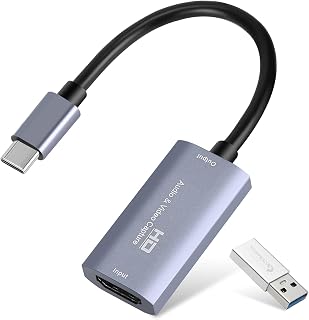
The right capture card depends on your specific workflow and hardware ecosystem. For professional streamers running dual-PC setups or capturing next-gen console gameplay in pristine quality, the Elgato 4K Pro Internal Capture Card delivers 8K60 passthrough with true 10-bit HDR capture. If you need a portable, budget-conscious solution that still handles 1080p60 smoothly, the Guermok Video Capture Card offers plug-and-play convenience with broad platform compatibility at a fraction of the investment.
Frequently Asked Questions
Do I need a capture card if I only stream PC games?
Most PC streamers can use software encoding through OBS or Streamlabs without a capture card since the game runs on the same system. However, a capture card becomes valuable if you run a dual-PC setup where one system handles gaming and another manages encoding and streaming. This separation reduces performance impact and provides better stream stability during demanding games.
Can I use a capture card with my DSLR or mirrorless camera?
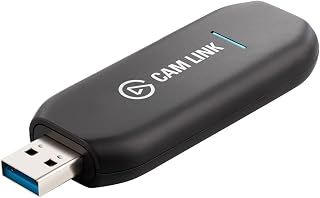
Yes, capture cards with HDMI input can convert your camera’s clean HDMI output into a webcam signal for streaming and video calls. Models like the Elgato Cam Link 4K specifically optimize this workflow, supporting resolutions up to 4K60 with ultra-low latency. Verify your camera supports clean HDMI output without overlays or recording indicators for the best results.
What’s the difference between 4K passthrough and 4K capture?
Passthrough refers to the signal sent to your display for gameplay, while capture describes the video quality being recorded to your computer. A card might offer 4K60 passthrough so you can play games in full resolution without lag, but only capture at 1080p60 to reduce file sizes and encoding load. Higher-end models in 2026 support matching 4K60 capture and passthrough for maximum quality. Understanding hardware specifications matters whether you’re streaming or working on intensive computational tasks.
Why does my PS5 show a black screen when connected to my capture card?
The PS5 enables HDCP (copy protection) by default, which blocks capture card recording. Navigate to Settings, then System, then HDMI, and disable HDCP to allow your capture card to receive the video signal. This setting resets each time you launch certain streaming apps, so you may need to disable it again after using Netflix or other protected content services.
Common questions
What is the best capture card for streaming in 2026?
The Elgato HD60 S+ is the best all-around choice for most streamers, offering 1080p60 HDR10 capture with 4K60 HDR10 passthrough, ultra-low latency, and broad compatibility with PS5, Xbox Series X/S, and both PC and Mac. It connects via USB and works seamlessly with OBS, Twitch, and YouTube. For internal setups, the Elgato HD60 Pro delivers similar 1080p60 performance through a PCIe x1 slot, reducing desk clutter. If you need 4K60 capture from a DSLR or camcorder, the Elgato Cam Link 4K is purpose-built for that workflow.



Write Your Review
No reviews yet. Be the first to share your experience!