

Your desktop PC’s wired connection might be reliable, but it’s not always practical. Whether you’re setting up a new gaming rig in a room without ethernet access, upgrading an older system to WiFi 6 standards, or simply need better wireless range, the right adapter makes all the difference. Modern WiFi adapters deliver speeds that rival wired connections while offering the flexibility to position your PC anywhere in your home.
This guide walks you through 10 WiFi adapters verified across PCIe and USB form factors, covering everything from budget-friendly dual-band options to cutting-edge WiFi 7 technology. You’ll learn which models excel for gaming, which offer the best range, and how to match an adapter to your router and usage patterns. If you’re also considering a complete system upgrade, check out our guide to the best laptops for computer science students for portable alternatives.






Buying Guide: What to Consider Before Purchasing
WiFi Standard and Speed Requirements
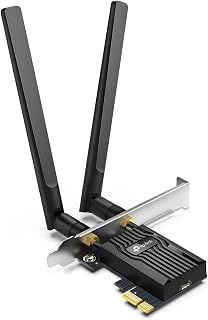
The WiFi standard determines both maximum throughput and how efficiently your adapter handles congestion. WiFi 6 (802.11ax) adapters like the TP-Link WiFi 6 PCIe WiFi Card for PC deliver speeds up to 2.4 Gbps with improved performance in busy networks through OFDMA and MU-MIMO technology. WiFi 7 models such as the WAVLINK BE6500 USB WiFi 7 Adapter for Desktop PC push tri-band speeds even higher while reducing latency for real-time gaming.
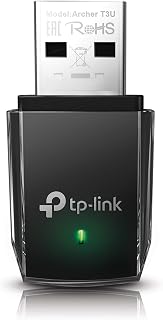
Match the adapter’s standard to your router’s capabilities. A WiFi 6 adapter paired with a WiFi 5 router will still work, but you won’t see the full speed benefits until you upgrade both. For streaming 4K content or online gaming, aim for at least AC1300 speeds on dual-band adapters. Casual browsing and email work fine with AC600 models like the TP-Link Nano AC600 USB WiFi Adapter for Desktop.
Form Factor: PCIe vs USB
PCIe adapters install directly into your motherboard’s expansion slot, offering the most stable connection and typically better thermal management. They’re ideal if you have an available slot and don’t need to move the adapter between systems. Models like the TP-Link WiFi 6 PCIe WiFi Card for Desktop PC include both standard and low-profile brackets for compatibility with mini tower cases.
USB adapters provide plug-and-play convenience and portability. USB 3.0 models deliver speeds up to 10 times faster than USB 2.0, making them suitable for high-bandwidth tasks. Nano-sized adapters stay nearly flush with your port, while models with external antennas like the TP-Link USB WiFi Adapter for Desktop PC offer adjustable positioning for better signal reception. Choose USB if you need to switch the adapter between devices or lack internal expansion slots.
Antenna Configuration and Range
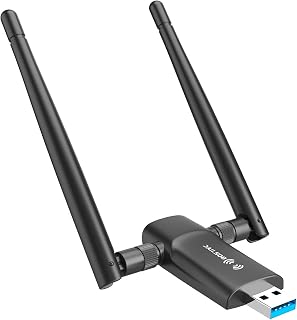
Antenna design directly impacts signal strength and coverage area. Adapters with external high-gain antennas (5dBi or higher) perform better at distance and through obstacles. The Nineplus Wireless USB WiFi Adapter for PC includes dual 5dBi antennas that you can rotate to face your router, optimizing reception in challenging layouts. Multi-directional antennas work well in multi-story homes or when the router sits in a different room.
Magnetized bases and extension cables provide placement flexibility. The WAVLINK AX1800 USB WiFi 6 Adapter for Desktop PC combines a magnetic base with a 1-meter USB 3.0 cable, letting you position the adapter away from your PC’s metal case for cleaner signal paths. Internal PCIe antennas offer cleaner aesthetics but may require strategic case positioning for optimal performance. For setups where your PC sits in a home office, our best laptops for working from home guide offers complementary wireless connectivity insights.
Operating System Compatibility and Driver Support
Driver availability determines whether your adapter will work out of the box or require manual installation. Many newer adapters designed for Windows 10 and 11 include built-in drivers that auto-install when you plug them in. The Nineplus USB WiFi Adapter for PC Desktop supports automatic driver detection on Windows 11 and 10, streamlining setup for non-technical users.
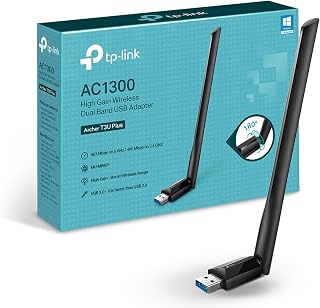
Check compatibility before purchasing if you run older Windows versions, macOS, or Linux. Some adapters work only with Windows, while others like the TP-Link AC1300 USB WiFi Adapter for Desktop PC support Mac OS X 10.9 through 10.14. Manufacturers typically host driver downloads on their support pages, but confirm that drivers exist for your specific OS version to avoid incompatibility surprises after purchase.
Final Thoughts
Choosing the right WiFi adapter comes down to matching your system’s capabilities with your actual usage patterns. For users seeking cutting-edge performance with a WiFi 7 router, the WAVLINK BE6500 delivers tri-band speeds and multi-link operation that minimize latency during bandwidth-intensive tasks. If you need a reliable PCIe solution that balances performance and value, the TP-Link WiFi 6 AX3000 offers WiFi 6 technology with Bluetooth 5.3 and a magnetized antenna base for flexible positioning. Both options represent solid investments that will keep your desktop connected as network standards continue evolving.
Frequently Asked Questions
Do WiFi adapters work with any desktop PC?
Most WiFi adapters work with any desktop PC that meets basic hardware requirements. USB adapters need an available USB port (USB 3.0 recommended for high-speed models), while PCIe adapters require an open PCIe x1 or larger expansion slot on your motherboard. Operating system compatibility matters more than hardware, verify that drivers exist for your Windows, macOS, or Linux version before purchasing. Some adapters include built-in drivers for Windows 10 and 11, while others require manual driver installation from the manufacturer’s website.
What’s the difference between dual-band and tri-band WiFi adapters?
Dual-band adapters connect to both 2.4 GHz and 5 GHz frequency bands, giving you flexibility between range (2.4 GHz) and speed (5 GHz). Tri-band adapters add a second 5 GHz band or a 6 GHz band, reducing congestion when multiple devices compete for bandwidth. The 6 GHz band, available on WiFi 6E and WiFi 7 adapters, offers even faster speeds and lower latency but requires Windows 11 version 21H2 or later and a compatible router. For most users in 2026, dual-band adapters provide sufficient performance unless you’re running multiple high-bandwidth tasks simultaneously.
Can a WiFi adapter improve my internet speed?
A WiFi adapter can improve speeds if your current adapter or built-in WiFi is outdated or malfunctioning, but it cannot exceed your internet plan’s maximum speed or your router’s capabilities. If you have gigabit internet and a WiFi 6 router but your old adapter only supports WiFi 5 at 433 Mbps, upgrading to a WiFi 6 adapter will deliver faster throughput. However, if your router maxes out at WiFi 5 speeds, even a WiFi 7 adapter won’t provide additional speed until you upgrade the router. The adapter’s role is to match or exceed what your router and internet plan can deliver, not to create speed from nothing. For professionals balancing remote work demands, our best laptops for freelancers guide explores devices with robust wireless capabilities.
How do I know if I need a PCIe or USB WiFi adapter?
Choose a PCIe adapter if you have an available expansion slot, want the most stable connection, and don’t plan to move the adapter between systems. PCIe models typically offer better thermal management and dedicated bandwidth. Opt for a USB adapter if you need portability, lack internal expansion slots (common in small form factor PCs), or prefer plug-and-play convenience without opening your case. USB 3.0 adapters deliver speeds comparable to PCIe for most applications, though USB 2.0 models create bottlenecks for high-speed networks. If you’re unsure about your PC’s internal configuration, USB adapters eliminate compatibility guesswork.
Common questions
What is the best USB WiFi adapter for PC in 2026?
The TP-Link Archer T3U Plus is the best overall USB WiFi adapter for most desktop PC users in 2026. It delivers AC1300 dual-band speeds with a high-gain external antenna for stronger signal reception, MU-MIMO support for efficient multi-device handling, and USB 3.0 connectivity to prevent bottlenecks. It balances performance, range, and value while maintaining broad compatibility with Windows 11/10/8/7 and macOS 10.9 through 10.15, making it a reliable choice for gaming, streaming, and general desktop use.


Write Your Review
No reviews yet. Be the first to share your experience!