

Whether you’re backing up important work files, carrying a presentation to a client meeting, or simply need extra storage that fits in your pocket, the right USB flash drive makes all the difference. With capacities ranging from 64GB to 512GB and transfer speeds that vary wildly between models, finding a drive that balances speed, durability, and value takes research.
This guide evaluates 10 top-performing USB flash drives available in 2026, covering everything from budget-friendly options to premium high-speed models. We’ve examined real-world performance, build quality, and user feedback to help you choose the drive that matches your workflow. If you’re also looking to upgrade other work equipment, our roundup of laptops for working from home can help complete your setup.





Buying Guide: What to Look for in a USB Flash Drive
Transfer Speed and USB Standard
Transfer speed determines how quickly you can move files on and off your drive, and the difference between USB 2.0 and USB 3.0 (or newer 3.1 and 3.2 standards) is dramatic. A USB 2.0 drive maxes out around 30-40MB/s, while USB 3.0 drives start at 100MB/s and can reach 400MB/s or more in premium models.
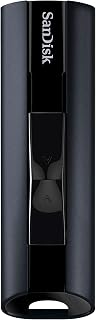
If you regularly transfer large video files, photo libraries, or software installers, investing in a USB 3.0 or higher drive saves considerable time. The SANDISK 512GB Extreme PRO USB 3.2 Solid State delivers read speeds up to 420MB/s, meaning a 4K video file that would take minutes on an older drive transfers in seconds. For students juggling assignments and presentations, check out our guide to laptops for business students to ensure your computer can take full advantage of high-speed storage.
Storage Capacity
Capacity needs vary widely depending on how you use your drive. A 64GB drive like the SanDisk 64GB Cruzer Glide USB 3.0 Flash Drive handles everyday documents, presentations, and a modest photo collection without issue. It’s perfect for students who need to shuttle assignments between campus computer labs and home.
For photographers, videographers, or anyone working with high-resolution media, 128GB to 256GB models offer breathing room. The SanDisk Cruzer Glide 256GB USB 3.0 Flash Drive provides ample space for extensive photo shoots or multiple 4K video projects. If you’re a creative professional managing large files, pairing your storage with the right hardware matters; our article on laptops for engineering students covers systems built to handle demanding workflows.
Durability and Build Quality
Flash drives live in pockets, bags, and backpacks where they endure constant jostling, temperature swings, and the occasional drop. Metal casings outlast plastic shells and provide better protection for the internal components. The SAMSUNG BAR Plus 3.1 USB Flash Drive, 128GB features rugged metal construction rated as waterproof, shockproof, and temperature-proof, backed by a five-year warranty.
Design details matter too. Retractable connectors like those on the PNY 128GB Turbo Attaché 3 USB 3.0 Flash Drive eliminate the need for a cap that can get lost, while keyring holes prevent the drive from disappearing into the depths of your bag. For educators who move between classrooms and carry multiple devices, durability is essential; see our recommendations for laptops for teachers that prioritize similar built-to-last design.
Security Features
Portable storage means portable risk. If your drive contains sensitive work documents, client information, or personal data, password protection and encryption become critical. Many drives include proprietary software like SanDisk SecureAccess or Lexar DataShield that creates encrypted, password-protected vaults on the drive.
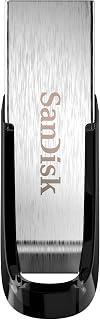
The SANDISK 128GB Ultra Flair, USB-A Flash Drive offers 128-bit AES encryption through its included software, ensuring your files stay private even if the physical drive is lost. For professionals handling confidential client data, this layer of protection is non-negotiable. Law students and legal professionals managing case files should review our guide to laptops for law students for complementary device security features.
Final Thoughts
The right USB flash drive depends on how you work and what you’re storing. For everyday file transfers and document backup, the Amazon Basics 128 GB Ultra Fast USB 3.1 Flash delivers reliable performance and excellent value. Creative professionals moving large media files will appreciate the blazing speed of the SANDISK 512GB Extreme PRO USB 3.2 Solid State, which cuts transfer times dramatically. Choose based on your capacity needs, how often you’ll move large files, and whether you need encryption for sensitive data.
Frequently Asked Questions
What’s the difference between USB 3.0 and USB 3.1 flash drives?
USB 3.1 offers theoretical maximum speeds up to 10Gbps compared to USB 3.0’s 5Gbps, though real-world performance depends on the specific drive’s internal components. Both standards are dramatically faster than USB 2.0 and work interchangeably with USB 3.0 and 3.1 ports. In 2026, most quality flash drives use USB 3.0 or higher, making them backward compatible with older USB 2.0 ports at reduced speeds.
How long do USB flash drives typically last?
Quality flash drives can last 10 years or more with normal use, though heavy daily read-write cycles will reduce lifespan. Modern drives use wear-leveling technology to distribute writes across memory cells evenly, extending longevity. Store your drive in a cool, dry place when not in use, and avoid leaving it plugged in continuously to maximize its useful life.
Can I use a USB flash drive to run an operating system?
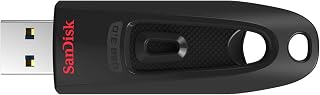
Absolutely. Many IT professionals and computer science students create bootable USB drives to run Linux distributions, Windows installation media, or diagnostic tools. The SANDISK 256GB Ultra, USB-A Flash Drive provides ample space for multiple operating system images. For students learning system administration or software development, pairing a bootable drive with the right hardware is essential; our roundup of laptops for computer science students covers machines that support this kind of work.
Do I need a USB-C flash drive or is USB-A still fine in 2026?
USB-A remains widely compatible with most desktop computers, older laptops, and many peripherals, making it the safer choice for maximum device compatibility. However, newer laptops and tablets increasingly favor USB-C ports. The Lexar 128GB JumpDrive Dual Drive D400 USB 3.2 solves this dilemma with both USB-C and USB-A connectors in a single drive, letting you move files between newer phones, tablets, and traditional computers without adapters.


Write Your Review
No reviews yet. Be the first to share your experience!