

When a storm, campsite, or remote workday cuts you off from a wall outlet, battery chemistry shapes more than runtime. It affects the weight you carry, how often you can recharge, and how well the station holds capacity through years of regular use. If your outage plan includes an editing setup, our guide to Premiere Pro editing computers can help you plan the rest of the workspace.
The lifepo4 vs lithium ion power station decision is often confusing because LiFePO4 is itself a type of lithium-ion chemistry. This guide explains the practical differences and assesses ten portable stations, from compact units for phones and cameras to high-capacity models for home backup, RV travel, and essential appliances.
Quick answer
This guide compares 10 picks, with Jackery Explorer 1000 v2 Portable Power Station ranked first. Jackery Explorer 300 Portable Power Station 292Wh has the most customer reviews.

For anyone sizing up lithium-ion against LiFePO4 for home backup duty, the 1070Wh capacity paired with 1500 watt output supports larger appliances during outages. Solar and battery charging flexibility matters to readers who want to compare recharge independence across chemistries before settling on which power station handles emergencies better.
Pros
- LFP battery holds 70%+ capacity after 4000 cycles
- 1500W output with 3000W surge handles most appliances
- One-hour emergency fast charging option
- Lightweight at 23.8 lbs with foldable handle
Cons
- Only 42 minutes runtime at full 1500W load
- Solar charging requires separately purchased panels
Choosing between LiFePO4 and standard lithium-ion power stations comes down to longevity and safety, and the Explorer 1000 v2 settles that question with its LFP chemistry. It holds over 70% capacity after 4000 charge cycles, a figure traditional lithium-ion units can't match, giving you a realistic 10+ year lifespan instead of needing replacement every few years. For anyone comparing the two battery types specifically for durability, this is the practical middle ground: a 1070Wh capacity with 1500W continuous output and 3000W surge, enough for camping, RV trips, or home emergency backup without the bulk of larger systems. The one-hour emergency charging mode and standard 1.7-hour charge cycle show the engineering tradeoff between speed and battery health that LFP chemistry allows. At 23.8 lbs with a foldable handle, it stays genuinely portable. Seven outlets, including dual 100W USB-C ports, cover modern devices and appliances. If the deciding factor between LiFePO4 and lithium-ion is cycle life and safety margin, this model demonstrates exactly why LFP wins that comparison.
Capacity and Power Output: 1070Wh battery capacity, 1500W continuous AC output, 3000W surge peak, 7 total power outlets
Charging: 1-hour emergency fast charge or 1.7-hour standard charge, 100W USB-C PD output, ChargeShield 2.0 technology
Battery Technology: LFP battery with 4000+ charge cycles, maintains 70%+ capacity after 4000 cycles, 10+ year lifespan
Ports and Connectivity: 2x USB-C (100W PD), 1x USB-A, 1x DC car port, 3x pure sine wave AC ports, LED lights, smart app control
Physical Specifications: Weight: 23.8 lbs, Dimensions: 12.87in (L) x 8.82in (W) x 9.72in (H), Foldable handle for portability
Additional Features: Smart app control with three charging modes, 30 dB quiet mode, energy efficiency mode, compatible with Jackery solar panels
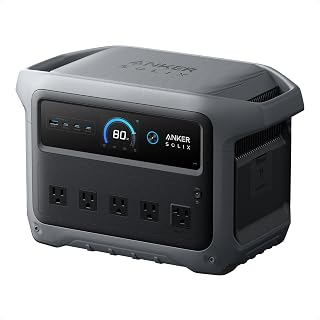
Readers evaluating higher wattage lithium-ion options against LiFePO4 alternatives will find the 2000 watt output notable, since it covers power-hungry camping gear that lower capacity units can't. This matters for the comparison because wattage headroom is often the deciding factor between chemistries when runtime and surge capacity both count.
Pros
- LiFePO4 cells retain 80%+ capacity after 4000 cycles
- 49-minute full recharge via wall outlet
- 10ms UPS switchover protects sensitive devices
- 600W solar input for off-grid recharging
Cons
- 2,000W continuous output may fall short for heavy appliances
- Solar charging speed depends on panel and sun conditions
When weighing LiFePO4 against lithium-ion power stations, the chemistry itself is only half the story, the other half is how fast and safely you can recharge that battery, and the SOLIX C1000 Gen 2 answers both. Its LiFePO4 cells retain at least 80% capacity after 4000 charge cycles, outlasting typical lithium-ion packs by a wide margin, while HyperFlash tech recharges the unit in 49 minutes from a wall outlet. That combination matters if you're choosing LFP for safety and longevity but don't want to sacrifice convenience. With 1,024Wh capacity and 2,000W continuous output, it suits homeowners, RV travelers, and remote workers who need dependable backup without generator noise or fumes. The 10ms UPS switchover protects CPAP machines and other sensitive devices during outages, a detail that matters when comparing battery types for medical or critical use. Nine outlets support simultaneous device charging, and solar input up to 600W means off-grid users can fully recharge in 1.8 hours under good sun. At 11.3 kg with sturdy handles, it's manageable for one person. For anyone sorting LFP from lithium-ion based on real-world safety and recharge speed, this model makes a strong case.
Good for homeowners, van lifers, and remote workers who want LFP's safety and cycle-life advantages paired with fast recharging and solar flexibility. Especially suited to anyone running CPAP machines or other equipment that needs seamless power during outages. Skip it if you need more than 2,000W continuous for heavy appliances, or if you don't plan to use solar and don't need the extra charging speed.
Capacity: 1,024Wh LiFePO4 battery
Output: 2,000W continuous, 3,000W peak
Ports: 10 total outputs
Wall Recharge: 1,600W input, 49 minutes to full
Solar Input: Up to 600W at 60V maximum, 1.8 hours to full
UPS Switchover: 10 milliseconds
Dimensions: 15.1L x 8.2W x 9.6H inches
Weight: 11.3 kg (24.9 lbs)
Battery Cycles: 4,000+ cycles with minimum 80% retention
Warranty: 5 years
Colors Available: Gray

This station gives LiFePO4 vs lithium-ion researchers a concrete data point with its 4000 cycle rating to 80 percent capacity, a hallmark LiFePO4 advantage over standard lithium-ion degradation rates. The 1800 watt output with 2200 watt X-Boost surge handling also suits readers who need expandable capacity for extended off-grid comparisons.
Pros
- Exceptionally fast charging cuts prep time dramatically, reaching full charge in under an hour
- LiFePO4 battery technology offers superior longevity and safety compared to standard lithium alternatives
- Modular expandability lets you scale power capacity from 1kWh to 5kWh without replacing the unit
- Multiple output options and 13 simultaneous connections handle diverse device needs in one go
- Robust IP65 rating withstands camping, outdoor work, and emergency scenarios without protection enclosures
Cons
- At 12.5 kg, portability may be limited for ultralight backpacking trips or situations requiring frequent movement
- Premium price reflects its capabilities, making it a significant investment compared to lower-capacity models
- Expansion battery packs sold separately, adding to total cost for users seeking maximum 5kWh capacity
The EcoFlow Delta 3 is a mid-range portable power station designed for campers, outdoor enthusiasts, and anyone seeking reliable backup power. Its 1024Wh capacity and 1800W output handle most household appliances and power tools, making it versatile for emergencies, remote work, and extended outdoor trips.
The standout feature is its ultra-fast charging capability. With 500W solar input and 1500W AC input working together, you achieve a full charge in just 56 minutes or 80% in 30 minutes. This dramatically reduces downtime and makes it practical for frequent users who can't wait hours to recharge. The X-Boost technology expands power delivery to 3600W surge, enabling high-draw devices like air compressors or power tools.
Build quality reflects EcoFlow's reputation for durability. The LiFePO4 battery chemistry supports 4000 cycles to 80% capacity, translating to approximately 10 years of daily use. The IP65 rating provides comprehensive environmental protection against dust, water splashes, and oil, essential for outdoor reliability. The compact dimensions and 12.5 kg weight balance practicality with heft, though it's not designed for ultralight applications.
The main limitation is cost and weight. The Delta 3 sits at a premium price point, and expansion batteries are sold separately, potentially adding hundreds more if you need the full 5kWh system. The 12.5 kg mass also means it's better suited to car camping or base camp scenarios than constant relocation.
Overall, the Delta 3 excels for users prioritizing fast recharging, long-term reliability, and expandable capacity. Its 5-year warranty and proven EcoFlow ecosystem support make it a solid long-term investment for serious outdoor enthusiasts and professionals needing dependable mobile power.
Capacity and Output: 1024Wh total energy, 1800W continuous AC output, 2200W rated with X-Boost to 3600W surge power. Supports up to 13 simultaneous device connections.
Battery Technology: LiFePO4 chemistry, 4000 cycles to 80% capacity retention, 10-year lifespan under normal use, 5-year manufacturer warranty included.
Charging Methods: Five fast recharge options including 500W solar input, 1500W AC wall charging, and hybrid combinations. Full charge achievable in 56 minutes, 80% in 30 minutes via AC input.
Physical Specs: 12.5 kg weight, 15.7 x 8 x 11.2 inches dimensions, black and gray color. IP65 rating for splash, dust, and oil resistance.
Expandability: Modular design scales capacity from 1kWh base up to 5kWh with compatible DELTA 3, DELTA Pro 3, and DELTA 2 Max battery pack additions.
Best For: Camping trips, off-grid cabins, emergency backup power, outdoor work sites, and travel scenarios where reliable AC power and fast recharging are priorities. Ideal for users with multiple devices requiring simultaneous power.
Consider Alternatives If: You need ultralight portability for backpacking, operate on a tight budget, or require capacity beyond 5kWh. For simpler needs, smaller 300-500Wh models may suffice.
Expansion Strategy: Purchase the base Delta 3 first, then add battery packs as your power needs grow. This avoids buying unused capacity upfront and leverages EcoFlow's ecosystem flexibility.
Warranty and Support: Five-year warranty covers manufacturing defects. EcoFlow provides 5 years of spare part availability and customer service support, reducing long-term ownership risk and maintenance concerns.
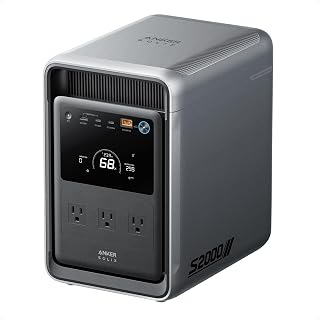
With 2010Wh capacity and 1500 watt output, this suits readers comparing chemistries for home backup where runtime matters more than charge speed. The listed uses spanning power outages and emergencies give context for why capacity to weight ratio becomes a key comparison point between LiFePO4 density and conventional lithium-ion packs.
Pros
- LFP battery rated for 10,000 cycles and 15-year lifespan
- 6W idle draw enables 35-hour refrigerator runtime
- Six recharge methods including 400W solar input
- Compact and lighter than comparable 2kWh units
Cons
- No 12V DC port for certain RV appliances
- Real-world runtime varies by appliance and conditions
If the LiFePO4 vs lithium-ion debate ultimately comes down to which battery actually lasts long enough to justify the investment, the SOLIX S2000 makes the strongest case in this lineup. Its LFP cells are rated for 10,000 charge cycles with a 15-year lifespan, far beyond what standard lithium-ion packs typically offer, which matters most for anyone planning long-term home backup rather than occasional camping trips. At 2,010Wh with 1,500W continuous output, it covers 99% of essential household appliances, including refrigerators and medical equipment. The 6W idle power draw is a direct result of efficient LFP engineering, enabling a 35-hour refrigerator runtime that beats comparable systems by 20%. Eight outlets and six recharge methods, including 400W solar input and generator compatibility, give it flexibility across home and off-grid scenarios. At 35.7 pounds and a compact footprint, it's notably smaller and lighter than other 2kWh-class units. For buyers specifically weighing battery chemistry against long-term cost and reliability, the cycle life and efficiency here outweigh the higher upfront investment compared to lithium-ion alternatives.
Capacity and Output: 2,010Wh LiFePO4 battery, 1,500W continuous output, 3,000W peak output
Battery Technology: 314Ah LFP cells, 10,000 cycle lifespan, 15-year warranty
Dimensions: 8.19L x 11.1W x 12.7H inches
Weight: 35.7 pounds
Outlets: 8 total (front and rear configuration)
Charging Options: AC input, solar (up to 400W), generator, car outlet, alternator charger
UPS Switchover: Less than 10 milliseconds
Idle Power Draw: 6W
Color: Black
Model: AS220
Warranty: 5 years
Best for homeowners who want long-duration backup for essential appliances and plan to keep the unit for a decade or more, where LFP's cycle life pays off. Also fits those who need flexible recharge options including solar and generator input. Skip it if you need a 12V DC port for RV-specific devices, or if you only need occasional, short-term backup where the investment isn't justified.

At 3014.4Wh with 2400 watt output, this is built for readers comparing chemistries specifically for RV and off-grid home backup, where capacity under heavy sustained draw separates LiFePO4 from lithium-ion. Multiple charging sources including solar and generator make it relevant for testing recharge consistency across different power station chemistries.
Pros
- Compact form factor at just 58 pounds makes it genuinely portable compared to other 3kWh stations
- Rapid charging speed gets you from empty to 80% in just over an hour, faster than most competitors
- Dual power output capability handles both high-demand surge loads and sustained continuous power needs
- Purpose-built RV integration eliminates need for adapters or workarounds for camper electrical systems
- Strong 4.7-star rating from 241 real users demonstrates proven reliability in the field
Cons
- 1 hour 18 minute runtime at full load means you'll need frequent recharges for high-power extended use
- Weight of 58 pounds is substantial for solo carrying, requiring two hands or a cart for extended distances
- Limited to 2 AC outlets, which may require power strips or hubs if powering multiple devices simultaneously
The BLUETTI Elite 300 is a portable power station engineered for RV enthusiasts, homeowners preparing for outages, and off-grid adventurers. Its 3014Wh capacity paired with compact dimensions makes it one of the few power stations that balances serious energy storage with genuine portability. This is the right choice for anyone seeking dependable emergency backup or mobile power without sacrificing convenience.
The standout feature is the combination of speed and intelligence. Charging to 80% in 78 minutes means you're rarely waiting around, and the 10ms UPS backup automatically switches power to keep your router, computer, and home office gear running during grid failures. The 4800W surge capacity effortlessly starts demanding loads like kettles and air compressors, while the 2400W sustained output handles everyday appliances, refrigerators, and medical devices like CPAP machines reliably.
Build quality reflects BLUETTI's reputation for durability. The LiFePO4 battery supports 6000+ full cycles, translating to over a decade of regular use. The compact molded plastic housing protects internal components effectively, and the RV-ready TT-30 outlet with 12V/30A DC output eliminates the need for external adapters for camper integration. Multi-source charging through AC, solar panels, or car chargers provides genuine flexibility whether you're at home, on the road, or fully off-grid.
Practical limitations exist. The 1 hour 18 minute runtime at full load means heavy users will need solar panels or regular recharging. At 58 pounds, it's portable but not lightweight, requiring both hands or a dolly for extended movement. The two AC outlets, while sufficient for typical backup scenarios, may necessitate power strips for households running multiple simultaneous devices.
The Elite 300 represents the sweet spot for portable power: serious capacity in a realistic size, proven reliability with strong user ratings, and thoughtful features like RV integration and app control. It's an excellent investment for adventure travelers, emergency-minded homeowners, and anyone needing dependable off-grid power without the bulk of larger units.
Power Output: 2400W continuous, 4800W surge capacity with 10ms UPS backup switching
Battery: 3014Wh LiFePO4 with 6000+ charge cycles
Outlets: 2 AC outlets (120V), TT-30 RV port, 12V/30A DC output
Charging: 0 to 80% in 78 minutes via AC, solar, car charger, or generator input
Dimensions: 14.4L x 12W x 11.7H inches
Weight: 58 pounds
Runtime: Approximately 1 hour 18 minutes at full 2400W load
Best For: RV owners, campers, homeowners preparing for outages, small business backup power, off-grid enthusiasts
Consider If: You need serious capacity in a truly portable size, want RV-specific features built-in, or require fast recharge capability for frequent use
Skip If: You need extended runtime (8+ hours) on a single charge, prefer ultra-lightweight portability under 30 pounds, or require more than 2 AC outlets without expansion
Pairing Recommendation: Maximize value by adding a solar panel kit for extended off-grid autonomy. The fast charging design pairs well with 400W+ solar input for continuous operation in sunny locations.

If you're weighing lithium-ion against LiFePO4 and leaning toward standard lithium-ion for its lighter weight, this one fits. Its 300 watt max output and 4 hour charge time make it a grab-and-go option for small electronics rather than appliances. The compact form factor suits readers prioritizing portability over the longer cycle life that LiFePO4 chemistry typically offers.
Pros
- LiFePO4 chemistry rated for 4,000+ charge cycles, over 11 years of use
- Compact 7.5 lb design with integrated handle for easy portability
- Six ports let you charge multiple devices at once
- Fast recharge, about 3-4 hours via AC or quicker with solar
Cons
- Not suited for refrigerators, air conditioners, or high-wattage tools
- 292Wh capacity limits it to small electronics, not household backup
If you're comparing LiFePO4 against older lithium-ion units, the Explorer 300 is a clear example of why the newer chemistry wins out for most buyers. Its LiFePO4 battery is rated for over 4,000 charge cycles before dropping to 70% capacity, which works out to more than 11 years of regular use, a lifespan that standard lithium-ion power stations simply can't match. That longevity matters most if you plan to use the unit often, whether for weekend camping trips, travel, or routine mobile work, rather than letting it sit in a closet for emergencies. At 292Wh and 7.5 lbs, it's built for charging phones, tablets, cameras, and laptops rather than running appliances, so the use case is narrow but well served. The 300W rated output with 600W peak surge covers small electronics comfortably, and six simultaneous ports (two AC, USB-C PD, two USB-A, and a car port) mean you're not constantly swapping cables. Charging takes about 3 to 4 hours via AC, or faster with a compatible solar panel, making it easy to keep topped off between trips.
Buy this if you want a lightweight, frequently used power source and value the long-term durability of LiFePO4 over cheaper lithium-ion alternatives. It suits campers, travelers, and remote workers charging phones, tablets, laptops, and small electronics. Skip it if you need to run refrigerators, air conditioners, or high-wattage tools, or if you only need occasional emergency backup and don't need the extra cycle life LiFePO4 provides over standard lithium-ion options.
Capacity: 292Wh (LiFePO4 battery)
Weight: 7.1-7.5 lbs
Dimensions: 15.43in D x 9.92in W x 11.89in H
AC Output: 2 outlets, 110V, 300W continuous (600W peak surge)
USB Ports: USB-C PD 100W, USB-A 2.4A (x2)
Car Port: 120W 12V output
Charging Time: Approximately 4 hours AC, 2.8 hours with 100W solar panel
Battery Cycles: 4,000+ before reaching 70% capacity
Warranty: 2 year manufacturer
Model: JE-300E

Readers deciding between solar-compatible lithium-ion and LiFePO4 setups will notice this one bridges both worlds with dual battery and solar charging. The 360 watt output handles camping essentials, and since capacity sits below 300Wh, it suits those comparing lightweight chemistry options rather than committing to a heavier, higher capacity LiFePO4 bank.
Pros
- Exceptional portability: Lightweight 4.13kg frame with compact dimensions perfect for hiking, camping, and travel
- Fast charging options: 50-minute wall recharge or flexible solar, car, and USB-C charging methods
- Heavy-duty battery technology: LiFePO4 chemistry outlasts standard lithium with minimal degradation over years
- Versatile connectivity: Mix of AC, USB-C, USB-A, and car outlets handles laptops, phones, cameras, and drones
- Reliability backed by warranty: 5-year coverage and minimal 25dB noise make it ideal for outdoor enthusiasts
Cons
- Solar panel sold separately, requiring additional investment for truly off-grid independence
- 288Wh capacity may run larger appliances for limited duration; plan for stacked charging with solar
- Shoulder strap not included despite portable design, necessitating separate purchase for hands-free carry
The Anker SOLIX C300 is a portable power station designed for outdoor enthusiasts, travelers, and anyone needing reliable backup power. At 4.13kg and measuring just 6.46" x 6.34" x 9.45", it's engineered for mobility without sacrificing usable capacity. This unit delivers 300W continuous output with 600W surge capability, powered by a 288Wh LiFePO4 battery that can charge most phones 8+ times or run a laptop for several hours.
What sets the C300 apart is its versatility and speed. The 140W bidirectional USB-C ports enable rapid charging of the station itself (80% in 50 minutes from wall power) while simultaneously powering demanding devices. Eight ports (three AC outlets, two high-power USB-C, one lower-power USB-C, one USB-A, and a 12V car socket) mean you can charge a laptop, phone, camera, and drone at once, or run a small appliance and lights during camping trips or power outages.
Build quality reflects Anker's reputation for durability. The LiFePO4 battery chemistry resists degradation, lasting through 3,000 charge cycles equivalent to 10 years of regular use. Smart temperature control and impact-resistant housing protect against outdoor wear, backed by a solid 5-year warranty. The ultra-quiet 25dB operation preserves campsite peace, and the option to pair with a 100W solar panel enables true off-grid sustainability.
Real limitations exist. The 288Wh capacity powers smaller loads sustainably but depletes faster with high-draw devices. Solar panels and the shoulder strap both require separate purchases, adding to initial cost. For extended trips without electricity access, you may need additional solar capacity or a second battery module.
The Anker SOLIX C300 is the right choice for campers, travelers, and emergency preparedness who value portability and charging speed. Its blend of LiFePO4 durability, diverse ports, and compact design makes it one of the better mid-capacity power stations at this price point.
Power Output: 300W continuous, 600W surge capacity
Battery: 288Wh LiFePO4, 3,000 cycle lifespan
Charging Ports: 3x AC outlets (300W total), 1x car socket (120W), 2x USB-C (140W each), 1x USB-C (15W), 1x USB-A (12W)
Recharge Time: 50 minutes to 80% via wall outlet (AC charging cable included)
Dimensions: 6.46"L x 6.34"W x 9.45"H
Weight: 4.13kg (9.1 lbs)
Noise Level: 25dB at 3.3 feet
Warranty: 5 years
Compatibility: Compatible with 100W and 60W Anker solar panels, not compatible with SOLIX PS30, PS200, or PS400
Who Should Buy This: Campers, van lifers, outdoor adventurers, travelers, and anyone setting up emergency home backup power. It's ideal if you need fast charging and multi-device support in a lightweight, quiet package.
Who Should Look Elsewhere: If you require heavy continuous power for multiple large appliances, consider the higher-capacity C1000 or P1000. If you prioritize solar included in the box, other kits bundle panels for all-in-one convenience.
Maximizing Value: Pair this with a 100W solar panel for true off-grid capability and reduced electricity costs on extended trips. Invest in the optional shoulder strap for hands-free portability. Use the 140W USB-C ports for fastest device charging and priority recharging of the station itself during camp downtime.
Long-Term Cost: The LiFePO4 battery degrades slowly over 3,000 cycles, roughly 8-10 years with regular use. Anker's 5-year warranty covers defects, and replacement batteries are available, making this a long-term investment rather than a disposable purchase.

Readers comparing charging flexibility between chemistries will note this one accepts solar, AC, car, lead-acid, and generator input, a spread that matters when testing real-world recharge speed claims often cited in LiFePO4 vs lithium-ion debates. The 1800 watt output and 1024Wh capacity support extended camping or backup use during that comparison.
Pros
- Rapid 45-minute charging gets you back on the road fast
- Lightweight and compact design makes it genuinely portable for camping and travel
- Whisper-quiet operation won't disturb neighbors or campsite mates
- Multiple charging inputs (AC, solar, car, generator) provide maximum flexibility
- Excellent customer reviews praising reliability and real-world performance
Cons
- 25 lbs weight may feel heavy during extended hand-carrying despite portability claims
- Battery capacity limits runtime for power-hungry appliances like electric stoves or space heaters
- Premium price point compared to basic generators without UPS functionality
The BLUETTI Elite 100 V2 is a mid-sized portable power station designed for camping, emergency backup, and off-grid adventures. It combines genuine portability with serious power output, making it suitable for outdoor enthusiasts, remote workers, and homeowners wanting reliable UPS backup without generator noise and fumes.
The standout feature is the 45-minute rapid charging to 80%, powered by a 1200W TurboBoost charger. Real-world testing from reviewers confirms it powers multiple devices simultaneously, including phones, laptops, fans, and even small appliances. The 3600W surge capacity handles startup demands, and 11 total ports mean multiple gadgets charge at once without daisy-chaining adapters.
Build quality impresses with a sturdy plastic enclosure, intuitive digital display, and thoughtful design touches like the hidden carry handle. The ultra-quiet 30dB operation in silent mode genuinely makes a difference during overnight camping. The 10ms UPS switchover protects network equipment and computers during power outages, adding real value for home backup scenarios.
Runtime depends entirely on what you're powering. A phone charges many times over, while continuous operation of high-draw devices drains the 1024Wh battery faster. Some users find 25 lbs noticeable during extended carrying, though most appreciate the tradeoff between power and portability.
The Elite 100 V2 delivers excellent performance for its category with LiFePO4 longevity, smart app controls, and proven reliability. It's a solid investment for serious outdoor users and a practical insurance policy for emergency power at home.
Power capacity of 1024Wh supports different devices with varying runtimes. A laptop typically runs 8-12 hours, a mini-fridge 12+ hours, and a phone charges 10+ times. High-draw devices like electric kettles or space heaters deplete the battery in hours. Use the BLUETTI app to monitor real-time consumption and plan charging accordingly.
Charging speed depends on input method. Wall outlet charging reaches 80% in 45 minutes using TurboBoost. Solar panel charging is slower but adds flexibility for extended trips. Car charging and generator inputs provide additional options when AC power isn't available, making this ideal for truly remote locations.
Best suited for camping enthusiasts, van lifers, and travel professionals who value quick charging and quiet operation. Also excellent for homeowners wanting dependable UPS backup for routers and computers during outages. Not ideal for users powering heavy-load devices continuously or those on tight budgets seeking basic emergency power without UPS features.

This model suits readers who want a side by side on charging speed, since its USB Type C fast charging and 90000mAh capacity rating make recharge comparisons between lithium-ion and LiFePO4 units straightforward. Seven ports and dual battery or solar input also matter for anyone testing versatility across chemistries in camping conditions.
Pros
- Compact and lightweight design genuinely fits in a backpack or car trunk
- Multiple fast-charging USB-C ports eliminate device charging conflicts
- LiFePO4 technology provides better longevity and safety than standard lithium batteries
- Excellent warranty coverage with 3-year protection builds confidence in durability
- Compatible with affordable solar panels for truly off-grid living
Cons
- 288Wh capacity limits runtime for power-hungry devices like full-size air compressors or space heaters
- Shoulder strap sold separately, adding extra cost for convenient carrying
- Not compatible with older Anker solar panel models, limiting upgrade flexibility
The Anker SOLIX C300 DC is a midrange portable power station designed for outdoor enthusiasts, remote workers, and camping hobbyists who need dependable backup power without hauling a heavy battery pack. With 288Wh capacity and 300W sustained output, it handles laptops, phones, tablets, cameras, and small appliances reliably. The LiFePO4 battery technology ensures it will outlast cheaper alternatives and perform well even in temperature extremes.
Real-world performance shines with the dual 140W USB-C ports that charge modern devices at impressive speeds. Recharging to 80% takes just one hour via USB-C or solar, making this station genuinely practical for day trips and weekend adventures. The seven ports mean you can charge multiple devices simultaneously without choosing favorites, and the car socket opens possibilities for powering vehicle accessories or small appliances during road trips.
The 2.8kg weight and compact footprint make this station actually portable, distinguishing it from heavier competitors that claim portability but stay car-bound. The minimalist design feels premium, though the omitted shoulder strap is a minor disappointment for the price. Build quality appears solid, and the 3-year warranty suggests Anker stands behind its product.
The 288Wh capacity does impose real limits, best acknowledged upfront. A full laptop charge consumes roughly one-third of the battery, and power-hungry devices like air compressors or space heaters won't work. Solar compatibility adds genuine value if you commit to an Anker solar panel, offering true off-grid flexibility that most competitors in this price range lack.
The C300 DC earns its reputation as a smart value pick for anyone balancing portability, performance, and price. It won't replace a whole-home battery, but for outdoor enthusiasts, mobile professionals, and emergency backup needs, it solves real problems at a fair price.
Battery and Power: 288Wh capacity, 300W sustained output, LiFePO4 battery chemistry with 3-year limited warranty. Recharge time: 1.5 hours to full via dual USB-C fast charging.
Ports and Connectivity: 7 total outlets including 1x car socket (120W), 2x USB-C (140W each), 1x USB-C (100W), 1x USB-C (15W), and 2x USB-A (12W each). Includes 60cm 140W USB-C to USB-C charging cable.
Physical Specifications: Weight 2.8kg (6.2 lbs), dimensions 4.89 inches length by 7.87 inches width by 4.72 inches thickness. Battery weight: 1,740g. 30% smaller footprint than competing midrange power stations.
Compatibility: Compatible with 100W or 60W Anker solar panels for sustainable charging. Not compatible with Anker SOLIX PS30, PS200, or PS400 solar panels.
Best For: Campers, hikers, and outdoor enthusiasts needing portable phone and laptop charging. Remote workers requiring backup power. Road trippers who want car-charging capabilities. Emergency preparedness on a budget. Small appliance enthusiasts and USB-C device owners.
Consider Alternatives If: You need to run large AC appliances for extended periods. You require true whole-home backup power. Your devices use older charging standards exclusively. You absolutely cannot spend extra on a solar panel.
Smart Add-Ons: Shoulder strap (sold separately) for hands-free carrying. 100W Anker solar panel for truly off-grid capability. Secondary USB-C cable as backup. Protective carrying case for maximum durability during travel.
Setup Tip: Activate the unit on first use with an 18W or higher USB-C wall charger. Use only the USB-C2 and USB-C3 ports for initial charging. Test all seven ports with your devices before heading into the field to prevent surprises.

For readers specifically comparing LiFePO4 longevity against lithium-ion, this unit removes the guesswork since it's built on LiFePO4 chemistry from the start. The digital display and overload protection add transparency and safety, while 7 outlets give campers enough ports to run several small devices simultaneously without needing a lithium-ion alternative.
Pros
- Exceptionally fast recharge time with 100W PD input gets you back to full power quickly
- Diverse port selection allows simultaneous charging and powering of phones, laptops, cameras, drones, and CPAP machines
- Advanced LiFePO4 battery chemistry provides decade-long lifespan and 3000+ charge cycles
- Lightweight and compact design makes it genuinely portable without sacrificing power output
- Pass-through power delivery functions as backup during outages while charging the unit
Cons
- 230Wh capacity limits ability to power high-draw appliances like full-size refrigerators or major kitchen equipment for extended periods
- Fast charging from standard wall outlets may require higher amp breaker to avoid circuit issues
- Not ideal as sole power solution for large households during extended outages without additional solar panels or generators
The VTOMAN FlashSpeed 300 is a compact portable power station designed for camping, travel, emergency backup, and nomadic lifestyles. It delivers 300W continuous power from a 230Wh LiFePO4 battery, weighing just 7.4 lbs. This makes it an excellent choice for anyone needing reliable, portable energy without the bulk of larger power stations.
The standout feature is the 100W USB-C Power Delivery input, which recharges the unit to 80% in approximately 2 hours, one of the fastest recharge speeds in its class. Seven outlets let you power phones, laptops, speakers, cameras, drones, and portable medical devices simultaneously. The LiFePO4 battery chemistry provides exceptional longevity with 3000+ charge cycles and a lifespan six times longer than conventional lithium batteries, making it a genuine 10-year investment.
Build quality is solid with digital display monitoring, overload protection, and pass-through power delivery that keeps your devices powered during outages while charging the unit. The integrated LED light with steady, strobe, and SOS modes adds practical safety for camping and emergencies. Four recharge options (wall, solar, car outlet, USB-C) provide flexibility for any environment.
The main limitation is its 230Wh capacity, which won't run large appliances like full refrigerators for extended periods. Fast charging from standard outlets may require adequate electrical capacity. For occasional outdoor use, emergency backup for essential devices, or supplementing solar setups, these tradeoffs are minor.
The VTOMAN FlashSpeed 300 represents exceptional value for portable power. It combines fast recharging, versatile outlets, durable construction, and proven reliability into a genuinely portable package. Recommended for camping enthusiasts, emergency preparedness, digital nomads, and anyone seeking dependable backup power without premium pricing.
Power and Battery
Output Wattage: 300W
Battery Capacity: 230Wh
Battery Type: LiFePO4
Battery Cycles: 3000+
Estimated Lifespan: 10+ years
Charging and Outlets
100W USB-C Power Delivery (2 hours to 80%)
AC Outlets: 2x
USB-C Outlets: 1x100W
USB-A Outlets: 3x
DC Port: 1x
Total Outlets: 7
Recharge Options
Wall Socket: 2.5 hours
Solar Panel: Compatible
Car Outlet: 12V/24V compatible
USB-C Input: 100W fast charge
Physical Specs
Weight: 7.4 lbs (3.4 kg)
Dimensions: 10.24 x 4.72 x 7.87 inches
Color: Black
LED Light: 3 modes (steady, strobe, SOS)
Digital Display: Yes
Overload Protection: Yes
Outdoor and Travel
The lightweight 7.4 lb design makes this ideal for camping trips, hiking adventures, and travel where portability matters. Charge phones, tablets, cameras, and portable speakers without vehicle dependency.
Emergency and Home Backup
Keep essential devices powered during outages. The pass-through capability lets you maintain device charging while automatically switching to battery backup during power loss. Great for CPAP machines, routers, and medical devices.
Digital Nomads and Remote Work
Fast 100W USB-C charging means your MacBook, Dell XPS, or other modern laptops stay powered for extended work sessions without needing a wall outlet.
Drone and Photography
Multiple USB outlets and USB-C power delivery handle drone batteries, camera batteries, and portable lighting simultaneously, making it perfect for content creators and photographers in the field.
Solar System Expansion
Owners frequently pair this with solar panels for sustainable off-grid living. Its multiple recharge methods and high cycle count make it reliable for renewable energy setups over many years.
Buying Guide: LiFePO4 vs Lithium-Ion Power Stations
Battery chemistry matters, but it is only one part of a smart power-station purchase. Match the capacity, output, ports, recharge options, and physical size to the devices you genuinely need to keep running. That approach prevents a lightweight travel unit from being asked to do the work of a home-backup system.
Understand What LiFePO4 and Lithium-Ion Actually Mean
LiFePO4, also called LFP, is one variety of lithium-ion cell. In product listings, “lithium-ion” generally means alternative chemistries such as NMC or NCA, which often deliver more energy for their weight. LFP typically emphasizes long cycle life, stable heat behavior, and gradual capacity loss, useful qualities for a station you expect to recharge repeatedly and store near living space.
That distinction should guide expectations, not replace sensible charging and storage habits. The Jackery Explorer 1000 v2 Portable Power and Anker SOLIX C1000 Gen 2 Portable Power Station each cite 4,000-cycle durability figures, while EF ECOFLOW Delta 3 Portable Power Station and BLUETTI Elite 100 V2 Portable Power Station also use LFP cells. Anker SOLIX S2000 Portable Power Station, 2,010Wh carries an especially ambitious 10,000-cycle claim, illustrating why LFP dominates this selection.
Size Capacity Around Your Real Runtime Goal
Watt-hours describe stored energy, while continuous watts tell you whether the inverter can operate an appliance at all. Start with actual device wattage and expected operating hours, then leave room for inverter losses, fluctuating loads, and a reserve you will not want to drain. A stated capacity does not translate directly into equal AC runtime because the station and connected gear use energy too.
Roughly 1kWh stations such as the Jackery Explorer 1000 v2 Portable Power, Anker SOLIX C1000 Gen 2 Portable Power Station, EF ECOFLOW Delta 3 Portable Power Station, and BLUETTI Elite 100 V2 Portable Power Station suit networking gear, lights, laptops, and selective appliance use. For longer outages or RV needs, the 2,010Wh Anker SOLIX S2000 Portable Power Station, 2,010Wh and 3,014Wh BLUETTI Elite 300 Portable Power Station for RV provide more reserve. Our GPU picks for Blender rendering can help establish the demands of a creator workstation.
Match Output and Ports to Your Devices
Capacity cannot make a 300W station operate a 1,500W appliance. Compare continuous AC output first, then look at surge capacity for motor-driven equipment, the number of outlets, USB-C power delivery, and DC connections. A power station with the right watt-hour rating but insufficient AC output will still leave high-draw gear unusable.
With its stated 2,000W output and 10 ports, the Anker SOLIX C1000 Gen 2 Portable Power Station fits a multi-device setup, while the EF ECOFLOW Delta 3 Portable Power Station lists 1,800W output and the ability to power 13 appliances simultaneously. The Anker SOLIX C300 Portable Power Station offers three AC outlets, whereas Anker SOLIX C300 DC Portable Power Station, 288Wh concentrates on USB and DC charging. For a graphics-heavy desk, compare your station plan with these GPU choices for video encoding.
Balance Portability, Recharge Speed, and Backup Switching
Higher capacity usually brings more weight, so portability deserves equal attention. The Jackery Explorer 300 Portable Power Station,292Wh weighs 7.5 pounds, and the VTOMAN FlashSpeed 300 Portable Power Station weighs 7.4 pounds, making either easier to carry to a campsite or vehicle. Choose an AC-equipped model when you need household plugs, or a DC-focused option when USB-C, USB-A, and car-socket charging are your primary needs.
Fast recharge claims are useful only when your outlet, solar array, and selected mode can support them. The Anker SOLIX C1000 Gen 2 Portable Power Station lists a 49-minute app-enabled recharge, while EF ECOFLOW Delta 3 Portable Power Station lists a 56-minute full recharge and BLUETTI Elite 100 V2 Portable Power Station lists an 80% recharge in about 45 minutes. Several models also list 10 ms UPS switching for computers and routers, a feature worth considering alongside our guide to laptops for cybersecurity students if dependable desk power is important.
Final Thoughts
For a compact, high-output LFP unit that can serve frequent home and travel use, the Anker SOLIX C1000 Gen 2 Portable Power Station is a balanced choice; for lightweight device charging and basic camp power, the VTOMAN FlashSpeed 300 Portable Power Station keeps the approach simple. Prioritize output, usable capacity, recharge options, and port mix alongside chemistry, and the right station will remain useful long after its first charge.
Frequently Asked Questions
Is LiFePO4 better than a standard lithium-ion power station?
LiFePO4 is often the stronger choice for home backup, regular camping, and long ownership because it commonly offers more charge cycles and stable thermal characteristics. Conventional lithium-ion chemistries can make more sense where minimal weight and higher energy density are the priority. Compare warranty coverage, output, ports, and capacity as carefully as you compare battery chemistry.
How long does a LiFePO4 power station battery last in 2026?
Battery life is not one fixed calendar date, since depth of discharge, storage temperature, charge habits, and load levels all affect it. The reviewed LFP models cite figures ranging from 3,000 to 10,000 cycles, usually tied to a stated remaining-capacity threshold. Treat those numbers as manufacturer durability targets rather than a guaranteed lifespan for every usage pattern.
Does LiFePO4 charge more slowly than lithium-ion?
Not necessarily. Recharge pace depends on cell design, battery-management hardware, input wattage, charging mode, and the capability of your wall outlet or solar panels. The fast-charge claims from Anker and BLUETTI show that LFP stations can recharge quickly when the required conditions are available. If you run demanding visual workloads, review these GPU options for video upscaling while planning your full backup-power load.
Can a LiFePO4 power station work as a UPS for my computer?
Several LFP power stations list 10 ms UPS switching, including models from Anker, BLUETTI, and EcoFlow. Confirm the station’s continuous output, your computer’s startup demands, connected peripherals, and the manufacturer’s UPS guidance before relying on it for critical work. If a printer is part of your outage setup, consider its draw alongside our printer picks for teachers.




Write Your Review
No reviews yet. Be the first to share your experience!