

When the lights go out, a compact battery can keep a phone alive, but it will not necessarily run the router, CPAP, refrigerator, and work laptop you depend on. A 1000W portable power station gives you a far more practical reserve for home outages, camping, RV travel, and remote work.
This guide narrows down the best 1000W portable power station options for people who need meaningful capacity without hauling a fuel generator. If your mobile workflow includes drives and a laptop, pairing your power plan with a portable SSD for Mac helps keep critical files accessible wherever you set up.
Quick answer
This guide compares 10 picks, with Anker SOLIX C1000 Gen 2 Portable Power Station, 1024Wh ranked first. Jackery Explorer 300 Portable Power Station 292Wh has the most customer reviews.
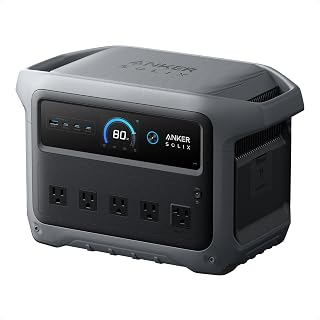
The 2000W output and solar compatibility make this a strong contender for both home backup and off-grid camping. Its 120VAC rating handles typical household appliances, while the battery-powered and solar fuel options provide flexibility during outages or extended outdoor stays. The high wattage ceiling ensures heavy-load devices run smoothly, aligning perfectly with the dual-use case of backup reliability and rugged camping performance.
Pros
- 2,000W continuous output
- 1,024Wh capacity
- Stated 49-minute wall recharge
- Up to 600W solar input
Cons
- Weighs 11.3 kg
- Fast solar rating requires optimal conditions
For a backup-and-camping roundup centered on 1,000W-class stations, the SOLIX C1000 Gen 2 supplies considerably more running power than that benchmark: 2,000W continuous output, with an engine-power maximum listed at 3,000W. Its 1,024Wh capacity positions it for more than a phone-and-light kit, while its portable inverter format and 120V AC operation suit a camp setup or moving backup power around a home. Recharge flexibility is central to its appeal. HyperFlash technology supports a stated 49-minute wall recharge at 1,600W input, and it accepts up to 600W of solar input, with a claimed 1.8-hour full solar charge under optimal conditions. That matters when camping away from the grid and when outages make repeat recharging important. A 10ms UPS switchover adds a backup-oriented feature for devices that need minimal interruption. The unit has a compact 15.1-by-8.2-by-9.6-inch footprint, weighs 11.3 kg, and uses LiFePO4 cells rated to retain at least 80% capacity after 4,000 cycles. It also provides 9 total outlets and is designed to power multiple devices.
Choose this Anker if you want one portable station to cover campsite electronics and meaningful household backup needs, and you value fast wall charging, solar compatibility, and UPS-style switchover. Its 2,000W output, 1,024Wh capacity, and 9 outlets suit people needing more headroom than a basic 1,000W station. Skip it if low carrying weight is your top priority: 11.3 kg may be manageable for short carries but is not ultra-light. Also skip it if you only need to charge a few small devices.
Capacity: 1,024Wh LiFePO4 battery
Output: 2,000W continuous, 3,000W peak
Ports: 10 total outputs
Wall Recharge: 1,600W input, 49 minutes to full
Solar Input: Up to 600W at 60V maximum, 1.8 hours to full
UPS Switchover: 10 milliseconds
Dimensions: 15.1L x 8.2W x 9.6H inches
Weight: 11.3 kg (24.9 lbs)
Battery Cycles: 4,000+ cycles with minimum 80% retention
Warranty: 5 years
Colors Available: Gray

At 292Wh and 300 watts, this unit falls well short of the 1000W threshold needed for reliable backup or extended camping trips. It can charge phones and small devices through its 2.4A USB ports, but the 10A AC output and compact capacity limit it to light-duty tasks. For the scenarios in this roundup, the power ceiling and brief runtime make it unsuitable when appliances or multiple devices need sustained energy.
Pros
- Compact 7.5-pound design
- 292Wh battery capacity
- 100W USB-C PD port
- LiFePO4 rating of over 4,000 cycles
Cons
- Only 300W rated output
- Not intended for refrigerators or high-wattage tools
A 300W station is not a replacement for a 1,000W model, but the Explorer 300 has a clear role in a backup-and-camping guide for users whose essential load is modest and whose gear must stay light. Its 292Wh capacity and 7.5-pound weight make it a compact choice for charging phones, tablets, cameras, drones, and laptops at camp or keeping those smaller devices available during a short outage. The 300W rated output, with a 600W peak surge, defines the boundary: it is intended for electronics rather than refrigerators, air conditioners, or high-wattage tools. Its connections make that focused use practical, pairing two AC outlets with a 100W USB-C PD port, two USB-A ports, and a 120W car charging port; the existing description says it can serve six devices at once. It reaches full charge in about three to four hours via AC adapter. It can also use compatible solar panels, with an 80% charge in 2.8 hours cited from a 100W panel. LiFePO4 chemistry is rated for over 4,000 cycles before capacity falls to 70%, and the digital display shows remaining capacity. This is the lightweight, low-demand alternative, not the high-output pick.
Buy the Explorer 300 if your camping or outage plan centers on communications, laptops, cameras, drones, and other low-draw electronics, and 7.5-pound portability is more useful to you than appliance-level output. It is a sensible second power source for a vehicle or a compact primary option for short trips. Skip it if the reason you are shopping this roundup is to run a refrigerator, air conditioner, high-wattage tools, or other loads that call for a true 1,000W-class station. Its 300W rating is the deciding limitation.
Capacity: 292Wh (LiFePO4 battery)
Weight: 7.1-7.5 lbs
Dimensions: 15.43in D x 9.92in W x 11.89in H
AC Output: 2 outlets, 110V, 300W continuous (600W peak surge)
USB Ports: USB-C PD 100W, USB-A 2.4A (x2)
Car Port: 120W 12V output
Charging Time: Approximately 4 hours AC, 2.8 hours with 100W solar panel
Battery Cycles: 4,000+ before reaching 70% capacity
Warranty: 2 year manufacturer
Model: JE-300E

Hitting exactly 1000W output with 1024Wh LiFePO4 capacity, this station delivers the threshold power for home backup essentials and extended camping gear. The 110VAC output supports common appliances, and solar recharge capability makes it practical for off-grid weekends or outage preparation. Its residential and camping use designations align directly with the article's dual-purpose focus, offering a balanced middle ground for both scenarios.
Pros
- Excellent value at the price point with genuine 1000W continuous output and true LiFePO4 chemistry
- Versatile charging ecosystem supports solar expansion, making it future-proof for off-grid living
- Automotive-grade battery pack with advanced BMS delivers medical-device-safe, stable power
- Impressive real-world performance per customer reviews, consistently powering CPAP machines, multiple devices, and home appliances
- Fast 60W USB-C charging gets laptops to 50% in 30 minutes
Cons
- At 27.7 lbs, it requires genuine effort to carry despite the marketing of it as lightweight
- Manual recommends turning off outputs when not in use to prevent parasitic battery drain
- Does not feature UPS or pass-through charging capability for uninterrupted power switching
The Staryline 1000W Portable Power Station is a versatile backup power solution designed for homeowners facing outages, outdoor enthusiasts, and remote workers who need reliable electricity off-grid. Its 1024Wh LiFePO4 battery and 1000W continuous output make it capable of powering everything from Wi-Fi routers and mini fridges to CPAP machines and home entertainment systems for extended periods.
The standout feature is its flexible charging ecosystem. With dual 110V AC outlets, 60W USB-C power delivery, and two USB-A ports, you can charge five devices at once. The ability to accept up to 300W solar input transforms this into a long-term off-grid power solution, with an optional 200W solar panel fully recharging it in 6-8 hours on sunny days. Customer reviews consistently praise its performance running critical appliances and charging multiple devices simultaneously during actual power outages.
Build quality centers on automotive-grade LiFePO4 chemistry protected by a six-layer smart battery management system. This approach guards against overcharge, overload, and temperature extremes while delivering power stable enough for sensitive medical devices. The design retains 80% capacity after 3000+ cycles, translating to roughly six years of reliable service for typical users.
The primary trade-off is weight, at 27.7 lbs it demands respect during transport despite the marketing language suggesting otherwise. The unit also lacks UPS functionality for seamless power switching and requires manual output shutdown to prevent drain when not in use, minor inconveniences that experienced power users typically manage.
This power station represents solid engineering at its price point, delivering genuine capacity and thoughtful charging flexibility. It suits anyone needing dependable emergency backup, serious campers planning extended trips, or rural residents exploring energy independence through solar expansion.
Power Output: 1000W continuous, 2000W peak surge capacity
Battery: 1024Wh LiFePO4 with automotive-grade cells and six-layer smart BMS protection
Charging Ports: 2x 110V AC outlets, 1x 60W USB-C PD port, 2x USB-A ports
Solar Input: Up to 300W maximum, compatible with standard monocrystalline panels
Durability: 3000+ charge cycles with 80% capacity retention, approximately 6-year lifespan
Physical: 27.7 lbs, dimensions 18L x 12W x 16H inches, three colors available (Gray, Blue, Yellow)
Included: Power station, car charging cable, AC charging cable, user manual
Home Emergency Backup: Homeowners in areas with frequent outages can keep Wi-Fi, phones, medical devices, and refrigeration running until power restores. Real customers report powering multiple devices and appliances during actual blackouts.
Outdoor Enthusiasts: Campers and RV travelers gain a portable power hub that runs fans, charges devices, and connects solar panels for multi-day trips without external charging sources.
Remote Workers: Digital nomads and rural professionals benefit from the Starlink-compatible low-interference power delivery for reliable video calls and work sessions away from grid power.
Off-Grid Explorers: Users planning solar expansion gain a scalable foundation that accepts up to 300W solar input, making it suitable for gradual migration toward energy independence.
Not Ideal For: Those needing true UPS functionality with zero downtime switching, or users who require pass-through charging to power devices while simultaneously charging the battery.

With only 288Wh capacity and 360W output, this model cannot meet the 1000W requirement for backup power or demanding camping gear. Its solar input and 230V rating suggest portability for minimal electronics, yet the 30W solar wattage and low output ceiling mean longer recharge times and restricted appliance compatibility. Readers looking for substantial backup or multi-device camping support will find the capacity inadequate.
Pros
- Fast 140W bidirectional USB-C charging, 80% in 50 minutes
- LiFePO4 battery rated for 3,000 cycles, about 10 years of use
- Ultra-quiet 25dB operation for campsite use
- Eight ports allow charging multiple devices simultaneously
Cons
- 300W continuous output falls well short of 1000W-class backup needs
- Solar panel and shoulder strap sold separately
If your search for a 1000W power station is really a search for enough backup capacity to matter, the SOLIX C300 is worth noting mainly as a contrast. At 300W continuous and 600W surge, it sits well under the 1000W mark, so it belongs on this list as the lightweight option for small loads rather than a true backup workhorse. Its 288Wh LiFePO4 battery handles phones, laptops, cameras, and small lights across eight ports, and the 140W bidirectional USB-C setup charges the unit itself to 80% in 50 minutes. For camping, that speed and the 25dB silent operation matter more than raw wattage. Add the option to pair with a 100W solar panel and you get a sustainable, grab-and-go setup for short trips. Just be clear-eyed about the ceiling here. This is not the pick for running appliances or riding out a multi-day outage. It's the pick for travelers who want fast charging and portability in a 1000W-class camping lineup, not maximum backup power.
Power Output: 300W continuous, 600W surge capacity
Battery: 288Wh LiFePO4, 3,000 cycle lifespan
Charging Ports: 3x AC outlets (300W total), 1x car socket (120W), 2x USB-C (140W each), 1x USB-C (15W), 1x USB-A (12W)
Recharge Time: 50 minutes to 80% via wall outlet (AC charging cable included)
Dimensions: 6.46"L x 6.34"W x 9.45"H
Weight: 4.13kg (9.1 lbs)
Noise Level: 25dB at 3.3 feet
Warranty: 5 years
Compatibility: Compatible with 100W and 60W Anker solar panels, not compatible with SOLIX PS30, PS200, or PS400
Buy this if you camp light, travel often, and mainly need to keep phones, cameras, and a laptop charged with minimal weight. Skip it if you came to this list wanting something closer to 1000W of continuous backup power for home outages or larger devices. At 300W continuous, it's better as a secondary unit or short-trip companion than a primary backup source.

Delivering 1800W from a 1024Wh LiFePO4 battery, this station balances capacity with versatile recharge options including solar, AC, car, and generator inputs. The multi-source flexibility suits emergency backup scenarios where grid power is unavailable, and the wattage handles camping essentials like portable fridges or power tools. Its recommended uses explicitly include home backup and outdoor trips, matching the article's dual focus.
Pros
- 1800W continuous output and 3600W surge, well above the 1000W benchmark
- 1024Wh LiFePO4 battery rated for 4000+ cycles
- 45-minute fast charge to 80% via TurboBoost charger
- Sub-10ms UPS switchover protects sensitive electronics
Cons
- 25 lbs weight is noticeable during extended carrying
- Runtime drops quickly with continuous high-draw devices
For an article built around 1000W-class power stations, the BLUETTI Elite 100 V2 earns its spot by exceeding that bar with room to spare. Its 1800W continuous output and 3600W surge capacity put it well above the 1000W threshold, meaning it can realistically handle camping setups, emergency backup, and road trip demands that a smaller unit would struggle with. The 1024Wh LiFePO4 battery, rated for 4000-plus cycles, backs that output with real runtime, powering a laptop for 8-12 hours, a mini-fridge for over 12 hours, or charging a phone more than 10 times. The 45-minute charge to 80% via the 1200W TurboBoost charger means downtime between uses stays short, and the sub-10ms UPS switchover adds a genuine safety net for networking gear or computers during outages. Eleven ports mean multiple devices run at once without adapter juggling. At 25 lbs, it asks more of you to carry than a lightweight unit would, but for backup and camping needs where 1000W is the benchmark, that weight buys real capability.
Power capacity of 1024Wh supports different devices with varying runtimes. A laptop typically runs 8-12 hours, a mini-fridge 12+ hours, and a phone charges 10+ times. High-draw devices like electric kettles or space heaters deplete the battery in hours. Use the BLUETTI app to monitor real-time consumption and plan charging accordingly.
Charging speed depends on input method. Wall outlet charging reaches 80% in 45 minutes using TurboBoost. Solar panel charging is slower but adds flexibility for extended trips. Car charging and generator inputs provide additional options when AC power isn't available, making this ideal for truly remote locations.
Buy this if you want power station capacity that genuinely clears the 1000W mark for home backup or camping with multiple or higher-draw devices. Skip it if you only need to charge phones and small electronics, since the 25 lbs weight and larger size are unnecessary for light use. It suits remote workers, homeowners wanting UPS protection, and anyone prioritizing capacity over minimal weight.

Pros
- Excellent capacity-to-weight ratio at 999Wh in a 17-pound frame makes transport practical for outdoor adventures
- 10 diverse ports and 60W USB-C PD mean fewer adapters and faster charging for modern devices like MacBooks and phones
- Pure sine wave output protects expensive electronics better than modified sine wave competitors
- Multiple charging options including MPPT solar technology enable true off-grid independence
- Comprehensive battery protection system and long lifespan deliver confidence in durability and long-term value
Cons
- 1-hour runtime at full 1000W draw limits sustained high-power use, requiring strategic device prioritization
- No customer reviews available to verify real-world performance claims and long-term reliability
- Requires careful load management to stay under 1000W limit, which may be restrictive for simultaneous high-demand devices
The GRECELL EB1000 is a mid-capacity portable power station built for outdoor enthusiasts, RV travelers, remote workers, and homeowners preparing for emergencies. At 999Wh with 1000W continuous output, it bridges the gap between ultralight travel packs and heavy-duty home backup systems, offering genuine versatility without excessive weight.
The standout feature is its connectivity ecosystem: 10 ports including 60W USB-C Power Delivery, three 18W Quick Charge 3.0 USB-A ports, a 10W wireless pad, and dual AC outlets with pure sine wave output. This breadth means you can charge a MacBook, smartphone, tablet, and portable speaker simultaneously without adapters, plus run AC-powered devices like mini-fridges or CPAP machines. The integrated LCD display provides real-time transparency on draw and remaining runtime, eliminating guesswork during critical moments.
Build quality reflects automotive-grade construction: the battery supports 2000+ charge cycles with a 10-year design lifespan, backed by an upgraded Battery Management System protecting against overcharge, short circuits, and thermal runaway. Dual silent cooling fans keep temperatures safe during heavy loads or solar recharging. The 17-pound form factor with ergonomic carry handle makes this genuinely portable compared to heavier competitors, though it requires careful load balancing since the 1000W limit binds simultaneous high-power devices.
The MPPT solar controller maximizes energy capture from variable sunlight, enabling true off-grid sustainability. Pass-through charging lets you power devices while recharging the station itself, a practical feature for extended trips. The included cables and storage bag arrive ready to deploy.
The primary limitation is that 1-hour runtime at full power capacity means this works best for layered power strategies rather than continuous high-draw scenarios. Without customer reviews yet available, durability claims remain manufacturer-stated rather than field-proven. Overall, this is a thoughtfully designed power station for active outdoor use and supplemental home backup, delivering genuine multi-device capability in a portable package.
Camping and RV travel: Power essential devices and comforts like LED lighting, fans, and phone charging during multi-day trips. The lightweight design fits van conversions and road trip setups better than heavier generators.
Remote work: Keep laptops, monitors, and networking gear running during power outages or while working from off-grid locations. Pure sine wave output protects sensitive electronics.
Medical backup: CPAP machines, oxygen concentrators, and other home medical equipment need clean sine wave power. The 999Wh capacity provides meaningful runtime for essential devices during emergencies.
Solar integration: Use with portable solar panels to extend off-grid capability indefinitely. MPPT tracking optimizes charge speed across varying sunlight conditions.
Emergency preparedness: Deploy rapidly during storms, blackouts, or natural disasters with an ergonomic 17-pound carry handle and pre-tested charge ecosystem.
Power Output: 1000W continuous, 2000W peak burst, pure sine wave 120V AC
Capacity: 999Wh (27Ah at 37V nominal)
Battery Type: Automotive-grade lithium with 2000+ cycle lifespan
Ports: 2x 120V AC outlets, 1x USB-C PD 60W, 3x USB-A QC 3.0 (18W each), 1x 10W wireless charging, 1x 12V car outlet, 2x DC 5.5mm outputs
Charging: AC adapter, solar input (MPPT controller included), 12V car charger
Weight: 16-17 pounds (7.7 kg)
Dimensions: 9.61in x 9.61in x 6.97in (24.4cm x 24.4cm x 17.7cm)
Additional Features: Real-time LCD display, pass-through charging, SOS LED light, dual silent cooling fans
Warranty: 24 months

At 288Wh and 600W output, this compact generator lacks the 1000W capacity needed for serious backup or multi-device camping. While the LFP chemistry and solar compatibility offer durability and eco-friendly recharge, the limited wattage restricts use to small electronics and LED lighting. For readers seeking robust backup power or the ability to run higher-draw camping equipment, this model underdelivers on both fronts.
Pros
- Eight charging modes including AC, solar, car, and generator
- 45-minute fast charge to 80% via 380W wall adapter
- Sub-10ms UPS switchover protects CPAP machines, routers, and laptops
- Compact 9.4 lb design fits backpacks and car trunks
Cons
- 600W continuous output falls short of 1000W-class backup needs
- Lacks large-scale verified customer reviews at time of listing
This article is about finding the right 1000W-class pick for backup and camping, and the Elite 30 V2 is useful here as the budget-friendly entry point rather than the top performer. Its 600W continuous output and 1500W Power Lifting surge mode land it below the 1000W mark but still ahead of many lightweight competitors, making it a reasonable choice if your backup needs are modest. The 288Wh LiFePO4-based UltraCell battery supports eight charging modes, covering AC, solar, car, and generator input, which suits campers who want flexibility without complexity. A 45-minute fast charge to 80% and a sub-10ms UPS switchover add real convenience, especially for protecting routers, laptops, or CPAP machines during sudden outages. At 9.4 lbs and a compact footprint, it travels easily in a backpack or trunk. The tradeoff is clear: this unit is built for shorter trips and smaller loads, not for carrying a household through an extended outage. For this article's audience, it works best as a secondary or lightweight option alongside something closer to or above 1000W.
Power Output: 600W continuous, 1500W surge (Power Lifting Mode)
Capacity: 288Wh with LFP battery chemistry
Charging Speed: 0-80% in 45 minutes via 380W AC adapter, 0-100% in 70 minutes
Charging Modes: 8 modes including AC wall (380W/200W adjustable), solar input, car charging, and generator compatible
UPS Response: 10ms ultra-fast switch for critical device protection
Outlets: 9 total ports including AC, USB-C with 140W PD fast charging, and DC outputs
Weight: 9.5 lbs (9.4 lbs stated in marketing)
Dimensions: 9.8 inches long by 7 inches wide by 6.6 inches high
Standby Power Draw: 4.5W AC mode, 5W DC mode, 8W standby
Warranty: 60 months manufacturer coverage
Battery Technology: UltraCell LFP with enhanced thermal management
Recommended Uses: Camping, road trips, emergency home backup, outdoor recreation, and event power
Buy this if you want a compact, affordable backup option for weekend camping or short power outages involving small electronics. Skip it if your main goal is matching or exceeding 1000W of continuous output, since 600W will limit what you can run. Best suited to casual users and emergency preppers who prioritize portability over maximum capacity.

Pros
- Exceptional capacity at 999Wh handles most household and outdoor power needs without excessive weight
- Multiple charging options provide genuine flexibility for camping, van life, and emergency scenarios
- Ten simultaneous charging ports with individual module switches offer convenience and device flexibility
- LiFePO4 chemistry with 2000+ cycle rating delivers long-term reliability compared to standard lithium
- Includes complete accessory package: storage bag, solar cable, car charger, and 24-month warranty
Cons
- 8-12 hour AC recharge time means planning ahead for home backup scenarios, though pass-through charging helps
- 17 pounds is manageable but noticeably heavier than competing lightweight models under 10 pounds
- Price point sits mid-range, positioning it above budget options but below premium 2000Wh+ stations
The GRECELL 999Wh is a mid-capacity portable power station designed for outdoor enthusiasts, RV travelers, and homeowners seeking reliable backup power. With 1000W continuous and 2000W peak output, it handles demanding devices like mini-fridges, power tools, and medical equipment. The LiFePO4 battery delivers proven longevity compared to standard lithium options.
What sets this station apart is its charging flexibility and port variety. Three recharge methods (AC, solar, car) mean you're never stuck without options, while the 10-device simultaneous charging capability covers nearly every scenario. The dual AC outlets, USB-C PD 60W, three fast-charge USB ports, wireless pad, and 12V car port eliminate the need for external hubs or adapters.
Build quality reflects practical engineering rather than premium materials. The 17-pound form factor balances capacity with portability, though it's notably heavier than ultralight competitors. The rugged shock-resistant housing, dual cooling fans, and comprehensive BMS protection instill confidence for outdoor use. Individual module switches and a detailed LCD screen give you precise control over power distribution.
The main limitation is the 8-12 hour AC recharge window, which requires planning for emergency backup scenarios. Additionally, while 999Wh is substantial, households running multiple high-draw appliances simultaneously may need larger capacity. The price positions it competitively for features but above budget alternatives.
Verdict: A dependable, feature-rich power station that excels for camping, van life, and home backup when you value charging flexibility and simultaneous device support. Best suited for users who appreciate multiple charging options and don't need maximum portability at any cost.
Battery and Power Output
Capacity: 999Wh LiFePO4
Continuous Output: 1000W
Peak Output: 2000W
Battery Cycles: 2000+ cycles rated
Waveform: Pure sine wave
Charging Ports and Outputs
AC Outlets: 2x 110V
USB-C: 1x PD 60W
USB-A: 3x QC 3.0 (18W each)
Wireless Charging: 10W pad
12V Car Port: 1x
DC Outputs: 2x
Total Simultaneous Devices: 10
Recharging Methods
AC Adapter: 8-12 hours (100-120V)
Solar MPPT: Up to 800W input
Car Port: 12V charging support
Pass-Through: Simultaneous charge and discharge supported
Physical Specifications
Weight: 17 pounds
Design: Compact with ergonomic handle
Housing: Shock-resistant, rugged construction
Cooling: Dual silent fans
Display: Smart LCD with real-time metrics
Color: Olive
Included Accessories
AC charging cable, car charger cable, MC4 solar charging cable, cable storage bag, manual, 24-month warranty
Who Should Buy
Campers and RV travelers needing multi-device charging away from hookups. Van lifers wanting energy independence with solar support. Homeowners building emergency backup systems without full home generator cost. Remote workers requiring CPAP, laptop, and phone charging reliability. Users prioritizing charging flexibility over maximum portability.
Who Might Consider Alternatives
Ultralight backpackers needing under-10-pound capacity, as this unit weighs 17 pounds. Urban apartment dwellers in areas with limited power outages needing minimal storage footprint. Budget-conscious buyers seeking entry-level stations under $200. Users requiring 2000Wh+ for extended off-grid stays with heavy appliances.
Real-World Use Cases
Weekend camping trips powering laptops, tablets, portable speakers, and charging 6+ phones and smartwatches simultaneously. RV travel with pass-through charging keeping the battery topped off while running air compressors or power tools. Home backup during 8-12 hour outages supporting refrigerator, LED lights, fan, and medical devices. Van life with daily solar recharge supplementing AC top-offs for sustainable energy.
Performance Expectations
Expect full recharge via AC in 8-12 hours or overnight. Solar recharge times vary dramatically with panel wattage, location, and weather, typically 6-16 hours with 800W MPPT capacity. Runtime on single charge depends on device draw but generally powers a mini-fridge 4-6 hours or laptops 8+ hours. The battery management system automatically protects against overcharge and thermal issues.

Pros
- Multiple charging ports cover virtually every device type you'll encounter, from CPAP machines to mini-fridges
- MPPT solar charging technology significantly reduces charging time compared to basic solar controllers
- Built-in protections against overcharging, short circuits, and surges safeguard expensive electronics
- Three recharge options give flexibility, whether at home, on the road, or off-grid
Cons
- 23-pound weight, while lightweight for its capacity, still requires consideration for backpacking or extended hiking
- Maximum 1000W output limits use with high-power devices like large air conditioners or power tools
- Wireless charging feature requires additional button presses and drains battery faster than wired charging
The GRECELL T-1000 is a 999Wh portable power station designed for outdoor enthusiasts, travelers, and those seeking reliable backup power. It bridges the gap between lightweight portability and substantial power capacity, delivering 1000W continuous output with 2000W peak surge capability. This makes it practical for camping, emergency preparedness, and powering devices during extended outdoor activities.
The standout feature is its connectivity versatility. With 2 AC outlets, 3 USB-C ports, 1 USB-C PD, 2 DC 12V ports, wireless charging, plus LED light and SOS flashlight, you can power laptops, phones, tablets, CPAP machines, and even mini-fridges simultaneously. The built-in MPPT solar controller is a major advantage, automatically extracting maximum power from solar panels to optimize charging from variable power sources, a feature often missing from competing models.
Build quality appears solid with an advanced battery management system that automatically stops charging when devices reach full capacity and protects against short circuits and power surges. Silent dual cooling fans keep the unit operating quietly even under sustained load, a practical consideration for campsite use. At 23 pounds, it's reasonably portable while maintaining the capacity needed for meaningful power output.
Drawbacks worth noting: the 1000W limit means it cannot power heavy-duty tools or large appliances, and while 23 pounds is light for its capacity, it's still substantial for multi-day backpacking. The wireless charger, while convenient, requires menu navigation and drains battery faster than wired alternatives. Real-world runtime varies based on device usage and ambient conditions.
The GRECELL T-1000 represents strong value for outdoor adventures and backup power needs. Its multi-port design, solar charging capability, and robust protection systems make it a practical investment for anyone regularly venturing off-grid or seeking emergency preparedness without generator noise and fuel logistics.
Battery Capacity: 999Wh with advanced management system
Power Output: 1000W continuous, 2000W surge, pure sine wave
Charging Ports: 2 AC outlets, 3 USB-QC, 1 USB-C PD, 2 DC 12V, 1 12V cigarette lighter, wireless charging
Recharge Methods: AC outlet (included cable), car outlet (included cable), solar panel (7909 connector included)
Weight: 23 pounds
Dimensions: 11.6 x 7.91 x 7.91 inches
Warranty: 2 years
Model: T-1000
Special Features: Built-in MPPT solar controller, dual cooling fans, LED light, SOS flashlight, LCD display
Who Should Buy: Campers and outdoor adventurers, remote workers needing backup power, RV and van lifers, emergency preparedness households, and anyone wanting solar-capable portable power without traditional generator maintenance.
Who Might Want to Look Elsewhere: Users needing sustained high-power output for heavy tools or industrial equipment, ultralight backpackers prioritizing minimal weight over convenience, or those seeking AC-only charging without solar capability.
Important Usage Notes: Device runtime equals approximately 999Wh times 0.85 conversion efficiency divided by your device's operating power. Turn off AC output when not in use to prevent battery drain. The wireless charger requires pressing the power button first, then the USB button. Do not attempt to power devices exceeding 1000W rated capacity.
Value Consideration: The inclusion of three charging cables, solar controller, and two-year warranty significantly enhances long-term value. The MPPT solar technology and multi-port design justify the investment versus basic portable power banks or traditional generators requiring fuel and maintenance.
Pros
- Exceptional value for 1000W continuous power at this price point
- Proven real-world performance powering CPAP devices for multi-night camping trips
- Versatile charging ecosystem with USB-C PD 60W, Quick Charge 3.0, and wireless charging
- Portable yet powerful enough to run fans, phone chargers, and small appliances simultaneously
- Built-in MPPT solar charging optimization extracts maximum power from variable sources
Cons
- Cannot power high-wattage devices like coffee makers or electric kettles that exceed 1000W
- Actual runtime varies significantly based on device load and environmental conditions
- Wireless charger and some ports require separate button presses to activate
The GRECELL EB1000 is a mid-range portable power station designed for camping enthusiasts, RV travelers, and homeowners preparing for outages. It combines a substantial 999Wh battery with 1000W continuous output into a surprisingly portable 17.8-pound frame, striking a practical balance between capacity and mobility that appeals to users who prioritize versatility over ultralight weight.
What sets this model apart is its proven real-world performance in critical applications. Multiple verified users report running CPAP machines for 3+ consecutive nights without recharge, while still maintaining battery reserve for phone charging. The 60W USB-C fast charging delivers MacBook Pro speeds, while three Quick Charge 3.0 USB-A ports eliminate slow charging bottlenecks. Ten simultaneous connection points (including wireless charging) mean you're genuinely replacing a power strip, not just carrying a backup battery. The advanced Battery Management System handles surge protection and auto-shutoff at full charge, essential safeguards for expensive devices like medical equipment and laptops.
The industrial design prioritizes function over aesthetics. Dual cooling fans operate silently and effectively prevent thermal throttling during peak loads or solar input. Individual power switches for each module give fine-grained control. The included three charging cables and premium storage bag arrive ready for deployment. MPPT solar technology optimizes panel output, enabling true off-grid operation when paired with compatible solar panels. The integrated LED light with SOS mode adds practical emergency backup value.
Realistic limitations exist. Devices drawing over 1000W (most coffee makers, electric kettles, space heaters on high) won't run. Actual runtime depends heavily on total load and efficiency loss. The wireless charger requires activating the USB button after powering on. These are minor friction points in an otherwise reliable system.
The GRECELL EB1000 delivers genuine value for practical outdoor and emergency use. It outperforms cheaper competitors on sustained runtime (verified CPAP testing) while costing significantly less than premium alternatives. Best suited for camping weekends, van-life setups, emergency home backup, and serious mobile professionals who need multi-night autonomy without the ultralight price premium.
Power Output: 1000W continuous, 2000W surge, pure sine wave AC inverter. Battery Capacity: 999Wh lithium-ion with upgraded Battery Management System. Dimensions and Weight: 6.2 inches L x 6.2 inches W x 9.8 inches H, 17.8 pounds actual (spec lists 20 pounds). Charging Ports: 2 AC sockets (120V), 1 USB-C PD 60W, 3 USB-A Quick Charge 3.0 (18W each), wireless charging pad, 12V car port, 2 DC outputs.
Recharge Options: AC wall outlet (full charge in 5-7 hours), solar panels with MPPT tracking, or car 12V port. Cooling System: Dual silent fans with thermal protection. Display: Smart LCD shows real-time wattage, battery percentage, and estimated runtime. Safety Features: Auto-shutoff at full charge, short-circuit protection, power surge safeguards, thermal management. Color Options: Green and Black. Warranty: 1 year manufacturer coverage. Model: EB1000. Manufacturer: Huizhou Intelligent Energy Co., Ltd.
Best For: Campers planning multi-night trips (especially CPAP users), van-lifers needing reliable mid-capacity backup, homeowners preparing emergency power supplies, road-trippers who want to charge multiple devices without vehicle power drain.
Consider Alternatives If: You need 2000W+ continuous power (industrial tools, large appliances), prioritize ultralight under 10 pounds, or require permanent home integration. Models under 500Wh better suit day-trips, while 2000+ Wh units serve permanent installations.
Essential Accessories: Portable solar panels (uses included 7909 connector) unlock true off-grid freedom. Car charging cable extends usefulness on road trips. Additional USB-C PD cables maximize fast-charging flexibility. A soft carrying bag provides organization (one is included).
Real-World Expectations: Don't expect to run high-wattage appliances. Coffee makers, electric kettles, and space heaters exceed capacity. Estimate runtime as (999Wh x 0.85) divided by your device's watts. A 100W device runs roughly 8-9 hours at full charge. Actual performance varies by temperature, charge cycles, and device efficiency. Turn off AC output when not in use to prevent phantom drain.
Buying Guide
Start with usable capacity, not just the wattage label
Wattage tells you what a power station can run at one time, while watt-hours indicate how long it can run. For meaningful backup, models near 1,000Wh are the sensible starting point, since conversion losses mean you never use every stored watt-hour at the wall outlet.
The Staryline 1000W Portable Power Station 1024Wh LiFePO4 and the 999Wh GRECELL units are sized for lights, a router, laptops, and intermittent refrigerator use. For network storage, confirm the draw shown on your equipment label and consider the energy needs outlined in this NAS hard drive buying guide before relying on any battery backup.
Match continuous output to your largest appliance
A 1000W continuous rating is adequate for many essentials, but it is not a blank check for heaters, large coffee makers, or high-draw kitchen equipment. Check the running wattage and startup surge of every appliance you plan to use, then leave a comfortable buffer below the station’s stated limit.
The Anker SOLIX C1000 Gen 2 Portable Power Station offers 2,000W continuous output and 3,000W peak, while the BLUETTI Elite 100 V2 provides 1,800W rated AC output with a higher power-lifting mode. By contrast, the Jackery Explorer 300 and Anker SOLIX C300 are lighter choices for electronics and small devices, not full-size backup loads. A desk with a 32-inch 4K monitor, laptop, and peripherals also deserves a quick wattage check before you plug in.
Prioritize recharge speed and solar input for outage readiness
A large battery is far more useful when you can refill it quickly between outages or during a short stop on the road. The Anker SOLIX C1000 Gen 2 lists a 49-minute high-speed AC recharge when its app-enabled charging mode is used, while the BLUETTI Elite 100 V2 lists an 80% recharge in roughly 45 minutes.
For off-grid use, look at solar input limits, connector compatibility, and the panel wattage you actually plan to carry. Anker supports up to 600W solar input on the C1000 Gen 2, while the GRECELL 999Wh Portable Power Station 1000W lists high-input MPPT solar charging. Remote editors carrying an external SSD for gaming should also favor a station with dependable USB-C charging and enough AC power for the whole workstation.
Consider UPS support, port selection, and carry weight
For a router, laptop, or CPAP, a fast UPS switchover can be as valuable as capacity. The Anker SOLIX C1000 Gen 2, BLUETTI Elite 100 V2, and BLUETTI Elite 30 V2 list 10ms UPS backup, which can help keep compatible essentials running through a brief interruption.
Port variety matters when several people need power at once. The GRECELL 999Wh models include AC, USB-C, USB-A, DC, car-style, and wireless charging options, while the compact Anker C300 emphasizes fast USB-C output for travel gear. If your desk includes a fast display from our competitive FPS monitor guide, include its power brick in your total load calculation. Finally, verify the actual carry weight, handle design, and storage footprint, especially if you will move the station between a vehicle and campsite.
Final Thoughts
Choose the Anker SOLIX C1000 Gen 2 Portable Power Station when rapid recharging, strong AC output, and UPS support matter most for a flexible home-and-travel setup. The GRECELL 999Wh Portable Power Station 1000W is a compelling fit for users who want a lighter 1kWh-style backup solution with broad device connectivity and solar flexibility.
Frequently Asked Questions
How long will a 1000Wh portable power station run my devices?
A useful estimate is battery capacity multiplied by roughly 0.85, then divided by the device’s wattage. A 999Wh station running a steady 60W device may last around 14 hours, while a 600W appliance can drain it in much less than two hours. Temperature, inverter losses, and cycling appliances such as refrigerators will change real-world runtime.
Can a 1000W portable power station run a mini refrigerator or CPAP?
Many can run a mini refrigerator or CPAP, provided the appliance’s running draw and startup surge stay within the station’s continuous and peak limits. A refrigerator compressor cycles on and off, so runtime depends on ambient temperature and how often the door opens. For medical equipment, follow the device maker’s backup-power guidance and keep a separate contingency plan.
Is a LiFePO4 battery worth choosing in 2026?
LiFePO4 is a strong choice for a station you expect to recharge often because it is commonly associated with long cycle life and stable chemistry. The Anker and BLUETTI models in this comparison list thousands of cycles before reaching a reduced capacity threshold. Check the stated warranty and cycle rating, since those details vary by model.
What should I keep powered during an outage?
Start with communication, lighting, work essentials, medical equipment, and food preservation rather than trying to power an entire home. A router, phone chargers, laptop, LED lamps, and a small fridge are usually a more manageable load than resistance heaters or large cooking appliances. If protecting local files is part of your plan, our best 8TB hard drive guide can help you choose storage suited to a dependable backup routine.




Write Your Review
No reviews yet. Be the first to share your experience!